INDONESIA
RISK
ASSESSMENT
ON TERRORISM FINANCING AND
FINANCING OF PROLIFERATION OF
WEAPONS OF MASS DESTRUCTION
YEAR 2021
INDONESIA RISK ASSESSMENT
ON TERRORISM FINANCING AND FINANCING OF PROLIFERATION OF
WEAPONS OF MASS DESTRUCTION YEAR 2021
© 2021, Implementation Team of Indonesia Risk Assessment on Terrorism Financing and Financing of Proliferation of Weapons of Mass Destruction
D R A F T I N G T E A M
INDONESIAN RISK ASSESMENT ON TERRORISM FINANCING AND FINANCING OF PROLIFERATION OF WEAPONS OF MASS DESTRUCTION
YEAR 2021
Indonesia Risk Assessment on Terrorism Financing and Financing of Proliferation of Weapons of Mass Destruction Year 2021
ii
ISBN : 978-602-9285-68-0
Writer Coordinator : V. Annisa
Book Size : 295 x 210 mm
Manuscript : Implementing Team for Indonesia Risk Assessment on Terrorism Financing and Financing of Proliferation of Weapons of Mass Destruction in 2021
Artistic Director : Arthur Ananta Cover Design, Layout
and Graphic Illustrations
Published by : Pusat Pelaporan dan Analisis Transaksi Keuangan / Indonesian Financial Transaction Reports and Analysis Center (PPATK / INTRAC), 2021
Permitted to be quoted by citing the source.
FURTHER INFORMATION
Pusat Pelaporan dan Analisis Transaksi Keuangan (PPATK) Indonesian Financial Transaction Reports and Analysis Center (INTRAC)
Jl. Ir. H Juanda No. 35 Jakarta 10120 Indonesia Phone: (+6221) 3850455, 3853922
Fax: (+6221) 3856809, 3856826 website: http://www.ppatk.go.id INDONESIA RISK ASSESMENT
ON TERRORISM FINANCING AND FINANCING THE PROLIFERATION OF WEAPONS OF MASS DESTRUCTION YEAR 2021
Indonesia Risk Assessment on Terrorism Financing and Financing of
Proliferation of Weapons of Mass Destruction Year 2021 iii DRAFTING TEAM OF INDONESIA RISK ASSESSMENT ON TERRORISM FINANCING AND FINANCING OF PROLIFERATION OF WEAPONS OF MASS DESTRUCTION YEAR 2021 1. Representatives of Indonesian Financial Transaction Reports and Analysis Center 2. Representatives of Coordinating Ministry for Political, Legal and Security Affairs 3. Representatives of Ministry of Foreign Affairs
4. Representatives of Directorate General of Customs and Excise, Ministry of Finance 5. Representatives of Center for Financial Professional Development, Ministry of Finance 6. Representatives of Directorate General of State Assets, Ministry of Finance
7. Representatives of Ministry of Law and Human Rights 8. Representatives of Ministry of Cooperatives and SMEs
9. Representatives of Commodity Futures Trading Supervisory Agency, Ministry of Trade 10. Representatives of Supreme Court and the Court
11. Representatives of Attorney General's Office of the Republic of Indonesia 12. Representatives of Indonesian National Police
13. Representatives of National Counter-Terrorism Agency 14. Representatives of State Intelligence Agency
15. Representatives of Bank Indonesia
16. Representatives of Financial Services Authority 17. Representatives of Presidential Staff Office
COMPANION TEAM OF METHODOLOGISTS AND QUALITY ASSURANCE EXPERTS FOR INDONESIA RISK ASSESSMENT ON MONEY LAUNDERING YEAR 2021
1. University of Sumatera Utara 2. University of Sriwijaya 3. University of Jember 4. University of Udayana 5. University of Padjajaran 6. University of Gadjah Mada 7. University of Airlangga
8. College of Statistics, Central Bureau of Statistics 9. Partner Ernst & Young
Indonesia Risk Assessment on Terrorism Financing and Financing of Proliferation of Weapons of Mass Destruction Year 2021
iv
LIST OF TERMS AND ABBREVIATIONS
TERMS /
ABBREVIATIONS EXPLANATION
AML/CFT Anti Money Laundering/Counter Financing of Terrorism
APG Asia / Pacific Group on Money Laundering
APH/LPH Law Enforcement Officials/Law Enforcer AgenciesLaw Enforcement Agencies
COVID-19 Corona Virus Disease-19
CTF Summit Counter Terrorism Financing Summit
UNSC UN Security Council
DTTOT List of Suspected Terrorists and Terrorist Organizations
FATF Financial Action Task Force
FIU Financial Intelligence Unit
IFTI International Fund Transfer Instruction
ISIS/ISIL Islamic State of Iraq and Syria/Islamic State of Syria and the Levant KUPVA BB Non-Bank Foreign Exchange Business Activities
SRB Supervisory and Regulatory Bodies
LTKM Suspicious Financial Transaction Report
MER Mutual Evaluation Review
ML Money Laundering
MLA Mutual Legal Assistance
NRA National Risk Asessment
PEPs Politically Exposed Persons
PBJ Goods and Services Provider
PJK Financial Services Provider
PMPJ Financial Services Provider
PPATK Pusat Pelaporan dan Analisis Transaksi Keuangan / Indonesian Financial Transaction Reports and Analysis Center
PFWMD Financing of Proliferation of Weapons of Mass Destruction
PTD BB Non-Bank Fund Transfer Operator
RBA Risk Based Approach
RBS Risk Based Supervision
Rp Rupiah
SRA Sectoral Risk Assessment
STR Suspicious Transaction Report/LTKM
TP Criminal Act
TPA Predicate Crime
TF Money Laundering
WMD Weapon of Mass Destruction
Indonesia Risk Assessment on Terrorism Financing and Financing of
Proliferation of Weapons of Mass Destruction Year 2021 v Assalamu’alaikum warahmatullahi wabarakatuh,
In 2015 for the first time Indonesia conducted a national risk assessment of Terrorism Financing (TPPT) through publication of the document "National Risk Assessment of Terrorism Financing 2015" or the National Risk Assessment (NRA) of TPPT compiled by INTRAC together with all stakeholders of Anti-Money laundering and Prevention of Terrorism Financing (ML-TF) regime and then continued with update carried out in 2019. Through the NRA TPPT, the Government of Indonesia has made many strategic policies in mitigating the main identified risks, the implementation of which has been conducted by each stakeholder in accordance with their main duties and functions.
In order to respond to the various challenges that occur at the international, regional, and national scope during the 2019-2020 period, in 2021, an updated TF risk analysis will be carried out as well as for the first time a risk assessment is carried out on prevention of Financing of Proliferation of Weapons of Mass Destruction (PFWMD) by involving the role of the ML Committee (National Co-ordination Committee on ML/TF) as well as all stakeholders for the prevention of TF and PFWMD, and using the FATF standard methodology that has been tested for validity.
PREFACE AND FOREWORD
Indonesia Risk Assessment on Terrorism Financing and Financing of Proliferation of Weapons of Mass Destruction Year 2021
vi
In the period from March 2020 to the present, the world is facing a problem that was never imagined before, namely COVID-19 pandemic which has infected millions of people in various parts of the world and transformed into a multidimensional crisis in various strategic sectors, including the increasing risk of TF and PFWMD in the future pandemic. Therefore, a strong cooperation is needed between stakeholders to increase vigilance and strengthen the integrity of the financial system in dealing with threats due to COVID-19 pandemic such as increased fraud, cyber-crime, and the number of illegal fintech as well as facing vulnerabilities stemming from increased financial volatility, misuse of aid funds and changes in financial behavior.
One of the important instruments used to effectively address the risks of TF and PFWMD in Indonesia is to use the results of the national risk assessment of TF and PFWMD which can help relevant stakeholders to understand the complexities surrounding TF and PFWMD risks, and then take policies and strategic approach with a risk-based approach as recommended by the Financial Action Task Force (FATF).
In the last 5 years, the trend of terrorism financing has undergone many changes.
From initially using illegal sources such as acts of robbery, crime, or violence, turning into fundraising through fundraising schemes with the label of humanitarian donations and legitimate business ventures. In addition, during an uncertain global situation, Indonesia, which applies the principle of being free and active in its foreign policy, is committed to participating in implementing world order based on independence, eternal peace, and social justice. Therefore, a risk analysis regarding the increasing trend of the development and use of Weapons of Mass Destruction (WMD), consisting of chemical, biological, and nuclear weapons, which have now become international security threats is needed. In the future, we see that with the increasingly complex world order and the challenges it faces, even better preparedness is needed, so that coordination, cooperation, and cooperation are absolute things that need to be made.
Taking this into account, as well as facing the FATF Mutual Evaluation Review (FATF MER) which was originally to be conducted in 2020-2021, the National Risk Assessment document for Terrorism Financing and Financing of Proliferation of Weapons of Mass Destruction 2021 was prepared to provide a comprehensive overview of the current risks. TF and PFWMD in Indonesia, as well as recommendations for priority actions and mitigation in response to these risks.
Indonesia Risk Assessment on Terrorism Financing and Financing of
Proliferation of Weapons of Mass Destruction Year 2021 vii Finally, I would like to thank and express high appreciation to all parties who have contributed to the publication of this document. May all our deeds be blessed by Allah SWT.
Amen yaa Robbal ‘aalamiin.
Wassalamu’alaikum warahmatullahi wabarakatuh.
Jakarta, April 2022 Head of PPATK
Dr. Ivan Yustiavandana S.H., LLM.
Indonesia Risk Assessment on Terrorism Financing and Financing of Proliferation of Weapons of Mass Destruction Year 2021
viii
EXECUTIVE
SUMMARY
Terrorism is a transnational crime that threatens human safety in all parts of the world, including Indonesia. The funding aspect is an important link behind an act of terrorism that can have a significant consequence in supporting the achievement of the goals of the terrorists to conduct their actions. Along with the times and technology, the methods of financing terrorism are also changing, starting from what initially only used conventional methods such as fundraising in cash, until now it has developed with the use of virtual payment instruments that can be used by all internet users around the world, and starting from initially using illegal methods that are underground (hidden or secret), until now using legal institutions. In response to this, the Government and the people of Indonesia are committed to always play an active role in every effort to prevent and eradicate Terrorism Financing (TF) through a follow the money approach (handling criminal acts that focus on the proceeds of crime) by involving various relevant stakeholders such as the National Security Agency. Law Enforcement, Self-Regulating Bodies, and Financial Service Providers.
Some of the main findings related to TF in the NRA TF and PWMD 2021 show that personal sponsors (terrorist financiers/fundraisers), misuse of donations through community organizations (ormas), and legitimate business ventures are the most common mode of collecting TPPT funds by terrorist financing. Meanwhile, the profiles of perpetrators at risk of financing terrorism are businesspeople/entrepreneurs, private employees, and traders, as was found in several cases where the perpetrators are welding entrepreneurs, herbal medicine trader, and travel agents.
Meanwhile, DKI Jakarta, East Java, West Java, and Central Java are included in the category of areas with a high risk of terrorism financing. On the other hand, current developments have provided an opportunity for perpetrators to seek terrorism financing in ways that tend to be difficult to detect and trace through virtual assets and online loans. In the international cluster, the risk of financing terrorism in Indonesia includes two things, namely: (1) inward risk (funding comes from abroad and used for terrorism activities in Indonesia), and (2) outward risk (funding comes from Indonesia and is used for financing terrorist activities abroad). Based on the findings of foreign risks, countries that are at high risk of being an indication of sources of terrorism financing entering Indonesia are the United States, Malaysia, the Philippines, Australia. Meanwhile, Malaysia, the Philippines, and Australia are the countries most at risk of indicated as a destination for terrorism financing originating from Indonesia.
Indonesia Risk Assessment on Terrorism Financing and Financing of
Proliferation of Weapons of Mass Destruction Year 2021 ix In the context of the Financing of Proliferation of Weapons of Mass Destruction (PFWMD), although in Indonesia there has not been a direct threat of PFWMD, but as part of the international regime, Indonesia has played an active role in maintaining world order, one of which is supporting counter-terrorism related to the use of Weapons of Mass Destruction.
The potential threat of PWMD in Indonesia comes from the existence of trade transactions conducted with countries included in the United Nations Security Council Resolutions (UNSC).
In addition, other potential threats that can arise are from the accounts of foreign nationals who come from high-risk countries based on the UN Security Council Resolution who no longer live or work in Indonesia and are subsequently abused by other parties.
Indonesia Risk Assessment on Terrorism Financing and Financing of Proliferation of Weapons of Mass Destruction Year 2021
x
TABLE OF CONTENTS
DRAFTING TEAM iii
LIST OF TERMS AND ABBREVIATIONS iv
PREFACE AND FOREWORD viii
EXECUTIVE SUMMARY xii
TABLE OF CONTENTS x
LIST OF TABLES xii
LIST OF FIGURES xiii
CHAPTER I INTRODUCTION 1
1.1 Background 1
1.2 Purpose 3
1.3 Output 4
1.4 Document Structure 4
CHAPTER II METHODOLOGY 7
2.1 Research Methodology 7
2.2 Scopes and Stages of Risk Assessment 7
2.3 Risk Forming Factors 11
2.4 Data Collection Techniques 12
CHAPTER II Legal Framework for Prevention and Eradication of Terrorism Financing and Financing of Proliferation of Mass Destruction Weapons (PFWMD) in Indonesia
18
3.1 Legal Framework for Prevention and Eradication of TF and PFWMD 18
3.2 Supervision and Regulation of TF and PFWMD in Indonesia 20
3.2.1 CFT and PFWMD Monitoring and Regulatory Landscape 20
3.2.2 Regulations and Policies 21
3.2.3 Achievements and Successes 24
3.2.4 Domestic Cooperation 28
3.2.5 International Cooperation 28
3.3 Law Enforcement Agency 29
3.3.1 Landscape of TF Law Enforcement in Indonesia 29
3.3.2 Regulations and Policies 30
3.3.3 Achievements and Successes 31
3.3.4 Domestic Cooperation 32
3.3.5 International Cooperation 32
Indonesia Risk Assessment on Terrorism Financing and Financing of
Proliferation of Weapons of Mass Destruction Year 2021 xi CHAPTER IV KEY RISKS OF TERRORISM FINANCING AND PFWMD 35
4.1 Terrorism Financing Risk Assessment Landscape in Indonesia 35
4.2 Terrorism Financing Domestic Heat Map 2021 35
4.2.1 Typology 35
4.2.1.1 Terrorism Fund Raising Methods 36
4.2.1.2 Terrorism Fund Transfer Methods 38
4.2.1.3 Terrorism Fund Uses Methods 41
4.2.2 Industrial Sector of the Reporting Party 42
4.2.3 Perpetrator Profile 43
4.2.3.1 Individual Profile 43
4.2.3.2 Non-Individual Profile 45
4.2.4 Geographic Area 47
4.2.5 Case Studies 48
4.3 Terrorism Financing Overseas Heat Map 2021 51
4.3.1 Foreign Inward Risks 52
4.3.2 Foreign Outward Risks 53
4.4 Emerging Threats of Terrorism Financing 54
4.5 Risk of Financing of Proliferation of Weapons of Mass Destruction 2021 57 4.6 Risk of Terrorism Financing and Financing of Proliferation of Weapons of Mass Destruction
During COVID-19 Pandemic 59
4.6.1 Consequence of COVID-19 and Policy Responses to CFT and PFWMD Programs 60 4.6.1.1 Supervisory and Regulatory Bodies and Other Ministries/Institutions 60
4.6.1.2 Law Enforcement Agencies 63
CHAPTER V CONCLUSIONS OF TERRORISM FINANCING AND PFWMD RISKS 65
5.1 Conclusions of Terrorism Financing and PFWMD Risks 65
5.1.1 Terrorism Financing (TF) 65
5.1.2 Financing of Proliferation of Weapons of Mass Destruction (PFWMD) 66
REFERENCES 68
Indonesia Risk Assessment on Terrorism Financing and Financing of Proliferation of Weapons of Mass Destruction Year 2021
xii
LIST OF TABLES
Table 1 Formulation of Risk Level 9
Table 2 List of Risk Assessment Levels 12
Table 3 Policies related to Risk Mitigation Efforts of Ministries/Agencies 24 Table 4 Policies related to Risk Mitigation Efforts by Law Enforcement
Agencies 31
Table 5 Individual Profile 44
Table 6 Inward Risks 52
Table 7 Outward Risks 53
Table 8 SRB and Other Ministries/Agencies’ Policy Responses for COVID-19 61 Table 9 Law Enforcement Agencies’ Policy Responses for COVID-19 63
Indonesia Risk Assessment on Terrorism Financing and Financing of
Proliferation of Weapons of Mass Destruction Year 2021 xiii
LIST OF FIGURES
Figure 1 Risk Assessment Formulation 8
Figure 2 Quantitative Transformation 8
Figure 3 Example of a Risk Evaluation Matrix 10
Figure 4 Overview of the ML/TF Risk Assessment Process 10
Figure 5 Response Rate of Reporting Party Questionnaire Filling 14 Figure 6 Response Rate of APH and K/L Questionnaire Filling 14 Figure 7 Response Rate of Supervisory and Regulatory Bodies
Questionnaire Filling 15
Figure 8 Typology - Fundraising 36
Figure 9 Typology - Transfer of Funds 38
Figure 10 Typology - Use of Funds 41
Figure 11 Industrial Sector Risk 42
Figure 12 Risk Profile of Individual Perpetrator 45
Figure 13 Risk Profile of Non-Individual Perpetrator 46
Figure 14 Terrorism Financing Area Risk 48
Figure 15 Illustration of TF Transfer of Funds 49
Figure 16 Illustration of the Use of Funds for Amaliyah Action Case (AH) 50 Figure 17 Illustration of the Use of Funds for Amaliyah Action Case (WS) 51 Figure 18 Illustration of the Use of Funds for Amaliyah Action Case (AKA) 51 Figure 19 Assessment of Terrorism Financing Activities by
Cryptocurrency Properties 55
Figure 20 PFWMD Funding List Flow 58
RISK ASSESSMENT ON TERRORISM FINANCING AND FINANCING OF PROLIFERATION OF WEAPONS OF MASS DESTRUCTION YEAR 2021
Along with the development of the scope and nature of the increasing global terrorism threat, a high commitment from the Government of Indonesia is needed to prevent Terrorism Financing as one of the efforts to combat terrorism.
The Government of Indonesia is realizing its commitment to building effective AML-CFT regime by carrying out updated national risk assessment on terrorism financing (TPPT), and for the first time also a risk assessment on Financing of Proliferation of Weapons of Mass Destruction (PFWMD) with stakeholders who are members of the NRA Indonesia's Inter-Agency Working Group in 2021.
CHAPTER I
INDONESIAN
Indonesia Risk Assessment on Terrorism Financing and Financing of Proliferation of Weapons of Mass Destruction Year 2021 1
CHAPTER I
INTRODUCTION
1.1 Background
Based on Global Terrorism Index 2019, Indonesia ranks 35th out of 138 countries around the world with a value of 5.07 which means that the consequence of terrorism attacks that occurred in Indonesia is at a medium level1. The assessment was conducted from several factors such as the number of deaths due to terrorist attacks, the trend of terrorist attacks since 2002, terrorist groups in various countries, and the consequences of these terrorist attacks. In the 2018-2019 period, there has been an increase in the number of acts of terrorism in Indonesia, such as the church bombing in Surabaya, Sibolga bombing, and terrorist attacks targeting Law Enforcement Agencies such as what happened at the Mobile Brigade Headquarters Kelapa Dua, Riau Police Headquarters, Surabaya Big City Resort Police Headquarters, Medan Big City Resort Police Headquarters, and Kartasura Police Post.
One of the main Factor that support terrorists to conduct their actions is the existence of financial support or sustainable funding. The funds obtained are then used for various operational preparations before conducting the action, when conducting the action, and financing compensation for terrorist members and their families, especially for those whose families died after committing acts of terror. In addition, the funds obtained are also used to promote ideology, fund travel and lodging, train new recruits, falsify documents, purchase, or assemble weapons and ammunition, as well as explosives or bombs.
1Global Terrorism Index 2019: Measuring the Impact of Terrorism, published by Institute for Economics & Peace, Sydney.
Indonesia Risk Assessment on Terrorism Financing and Financing of Proliferation of Weapons of Mass Destruction Year 2021
2
Along with the times and technology, the methods of financing terrorism is also changing, from initially only using conventional methods such as fundraising in cash, to now using virtual payment instruments that can be used by all internet users around the world; as well as from initially using illegal methods that are underground, to currently using legal institutions. The perpetrators of terrorism are always trying to find alternative loopholes if the main methods used has been successfully uncovered by law enforcement officials. In addition, the spread of terror acts supported by cross- border funding means that its eradication requires international cooperation.
In response to this, the Government and the people of Indonesia are committed to always play an active role in every effort to prevent and eradicate criminal acts of terrorism, both national and transnational. One of them is through efforts to break the chain of terrorism financing through a follow the money approach with INTRAC acting as a focal point in preventing and eradicating Money Laundering (ML) and Terrorism Financing (TF) in Indonesia through its role as a financial intelligence agency. Efforts to prevent and eradicate TF also involve various relevant stakeholders such as Ministries/Institutions (K/L), Law Enforcement Agencies, Supervisory and Regulatory Bodies (SRB) as Regulators and Financial Service Providers as Reporting Parties (PP) due to the linkages that exist in each task and function.
In addition, in line with the development of the current global threat in which there has been an increasing trend of acts of terrorism using weapons of mass destruction or Weapons of Mass Destruction (WMD) based on chemical, biological, radiological, nuclear, and explosive materials, every country in the world as stated in UN Security Council Resolution (DK) 1540, it is mandatory to establish and implement national regulations to prevent non-state perpetrator from obtaining weapons of mass destruction. In this regard, FATF Recommendation 7 (targeted financial sanctions related to proliferation) encourages countries in the world to take immediate action to freeze funds or assets owned or controlled by individuals or corporations whose identities are listed on the list of Financing of Proliferation of Weapons of Mass Destruction (PFWMD).
Indonesia Risk Assessment on Terrorism Financing and Financing of
Proliferation of Weapons of Mass Destruction Year 2021 3 In responding to various threats related to money laundering and money laundering offenses, INTRAC has issued a National Risk Assessment on Money Laundering and Terrorism Financing (NRA on ML/TF) document which includes the process of identifying, analyzing, and evaluating the risks of money laundering and money laundering which is the basis for determining policies for prevention and eradication of money laundering and money laundering in Indonesia. The preparation of this NRA is in line with FATF Recommendation 1 (Assessing risk and applying a risk- based approach) which requires each country to identify, assess, and understand the risks to money laundering and money laundering offenses, and PPSPM; and act, including determining the authority and mechanism to coordinate action to assess the risk in question. With an assessment and understanding of the risks of ML, TF, and PPSPM, the Government of Indonesia can allocate resources for strategies to mitigate the risks of ML, TF, and PPSPM effectively. The previous NRA ML and TPPT were issued in 2015 and 2019 where the updated documents in 2019 targeted the high risks identified in 2015. This year, the 2015 & 2019 NRA will be renewed, which on this occasion will be assessed ML and TF risks as year 2020-2021, as well as for the first time a comprehensive PFWMD risk assessment.
1 .2 Purposes
In general, the objectives of the preparation of the NRA for TF and PFWMD are as follows:
1. Identify, analyze, and evaluate various domestic risks related to TF, which include typology, area, profile of perpetrators, and products of the Reporting Party, both those that have occurred and those that are potential;
2. Identify, analyze, evaluate various international risks, both inward and outward based on the country of origin, both those that have occurred and those that are potential related to TF in Indonesia;
3. Identify and analyze potential threats both domestically and internationally related to TF and PFWMD in Indonesia; and
4. Formulate recommendations for strategies and policies related to TF and PFWMD risk mitigation in Indonesia, both existing, potential, and emerging ones.
Indonesia Risk Assessment on Terrorism Financing and Financing of Proliferation of Weapons of Mass Destruction Year 2021
4
1.3 Output
Furthermore, the NRA compiled can be a reference for meeting national needs related to efforts to prevent and eradicate TF and PFWMD such as:
1. Formulation of the National Strategy for the Prevention and Eradication of ML and TF (STRANAS) which is a guideline for stakeholders to formulate policies and priority actions related to AML-CFT;
2. Preparation of Sectoral Risk Assessment (SRA) used by Institutions/Law Enforcement Officials (APH) as a reference for conducting Risk-Based Investigation (RBI) and strategies for handling ML, TF, and PFWMD cases;
3. Preparation of Sectoral Risk Assessment used by the Supervisory and Regulatory Bodies (SRB) as a reference in implementing Risk-Based Supervision (RBS); and
4. Preparation of the Risk-Based Approach (RBA) for the Reporting Party (PP) as a reference in the preparation and implementation of the AML-CFT program.
1.4 Document Structure
The document of NRA on TF/PF 2021 is divided into several chapters, which are as follows:
CHAPTER I Introduction
This chapter consists of background, objectives, outputs and writing structure.
CHAPTER II Methodology
This chapter describes the methodology consisting of research methods, scope, and stages of risk assessment, risk-forming factors, and data collection techniques.
CHAPTER III Legal Framework for the Prevention and Eradication of Terrorism Financing and Financing of Proliferation of Weapons of Mass Destruction in Indonesia.
This chapter provides an overview of the legal framework in Indonesia, which includes the regulatory and regulatory framework related to AML-CFT and prevention of PFWMD.
Indonesia Risk Assessment on Terrorism Financing and Financing of
Proliferation of Weapons of Mass Destruction Year 2021 5 CHAPTER IV Indonesia Risk Assessment on Terrorism Financing and Financing of Proliferation of Weapons of Mass Destruction Year 2021
This section contains a core review related to the mode of financing terrorism, domestic risks, international risks, emerging threats, TF cases in Indonesia, PFWMD hitmaps, as well as TF and PFWMD risks during COVID-19 pandemic.
CHAPTER V Conclusions of Terrorism Financing and PFWMD Risks
This chapter is a closing which contains conclusions and recommendations on Indonesia's national risk assessment of TF and PFWMD.
8 Penilaian Risiko Indonesia Terhadap Tindak Pidana Pendanaan Terorisme dan Pendanaan Proliferasi Senjata Pemusnah Massal Tahun 2021
International best practices are the main reference for 2021 Holistic Update of the National Risk Assessment of TF and PFWMD.
Not only involving domestic stakeholders, namely Regulators, Reporting Parties and Associations, Supervisory and Regulatory Bodies, Law Enforcement Agencies, Academics, Experts; but also partner Financial Intelligence Institutions (FIUs) abroad in the context of preparing the Assessment.
CHAPTER II
RESEARCH
M E T H O D O L O G Y
Indonesia Risk Assessment on Terrorism Financing and Financing of Proliferation of Weapons of Mass Destruction Year 2021 7
CHAPTER I I
RESEARCH
METHODOLOGY
2.1 Research Methodology
The preparation of the NRA for TF and PFWMD is based on a combination of three frameworks that have been used in the preparation of the previous NRA, namely: FATF Guidance, IMF Formulation, and NRA World Bank Framework. Analytical method used is the Mixed Method Sequential Explanatory Analysis which elaborates quantitative and qualitative approaches. Quantitative approach is conducted through the use of statistical data, register data, questionnaires, and expert views. Meanwhile, qualitative approach is conducted through a series of literature review processes, in- depth interviews, case studies, and Focus Group Discussions (FGD).
2 .2 Scope and Stages of Risk Assessment
In conducting a risk assessment, there are three stages conducted as described above, namely as follows:
1. Identification
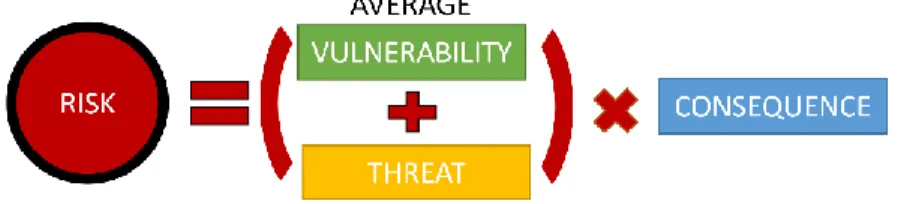
After determining the objectives and scope of the risk assessment, the first step is to identify risks based on the concepts of threats, vulnerabilities, and consequences. To have a solid foundation before entering the next stage, the identification process must be conducted by compiling a list of the real threats and the most important potential threats, and existing vulnerabilities based on reports related to certain sectors or mechanisms that are prone to being used in support of TF. In this first stage, the process of mapping the types of real or potential risks (perceptions) both in terms of prevention and eradication is conducted for reporting parties, regulators, and Law Enforcement Agencies. The following is an overview of the risk assessment formulation used in the TF:
Indonesia Risk Assessment on Terrorism Financing and Financing of Proliferation of Weapons of Mass Destruction Year 2021
8
2. Analysis
The analysis process is the core of the ML/TF risk assessment activities. This section aims to analyze the identified risks to understand the causes, sources, possibilities, and consequences related to TF. This stage contains the weighting process for each identified risk. This NRA quantifies each variable by transforming the scale of threats, vulnerabilities, and consequences into a scale of 3-9. In this scale, the data with the smallest value automatically becomes a scale of three, while the data with the largest value automatically becomes a scale of nine. Data with a value between both becomes a scale between three up to nine depending on the size of the data value. This quantitative transformation is conducted using the following simple method:
Figure 2 Quantitative Transformation Source: NRA Indonesia 2015 Figure 1 Risk Level Formulation Source: Indonesian Risk Assesment to TF 2015
Indonesia Risk Assessment on Terrorism Financing and Financing of
Proliferation of Weapons of Mass Destruction Year 2021 9 For each Point of Concern (PoC), each risk-forming factor from the identification process is summed and then averaged. The smallest scale is three and the largest scale is nine, both for the threat, vulnerability, and consequence variables. In accordance with the risk assessment formula, after obtaining the value of the quantity of threats and vulnerabilities, the two are then added together to obtain the likelihood value (IMF, 2011). The trend value of each PoC is then averaged and converted again into a scale of 3-9.
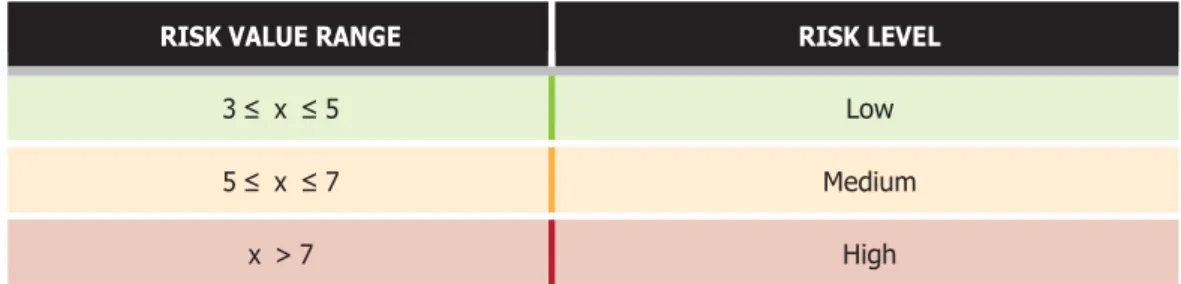
In accordance with the risk formula, after obtaining the trend value, it is then multiplied by the consequence scale to obtain the risk value. Since the trend and consequence scales are each worth 3-9, the smallest risk value is 9 (3x3) and the largest is 81 (9x9). To get a consistent scale of 3-9, the risk value obtained is then converted by calculating the square root of each risk value. The risk value of each PoC is then divided into three levels, as follows:
Table 1 Formulation of Risk Level Source: NRA Indonesia 2015
RISK VALUE RANGE RISK LEVEL
3 ≤ x ≤ 5 Low
5 ≤ x ≤ 7 Medium
x > 7 High
The following is an alternative explanation regarding the level of threats, vulnerabilities, and consequences above:
1. High: there are significant numbers and values involved in suspicious transactions and factually and potentially identified cases
2. Medium: there are moderate amounts and values in suspicious transactions and factually and potential identified cases
3. Low: there is a limited number and value in factual and potential identified suspicious transactions and cases
Indonesia Risk Assessment on Terrorism Financing and Financing of Proliferation of Weapons of Mass Destruction Year 2021
10
3. Evaluation
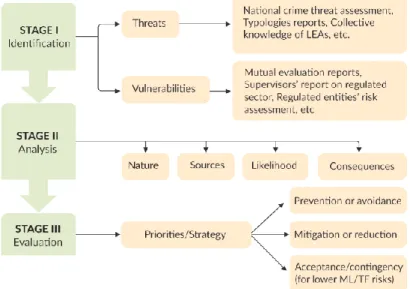
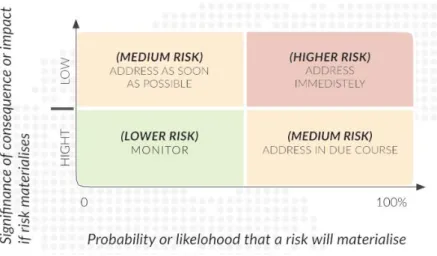
This last process is taking the results of the findings during the analysis process to be able to determine the priorities that need to be done to deal with risks, considering the objectives set at the beginning of the assessment process. These priorities can further contribute to developing strategies for mitigation measures.
This stage contains an assessment process for each weight generated at the analysis stage, whether the existing risks are high, medium, or low, as well as determining attitudes towards the risks found, as described in the following matrix:
Figure 3 Example of a Risk Evaluation Matrix
Source: FATF Guidance -National Money Laundering and Terrorist Financing Risk Assessment 2013
Figure 4 Overview of the ML/TF Risk Assessment Process
Source: FATF Guidance - National Money Laundering and Terrorist Financing Risk Assessment 2013
Indonesia Risk Assessment on Terrorism Financing and Financing of
Proliferation of Weapons of Mass Destruction Year 2021 11 2.3 Risk Forming Factors
Based on the 2013 National Money Laundering and Terrorist Financing Risk Assessment FATF Guidance, to conduct a ML/TF risk assessment at the national level, an approach based on the following concepts is used:
1. Risk: consists of three factors, namely threats, vulnerabilities, and consequences.
Risk assessment is a product or process that is based on a methodology, approved by the stakeholders involved in its preparation, and aims to identify, analyze, and understand the risks of ML/TF so that it can be useful as a first step to overcome them.
2. Threats: interpreted as individuals or groups or groups of people, objects, or activities that have the potential to cause harm, for example the state, society, economy, and others. In the context of TF, threats can be posed by perpetrators, terrorist groups and their facilitators, funding, and TF activities both now and in the future.
3. Vulnerabilities: interpreted as anything that can be exploited by existing threats or that can support and facilitate activities that lead to ML. In the context of TF, vulnerability focuses on factors that indicate weakness of the AML-CFT system or certain controls in a country.
4. Consequence: means the consequence or danger arising from TF, and includes the consequences of initial criminal acts and terrorist activities on financial system and institutions, economy, and society in general.
To determine the key risks, a series of assessments are conducted by conducting a process of identification, analysis, and evaluation by considering several aspects, namely: threats, vulnerabilities, and consequences. Furthermore, discussion of the key risks of TF will be conducted based on the division of two clusters, namely domestic and international. In the domestic cluster, the following PoCs will be discussed: (1) Terrorism Financing Typology, (2) Terrorism Financing Areas, (3) Terrorism Financing Perpetrator Profile, and (4) Reporting Party Products. Meanwhile in the international cluster, inward and outward TF risks will be discussed. In addition, the main risk analysis section of TF also discusses emerging threats which are interpreted as new threats that are considered to have the potential to occur in the
Indonesia Risk Assessment on Terrorism Financing and Financing of Proliferation of Weapons of Mass Destruction Year 2021
12
future, or threats that have been recognized but whose consequence has not been seen widely.
After assessment process is conducted which includes the calculation and weighting process, the final result will be in the form of risk, which in this NRA TF the determination of the weight for the risk level is:
Table 2 List of Risk Assessment Levels
RISK LEVEL WEIGHT
VALUE RISK LEVEL MEANING
Low Risk Rating 3 – 5 Existing risks are acceptable but need to be reviewed periodically
Medium Risk Rating >5 – 7 The existing risk is moderate, but efforts need to be made to manage it (because if not, the risk has the potential to lead to a higher one)
High Risk Rating >7 – 9
Existing risks need to be treated as soon as possible
As for PFWMD, the process of identification, analysis and evaluation will consider aspects of threats and vulnerabilities as well as risk mitigation that has been conducted. Because until now there have been no real cases of PFWMD in Indonesia, it is not possible to measure the real consequence of PFWMD.
2.4 Data Collection Techniques
The preparation of TF NRA went through several stages of collecting data and information collected from stakeholders related to TF, even though it was conducted during COVID-19 pandemic, where almost the entire data collection process was carried out online. Meanwhile, in carrying out the NRA TF and PFWMD risk assessment process, the stakeholders involved by INTRAC NRA Team are actively involved, including Law Enforcement Agencies, Supervisory and Regulatory Bodies, and Reporting Parties. Thus, in general, the stages of the process to be able to conduct a risk assessment of TF and PFWMD are as follows:
Indonesia Risk Assessment on Terrorism Financing and Financing of
Proliferation of Weapons of Mass Destruction Year 2021 13 1. Data Collection Stage
In this process, the INTRAC Team sent documents to fill out a money laundering and terrorism financing questionnaire to PP, SRB, and LPH to assess the extent to which the identification, detection, and prevention processes have been carried out, mainly based on the DTTOT which has been the reference for identifying terrorism financing.
This survey instrument adopts the instrument that has been developed by FATF.
To make it easier for respondents to understand, the survey instrument has been translated and adapted to the context in Indonesia. Furthermore, the survey population is stakeholders from TF, such as PP, SRB, LPH, Association Institutions, and other stakeholders who are considered to have an adequate understanding of the current development of threats, vulnerabilities and consequences of TF in Indonesia.
So that the respondents were determined purposively non-probabilistically based on their suitability with the criteria and their adequate understanding of TF in Indonesia.
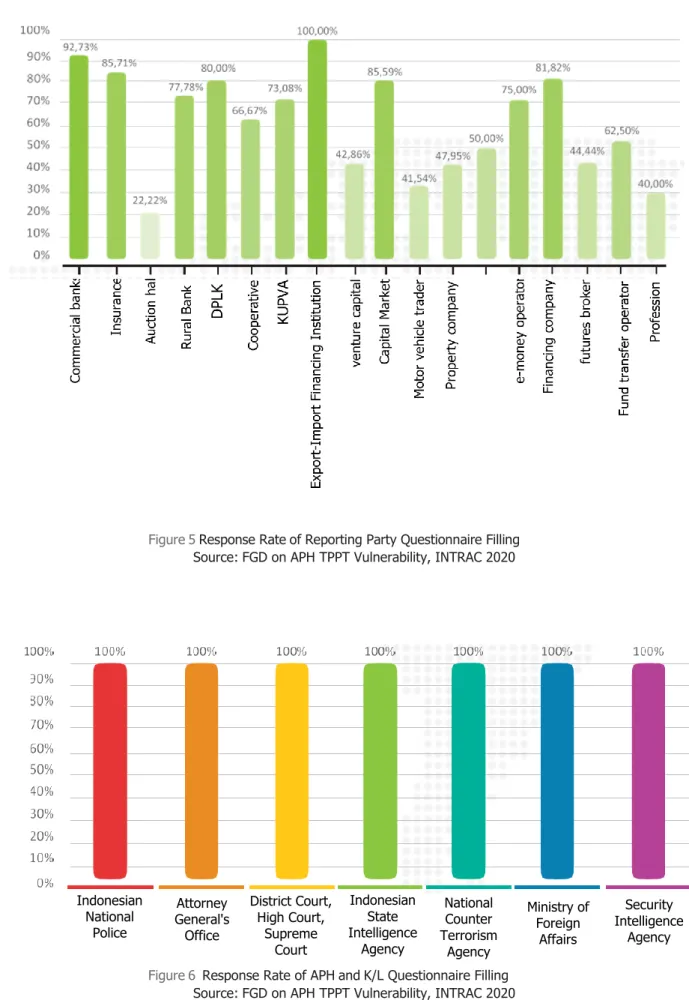
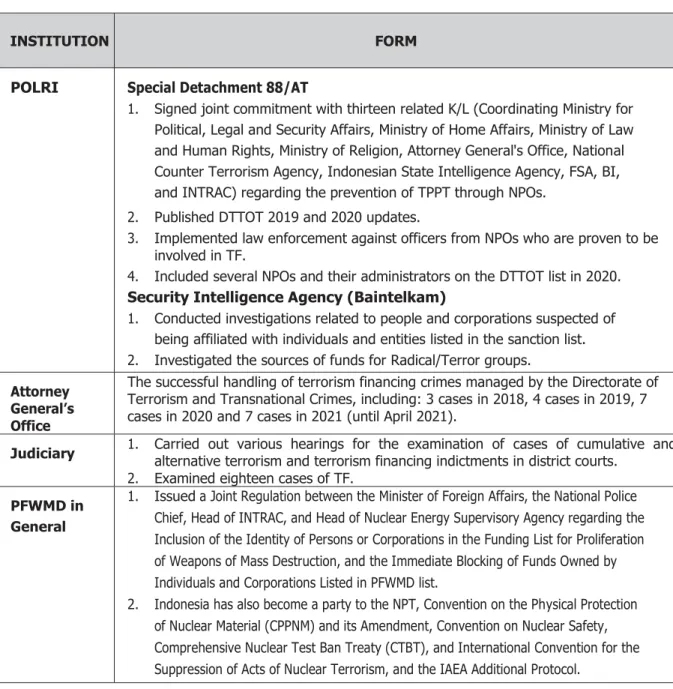
The survey conducted involved approximately 600 respondents for the purpose of analyzing the risks of money laundering and money laundering offenses. This data collection process was conducted from August to November 2020. There are three main types of questionnaires directed to the four main stakeholders in the AML-CFT regime in Indonesia. The three main questionnaires were for PP, SRA, and LPH. In general, of the total ML, TF and PFWMD respondents, the response rate reached around 87 percent. Meanwhile, for TF and PFWMD respondents it reached 100%. The response rate of the various respondents based on the category of sector and institution of origin can be seen in the following graph.
Indonesia Risk Assessment on Terrorism Financing and Financing of Proliferation of Weapons of Mass Destruction Year 2021
14
Figure 5 Response Rate of Reporting Party Questionnaire Filling Source: FGD on APH TPPT Vulnerability, INTRAC 2020
Figure 6 Response Rate of APH and K/L Questionnaire Filling Source: FGD on APH TPPT Vulnerability, INTRAC 2020 Indonesian
National Police
Attorney General's Office
District Court, High Court,
Supreme Court
Indonesian State Intelligence
Agency
National Counter Terrorism
Agency
Ministry of Foreign
Affairs
Security Intelligence
Agency
Indonesia Risk Assessment on Terrorism Financing and Financing of
Proliferation of Weapons of Mass Destruction Year 2021 15
Figure 7 Response Rate of Supervisory and Regulatory Bodies Questionnaire Filling Source: FGD on APH TPPT Vulnerability, INTRAC 2020
2. Discussion Stage
The process of discussion and discussion between INTRAC separately with each Reporting Party, Supervisory and Regulatory Bodies, and APH related to the implementation of NRA TPPT/PPSPM and explanations regarding technical matters and substance related to filling out the assessment document. In this process also presented the results of data collection questionnaires that have been filled out by stakeholders for later confirmation and confirmation of the data.
In the data collection technique, the preparation of the NRA combines quantitative and qualitative approaches. In terms of the quantitative approach, there are two sources of data that become the reference.
1. Statistical data: Reporting Statistics, Information Exchange, Case Handling, Court Decisions, Asset Recovery
2. Questionnaire: Statistics and Perceptions of APH, SRA, Reporting Parties, Foreign FIUs.
3. Focus Group Discussion (FGD) stage
The discussion process was held to obtain in-depth information through in- depth interviews from stakeholders involved in handling TF. To assist in filling out the questionnaire, the NRA drafting team carried out A series of FGDs were held sequentially starting from: Threat Analysis FGD, Vulnerability Analysis FGD,
BI FSA INTRAC Ministry of
Cooperatives and Small and
Medium Enterprises
DJKN PPPK CoFTRA Directorate General of Customs and
Excise
Indonesia Risk Assessment on Terrorism Financing and Financing of Proliferation of Weapons of Mass Destruction Year 2021
16
Consequence and Risk Analysis FGD, and Mitigation and Priority Action FGD involving SRB and APH.
Meanwhile, qualitative data comes from:
1. Focus group discussion: Analysis of Threats, Vulnerabilities, Consequences, Risks, Risk Mitigation and Priority Actions
2. PESTEL analysis : Political, Economic, Social, Technology, Environmental, Legislative (Political, Economic, Social, Technological, Environmental, and Legislation including legal aspects).
Indonesia Risk Assessment on Terrorism Financing and Financing of
Proliferation of Weapons of Mass Destruction Year 2021 17
OF THE PREVENTION AND
ERADICATION OF TERRORISM FINANCING AND FINANCING OF PROLIFERATION OF WEAPONS OF MASS DESTRUCTION IN INDONESIA
The Government of Indonesia continues to show progress and progressive steps in its commitment to prevent TF and PFWMD, as well as its success in efforts to control TF and PFWMD risks.
Indonesia's success in mitigating the risks of TF and PFWMD cannot be separated from the effective cooperation between Domestic and International Institutions.
CHAPTER III
LEGAL FRAMEWORK
Indonesia Risk Assessment on Terrorism Financing and Financing of Proliferation of Weapons of Mass Destruction Year 2021
18
CHAPTER I I I
LEGAL FRAMEWORK FOR PREVENTION AND ERADICATION OF TERRORISM FINANCING AND FINANCING OF PROLIFERATION OF WEAPONS OF MASS DESTRUCTION (PFWMD) IN INDONESIA
3.1 Legal Framework for the Prevention and Eradication of Terrorism Financing and PFWMD
In accordance with the commitment of the Government and all Indonesian people to play an active role and participate in every effort to prevent and eradicate all forms of criminal acts, especially TF at the national, regional and transnational levels, Indonesia has ratified various international conventions and agreements related to TF such as the ratification of the Convention International for Combating Terrorism Financing (1999) through Law no. 6 year 2006 and the ratification of UN Security Council Resolution 1373 (2001) which asks each country to take steps to prevent and eradicate acts of terrorism financing through Law Number 9 of 2013 on the Prevention and Eradication of Terrorism Financing Crimes; and Law Number 16 of 2017 on Community Organizations and Presidential Regulation Number 18 of 2017 on Procedures for Accepting and Giving Donations by Community Organizations in the Prevention of Terrorism Financing Crimes. Indonesia also supports prevention efforts, including by implementing UN Security Council Resolutions 1267 (1999), 1988 (2011) and 2253 (2015) which are in line with Indonesian national laws related to countering terrorism financing. On this basis, Indonesia already has a DTTOT based on the Al-Qaeda Sanctions List and the Taliban List for the asset freezing process.
Indonesia Risk Assessment on Terrorism Financing and Financing of
Proliferation of Weapons of Mass Destruction Year 2021 19 Meanwhile, regarding PFWMD, Indonesia is committed not to develop or possess nuclear weapons and mass destruction, by becoming a state party to international instruments concerning the control and elimination of nuclear weapons and mass destruction, namely Partial Nuclear-Test-Ban Treaty (PTBT), Treaty on the Non-Proliferation of Nuclear Weapons (NPT), International Atomic Energy Agency (IAEA), Convention on the Prohibition of the Development, Production and Stockpiling of Bacteriological (Biological) and Toxin Weapons and on Their Destruction (BWC), Convention on the Prohibition of the Development, Production, Stockpiling and Use of Chemical Weapons and on Their Destruction (CWC), and at the regional level has been one of the pioneers of the Southeast Asia Nuclear-Weapon-Free Zone (SEANWFZ) Treaty. Currently, Indonesia is also in the process of ratifying the Treaty on the Prohibition of nuclear weapons (TPNW). In addition, there is also a Joint Regulation Number 5 of 2017 on the Inclusion of the Identity of Persons and Corporations in the Funding List for Proliferation of Weapons of Mass Destruction and the Immediate Blocking of Funds Owned by Persons or Corporations Listed in the List of Financing of Proliferation of Weapons of Mass Destruction which is a joint regulation between Nuclear Energy Regulatory Agency, MOFA, Indonesian National Police, and INTRAC which regulate the inclusion, blocking, deletion of the identities of individuals and corporations related to the list of Financing of Proliferation of Weapons of Mass Destruction, as well as the provisions of Article 93 of the ML Law which is one of the main regulations for preventing PFWMD.
TF and PFWMD are cross-border crimes that require effective cooperation at the bilateral, regional, and international levels. In the context of law enforcement against these transnational crimes, Indonesia since 2006 has had Law Number 1 of 2006 on Mutual Legal Assistance in Criminal Matter which regulates in detail the request for mutual assistance in criminal matters from the Government of the Republic of Indonesia to the requested party and from the requesting Party to the Government of the Republic of Indonesia. TF is regulated in Law Number nine of 2013 on the Prevention and Eradication of Terrorism Financing Crimes.
Indonesia Risk Assessment on Terrorism Financing and Financing of Proliferation of Weapons of Mass Destruction Year 2021
20
3.2 Supervision and Regulation of CFT and PFWMD in Indonesia 3.2.1 CFT and PFWMD Monitoring and Regulatory Landscape
ML-TF regime in Indonesia is a series of arrangements and processes for the prevention and eradication of criminal acts of money laundering and terrorism financing (ML and TF) and PFWMD, involving all relevant stakeholders including the community.
In the Indonesian CFT and PFWMD regimes, there are several SRBs, namely:
1. Financial Services Authority (FSA) acts as the SRB for the banking sector, capital market, and non-bank financial industry (IKNB);
2. Bank Indonesia (BI) acts as SRB of Non-Bank Funds Transfer Operators, Non-Bank Funds Transfer Operators (PTD BB), Non-Bank Card Payment Instruments (APMK), and Non-Bank Electronic Money and Electronic Wallets (EU and DE). BI also plays the role of approving the carrying of Foreign Banknotes (UKA) with a value of at least Rp1,000,000,000.00 (one billion rupiah) into and out of the Indonesian customs area;
3. The Ministry of Cooperatives and Small and Medium Enterprises (Kemenkop UKM) as the Supervisory and Regulatory Bodies for the Savings and Loans Cooperatives;
4. Commodity Futures Trading Supervisory Agency (CoFTRA) as Supervisory and Regulatory Bodies for Physical Traders of Crypto Assets;
5. Ministry of Law and Human Rights (Kemenkumham) as Supervisory and Regulatory Bodies for Notary; Immigration Traffic; and the MLA Central Authority;
6. Ministry of Finance (Kemenkeu) as Supervisory and Regulatory Bodies for Accountants and Public Accountants and Auction Centers;
7. INTRAC as Supervisory and Regulatory Bodies for Goods and Services Providers, Financial Planners and Advocates;
8. Ministry of Home Affairs, Ministry of Foreign Affairs, Ministry of Law and Human Rights, Ministry of Social Affairs, and Ministry of Religion as Supervisors of Community Organizations/Ormas; and
9. Directorate General of Customs and Excise (DJBC) of the Ministry of Finance as Supervisor of Cross-Border Cash Carrying.
Indonesia Risk Assessment on Terrorism Financing and Financing of
Proliferation of Weapons of Mass Destruction Year 2021 21 In addition, there are several Ministries/Institutions (K/L) that play a role in countering terrorism financing and/or PPSPM and are also part of CFT and PFWMD stakeholders, namely:
1. National Counter-Terrorism Agency (BNPT).
2. State Intelligence Agency (BIN).
3. Ministry of Foreign Affairs (Kemenlu).
4. The Ministry of Communication and Information Technology (Kemenkominfo) as the supervisor of terrorism and radicalism content on the internet.
5. Nuclear Energy Supervisory Agency (BAPETEN).
6. Ministry of Home Affairs, Ministry of Foreign Affairs, Ministry of Law and Human Rights, Ministry of Social Affairs, and Ministry of Religion as Supervisors of Community Organizations/Ormas; and
7. Directorate General of Customs and Excise (DJBC) of the Ministry of Finance as the Supervisor of Cross-Border Cash Courier.
3.2.2 Regulations and Policies
The following are some of the regulations and policies that have been issued regarding CFT and PFWMD:
1. FSA Regulation Number 12/POJK.01/2017 on Implementation of the AML- CFT Program in the Financial Services Sector as amended by POJK Number 23/POJK.01/2019 and SEOJK Number 38/SEOJK.01/2017 on Guidelines for Participatory Blocking Immediately upon Customer Funds in the Financial Services Sector whose identities are listed in the List of Suspected Terrorists and Terrorist Organizations, as amended by SEOJK Number 29/
SEOJK.01/2019;
2. FSA Circular Letter Number 32/SEOJK.03/2017 on Implementation of the AML-CFT Program in the Banking Sector;
3. FSA Circular Letter Number 47/SEOJK.04/2017 on Implementation of the AML-CFT Program in the Capital Markets Sector;
4. FSA Circular Letter Number 37/ SEOJK.05/2017 on Implementation of AML and CFT Programs in the Non-Bank Financial Industry Sector (IKNB);
5. FSA Circular Letter Number 38/SEOJK.01/2017 on Guidelines for the Immediate Blocking of Customer Funds in the Financial Services Sector whose identities are listed in the DTTOT;
Indonesia Risk Assessment on Terrorism Financing and Financing of Proliferation of Weapons of Mass Destruction Year 2021
22
6. Financial Services Authority Circular Letter Number 29/SEOJK.01/2019 on Amendments to Financial Services Authority Circular Letter Number 31/
SEOJK.01/2019 on Guidelines for the Immediate Blocking of Customer Funds in the Financial Services Sector;
7. Bank Indonesia Regulation Number 18/9/PBI/2016 on Regulation and Supervision of Payment System and Rupiah Money Management;
8. Bank Indonesia Regulation Number 19/10/PBI/2017 on Application of Anti- Money Laundering and Prevention of Terrorism Financing for Non-Bank Payment System Service Providers and Non-Bank Fund Transfer Operators;
9. Guidelines for Implementing Immediate Blocking of Funds Owned by Individuals or Corporations whose identities are listed in the List of Suspected Terrorists and Terrorist Organizations for Payment System Service Providers Other Than Banks and Non-Bank KUPVA Operators Under the Supervision and Regulation of Bank Indonesia;
10. Guidelines for Implementing Immediate Blocking of Funds Owned by Individuals or Corporations whose identities are listed in the Funding List for Proliferation of Weapons of Mass Destruction for Payment System Service Providers Other Than Banks and Non-Bank KUPVA Operators Under the Supervision and Regulation of Bank Indonesia;
11. Guidelines for the Principles of Knowing Service Users or Customer Due Diligence (CDD) for Non-Bank Payment System Service Providers and Non- Bank KUPVA Operators under the supervision and regulation of Bank Indonesia;
12. Guidelines for the Implementation of Risk-Based AML-CFT for Non-Bank Money Transfer Business Activities (PTD BB) and Non-Bank Fund Transfer Operators;
13. Guidelines for the Implementation of Risk-Based AML-CFT for Electronic Money Operators, Electronic Wallets, and Card-Based Payment Instruments;
14. FSA Regulation Number 23/POJK.01/2019 on Amendments to Financial Services Authority Regulation Number 12/POJK.01/2017 on Implementation of Anti-Money Laundering and Prevention of Terrorism Financing Programs in the Financial Services Sector and SEOJK Number 29/SEOJK.01/ 2019 on Amendments to SEOJK Number 31/SEOJK.01/2019 on Guidelines for the Immediate Blocking of Customer Funds in the Financial Services Sector
Indonesia Risk Assessment on Terrorism Financing and Financing of
Proliferation of Weapons of Mass Destruction Year 2021 23 whose identities are listed in the List of Suspected Terrorists and Terrorist Organizations;
15. FSA Regulation Number 12/POJK.03/2019 on Commercial Bank Reporting Through Financial Services Authority Reporting System;
16. Regulation of the National Counter-Terrorism Agency Number 1 of 2020 on the Strategic Plan of the National Counter-Terrorism Agency for 2020-2024;
17. INTRAC Regulation Number 07 of 2019 on Procedures for Handling Reports and/or Information from the Community;
18. Financial Services Authority Circular Letter Number 31/SEOJK.01/2019 on Guidelines for the Immediate Blocking of Customer Funds in the Financial Services Sector whose identities are listed in the Funding List for Proliferation of Weapons of Mass Destruction;
19. Circular Letter of the Head of INTRAC Number 02 of 2019 on Guidelines for the Implementation of the Principles of Recognizing Service Users and Submission of Suspicious Financial Transaction Reports for the Profession;
20. Circular Letter of the Head of INTRAC Number 5 of 2016 on Guidelines for Implementing the Immediate Blocking of Funds Owned by Persons or Corporations whose identities are listed in the DTTOT;
21. Regulation of the Head of CoFTRA Number 4 of 2017 on Guidelines for Implementing Immediate Blocking by Futures Brokers on Funds Owned and Controlled by Persons or Corporations whose identities are listed in the List of Suspected Terrorists and Terrorist Organizations;
22. Regulation of the Head of CoFTRA Number 10 year 2017 concerning Guidelines for Implementing Immediate Blocking by Futures Brokers on Funds Owned and Controlled by Individuals or Corporations whose identities are listed in the Funding List for Proliferation of Weapons of Mass Destruction;
23. Joint Regulation of the Minister of Foreign Affairs of the Republic of Indonesia, Chief of Indonesian National Police, Head of Center for Financial Transaction Reports and Analysis, and Head of Nuclear Energy Supervisory Agency Number 4 of 2017, Number 5 of 2017, Number 9 of 2017, and Number 5 of 2017 on the Inclusion of the Identity of Persons or Corporations in the List of Financing of Proliferation of Weapons of Mass Destruction, and the Immediate Blocking of Funds belonging to Persons or Corporations Listed in the Funding List for Proliferation of Weapons of Mass Destruction;
Indonesia Risk Assessment on Terrorism Financing and Financing of Proliferation of Weapons of Mass Destruction Year 2021
24
24. Regulation of the Head of INTRAC Number 2 of 2017 on Guidelines for Implementing the Immediate Blocking of Funds belonging to Individuals or Corporations whose identities are listed in the List of Financing of Proliferation of Weapons of Mass Destruction.
3.2.3 Achievements and Successes
In general, policies related to TF and PFWMD mitigation efforts conducted by K/L and SRB in the 2019-2020 period are as follows:
Table 3 Policies related to Risk Mitigation Efforts of Ministries/Agencies
MINISTRY /
INSTUTION FORM
OJK 1. Issued POJK Number 23/POJK.01/2019 concerning Amendments to FSA Regulation Number 12/POJK.01/2017 concerning Implementation of AML-CFT Program in Financial Sector.
2. Actively conducted various socialization of compliance monitoring of the implementation of AML-CFT in the PJK Sector.
3. Currently preparing technical instructions on the application of the ML-TF program in fintech p2p lending, one of which is by conducting due diligence using biometrics. Fintech p2p lending is then asked to identify risks both sectorally and nationally.
BI 1. Coordinated intensively with domestic authorities as well as the authorities or central banks of other countries related to AML-CFT.
2. Has issued a Bank Indonesia Regulation (PBI) concerning Implementation of AML- CFT for payment system service providers other than Banks and Non-Bank KUPVA in accordance with FATF 40 Recommendations.
3. Has implemented risk-based supervision (Risk Based Approach). Furthermore, it has issued guidelines for the implementation of risk-based AML-CFT for the organizers as well as guidelines for the supervision of risk-based AML-CFT for Bank Indonesia.
4. Has issued Internal Governor's board member regulations (PADG) related to ML-TF supervision for operators under the supervision and regulation of Bank Indonesia.
5. Carried out regular capacity building for Bank Indonesia supervisors throughout Indonesia and PJSPs other than Banks and non-bank KUPVA through coordination meetings, workshops and coaching clinics. In addition, regularly standardize SP-PUR (Payment System and Rupiah Money Management) competencies through training/certification for operators under the regulation and supervision of Bank Indonesia.
6. Controlling unlicensed KUPVA BB and illegal PTD BB in coordination with Indonesian National Police.
Indonesia Risk Assessment on Terrorism Financing and Financing of
Proliferation of Weapons of Mass Destruction Year 2021 25
MINISTRY /
INSTUTION FORM
Ministry of Law and Human Rights
1. Issued the Regulation of Minister of Law and Human Rights (Permenkumham) Number 15 of 2019 on Procedures for Implementing the Implementation of the Principle of Recognizing the Beneficial Owner of a Corporation.
2. Issued the Regulation of Minister of Law and Human Rights (Permenkumham) Number 21 of 2019 on Procedures for Supervision of the Application of the Principle of Recognizing the Beneficial Owner of a Corporation.
3. Conducted regular supervision of business sectors registered with Ministry of Law and Human Rights.
4. Tightened supervision of entry and exit of foreigners and Indonesian citizens through border areas by providing immigration services at all National Border Posts (PLBN) and building seven new PLBNs bordering Malaysia, Papua New Guinea, and Timor Leste.
5. Conducted monitoring terrorism convicts and their funding by placing them in special prisons (maximum security).
Ministry of Cooperatives and SMEs
Issued the Regulation of Minister of Cooperatives and SMEs Number 2 of 2019 on Online Single Submission for Micro and Small Enterprises.
Ministry of Foreign
Affairs 1. Improved the quality of protection for Indonesian citizens abroad, including in the context of preventing and overcoming criminal acts of terrorism.
2. Government (in this case represented by Ministry of Foreign Affairs) enhances and optimizes international cooperation in countering