
Permission of the publisher is required for all other derivative works, including compilations and translations. This chapter is one of the first studies to examine the internationalization of venture capital-backed firms.
INTERNATIONAL SOCIAL CAPITAL, TECHNOLOGY
IN INTERNATIONALIZING ENTREPRENEURIAL FIRMS
INTRODUCTION
In particular, we attempt to analyze the moderating influence of relationship-specific social capital on the exchange and acquisition of technological and foreign market knowledge in relationships between internationalizing new firms and their cooperation partners in foreign target markets. First, we review the received theories on the internationalization process of SMEs, focusing in particular on the roles assigned to knowledge and knowledge acquisition in these theories.
THEORETICAL FRAMEWORK
Social capital has been identified as an important influence on resource mobilization and organizational learning. The concepts and ideas in the social capital theory are most recognizable in the ''network model of internationalization'' (Johanson & Mattsson, 1988).
HYPOTHESES
Because of the path-dependent nature of technological learning, no two partners are likely to possess exactly the same technological knowledge base. The data was collected with a postal questionnaire survey addressed to the CEOs of the companies.
RESULTS
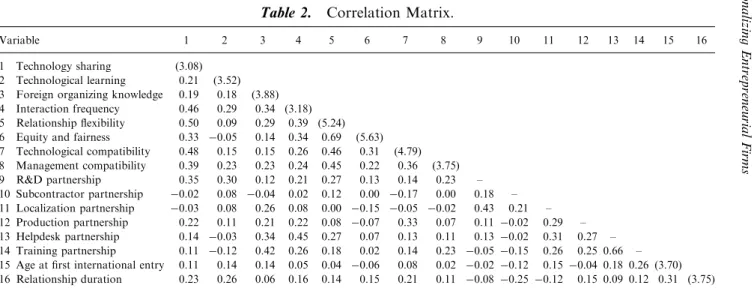
No differences were observed in the response patterns of the two groups, providing good evidence of test-retest and interrater reliability of the measures. As can be seen in Tables 3–5, there are statistically significant associations with each of the relationship outcome variables.
DISCUSSION
And what are the main causes of foreign liability in different industrial contexts. Our study was based on a cross-sectional survey and as such cannot provide us with long-term information on the dynamics of international cooperation.
NOTE
While our focus on Finnish software companies helped eliminate potential biases arising from internationalization choices, it created a potential culture and country specificity problem. Finally, we chose to focus on the most important international partnership, neglecting the learning benefits that come from multiple collaborations.
Effects of age at entry, knowledge intensity and imitability on international growth.Academy of Management Journal. Social capital and value creation: The role of intrafirm networks. Academy of Management Journal.
EXPLAINING EXPORT
PERFORMANCE: A COMPARATIVE STUDY OF INTERNATIONAL NEW
INDIAN SOFTWARE INDUSTRY
Small companies that were international at or near their inception were not considered in the regular research (Welch & Loustarinen, 1988). Several empirical studies, as shown in the table below, have analyzed the growth of international new ventures using the above-mentioned theoretical frameworks, but none provide a holistic explanation.
EXPORT PERFORMANCE LITERATURE
It is important to understand that due to the structural differences in the Indian and Finnish software industries, we expect that the impact of entrepreneurship and firm-level variables on export performance will differ. In a previous study by Kundu and Katz (2003), entrepreneurship variables were significant in explaining export performance.
THE FINNISH SOFTWARE INDUSTRY
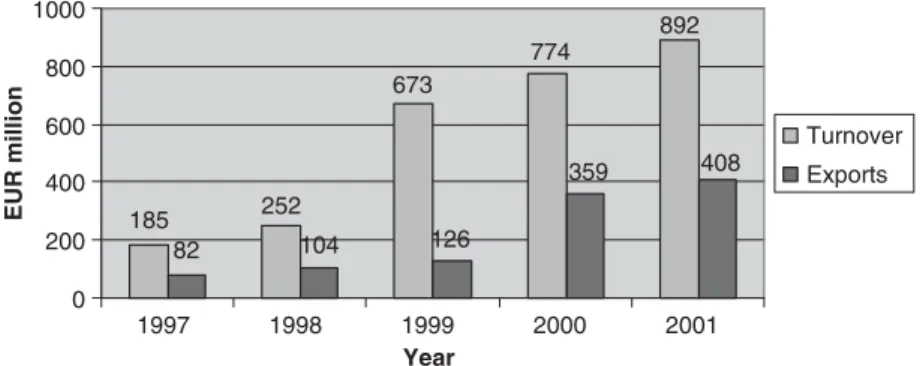
Most of these firms are small; in industry data from 2001, the average sales turnover of the Finnish software firms was around EUR 500,000, and 70% of the firms employed less than 20 people. In 2001, most of the companies that participated in a survey on Finnish software companies did not make a profit.
THE INDIAN SOFTWARE INDUSTRY
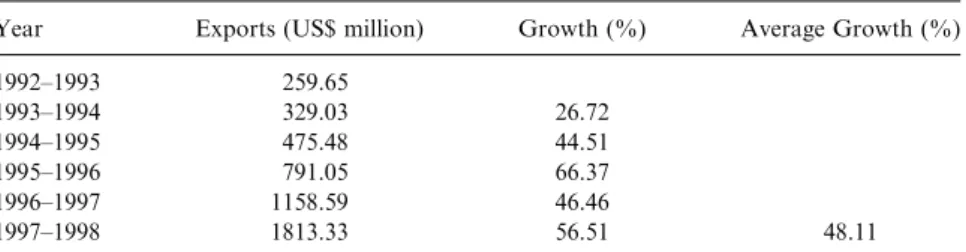
It is important to note that with the economic reforms that began in 1991, the Government of India formulated proactive policies to strongly promote the software sector. A recent paper by Contractor and Kundu (2004) identifies five factors as necessary and sufficient conditions for India's export success, namely, liberal economic policy, engineering and technical capabilities, infrastructure, and raising enterprise value.
THEORY BACKGROUND AND HYPOTHESES FOR EXPORT PERFORMANCE
The innovative power of the entrepreneur was measured with an innovation scale developed by Rogers and Schumaker (1971). The age of the company was calculated based on the year the company was founded.

RESULTS AND DISCUSSIONS
In the case of Finland, not surprisingly, none of the respondents identified it as a technological lag. The next hypothesis examines the impact of the firm's international experience on export growth and intensity.
CONCLUSIONS
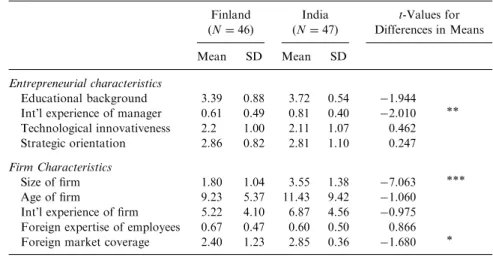
The strategic orientation variable (our shorthand for the ``glocalization'' . capabilities of the entrepreneur) is strongest for Finland in both tables 7 and 5. Most of the firms in the software business are very young and especially in the case of Finland, very small.
POLICY IMPLICATIONS
Therefore, one objective of this study is to see which factors – those related to the entrepreneur, or those related to the structure of the firm – provide stronger explanations of performance. Overall, entrepreneur characteristics such as educational background, technological innovativeness, and strategic orientation of the entrepreneur are somewhat more important in explaining successful export performance.
FUTURE RESEARCH
The one abundant resource in Finland and India is technical human capital and the impressive growth rate in the software sector (where financial capital is not a major constraint) highlights the returns of these countries' large tertiary education institutions. The findings of this chapter also reiterate the fact that traditional explanations of manufacturing industry performance do not always apply to the emerging service sector, or at least that traditional theory variables provide a less than complete explanation.
NOTES
On the relationship between firm size and export intensity.Journal of International Business Studies The future of the multinational enterprise. Predictors of export strategy and performance of small and medium-sized firms.Journal of Business Research.
INSTITUTIONAL AND ECONOMIC INFLUENCES ON INTERNET
ADOPTION AND ACCELERATED FIRM INTERNATIONALIZATION
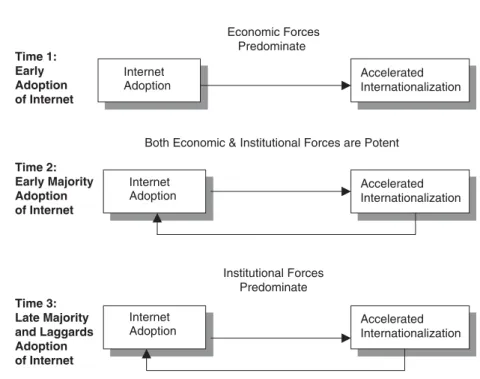
A two-force perspective – economic and institutional – serves to explain the adoption of the Internet by organizations in the process of accelerated internationalization. A model follows that focuses on the relationship between Internet adoption and accelerated internationalization.
THE LIABILITY OF FOREIGNNESS AND ACCELERATED INTERNATIONALIZATION
In the following sections of the chapter, the literature on international entrepreneurship, electronic commerce, technology adoption cycles and institutional theory is reviewed. We then present a detailed analysis of the book retailing industry in the United States, showing different stages of the Internet adoption process and accelerated internationalization in the third section.
THE INTERNET AND E-BUSINESS
VALUE CREATION AND EFFICIENCY
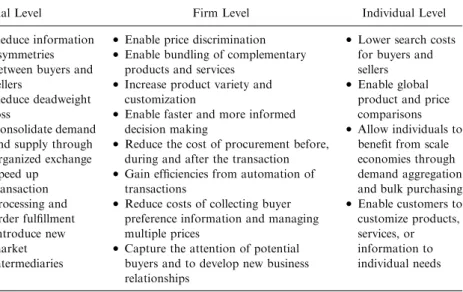
The contribution of the Internet has been discussed at three levels (societal level, corporate level and individual level). For society, the Internet offers a new intermediary that connects suppliers and customers (Lucking-Reiley & Spulber, 2001).
ISOMORPHISM, DIFFUSION OF INNOVATION, AND THE INTERNET
Compared to large established firms, small firms, especially those with a stronger entrepreneurial orientation, are more likely to actively explore innovative ideas. The findings are consistent with institutional theory, which states that such firms are more peripheral and therefore less embedded in their institutional environments, making them more likely to develop new practices (Leblebici, Salancik, Gopay, & King, 1991; Greenwood & Hinings ). , 1996).
INTEGRATING INSTITUTIONAL AND ECONOMIC PERSPECTIVES
As a result, it is likely that only a small number of firms with prestige and power will adopt innovations early, after which the new practices are legitimized and perhaps necessary for later adopters. While some companies are more innovative and more likely to accept new ideas, other companies are more reluctant and suspicious of innovations.
A MODEL OF INTERNET ADOPTION AND ACCELERATED INTERNATIONALIZATION
The early adopters of the Internet for business purposes were more likely to engage in accelerated internationalization than the late adopters. As time went by, users of the Internet for business purposes became more and more established businesses.
INTERNET ADOPTION AND ACCELERATED INTERNATIONALIZATION IN THE
Not only can the use of the Internet accelerate the internationalization process of organizations, but the internationalization process can accelerate the adoption of Internet technology in organizations. Thus, there may be a reciprocal relationship between Internet adoption and firm internationalization.
BOOK-RETAILING INDUSTRY
The advent of the Internet in the early 1990s gave booksellers a new channel to access more customers. The adoption of the Internet by booksellers greatly contributed to the internationalization process of the companies in the United States.
CONCLUSION
A limitation of the chapter is that only the bookstore industry was examined for the study. The Dynamics of Foreign Liability: A Global Study of Survival in Financial Services.Strategic Management Journal.
NEW VENTURE GROWTH IN INTERNATIONAL MARKETS
THE ROLE OF STRATEGIC ADAPTATION AND
NETWORKING CAPABILITIES
To identify the skills important to new venture growth in international markets, we began with a literature review on skills and new venture growth. The second section consists of the application of these skills in the growth of new ventures in the international context, in which some proposals are offered.
CAPABILITIES AND NEW VENTURE GROWTH
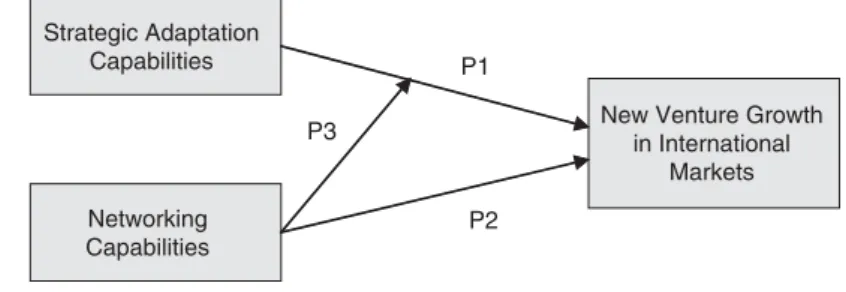
It is through these benefits that the development of a networking capability can significantly contribute to new venture growth. An additional way in which networks contribute to new venture growth is by improving a new venture's strategic adaptability.
THE INTERNATIONAL CONTEXT
Specifically, we consider the direct effects of strategic adaptation and network capabilities on new venture growth in international markets. In this chapter, we examined how strategic adaptation and network capabilities lead to new venture growth in international markets.
NETWORK ANALYSIS IN AN INTERNATIONAL
ENTREPRENEURIAL ENVIRONMENT
Network analysis has been used effectively in studies of cooperative alliances, new ventures, and IPOs and venture financing, three areas of interest to IP research. We will further explain specific opportunities where network analysis can advance the IE research stream.
DEFINITION OF NETWORK ANALYSIS
Next, we outline specific areas where network analysis can inform IP research, specifically the study of cooperative alliances, new ventures, and IPOs and venture financing. We believe that these, as well as other forms of network analysis methods can be used effectively in IE.
OVERVIEW OF NETWORK ANALYSIS
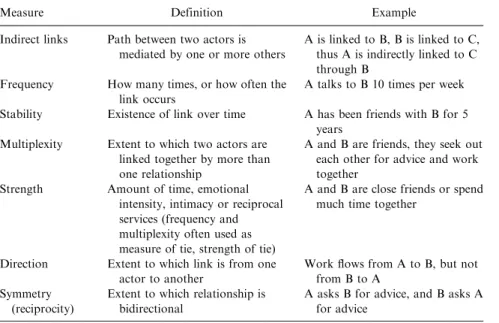
Density ratio between the number of actual connections and the number of possible connections in a network. Density is measured as the ratio of the number of ties in a network to the total possible number of ties (Wasserman & Faust, 1994).
RESEARCH OPPORTUNITIES
This study by Manev and Stevenson examined interactions between network analysis in an international business environment 151. The use of network analysis methods to investigate IE relationships is only limited by the researcher's imagination.
DATA COLLECTION
These binary responses are easier for respondents compared to requests to rank all members of the network (Marsden, 2005). Both programs can be used to calculate all the network measures we have discussed, as well as generate network sociograms.

LIMITATIONS
Venture capital financing, strategic alliances and IPOs of internet startups. Journal of Business Venturing. Strategic alliances and the speed of new product development: An empirical investigation of entrepreneurial biotechnology firms. Journal of Business Venturing.
A CROSS-NATIONAL COMPARISON OF INCUBATED ORGANIZATIONS
AN INSTITUTIONAL PERSPECTIVE $
As a result, institutional theory may lead us to expect that those new ventures that are most adaptable to institutional pressures will have the greatest chance of success. New ventures have become the main source of innovation and creation of new technologies (Acs & Audretsch, 1990).
PURPOSE
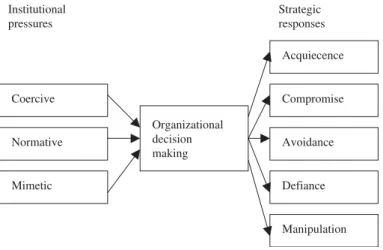
STRATEGIC RESPONSES TO INSTITUTIONAL PRESSURES
He argues that new organizations will respond to institutional pressures according to their readiness to respond and their ability to adapt to institutional rules and expectations. In this study, we examined one environment in which knowledge of institutional requirements is extensive and one environment in which the ability to adapt to institutional requirements is less extensive.
SAMPLE
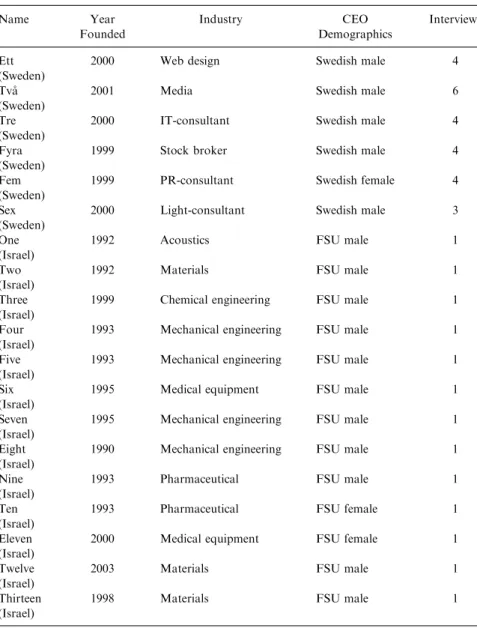
In a recent literature review in the field of incubator studies, Hackett and Dilts (2004) lament the lack of research on incubated organizations. By focusing on incubated organizations in two different countries we hope to address some of the shortcomings highlighted by Hackett and Dilts (2004).
CHARACTERISTICS OF THE TWO INCUBATOR ENVIRONMENTS
These quotes were drawn as closely as possible from translations of the actual interviews in the current study. We wrote a commentary in the newspaper about the incompetence of the incubator leadership and what they suggest we should do.
ANALYSIS
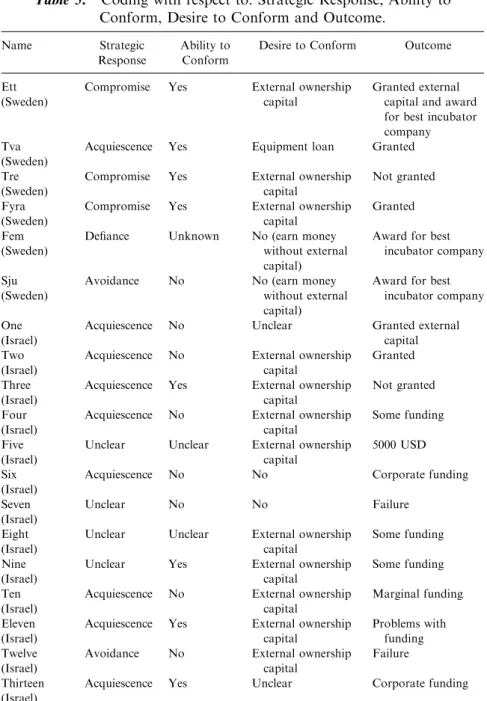
Thus, those incubated in the Israeli environment adapted to institutional pressures, but still failed to gain legitimacy from their conformity. In the case of the Israeli entrepreneurs, they intended to conform to the institutional pressures, but knowledge of the institutional requirements made their conformity incomplete.
TUNING UP THE GLOBAL VALUE CREATION ENGINE: THE ROAD TO
INTRODUCTION
And fortunately, the instructional models of the Deliberate Practice School sensibly place both the statics of traits and the dynamics of process into a comprehensive explanation for operational excellence that is rooted in the development (through Deliberate Practice) of most individuals. In the fourth part of the chapter, I present and discuss the international implications of the emerging "school of practice".
BACKGROUND
For too long, these notions seem to have constituted a tacit morality for our tolerance of the exclusion of the majority of the world's population from the possibility set of high-performance economic outcomes. Within section 4 the implications of the model for creating global entrepreneurs are developed: (1) in first-tier economies, (2) in transition and developing economies, (3) using a theoretically justifiable pedagogy, and (4) by explore some of the technological support that is useful to support and assist in the effective use of this approach.
EDUCATION AND HIGH-PERFORMANCE RESULTS
Finally, I conclude the section with a discussion of the model's application to education and thinking (Glaser, 1984), and to recommended pedagogy (Section 3.4). Furthermore, the model illustrates one of the most robust findings in the literature (Ericsson, RONALD K.