In the same year Lavy engraved the portrait of the First Consul on a medal commemorating Bonaparte's decisive victory at Marengo. After the return of the actor Emmanuel I, Lavy devoted his entire activity to the honor of the Savoy king.
![Fig. ID. — It.ai lA.N Rkithmc, pattern scudo of 5 lire, year 2 [1803] 23](https://thumb-ap.123doks.com/thumbv2/123dok/11127738.0/8.813.434.780.232.541/fig-id-rkithmc-pattern-scudo-lire-year-1803.webp)
FLORENCE
ITALI.AN COIN ENGRAVKRS SINCE 1800
Apparently the attractive 10 lire piece or den of the Regent and her son. Fig. 21) shows, on closer examination, only modest qualities. The mark,''* used in a new style, dominates the obverse field, while a slightly oval crown adds grace to the reverse of the coin.

14 BULLETIN 229: CONTRIBUTIONS FROM THE MUSEUM OF HISTORY AND TECHNOLOGY
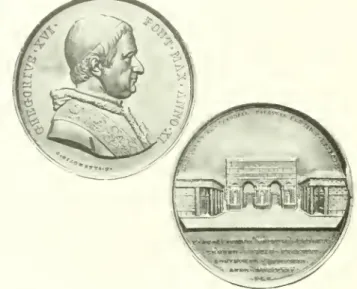
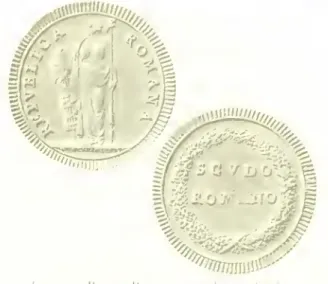
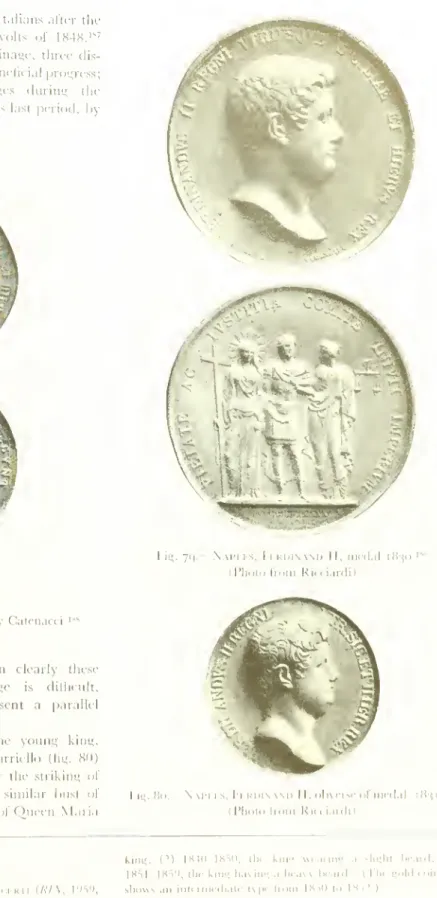
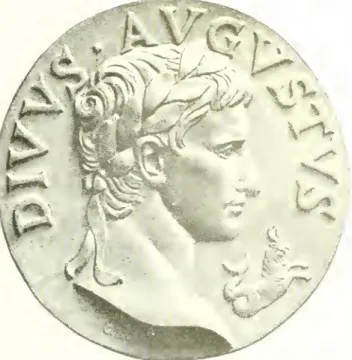
His talent as a gem cutter earned him a reputation as a master of the art, and his work was highly prized at the Austrian court. Fromtlie h.md Inspired by the same portrait of Marie Louise, he also carved a medal of the duchess to commemorate her arrival in Parma. III. of Bourbon, but the assassination of the duke in 1854 made it impossible to issue coins. His art studies as well as his training as a mechanical engineer enabled him to participate ])ectively in the reorganization of the Parma mint in 185.3. ) is practically an adaptation of a similar arrangement used in England since the days of Queen .Anne. During the pontificate of Pius VII, two brothers from the Hamerani dynasty of famous minters devoted their activity to. The artistic capacity of the two brothers was apparently limited to copying long-accepted coin types. Loc.cit.: alsoKeary,BritishMuseumGuide,p.87,item343. 34; Cf. J.Babelon,Medailleelmedailleurs, p.189: "Leurmfiritc artistiquen'cstpastransccndant.". The unusu.ilK elont;a(ed f.ic<- of J^Mitilf disturbs the arlistii b.dance of componi-. The figure of C:hurch llo.iting on etiicre.il clouds, a centuries-old syml) ol iif thr spiritu.il puwcr of the Roman. The sublimity and devotion expressed in his first reverse (fig. 47), where a slight asymmetrical shift of the figure to the upper edge and the soft glow of the halo convey a divine aloofness, finally descend into a senseless mannerism , clearly visible in its third version. The . brilliant effect of many of his refined portraits on .. his larger coins are mainly based on su)tle details that fade on smaller coins because of the limited surface. Instead, a youthful, robust exuberance embodied in a noble but superficially treated relief replaces the transcendental, thoughtful fragility of the earlier portrait. The halo of rays gives an airy transparency to the background of the descending dove. One of the purest expressions of the intellectual in the middle of the 19th century he can see in the German engraver Carl Friedrich Voigt, who for many years worked on. Mthongh N'oigt's artistic personality was formed under the t;iiidance of most of the masters of his period, he did not follow any of them in particular. At the age of twenty he joined the Loos family medal institute and worked under the direction of Gottfried Bernhardt Loos. Apparently, only usability aspects were taken into account when choosing this plant. for the large l)Ut legible letters of the inscription crowd the field and destroy any pleasant balance of the composition. This re\crse tyjie, created by Nicole Cerbara, was also adapted to the decimal coin introduced by Pius IX with the reform of 1866. Despite \'oigt's conformity, Pius IX looks like. on the obverse differs greatly from portraits of this Pope by other artists. There is an expression of nobility presented with a simplicity that only a mastery of sculptural form can impart. The Pope's passivity is only the surface.. human kindness in a face of great dignity permeates the simple features. After 1870, no coins were issued by the Popes for almost sixty years, until 1930, when the coins were struck - an expression of recognized secular power. 3aid to his work.''''' .\lt;h using the same technique from the raised border adopted |)re\iousl\-. of Fencer, displavs this coin a siipeiior tre.itnient. 3 25) mention that only 150dm,it was p,iid to Michelc .\rnaudfor there\er.scmodel. the s.unedie, repl.Kinu withawTiallionlvllieinvlipiion uitliin the border. But never was the influence of .Antonio C^anova more evident than in the portraits of Murat of Rega and his contemporary Xicola Morghen, who created the beautiful 40-franc piece fig. 71). Some of the medals are engraved in low relief generally assumed to be 'for coins'.' 'Ordinary', tile. The latter pijrtrait gained much satisfaction at the trial, and several proofs of IS12 5-lire were sent. In 1822 he was commissioned by the king to teach at the newly founded Istituto di Belle .\rti. God, his aspirations an anachronism, his actions a fetish against freedom, Ferdinand I died tormented by the prospect of growing free national movement. The delicate, flowing plastic forms display a genuine human calm, which contrasts sharply with a contemporary portrait of the king by the French medalist Jean Jacques Barre (fig. 77). The plain, beardless head of the young king, copied by Catenacci (fig. 79) and Carriello (tig.. 80) from a model by Rega, was used for the striking ol. An astonishing fact is that the only medal bearing exactly the same portrait as the coins is one struck on an octagonal planchet in 1840 for the inauguration of the first Italian railway (fig. 83). Later he was appointed prima incisore dei rovesci (first engraver of reverses) and in this position he prepared most of the stamps for inscriptions or decorations.'" Much of his work is shrouded in anonymity, and we can distinguish much. In 1810, .Xchille Arnaud was commissioned to produce a 40-franc piece for Joachim Murat's new coinage, but his project was rejected by the mint director, G. Limited to engraving obverses, according to the tradition of the Neapolitan mint, d'Andrea worked on few reverses. Since the archives have not revealed any precise documentation, -" our designations are purely conjectural, obtained through personal interpretation of the stylistic characteristics of the various engravers. When studying the portrait of the king after 1833, the year of Rega's death, it is suspected that each artist was on . No one has done a systematic search of the fascicles of the last fifty years of Bourbon mints in Naples. There are no medals with a similar design that could help us identify the artist, but the psychological finesse and plasticity in expressing individual traits point strongly towards Carriello as the likely author. The artist's daring to portray his king as a good-natured but ill-mannered character, who looked more like a Dutch sailor than a high potentate, apparently did not meet with the court's approval. This design, the last portrait of the king, is clearly different from all previous ones. The stately but otherwise lifeless portrait of the king used on both medals earned him prestige. It was quite natural that with the throne of Franco II. in 1859.'\rnaud commissioned to engrave new royal money (fig. 96). The invading waves of the unification mo\-emcnt borne by Garibaldi's men soon reached these southern lands, and in 1861 the Kingdom of Naples and. It was only natural that with the accession of Francis II in 1859.'\rnaud should be commissioned to engrave the coin of the new king (fig. 96).. the long series of Neapolitan coins won wide approval at court for its "great likeness". . In his position as chief engraver he created .ill ol the uold, silver, and cojiper coins struck in the reigns of Humbert I. and also of Durini ; the first \'e.ns of the rule of \'ictor Emmanuel 111. The bust of Humbert I, in uniform and wearing an enormous crown, was evidently intended to give increased dignity and majesties to the king among his subjects in /\frica . The obverse of the Martinon, flanked by an unobtrusive, well-formed and well-spaced legend, emphasizes the vertical arrangement. Ml of the coins struck at the Roman mint for the Italian government and for foreign countries during the period from 1913 to 1935 are impeccable examples of his technical skill as well as his understanding of the artistic problems involved in adapting a design to a coin. . However, the boxes cut by Motti from models presented by Calandra, Romagnoli or Mistruzzi faithfully reproduced the individual characteristics of each artist. Fig. 126) created by Romagnoli were magnificently translated into steel machinery by Motti. Impatient in its expression, it reveals the artist's inability to reach beyond physiognomic resemblance. The large letters of the inscription crowd the field, depriving the coins of their aesthetic appeal. These coins are his own artistic products (fig. 109). The king's portrait, although immaculate in its plastic treatment, shows little spiritual life. Let yourself be gradually guided by the guidance of enlightened private initiatives and the inspiration of the personal. Tlic Mcmrt.iTVCiiiMiition1)1 I'lin dcocil ih.ii ihcWillican could imitate the use of the Rom.111 inim lor de sliikiiii; ol. These are strong coined images that considerably strengthen the decorative character of Italian coinage, but the flat design of the plastic relief reduces their artistic qualities. Tile frcqncni\ ol nndc allilciic ii'^uns on his coins -'-'' and cspfn iaIU on nicd.ils rcvcal.s '^ir.n iascinalion wliicli .nu i.in (hcrk uIm'''<^ r \ riicd on.Plioto of the author) . are mainly modern inter[)retations of the images of ancient Greek coins: the rider on part 1-lek resembles the boy rider on the coins from Tarentum, Hercules, who is fighting. A conspectus uf Romasnoli's art wouki he inconi- plcte without mentioning' a group of seven initial medals commemorating the years of the Fascist era.-'*'. Motivated by his exquisite sense of decoration, he created a charming group of religious figures. The figure of the Savior in the Olire gold piece of 1929 (fig. 127), impressive in its spiritualit>', the dia|)hanouse figure of the Madonnaon piece 1 lire,. St. Peter's Basilica (engraved on the reverse of the year VIII medal)^°' and a scene depicting the Pope in prayer for world peace on the year's medal. Although a greater number of subjects implicitly requires a greater variety in execution, this does not necessarily impair artistic qualities. Apparently he does his best when, inspired by Renaissance art, he abandons the soft contour and pedantic technique of his usual. The medal of Benito Mussolini in 1925 reveals a third and even more unexpected aspect of Mistruzzi's talent. The head, vaguely impressed by the Renaissance technique, reproduces only moderate qualities of the portrait, but the really surprising part of the medal is that. In cirder tn eciiuur with the spiiit of the times he eiianycd fully his leehiiitpie. Some of Mistruzzi's medals already show the beneficial influence of Renaissance art in simple offline flow and relief. The surrounding legend, conceived as a sculptural element, as an integral part of the composition, usually completely encloses the bust, sometimes in two or three dense lines. But the charm of the figure and the piu'itv of the composition mark this coin image as. SUMMARY At the same time President Theodore Roosevelt in the United States was instigating an Rivista Numismatica Italiana (Milano, 1958), vol. Le monete contese del regno di Matteo Ernanuele III. Stiie, il suo conn di uedals dal pontificio di Martiiin ]' a tutto il Pontificio del santo. aspettare ili Pio I e\i\i\lenti nella Pontifieia ~eeea di Roma. Le prove in argento delle targhe di Ferdinando IV di Borbone della riforma monetaria napoletana del 1804-1805.PARMA
16 BULLETIN 229: CONTRIBUTIONS I- ROM THE MUSEUM OF HISTORY AND TECHNOLOGY
PAPAL ROME
18 BULLETIN 229: CONTRIBUTIONS 1 RO.M 1 UK .\H SLUM OF HISTORY .AND TEC:HNOLOGV

PAPER 33; ITAI.I.AN COIN ENGRAVERS SINCE 180(1

26 BULLETIN 229: CONTRIBUTIONS FROM THE MUSEUM OF HISTORY AND TECHNOLOGY

NAPLES
30 BULLETIN 229: CONTRIBUTIONS FROM HIE MUSEUM OF HISTORY .AND TECHNOLOGY
APER 33: ITALIAN COIN F.NtiR.WKKS SINCE IS(K)
34 BULLETIN 229: CONTRIBUTIONS FROM THE MUSEUM OF HISTORY AND TECHNOLOGY

36 BULLETIN 229: CONTRIBUTIONS FROM THE MUSEUM OF HISTORY .\ND TECHNOLOGY
38 BULLETIN 229: CONTRIBUTIONS FROM THE MISEUM OF HISTOR\' .XND TECHNOLOGY
ITALIAN C:01N KNGRANKK.S SINC]': bSdO
40 BULLETIN 229: CONTRIBUTIONS FROM THE .MUSEUM OF HISTORY AND TECHNOLOGY
ITALIAN COIN ENGRAVIIKS SINCI', 1800
42 BULLETIN 229: CONTRIRTTIONS FROM THE MISEIM OF HISTORY .AND TECHNOLOGY
IT.M.IAN C:01N EN(;kAVi;KS SINCK 18(I0
ROME SINCE 1861

46 BULLETIN 229: CONTRIBUTIONS FROM THE MUSEUM OF HISTORY AND TECHNOLOGY
ITALIAN COIN KNURAVERS .SINCE 18(10
50 BULLETIN 229: CONTRIBI^TIONS FROM THE MUSEUM OF HISTORY .AND TECHNOLOGY

3Z BULLETIN 229: CONTRIBUTIONS FROM THE MUSEUM OF HISTORY .-WD TECHNOLOGY
54 BULLETIN 229: CONTRIRTTIONS FROM IHE MUSEUM OF HISTORY ,\ND TECHNOLOGY

56 BULLETIN 229: CONTRIBUTIONS FROM THE MISEUM OF HISTORY AND TECHNOLOGY
IT.ALI.AN COIN ENGR.AVF.RS SINC;F, ISdO
58 BULLETIN 229: CONTRIBUTIONS FROM THE MUSEUM OF HISTORY .WD TECHNOLOGY

62 BULLETIN 229 : CONTRIBUTIONS FROM THE MUSEUM OF HISTORY .AND TECHNOLOGY
ITALIAN COIN ENtJKAVKRS SINCl', 1800 63
64 BULLETIN 229: CONTRIBUTIONS FROM THE MUSEUM OF HISTORY .\ND TECHNOLOGY