LINGUISTIC REALIZATIONS OF THE ABSTRACTS IN INFORMATICS, COMPUTER SCIENCE & ENGINEERING, AND
INFORMATION SYSTEMS JOURNALS Nurhayati S1, Fadilah Fadilah2
1’2Prodi Bahasa Inggris, Universitas Bina Sarana Informatika, Jakarta, Indonesia [email protected]
ABSTRACT
The abstract is now a required part of a Research Article (RA) for most scientific publications. It is recognized that the functions, linguistic realizations, and rhetorical structures of abstracts and RAs vary (Lores 2004). The study aims to examine how each step in RA abstracts is expressed linguistically. The data come from 30 RA abstracts taken from two Informatics, Computer Science & Engineering, and Information Systems in COMMIT (Communication and Information Technology) Journal and Khazanah Informatika, Jurnal Ilmu Komputer dan Informatika published in 2021-2022. According to Hyland's theory, the writers enumerated each move frequency of the rhetorical structure: Introduction (M1), Purpose (M2), Method (M3), Results (M4), and Conclusion (M5). The writers then examined each move's linguistic realizations, paying particular attention to the word tense and lexis. It was discovered that the category of "innovation in a field"
was the most frequently used one in Move 1; "this" predominates in the category of deictic item in Move 2;
and "use" and "show" are the most frequently used verbs in Move 3. Move 4 contains 25 that-complement phrases; At move 5, mixed results were found for each cohort. In Moves 1, 2, 4, and 5, the Present tense was used the most. In all the movements, the active voice predominated, and the passive voice was applied more in Move 3. The findings are a practical guide for beginning researchers conducting comparable studies.
Keywords: genre, research article abstracts, rhetorical structure, linguistic realizations ABSTRAK
Abstrak sekarang menjadi bagian wajib dari Artikel Penelitian (RA) untuk sebagian besar publikasi ilmiah.
Diakui bahwa fungsi, fitur linguistik, dan struktur retoris abstrak dan artikel penelitian bervariasi (Lores 2004). Studi ini bertujuan untuk mengkaji bagaimana setiap langkah dalam abstrak RA diekspresikan secara linguistik. Data tersebut berasal dari 30 abstrak artikel penelitian yang diambil dari dua jurnal Informatika, Computer Science & Engineering, dan Information Systems di Jurnal COMMIT (Communication and Information Technology) dan Khazanah Informatika, Jurnal Ilmu Komputer dan Informatika yang diterbitkan tahun 2021-2022. Menurut teori Hyland, para penulis menyebutkan setiap frekuensi ‘move (M)’ dari struktur retoris: Pendahuluan (M1), Tujuan (M2), Metode (M3), Hasil (M4), dan Kesimpulan (M5). Para penulis kemudian memeriksa fitur linguistik setiap ‘move’ memberikan perhatian khusus pada kata tegang dan leksis.
Ditemukan bahwa kategori "inovasi dalam suatu bidang" adalah yang paling sering digunakan dalam move 1; "this" mendominasi dalam kategoriitem deiktik di move 2; dan "use" dan "show" adalah kata kerja yang paling sering digunakan dalam Langkah 3. Move 4 berisi 25 frasa pelengkap itu; Pada Move 5, hasil yang beragam ditemukan untuk setiap kelompok. Dalam Move 1, 2, 4, dan 5, Present tense paling banyak digunakan. Dalam semua move, kalimat aktif mendominasi, dan kalimat pasif digunakan lebih banyak di Move 3. Temuan ini merupakan panduan praktis bagi para peneliti pemula yang melakukan studi serupa.
Kata kunci: genre, abstrak artikel penelitian, struktur retoris, realisasi linguistik.
INTRODUCTION
The research article (RA) is a crucial genre from both a quantitative and a qualitative standpoint, according to Swales (1990) in (Wei et al., 2022) all other public research-process genres have a dynamic connection with the RA. The RA aims to disseminate new information to academics and persuade them to believe the claims (Hyland, 2000) in (Li, 2011). Abstracts, research presentations, grant applications, theses and dissertations, books, and monographs are all examples of how the RA can be presented.
Focusing on the abstracts, (Tovar Viera, 2019) states that an abstract is the most- read sections that is freely available onlin. According to Hyland (2002) in (Suntara &
Usaha, 2013) , “the abstract is generally the readers’ first encounter with a text, and is often the point at which they decide whether to continue and give the accompanying article further attention or to ignore it." The abstract is frequently the point at which they decide whether to keep reading and pay more attention to the related article or to disregard it.
Bhatia (1993) in (Karmila & Laila, 2020), proposed four-move model which emphasizes the action of the author will take, the way the action is achieved the finding and conclusion.
This type of model is well-known as IMRD; it stands for Introduction, Method, Results, and Discussion. Another model proposed by Hyland (2000) in five-moves which are Introduction, Purpose, Method, Product, Conclusion.
The linguistic realizations of the movements are another area of interest in analyzing abstracts. However, the majority of these studies (e.g. Anderson & Maclean, 1997; Lau, 2004; Santos, 1996) looked to analyze the lexis of the moves, and very little research, except for Salager-Meyer (1992), has focused on the verb tense of the moves in isolation. (Tseng, 2011) showed that his findings are in line with those of Salager-Meyer (1992), observing that verb tenses perform different functions in different sections of the texts and their moves, for instance, the present tense enhances and emphasizes the discussion in the conclusion, recommendation, and synthesis of the data. In contrast, the past tense was commonly used in purpose, methods, result,s and case presentation moves.
The present Tense is frequently used in the moves of conclusion, recommendation, and data synthesis to emphasize and enhance the generalizability of particular findings.
(Swales&Feak, 2004) in (Nurhayati, 2016) noted that although the opening statements and conclusions are frequently in the Present Tense, there appears to be
significant disciplinary and individual tense variation in sentences dealing with results. The tense usage in abstracts is quite complex. It is considered suitable to investigate the verb tense of moves as a realization element in applied linguistic abstracts, given that little research has looked at verb tense per sentence.
The use of the present Tense has become increasingly common in abstracts, which are not only distinguished by the use of the past Tense. Suntara and Usaha (2013:89) stated that the present simple tended to occur with a general topic in the field, while the present perfect referred to previous research or previous studies in general. The past tense tended to be used for a specific researcher, a specific research object or outcome in previous research.
Santos (1996) found a strong preference for the past tense in his study because Move 4 (Summarizing the Result) referred to one’s own research requiring a narrower claim. Similarly, Pho (2008) found a preference for past tense over present tense in her study. (Kanafani et al., 2022) expounded that studies concentrating on the abstract portion of a RA have been very common over time. As a result, the importance of abstracts becomes more obvious. In particular, move-based analysis of RA abstracts has been extensively analyzed (e.g., Kaya & Yağiz, 2020; Rashidi & Meihami, 2018; Al- Khasawneh, 2017; Pho, 2008)). As they offer in-depth insights into terms frequently connected to the rhetorical maneuvers of the abstracts, linguistic realizations like tense and voice have been incorporated in a number of previous studies (e.g., Gani et al., 2020;
Khany & Malmir, 2019; Amnuai, 2019; Tankó, 2017; Wahyu, 2016). In essence, there have been a variety of methods used to analyze RA abstracts. Yet, the most prevalent trends are author-dependent, cross-linguistic, and interdisciplinary study methodologies (El-Dakhs, 2018).
According to (Lores, 2004), RA abstracts vary from RAs in the following three areas: function, rhetorical structure, and linguistic realizations. Many studies of the part genre have been done due to the growing interest in abstracts. Santos (1996) in Yun Li (2011:7) decided to examine the linguistic structure of RA abstracts at two levels: (1) the features that constitute abstracts at the macro-level of textual organization; (2) the sentence level features at the micro-level of textual analysis. The emphasis of this study is on analyzing linguistic realizations or features of the abstracts in Informatics, Computer Science & Engineering, and Information Systems journals.
RESEARCH METHOD
The descriptive qualitative method was used in this study to investigate the move structures and their frequency. According to (Nassaji, 2015), the goal of descriptive research is to describe a phenomenon and its characteristics. However, qualitative research is more comprehensive and frequently involves a rich collection of data from various sources to gain a deeper understanding of individual participants, including their opinions, perspectives, and attitudes. Qualitative research collects data in a qualitative manner, and the analysis method is also primarily qualitative.
(Lambert V. and C. Lambert, 2012) say qualitative descriptive studies focus on discovering the nature of specific events. Thus, data collection involves minimal to moderate, structured, open-ended, individual or focus group interviews. However, data collection also may include observations, and examination of records, reports, photographs, and documents. Data analysis of qualitative descriptive research, unlike other qualitative approaches, does not use a pre-existing set of rules that have been generated from the philosophical or epistemological stance of the discipline that created the specific qualitative research approach. The total corpus of this study was 30 RA abstracts taken from two Informatics, Computer Science & Engineering, and Information Systems in COMMIT (Communication and Information Technology) Journal and Khazanah Informatika, Jurnal Ilmu Komputer dan Informatika published in 2021-2022.
Using Hyland's (2000) five-move model, 30 RA abstracts were analyzed by investigating each move as explained in Table 1 below.
Table 1. Classification and function of moves (Hyland, 2000)
Moves Function
1. Introduction Estalibshes context of the paper and motivates the research or discussion.
2. Purpose Indicates purpose, thesis or hypothesis, outlines the intention behind the paper.
3. Method Provides information on design, procedures, assumptions, approach, data, etc.
4. Product States main findings or results, the argument, or what was accomplished.
5. Conclusion Interprets or extends results beyond scope of paper, draws inferences, points to applications or wider implications.
Source: Hyland, K. (2000). Disciplinary Discourses: Social interactions in academic writing. London: Longman.
In collecting data, the writers identify each move based on Hyland’s classification and functions in table 1. Then, the analysis of the linguistic realizations was done to find out the lexis and the verb tense used in each move according to the related theories and the findings of the previous studies.
FINDINGS AND DISCUSSION FINDINGS
1. LEXIS
Linguistic realizations of the moves are the focus of this study. The realizations are another discussion besides the rhetorical structure. However, most of these studies appeared to analyze the lexis of the moves (e.g. Anderson & Maclean,1997; Lau, 2004; Santos, 1996), and little research, except for Salager-Meyer (1992), has paid attention to the verb tense of the moves in its own right. Below is the linguistic realizations of each move.
Move 1
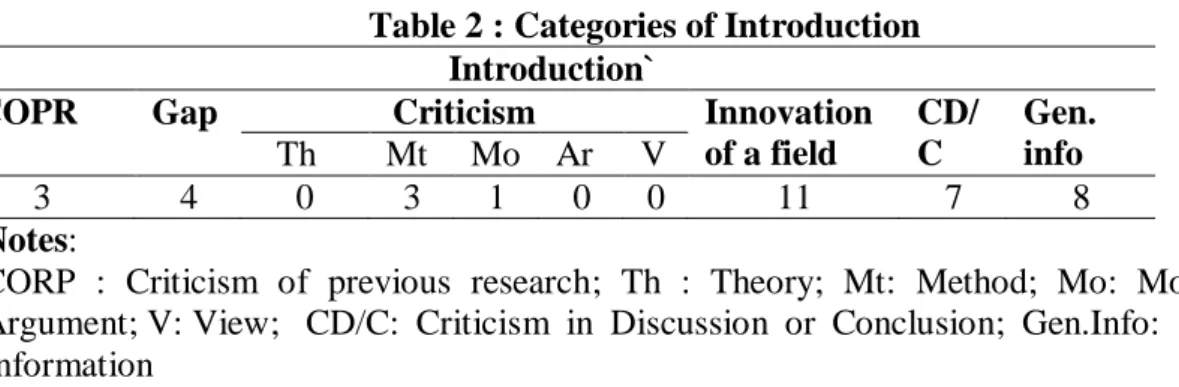
Table 2 : Categories of Introduction Introduction`
COPR Gap Criticism Innovation
of a field
CD/
C
Gen.
info Th Mt Mo Ar V
3 4 0 3 1 0 0 11 7 8
Notes:
CORP : Criticism of previous research; Th : Theory; Mt: Method; Mo: Model; Ar:
Argument; V: View; CD/C: Criticism in Discussion or Conclusion; Gen.Info: General Information
Move 2 (Purpose)
Table 3. Predominating formula-like pattern employed in Purpose move Diectic Item This (21), The (7), There (1), These(1)
Nominal references/
Inquiry type or genre
Research (8) , study (15) , two objectives of this research (1), two methods (1), paper (4), purpose of this research (1)
Reporting Verbs Aims (11), uses….hoping that (1), proposed (a solution) to (1), investigates (1), was an effort to determine(1), describes (3), are/compare/reduce (1), attempts to solve (1), aim to apply (1), seeks to identify (1), seeks to preserve (1), is to design (1), proposes (1), seeks to measure (1), is an effort to (1), recommends (1), is
developed (1), examines (1)
Pronoun We (2)
Move 3 (Method)
Table 4. Predominating formula-like pattern employed in Purpose move Typical Verbs Predict (1), provide (1), use (15), process (1), analyze (1),
apply (3), combine (1), perform (1), evaluate (2), allow (1), comprehend (1), regard (1), detect (1), equip (1), require (1), investigate (1), detect (1), improve (1), take (1), review (1), collect (1), summarize (1), test (1), eliminate (1), generate (1), employ (1), optimize (1), generate (1), match (1), classify (1), adopt (1), consist (1), originate (1), extract (1), monitor (1), build (1), implement (1), include (1), employ (2), carry (1), determine (1), rank(1)
Pronoun it (4), we (4) Move 4 (Product)
Table 5. Predominating formula-like pattern employed in Purpose move
Opening Nouns the results (8), models (1), the experimental results (2), our observations (1), the result of this study (1), the site (1), the evaluation (1), the user response test (1), the result (6), classification (1), using e-prescription (1), testing the Pesma (1) the site (1)
Reporting Verbs Show (6), shows (4), showed (2), explain (1), demonstrate (1), achieve (1), present (1), provide (1), perform (1), perceive (1), produce (1), produces (1), produced (1), can reach (1), can be found (1), prove (1), take (1), worked well (1), managed (1), get (1), attains (1), suggests (1), gives (1), recall (1), attains (2), attracts (1), recorded(1), reduce (1), make (1), gets (1), followed (1), violate, (1) tested (1), used, stated, using, gives, using, pay, wait, bring, shows, helps, evaluate (1), gives (1), works (1), detect(1), work (1), activate (1), capture (1), obtained (1), using (1), produces (1), suggests (1), indicating(1), obtained (2), produced (1), experienced (1), developed (1), design (1), showed (1), measure, determined (1), invalidates (1), helps (1), reflect (1), directs. (1)
That Complement Clause (25)
The results show that the variables of quality of work life
The results demonstrate that the model trained with eight layers of Convolutional Neural Networks (CNN) (SET-8) achieves
The results present that the proposed method provides good performance
The experimental results show that the accuracy of the SVM method
…and also that some of the chemical compounds have high similarity scores and can be found in nature
Pronoun we (1)
Move 5 (Conclusion)
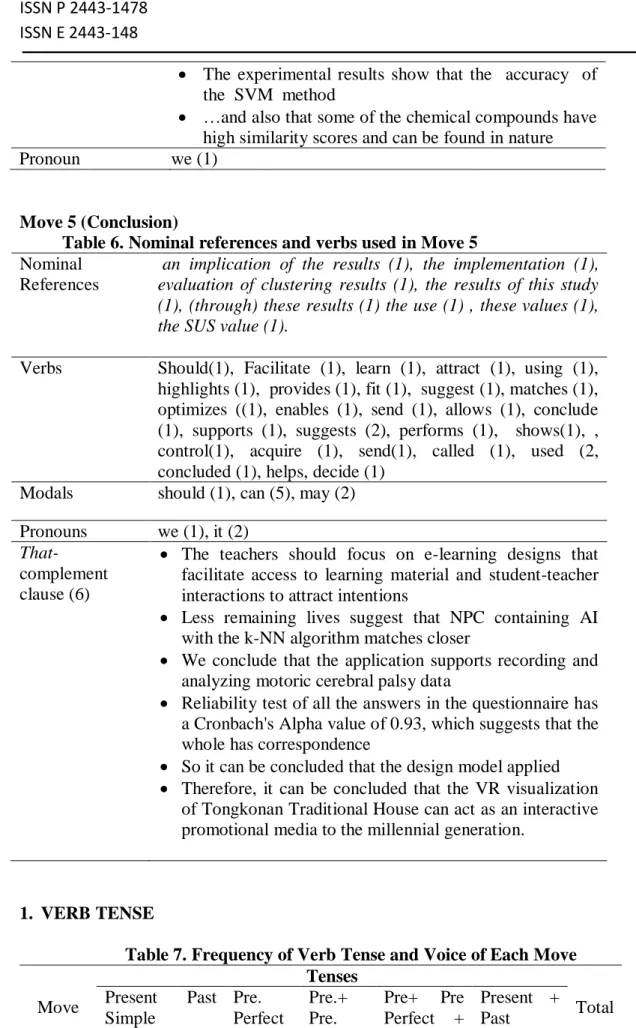
Table 6. Nominal references and verbs used in Move 5 Nominal
References
an implication of the results (1), the implementation (1), evaluation of clustering results (1), the results of this study (1), (through) these results (1) the use (1) , these values (1), the SUS value (1).
Verbs Should(1), Facilitate (1), learn (1), attract (1), using (1), highlights (1), provides (1), fit (1), suggest (1), matches (1), optimizes ((1), enables (1), send (1), allows (1), conclude (1), supports (1), suggests (2), performs (1), shows(1), , control(1), acquire (1), send(1), called (1), used (2, concluded (1), helps, decide (1)
Modals should (1), can (5), may (2) Pronouns we (1), it (2)
That-
complement clause (6)
The teachers should focus on e-learning designs that facilitate access to learning material and student-teacher interactions to attract intentions
Less remaining lives suggest that NPC containing AI with the k-NN algorithm matches closer
We conclude that the application supports recording and analyzing motoric cerebral palsy data
Reliability test of all the answers in the questionnaire has a Cronbach's Alpha value of 0.93, which suggests that the whole has correspondence
So it can be concluded that the design model applied
Therefore, it can be concluded that the VR visualization of Tongkonan Traditional House can act as an interactive promotional media to the millennial generation.
1. VERB TENSE
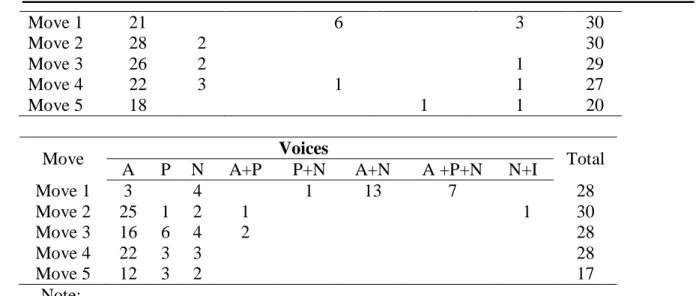
Table 7. Frequency of Verb Tense and Voice of Each Move
Move
Tenses
Total Present
Simple (Pre.)
Past Pre.
Perfect
Pre.+
Pre.
Perfect
Pre+ Pre Perfect + Past
Present + Past Simple
Move 1 21 6 3 30
Move 2 28 2 30
Move 3 26 2 1 29
Move 4 22 3 1 1 27
Move 5 18 1 1 20
Move Voices
Total A P N A+P P+N A+N A +P+N N+I
Move 1 3 4 1 13 7 28
Move 2 25 1 2 1 1 30
Move 3 16 6 4 2 28
Move 4 22 3 3 28
Move 5 12 3 2 17
Note:
A: Active; P: Passive; N: Nominal; I: Imperative
DISCUSSION 1. LEXIS
Move 1 (Introduction)
According to Hyland (2000), Move 1 (Introduction) establishes the context of the paper and motives the research or discussion. Later, Hyland (2004) suggests that there has been an increasing trend of the appearance on Introduction move in article abstracts, especially in the soft disciplines where writers have to acquaint readers with the background to their research. Hyland (2000) pointed out that the ability to identify a problem was a critical step in claiming insider status in all disciplines, but it was crucial in soft fields and that writers represented a problem as something which was unknown or unresolved by the community.
Table 2 showed that the analysis of Move 1 (Introduction) accorded to Stotebury’s (2006) suggestions that the Criticism of Previous Reasearch which fell into five categories:
criticism of previous research; gap; criticism of theory, method, model, argument, view;
innovation in the field; criticism in the discussion or conclusion move. It was used since it was more proper and specific in analyzing the Move 1 ( Introduction Move). It was found that Innovation in a field was the most frequent category in the abstracts of Informatics, Computer Science & Engineering, and Information Systems. The use of connectors of results was identified in this category such as : so, thus, and therefore. These connectors and words are to show the solutions given as the problems in the form of an innovation.
This finding is not in line with the previous studies. (Samraj, 2002) ) found that the creating of gap had greater importance in the Conservation Biology than the Wildlife Behavior abstracts. (Nurhayati, 2016) found that Criticism of previous research and Discussion/
conclusion in ASEAN EFL abstracts as the frequent category in move 1. (Santos,1996) pointed out that problem statement (Move 1) was the statement pointing out that previous research has not been thoroughly successful or complete.In this study was also found a new findings that general information was used for 8 abstracts in Move 1.
In this study, cue words, negative words, some connectors of contrast, and other words are used to identify each category of Move 1. According to (Stotesbury, 2006) criticism of previous research contains grammatically or semantically negative verbs as could not, had not been assessed, failed to, and did not address, etc. and “ a gap in research was commonly indicated by quantifiers, such as few, little; by contrast between, for instance, well known and not well explained; phrases, such as lack of attention or understanding. Similarly, the lexemes urgency, need, necessity realized a gap for indispensable research.” (p.136). It is also in line with the writer’s previous finding (Nurhayati, 2016).
Here are details with some excerpts and related words from Move 1:
a. Criticism, the analysis and judgment of the merits and faults of a literary or artistic work, of previous research (3).
To avoid citizen disputes, hate speech on social media, such as Twitter, must be automatically detected. The current research in Indonesian Twitter focuses on developing better hate speech detection models. However, there is limited study on the explainability aspects of hate speech detection. (Abstract 4)
The Coronavirus (COVID-19) pandemic is still ongoing in almost all countries in the world. The spread of the virus is very fast because the transmission process is through air contaminated with viruses from COVID-19 patients’ droplets.
Several previous studies have suggested that the use of chest X-Ray images can detect the presence of this virus. Detection of COVID- 19 using chest X- Ray images can use deep learning (Abstract 5).
b. Gap (4), a difference, especially an undesirable one, between two views or situations, which consisted of cue words
The research is inspired by the COVID-19 pandemic which affects face-to-face learning and leads to the e-learning system. However, educational institutions and related parties are not prepared for this sudden change. (Abstract 1)
Every year UNIMUDA Sorong welcomes new students and keeps promoting to attract more. The process generates a growing number of student data. On the other hand, the promotional strategy to attract new students faces obstacles such as generalization among locations, ineffective time, limited personnel to carry out promotions, and cost inefficiency.(Abstract 30)
c. Criticism of : 1. Method (3)
Each grid system can use a different scheduling algorithm to execute jobs based on other parameters, such as resources, delivery time, and execution duration.
There is no guarantee that these traditional scheduling algorithms will get the job done. (Abstract 13)
One of the psychological test tools is the Mirror Tracer Apparatus which is used to determine the condition of a person's mental endurance with visual coordination in responding to the inverted image of an object seen through a mirror. Because the use of the Mirror Tracer Apparatus only uses one pattern, and the cost is quite expensive,…. (Abstract 17)
2. Model/ Application (1)
The Online Credits Hour (KRS) application is one of the existing systems at the University of Muhammadiyah Magelang where the academic community, including lecturers, students, and education staff, produces a large amount of student academic data. Evaluation is necessary to find out whether the system runs well. (Abstract 27)
d. Innovation in the field (11)
So, it is interesting to research the students’ intentions related to learning during the pandemic in the framework of the Technology Acceptance Model (TAM).
(Abstract 1)
Covid-19 is a global pandemic that drives many researchers to strive to look for its solution, especially in the field of health, medicine, and total countermeasures.
Early screening with in-silico processes is crucial to minimize the search space of the potential drugs to cure a disease. (Abstract 6)
In a two-player game like Anagram, the second player can be a nonhuman player called Non-Playable Character (NPC). A balanced game is more engaging.
Therefore, it is imperative to insert artificial intelligence (AI) into an NPC to make it possess a balance ability. (Abstract 15)
e. Criticism in Discussion or Conclusion (7)
University timetabling is an issue that has received more attention in the field of operations research. Course scheduling is the process of arranging time slots and room for a class by paying attention to existing limitations. This problem is an NP- Hard problem, which means the computation time to find a solution increases exponentially with the size of the problem. (Abstract 16)
Corn is one of the agricultural products that are essential as daily food sources or energy sources. Corn selection or sorting is important to produce high-quality seeds before its distribution to areas with varying conditions and agricultural characteristics. Hence, it is necessary to build corn seeds identification. (Abstract 22)
f. General Information (8)
Indonesia is one of the countries most affected by the Coronavirus pandemic with millions confirm cases. Hence, the government has increased strict procedures for using face masks in public areas. (Abstract 3)
Psychology is the study of the behavior and mental processes of a person. In psychology, psychological tests or psychological tests are often used as part of the selection to determine the maximum performance of prospective employees based on mental endurance conditions from the factors of speed, accuracy, and consistency. (Abstract 17)
From the excerpts above, in this research , the criticism of the previous research contained some contrast connectors and cue words such as however, several previous
studies have…, many journals and papers have researched… . While in the gap in research was found contrast connector such as however and on the other hand. Both of the criticism of previous research and the gap in reserch were found that the connectors of contrast to show the distinction or the gap between the previous and the present research.
In the criticism of the method, the cue phrases, negative words, and contrast and reason connectors were used such as …no guarantee that these traditional algorithm.., but, however, and because, whereas in the criticism of the model, the cue word is used, the online credit hour (KRS) application. Both of them tried to criticize certain methods and models. It also happened to the criticism of Method which used some phrases which mentioned some methods and later would be discussed further in the research. Then, in the criticism of view, the Introduction of the abstracts used some sentences which tried to explain the view of the writers on certain problems.
In category of innovation of a field, the use of connectors of results was identified in this category such as : so, thus, and therefore. These connectors and words are to show the solutions given as the problems in the form of an innovation.Finally, in the criticism of discussion or conclusion, some phrases which showed the discussion or conclusion of the similar studies or the related topics.
Interestingly, this study found that the Move 1 contained general information which is out of the 5 categories mentioned above. This new category was used to give the general information about the related topics of the researches.
Move 2 (Purpose)
(Hyland, 2000) explains that Move 2 (Purpose) indicate purpose, thesis or hypothesis, outlines the intention behind the paper. The lexis of move 2 has been listed in Table 3.
(Santos, 1996) explained that the writers’ preference of using ”this” (e.g. This article, this paper, this case study) can presumably be explained that it was writers’ effort to incorporate the abstract into the body of the paper. On the other hand, the use “the” (e.g. the purpose, the aim of the present study) conveyed that the main article was viewed as standing apart from the abstract. As shown in Table 3, the usage of “this” was the most frequently distributed which was not in line with (Nurhayati, 2016) in which ‘this’ and ‘the’
were equally distributed. The use of ‘there’ was used to show the ‘availability’ of
something. For inquiry type or genre, the two most common choices were research and study. It can be seen that the word usage of the inquiry type or genre was not varied.
When analyzing the reporting verbs, it was found that the use of reporting verbs among the writers was also more varied. Based on Table 3, it showed that there was the most frequent reporting verb which is ‘aims’, while the other reporting verbs were found insignificantly. (Pho, 2008) also mentioned that first-person pronouns were hardly found in her corpus. It was in line with the finding of this present study. There was only 1 instance of the use of first-person pronoun. The following excerpt illustrated the use of the first- person pronoun.
Move 3 (Method)
According to (Hyland, 2000), Method move provides information on design, procedures, assumption, approach, data, etc. Table 4 showed that the typical verbs used in Move 3 were various. Each abstract tended to use different verbs to show the method of the research. The most common verb in this move was ‘use’ which refers to what method was utilized. The use of pronouns in Move 3 were not significantly identified The pronoun of
‘it’ is used to show the method and the pronoun of ‘we’ was used to show the agents who used the specific method.
Move 4 (Product)
Move 4 or Product move provides main findings or results, the argument, or what was accomplished. A closer analysis in Table 5 showed that the beginning sentence of Product move revealed that there was variation in the lexical items chosen for the opening noun. The most common signals were “results or the result,”. The most frequent reporting verb was “show” which is written in 2 different tenses; present and past simple. However, the word usage of opening nouns and reporting verbs were obviously various.
The use of self-reference words in Move 4 was one aspect discussed in the previous studies. (Pho, 2008) found that the use of self-references was negligible in the Summarizing in the Findings (STF) move, which contradicted Hyland’s (2003) findings. In this present study, there was the first plural pronoun,‘we’ , in describing the results or claims. In conclusion, the findings were quite similar to Pho’s (2008) findings. Below is the excerpt of the self-reference:
We obtained sufficiently good results where the black box testing proves that all functions work well. A usability testing using SUS with 30 respondents produces a good result at the level of 72.6, which suggests that the application is accepted.
(abstract :25)
The use of that-complement clauses was one outstanding linguistic realizations in Move 4. According to (Hyland&Tse, 2005), the evaluative “that” reflected the promotional aspects of abstract genre as a place where writers could highlight their research in order to hook readers and convince then that their work is valuable enough to continue to read the full paper. (Pho, 2008) found that a dominant syntactic structure in Summarizing the Findings (STF) move, which was non-existent in the first three move, was the use of that- complement clauses. This study found that there were 25 that-complement clauses in move 4.
Move 5 (Conclusion)
(Hyland, 2000) defined as a way to interpret or extend results beyond the scope of paper, draw inferences, point to application or wider implication. Conclusion move ( Move 5). The signal words of Conclusion Move was the use of nominal reference and verbs as below.
The signal of Conclusion Move (Move 5) was the use of references to the findings or data being reported. The writers utilized a general nominal reference such as ’the use’ and other writers used more specific nominal references to the function of Move 5, such as an implication of the results, the implementation, evaluation of clustering results, the results of this study, these results, the use , these value and , the SUS value. This may be one aspect of disciplinary variation found in Move 5. The excerpts below illustrated such references.
(1) The results of this study may be used as a comparative reference for the management to decide the right promotion strategy based on the locations and student background.
(Abstract :30)
(2) As an implication of the results, the teachers should focus on e-learning designs that facilitate access to learning material and student-teacher interactions to attract intentions and increase students’ satisfaction in using e-learning. (Abstract : 1)
(3) The use of the Explainable AI model highlights the importance of choosing the ideal model while maintaining users’ trust in the deployed model.(Abstract : 4)
(4) The SUS value means that the prototype is in the category of marginal low and indicates that the prototype does not meet the feasibility and needs improvement.
(Abstract: 10)
(5) The implementation of the Great Deluge algorithm optimizes existing schedules with an average penalty reduction of 42%. (Abstract : 16)
Another strategy that writers used in move 5 was the use of self-reference pronouns.
(Hyland, 2003) found that these instances of self-mention are most likely to occur at the beginning and end of the abstract, indicating for him a goal of self-promotion. Similarly, (Pho, 2008) found this strategy was used to make the writers’ presence explicit in abstracts.
In this present study, there was only one abstract using a self-reference word of ‘we’, as excerpted below.
(1) We conclude that the application supports recording and analyzing motoric cerebral palsy data. (Abstract:21)
Another finding is the use of verb variation in Move 5. As shown in Table 6, there was no most frequent verb used in Move 5. According to (Hyland &Tse, 2005), writers attributed the source of the evaluation to either a human source, including the author or other researchers, to an abstract entity, such as a spectrograph, the data, or the results, or to an un-named originator thereby concealing the source of the evaluation by attributing it to a general subject such as ‘it’. In the present study, it was found that most writers attributed the source of the evaluation to the data, the results, and the findings more than a general subject ‘it’. Concealing the source of the evaluation by attributing it to a general subject such as ‘it’ was found in a few instances as follows.
(1) So, it can be concluded that the design model applied to the prototype e-book is feasible and can be understood by users. (Abstract: 28)
(2) Therefore, it can be concluded that the VR visualization of Tongkonan Traditional House can act as an interactive promotional media to the millennial generation.
(Abstract : 29)
According to (Hyland and Tse, 2005), the use of dummy ‘it’ subjects represented an attempt to generalize the source of the comment and present it as objective in a state of affairs in the world distanced from the writers and so less open to negotiation.
The use of that-complement clause was another important linguistic realizations in Move 5. The clauses were connected with persuasion and conclusion verbs like “should”.
“suggest”, ‘conclude”, “be concluded as the excerpts in Table 6. This move is optional move as it was found less than 50%.
Another realization which was used in Move 5 was the use of modal auxiliaries especially those referring to obligation, possibility, ability or prediction about the results of the research as illustrated in the following excerpts.
(1) Through these results, machine learning techniques can compensate for the results of the deep learning technique in terms of accuracy, and the training process is faster than the deep learning technique. (Abstract:5)
(2) As an implication of the results, the teachers should focus on e-learning designs that facilitate access to learning material and student-teacher interactions to attract intentions and increase students’ satisfaction in using e-learning. (Abstract:5)
2. VERB TENSE
The use of tense in Move 1 was also interesting because the distribution of verb tense as aspect was varied. The most frequent tenses and aspects used in the abstracts were Present simple. And it is not in line with Tseng’s (2011) and Salager-Meyer’s (1992) finding that present simple is utilized in Move 5. However, (Swales and Feak, 2004) stated that the present tense is applied in the opening statements (Move 1). Others are the combination of Present Simple+Present Perfect and Present+ Past Simple. It is quite different from (Nurhayati, 2016) in her previous study in ASEAN EFL abstracts for the tense combination where it found Present+Future. The Present simple tended to occur with a general topic in the field and referred to the previous research as well, whereas the Present Perfect referred to previous research in general.
The past tense tended to be used for a specific research object in previous research and past information would be used for the research (Suntara & Usaha, 2013). The most voice of Move 1 was the tense combination which was Active+ Nominal (A+N) followed by Active+Passive+Nominal (A+P+N) as move 1 mostly consisted of more than one sentence or clause. The following excerpts illustrated the distribution of verb tenses found.
(1) The research is inspired by the COVID-19 pandemic which affects face-to-face learning and leads to the e-learning system. However, educational institutions and
related parties are not prepared for this sudden change. So, it is interesting to research the students’ intentions related to learning during the pandemic in the framework of the Technology Acceptance Model (TAM).) ( Abstract : 1)
(2) (2) Indonesia is one of the countries most affected by the Coronavirus pandemic with millions confirm cases (3) A large proportion of the direct vocabulary instruction an adult learner will receive in the EFL classroom will be unplanned. Although unplanned vocabulary instruction can provide many condition. ( Abstract : 2)
For the tense choice of Move 2 (Purpose), the Present tense was the most dominant tense while the others were Simple Past. The active voice was the most frequent voice in this move. It is in line with the writer’s previous finding and clearly different from the other previous studies. Furthermore, the writers of the abstracts preferred using the present tense to using the Past tense for the Purpose move.
Table 7 showed that Move 3 was dominant with the use of present Simple. It is not in line with (Suntara & Usaha, 2013; Tovar-viera, 2018) where Past tense was the dominant tense used in Move 3. Past Simple and Present Simple + Past Simple was insignificant ly used. Active voice was the most frequently employed, followed by Passive, Nominal, and Active+Passive. The tenses’ distribution was shown in table 7. Furthermore, both Past tense and present tense were accompanied by switching to the passive voice. The reason for this could be explained that the subjects took both an active role to participate in an experiment;
and a passive role when they received the treatment. With a closer look at the use of voice, The frequency of using passive verbs may be attributed to the fact that writers tried to stay as objective as possible when they presented the methods of their studies. The following excerpts illustrated the switching of active verbs to passive verbs.
(1) The research provides empirical evidence related to the quality of work balance and the ability to use information technology related to e-learning access, in addition to other factors in the TAM. The data are collected by distributing online questionnaires with a snowball sampling model.(Abstract : 1)
(2) It applies deep learning implementing the Convolutional Neural Network (CNN) algorithm with the MobileNetV2 architecture as a determinant of the conditions of wearing face masks. The system is equipped with an IoT-based remote controller to control the gate. (Abstract : 7)
The use of tenses in Move 4 (Product) was another aspect previously discussed.
(Santos, 1996); (Pho, 2008); (Tovar-viera, 2018) found a preference for past tense over present tense in Move 4 (Product). Nevertheless, in the present study, the preference of present tense in move 4 was stronger than past tense as shown in Table 7. Here are the representative excerpts of the abstracts.
(1) The results show that the variables of quality of work life and information technology self-efficacy, such as computers, the Internet, and communication, can explain the acceptance of elearning models, especially during a pandemic (Abstract: 1)
(2) The results present that the proposed method provides good performance. It is proven by the average value. The values are 83.67% for sensitivity, 82.40% for specificity, 82.00% for precision, 82.93% for accuracy, and 82.77% for F1-scor.
(Abstract : 2)
According to (Pho, 2008), the use of past tense to report of the study left the reader with the impression that the writer was being objective and was plainly reporting the findings of the research. The present tense gave the idea that the writer was generalizing beyond the results of the study, which left the impression that the results were widely accepted. For (Santos, 1996), the using of past tense signified the narrower claim of the research results, while the using of present tense implied that the research results yielded indisputable and established knowledge. In the present study, the writers’ preference of using simple present in Move 4 could be understood as an intention to generalize the results of their study to be widely accepted and to yield indisputable and to establish knowledge.
Another distinctive feature of the Conclusion Move, Move 5, was the dominant use Present simple verbs whose total was 18 abstracts. The others were the tense combination of Present Simple+ Present Perfect+Past Simple and Present+Past Simple. It could be explained that Move 5, which is intended to discuss the meaning of the results or outcomes and make generalizations based on the findings in the previous move, will make greater use of simple present in order to make the statements in Move 5 sound more general and thus more applicable. Some instances were given as below .
(1) The research provides insight into the early detection of COVID-19 patients through chest X-Ray images so that further medical treatment can be carried out immediately. (Abstract : 5)
(2) The implementation of the Great Deluge algorithm optimizes existing schedules with an average penalty reduction of 42%. (Abstract: 16)
CONCLUSION
It was found that Innovation of a field was the most frequent category in Introduction move (Move 1). The use of connectors of results was identified in this category such as : so, thus, and therefore. These connectors and words are to show the solutions given as the problems in the form of an innovation. This finding is not in line wit h the previous studies. (Samraj, 2005) ) found that the creating of gap had greater importance in the Conservation Biology than the Wildlife Behavior abstracts. (Nurhayati, 2016) found that Criticism of previous research and discussion or conclusion in ASEAN EFL abstracts as a frequent category in the move.
In move 2, the usage of “this” was the most frequently distributed which was not in line with the writer’s previous study (Nurhayati, 2016) in which ‘this’ and ‘the’ were equally distributed. The use of ‘there’ was used to show the ‘availability’ of something. For inquiry type or genre, two most common choices were research and study. It was also found that the writers used the different reporting verbs for Purpose move.
The most common verb in move 3 was ‘use’ which refers to what method was utilized. The use of pronouns of ‘we’ and ‘it’ in move 3 were not significantly identified.
The most frequent reporting verb was “show” which is written in 2 different tenses; present and past simple. However, the word usage of opening nouns and reporting verbs were obviously various.
The use of self-reference words in Move 4 was one aspect discussed in the previous studies. (Pho, 2008) found that the use of self-references was negligible in the Summarizing in the Findings (STF) move, which contradicted Hyland’s (2003) findings. In this present study, there was the first plural pronoun,‘we’ , in describing the results or claims.The findings of 25 that-complement clauses in move 4 is in line with Pho’s (2008) as the dominant syntactic structure in Summarizing the Findings (STF) move, which was non- existent in the first three move.
The writers utilized a general nominal reference such as ’the use’ and other writers used more specific nominal references to the function of Move 5. There was no most frequent verb used in Move 5. A general subject such as ‘it’ is to an un-named originator thereby concealing the source of the evaluation (Hyland and Tse: 2005). The use of that- complement clause was another important linguistic feature in Move 5.
The Present simple was the most frequent tense used in Move 1 (Introduction), Move 2 (Purpose), Move 4 (Product) and Move 5 (Conclusion). It was in the line with Malcolm’s (1987) suggestion in (Nurhayati, 2016). The use of other tenses were negligible The Present Perfect was employed in Move 1 to show the running discussion. Active voice was the most dominant in the all moves. Passive voice was used more in Move 3 (Method Move) and it was in with Nurhayati’s (2016).
Finally, the results of this study hopefully gives some contribution to novice writers to do the similar researches and the writer of this paper will be more comprehensive to analyze this research topic for next study.
BIBLIOGRAPHY
Hyland, K. & Tse, P. (2005). Hooking the reader: A corpus study of Evaluative That in abstracts. English for Specific Purposes, 24(2), 123-139.
Hyland, K. (2003). Self-citation and self reference: Credibility and Promotion in Academic Publication. Journal of the American Society for Information Science and Technology, 54(3) ,251-259.
Hyland, K.(2000). Disciplinary Discourse: Social interaction in academy writing. London, UK: Longman.
Kanafani, A., Nurcik, A. B., Harisbaya, A. I., Qurratu’aini, S. F., Kurniawan, E., & Lubis, A. H. (2022). Rhetorical Move and Linguistic Features Comparative Analysis of Research Article Abstracts by Authors of Different Organizational Backgrounds.
Proceedings of the Fifth International Conference on Language, Literature, Culture, and Education (ICOLLITE 2021), 595(Icollite), 129–135.
https://doi.org/10.2991/assehr.k.211119.021
Karmila, K., & Laila, M. (2020). Rhetorical Moves of Abstracts: Investigating Abstracts Thesis of English Education Department Students in Surakarta. Jurnal Penelitian Humaniora, 21(2), 120–127. https://doi.org/10.23917/humaniora.v21i2.11208
Lambert V, Lambert C. (2019). Qualitative Descriptive Research: An Acceptable Design.
Pacific Rim International Journal of Nursing Research [Internet];16(4):255-6.
Available from: https://www.tci-thaijo.org/index.php/PRIJNR/article/view/5805 Lores, R. (2004). On RA Abstracts : From rhetorical structure to thematic organization.
English for Specific Purposes, 23(3), 280-302.
http://dx.doi.org/10.1016/j.esp.2003.06.001
Li, Y. (2011). A genre analysis of English and Chinese research article abstracts in linguistics and chemistry.
Nurhayati. (2016). Analysis Of Linguistic Realizations Of Abstracts On Asian IICLLTLC-2
2016., p. 184–193.
http://openjournal.unpam.ac.id/index.php/Proceedings/article/view/205
Nassaji, H. (2015). Qualitative and descriptive research: Data type versus data analysis. In Language Teaching Research (Vol. 19, Issue 2, pp. 129–132). SAGE Publications Ltd. https://doi.org/10.1177/1362168815572747
Pho, P.D. (2008). Research article abstracts in applied linguistics and educational technologgy : a study of linguistic realizations of rhetorical structure and authorial
stance. Discourse Studies, 10(2), 231- 250.
http://dx.doi.org/10.1016/j.esp2003.06.001
Salager-Meyer, F. Corder. (1992). A text-type and move analysis study of verb tense and modality distribution in medical English abstracts. English for Specific Purposes, 11(2), 93-113.
Samraj, B. (2005). An exploration of a genre set: Research article abstracts and introduction in two disciplines. English for Specific Purposes, 24(2), 141-156. 2005.
Samraj, B. (2002). Disciplinary variation in abstracts: The case of wildlife behavior and conservation biology. In J. Flowerdew (Ed.), Academic Discourse (pp. 20-56).
Harlow : Longman.
Santos, M.B.D. (1996). The textual organization of research paper abstracts in applied linguistic. Text, 16(4), 481-499.
Stotesbury, H. (2003). Evolution in research article abstracts in the narrative and hard sciences. Journal of English for Academic Purposes, 2,327-341.
Suntara, W., & Usaha, S. (2013). Research article abstracts in two related disciplines:
Rhetorical variation between linguistics and applied linguistics. English Language Teaching, 6(2), 84–99. https://doi.org/10.5539/elt.v6n2p84
Tovar-viera, R. (2018). Linguistic realizations of research article abstracts written by Ecuadorian and North American academic authors. January, 82–99.
Tovar Viera, R. (2019). Rhetorical Move Structure in Abstracts of Research Articles Published in Ecuadorian and American English-Speaking Contexts. Arab World English Journal, 10(4), 74–87. https://doi.org/10.24093/awej/vol10no4.6
Tseng, F. (2011). Analyses of Move Structure and Verb Tense of Research Article Abstracts in Applied Linguistics. International Journal of English Linguistics, 1(2).
https://doi.org/10.5539/ijel.v1n2p27
Wei, H. Y., Razali, A. B., & Samad, A. A. (2022). Writing Abstracts for Research Articles:
Towards a Framework for Move Structure of Abstracts. World Journal of English Language, 12(6), 492–504. https://doi.org/10.5430/wjel.v12n6p492