The Peromyscus boylii species group is given special emphasis due to uncertainty regarding the relationships and taxonomic level of the forms included in it. Key to species Peromyscus of Nayarit 28 Peromyscus maniculatus labecula Elliot 29 Peromyscus boylii (Baird) 31 Peromyscus simulus Osgood 31 Peromyscus madrensis Merriam 32 Peromyscus pectoralis pectoralis Osgood 34 Peromyscus spicilegus Allen 35 Peromyscus melanophrys micropus Baker 37 Appendix: Dimensions (in mm) of Selected specimens . All five of these taxa are relevant to any discussion of the boylii complex.
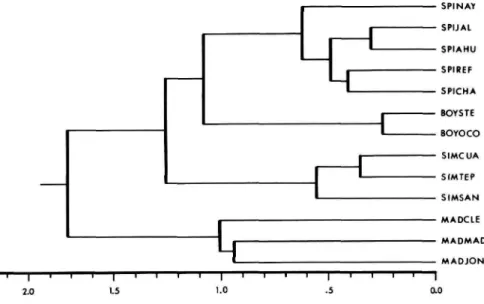
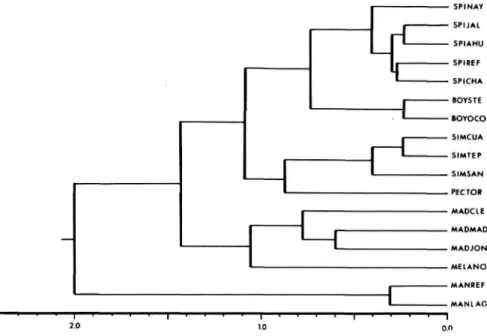
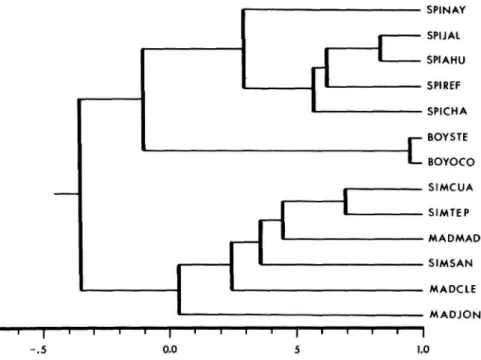
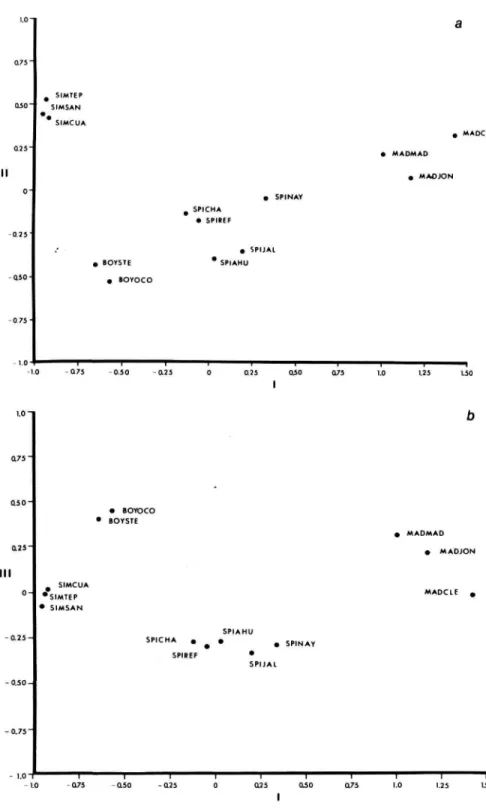
The occurrence of a mesolophid, mesolophid and ectolophid was recorded for samples of the following six population samples. The samples of each of the four boylii-group taxa cluster together; however, the heterogeneity of Os-good's (1909) P. The coherence of the geographic samples of boylii, simulus, madrensis, and spicilegus is confirmed again in the clustering exercise with only 13 OTUs (Figure 3).
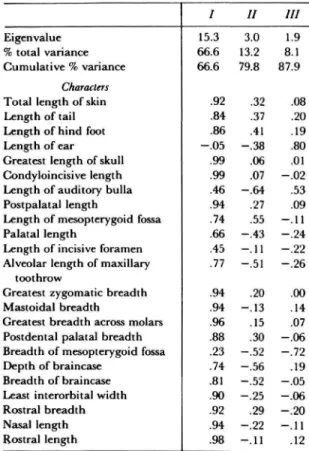
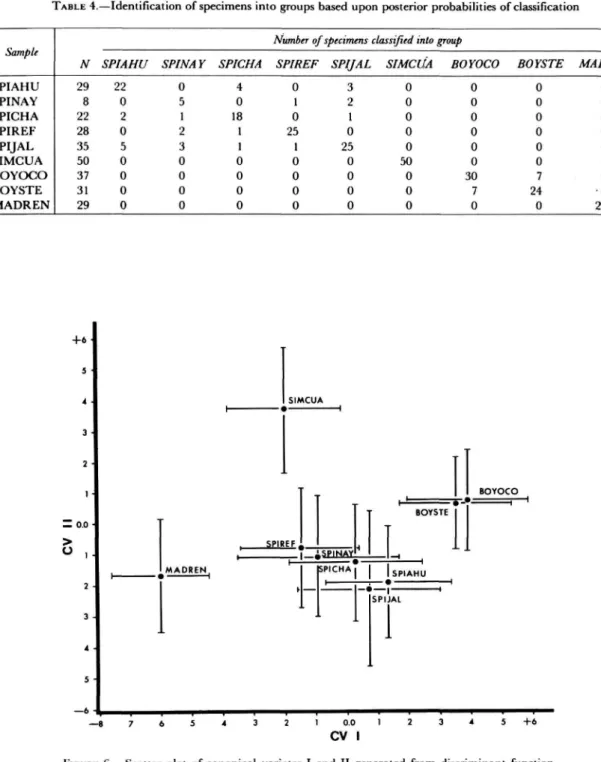
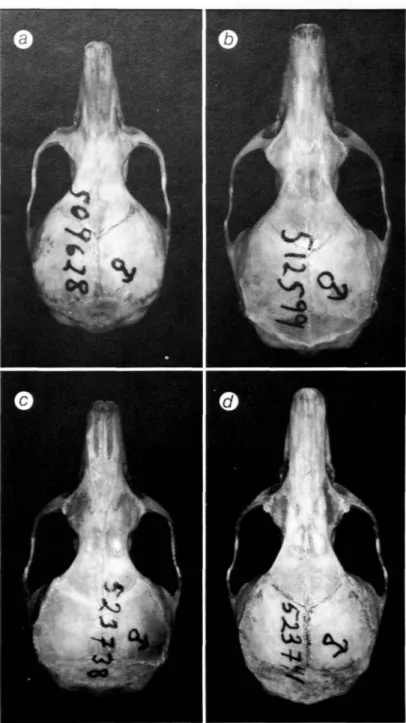
Other differences in size and proportions of the skulls are noted in the morphometric analyses. ISSUE 352 17 TABLE 5. Frequency of occurrence of certain dental features in species of Peromyscus boylii. The bicolored tail is less pronounced in specimens of spicilegus compared to that of boylii.
Our samples of boylii, madrensis, simulus and spicilegus can be easily separated based on the anatomy of the glans penis.
MfMOII'MMAM
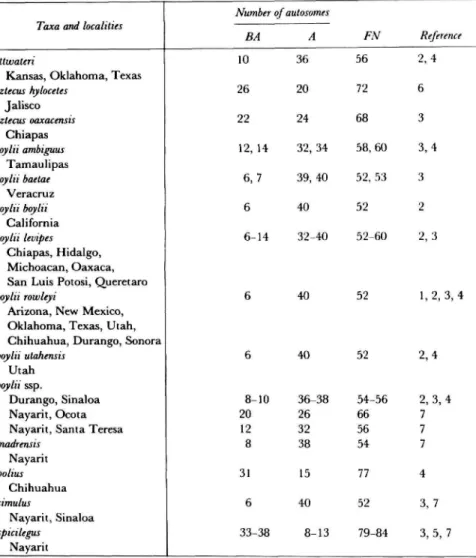
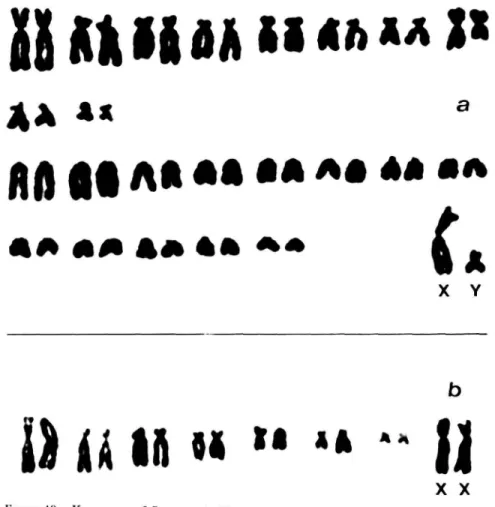
66, consisting of the following autosomes: two pairs of large and five pairs of medium-sized subtelocentric, one pair of large submetacentric, one medium and one small pair of metacentric, and 13 pairs of large to small acrocentric (Figure 10a). Autosomal polymorphism in the size of homologues was noted in a medium-sized pair of subtelocentric (in one male) and in the medium-sized pair of metacentric (in the other male and in the female). In each case, the putative homologues have the same morphology, but one chromosome is larger than the other.
Two pairs of large and one pair of medium-sized subtelocentrics, one pair of medium-sized submetacentrics, one pair of small metacentrics, and 16 pairs of evenly graded, small to large acrocentrics make up the remainder of the autosomal set. NUMBER 352 21 TABLE 6.-Variation in nonbanded karyotypes of Peromyscus spicilegus from Nayarit (number of .. acrocentric pairs, not including heteromorphic sets; FN = number of autosomal arms; SM = submetacentric; ST = subtelocentric). Agua Escondida Tempiste Chacala Ahuacatlan Jala Coapan Jalcocotan La Villita Arroyo Jiguite Arroyo Taberna Mesa del Nayar Santa Teresa.
The karyotypic formula in spicilegus is characterized by a large number of two-armed chromosomes, 17 to 19 pairs, and consequently a high fundamental number, ranging from 79 to 84 in our sample of 58 specimens from 12 different localities (Table 6). In the typical chromosomal distribution, the autosomes consist of a graded series of 15 pairs of large to small subtelocentric, one pair of medium-sized metacentric, one pair each of medium and small submetacentric, and one pair of large and four pairs of medium to small acrocentric (Figure 11). The distinction between the two most common karyotypes, FN=82 and FN=80, usually involves a small pair of chromosomes, which in some individuals are acrocentric but distinctly sub-.
Variations are also evident in the morphology of the X chromosome, whose alternative form is large submetacentric (Table 6). Although variable, the karyotype of Spicilegus is distinctive, and the extent and nature of the chromosomal variation we observed do not indicate hybridization between Spicilegus and any of its relatives. As Carleton (1977) noted, however, the name spicilegus does not properly apply to those populations in Durango and Sinaloa that Lee et al. 1972), reviewed as examples of boylii spicilegus.
The confusion stems from Osgood's (1909) revision, in which he greatly expanded the range of spicilegus to include not only the western mountains of Jalisco and Nayarit, but also much of the Sierra Madre Occidental and the western parts of the Mexican Plateau.
H Ifi it It H
Much of the karyotypic variation known in boylii (sensu stricto) occurs in those southern Mexican populations known as levipes or those previously misidentified as spicilegus (Table 7). DISTRIBUTION IN NAYARIT.-Found only in the mountains m) the eastern part of the state. Previously, Osgood's (1909) name combination boylii spicilegus would have applied to the populations in eastern Nayarit, but as shown here and elsewhere (Carleton, 1977), Osgood's perception of the taxon was a composite.
There maniculatus inhabited the hills, and at the same time occupied the broad valley of the Rio Grande de Santiago. TAXONOMIC NOTES. The origin of the mammalian fauna of the Tres Marias Islands raises interesting biogeographical questions. ECOLOGICAL NOTES. Peromyscus pectoralis, like maniculatus, is restricted to the topographically diverse southern part of the state.
TAXONOMIC NOTES.—Many of the specimens that Osgood (1909) placed under boy Hi spicilegus, mainly those in southern Chihuahua and the highlands of Sinaloa and Durango, have been considered boy lit rowleyi (Hooper, 1955; Baker and Greer, 1962). Peromyscus spicilegus is common in the pine-oak zone in the southern part of the state. Interrelationships of populations of the Peromyscus boylii Species Group (Rodentia, Muridae) in western Mexico.
Genetic variation and systematics of four mouse species of the Peromyscus boylii species group. Comparative morphology of the male reproductive tract in the rodent genus Peromyscus (Muridae).