Volume 7 Issue 1, October 2019, pp.1517- https://doi.org/10.35974/isc.v7i1.966
1517
Mediating Role of Leadership Style on Organizational Culture and Total Quality Management
Teresita G. Belarmino
Adventist University of the Philippines [email protected]
ABSTRACT
Scholars consider leadership style as a powerful tool for improving school managers’
commitment on total quality management (TQM), yet few studies have empirically examined the linkages on organizational culture, leadership styles, and TQM in tertiary institutions. This study determined the mediating role of leadership style on organizational culture and TQM.
The researcher employed the descriptive correlational design to analyze the level of organizational culture, the extent of leadership style as mediating variable, the extent of TQM in education as perceived by the respondents, and the relationship between those variables among school managers. There were 295 school managers from 13 tertiary institutions in Asia who responded to the study. The results of the study showed that the respondents have very high practices of organizational traits of involvement, adaptability, consistency, and mission with an indirect effect on leadership style. The extent of the respondents’ TQM is high on the following dimensions: a process-systems approach, customer-supplier focus, consistent quality leadership, continuous improvement and self-evaluation .The extent of leadership styles in both transformational and transactional as practiced by managers is high. However, the organizational culture had no direct effect on TQM. Thus, leadership style fully mediates organizational culture and TQM. Further, the school managers are committed to TQM in education regardless of age, civil status, educational attainment, and years of experience. As a contribution to the mediating mechanism, the emerging model showed that transformational and transactional being the components of leadership styles have loadings of .89 and .49, respectively. This means that the respondents’ leadership style practices have corresponding weights of 64.49% of transformational and 35.51% of transactional leadership style to fully mediate on the relationship between organizational culture and TQM. This research therefore, indicates the significance of the mediating role of leadership style on organizational culture and TQM in tertiary institutions. The outcome of this study shall be utilized as basis for conducting seminar-workshops and training programs. The study will contribute to future research on other dimensions on OC, LS and moderating variables in relation to TQM.
Keywords: Organizational Culture, Leadership Style, Transformational Leadership Style, Transactional Leadership Style, And Total Quality Management (TQM).
1518
INTRODUCTION
The dynamic international and comparative context of education challenges school administrators in highly competitive tertiary institutions to modify policies and programs to sustain quality education. With these policies are interlaced the need to address the prevailing issues on quality assurance to improve the standards of learning, teaching, and leadership (Fraser, et.al, 2015). The inadequacy of skills and the lack of innovative ideas, including insufficiency in the methods of delivering services (Palmer et.al., 2017) are among the challenges that must be addressed to assure quality education.
Quality assurance in total quality management (TQM) is an in-progress monitoring and evaluating program to improve the quality of the higher education system. (Sabir, et.al., 2011).
It is a way of ensuring that TQM defects are addressed. It includes administrative and procedural activities to fulfill the requirements and goals of education including its services and operations.
However quality assurance procedures that have worked fine with diminutive higher education systems also proved inadequate and ineffective in solving the issues of administrators’
commitment. Thus, administrators themselves must see the need for higher education institutions to fully implement TQM measures and procedures in performing QA for tertiary institutions (Higher Education across Asia, 2011).
Some research studies have revealed that educational administrators and school leaders are skeptical in the application of TQM due to identified reasons. Many institutions do not support TQM methods in their organization ( In'airat & Al-Kassem, 2014) because for them change is stressful ( Palmer et al. 2017, Ravindran & Kamaravel, 2016).
A recent study by Altahayneh (2014) reveals that 58.33% of the faculty members involved in the study showed no efforts in implementing TQM in their colleges. The mean score that represents the extent of implementing TQM principles falls below the average 60% for all dimensions which also indicates poor implementation. Abdul-razak et al., (2014) emphasize that the concepts of TQM have captured many educators' interest, but the challenges of implementation prevent its integration in the departments of tertiary institutions.
Evans & Lindsay, (2017) also discovered that there are existing impediments in the implementation of TQM in higher education institutions. One of the reasons for its failures is most often rooted in flawed organizational approaches and management systems, which include among others poorly, executed TQM strategies: lack of commitment by the top management and the workforce, neglect of teamwork, continuous improvement, and
1519
coordination (Suleman & Gul, 2015). Researchers note that there seem to be lack of training which is essential in the implementation of TQM in colleges and universities (Hill et al., 2015).
Prior research substantiates the fact that very few educational administrators have had formal training in academic administration (Stenberg et al. 2015). Others have problems on how to develop applicable mental models, leadership styles, and workable solutions (Kaplan and Owings, 2017).
Even the regional study which was financed by the Asian Development Bank (ADB) supports the finding that the continued development of higher education depends heavily on the enhanced capacity of school administrators and instructional staff to guarantee quality assurance in higher education (Higher Education across Asia, Overview of Issues and Strategies, 2011).
There have been research works that have shown evidences of neglected full participation concerning the TQM application process. The findings show that there is difficulty implementing and accepting TQM policies among school administrators in higher institutions, particularly those who have not applied the tenets of TQM.
Even if the school administrators of SDA tertiary institutions are aware of the need for interface quality assurance there is still a great need to have a supportive culture where expectations and standards, continuous improvements, and innovations are defined (Office of Education, Southern Asia-Pacific Division of Seventh-day Adventists, 2010). And while research scholars have become interested in the TQM program and leadership styles, and while some recent works of literature have emerged to address this gap in knowledge, there remains the fact that there is limited study on organizational culture and TQM as mediated by leadership styles in the area of tertiary institutions (Gray, Gregory, Zheng, Hartnell, 2011; Nazarian, 2013).
Transformational leadership style has a positive influence and significant role in achieving the success of TQM in universities (Hasssan & Ismail, 2013). Leadership style is the most influential factor that influences the success of TQM implementation in higher education (Kanji, Aldaweesh, et al., 2012). TQM can fulfill the need to revolutionize tertiary education.
Regardless of the enormous growth in the implementation of TQM in HEIs worldwide, there is no universal model for adopting TQM within a tertiary education context ((Kanji, Ariff, et, al., (2007); Aldaweesh et al., 2013; Sarvan & Anafarta, 2013). More so, there appears to have a gap in the knowledge of leadership style in its potential mediating role between organizational culture within the tertiary educational organization. Studies purporting to know the significant role of leadership style on organizational culture and TQM are limited.
1520
LITERATURE REVIEW
Organizational Culture (OC) is a “shared mental model or social glue that binds every individual together in an organization and serves as the aggregate of values, beliefs, norms, attitudes, assumptions, and ways of doing things,” (Schein 1985, 2010).
These values, beliefs, and assumptions serves as the foundation of organizational culture. It could also pertain to the totality of feelings and attitudes of administrators that could empower individuals to do things right the first time. (McNabb, Sepic, Schein, Luckmann, Sparks, 2007:
Hoy & Miskel, 2008; Abdullah et al., 2014) A healthy OC holds the institution together and gives it a distinctive identity. It functions as a kind of control to enable administrators to inculcate the values and norms that will specify appropriate behavior and shape the way the members act in particular situations (Hill, et al., 2015)
It could be the source of an institution’s distinct “personality.,” (Beytekin, 2010) or “style” in tertiary institutions (Palmer et.al, 2013).
Organizational Culture And Its Dimensions
Edgar Schein (1990) contends that organizational culture can be developed and changed.
However, members cannot understand developments without considering OC as the primary source of resistance to improve.
Denison (2000) advocates the four different organizational culture dimensions into traits of (1) involvement (2) consistency (3) adaptability, and (4) mission. Denison’s (2000) model notably helps to show capabilities of an organization which implies these four great intellectual traits to coordinate, to adapt external influences, and to integrate internal resources.
Involvement
An organization must aim at coordinating and integrating internal resources through involvement trait with indices on empowerment, team orientation, and capability development to adapt challenges from the external environment. This argument is the main thrust of Denison’s model, the involvement trait creates a sense of responsibility for individuals to develop, implement decisions. (Denison, 2000). This involvement trait also promotes internal integration, flexibility, and positive employee attitude knowing that they have an essential role in the decision making process. (Likert, 1961); (Becker, 1964); (Denison, 1984);
(Lawler,1990); (Denison and Mishra, 1995), (Spreitzer, 1995); (Fisher, 1997), and ( Abdullah et al., (2014).
1521 Consistency
Denison (2000) introduced consistency trait as the second dimensionis the basis of a healthy culture. In the same vein, Seashore, (1954); Davenport (1993), Saffold (1988); Senge, (1990);
Fisher, (1997); Greenberg, (2013) consider consistency trait as an effective dimension for enhancing worker's efficiency, effectiveness, clear communication, integration, coordination which springs from a standard frame of mind and conformity. Hill et al., (2015) emphasized that consistent attitudes motivate, energize and control members’ behavior. Mintzberg (1989, p. 98) and Evans (2014) refers to organizational culture as the organization’s consistent manner of thinking which exemplifies their traditions and beliefs. It permeates every individual’s life and fits in the framework of its structure thus sets it apart from other entities. The desire of a particular institution to create an identity constitutes a set of frequently experienced stable characteristics for a school organization. Likewise, Marin, Trompenaars & Hampden-Turner, Beytekin (2010) assert the consistency in the patterns of shared values, assumptions and beliefs developed by a group of people who work in the same organization.
Adaptability
Denison (2000) added adaptability as the third dimension of organizational culture with indices on creating change, customer focus, and organizational learning. Adaptability trait refers to the organization's ability to translate the demands of the business environment into action.
According to Hitt et al. (2015) organizational culture starts with shared values, and then eventually becomes the strength of the organization because of its self-reinforcing nature to create changes. Dess, et al. (2018) support this kind of changes as they elaborate that adaptability is an exploration of new opportunities to get rid of complacency.
Mission
Mission is the last and the fourth dimension of organizational culture with indices on goals and objectives, strategic direction, intent, a clear vision of goals and strategic objectives to lead and provide the workforce with a sense of focus, direction and a universal perspective of the future.
(Denison, 2000).
According to Rothwell et al., (2017) mission is the administrators’ purpose on the task they do every single day as they live by their values. It focuses on the contradiction of internal integration and external adaptation at the same moment of time and stresses stability and capability to give an organization its purpose, intent, and strategic direction (Mintzberg, 1987);
Ohmae (1983); Hatch, (1993); Schein, (1990); Hamel, (1996); Greenberg (2013). However,
1522
there is no such organizational culture taken as “best” because an ideal culture is that kind of culture which supports the organizational mission ( Lussier,& Achua, 2016).
The Importance Of Total Quality Management In Tertiary Education
Tertiary institutions of today are undeniably concerned with quality due to the emergence of competition among schools. Thus, the identification of quality educational institutions is universal (Pineda, 2013).
Quality management is of great value since time immemorial. It can also be traced back, even during ancient times on the Act of Creation, Inspection, and Self-Control from the Old Testament, written more than 2,500 years ago. God’s daily inspection of His creation and implementation of self-control implies comparing and contrasting actual results with specifications; such a process taken as an application of total quality management today will go a long way in the success of the TQM process
Total Quality Management, whether viewed through Deming's 14 Points, Juran's Trilogy, or Kaoru Ishikawa's Thought Revolution, exemplified in an integrated set of fundamental tenets aims to concentrate on the interpretation of TQM in education supported by Bonstingl (1992);
Bonstingl (2012) who proposed the Four Pillars of Total Quality Management as follows:
Customer-Supplier Focus
An educational institution, as emphasized by Bonstingl (1992); Bonstingl (2012) must focus, first and foremost, on its suppliers and customers. In a TQM institution, everyone is both a customer and a supplier, and thus, it is essential to identify one’s roles in the two capacities to better understand the systemic nature of work in which everybody must be involved.
Schmoker & Wilson (1993); Fitzgerald (2004); Farooq, (2007); Akhtar (2000); Cunningham
& Cordeiro, (2009); (Sallis, 2012) supported findings on TQM philosophy for school administrators to avail of the benefits of TQM in educational institutions (schools, colleges &
universities in both public and private) to aim for an extraordinary performance, which is a potential paradigm. This paradigm shift with TQM principles will help foster an organizational cultural change, for the staff to understand and live the message if TQM is to make an impact by changing attitudes and working methods to provide better services to its primary customers namely, individuals within the institution, teachers and students. In operating a no-fear TQM system with a focus on constant growth and improvement, there will be more excitement and challenges to teachers than a "good-enough" learning environment can provide.
1523 Continuous Improvement And Self Evaluation
Given that educational administrators and academic leaders’ interest in continuous improvement, despite their significant investment of time and effort, why do they fail to carry out a successful TQM implementation? These current issues and challenges in tertiary education institutions created havoc that prompted many educational administrators and leaders to explore implementing TQM process.
Deming, popularized this intellection that there should be no human being ever to evaluate another human being thus; TQM emphasizes self-evaluation as a fundamental part of a continuous improvement process for every institution. In addition, this principle stimulates every individual's potentialities by dedicating himself/herself to the ongoing improvement of abilities and those of the people with whom he/she works and also laminates to the focusing on learners' strengths, individual learning styles, and multiple intelligences (Repčić, 2005;
Beytekin et al., 2010).
Process-Systems Approach
The third pillar is the process-systems approach. The TQM organization when viewed as a system and the work people do within the system must be an ongoing process, (Bonstingl, 1992)
Evans &Lindsay (2017) elaborate on the element of the process-system approach to reach organizations goals and mission most effectively and efficiently, to structure a system, understand the interdependencies between the processes of each organizational system, and to provide a better understanding of the roles and responsibilities necessary for school administrators to achieve a common objective.
One of these quality improvement processes is for educational administrators to have a prior focus on the processes that could bring desired results. This prior focus could serve as the basis for a substantial and lasting change on a long series of small and achievable projects. It is necessary to make a difference carefully, process by process, issue by issue (Sallis, 2012).
Consistent Quality Leadership And Tqm
Consistent quality leadership is perhaps the most crucial element required to be able to implement or adapt the four pillars in quality leadership. The ultimate success of an ongoing quality transformation is the responsibility of top management and is achievable over time through constant dedication to the principles and practice of TQM (Bonstingl, 1992).
1524
According to Mendes, et al. (2014) HEIs need to exhibit apparent concern with developing TQM based initiatives. The HEI employees must be more committed and have more OCBs, compared to employees from institutions that do not have TQM principles. Administrators must understand that the quest for quality efforts through strategies- focused principles like quality continuous improvement awareness, teamwork, and constant learning orientation result in higher levels of organizational culture and citizenship behaviors, which in turn allow consolidating organizations’ competitive advantages
Leadership Style
Leadership style influences TQM. The relationship between the two has drawn considerable interests from both educators and business enthusiasts. Schein & Alvesson (2011) have further contributed to a more critical review of the link between leadership style and organizational culture (Schedlitzki & Edwards,2014).
According to Aldaweesh et al., (2013), leadership style is the primary key and pillar of TQM implementations in universities and colleges. Some researchers, though, notice that lack of top management commitment affects TQM efforts negatively. This lack of senior management commitment is considered to be one of the critical attributes to the failure of TQM efforts in tertiary education (Brown et al., 1994; Becket and Brookes, 2008; Saleh et al., 2016).
However, TQM did not find an appropriate path to practical implementation due to the absence of a particular leadership style. In other words, there is a lack of necessary authority to deploy values and goals through layers of higher education institutions departments, (Hill et al., 2015).
Rosa and Amaral, (2012); Wani & Mehraj,(2014), echoed similar thoughts when they mentioned that there are critical issues in implementing TQM in higher education which include the lack of a profound leadership style.
Indeed, leadership is the primary key and pillar of TQM implementations in tertiary education.
It seems to be the most influential factor to influence the success of quality in tertiary education.
Transformational Leadership Style
According to Manning and Curtis, (2017) although transformational leadership was first discussed by J.V. Downtown (1973) its emergence as an important theory of leadership can be traced to Burns, who first distinguished two kinds of leadership: transformational and transactional.
Research shows that transformational leadership has a positive effect on performance.
Employees with transformational leaders have higher levels of motivation, job performance
1525
and organizational commitment. Transformational leadership can occur at all levels of an organization and can emerged in both formal and informal roles.
Transactional Leadership Style
Burns (1978), the pioneer of the transactional leadership style described transactional leadership as exchanges of the relationship between the leader and the subordinates. This is the type of leadership style that is applied commonly in behavioral sciences. Burns elaborately explained that transactional leadership focuses on defining needs, assigning clear tasks, rewarding congruent behavior, and establishing a command-and-control mentality.
Theoretical Framework
This study was primarily anchored on the following theories:
Schein’s (1988), The Organizational Culture and elaborated by Denison. Robert J. House’s Path-Goal Theory, (1974); TQM in this study is anchored on the Four Pillars of Schools of Quality by John Jay Bonstingl (1993), Transformational Leadership Theory, and Transactional Leadership Theory by Burns (1978).
In Schein’s (1988) theory, culture exists on three levels namely artifacts, values, and underlying assumptions. Artifacts deal with organizational attributes which are observable, felt, and heard as an individual enters a new culture. Second, values is the level that deals with the espoused goals, ideals, norms, standards, and moral principles and is usually the level that is measurable through survey questionnaires and lastly, underlying assumptions. Information is attainable at this level by observing behavior to gather underlying assumptions because people may take for granted and not recognize these aspects. Schein, (2010) elaborated that the essence of organizational culture lies in this level, pioneered in directing researchers' attention toward an expansive understanding of organization culture.
Path-goal theory was primarily introduced in the leadership style literature during the early 1970’s in the study of Evans (1970), House (1971), House and Dessler (1974), and House and Mitchell (1974) and focus on how leaders can motivate subordinates to accomplish assigned goals in an organization (Northouse, 2016).
TQM in this study is anchored on the Four Pillars of Schools of Quality by John Jay Bonstingl (1993) which was conceptualized based on Joseph Juran and Deming’s 14 points. To sum up, TQM is customer-focused. It deals with continuous improvement and self-evaluation. It is a system of on-going processes and consistent quality leadership.
1526 Transformational Leadership Theory
James Macgregor Burns (1978) first articulated the idea of transformational leadership before Bernard Bass espoused on it almost a decade later. Burns proposed two leadership approaches for getting work done, namely, transactional leadership style or a transformational leadership style. The transformation label comes from the assessments of a leader’s past performance rather than follower attributions (referring to the style with charisma). Transformational leaders are equated for moving and changing things “in a big way,” by communicating to followers in a unique way towards a vision of the future, and like charismatic leaders, tapping into followers’ higher ideals and goals. The transformational leader seeks to transform a weak or declining an institution by influencing subordinates to buy into new possibilities and a new positive vision. Burns' concept is that transformational leadership is more effective than transactional leadership, based on an appeal to social values thus encourages others to collaborate, rather than working as individuals and potentially competing with one another. He also considers transformational leadership as an ongoing process rather than the discrete exchanges of the transactional approach (Achua & Lussier, 2013).
Transactional Leadership Theory
According to Burns (1978) this kind of transactional leadership style has a mindset that allows subordinates to trust the leader because they need to have their problems solved and they believe that the leader can solve them. The primary focus of transactional leaders is follower role clarification. Transactional leaders know the needs of the employees for the accomplishment of the organizational goals.
Transactional leaders focus on the potentialities of exchange between leaders and followers. In contrast, transformational leaders focus on the potentialities of the relationship between the leader and followers. Transactional leaders tap the motives of the followers to better reach the goals of both
METHODS
Research Design
The researcher employed the descriptive-correlational design to analyze the status/level of organizational culture, the extent of leadership style of the respondents as mediating variable, the extent of TQM in education as perceived by the respondents, and the relationship between those variables as perceived by the school administrators within selected Seventh-day
1527
Adventists tertiary schools in Asia. The researcher applied the quantitative research design to ask specific questions and collect quantifiable data from the analysis of the responses.
The process included collecting and describing data to determine the degree a relation exists between two or more variables (Gay, Mills, &Airasian, 2012) and (Malhotra, 2010).
Population And Sampling Techniques
This study comprised two hundred ninety-five school administrators currently serving as regular workers of the 13 tertiary schools of Seventh-day Adventist schools in Asia during the academic year 2018-2019. These 13 schools come from seven (7) country participants namely Indonesia, Thailand, Myanmar, Hong Kong, Korea, Pakistan, and the Philippines.
The purposive sampling method was used where the respondents were chosen for a certain purpose which in this study meant that the respondents a) are academic leaders and school administrators with management and leadership functions during the time of this study ; b) faculty with leadership positions in the undergraduate, graduate programs, academy and elementary departments; c) are affiliated with the institution and willing to be involved in the study. For the respondent schools, the criteria that were used were as follows: a) the respondent must be a Seventh-day Adventist tertiary institution in Asia, and b) the population of school administrators must be considered.
Figure 2. Distribution of final instruments used in the study
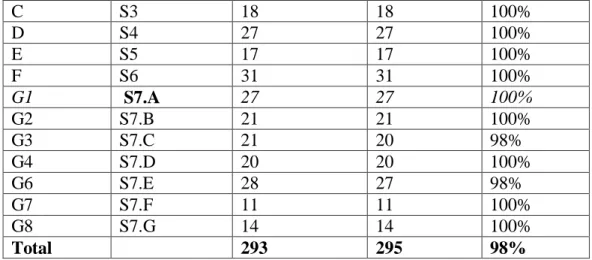
Table 1. The Distribution and Retrieval of Instruments
Profiles of Respondent SDA Universities and Colleges in Asia: 2018-2019 in Indonesia, Thailand, Myanmar, Hong Kong, Korea, Pakistan, and the Philippines
Country SDA School Number of School
Administrators
Retrieved Instruments
% Retrieved Instruments
A S1 25 25 100%
B S2 37 37 100%
1528
C S3 18 18 100%
D S4 27 27 100%
E S5 17 17 100%
F S6 31 31 100%
G1 S7.A 27 27 100%
G2 S7.B 21 21 100%
G3 S7.C 21 20 98%
G4 S7.D 20 20 100%
G6 S7.E 28 27 98%
G7 S7.F 11 11 100%
G8 S7.G 14 14 100%
Total 293 295 98%
Demographic Profile of the Respondents Distribution by Age
The figure shows the distribution of the respondents by age. Of the 308 (100%) administrator-respondents, seven (2.67 %) failed to answer this part while 288 (99.7%) were able to identify their age (181 or 47.8% were 45 yrs. old & below; and 197 or 52%
were 56 yrs. old & above).
Table 2. Distribution of the respondents by age
Combination M SD n F-value P
45 and below 1.78 0.96 88 .12 .890
46-55 1.81 1.16 108
56 and above 1.73 0.95 66
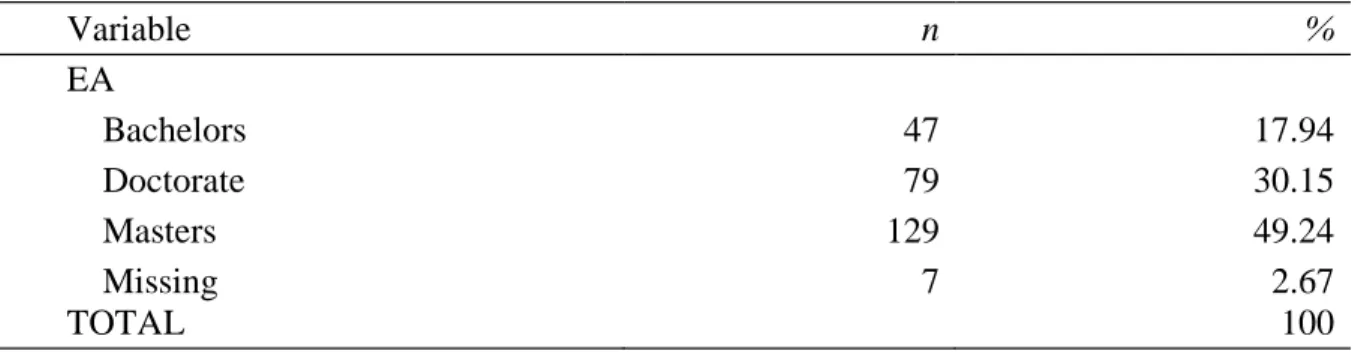
Table 3. Distribution of the respondents by educational attainment
Variable n %
EA
Bachelors 47 17.94
Doctorate 79 30.15
Masters 129 49.24
Missing TOTAL
7 2.67
100
Distribution By Years Of Experience
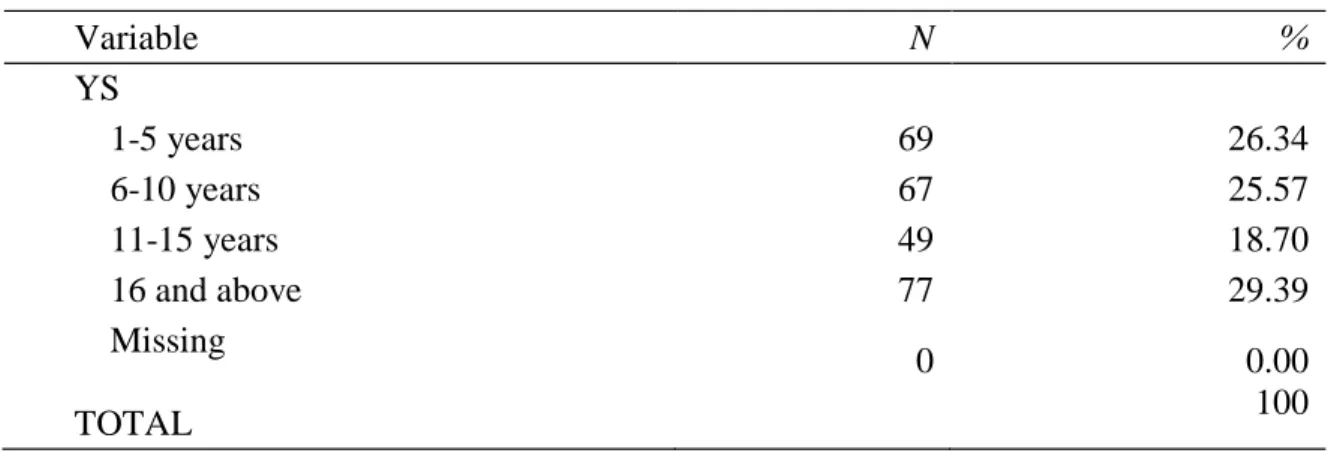
The figure above displays the distribution of school administrator-respondents according to years of experience. Of the 308 (100%) respondents who participated, three (.8%) were
1529
not able to answer this part; 152 (40.1%) served the school for 11 years and below; and 224 (59.1%) served the school for 12 years and above.
Table 4. Distribution of respondents by years of experience
Variable N %
YS
1-5 years 69 26.34
6-10 years 67 25.57
11-15 years 49 18.70
16 and above 77 29.39
Missing TOTAL
0 0.00
100
Instrumentation
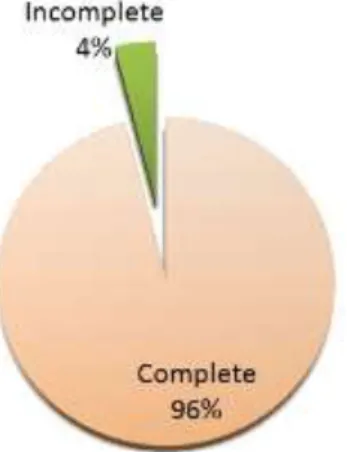
The researcher followed a systematic procedure from the preliminary data gathering. The study had three major phases: The Preliminary Data Gathering phase (PDG), the Questionnaire Development (QD), the Validation Phase (VP) and finally, the Pilot Testing (PT). The total data gathering instruments was 300; however, the researcher retrieved only 295. Table 1 displays the distribution and retrieval of the instruments from the respondents.
The questionnaire had four parts:
Part I dealt with the respondents’ demographic profile: age, civil status, educational attainment and years of experience as school administrators.
Part II contained questions on organizational culture as an administrator particularly on the constructs of involvement with 15 questions; consistency with 15 questions; adaptability, with 16 questions; and mission with 16 questions.
Part III is TQM in education experience with four dimensions namely: Customer-Supplier Focus with 15 questions; Continuous Improvement and Self Evaluation with 15 questions, a Process-Systems Approach with 18 questions, and Consistent Quality Leadership with 10 questions.
Part IV contained leadership styles which dealt with Transformational Leadership Style with 17 questions and Transactional Leadership Style 14 questions
1530
RESULTS
Summary on the Level of Organizational Culture
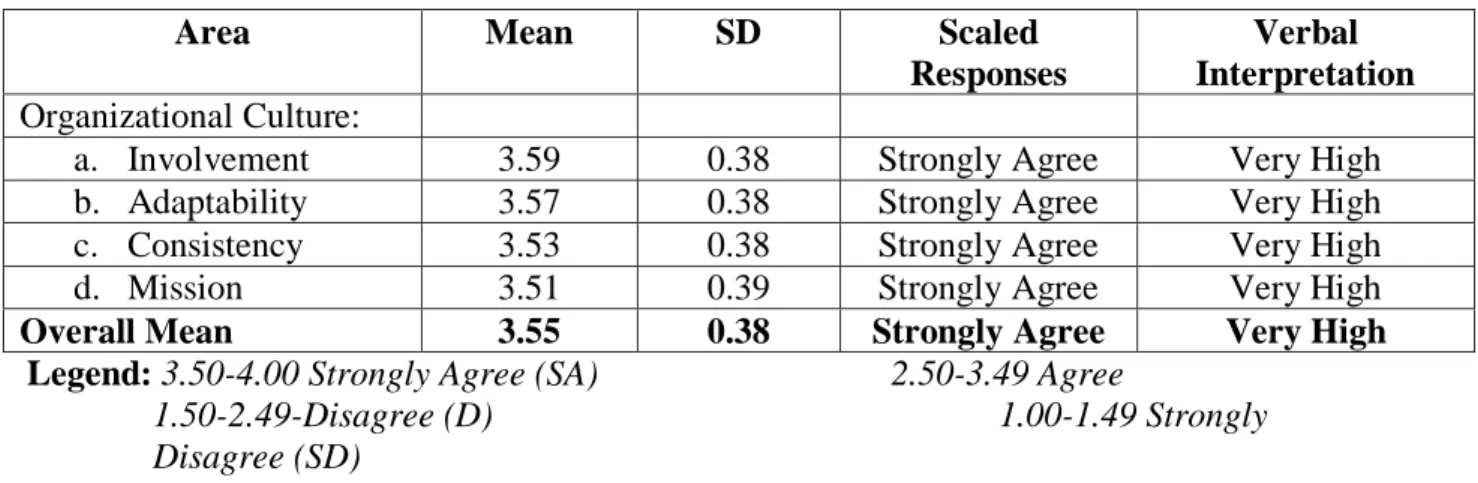
Table 13 shows the summary of the level of Organizational Culture with an overall mean of 0.35 and a standard deviation of 0.38 and interpreted as very high. The involvement trait of organizational culture has the highest mean (3.59) among the four dimensions and the lowest is the mission trait (3.51).
Table 5. Summary on the Level of Organizational Culture
Area Mean SD Scaled
Responses
Verbal Interpretation Organizational Culture:
a. Involvement 3.59 0.38 Strongly Agree Very High
b. Adaptability 3.57 0.38 Strongly Agree Very High
c. Consistency 3.53 0.38 Strongly Agree Very High
d. Mission 3.51 0.39 Strongly Agree Very High
Overall Mean 3.55 0.38 Strongly Agree Very High
Legend: 3.50-4.00 Strongly Agree (SA) 2.50-3.49 Agree
1.50-2.49-Disagree (D) 1.00-1.49 Strongly
Disagree (SD)
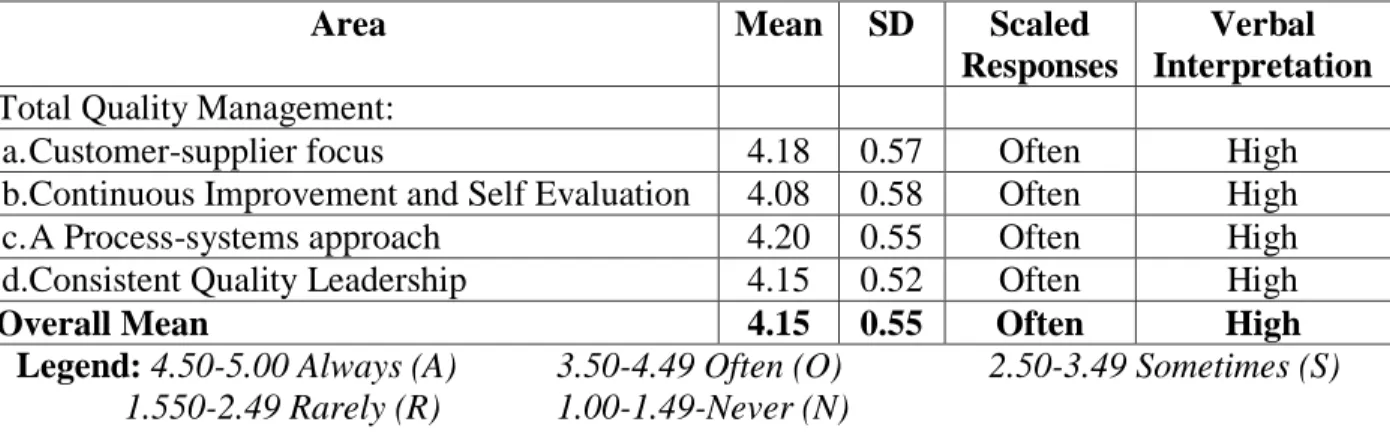
Table 6.Summary on the Extent of Total Quality Management practices.
Area Mean SD Scaled
Responses
Verbal Interpretation Total Quality Management:
a. Customer-supplier focus 4.18 0.57 Often High
b.Continuous Improvement and Self Evaluation 4.08 0.58 Often High
c. A Process-systems approach 4.20 0.55 Often High
d.Consistent Quality Leadership 4.15 0.52 Often High
Overall Mean 4.15 0.55 Often High
Legend: 4.50-5.00 Always (A) 3.50-4.49 Often (O) 2.50-3.49 Sometimes (S) 1.550-2.49 Rarely (R) 1.00-1.49-Never (N)
Extent of leadership styles as practiced by administrators. The following were the researcher’s findings on the extent of leadership style as practiced by the administrators in different tertiary institutions in Asia in terms of transformational and transactional leadership style.
Transformational Leadership style
1531
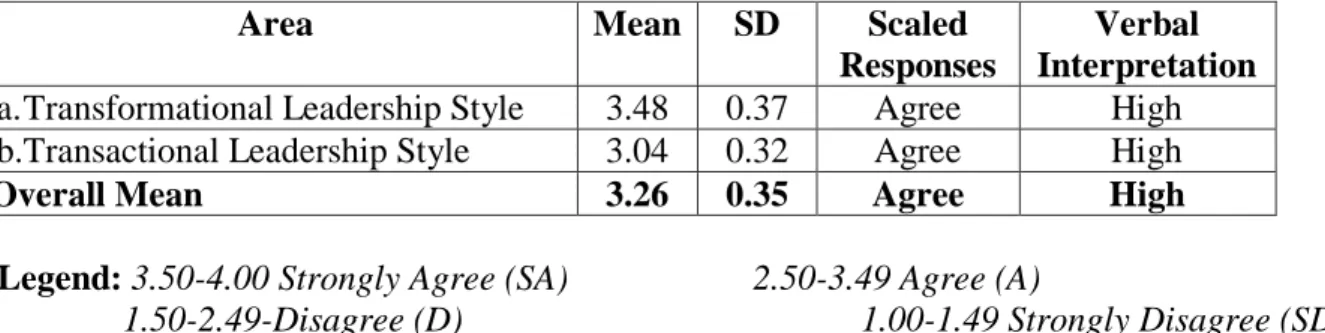
Table 7. Summary on the Extent of Transformational Leadership Style and Transactional Leadership Style
Area Mean SD Scaled
Responses
Verbal Interpretation a. Transformational Leadership Style 3.48 0.37 Agree High b.Transactional Leadership Style 3.04 0.32 Agree High
Overall Mean 3.26 0.35 Agree High
Legend: 3.50-4.00 Strongly Agree (SA) 2.50-3.49 Agree (A) 1.50-2.49-Disagree (D) 1.00-1.49 Strongly Disagree (SD)
Significant Differences in Total Quality Management when Demographic Profile is classified according to:
Age.
Table 8 presents the difference between age and total quality management which was interpreted as having no significant difference as shown by the t-test and p-values.
Table 8. Age Differences on Total Quality Management
Combination M SD N F-Value p-value VI
45 and below 1.78 0.96 88 0.12 .890 Not Sig.
46-55 1.81 1.16 108 Not Sig.
56 and above 1.73 0.95 66
It should be noted that the indicated sample size was too small to be statistically calculated.
The mean difference is
significant at the 0.05 level 9 (2-tailed)
The data reflected that respondents with the age of 45 and below had a mean of 1.73 and SD of 0.96. Respondents with ages of 46 to 55 had a mean of 1.81 and SD of 1.16 while respondents with ages 56 and above had a mean of 1.73 and SD of 0.95.
The result of the study shows that there is no significant difference in the TQM practices when classifying the age of the respondents. This implies that regardless of age, SDA school administrators in selected tertiary institutions in Asia are geared towards attaining TQM in education. Therefore, the null hypothesis which states that “There is no significant difference in total quality management classifying the age of the respondents” is accepted.
1532
The findings disprove the statement of Mpayamaguru (2012), when he cited that young and old workers have differences in job performances because respondents work to support total quality management regardless of age.
Educational Attainment.
Table 9 presents the difference between educational attainment and total quality management that was interpreted as no significant difference as shown by the t-test and p-values.
Tables 9. Educational Attainment Differences on Total Quality Management
Variable n % VI
Educational Attainment Not Sig.
Bachelors 47 17.94 Not Sig.
Doctorate 79 30.15 Not Sig.
Masters 129 49.24 Not Sig.
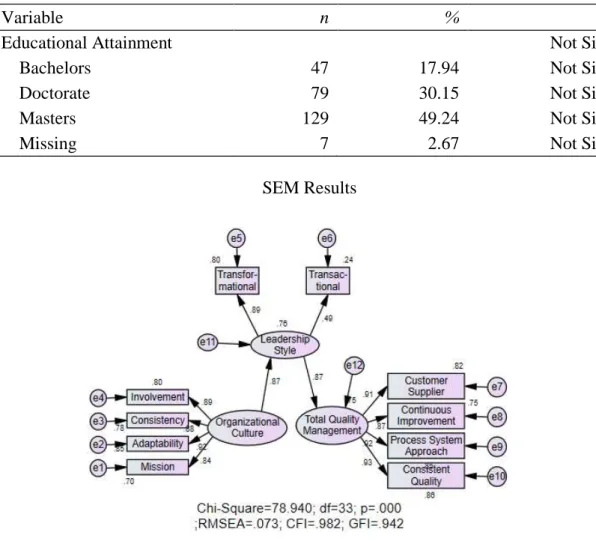
Missing 7 2.67 Not Sig.
SEM Results
Effects Of Transactional Leadership On Quality Education
The following shows the effects of transactional leadership on quality education Table 10. Standardized Path Coefficient in the Model
Variables Organizational Culture Leadership Style Total Quality Management
Organizational Culture .87
Leadership Style .87
Total Quality Management
1533
DISCUSSION
The findings of the study showed that the level of practice of respondents’ organizational culture is very high with a mean of 3.58, and an SD of .38, where school administrators’
involvement is interpreted as very high; consistency with a mean of 3.52, and an SD of .38 is interpreted as high, adaptability with a mean of 3.57, and an SD of.38, is interpreted as very high; and mission with a mean of 3.51 and an SD of .390 is interpreted as high. These organizational culture elements are highly practiced and evident in the SDA tertiary organizational institutions.
The extent of TQM as perceived by the respondents in tertiary Seventh-day Adventist institutions is elucidated as high. Based on the results of this study, customer-supplier focus with a mean of 4.17 and a standard deviation of 0.57 is interpreted as high. Continuous improvement with a mean of 4.08 and a standard deviation of .576 is interpreted as high; a process-system approach with a mean of 4.20 and a standard deviation of 0.55 is interpreted as high; Consistent Quality Leadership with a mean of 4.15 is interpreted is high, and a standard deviation of 0 .518 is interpreted is high. The above results established the fact that school administrators of SDA tertiary institutions concentrated on the process-systems approach with a mean of 4.20. On the other hand, continuous improvement with a mean of 4.08 was observed to be a low priority, proving that the most essential thing practiced in colleges and universities of SDA tertiary institutions focused on processes, giving less importance to continuous improvement.
The extent of the respondents’ leadership style in tertiary SDA institutions in Asia was rated as agreed and interpreted as high with an overall mean of 3.26 and a standard deviation of 0.35.
The data proved that transformational leadership style appears to be the familiar leadership style of the school administrators. Transformational leadership style with a mean of 3.48; and a standard deviation of 0.37 was interpreted high. Transactional leadership style with a mean of 3.04, and a standard deviation of 0.32, is interpreted as high but with an inferior intensity of being practiced.
Based on the findings of the study, there was no arrow from organizational culture variable pointing or leading to the TQM variable. While it passed through the mediator leadership style then from LS variable an arrow pointed to TQM. Thus, leadership style fully mediates on the relationship between organizational culture and TQM in education.
Based on the emerging model derived from the study, the linear regression model did not produce significant results, F(120=2.90, R^=001 indicating transformational leadership style
1534
and transactional leadership style did not explain a significant proportion of variation in TQM.
This means that leadership style had strong effects on the success of TQM implementation in education as it serves as the control for organizational culture. The results of the linear regression model were not significant, F(1,260) = 2.90, p = .090, R2 = 0.01, indicating that transformational leadership style and transactional leadership style did not explain a significant proportion of variations in TQM.
Conclusion
The following conclusions were drawn based on the findings of the study:
Organizational culture as evidenced through involvement, consistency, adaptability and mission is prevalent among school administrators in Seventh-day Adventist tertiary institutions in Asia. The respondents’ leadership style is high. TQM in education as perceived by the respondents as high, as well. Leadership style fully mediates organizational culture and TQM with transformational leadership style is the leadership style most often practiced. School administrators are geared towards TQM in education regardless of age, civil status, educational attainment and years of experience. These are the variables which significantly predict leadership style and the relationship between organizational culture and TQM in education with direct and indirect effects.
Therefore, the null hypothesis which states that there is no significant difference in TQM when age, civil status, educational attainment and years of experience are considered is accepted. On the other hand, the null hypothesis which states that there is no dimension of organizational culture that significantly predicts TQM and organizational culture is rejected. Leadership style is not significantly related to TQM in education and the null hypotheses that there is no relationship between organizational culture and leadership style is also rejected. More so, the null hypothesis which states that there is no variable that predicts TQM and there is no significant mediating role of leadership style on organizational culture and TQM are also rejected.
The new model derived from this study implies a paradigm shift to be employed by school administrators to attain continuous improvement. A committed prime mover with transformational leadership style to mediate organizational culture towards successful TQM implementation in education, the new model adheres to the values of leading tertiary Adventist Christian education integrated simultaneously with the Seventh-day Adventist beliefs, faith, a positive organizational culture. The school administrators’ transformational leadership style can be the ultimate avenue to a successful TQM in education. Finally, leadership style fully
1535
mediates on the relationship between organizational culture and total quality management in education.
Table 11. Mediation Table
Id Independent Dependent Mediator Type Estimate p-value
11 Organizational Culture TQM Leadership Style full 1.373 .001
Recommendation
Based on the findings and conclusion of the study, the researcher recommends the following:
School administrators should be continually in need of strategic means to keep up with the demands of organizational culture and should be challenged to adapt TQM processes in their institutions. School individuals should show adaptability of the organizational culture through their involvement and consistency in support of the school’s mission. Of equal importance are the different leadership styles that are being used for the individual tasks to continually improve. However, in situations where instructions are unclear and misrepresented between the subordinates and administrators, their loyalty and commitment towards the institution lessen, there is a need to improve on TQM and safeguard organizational culture.
Taking into consideration their role as motivators of a successful TQM implementation in education, school administrators and leaders - must look into the significance of having full commitment concerning the TQM process, apply transformational leadership style and provide their institutions with a range of TQM ideas from which to select those that best fit their situations; be introspective and apply strategies for changes using the appropriate leadership style tailored to the demands of the Adventist education’s organizational culture and aligned with TQM standards; continuously practice productive organizational culture traits of involvement, consistency, adaptability and mission as these traits have strong influence in the attainment of TQM in education; motivate others to apply their collective wisdom and adopt TQM for quality tertiary education; must engage in strategic TQM planning strategies where deemed necessary, in their goal towards continuous improvements; and must exude high confidence level of ability to manage the process of TQM and enhance the existing TQM program; utilize, if applicable, the proposed program presented by the researcher; consider transactional leadership style when a particular situation in the institution necessitates such, along with transformational leadership style. School principals. Creating a positive organizational culture is an essential role of school principals to - provide a concrete tool where teachers are informed of the importance of their support and commitment for continuous
1536
improvement through an effective TQM training program; forge new and efficient approaches in applying TQM principles for teaching-learning; provide practical recommendations in the application of TQM principles; actively become a part of teachers’ research groups for continuous improvement; and implement TQM in all departments.
Teachers. Being the concrete models of the institution’s positive organizational culture, teachers should – exercise continuous improvement and self-evaluation for continuous improvement processes; adapt positive organizational culture to strengthen involvement and consistency; collaborate with colleagues; participate in national, local or international in- service workshops; and engage in continuing education programs.
Researchers. Considering a great need to emphasize the critical factors of TQM so tertiary educational institutions could impart world-class education, researchers could – contemplate on the findings of this study that may be taken as a material or reference of subsidiary information for future research; explore more diverse samples of TQM soft skills in education to test if findings replicate a wider variety of school affiliations; explore other variables that can mediate organizational culture and TQM in education; replicate this study using other dimensions on organizational culture and moderating variables in relation to TQM in education; and administer a related study to explore other possible strands influencing TQM in education.
REFERENCES
Amanchukwu, R. N., Stanley, G. J., & Ololube, N. P. (2015). A review of leadership theories, principles and styles and their relevance to educational management.Scientific &
Academic Publishing, 5(1).
Hill, C. W., Jones, G. R., & Schilling, M. A. (2015). Strategic management: An integrated approach(11th ed.). Cengage Learning.Canada, USA.
Hitt, M., Miller, C. & Colella, A. (2015). Organizational behavior: A strategic approach. John Wiley & Sons, NY.
Sternberg, R., Davis, E., Mason, A., Smith, R.(2015). Academic leadership in higher education: from the top down and the bottom up. Rowman & Littefield, Maryland.
Barr, V.C & Leeson, C. (2016). Quality and leadership in the early years: research, theory and practice. Sage Publications, Ltd. London
Erguvan, M. M. (2016). A framework for implementation of Total Quality Management in Georgian Higher Education Institutions in the context of International Back Sea University. Published Thesis: International Black Sea University.
1537
Lussier, R. & Auchua, C. (2016).Leadership theory, application, & skill development. Cengage Learning. 20 Channel Center Street Boston, MA
Northouse, P. G. (2016). Leadership: Theory and practice (7th ed.). Thousand Oaks, CA: Sage.
Ravindran, N. & Dr. Kamaravel, R. K. (2016). Total quality management in education:
Prospects, issues and challenges. Shanlax International Journal of Education, 4(2), 58- 65.
Rothwell, W.,Stavros, J., Sullivan, R. (2016). Practicing organization development(4th ed.).John Wiley & Sons, Inc., USA.
Rowe, W. G. & Guerrero, L. (2016).Cases in leadership (4th ed.). Sage Publication, Inc.
Scandura, T. (2016). Essentials of organizational behavior: an evidence-based approach. Sage Publications, California.
Evans, J. R., & Lindsay, W. M. (2017). Managing for quality and performance excellence(10th ed.). Cengage Learning, Boston, MA, USA.
Gordon, J. (2017). The power of positive leadership. John Wiley & Sons, Inc. New Jersey, Canada.
Griffin, R., Phillips, J. & Gully, S. (2017). Organizational behaviour: Managing people and organizations. (12th ed.). Cengage Learning, United States.
Kaplan, L. & Owings, W. (2017). Organizational behavior for school leadership. Routledge Taylor and Francis Group, NY
Kouzes, J., &Posner B. (2017). The leadership challenge (6th ed.). John Wiley & Sons, Inc.
Hoboken, New Jersey.
Omar, H. O. (2017). Transformational leadership in quality management. Missoula MT:
University of Montana.
Palmer, I., Dunford, R. & Buchanan, D. (2017). Managing organizational change: Amultiple perspective approach. McGraw-Hill Education International Edition, NY
Powers, K. & Schloss, P. (2018). Organization and administration in higher education. New York, NY.
Daft, R. L. (2018). Leadership experience. Cengage Learning, New York.
Dess, G., McNamara, G., Eisner, A. & Lee, S.(2018). Strategic 9e management text & cases.
McGraw-Hill Education International Edition, New York