In 2006, the Deputy for Poverty Reduction, Manpower and SMEs in BAPPENAS proposed the establishment of a National Poverty Reduction Action Plan to strengthen poverty reduction programming in Indonesia. This working paper was prepared by the TA team to outline a conceptual framework and components of a National Poverty Reduction Action Plan to improve programming over the next three to five years to achieve national poverty reduction goals. It was hoped that the working document would be used by BAPPENAS as a reference for the preparation of a new National Action Plan for Poverty Reduction.
In preparing this Working Paper, the TA Team reviewed and summarized key findings and recommendations from approximately 50 papers related to poverty reduction in Indonesia. a) The Medium Term Development Plan (MDP) and its PRS summary;. The main conclusions are that pro-poor economic growth and accompanying macro-policy changes should be included in a National Poverty Reduction Action Plan with much greater emphasis on labour-intensive firms, micro, small and medium enterprises and the sector of agriculture. TOWARDS A NATIONAL ACTION PLAN FOR POVERTY REDUCTION iii Second, the Team incorporated the results of Working Paper 1 on “Poverty Reduction through Micro, Small and Medium Enterprise Development.
Introduction
Dimensions of Poverty and Policy Implications
TOWARDS A NATIONAL POVERTY REDUCE ACTION PLAN Four-thirds of the approximately 12.8 million illiterate Indonesians are women2. Most poor people tend to work in the informal sector and for micro-businesses. Most poor people live in rural areas and are largely dependent on agriculture.
TOWARDS A NATIONAL POVERTY REDUCTION ACTION PLAN 23 more effective use not only of their income, but also by better and more effective use of DAU, DAK and DEKON funds by the central government. Achieving the objectives of the National Action Plan for Poverty Reduction would require the active cooperation of the central and regional governments. TOWARDS A NATIONAL POVERTY REDUCTION ACTION PLAN 25 b) increase regional governments' awareness and understanding of nature.
Recent Progress
Economic growth has accelerated over recent years, and the government has introduced measures to improve both the financial and business climate. The RPJM has been used as a reference in formulating the annual budgets for 2008, making poverty reduction a top priority. The proportion of the national budget dedicated to the needs of the most disadvantaged in Indonesia has increased significantly from 2005 to 2008.
The government also reduced its large fuel subsidies and used much of the savings to fund pro-poor measures for health, education and rural infrastructure, and cash transfers to poor households. In August 2006, the government announced a commitment of 1.7 billion. USD (15.3 trillion Rp.) over 5 years for a national poverty alleviation program, the new Community Empowerment Program (PNPM). The government has also taken steps to engage the regions in the process of linking the national medium-term development plan and budget plans with the regions' plan to help ensure that local government priorities reflect national priorities, including poverty reduction and related gender equality measures.
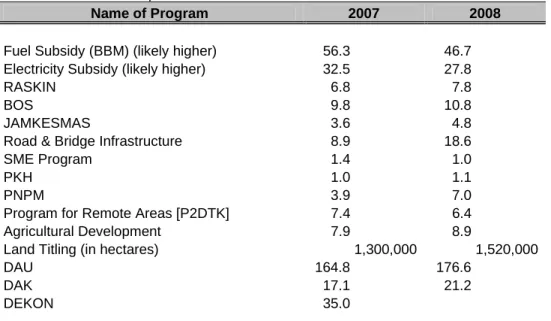
The government also helps the regions with their PRS planning and budgeting, and reviews annual regional budgets and subsidies to make them more pro-poor. TOWARDS A NATIONAL POVERTY REDUCTION ACTION PLAN 7 The Indian government spent more than Rp.120 trillion on subsidies in 2007, most of which was on fuel, rice and electricity5. That amount is likely to be much higher by the end of the fiscal year and next year if oil prices remain at levels around $100 per barrel.
Assessments have shown that many of the benefits of these subsidies do not accrue to the poor and that the costs of these subsidies will remain high. Plus the links between the National Special Allocation Fund (DAK) and Deconcentration funding (DEKON) and regional priorities for poverty reduction are weak. Most of the poorest regions have insufficient funds to effectively address poverty reduction, and the Government of Albania's transfers to the poorest districts should help them more than current funds such as DAK.
5 After this working paper was completed, the government took steps to reduce fuel subsidies by Rp 38 trillion and started a program of cash transfers to the poor.
The National Poverty Reduction Action Plan – Goals and Priorities
- Goals, Targets and Criteria
- Priorities for Pro-Poor Growth
- Priorities for Pro-Poor Jobs
- Priorities for Pro-Poor Services
Decentralization has significantly increased the number and complexity of regulations. This would make it easier for the poor to engage in production and activities that generate sustainable income. Subsidies such as fuel subsidies and grants to regions such as DAU take up a large share of the national budget.
These employment opportunities should be concentrated in sectors and places where the majority of the poor can access them. The pro-poor jobs priorities of an action plan will focus on measures that will create jobs for the majority of the poor in the medium term, especially those in rural areas, in agriculture and in the informal sector through the four main current efforts of expanded and strengthened by additions. financing in: infrastructure, microcredit; agriculture and community development. More needs to be done to create jobs for the poor, such as strengthening and increasing funding for poverty-targeted programs for essential infrastructure, micro-credit, and agricultural and rural development programs.
It is therefore important to note that micro and small enterprises are the homes of informal workers, who in turn constitute the poor. and the poor with low skills. Many of the rural poor farmers are either landless or have no title to their land.
The overall government goal is to change attitudes towards the poor and see the poor as assets and contributors. Over the past few years, the Indonesian government has significantly increased funding for a number of human resource and social protection programs for the poor. Indonesia has increased funding and improved many areas of health: . community health services, health insurance for the poor and more free medicines for the poor.
Evaluations show that health insurance and community health services are much less effective in meeting the needs of the poor than they could or should be. Since 1999, the government has met some of these goals through its Rice for the Poor (RASKIN) program, which annually aims to provide about one million tons of rice to the poor (10 kg per month) at a low price (average of around 1200 Rp. per kg). Informal safety nets play an important role as a coping mechanism for the poor in Indonesia and can compensate for inadequacies in the formal system.
Regional Pro-Poor Plans and Priorities
- Essential Role of Regional Governments
- Regional Pro-Poor Priorities
Each of these rural (or for that matter urban) plans should in turn be linked to national government programs and provide input into their programs as they are passed down to the districts and implemented with the help of local governments and the community. An example is the support for rural plans from regional development programs that are formulated and supported by the central government. In addition to and complementary to these efforts, regional governments should identify their infrastructure needs and either seek support from the central government to finance them from pro-poor action plan and DAK initiatives or use their own resources the first.
The central government should consider continuing to increase the priority and funding of essential health and education services and associated infrastructure needs. However, regional governments can also make significant additional efforts under their control, in addition to paying for normal operating costs, salaries and facilities. All of the above four regional pro-poor priorities should be led by local governments and their community and private sector partners.
Indeed, district governments have significant opportunities to make their programs more pro-poor by directing a greater share of their expenditures to the above key areas. To do that, there is a need for a solid pro-poor plan with clear priorities and then the formulation of more pro-poor budgets.

Implementation Aspects
- Governments Working Together
- Information and Communication
- Funding and Resourcing
- Monitoring and Evaluation (M&E)
TOWARDS A NATIONAL ACTION PLAN FOR COMBATING POVERTY 24 . TOWARDS A NATIONAL ACTION PLAN FOR POVERTY REDUCTION 25 b) increase the awareness and understanding of the regional governments. In recent years, the Central Statistical Bureau (BPS) has made significant progress in collecting, assessing and disseminating poverty data, nationally and regionally. This has enabled better poverty measurement, poverty mapping, poverty targeting of programmes, MDG poverty tracking and program evaluation.
The central government will need to help the regional governments to develop much better local poverty data, to conduct poverty mapping, to track local poverty levels and MDGs, and to develop better indicators for pro-poor programming and monitoring and evaluation (M&E). It is also a major reason why many programs are often not sufficiently accessible to the poor. Information on existing support programs (eg RASKIN and JAMKESMAS) and the new community development and conditional cash transfers (PNPM and PKH) being implemented in all communities over the next three years.
TOWARDS A NATIONAL POVERTY REDUCTION ACTION PLAN 26 explained in the previous sections are effective, some are not. Some of the programs should have increased allocations, some decreased, but for many it is more a case of effective use of existing allocations. DAK – more pro-poor by sector and relatively more per capita in poorer regions plus focus on quality of services not only on infrastructure.
A good understanding of the strengths and weaknesses of previous or ongoing poverty reduction programs is essential. Asia Foundation, Asian Development Bank, Canadian International Development Agency, National Democratic Institute, World Bank and Ministry of State for Women's Empowerment (2006). Moving forward on achieving the MDGs: "A strategy to help the poor by reducing fuel subsidies".
Gardiner, Peter (IHS) Assessing the Relevance of Poverty Reduction to the Budgets of the Ministries of Education and Health, for the Governance Reform Support Project II, Hickling, 2007.