Natural Resource and Environmental Economics
Roger Perman Yue Ma James McGilvray Michael Common
3rd editionNatural Resource and Environmental Economics
Roger Perman Yue Ma James McGilvray Michael Common
Natural Resource and Environmental Economics
Roger P erman Y ue Ma James McGilvray Mic hael Common
3rd edition
3rd edition
Natural Resource and Environmental Economicsis among the leading textbooks in its field. Well written and rigorous in its approach, this third edition follows in the vein of previous editions and continues to provide a compre- hensive and clear account of the application of economic analysis to environmental issues. The new edition retains all of the topics from the second edition but has been reorganised into four Parts: I Foundation II Environmental Pollution III Project Appraisal IV Natural Resource Exploitation.
This text has been written primarily for the specialist market of second and third year undergraduate and postgraduate students of economics.
Roger Permanis Senior Lecturer in Economics, Strathclyde University. His major research interests and publications are in the field of applied econometrics and environmental economics.
Michael Commonis Professor in the Graduate School of Environmental Studies at Strathclyde University. His major research interests are the development of ecological economics and policies for sustainability.
Yue Mais Associate Professor in Economics, Lingnan University, Hong Kong, and Adjunct Professor of Lingnan College, Zhongshan University, China. His major research interests are international banking and finance, as well as environmental economics for developing countries.
The late James McGilvraywas Professor of Economics at Strathclyde University. He made important contributions in the fields of input-output analysis, social accounting and economic statistics, and to the study of the economics of transition in Central and Eastern Europe.
www.booksites.net www.pearsoneduc.com www.booksites.net
Features:
• New chapterson pollution control with imperfect information; cost-benefit analysis and other project appraisal tools; and stock pollution problems
• Substantial extensionsto existing chapters, including a thorough account of game theory and its application to international
environmental problems; fuller treatments of renewable resource and forestry economics;
and greater emphasis on spatial aspects of pollution policy
• New pedagogical featuresincluding learning objectives, chapter summaries, further questions and more concise boxed cases
• New accompanying websiteat
www.booksites.net/perman provides a rich variety of resources for both lecturers and students
• Case studiesand examplesare used extensively, highlighting the application of theory
• Further readings, discussion questionsand problemsconclude each chapter
• Detailed mathematical analysisis covered in appendices to the relevant chapters
• Writing style andtechnical levelhave been made more accessible and consistent
Cover Image © Getty Images
www.booksites.net
strongest educational materials in resource and environmental economics, bringing cutting-edge thinking and best learning practice to a global market.
Under a range of well-known imprints, including Addison-Wesley, we craft high quality print and electronic publications which help readers to understand and apply their content, whether studying or at work.
To find out more about the complete range of our publishing, please visit us on the World Wide Web at:
www.pearsoneduc.com
Natural Resource and Environmental Economics
Third Edition
Roger Perman Yue Ma
James McGilvray
Michael Common
Edinburgh Gate Harlow Essex CM20 2JE
and Associated Companies throughout the world Visit us on the World Wide Web at:
www.pearsoneduc.com
First published 1996 Longman Group Limited Second edition 1999 Addison Wesley Longman Limited Third edition 2003 Pearson Education Limited
© Longman Group Limited 1996
© Addison Wesley Longman Limited 1999
© Pearson Education Limited 2003
The rights of Roger Perman, Yue Ma, James McGilvray and Michael Common to be identified as the authors of this work have been asserted by them in accordance with the Copyright, Designs and Patents Act 1988.
All rights reserved. No part of this publication may be reproduced, stored in a retrieval system, or transmitted in any form or by any means, electronic, mechanical, photocopying, recording or otherwise, without either the prior written permission of the publisher or a licence permitting restricted copying in the United Kingdom issued by the Copyright Licensing Agency Ltd, 90 Tottenham Court Road, London W1P 0LP.
ISBN 0273655590
British Library Cataloguing-in-Publication Data
A catalogue record for this book is available from the British Library Library of Congress Cataloging-in-Publication Data
Natural resource and environmental economics / Roger Perman . . . [et al.].—3rd ed.
p. cm.
Rev. ed. of: Natural resource and environmental economics / Roger Perman, Yue Ma, James McGilvray. 1996.
Includes bibliographical references and index.
ISBN 0-273-65559-0 (pbk.)
1. Environmental economics. 2. Natural resources—Management.
3. Sustainable development. I. Perman, Roger, 1949– Natural resource and environmental economics.
HC79.E5 P446 2003
333.7—dc21 2002042567
10 9 8 7 6 5 4 3 2 1
06 05 04 03
Typeset in 9.75/12pt Times by 35
Printed and bound by Ashford Colour Press Ltd., Gosport
Preface to the Third Edition xiii
Acknowledgements xv
Notation xvi
Introduction xix
Part I Foundations
Chapter 1 An introduction to natural resource and environmental
economics 3
Learning objectives 3
Introduction 3
1.1 Three themes 3
1.2 The emergence of resource and environmental economics 4 1.3 Fundamental issues in the economic approach to resource
and environmental issues 10
1.4 Reader’s guide 12
Summary 14
Further reading 15
Chapter 2 The origins of the sustainability problem 16
Learning objectives 16
Introduction 16
2.1 Economy–environment interdependence 17
2.2 The drivers of environmental impact 28
2.3 Poverty and inequality 41
2.4 Limits to growth? 44
2.5 The pursuit of sustainable development 48
Summary 52
Further reading 52
Discussion questions 54
Problems 54
Chapter 3 Ethics, economics and the environment 56
Learning objectives 56
Introduction 56
3.1 Naturalist moral philosophies 57
3.2 Libertarian moral philosophy 58
3.3 Utilitarianism 59
3.4 Criticisms of utilitarianism 64
3.5 Intertemporal distribution 67
Summary 75
Further reading 75
Discussion questions 76
Problems 77
Appendix 3.1 The Lagrange multiplier method of
solving constrained optimisation problems 77
Appendix 3.2 Social welfare maximisation 80
Chapter 4 Concepts of sustainability 82
Learning objectives 82
Introduction 82
4.1 Concepts and constraints 83
4.2 Economists on sustainability 86
4.3 Ecologists on sustainability 92
4.4 The institutional conception 96
4.5 Sustainability and policy 97
Summary 103
Further reading 103
Discussion questions 104
Problems 104
Chapter 5 Welfare economics and the environment 105
Learning objectives 105
Introduction 105
Part I Efficiency and optimality 105
5.1 Economic efficiency 107
5.2 An efficient allocation of resources is not unique 109
5.3 The social welfare function and optimality 112
5.4 Compensation tests 113
Part II Allocation in a market economy 116
5.5 Efficiency given ideal conditions 116
5.6 Partial equilibrium analysis of market efficiency 119 5.7 Market allocations are not necessarily equitable 122 Part III Market failure, public policy and the environment 124 5.8 The existence of markets for environmental services 124
5.9 Public goods 126
5.10 Externalities 134
5.11 The second-best problem 142
5.12 Imperfect information 143
5.13 Government failure 144
Summary 145
Further reading 146
Discussion questions 146
Problems 146
Appendix 5.1 Conditions for efficiency and optimality 147
Appendix 5.2 Market outcomes 152
Appendix 5.3 Market failure 153
Part II Environmental pollution
Chapter 6 Pollution control: targets 165
Learning objectives 165
Introduction 165
6.1 Modelling pollution mechanisms 167
6.2 Pollution flows, pollution stocks, and pollution damage 169
6.3 The efficient level of pollution 170
6.4 A static model of efficient flow pollution 171
6.5 Modified efficiency targets 174
6.6 Efficient levels of emissions of stock pollutants 177 6.7 Pollution control where damages depend on location
of the emissions 177
6.8 Ambient pollution standards 179
6.9 Intertemporal analysis of stock pollution 181
6.10 Variable decay 186
6.11 Convexity and non-convexity in damage and abatement
cost functions 187
6.12 Estimating the costs of abating pollution 189
6.13 Choosing pollution targets on grounds other than
economic efficiency 193
Summary 194
Further reading 195
Discussion questions 196
Problems 196
Appendix 6.1 Matrix algebra 196
Appendix 6.2 Spatially differentiated stock pollution:
a numerical example 201
Chapter 7 Pollution control: instruments 202
Learning objectives 202
Introduction 202
7.1 Criteria for choice of pollution control instruments 203 7.2 Cost efficiency and cost-effective pollution abatement
instruments 204
7.3 Instruments for achieving pollution abatement targets 206
7.4 Economic incentive (quasi-market) instruments 217
7.5 Pollution control where damages depend on location
of the emissions 228
7.6 A comparison of the relative advantages of command and control, emissions tax, emission abatement subsidy
and marketable permit instruments 234
Summary 238
Further reading 239
Discussion questions 240
Problems 241 Appendix 7.1 The least-cost theorem and pollution
control instruments 242
Chapter 8 Pollution policy with imperfect information 247
Learning objectives 247
Introduction 247
8.1 Difficulties in identifying pollution targets in the context
of limited information and uncertainty 248
8.2 Sustainability-based approaches to target setting and the
precautionary principle 249
8.3 The relative merits of pollution control instruments
under conditions of uncertainty 251
8.4 Transactions costs and environmental regulation 261
Summary 266
Further reading 267
Discussion question 268
Problems 268
Chapter 9 Economy-wide modelling 269
Learning objectives 269
Introduction 269
9.1 Input–output analysis 270
9.2 Environmental input–output analysis 274
9.3 Costs and prices 278
9.4 Computable general equilibrium models 281
Summary 290
Further reading 290
Discussion questions 290
Problems 291
Appendix 9.1 A general framework for environmental
input–output analysis 291
Appendix 9.2 The algebra of the two-sector CGE model 295
Chapter 10 International environmental problems 297
Learning objectives 297
Introduction 297
10.1 International environmental cooperation 298
10.2 Game theory analysis 299
10.3 Factors contributing to enhancing probability of international
agreements or achieving a higher degree of cooperation 311
10.4 International treaties: conclusions 312
10.5 Acid rain pollution 312
10.6 Stratospheric ozone depletion 319
10.7 The greenhouse effect 321
10.8 International trade and the environment 339
Learning outcomes 342
Further reading 343
Discussion questions 345
Problems 346 Appendix 10.1 Some algebra of international treaties 346
Part III Project appraisal
Chapter 11 Cost–benefit analysis 351
Learning objectives 351
Introduction 351
11.1 Intertemporal welfare economics 352
11.2 Project appraisal 362
11.3 Cost–benefit analysis and the environment 373
Summary 385
Further reading 386
Discussion questions 387
Problems 387
Appendix 11.1 Conditions for intertemporal efficiency
and optimality 388
Appendix 11.2 Markets and intertemporal allocation 395
Chapter 12 Valuing the environment 399
Learning objectives 399
Introduction 399
12.1 Dimensions of value 400
12.2 The theory of environmental valuation 403
12.3 Environmental valuation techniques 411
12.4 The travel cost method 411
12.5 Contingent valuation 420
12.6 Other techniques 435
Summary 440
Further reading 440
Discussion questions 441
Problems 441
Appendix 12.1 Demand theory and environmental evaluation 442
Chapter 13 Irreversibility, risk and uncertainty 444
Learning objectives 444
Introduction 444
13.1 Individual decision making in the face of risk 445
13.2 Option price and option value 448
13.3 Risk and irreversibility 451
13.4 Environmental cost–benefit analysis revisited 457
13.5 Decision theory: choices under uncertainty 459
13.6 A safe minimum standard of conservation 461
Summary 464
Further reading 465
Discussion questions 466
Problems 466
Appendix 13.1 Irreversibility and development:
future known 467
Appendix 13.2 Irreversibility, development and risk 468
Part IV Natural resource exploitation
Chapter 14 The efficient and optimal use of natural resources 473
Learning objectives 473
Introduction 473
Part I A simple optimal resource depletion model 474
14.1 The economy and its production function 474
14.2 Is the natural resource essential? 474
14.3 What is the elasticity of substitution between Kand R? 475 14.4 Resource substitutability and the consequences of
increasing resource scarcity 476
14.5 The social welfare function and an optimal allocation of
natural resources 480
Part II Extending the model to incorporate extraction costs and
renewable resources 486
14.6 The optimal solution to the resource depletion model
incorporating extraction costs 487
14.7 Generalisation to renewable resources 489
14.8 Complications 490
14.9 A numerical application: oil extraction and global
optimal consumption 491
Summary 495
Further reading 495
Discussion questions 496
Problems 496
Appendix 14.1 The optimal control problem and its
solution using the maximum principle 496
Appendix 14.2 The optimal solution to the simple
exhaustible resource depletion problem 503
Appendix 14.3 Optimal and efficient extraction or harvesting of a renewable or non-renewable resource
in the presence of resource extraction costs 504
Chapter 15 The theory of optimal resource extraction:
non-renewable resources 506
Learning objectives 506
Introduction 506
15.1 A non-renewable resource two-period model 510
15.2 A non-renewable resource multi-period model 512
15.3 Non-renewable resource extraction in perfectly
competitive markets 517
15.4 Resource extraction in a monopolistic market 518
15.5 A comparison of competitive and monopolistic
extraction programmes 518
15.6 Extensions of the multi-period model of non-renewable
resource depletion 520
15.7 The introduction of taxation/subsidies 525
15.8 The resource depletion model: some extensions and
further issues 526
15.9 Do resource prices actually follow the Hotelling rule? 527
15.10 Natural resource scarcity 529
Summary 532
Further reading 533
Discussion questions 533
Problems 533
Appendix 15.1 Solution of the multi-period resource
depletion model 534
Appendix 15.2 The monopolist’s profit-maximising
extraction programme 535
Appendix 15.3 A worked numerical example 536
Chapter 16 Stock pollution problems 537
Learning objectives 537
Introduction 537
16.1 An aggregate dynamic model of pollution 538
16.2 A complication: variable decay of the pollution stock 544
16.3 Steady-state outcomes 544
16.4 A model of waste accumulation and disposal 548
Summary 553
Further reading 554
Discussion question 554
Problem 554
Chapter 17 Renewable resources 555
Learning objectives 555
Introduction 555
17.1 Biological growth processes 557
17.2 Steady-state harvests 560
17.3 An open-access fishery 561
17.4 The dynamics of renewable resource harvesting 566
17.5 Some more reflections on open-access fisheries 569
17.6 The private-property fishery 570
17.7 Dynamics in the PV-maximising fishery 578
17.8 Bringing things together: the open-access fishery, static private-property fishery and PV-maximising
fishery models compared 579
17.9 Socially efficient resource harvesting 580
17.10 A safe minimum standard of conservation 582
17.11 Resource harvesting, population collapses and the extinction
of species 584
17.12 Renewable resources policy 586
Summary 592
Further reading 593
Discussion questions 595
Problems 595
Appendix 17.1 The discrete-time analogue of the
continuous-time fishery models examined in Chapter 17 596
Chapter 18 Forest resources 598
Learning objectives 598
Introduction 598
18.1 The current state of world forest resources 599
18.2 Characteristics of forest resources 601
18.3 Commercial plantation forestry 605
18.4 Multiple-use forestry 612
18.5 Socially and privately optimal multiple-use plantation forestry 615
18.6 Natural forests and deforestation 615
18.7 Government and forest resources 619
Summary 619
Further reading 620
Discussion questions 620
Problems 621
Appendix 18.1 Mathematical derivations 622
Appendix 18.2 The length of a forest rotation in the
infinite-rotation model: some comparative statics 623
Chapter 19 Accounting for the environment 626
Learning objectives 626
Introduction 627
19.1 Environmental indicators 627
19.2 Environmental accounting: theory 631
19.3 Environmental accounting: practice 640
19.4 Sustainability indicators 650
19.5 Concluding remarks 656
Further reading 658
Discussion questions 659
Problems 659
Appendix 19.1 National income, the return on wealth,
Hartwick’s rule and sustainable income 660
Appendix 19.2 Adjusting national income measurement
to account for the environment 663
Appendix 19.3 The UNSTAT proposals 666
References 671
Index 689
As we wrote in a previous preface, there are two main reasons for pro- ducing a new edition of a textbook. First, the subject may have moved on – this has certainly been true in the area of natural resource and envir- onmental economics. Second, experience in using the text may suggest areas for improvement. Both reasons warrant a third edition now.
We will say nothing here about the ways in which the subject area has
‘moved on’ except to note that it has and that you will find those changes reflected in this new edition. As far as experience in the use of this text is concerned, some more comment is warranted.
First, we have received much feedback from users of the text. Much of this has been highly favourable. Indeed, the authors are very pleased to note that its readership has become very broad, particularly since the appearance of a Chinese translation of the second edition of the text.
Negotiations have just started for a Russian translation of the third edi- tion. User feedback – formal and informal – has provided us with many ideas for ways of making the text better. We are particularly grateful to those individuals who provided solicited reviews of the first and second editions, and to the many readers who made unsolicited comments.
Many of the changes you will find here reflect that body of advice.
Some of the main changes that have taken place between the second and third editions are as follows. There is substantial change to the organisation of the text, principally involving a division into Parts that reflect clusters of themes. Details of this change are given in the Intro- duction. There are three new chapters: pollution policy with imperfect information, cost–benefit analysis, and stock pollution problems. Most of the chapters that are retained from the second edition have been very substantially changed. Of the many changes that could be listed, we mention just four. We pay greater attention to game theory (especially in considering international environmental problems); the consequences of decision making under uncertainty are treated more widely throughout the text; and our use of mathematics has been changed significantly.
Much of the formal treatment has been pulled into appendices, leaving the main body of the chapters to emphasise intuition and verbal or dia- grammatic explanation. However, despite this, the exposition and applica- tion is more strongly based in economic theory than before, rather than less. Finally, considerably more attention has been given to the spatial dimension of pollution problems and abatement programmes.
The other major area of change we have made to the text lies in the development of the accompanying website for the text, and in the
additional resources it contains. We will leave you to peruse the Additional Resources section a few pages below this point to find out what this set of resources comprises.
There are several friends and colleagues the authors would like to thank. Our thanks go to Alison Wilson for her assistance in preparation of the indexes. We remain grateful to Jack Pezzey for writing an appendix to what is now Chapter 19, and for giving comments on drafts of the relevant parts of the chapter in its second edition counterpart.
Mick Common, Yue Ma and Roger Perman would like to express their gratitude to Alison McGilvray for her continued support and encourage- ment throughout this revision process. The genesis, early editions, and current form of the book owe much to her late husband, Jim. We hope that she would agree that this new edition is one of which Jim would feel proud.
Roger, Yue and Mick have succeeded in remaining permanent part- ners with their wives – Val Perman, Hong Lin and Branwen Common – despite the increasing burdens of academic life and textbook pre- paration. Once again, we are grateful to our wives for their help and encouragement.
It would be wrong of us not to express once again our debt to Chris Harrison (now at Cambridge University Press) for his excellence in all aspects of commissioning, editing and providing general support for the two previous editions. We know he remains interested in its success.
Michael Fitch has edited the manuscript with diligence and profession- alism, correcting many of our errors and improving the transparency and readability of the text. For this we are very grateful. The staff at Pearson Higher Education, particularly Paula Harris, Catherine Newman and Ellen Morgan have, as always, been helpful, enthusiastic and professional.1
roger perman yue ma michael common july2002
1 The individuals responsible for typesetting made a superb job of translating the copy-edited manuscript into pages for the book.
It is impossible to fully acknowledge our debt to the many individuals who have developed, and fostered awareness of, the discipline of nat- ural resource and environmental economics. We hope that this debt becomes clear to the reader of this text. What will not be evident to the reader is the debt which the authors owe to those teachers who have cultivated our interests in this area of study.
Wherever the authors have drawn heavily on expositions, in written or other form, of particular individuals or organisations, care was taken to ensure that proper acknowledgement was made at the appropriate places in the text. As noted in the Preface to the Second Edition, Jack Pezzey wrote the first of the appendices to Chapter 19.
We are grateful to the following for permission to reproduce copyright material:
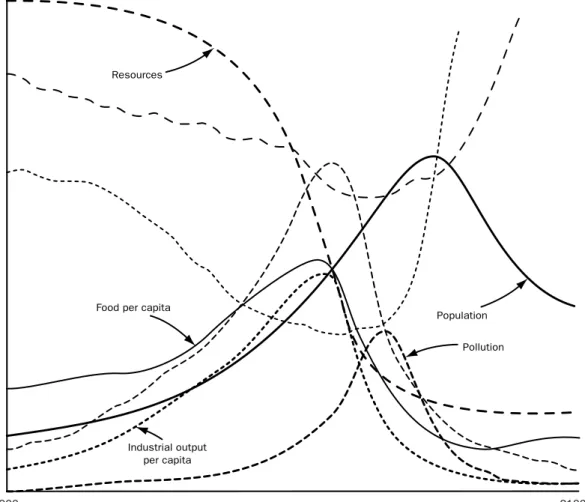
Figure 2.13 from The Limits to Growth: A Report for The Club of Rome’s Project on the Predicament of Mankind(Meadows, D.H., et al. 1972);
Figures 6.1 and 6.2 from Externalities of Energy, Vol. 4, Oil and Gas, by permission of the Office for Official Publications of the European Communities. Unite ‘Services auteurs’ Copyright Bureau JMO C5-129 (ExternE, 1995); Tables 6.5 and 10.8 and Figures 10.16 and 10.17 from Climate Change 2001: Mitigation. Third Assessment Report of Working Group III of the IPCC by permission of the Intergovernmental Panel on Climate Exchange (IPCC, 2001); Table 7.4 from Economic founda- tions of the current regulatory reform efforts, Journal of Economic Perspectives 10(3), 124 –5 (Viscusi, W.K. 1996); Table 7.7 from T.H.
Tietenberg, Economic Instruments for Environmental Regulation, Oxford Review of Policy 6(1), 17–34, by permission of Oxford University Press and the author (Tietenberg, T.H. 1990); Figure 10.13 from EUR report 16523 reproduced by permission of the Publishers, the Office for Official Publications of the European Communities © European Communities;
Table 18.2 from FRA 2000 Main Report, Table 49-1, page 334, by per- mission of the Food and Agriculture Organization of the United Nations (FRA, 2000); Figure 19.1 from Data from Environmental Indicators:
OECD Core Set, Copyright OECD, 1995; Tables 19.1 and 19.2 from Environmental Measures, Environmental Challenge Group; Figure 19.3 from Index of sustainable economic welfare for the UK, Index of Sustainable Economic Welfare –a Pilot Index: 1959–1990(Jackson and Marks, 1994); Extracts on p. 345 from ‘Global warming won’t cost the earth’ (F.C. Ind, 1995), The Independent.
In some instances we have been unable to trace the owners of copyright material, and we would appreciate any information that would enable us to do so.
List of variables
As far as possible, in using letters or symbols to denote variables or other quantities of interest, we have tried to use each character consistently to refer to one variable or quantity. This has not always been possible or desirable, however, because of the large number of variables used in the book. In the following listing, we state the meaning that is usually attached to each letter or symbol used in this way. On the few occasions where a symbol is used in two ways, this is also indicated. Where usage differs from those given below, this is made clear in the text.
A =Pollution stock (or ambient pollution level) B =Gross benefit of an activity
C =Consumption flow ortotal cost of production of a good D =Damage flow
E =An index of environmental pressure e =Natural exponent
F =Reduction in pollution stock brought about by clean-up G =Total extraction cost of a resource orbiological growth of a
resource
H =Renewable resource harvest rate I =Investment flow
i =Market rate of interest K =Capital stock (human-made) L =Labour service flow M =Emissions (pollution) flow MPK =Marginal product of capital MPL =Marginal product of labour MPR =Marginal product of resource MU =Marginal utility
MUX=Marginal utility of good X NB =Net benefit of an activity
P =Unit price of resource (usually upper-case for gross and lower- case for net)
Q =Aggregate output flow
R =Resource extraction or use flow r =Consumption rate of interest S =Resource stock
T =Terminal time of a planning period
t =A period or instant of time U =Utility flow
V =Environmental clean-up expenditure W =Social welfare flow
Z =Pollution abatement flow δ =Social rate of return on capital α =Pollution stock decay rate
ρ =Rate of utility time preference (utility discount rate)
The Greek characters µ, χand ω are used for shadow prices deriving from optimisation problems.
The symbols Xand Yare used in a variety of different ways in the text, depending on the context in question.
Mathematical notation
Where we are considering a function of a single variable such as Y=Y(X)
then we write the first derivative in one of the following four ways:
Each of these denotes the first derivative of Ywith respect to X. In any particular exposition, we choose the form that seems best to convey meaning.
Where we are considering a function of several variables such as the following function of two variables:
Z=Z(P, Q)
we write first partial derivatives in one of the following ways:
each of which is the partial derivative of Zwith respect to the variable P.
We frequently use derivatives of variables with respect to time. For example, in the case of the variable S being a function of time, t, the derivative is written in one of the following forms:
Our most common usage is that of dot notation, as in the last term in the equalities above.
Finally, much (but not all) of the mathematical analysis in this text is set in terms of continuous time (rather than discrete time). For reasons of
d d
d d S
t S t ( )t
= =F
∂
∂
∂
∂ Z P
Z P Q P ZP ( , )
= =
d d
d d Y X
Y X
X Y X YX ( )
( )
= = ′ =
compactness and brevity, we chose in the first and second editions to avoid using the more conventional continuous-time notation x(t) and to use instead the form xt. That convention is continued here. This does, of course, run the risk of ambiguity. However, we have made every effort in the text to make explicit when discrete-time (rather than continuous- time) arguments are being used.
Who is this book for?
This book is directed at students of economics, undertaking a specialist course in resource and/or environmental economics. Its primary use is expected to be as a principal textbook in upper-level undergraduate (final year) and taught masters-level postgraduate programmes. However, it will also serve as a main or supporting text for second-year courses (or third-year courses on four-year degree programmes) that have a substantial environmental economics component.
This third edition of the text is intended to be comprehensive and contemporary. It deals with all major areas of natural resource and environmental economics. The subject is presented in a way that gives a more rigorous grounding in economic ana- lysis than is common in existing texts at this level. It has been structured to achieve a balance of theory, applications and examples, which is appropriate to a text of this level, and which will be, for most readers, their first systematic analysis of resource and environmental economics.
Assumptions we make about the readers of this text
We assume that the reader has a firm grasp of the economic principles covered in the first year of a typical undergraduate economics programme. In par- ticular, it is expected that the reader has a reasonable grounding in microeconomics. However, little know- ledge of macroeconomics is necessary for using this textbook. We make extensive use throughout the book of welfare economics. This is often covered in second-year micro courses, and those readers who
have previously studied this will find it useful. How- ever, the authors have written the text so that relevant welfare economics theory is developed and explained as the reader goes through the early chapters.
The authors have also assumed that the reader will have a basic knowledge of algebra. The text has been organised so that Parts I to III inclusive (Chap- ters 1 to 13) make use of calculus only to an ele- mentary level. Part IV (Chapters 14 to 19) deals with the use of environmental resources over time, and so necessarily makes use of some more advanced techniques associated with dynamic optimisation.
However, we have been careful to make the text generally accessible, and not to put impediments in the way of those students without substantial math- ematics training. To this end, the main presentations of arguments are verbal and intuitive, using graphs as appropriate. Proofs and derivations, where these are thought necessary, are placed in appendices.
These can be omitted without loss of continuity, or can be revisited in a later reading.
Nevertheless, the authors believe that some math- ematical techniques are sufficiently important to an economic analysis of environmental issues at this level to warrant a brief ‘first-principles’ exposition in the text. We have included, as separate appen- dices, sections explaining the Lagrange multiplier technique of solving constrained optimisation prob- lems, an exposition of optimal control theory, and a brief primer on elementary matrix algebra.
Contents
A novel feature of this third edition is the division of the text into four parts; these parts cluster together the principal areas of interest, research and learning in natural resource and environmental economics.
Part I deals with the foundations of resource and environmental economics
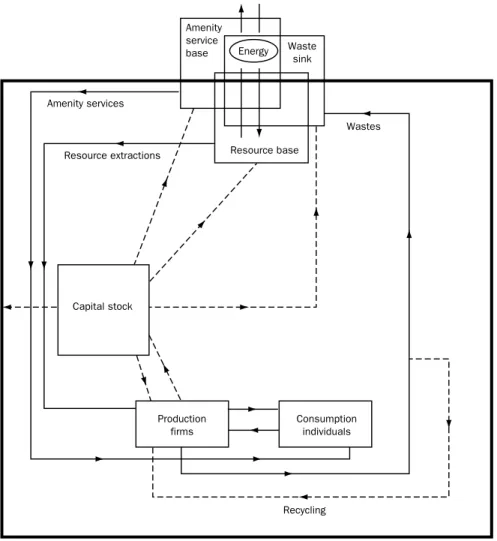
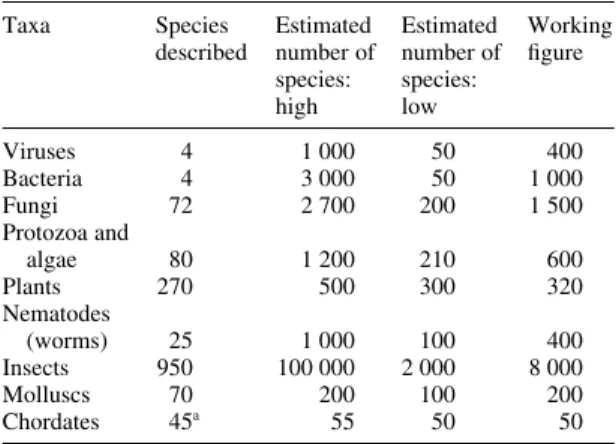
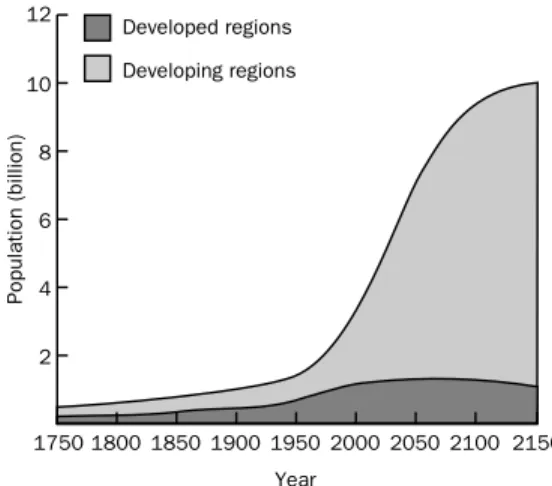
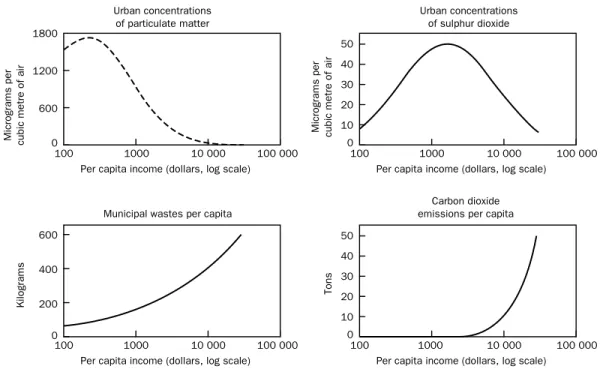
The first chapter provides a background to the study of resource and environmental economics by putting the field in its context in the history of economics, and by briefly outlining the fundamental character- istics of an economics approach to environmental analysis. The text then, in Chapter 2, considers the origins of the sustainability problem by discussing economy–environment interdependence, introducing some principles from environmental science, and by investigating the drivers of environmental impact.
Sustainable development is intrinsically related to the quality of human existence, and we review here some of the salient features on the current state of human development. Chapter 3 examines the ethical underpinnings of resource and environmental eco- nomics, while Chapter 4 considers conceptualisa- tions of the sustainability problem. Part I finishes, in Chapter 5, with a comprehensive review of the theory of static welfare economics, and provides the fundamental economic tools that will be used throughout the rest of the book.
Part II covers what is usually thought to be
‘environmental economics’
A principal focus of the five chapters in Part II is the analysis of pollution. We deal here with pollution targets, in Chapter 6, and with methods of attaining pollution targets (that is, instruments), in Chapter 7.
We are careful to pay proper attention to the limits of economic analysis in these areas. Pollution policy is beset by problems of limited information and uncertainty, and Chapter 8 is entirely devoted to this matter. Many environmental problems spill over national boundaries, and can only be successfully dealt with by means of international cooperation.
Again, we regard this topic of sufficient importance to warrant a chapter, 10, devoted to it. A central fea- ture of this chapter is our use of game theory as the principal tool by which we study the extent and evolution of international cooperation on environ- mental problems. Finally, the authors stress the limits of partial equilibrium analysis. In Chapter 9 we take the reader through the two principal tools of economy-wide economy–environment modelling, input–output analysis and computable general equi-
librium modelling. The ways in which general equili- brium – as opposed to partial equilibrium – modelling can enhance our understanding of resource and envir- onmental issues and provide a rich basis for policy analysis is demonstrated here.
Part III is concerned with the principles and practice of project appraisal
Many practitioners will find that their work involves making recommendations about the desirability of particular projects. Cost–benefit analysis is the central tool developed by economists to support this activity. We provide, in Chapter 11, a careful sum- mary of that technique, paying close attention to its theoretical foundations in intertemporal welfare economics. Our exposition also addresses the limits – in principle and in practice – of cost–benefit ana- lysis, and outlines some other approaches to project appraisal, including multi-criteria analysis. A dis- tinguishing characteristic of the economic approach to project appraisal is its insistence on the evaluation of environmental impacts on a basis that allows comparability with the other costs and benefits of the project. In Chapter 12 we examine the economic theory and practice of valuing environmental (and other non-marketed) services, giving examples of the application of each of the more commonly used methods. Inevitably, decisions are made within a setting of risk and uncertainty, and in which actions will often entail irreversible consequences. Chapter 13 examines how these considerations might shape the ways in which projects should be appraised.
Part IV covers what is commonly known as resource economics
The basic economic approach to natural resource exploitation is set out in Chapter 14. In Chapter 15 we focus on non-renewable resources, while Chap- ter 17 is about the economics of renewable resource harvesting and management, focusing especially on ocean fisheries. Forest resources have some special characteristics, and are the subject of Chapter 18.
Chapter 16 revisits the analysis of pollution prob- lems, but this time focusing on stock pollutants, where the analytical methods used to study resources are applicable. In this chapter pollution generation is linked to the extraction and use of natural resources,
as is necessary in order to develop a sound under- standing of many environmental problems, in particu- lar that of the enhanced greenhouse effect. Finally, Chapter 19 returns to the question of sustainability in the context of a discussion of the theory and prac- tice of environmental accounting.
Perspectives
All books look at their subject matter through one or more ‘lenses’ and this one is no exception.
n It adopts an economicsperspective, while nevertheless recognising the limits of a purely economic analysis and the contributions played by other disciplines.
n It is an environmentaleconomics (as opposed to an ecologicaleconomics) text, although the reader will discover something here of what an ecological economics perspective entails.
n The authors have oriented the text around the organising principles of efficiencyand sustainability.
n Many textbook expositions fail to distinguish properly between the notions of efficiency and optimality; it is important to use these related, but nevertheless separate, ideas properly.
n Although the partitioning of the text might be taken to imply a separation of resource economics from environmental economics, our treatment of topics has made every effort to avoid this.
n Some topics and ideas appear at several points in the book, and so are examined from different perspectives and in various contexts. Examples include the Hartwick rule and the safe minimum standard principle.
n Substantial attention is given to the consequences of limited information (or uncertainty) for policy making.
The textbook as a learning resource
The authors are aware that students need a variety of resources for effective learning. We have tried to
move this third edition of the text closer to provid- ing a full set of such resources. This has been done mainly through the development of an accompany- ing website.
The content of that site is described at length in the section on Additional Resources. At this point it is sufficient just to note that these consist (prin- cipally but not exclusively) of
n a set of web links, carefully structured to facilitate further reading and research;
n specimen answers for the Discussion Questions and Problems that appear at the end of the chapters in the book;
n many additional online Word documents, examining at greater length some topics that had relatively brief coverage in the main text (such as biodiversity, agriculture, traffic);
n a large number of Excel files that use simulation techniques to explore environmental issues, problems, or policies. These can be used by the reader to enhance understanding through exploring a topic further; and teachers may work them up into problems that give powerful insight.
Other pedagogical features
We have gone to some trouble to use, as far as is possible, consistent notation throughout the book. A list of the main symbols used and their usual mean- ings is given on page xvi. However, given the range of material covered it has not been possible to main- tain a one-to-one correspondence between symbols and referents throughout the book. Some symbols do have different meanings in different places. Where- ver there is the possibility of confusion we have made explicit what the symbols used mean at that point in the text.
Secondly, each chapter begins with learning objectives and concludes with a chapter summary.
While these are relatively modest in extent, we hope the reader will nevertheless find them useful. Finally, each chapter also contains a guide to further reading.
Several of these are very extensive. Combined with the website-based links and bibliographies, the reader will find many pointers on where to go next.
Course designs
The authors do, of course, hope that this text will be used for a full course of study involving the material in all 19 chapters. However, we are aware that this would be time-consuming and may not fit with all institutional structures. We therefore offer the fol- lowing three suggestions as to how the text might be used for shorter courses. Suggestions A and B avoid the chapters where dynamic optimisation techniques need to be used, but still include material on sustainability and the principles and application of cost–benefit analysis. In all cases, courses could be further shortened for students with a strong eco- nomics background by treating some parts, at least, of Chapters 5 and 11 as revision material. We do not recommend that this material be completely dropped for any course. Obviously, other permutations are also possible.
A: An environmental economics course
Part I Foundations
Chapter 1 An introduction to natural resource and environmental economics
Chapter 2 The origins of the sustainability problem Chapter 3 Ethics, economics and the environment Chapter 4 Concepts of sustainability
Chapter 5 Welfare economics and the environment Part II Environmental Pollution
Chapter 6 Pollution control: targets Chapter 7 Pollution control: instruments
Chapter 10 International environmental problems Part III Project Appraisal
Chapter 11 Cost–benefit analysis Chapter 12 Valuing the environment
B: An environmental policy course
Part I Foundations
Chapter 2 The origins of the sustainability problem Chapter 3 Ethics, economics and the environment
Chapter 4 Concepts of sustainability
Chapter 5 Welfare economics and the environment Part II Environmental Pollution
Chapter 6 Pollution control: targets Chapter 7 Pollution control: instruments
Chapter 8 Pollution policy with imperfect information Chapter 9 Economy-wide modelling
Chapter 10 International environmental problems Part III Project Appraisal
Chapter 11 Cost–benefit analysis Chapter 12 Valuing the environment
Chapter 13 Irreversibility, risk and uncertainty C: A resource economics and policy course
Part I Foundations
Chapter 2 The origins of the sustainability problem Chapter 4 Concepts of sustainability
Chapter 5 Welfare economics and the environment Part III Project Appraisal
Chapter 11 Cost–benefit analysis Chapter 12 Valuing the environment
Chapter 13 Irreversibility, risk and uncertainty Part IV Natural Resource Exploitation
Chapter 14 The efficient and optimal use of natural resources
Chapter 15 The theory of optimal resource extrac- tion: non-renewable resources
Chapter 16 Stock pollution problems Chapter 17 Renewable resources Chapter 18 Forest resources
Chapter 19 Accounting for the environment
Additional resources
On the back cover of this textbook, you will find the URL (website address) of a site that is available to accompany the text. For convenience, we reproduce the web address again here; it is www.booksites.net/perman.
This web page contains, among other things, some navigation tips to help you find your way around this site. When you are ready to move on, please click on the link indicated by Main Menu. This takes you to the main menu of resources available on the accom- panying website.
The Main Menu contains eight choices. The four on the left are directly related to the textbook.
The four on the right are of associated interest. In the table overleaf, a brief description is given of the resources available from each of these menu items.
Fuller descriptions of some of these menu items are given later in this Introduction.
This accompanying website will undergo a pro- cess of evolution throughout the life of the textbook.
Periodically, the content of the web pages will be
reviewed and updated where necessary or desirable.
Some of the menu items which are relatively ‘sparsely populated’ right now (such as Miscellaneous Items, and Courses: Outlines and Details) are likely to become more heavily populated as time goes by. As errata become known to us, the relevant web pages will be periodically updated.
The authors welcome suggestions for further items to include on these web pages. If you would like to make any such suggestion, or if you have a particular ‘ready-made’ item that you feel would be a useful addition, please e-mail Roger Perman at [email protected]. The authors will consider these suggestions carefully and, wherever possible and desirable, incorporate them (with proper attribu- tion) in these web pages.
Clicking on this hyperlink will take you to the top page of the Natural Resource and Environmental Economics website maintained by one of the
authors. A screenshot of what this web page looks like is shown below.
We now give a little more information about some of these menu items.
Additional Materials for the Text
This is intended by the authors to be the main resource available on this accompanying website.
It is important to be clear that all the materials here are entirely optional and genuinely additional. It is not necessary for the reader to read, study, or work through any of them. It is not required that you use any of these materials to follow any of the argu- ments and/or examples used in the text. The text- book has been written in such a way that it stands alone, and does not intrinsically depend on these additional materials. (Where we felt something was necessary, it was included in the main text.)
However, the fact that we have included these materials does imply that the authors think you may find some of them useful. Some materials are designed to broaden knowledge (by giving, in Word files, additional commentary on related matters).
Others are aimed at deepening understanding by using standard software packages (such as Excel) to show how numerical examples used in the text were obtained, and to allow the reader to experiment a little, perhaps by changing parameter values from those used in the text and observing what happens.
Occasionally we use the symbolic mathematical package Maple for some of the items in Additional Materials. Many readers will be unfamiliar with this pakage, and you should not worry if they are not,
therefore, useful to you. But please note that Maple is increasingly being used in higher education, is not difficult to learn, and it can be a very powerful tool to have at your disposal. You may wish to follow some of our suggestions about how this package can be learned. Finally, we also anticipate that some lecturers and instructors will wish to adapt some of these materials for class use (much as many of the files you will find here benefit from other writers’
earlier work). The authors believe that much useful learning can take place if instructors adapt some of the spreadsheet exercises as exploratory problems and set them as individual or group tasks for their students.
Accessing the Additional Materials
Most of the chapters in the textbook refer to one or more files that are called Additional Materials, plus a specific file name. To find, and then open/down- load these files, go to the ‘Additional Materials for the Text’ link in the Main Menu. Then select the appropriate chapter from the table you will see there.
The page you will then see contains a hyperlinked listing of all Additional Materialsfor that chapter.
The first item in the list for each chapter is a Readme file that briefly summarises all of these.
Please note that we do not place a comprehensive listing of all Additional Materialsreferred to in any particular chapter at the end of that chapter. Such a listing can only be found on the appropriate Readme file that we mentioned above.
Additional Materials for the Text Selecting this page gives the reader access to all the Additional Materialsreferred to throughout the text and to many others not mentioned explicitly in the text.
Images from the Text Here you will find downloadable copies of the images used in the textbook.
Errors in the Third Edition This page lists all errors in the text currently known to the authors.
Answers to Questions in the Text Selecting this page takes the reader to a page that gives access to answers to all questions and problems in the text.
Environmental Economics Links Provides an extensive annotated set of web page links of interest to the resource and environmental economist.
A variety of Bibliographies Here you will find several large bibliographies of readings compiled by various individuals and organisations.
Courses: Outlines and Details A compendium of resource and environmental courses available throughout the world.
Miscellaneous Items As the name implies, contains a collection of items that are difficult to classify but may be of interest to you.
Answers to Questions in the Text
All chapters in this textbook (except the first) con- tain a small number of Discussion Questions and Problems. Answers are available to most of these.
Those answers are collated chapter-by-chapter, and can be accessed through the main table that you will find on this web page.
However, the authors must admit to being in something of a quandary about how those answers should be made available. One principle that we regard as eminently reasonable is that all readers of this text should have free access to the answers. But we are also aware that some instructors may wish to set some of the Questions or Problems for their students, possibly with the intention of assessing answer quality. This seems to be in conflict with the desire to give open access.
At the time of writing, we are inclined to provide open access to the answers. However, the authors reserve the right to change this policy, particularly if instructors inform us that a password-protected answer set would be of particular value to them.
Therefore, we may at some point in the future ask Pearson Education Limited to password-protect this site. Those wishing to be given a password would, in that event, need to apply through the relevant form that would be provided in the ‘Answers to Questions in the Text’ pages on the website. All requests from instructors and any other ‘reasonable request’ for a password would be met in the affirmative.
Environmental Economics Links
As we remarked in the second edition, a huge vol- ume of information of interest to the environmental economist can now be found on the Internet. This can be read online, printed for future reference or saved to disk. It is hardly a novel idea to compile a set of ‘Useful links’ and to place this on one’s own website. We have also done that.
However, we have reasons for believing you may find this one more useful than most. The main rea- son for this belief lies in its structure. Actually, these links are structured in two different ways:
n by chapter topic
n by the provider type
For example, suppose that you have just read Chapter 17 (on renewable resources) and wish to be pointed to a set of web links that are particularly useful in relation to the content of that chapter. Then go to the chapter-by-chapter menu option, select 17 from the table, and the links will be provided. We do not claim that our classification is always uncon- tentious; but the authors have tried to be helpful.
Some of the web links contain brief annotated com- mentary that may help you select more efficiently.
The ‘By organisation link’ structure is more conventional but still very useful, given that so much of value comes from a relatively small set of organisations. You will find that we have further sub-classified this set in various ways to help your searching. It will be too cumbersome to explain the classification structure here. It will be much simpler for you to follow the appropriate link from the Main Menu and view it directly. You will no doubt know already many incredibly good Internet sites maintained by organisations with an interest in the environment (such as those of the US EPA, various United Nations bodies, and many environmental ministries). You may be less aware of the existence of a large number of excellent university or research group sites, or those of various individuals and NGOs.
Note also that the main menu has one specific item labelled as ‘A variety of Bibliographies’. Listed here are not only links to some excellent printed book and /or article bibliographies but also links to a small number of other exceptionally good website compilations. You do not have to rely only on us, therefore!
We are always looking for new suggestions for links to be included in our lists. Please e-mail sug- gestions to Roger Perman (address given earlier).
Site availability
Although the URL for the accompanying website is www.booksites.net/perman, the server location used is actually at the University of Strathclyde. The site can also be accessed via the URL http://homepages.
strath.ac.uk/~hbs96107/enviro7.htm. In common with web addresses at many university servers, this address may change at some time in the future. In the event of such a change, a link to the revised address will be given on the accompanying website.
Contemplation of the world’s disappearing supplies of minerals, forests, and other exhaustible assets has led to demands for regulation of their exploitation. The feeling that these products are now too cheap for the good of future generations, that they are being selfishly exploited at too rapid a rate, and that in consequence of their excessive cheapness they are being produced and consumed wastefully has given rise to the conservation movement.
Hotelling (1931)
1.1 Three themes
The concepts of efficiency and optimality are used in specific ways in economic analysis. We will be dis- cussing this at some length in Chapter 5. However, a brief intuitive account here will be useful. One way of thinking about efficiency is in terms of missed opportunities. If resource use is wasteful in some way then opportunities are being squandered; elim- inating that waste (or inefficiency) can bring net benefits to some group of people. An example is energy inefficiency. It is often argued that much energy is produced or used inefficiently, and that if different techniques were employed significant resource savings could be gained with no loss in terms of final output.
This kind of argument usually refers to some kind of technical or physical inefficiency. Economists usually assume away this kind of inefficiency, and focus on allocative inefficiencies. Even where resources are used in technically efficient ways, net benefits are sometimes squandered. For example, suppose that electricity can be, in technically effi- cient ways, generated by the burning of either some heavily polluting fossil fuel, such as coal, or a less polluting alternative fossil fuel, such as gas. Because of a lower price for the former fuel, it is chosen by
and environmental economics
Learning objectives
In this chapter you will
n be introduced to the concepts of efficiency, optimality and sustainability
n learn about the history of natural resource and environmental economics
n have the main issues of modern resource and environmental economics identified
n see an overview and outline of the structure of this text
Introduction
The three themes that run through this book are efficiency, optimality and sustainability. In this chapter we briefly explain these themes, and then look at the emergence of the field of study which is the economic analysis of natural resources and the environment. We then identify some of the key fea- tures of that field of study, and indicate where, later in the book, the matters raised here are discussed more fully.
profit-maximising electricity producers. However, the pollution results in damages which necessitate expenditure on health care and clean-up operations.
These expenditures, not borne by the electricity sup- plier, may exceed the cost saving that electricity producers obtain from using coal.
If this happens there is an inefficiency that results from resource allocation choices even where there are no technical inefficiencies. Society as a whole would obtain positive net benefits if the less polluting alternative were used. We show throughout the book that such allocative inefficiencies will be pervasive in the use of natural and environmental resources in pure market economies. A substantial part of envir- onmental economics is concerned with how eco- nomies might avoid inefficiencies in the allocation and use of natural and environmental resources.
The second concept – optimality – is related to efficiency, but is distinct from it. To understand the idea of optimality we need to have in mind:
1. a group of people taken to be the relevant
‘society’;
2. some overall objective that this society has, and in terms of which we can measure the extent to which some resource-use decision is desirable from that society’s point of view.
Then a resource-use choice is socially optimal if it maximises that objective given any relevant con- straints that may be operating.
As we shall see (particularly in Chapter 5), the reason efficiency and optimality are related is that it turns out to be the case that a resource allocation cannot be optimal unless it is efficient. That is, efficiency is a necessary condition for optimality.
This should be intuitively obvious: if society squan- ders opportunities, then it cannot be maximising its objective (whatever that might be). However, effi- ciency is not a sufficient condition for optimality; in other words, even if a resource allocation is efficient, it may not be socially optimal. This arises because there will almost always be a multiplicity of differ- ent efficient resource allocations, but only one of those will be ‘best’ from a social point of view. Not surprisingly, the idea of optimality also plays a role in economic analysis.
The third theme is sustainability. For the moment we can say that sustainability involves taking care of
posterity. Why this is something that we need to consider in the context of resource and environ- mental economics is something that we will discuss in the next chapter. Exactly what ‘taking care of pos- terity’ might mean is discussed in Chapter 4. On first thinking about this, you might suspect that, given optimality, a concept such as sustainability is redund- ant. If an allocation of resources is socially optimal, then surely it must also be sustainable? If sustain- ability matters, then presumably it would enter into the list of society’s objectives and would get taken care of in achieving optimality. Things are not quite so straightforward. The pursuit of optimality as usu- ally considered in economics will not necessarily take adequate care of posterity. If taking care of pos- terity is seen as a moral obligation, then the pursuit of optimality as economists usually specify it will need to be constrained by a sustainability requirement.
1.2 The emergence of resource and environmental economics
We now briefly examine the development of resource and environmental economics from the time of the industrial revolution in Europe.
1.2.1 Classical economics: the contributions of Smith, Malthus, Ricardo and Mill to the development of natural resource economics
While the emergence of natural resource and envir- onmental economics as a distinct sub-discipline has been a relatively recent event, concern with the substance of natural resource and environmental issues has much earlier antecedents. It is evident, for example, in the writings of the classical economists, for whom it was a major concern. The label ‘class- ical’ identifies a number of economists writing in the eighteenth and nineteenth centuries, a period during which the industrial revolution was taking place (at least in much of Europe and North America) and agricultural productivity was growing rapidly. A recurring theme of political–economic debate con- cerned the appropriate institutional arrangements for the development of trade and growth.
These issues are central to the work of Adam Smith (1723 –1790). Smith was the first writer to systematise the argument for the importance of mar- kets in allocating resources, although his emphasis was placed on what we would now call the dynamic effects of markets. His major work, An Inquiry into the Nature and Causes of the Wealth of Nations (1776), contains the famous statement of the role of the ‘invisible hand’:
But it is only for the sake of profit that any man employs a capital in the support of industry; and he will always, therefore, endeavour to employ it in the support of that industry of which the produce is likely to be of the greatest value, or to exchange for the greatest quantity, either of money or of other goods.
As every individual, therefore, endeavours as much as he can both to employ his capital in the support of domestic industry, and so to direct that industry that its produce may be of the greatest value; every individual necessarily labours to render the annual revenue of the society as great as he can. He generally, indeed, neither intends to promote the public interest, nor knows how much he is promoting it. . . . he is, in this as in many other cases, led by an invisible hand to promote an end which was no part of his intention . . .
. . . By pursuing his own interest he frequently promotes that of society more effectively than when he really intends to promote it.
Smith ( [1776] 1961), Book IV, Ch. 2, p. 477 This belief in the efficacy of the market mechanism is a fundamental organising principle of the policy prescriptions of modern economics, including re- source and environmental economics, as will be seen in our account of it in the rest of the book.
A central interest of the classical economists was the question of what determined standards of living and economic growth. Natural resources were seen as important determinants of national wealth and its growth. Land (sometimes used to refer to natural resources in general) was viewed as limited in its availability. When to this were added the assump- tions that land was a necessary input to production and that it exhibited diminishing returns, the early classical economists came to the conclusion that economic progress would be a transient feature of history. They saw the inevitability of an eventual stationary state, in which the prospects for the living standard of the majority of people were bleak.
This thesis is most strongly associated with Thomas Malthus (1766 –1834), who argued it most forcefully in his Essay on the Principle of Population(1798), giving rise to the practice of describing those who now question the feasibility of continuing long-run economic growth as ‘neo-Malthusian’. For Malthus, a fixed land quantity, an assumed tendency for con- tinual positive population growth, and diminishing returns in agriculture implied a tendency for output per capita to fall over time. There was, according to Malthus, a long-run tendency for the living stand- ards of the mass of people to be driven down to a subsistence level. At the subsistence wage level, living standards would be such that the population could just reproduce itself, and the economy would attain a steady state with a constant population size and constant, subsistence-level, living standards.
This notion of a steady state was formalised and extended by David Ricardo (1772 –1823), particu- larly in his Principles of Political Economy and Taxation (1817). Malthus’s assumption of a fixed stock of land was replaced by a conception in which land was available in parcels of varying quality.
Agricultural output could be expanded by increasing the intensive margin (exploiting a given parcel of land more intensively) or by increasing the extens- ive margin (bringing previously uncultivated land into productive use). However, in either case, returns to the land input were taken to be diminishing. Eco- nomic development then proceeds in such a way that the ‘economic surplus’ is appropriated increasingly in the form of rent, the return to land, and develop- ment again converges toward a Malthusian station- ary state.
In the writings of John Stuart Mill (1806 –1873) (see in particular Mill (1857) ) one finds a full state- ment of classical economics at its culmination. Mill’s work utilises the idea of diminishing returns, but recognises the countervailing influence of the growth of knowledge and technical progress in agriculture and in production more generally. Writing in Britain when output per person was apparently rising, not falling, he placed less emphasis on diminishing returns, reflecting the relaxation of the constraints of the extensive margin as colonial exploitation opened up new tranches of land, as fossil fuels were increas- ingly exploited, and as innovation rapidly increased agricultural productivity. The concept of a stationary