More and more legislation is being developed in the UK, the EEC and around the world to protect the individual and the environment from the dangerous pollutant - noise. Inevitably there is some duplication between the chapters and with our other publication, Noise Control in Building Services. Nevertheless, it is considered a book of value to both students and engineers in all industries, an essential reference for any bookcase.
Basic Physics of Sound
This is an equation that relates the sound pressure level to the sound power level under a given circumstance. When this distance is greater than (b/π), the sound pressure level is the same as that produced by a compact source of the same power.

Physiology and Psychology of
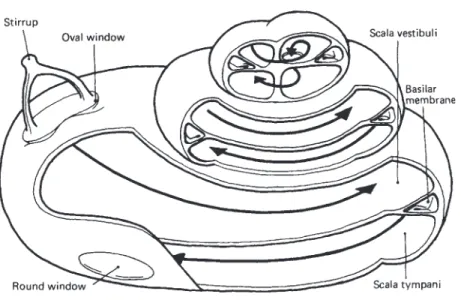
Connected to the eardrum is a series of small bones in the air-filled middle ear cavity. Exposure to impulsive noise of 150 dB or more can cause the eardrum to rupture beyond repair—the umbilicus can break or displace, or even penetrate the oval window.
Noise and the Law
At this stage, the local authority's Environmental Health Department issued a notice under the Pollution Control Act 1974. In the UK, the Noise at Work Regulations 1989 do not require an employee's hearing to be tested.
Sound in Rooms
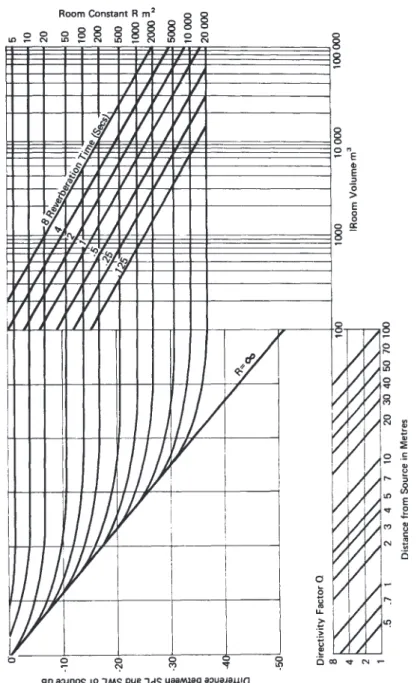
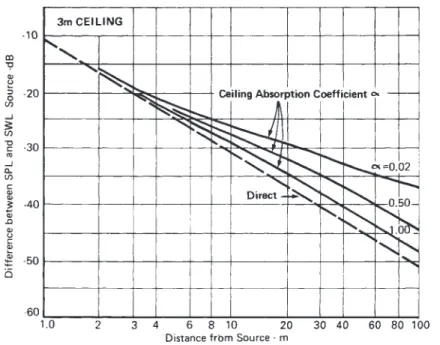
The achievement of the reverberant component of the sound pressure level in a room is only possible when the multiple reflection process of sound between the boundaries of the room is not inhibited. All three of the previous faults can be overcome by ensuring that the sound is not so easily reflected from the special surfaces.
Sound Insulation
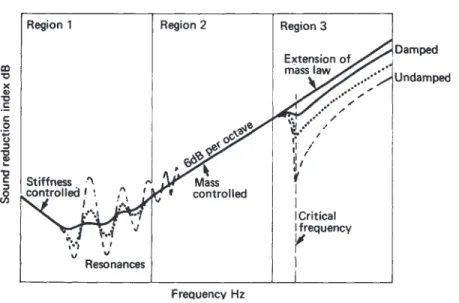
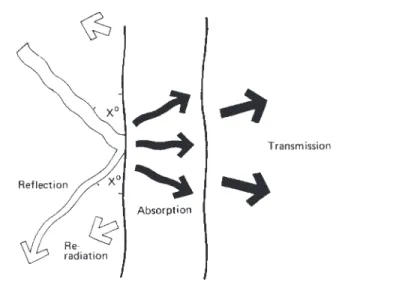
Thus the amplitude of wall vibrations is inversely proportional to the mass of the wall and it follows that. It will be clear that the transmitted sound pressure level L2 will be directly proportional to the area of the compartment under test. If the partition surface were increased, more acoustic energy would be communicated to the waiting room and the measured sound pressure level L2 would increase.
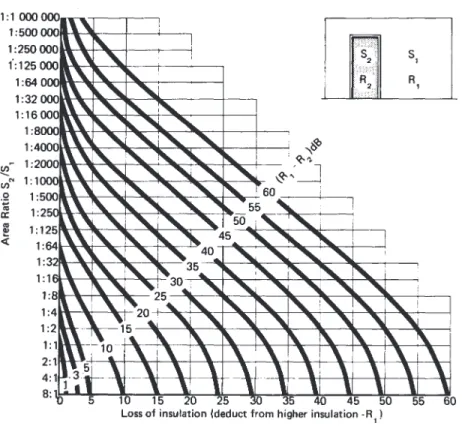
The stiffness of the partition wall affects performance in both Regions 1 and 3. SPL1 = reverberant sound pressure level in the source room SRI = sound reduction index of the common partition S = area of the partition wall (m2). In this example, it was assumed that the entire partition wall had the same construction.
Failing this, the performance of the partition had to be improved so that the combined performance of three elements was acceptable.

Vibration Theory
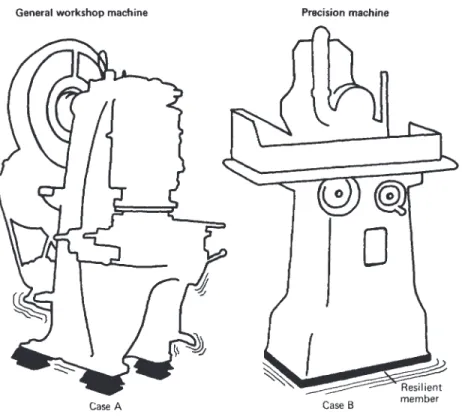
At low frequencies, the movement will be resisted mainly by the stiffness of the support springs. As the disturbing frequency tends to zero, the motion of the device will be equal to the disturbing force divided by the spring stiffness. However, if the disturbing frequency is too high, the motion will be resisted by the mass effect of the mounted device.
If the mass moves upward, in the absence of the disturbing force the mass will tend to continue upward. Effects of spring stiffness The natural frequency of a simple mass-spring system depends only on the static deflection of the spring under the mass. In these circumstances, it is the mass that controls the amount of movement, not the spring.
Individual components can no longer be considered rigid and the mass of the spring becomes significant.
Basic Sound and Vibration
Measuring Systems
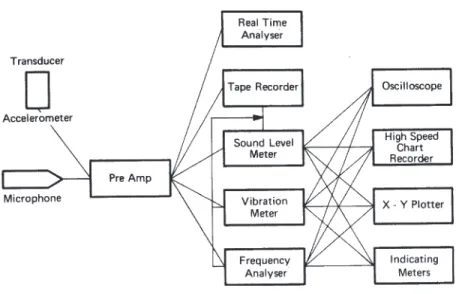
Displacement transducers generate an output voltage that is directly proportional to the relative displacement of the pickup. When the assembly is subjected to vibrations, the mass exerts a force on the piezoelectric discs that is proportional to the acceleration of the mass. The piezoelectric effect of the discs produces a voltage proportional to the force applied, and thus to the acceleration it is subjected to.
Therefore, the length of the cable between the microphone and the amplifier is no longer important. Only rarely is the higher skill of a quality instrument recorder required. The simplest combination of the basic sound and vibration measurement systems described in Section 1 is the sound level meter.
Other instruments have grids of analysis filters built into the housing of the sound level meter.
Measurements and Measuring
Techniques
In many general purpose jobs, the risk of microphone damage inherent in using a random effect corrector is not justified by the increased accuracy at high frequencies. A microphone samples the sound pressure level in a small area, but whether the sound pressure level at the microphone is representative of the surroundings will depend on many factors. Experience has shown that it is difficult to predict night conditions based on observing the location during the day.
Wind has a secondary effect by directly affecting the microphone of the meter and causing high readings. If you plug headphones into the output socket of the sound level meter, you can listen to the sounds registered by the meter and tell if you have problems or not. Measurements at such locations are therefore unlikely to be representative of the area as a whole.
While measurements in dBA terms are usually sufficient to establish whether a problem exists, but when remedial measures need to be taken, it is necessary to have information about the frequency content of the noise.
Planning for Noise Control
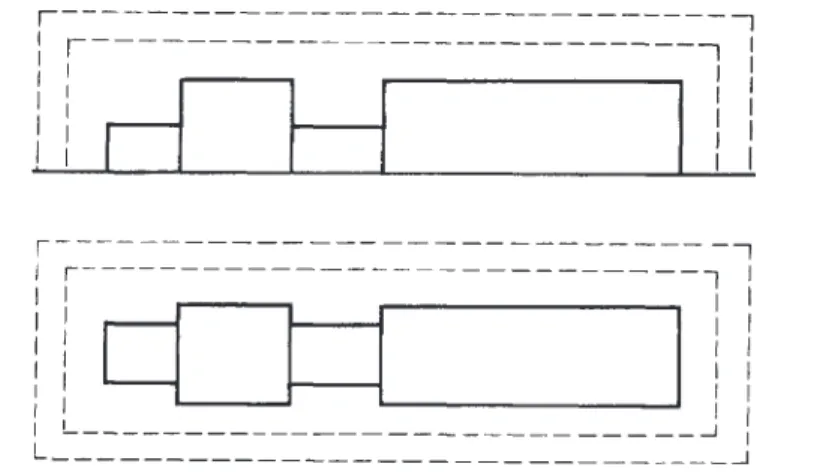
Transmission Path The second phase of the chain – the transmission path – is identified as all wave transmission media that communicates the sound and vibration generation from the source to the receiver. Receiver The last part of the chain—the receiver—is identified as the occupant of the place most affected by any noise nuisance. Noise control along the transmission path embraces any changes, modifications or supplementary noise control elements introduced at any point between the environment of the sound source and the receiver.
Before prejudging such a situation, it is useful to determine all possible controls that could be applied to the situation. Each of the noise control procedures shown in Figure 5 can contribute to reducing ambient noise levels. The basic source of noise will be located on that part of the machine from where the input of vibration energy originates.
Consequently, any treatment that can reduce such build-up of the reverberant sound field, such as the use of sound.
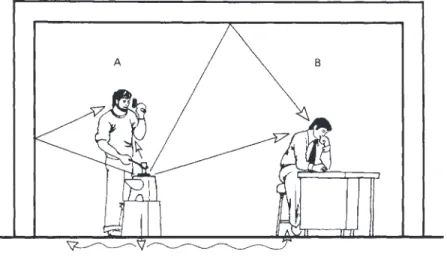
Noise Control by Planning and
Maintenance
Neighboring residents often see the facility from the back or side instead of the front. With all noise control issues, it is almost invariably cheaper to incorporate mitigation measures at the outset rather than later. The solution would have been to install ceilings for the offices, which would have made it possible to realize the full performance of the partitions.
On the other hand, if noise had been taken into account at the design stage, the problem would not have arisen and the total cost of the system would probably not have been higher. Noise control by planning is probably the least spectacular form of noise control, but in many cases it is the most effective form. Maintenance After noise control through planning, noise control through maintenance is probably the most neglected area.
Increased noise levels or vibration levels from cars can be used as a guide to the condition of the car and should be interpreted.

Noise Control at Source
An example of the former was replacing a milling process with weld preparation on diesel engine cylinder blocks. Changing cam profiles to avoid step changes in acceleration is an example of the first process. Ironically, in many of the cases where this has occurred, soft materials have been found under the same circumstances to reduce wear.
Stick-Slip Friction Here, the sound is produced by the alternating sliding and sticking of the two contact surfaces, causing the structure to sound. In many cases lubrication of the process, the simplest way to reduce noise, is not an acceptable solution. Hydraulic effects Noise from hydraulic effects is related to the design of the motors, pumps, valves and other components in the system.
This is due to fluctuations in the airflow over the fan blades or louver as it passes through the ducts caused by the other component.

Enclosures, Barriers and Cladding
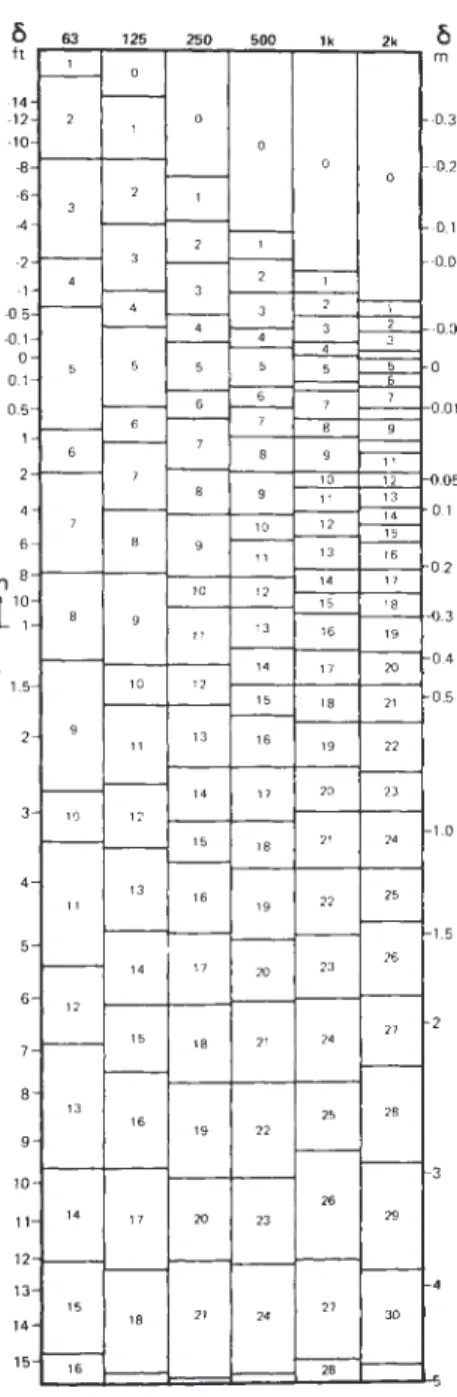
However, high-frequency radiation is better controlled by screening, and a more pronounced cut-off will be detected on the quiet side of the barrier. It can be established that the insertion loss of a barrier will be a function of the Fresnel number (2.δ/λ), and the relationship between screening effect and path difference is illustrated in fig. 2. It will thus be clear that the sound energy reaching the observer will be the sum of the total energy received along these three paths.
What is the resulting screening effect if the centerline of the screen is 1 meter from the line connecting the source and the observer? In a situation like this, or when it is necessary to control sound reflected from a shielding structure, it will be necessary to consider the use of an acoustically absorbent treatment on the side of the shield exposed to the sound field. In semi-reflective environments, for example a large workshop, much of the sound will reach the observer behind a screen through reflection from the internal building surfaces.
Consequently, the use of screening for effective noise control will normally be limited to cases where the direct component of the sound field is dominant.