
The NMJN is published by the Department of Nursing, Faculty of Medicine, Diponegoro University and available at http://ejournal.undip.ac.id/index.php/medianers. The journal is published by the Department of Nursing, Faculty of Medicine, Diponegoro University and strives to provide the most recent and best research in the field of nursing. Authors submitting a manuscript do so with the understanding that if accepted for publication, copyright of the article will be assigned to Nurse Media Journal of Nursing and Department of Nursing, Faculty of Medicine, Diponegoro University as the publisher of this journal.
Nurse Media Journal of Nursing and the Department of Nursing, Faculty of Medicine, Diponegoro University make every effort to ensure that no incorrect or misleading data, opinions or statements are published in the journal.
Copyright Transfer Agreement
Reproduction of any part of this journal, its storage in databases and transmission in any form or media such as electronic, electrostatic and mechanical copies, photocopies, recordings, magnetic media, etc. will be permitted only with the written permission of Nurse Media Journal of Nursing and Department of Nursing, Diponegoro University Faculty of Medicine. However, the content of articles and advertisements published in the Nurse Media Journal of Nursing is the sole and exclusive responsibility of their authors and advertisers. The copyright transfer agreement form is available on the NMJN website (http://ejournal.undip.ac.id/index.php/medianers).
We hereby agree to transfer all right, title, interest and copyright ownership to Nurse Media Journal of Nursing, Faculty of Medicine, Diponegoro University for the copyright of the above manuscript.
Copyright Transfer Agreement Form
This is a direct reflection of the quality of the work of the authors and the institutions that support them. The editor of the NMJN journal is responsible for deciding which of the articles submitted to the journal should be published. The validation of the work in question and its importance to researchers and readers should always drive such decisions.
Editors may be guided by the policies of the journal's editorial board and limited by such legal requirements as may be in effect regarding defamation, copyright infringement, and plagiarism.
Publication Ethics and Malpractice Statement
Authors should cite publications that have been influential in determining the nature of the work reported. Authorship should be limited to those who made a significant contribution to the conception, design, execution, or interpretation of the reported study. Where there are others who participated in some essential aspect of the research project, they should be acknowledged or listed as contributors.
If two or more reviewers consider a manuscript unsuitable for publication in this journal, a statement explaining the basis for the decision will be sent to the authors within three months of the submission date.
Submission Information
All manuscripts must be submitted to the NMJN Editorial Board via the Online Submission and Tracking Interface at: http://ejournal.undip.ac.id/index.php/medianers. Three types of manuscripts are acceptable for publication in NMJN: original research articles, literature study, and case report. Manuscripts sent back to the authors for revision must be returned to the editor without delay (no later than one month).
Submit revised manuscripts to the editors by email ([email protected]) or preferably via the online submission interface.
Keyword and Author Indexing
Patient Safety Goals’ Level of Attainment in Selected Tertiary Hospitals in Manila, Philippines: A Preliminary
Study
2015) supported WHO's Health Facts, which stated that in Southeast Asia, limited knowledge about harm to patients poses a threat to patient safety. This study aimed to evaluate the level of achievement of patient safety goals among nurses in selected tertiary hospitals in Metro Manila, Philippines. The 2002 World Health Assembly provided an opportunity for many countries to address the status of patient safety facilities.
2008-0023 to ensure that patient safety is integrated into the system of all hospitals in various settings. Therefore, many hospitals in the country have been mandated to develop an audit mechanism with quality improvement initiatives based on patient safety. In 1999, the Institute of Medicine (cited in Donaldson et al., 2000) advocated the development and implementation of patient safety programs based on safety principles to prevent any harm to patients, significant others, and members of the healthcare team.
The PSG level of achievement varied from one hospital to another, indicating differences in the implementation of patient safety culture. Although significant differences are noted, strengthening patient safety guidelines and protocols should be the highest priority requiring engagement, commitment and collaboration. The selected hospitals in this study indicate a high level of achievement of patient safety objectives.
The hospital should further strengthen knowledge, skills and attitudes towards a continuous patient safety culture. Patient safety and quality of care in developing countries in Southeast Asia: a systematic literature review.
Quality of Life and Associated Factors in Indonesian Diabetic Patients with Foot Ulcers
A previous study reported that approximately 50% of diabetic foot ulcer patients lost their jobs due to their condition. Another previous study also showed that patients with diabetic foot ulcers had significantly lower quality of life in all domains of quality of life (Almeida et al., 2013). A previous study by Syarif examined the quality of life in patients with diabetic foot ulcers in Serang, Indonesia (Syarif, 2013).
The study by Syarif (2013) only examined patients' QOL; However, the factors associated with QOL in diabetic foot ulcer patients in Indonesia had not yet been investigated. Therefore, it is necessary to investigate QOL in each domain and the factors associated with QOL in diabetic foot ulcer patients in Indonesia. This study is the first study to investigate the associated factors of QOL in diabetic foot ulcer patients in Indonesia.
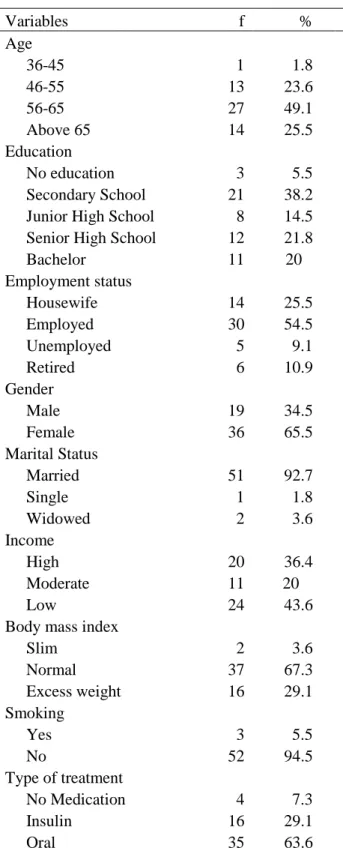
The inclusion criteria of this study were the patients with a diabetic foot ulcer and older than 35 years. The data related to the QOL of patients in each domain with a diabetic foot ulcer are shown in Table 3. This study is the first study to report that blood glucose level can affect the QOL of patients with a diabetic foot ulcer.
Health-related quality of life in patients with diabetic foot ulcers - translation and Polish adaptation of the Diabetic Foot Ulcer Scale-Short Form. Factors associated with wound healing and quality of life in patients with diabetic foot ulcers.
Nursing Students’ Attitudes towards Caring for Dying Patients
The descriptive approach looked for the mean and standard deviation frequency distribution of attitudes toward caring for dying patients. In addition, 84.9% of students had no experience training in the care of dying patients. This study indicated that there is no gender-related difference in attitudes toward caring for dying patients.
However, Dunn, Otten and Stephens (2005) explains that feminism influences attitudes towards caring for dying patients. It contrasts with Barrere, Durkin, and Lacoursiere (2008) who reported that an end-of-life training program affects attitudes toward caring for dying patients. Experience in caring for a patient before death can develop a positive attitude in caring for dying patients.
This experience can influence the students' perceptions and develop an attitude in the care of the dying patients (Lange, Thom, & Kline, 2008). The academic level in this study is also indicated to have a correlation with the attitudes in the care of dying patients. Senior nursing students have a better ability and high confidence in caring for dying patients (Colley, 2016).
Factors of experience of caring for dying patients and academic level influence students' attitudes towards caring for dying patients. Characteristics of nurses and their attitudes towards death and care for dying patients in a public hospital in Jordan.

Self-Management Counseling and Physical Health Status among Patients with Pulmonary TB in Bogor, Indonesia
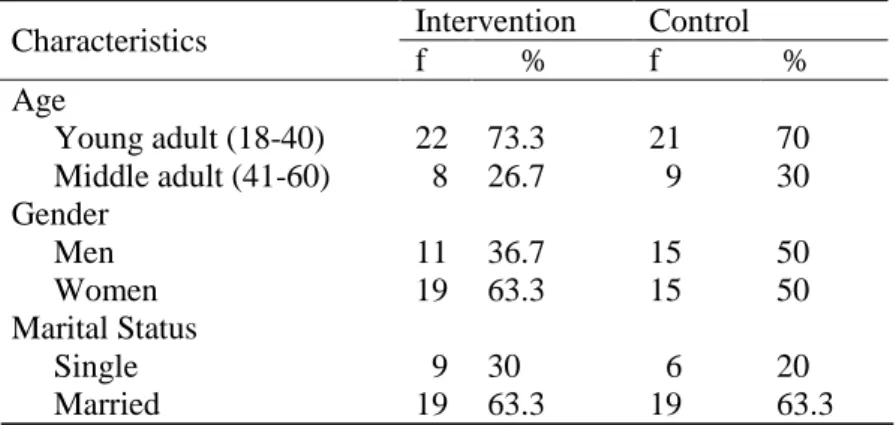
This study aimed to identify the effects of self-management counseling on physical health status in patients with pulmonary TB. The majority of TB patients were female, 63.3% and 50% for the intervention and control groups, respectively. Based on the result of the study, most of the TB patients were aged 18-40 years (early adults).
This is consistent with previous studies, which suggested that most patients with pulmonary tuberculosis were of productive age. This result was different from a previous study which reported that most patients with pulmonary tuberculosis were male (Louw, Mabaso & Peltzer, 2016). Most patients with pulmonary tuberculosis are married because they were included in the adult age group.
The physical health status of pulmonary TB patients changed not only due to the impact of disease but also the side effects of anti-TB drugs. The work is also related to physical health aspects of TB patients' quality of life (Masumoto et al., 2014). This may be a consideration for nurses in providing self-management counseling to pulmonary TB patients, particularly with regard to intervention duration.
Based on the result of this study, it can be concluded that self-management counseling did not significantly increase the physical health status of pulmonary TB patients. Factors associated with health-related quality of life among pulmonary TB patients in Manila, Philippines.
Nurse Media Journal of Nursing, (1), 2018, 44-57
Relating Factors of Insomnia among Haemodialysis Patients
Some studies have found that anxiety as a psychological problem can cause insomnia among hemodialysis patients (Elder et al., 2008; Rosdiana, 2011; Sabry et al., 2010). Another demographic factor such as education level was also generally related to insomnia, but it was not in dialysis patients (Paparrigopoulos et al., 2010; Rosdiana, 2011). Insomnia also occurs mostly in patients with smoking and coffee consumption habits (Merlino et al., 2006).
The incidence of insomnia in this study was higher than the previous studies (Rosdiana, 2011; Sabbatini et al., 2001). This result was a little higher than Lee et al. 2013) who reported that 27.6% of dialysis patients felt anxious. However, this result was lower than Vasilopoulou et al. 2015) who reported that 47.8% of hemodialysis patients had high anxiety levels.
Feroze et al (2010) reported that more than 70% of dialysis patients experienced depression or anxiety. Stress or anxiety in dialysis patients will initiate the sympathetic nervous system to release catecholamine, glucagon and cortisol-steroid hormones (Feroze et al., 2010). Educational level is generally associated with insomnia as a coping resource and possible condition, but was not in dialysis patients (Paparrigopoulos et al., 2010; Rosdiana, 2011).
This result was consistent with Al-Jahdali et al. 2010) and Rosdiana, (2011) who reported that insomnia in patients was not related to marital status. This result was supported by Al-Jahdali et al. 2010) who reported that there was no association between smoking habit–coffee consumption and insomnia.
