DOI: 10.19105/karsa.v30i1.5100
1 |
Received: 14 Sept 2021, Accepted: 17 Mar 2022, Published: 20 Jun 2022
Critical Discourse Analysis on Name Shifting Practice among Millennial Muslims in the Indonesian Context
Rafika Rabba Farah
Fakultas Keguruan dan Ilmu Pendidikan, Universitas Muhammadiyah Malang, Indonesia
email: [email protected] Triastama Wiraatmaja Fakultas Keguruan dan Ilmu Pendidikan Universitas Muhammadiyah Malang, Indonesia
email: [email protected] Puji Sumarsono
Faculty of Language and Communication, Universiti Pendidikan Sultan Idris, Malaysia
email: [email protected]
Abstract
Name-giving is not merely a compilation of words to meet official record registration, yet the idea behind this has some socio-cultural values. Indonesian Muslim names have now experienced some changing from the past. This research aims at analyzing the discourse of millennial Muslim names in Indonesia. NVivo 12 Plus was used to analyze the nodes data of three categories — Pure Indonesian, Pure
DOI: 10.19105/karsa.v30i1.5100
| 2
Arabic, and Mixing across its case — parents and children. Another analysis used was word frequency to picture the frequent word clouds used in parents’ and children’s naming practices. Results show a shift in Indonesian millennial Muslims' naming practice, as the Pure Arabic and Mixing categories have upward trends compared to the Pure Indonesian variety. This present research has shed a light that Indonesian Millennial Muslim parents want to pertain their children's identity as Muslims and want their children to be part of the global world.
[Pemberian nama bukanlah sekadar susunan kata-kata untuk memenuhi pencatatan sipil saja, namun gagasan di balik ini memiliki beberapa nilai sosial budaya. Nama-nama Muslim Indonesia kini telah mengalami beberapa perubahan dari masa lalu. Penelitian ini bertujuan untuk menganalisis wacana nama Muslim milenial di Indonesia. NVivo 12 Plus digunakan untuk menganalisis data node dari tiga kategori—
Bahasa Indonesia Murni, Bahasa Arab Murni, dan Campuran dilihat dari nama orang tua dan anak-anak. Analisis lain yang digunakan adalah frekuensi kata untuk menggambarkan awan kata yang sering digunakan dalam praktik penamaan orang tua dan anak. Hasil penelitian menunjukkan bahwa ada pergeseran praktik penamaan pada Muslim milenial Indonesia, karena kategori Arab Murni dan Campuran memiliki tren yang meningkat dibandingkan dengan kategori Bahasa Indonesia Murni. Penelitian kali ini mengungkap bahwa orang tua Muslim milenial Indonesia memberi nama anak karena ingin mempertahankan identitas anaknya sebagai Muslim serta ingin anaknya menjadi bagian dari dunia global.]
Keywords: Critical Discourse Analysis; name; Muslim; millennial
Introduction
Globalization has brought people more mobility than decades ago, and people can now easily travel around the globe. As a result, people can exchange knowledge, experience, and culture. Knowing other countries’ cultures and talking about it becomes popular. Thus, assimilating into the dominant culture is very likely, and one form of cultural assimilation is found in the name-giving.
DOI: 10.19105/karsa.v30i1.5100
3 | What’s in a name? This saying is not always true; name-giving is significant for the minority. Interestingly, students from China studying in Australian universities are found to have two names, the Chinese and English names. My friend has Abby for her English name and Han Xiao for her Chinese. When she was asked how did she pick up the English name, she declared that her English teacher in high school picked one for her. This issue is supported by a study revealing that many Chinese use western names for pragmatic use; it is for a relationship, intimacy, and mutual trust in intercultural and interpersonal communication, mainly for business purposes.1
Another phenomenon is that Thai students studying in Indonesian universities have significantly different nicknames than their original names written in students’ attendance lists. For instance, Sirilak Prasetdam is called Salma. When it is confirmed that her reason for having that name is because of a religious issue, the Thai-Muslims have two names, Thai names and Muslim-associated names. Thus, to be assimilated into the mainstream culture, the Chinese and Thai students are decided to have two names.
Long in history, it is often heard that people of one ethnicity are forced to assimilate into the mainstream ethnic group by changing their ethnic name. Political tragedy forcing one ethnicity to have the name of the dominant group has occurred to Koreans living in Japan. It is revealed that the Zainichi Koreans were in the history threatened to use the Japanese name during the annexation of Korea (1910-1945) and continue until today.2 Further, the research finding explains that Koreans’ nicknames are still maintained within their group. As for them, using a name attached to their tradition is a norm. In addition, Muslims in Andalusia, Spain, were historically threatened by the Christian-ruling government with three complicated options: exiled, converted, or killed.
Some Muslims chose to make the conversion by changing their Muslim
1 David C.S Li, “Borrowed identity: Signaling involvement with a Western name,”
Journal of Pragmatics 28, no.4 (1997): 489–513, https://www.sciencedirect.com/
science/article/abs/pii/S0378216697000325.
2 Kayoko Aoki, “Name and Ethnic Identity: Experiences of Korean Women in Japan,”
Journal of Asian and African Studies 0, no. 0 (2012): 1–15, https://doi.org/10.1177/
0021909611419943.
DOI: 10.19105/karsa.v30i1.5100
| 4
names into Christian-sounded names. Further, the Turkish-Bulgarian Muslims — the Tatars, Alevi, and Gypsies — were forced to take Bulgarian names with the prohibition of Turkish names during the name change program in 1984-1985.3 In a similar vein, a British Muslims who have Muslim-sounding names are reported to lose their white privilege and are vulnerable to racism and Islamophobia compared to the ones who have British name.4 Also, in Indonesian context, the Javanese Muslims in Bantul West Java are found to shift their name-giving on their children from pure Javanese into more Islamic names.5
In this regard, personal naming is not merely a name-giving; it conveys the social structure of a community and feeling. Of the many kinds of research about Muslim names and identity, however, there is still reasonably limited research studying millennial Muslim names in Indonesia that focus on discovering the trend of name-giving and its discourse on shifting. Therefore, this research investigates the frequent names used by the millennial Muslims on their children, the name- shifting category of parents and children’s names, and parents’ reasons for naming preferences of their children. Thus, this present research will portray the demographic data about a naming practice that occurs among Indonesian millennial Muslims and also their identity associated with the naming-giving. The research problems are as follows: (1) What are the categories of name shift in naming practice between the millennial and the new generation of Indonesian Muslim society? (2) What are the most frequent naming preferences used by the Indonesian millennial
3 Daniel G. Bates, “What’s in a Name ? Minorities , Identity , and Politics in Bulgaria,”
Global Studies in Culture and Power 1, no. 2-3 (1994): 201-225, https://doi.org/
10.1080/1070289X.1994.9962505.
4 Emily Jay Wykes, “The Racialization of Muslim-Sounding Names The interaction of names, embodied identities and Islam (religion),” Bridge Institute (2017): 2-15, https://www.azizfoundation.org.uk/wpcontent/uploads/2021/01/Bridge-Report-Mus lim-sounding-names.pdf.
5 Askuri Askuri and Joel C Kuipers, “An orientation to be a good millennial Muslims:
state and the politics of naming in Islamizing Java,” Indonesian Journal of Islam and Muslim Societies 9, no. 1 (2019): 31–55, https://doi.org/10.18326/ijims.v9i1.
DOI: 10.19105/karsa.v30i1.5100
5 | Muslim society? (3) What are the reasons for naming practices among Indonesian millennial Muslim parents?
This research is expected to contribute to the Sociolinguistics field, particularly capturing the social phenomena related to name- giving. As mentioned, this research aims to fill the gap of the previous research that focuses on name-giving in millennial Muslims in the Indonesian context. Therefore, the results of this study can provide demographic data on the variety of Muslim names used by millennial Muslims and present Muslim parents about their reasons for name- giving.
Name and Linguistics
A name of any kind, like place or person, can be a word or combination of words; thus, it has a linguistic notion. Based on its lexical theory, language in the form of a word is arbitrary. In this regard, it is argued that the arbitrariness of words like “morning”, which has the meaning of time of day before the sun reaches its zenith, and also the use of an onomatopoeic, word such as “bang” or “broom broom” are the example of linguistic arbitrariness.6 Arbitrary means that a word has no interest or intrinsic motivation; the function merely serves as a grammatical function. A significant category of names refers to grammatical structures like nouns and adjectives. In addition, personal names can refer to linguistic properties. Also, some other names follow the phonology, morphology, syntax, and semantic use.7
Yet, different from the arbitrariness of words, the choice of naming is not arbitrary, especially for toponyms — place, and name.8 This choice can be affected by the experience; sometimes, it is political.
For example, some streets in big cities in Indonesia are named Soekarno-
6 Abbas Eslami-Rasekh and Mohammad Ahmadvand, “Name-giving variations in Kurdistan Province of Iran: An ethnic identity marker categorized,” Khazar Journal of Humanities and Social Science 18, no. 2 (2015): 5–22, https://doi.org/10.5782/2223- 2621.2014.18.2.5.
7 Eslami-Rasekh and Ahmadvand, “Name-giving variations in Kurdistan,” 5–22.
8 Lisa Radding and John Western, “What’s in a name? linguistics, geography, and toponyms,” Geographical Review 100, no. 3 (2010): 394–412, https://doi.org/10.1111/
j.1931-0846.2010.00043.x.
DOI: 10.19105/karsa.v30i1.5100
| 6
Hatta as it is related to Indonesian history. Another example, the capital of Indonesia was named Batavia, but after its independence event, Batavia changed into Jayakarta. In history, Jayakarta was inspired by the Quran chapter Al-Fath (victory, triumph); thus, Jayakarta has the meaning of ’a clear conquest’. Again, this place’s naming is related to Indonesian historical events. This naming of Jayakarta has linguistic origins, but this name has changed over time. Language and cultural development make this name change into Jakarta due to its practicality in pronunciation and spelling; thus, Jakarta is the short form of Jayakarta.
Likewise, this phenomenon also occurs in personal names. The use of personal names can have semantic content. Proponents believe that a word must serve a systematic function in language.9So it must have a semantic meaning. In socio-cultural reality, a parent names his kid hoping him to be a good man or be like figure A or B. This practice indicates that societal naming reflects parents' real-world knowledge and is associated with personal taste. In the course of history, Anthroponym studies reveal that naming practices are related to the quality of human characteristics, kinship, nationality, occupation, geography, and social status.10 Furthermore, naming practices also signify the social and cultural backgrounds of the new-born infant and the name-giver; it also represents pivotal insights into the patterns of social and cultural organizations of communities as well as the socio- cultural changes.11 In short, naming is a meaningful practice, not a meaningless tradition as some other experts might believe.
9 Mehdi F. al-Ghazali, “A Semantic Analysis of Personal Names in English and Arabic,” Mustansiriyah Journal of Arts 51 (2009): 1–18, https://www.iasj.net/iasj/
download/441833481f3168fd.
10 Natalya N. Zerkina, Olesya V. Kisel, Vladimir Mikhailov & Oksana A. Lukina,
“Historical and Social Background of English Name Giving Process,” Arab World English Journal 9, no.1 (2018): 88–96, https://doi.org/10.24093/awej/vol9no1.6.
11 Abdul Wahed, Qasem Ghaleb, AWQ Al-Zumor, “A socio-cultural and linguistic analysis of Yemeni Arabic personal names,” GEMA Online Journal of Language Studies 9, no. 2 (2009): 15–27, https://www.researchgate.net/publication/228819616_
A_sociocultural_and_linguistic_analysis_of_yemeni_Arabic_personal_names.
DOI: 10.19105/karsa.v30i1.5100
7 | More importantly, this issue has developed a prominent cross- disciplinary field that studies names and naming practices in linguistics.
Known as Onomastics, which is an area of research under the branch of semantics. This field studies the etymology of proper names12; and this field piqued experts’ interest in linguistics because it deals with language use and practice, ideology, and language play.
Name and Identity
A name attached to someone marks his identity. To which ethics a person belongs, the name can serve as its identification property. Using forename and surname can refer to tribe, ancestor, and area. In the Indonesian context, Nasution, Siregar, Boru are associated with Batak tribe; Assegaf, Al-Habsyi, Al-Attas are belong to Alawiyyin Arab (Habib heredity), while Bamu’min, Ba’asyir, Bahanan are the Hadramaut Arab (non-Habib heredity); this sure name can also be used as a trace to the ancestor’s occupation. While for the association with the area, Indonesian personal names such as Joko, Agus, and Purnomo are known as people from East and Central Java, while Asep, Deden, and Dadang are people from West Java. In addition, certain customs like in India (the Hindus), a personal naming has patrilineal tradition, and a son takes after his father’s family name while a girl will later alter into her husband’s name after she is married.13 This nuance not only reflects a holder’s identity, but the personal name also reflects on the name givers’ identity.
It is factual that a name attached to an individual affects his feelings throughout his life. A personal name indicates the unique identity in which a person will build a perception of himself; in such a way, a personal name can build a self-image. In such a notion, a personal name has a psychological notion on the bearer of that name. Therefore, a name has been declared as having a major impact on personality development. A study on facial appearance shows that a person with a
12 Crystal cited in Wahed, Ghaleb, Al-Zumor, “A socio-cultural and linguistic analysis,” 15–27.
13 Raja Jayaraman, “Personal Identity in a Globalized World: Cultural Roots of Hindu Personal Names and Surnames,” The Journal of Popular Culture 38, no.3 (2005):
476–490, https://doi.org/10.1111/j.0022-3840.2005.00124.x.
DOI: 10.19105/karsa.v30i1.5100
| 8
particular name will have a different facial appearance; thus, it demonstrates that a social tag—given name—represents how someone’s facial appearance will look.14
Someone’s identity is created when they were given specific names; also, when giving names, the name givers must have taken a lot into account, including the internal and external factors that led them to come up with specific names. The internal factors include the weather, agricultural, circumstantial, weapons, and clan names. The external factors that led to specific names include the names of the continents, countries, and cities, foreign names, and brand and innovations names.15 In other words, name giving has profound attachments to depict someone’s identity, including their socio-cultural identity; also, specific names have certain implications based on the name-givers background.
Furthermore, personal naming has constructed one’s position in society. Many researchers have studied the correlation between identity in naming and success in achieving important goals in later life, such as education and economic status. A study on black Asian names at the undergraduate level shows that name type has little direct influence on students’ performance.16 In addition, carrying a black name in American culture has become a consequence in life instead of a cause of poverty and discrimination.17 Meanwhile, an experimental study on using African-American names and White names for job applications written in a resume reveals that African-American names have more
14 Yonat Zwebner, Anne-Laure Sellier, Nir Rosenfeld, Jacob Goldenberg & Ruth Mayo, “We Look Like Our Names: The Manifestation of Name Stereotypes in Facial Appearance,” Journal of Personality and Social Psychology 112, no. 4 (2017): 527–
554, https://doi.org/10.1093/nq/s5-XI.269.148-d.
15 Wahed, Ghaleb, Al-Zumor, “A socio-cultural and linguistic analysis,” 15–27.
16 Gigi Foster, “Names will never hurt me : Racially distinct names and identity in the undergraduate classroom,” Social Science Research 37, (2008): 934–952.
https://doi.org/10.1016/j.ssresearch.2008.02.004.
17 Roland G. Fryer, JR, and Steven D. Levitt, “The causes and consequence of distinctively black names,” Quarterly Journal of Economics 3, (2004): 767–805, https://scholar.harvard.edu/fryer/publications/causes-and-consequences-distinctively- black-names.
DOI: 10.19105/karsa.v30i1.5100
9 | discrimination compared to the White names: as White names receive 50% interview call-backs whereas the African-American names have smaller call-backs for a job interview.18 Furthermore, it has been elicited that Chinese Indonesian parents' preferences in naming their children a mix between English and Indonesian names are a manifestation of political interest in the nation’s politics.19 In such a notion, to clarify the discussion, it is revealed that naming practice can also express a kind of tension as it is used as the interplay between identity and power.
In Chinese culture, the signification of name-giving also not only serves as proactive attempts to preserve their customs and heritages20, but also represent the identity and hopes for their heritages as well. A name among the Chinese also manifests a concept that differs them from a sense of belonging to a particular sex, social class, political or religious creed, geographical background, and racial background.21 Thus, name- giving practices in Chinese culture also represent maintaining their customs.
Names and Religious Connotation
Not only brings social construct, but naming practice around the world also has a religious connotation. It is prevalent that ’English men around the world use baptismal names’. The Christians will be given the
’baptismal name’ shortly after their birth. In Paris, between 1701-1790, the Old Testament names used widely among Catholics were Marie, Anne, Jeanne, Elisabeth, and Suzanne; whereas, among Protestants,
18 Marianne Bertrand & Sendhil Mullainathan, “Are Emily and Greg more employable than Lakisha and Jamal? A field experiment on labor market discrimination,” NBER working paper series 9873 (2003): 147–173, https://www.nber.org/system/files/
working_papers/w9873/w9873.pdf.
19 Benjamin Bailey and Sunny Lie, “The politics of names among Chinese Indonesians in Java,” Journal of Linguistic Anthropology 23, no. 1 (2013): 21–40, https://doi.org/
10.1111/jola.12003.
20 Xing Xu, “Exploring the Logic of Name Changes and Identity Construction: A Reflective Self-Narration of Assimilation Expectations,” Names: A Journal of Ono- mastics 68, no. 1 (2018): 32–41, https://doi.org/10.1080/00277738.2018.1452937.
21 Quaglia et al. cited in Xu, “Exploring the Logic of Name Changes,” 32–41.
DOI: 10.19105/karsa.v30i1.5100
| 10
were Marie, Jeanne, Anne, Francoise, Louise.22 In similar notion, in the German Jewish community, the most popular female biblical names between 1096-1349 were Hannah, Sarah, Rachel, and Rebecca; while, for male Hebrew names were Yitshaq, Shemu’el, Ya’qov, Yosef, Moshe,
‘Avraham.23 In Jewish tradition, males are named based on patrilineal formation, while female names are in a flux changing from time to time.24 The rule on Jewish tradition in naming is more to pertain their religious affiliation and, genealogic status, Jewish identity.
Names affiliated with a religious association are supposed to trigger social tension in society. In Paris, a groom’s marriage was problematized by a Catholic Church priest as his father’s name was recorded to have been associated with a Protestant name: Elie Giraudeau.25 Since the revocation of the Edict of Nantes in 1685, the French Protestants were forced to convert to Catholicism. Regarding this phenomenon, it is also revealed that given names are proven vulnerable to religious persecution; thus, he argues that given names should play an essential change in how religious identity is marked—a change that reinforces the growing religious acceptance in the city. In another context, it is also revealed that there was labor market discrimination for the ones who bear ethnic-sounding names between
22 David Garrioch, “Suzanne, David, Judith, Isaac...: Given names and protestant religious identity in eighteenth-century Paris,” French Historical Studies 33, no. 1 (2010): 33–67, https://doi.org/10.1215/00161071-2009-020.
23 Lilach Assaf, “Names, Identifications, and Social Change Naming Practices and the (Re-)Shaping of Identities and Relationships within German Jewish Communities in the Late Middle Ages,” Thesis for Doctoral (2016): 1–235. https://www.researchgate.
net/publication/325893691_Names_Identifications_and_Social_Change_Naming_Pr actices_and_the_ReShaping_of_Identities_and_Relationships_within_German_Jewis h_Communities_in_the_Late_Middle_Ages.
24 Naomi Morgenstern Leissner, “A Jewish Rose by Any Other Name: Thoughts on the Regulation of Jewish Women’s Personal Names,” Women in Judaism: A Multidisciplinary Journal 14, no. 1 (2017): 1–60, https://wjudaism.library.utoronto.ca/
index.php/wjudaism/article/view/29467/22413.
25 David Garrioch, “Suzanne, David, Judith, Isaac...: Given names and protestant religious identity in eighteenth-century Paris,” French Historical Studies, 33(1), (2010): 33–67, https://doi.org/10.1215/00161071-2009-020.
DOI: 10.19105/karsa.v30i1.5100
11 | the Ashkenazim — the Israeli Jews of European and American descent
—who achieved a higher level of education and earnings compared to the Sephardic — the Israeli Jewish of Asian and African.26 Likewise, in the aftermath of 9/11, the United States has accused Muslims-associated names as the bomb blaster and terrorists. Those names will likely be interrogated in public spaces such as the airport; the timely arrival of the police has put the holder of the Muslim sounded names into a silent dark room. In addition, empirical evidence shows that immigrant Muslims in Sweden have massively changed their Muslim names (the sure names) into more ’neutral’ European names. The main reason is to assimilate with the society along with the anti-Muslim movement in Sweden.27
In a literary context, it is argued that the use of Christian names is often used to avoid harassment or being manipulated by people, and after gaining a new understanding of the self of their identity, the characters in that literary works abandoned the despised pet names or pseudonym.28 Thus, the characters start using Christian names after being enlightened about their sense of identity; in other words, the personal perception of identity evolves after gaining experience and under personal growth.
Muslim name-giving practice in Indonesia
It has been widely discussed that naming practices around the globe have evolved, including Indonesian names. The practice of naming is shifting from time to time. In one neighborhood, in a village where the major residents are people from Java, it was astonishing that recently a new-born child named ‘Diego’; his parents, while he is a Muslim and has Javanese ethnicity, so was his physical appearance.
26 Yona Rubinstein and Dror Brenner, “Pride and prejudice: using ethnic-sounding names and inter-ethnic marriages to identify labor market discrimination,” The Review of Economic Studies 81, no.1 (2014) 389-425, https://doi.org/10.1093/restud/rdt031.
27 Shahram Khosravi, “White masks/Muslim names: Immigrants and name-changing in Sweden,” Race and Class 53, no.3 (2012): 65–80, https://doi.org/10.1177/0306396 811425986.
28 Botolv Helleland, Christian-Emil Ore & Solveig Wikstorm (eds), “Personal Names and Identity in Literary Contexts,” Oslo Studies in Language 4, no.2 (2012): 273–
284, https://doi.or/10.5617/osla.324.
DOI: 10.19105/karsa.v30i1.5100
| 12
People laughed at this naming and invited the surrounding neighborhood to discuss this phenomenon. What went wrong? Said the parents. It is inevitable that indeed name reflects a person’s identity. The choice of this western-sounded name in the Indonesian context, especially in the Muslim country framework, is perceived as a juxtaposing idea.
In its history, Javanese names were popular among Indonesian Muslims. The suffix -o were chosen for male and suffix -i for female, such as Darto, Darmi, Budiono, and Budiani. Furthermore, some common Javanese names have adopted elements of nature, animal, and other elements such as greatness, beauty/handsomeness, and morality.29 An example of those names is Tirto (water) for nature; Singosari (lion) for an animal; Agung (great) for greatness; Ayu (beautiful), Bagus (handsome) for beauty/handsomeness; and Setya (loyal) for morality.
However, this naming practice has shifted over the period.
At Asia Pacific Economic Cooperation (APEC) Summit, Obama has described that Indonesia in his time of stay during his youth was much different compared to today’s development; he pointed out that Indonesia now is more Islamic as there are more women with headscarves.30
Critical Discourse Analysis
Critical Discourse Analysis (CDA) has been widely discussed and employed by discourse analysts to identify the associations of socio- cultural contexts with discourse, power, dominance, and social inequality.31 Thus, CDA helps those who seek to exercise the context-
29 Sahid Teguh Widodo, “Modernization of Javanese Personal Names in the North Coastal Region of Java , Indonesia,” Asian Journal of Social Sciences & Humanities 2, no.4 (2013): 42–49, http://www.ajssh.leena-luna.co.jp/AJSSHPDFs/Vol.2(4)/
AJSSH2013(2.4-05).pdf.
30 Joel C. Kuipers and Askuri, “Islamization and Identity in Indonesia: The Case of Arabic Names in Java,” Southeast Asia Program Publication at Cornell University 103, no. 1 (2017) 25–49, https://doi.org/10.1353/ind.2017.0001.
31 Teun A. Van Dijk, “Editorial: Discourse, Cognition and Society,” Discourse and Society: an International Journal for the Study of Discourse and Communication in their Social, Political and Cultural Contexts 7, no.1, (1996) 5-6.
DOI: 10.19105/karsa.v30i1.5100
13 | relations of social contexts with ideology, power, inequality, and the like, which can be discovered and analyzed in spoken and written discourses. It is asserted that CDA also acts as a tool to assist researchers in finding out the association between language and society, not only to constitute an understanding of giving description and interpretation regarding the issue but also to provide an explanation of why and how discourses work.32
Yet, the process of interpreting and analyzing the spoken or written texts must adhere to the social conventions or the general knowledge that explicitly and implicitly stated.33 The intentions could be discovered by attaching the process of interpreting and analyzing the texts with the social conventions. However, to be able to conduct CDA, the researchers must adhere to the following eight principles of CDA.34 CDA addresses social issues, power relations are discursive, discourses constructs society and culture, discourse does ideological work, discourse is historical, and the socio-cognitive approach is necessary to comprehend the concerns of texts and society. Discourse analysis is interpretive and explanatory, employing systematic methodology, and CDA is a socially keen scientific paradigm.
Next, to constitute a better understanding of utilizing CDA, one’s must be able to grasp the analysis concept. It is depicted as follows;
Van Dijk’s Discourse Analysis Concept35
32 Rebecca Rogers, “An Introduction to Critical Discourse Analysis in Education Second Edition,” Routledge 3, https://repositorio.unan.edu.ni/2986/1/5624.pdf.
33 Fairclough (1989) cited in Rebecca Rogers (2004). An Introduction to Critical Discourse Analysis in Education,” Routledge 3, https://repositorio.unan.edu.ni/2986/
1/5624.pdf.
34 Fairclough and Wodak cited in Rebecca Rogers (2004). An Introduction to Critical Discourse Analysis in Education,” Routledge 3, https://repositorio.unan.edu.ni/2986/
1/5624.pdf.
35 Teun A. Van Dijk, “Editorial: Discourse, Cognition and Society,” Discourse and Society: an International Journal for the Study of Discourse and Communication in their Social, Political and Cultural Contexts 7, no.1 (1996): 5-6.
DOI: 10.19105/karsa.v30i1.5100
| 14
Van Dijk’s discourse analysis concept is always said as social cognition. According to van Dijk, discourse analysis is not enough to analyze the text itself because it has a practical production that must be observed. In this condition, the readers must know how the text is produced, so they can understand why the text must be like that. If there is a text that discriminates against women, it needs analysis of why that text must be produced in such a way and why the text must make the women be the minority.
Van Dijk connects significant elements such as social structures with the microelement called social cognition. This social cognition has two meanings. First, it shows how the process of the texts produced by the journalists, and secondly, it describes the social value in society which is more expansive. The social value also will influence the journalist’s knowledge in producing the text. Van Dijk sees how the social structure, dominant, and powerful community in society are.
Moreover, he analyzes how the journalist's cognition and awareness influence specific texts. Van Dijk sees discourses in three dimensions;
text, social cognition, and social analysis.
In summary, text constructs context, and context is created by the text. Text here serves as a fundamental understanding of the surface level of linguistics and socio-cultural aspects and can be seen and found everywhere; therefore, a series or compilation of texts eventually construct the context. On the other hand, the context of linguistics and socio-cultural aspects can be understood by a series of texts that support them; hence the contexts can be explained by texts that sustain their understanding of them. In the relation of CDA and language, it is elaborated that the contexts of discourse in CDA are pretty complex because the CDA framework is to construct and be constructed by
Socio-cultural
Context
Social Cognition
Text
DOI: 10.19105/karsa.v30i1.5100
15 | context, as discourses are constantly surrounded by social, political, economic, cultural, or racial contexts.36
After making assumptions based on the critical discourse analysis, the researchers aim to study the association between the form and function of language while explaining why and how the patterns are intertwined. On name shifting of millennial Muslims, CDA plays a critical role in investigating the purpose of name-giving among the new generation of Indonesian millennial Muslim society. By implementing CDA, the researchers would be able to discover the intentions of the name-giver in associating the names of a new generation of Indonesian millennial Muslim society with specific socio-cultural contexts.
Method
This present research implemented a qualitative research design.
This design was implemented as a qualitative seeks to understand the whole picture of the phenomena.37 The procedure for data collection to answer questions one and two were done by distributing questionnaires through google form to reach wider audiences by confirming their full name, foreign language learning, children’s full names, and their name association. Further, an interview with three respondents based on three naming categories was implemented to obtain the answer to the third research question. All data derived from this research were qualitative.
Respondents and Instruments
Therefore, the participants eligible for this study must meet the following criteria: (1) Indonesian millennial Muslims; (2) Experienced learning one foreign language in a formal setting; (3) Have a child or children; (4) Born between 1980-1996. The target respondents for this study are a minimum of 200 respondents.
36 Rebecca Rogers, “An Introduction to Critical Discourse Analysis,” (2004).
37 Donald Ary, Lucy Cheser Jacobs, Chris Sorensen, and Asghar Razavieh,
“Introduction to Research in Education,” United States: Wadsworth Cengage Learning http://repository.unmas.ac.id/medias/journal/EBK-00124.pdf.
DOI: 10.19105/karsa.v30i1.5100
| 16
The researchers employed several techniques and instruments in collecting the data: questionnaires and interviews. First, the questionnaire was formulated in the form of Google form. The items listed in the questions were: respondents’ full name, gender, year of born, a foreign language learned at school, a background of education, educational context, children’s full name, and its’ association. The questionnaire was distributed through a mailing list and social media platforms like Facebook and WhatsApp. The second technique in collecting the data was by conducting an in-depth interview. It was implemented to seek data about participants’ reasons for the name- giving practice to their children. The focus of the interview was to investigate the cause and its association with religious and socio-cultural practice; thus, the name givers’ identity can be observed.
Procedure and Data Analysis
Some procedures were applied to organize the collection to ease the data collection process in this research. All practices for obtaining and collecting data were as follow: distributing questionnaire through the online platform, classifying data based on their frequency and category, conducting the interview, and transcribing the results of the interview. With all procedures, the data were collected and organized well. Finally, to know the data results, they had to be analyzed and calculated carefully using the chosen software for data analysis.
After completing the data collection, data analysis was conducted using analytical software for qualitative research, NVivo 12 Plus. The features used were word frequency to answer research question number 1 (Q1), crosstab analysis to answer research question number 2 (Q2), and a hierarchy chart to answer research question number 3 (Q3).
Result
Respondents’ Demographic Profile
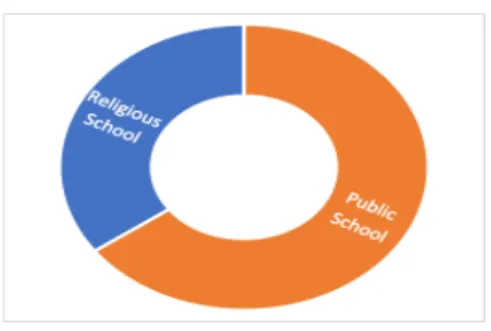
Figure 1. Respondents’ Educational Setting
DOI: 10.19105/karsa.v30i1.5100
17 | Figure 2. Respondents’ Educational Background
Figure 3. Foreign Language Learnt by the Respondents
DOI: 10.19105/karsa.v30i1.5100
| 18
Categories of Name Shifting Practice
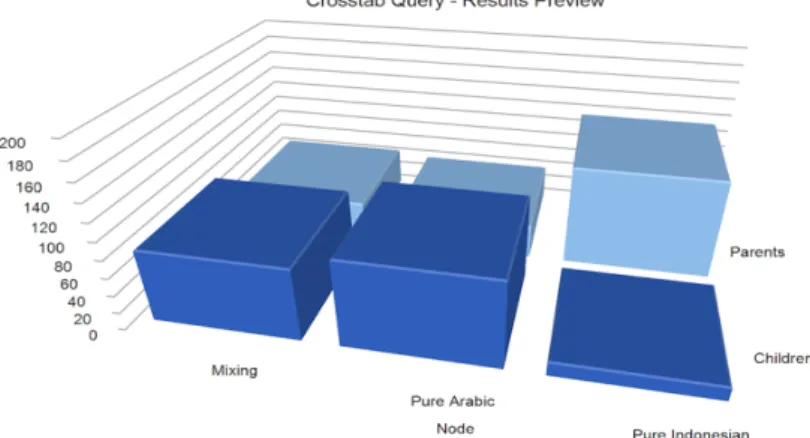
Figure 4. Name Shifting Practice in Parents and Children
Based on three categories used for the NVivo crosstab analysis—Pure Indonesian, Pure Arabic, and Mixing, there is a downward trend in Pure Indonesian names in children’s naming practice (17 counts). In contrast, their parents’ popular names were in this category (above 100 counts). Data discover that Pure Arabic has the most preferred naming practice for children with 99 counts, followed by a Mixing category with 83 counts. The Mixing category involves Indonesian-Arabic, Indonesian-Arabic-Foreign Language (English, European, etc.).
The Frequent Naming Preference among Millennial Muslims in Indonesia
Figure 5. Parents’ word frequency (40 frequent words)
DOI: 10.19105/karsa.v30i1.5100
19 | Figure 6. Children’s word frequency (40 frequent words)
The word cloud of parents’ and children’s naming practices shows a significantly different trend. Data reveal that parents’ names have more variety in Indonesian sounded names, such as Dwi (7 counts), Arif (4 counts), Kusuma (4 counts), Ayu (3 counts), Ade (3 counts), Putri (3 counts) and the like. Meanwhile, in children's naming practice, the word frequency shows that Arabic sounded names have the most frequency. It is seen clearly from the word cloud that Muhammad has been the most frequent name used by the respondents’ children for 36 counts, followed by Ahmad for six counts. Other varieties are Fatih, Achmad, Akbar, Ayyubi, Ghifari, Khadijah, Rayyan, Yusuf, Zahra, and so forth.
DOI: 10.19105/karsa.v30i1.5100
| 20
The Reasons for Naming Practices Based on Three Naming Categories
Firstly, the category of Pure Indonesian names, based on the interview session with one of the respondents whose son’s name belongs to the Pure Indonesian names. One of the parents said:
“The reason why Arka’s name is so Javanese is that it was derived from Sanskrit. First, because both of his parents are Javanese, we decided that we do not want him to lose his root (identity) as a Javanese-born child and should be named Javanese-sound-like. Next, Arka’s name was actually taken from one of the figures in the traditional Javanese shadow puppet (Wayang Kulit). The figure’s name was Raden Arka Suto, who possesses good characteristics: statesman-like and charitable. We hope that the positive traits/characters owned by that figure would be then possessed by Arka.”
Based on the interview session above, the researchers deemed that the name-giving practice in the Pure Indonesian aspect was based on two related contexts; the language learned and socio-practice. First, the languages spoken by both parents were Javanese since their ethnicity was Javanese. They inferred that as someone born and raised in Javanese culture, they did not want their son to discard his roots or his identity as Indonesian, whose ethnicity is Javanese; therefore, the name bestowed to him was Javanese sound-like which derived from Sanskrit.
Continuing the previous one, both parents highly uphold Javanese culture, which can be perceived from the meaning of the name given to their son. Their son’s name was inspired by one of the figures in the traditional Javanese shadow puppet or Wayang Kulit, and the figure’s name was known as Raden Arka Suto. That figure possesses characteristics classified as good traits for someone to imitate, such as a statesman-like attitude and generosity. Based on those premises, as a descendant of Javanese heritage and culture, both parents hope that their son would then possess distinctive qualities shown by Raden Arka Suto
DOI: 10.19105/karsa.v30i1.5100
21 | above, which is deemed an excellent trait to possess by somebody from Javanese culture.
Next, the categories of Pure Arabic names, according to the interview session with one of the parents, which son’s name belongs to Pure Arabic names. It can be seen that:
“There are several reasons for the naming. First of all, I know well that a name for Muslims is a prayer; thus, the name for my son must be taken from one of the best names. There were some options we selected, and finally, we chose Achmad, which references our Prophet Muhammad. The second is about the use of naming practice at many Indonesian schools where students’attendance list is alphabetically ordered, and ’A’ is the first. So, it is very efficient in terms of an administrative issues. The third one is a trend; the latest trend for Muslim naming is Arabic which we consider this trend is good.”
The researchers regarded that there were two contexts in play for the naming practice in Pure Arabic names; socio-religious practice and language learned. According to one of the respondents whose son’s name belonged to the category of Pure Arabic names, Achmad. It can be inferred that there the parents’ initial intention was to provide and bestow their son with the best name because, based on their belief, name-giving practices as a Muslim also indicate hopes attached to the name chosen. The name Achmad itself referred to Prophet Muhammad, which has a significant meaning which was praiseworthy.
The previous context also added the importance of the language learned by both parents; under the pretext that they are both Muslim, both parents understand the Arabic language as the language used in the Qur’an — a Muslim sacred book. Therefore, it assisted them in bestowing specific names in Arabic that are getting more popular lately.
Lastly, the social conventions in Indonesian contexts restrain the parents from adhering particular sequence of the students’ names in school was based on alphabetical order, in which they bestowed him the first letter of his name with an A. Lastly, in the category of Mixing names, the
DOI: 10.19105/karsa.v30i1.5100
| 22
interview session with one of the parents whose daughter’s name belongs to the category of Mixing Names went as follows:
“There was such a significant reason actually, and my wife wanted the English name whereas I wanted the Arabic one which was derived from the Quran chapter An-Nisa. So, we blended the two wishes. According to At-Tabari tafseer, my daughter’s name means delicious food which brings no disease. Thus, we want our daughter to bring more positive value to us. For the English names ’Queena’, we want her to be the queen in the family; those reasons are the main ones.”
Based on the premise of the interview session above, the researchers deemed that both parents were bound to the contexts of language learned and the socio-religious practice. Both parents were exposed to English and Arabic; one of them desired their daughter to bestow with English-sound-like names, and the other wished for Arabic names. The daughter’s English-sound-like name, Queena, means queen.
On the other hand, the Arabic-sound-like name was derived from one of the chapters in the Qur’an, Surah An-Nisa. In addition, the socio- religious practices of both parents also assisted them in picking a name that had a distinct meaning. As Muslims, they are bound to learn Qur’an and Hadith, in which their upbringing influenced the Arabic-sound-like name Muslims.
In those three categories, the researchers also perceived that the respondents’ linguistics developments provide additional value to the naming styles of the respondents who belong to Muslim community members in Indonesia since, as Muslims and they are exposed to various languages such as Arabic, English, and Bahasa. In addition, socio- cultural background such as ethnicity provide added value as well; for example, one of the respondent’s ethnicity is Javanese, the exposure to the Javanese language also plays a critical role in the naming styles.
Therefore, the language used for naming styles was greatly influenced by exposure to those languages and socio-cultural identities.
DOI: 10.19105/karsa.v30i1.5100
23 | Discussion
After thoroughly dissecting each category of name-giving practices above, those three categories had something in common. In the text that explains Muslim name-giving practice in Indonesia, the respondents who are Muslim have learned more than one language aside from their mother tongue or Bahasa, and all of them have practiced socio-religious beliefs based on their ethnicity and religious point of view. Based on that premise, the researchers could determine that the shifting and fluidity of the name-giving practice among Indonesian Muslims were influenced by the exposure to the third context, the background of education, and the socio-religious exposure during the High School level or the Higher Education. It is perceived that learning foreign languages in educational contexts have a high possibility of influencing learners’ belief which can be seen from the communicative performance and social context.38
Some parents were studying at public schools or state universities with limited exposure to Islamic teaching. On the other side, everybody who experienced studying at private Islamic schools and private Islamic universities is exposed to abundant knowledge of Islam and the language publicly known in the Qur’an Arabic language.
Besides, English in public or private universities is also regarded as a compulsory course, so anyone would have the possibility to learn foreign languages, either English or Arabic. Besides, it has been emphasized that learning and acquiring a new language was highly associated with a better job opportunity and any other occasion related to language skills.39 In other words, the foundation of learning a new language may assist someone to get life-betterment. Also, the naming practice would no longer be associated with their socio-cultural
38 Sirawit Apairach and Jutarat Vibulphol, “Beliefs about Language Learning of Thai Upper Secondary School Students in Different Educational Contexts,” PASAA:
Journal of Language Teaching and Learning in Thailand 50 (2015): 65–94, https://doi.org/10.14456/pasaa.2015.3.
39 Mustapha Z. Altan, “Beliefs about Language Learning of Foreign Language- Major University Students,” Australian Journal of Teacher Education 31, no. 2 (2006): 45- 52. https://doi.org/10.14221/ajte.2006v31n2.5.
DOI: 10.19105/karsa.v30i1.5100
| 24
background as anyone would bestow a name based on their preferences.40
Based on the survey, both parents of the first respondent who belonged to Pure Indonesian names were of Javanese ethnicity. They bestowed their son a Javanese name because they hoped they would imitate good characteristics shown by one of the traditional Javanese shadow puppet figures. In this context, naming practice among Javanese derived from various aspects of Javanese culture, one of which was pewayangan or traditional Javanese shadow puppet.41 Based on that premise, the researchers could infer that because the respondents, both the father and mother, were only exposed to public school, and the moment they had to pick a name. They relied on their socio-practice as a Javanese descent; as been reflected when bestowing a Javanese name for their son. The naming practice also has a systemic function in recognizing someone’s identity that is highly related to their geographical and historical background.42
The researchers also consider that their educational background during high school and university mainly was a public or state-based school. Therefore, the exposure they received throughout the years was primarily locals; in other words, they were only exposed to local customs, one of which was their ethnicity as Javanese. However, based on the interview, the researchers could conclude that respondents who picked Javanese or Indonesia have a keen sense of belonging to their ethnicity to preserve the local wisdom of the culture. Due to the trend of naming practice among Javanese during the past years also tend to adopt foreign terms, either Arabic or European contexts.43 In addition, the use of naming-practice that associated with Javanese norms and culture
40 Eric Kunto Aribowo and Nanik Herawati, “Pemilihan Nama Arab Sebagai Strategi Manajemen Identitas di antara keluarga Jawa Muslim,” International Seminar Prasasti III: Current Research in Linguistics, (2016): 270–277, https://jurnal.uns.ac.id/
prosidingprasasti/article/view/1508.
41 Aribowo and Herawati, “Pemilihan Nama Arab Sebagai Strategi,” 270–277.
42 Aribowo and Herawati, “Pemilihan Nama Arab Sebagai Strategi,” 270–277.
43 Nurhayati cited in Aribowo and Herawati, “Pemilihan Nama Arab Sebagai Strategi,”
270–277.
DOI: 10.19105/karsa.v30i1.5100
25 | were shifting.44 Thus, the respondents here would like to uphold and preserve their identity as Javanese. Regarding a keen sense of belongings to naming practice in the Javanese context, the use of Javanese-sound names was one of the significations of preserving their identity as the descendant of Javanese culture and pointed out that the Javanese language and culture are still highly upheld by them.45
Next, in the pure Arabic name category, the researchers perceived that they chose the Arabic name because they desired that their son would be able to imitate and possess good characteristics as reflected in the name. Specific personal names, language, clothing style, flags, and others were part of someone’s identity. It was regarded as the reflection of the characters and quality of a person bestowed with a particular name. In addition, recent socio-trends regarding name-giving practice in Indonesia also tend to involve or take from Arabic-sound names or Holy Qur’an.
Names associated with Javanese would likely be replaced with Arabic names that have close ties with an act of Islamic piety. The researchers, then, would be able to conclude that the respondents from the category of pure Arabic names, both of the parents, were not only having an educational background in the state or public schools but also experienced studying at Islamic or religious-based universities. This means naming practices were derived from norms, social conventions, and cultural exposure of the name-giver exposed to Arabic languages.
During their university studies, both respondents were required to enroll in Islamic courses that exposed them to Arabic languages and culture, regardless of their ethnicity, language spoken, and religious views. It is stated that learning foreign languages in an educational context tends to influence learners' beliefs, which can be seen from the communicative performance and social context.
Moreover, learning Arabic and any other foreign languages would help the learners better understand the socio-cultural practice of the target language. It can be inferred that the respondent considering
44 Widodo, Nurhayati, Andriani, cited in Aribowo and Herawati, “Pemilihan Nama Arab Sebagai Strategi,” 270–277.
45 Aribowo and Herawati, “Pemilihan Nama Arab Sebagai Strategi,” 270–277.
DOI: 10.19105/karsa.v30i1.5100
| 26
this premiss with pure Arabic names was receiving better. A lot of exposure to Arabic languages compared to those who had never experienced studying in an Islamic or religious university, which is reflected in their name-giving practice when bestowing Arabic names for their son. These data are in line with the finding of naming practices in three regions in Indonesia (Bantul, Lumajang, and Lamongan) between 1911-2010; it is discovered that Pure Javanese names experien- ced a downward trend while Pure Arabic names had an upward trend in all the three regions. Other categories are Javanese-Arabic hybrid, super hybrid, and Indonesian hybrid have overtaken the popularity of Pure Javanese names among Muslims in Indonesia, which has the first place at the beginning of the periods.46 Thus, this name shifting has been an indication that Indonesian millennial Muslim parents want to associate their children with more Islamic connections and the modern world through naming practice.
Lastly, in the mixing category, the researchers regarded that both parents were hoping for their daughter to possess the characteristics or traits embedded in the selected name. It is also accentuated that in Chinese culture, naming practice possesses great significance that transcends the idea of a sheer referential linguistics token.47 In other words, when both the parents bestow specific names to their children, they were taking the meaning or linguistics aspects into account as an act of piety based on their Islamic belief. Besides, both parents were exposed to English and Arabic since they were studying at private Islamic schools and universities that assisted them in bestowing favorable names with good meaning a. according to their preferences. It is stated that the exposure to a second language context or foreign language is bound to help to master the language.48
It means mastering or learning foreign languages would assist the parents in picking specific names that they desire due to the meanings that hold something special for them. Besides, they were
46 Kuipers and Askuri, “Islamization and Identity in Indonesia: The Case,” 25–49.
47 Xu, “Exploring the Logic of Name Changes,” 32–41.
48 Altan, “Beliefs about Language Learning 45-52.
DOI: 10.19105/karsa.v30i1.5100
27 | bound to learn Arabic and English in private Islamic schools and universities. In addition, in Islamic socio-religious practice, anyone was encouraged to learn about Koran as the primary source of law and the Hadith as the secondary source of law. Related to their keen sense of religious creed, giving a particular name in Arabic or English also represents their expression of identity that depicts their sense of belongings to a specific social class, political or religious creed.49 It is also emphasized that with exposure to certain customs, everyone could take on particular principles that reflected in their clothing style, behaviors, and social life.50 In other words, the parents’ upbringing and exposure to Arabic and English languages influenced them to bestow specific names derived from Arabic and English. Hence, the Arabic names also indicated the parents’ admiration and pride in Muslim and its’ Islamic teachings.51
Therefore, to understand the findings mentioned earlier, the researchers proposed the following scheme of diagrams adapting CDA’s developed by Dijk (1993). In our findings, as depicted in the diagram below, the Millennial Muslim name-giving practice in Indonesia was regarded as the text constantly influenced by the surroundings contexts, a language learned, a background of education, and socio-religious practice. Hence, the name-giving practice among Millennial Muslims could be perceived based on the categories of the three name-shifting practices; Pure Indonesian, Pure Arabic, and Mixing. Those three were regarded as the text representation constantly shaped and influenced by the shifting and the development of the surrounding contexts. In addition, related to the previous statements regarding CDA, the researchers could draw an analogy that the language of naming styles among the respondents was due to the respondents’ intention to keep their identity, either ethnicity-view, socio-cultural or socio-religious view, and educational view. It was also mentioned that the act of naming
49 Quaglia et al. cited in Xu, “Exploring the Logic of Name Changes,” 32–41.
50 David Keyworth, “The socio-religious beliefs and nature of the contemporary vampire subculture,” Journal of Contemporary Religion 17, no.3 (2002): 355–370, https://doi.org/10.1080/1353790022000008280.
51 Aribowo and Herawati, “Pemilihan Nama Arab Sebagai Strategi,” 270–277.
DOI: 10.19105/karsa.v30i1.5100
| 28
was regarded as parents’ attempt to construct social identity, which entails that naming styles is an active process to preserve and maintain their identity.52
Figure 7. CDA’s of Millennial Muslim Name-giving Practice in Indonesia
Adapted from Van Dijk (1996)
Conclusion
The data have shown a shift in naming practice among millennial Indonesian Muslim parents for their children. This shift can be observed in parents’ naming practices and influenced by society’s religious practice, educational background, and foreign languages learned at school. In society’s religious practice, Indonesia has experienced a fast- track change in Islamic teaching, as it was seen that women with
52 Smitha Joseph, A Sociolinguistic Analysis of Indian Christian Names The Case of Telugu Catholics and Syrian Christians (United States: Vernon Press, 2021).
DOI: 10.19105/karsa.v30i1.5100
29 | headscarves are found more easily today than decades ago. When it is analyzed according to parents’ background of education and foreign languages learned, millennial parents are today have been exposed to modernity and science.
Thus, by naming their children with Pure Arabic names, parents want their children to pertain to their identity as Muslims. Whereas naming their children with the Mixing names, parents want them to pertain to their identity as Indonesian Muslims and be part of the global words.
Reference
Abbas and Mohammad Ahmadvand. “Name-giving variations in Kurdistan Province of Iran: An ethnic identity marker categorized.” Khazar Journal of Humanities and Social Science18, no. 2 (2015): 5–22. https://doi.org/10.5782/2223-2621.
2014.18.2.5.
Al-Ghazali, Mehdi F. “A Semantic Analysis of Personal Names in English and Arabic.” Mustansiriyah Journal of Arts 51 (2009): 1–
18. https://www.iasj.net/iasj/download/441833481f3168fd.
Altan, Mustapha Z.. “Beliefs about Language Learning of Foreign Language- Major University Students.” Australian Journal of Teacher Education 31, no. 2 (2006): 45-52. https://doi.org/10.
14221/ajte.2006v31n2.5.
Aoki, Kayoko. “Name and Ethnic Identity: Experiences of Korean Women in Japan.” Journal of Asian and African Studies 0, no. 0 (2012): 1–15. https://doi.org/10.1177/0021909611419943.
Apairach, Sirawit and Jutarat Vibulphol. “Beliefs about Language Learning of Thai Upper Secondary School Students in Different Educational Contexts.” PASAA: Journal of Language Teaching and Learning in Thailand 50 (2015): 65–94. https://doi.org/10.
14456/pasaa.2015.3.
Aribowo, Eric Kunto and Nanik Herawati. “Pemilihan Nama Arab Sebagai Strategi Manajemen Identitas di antara keluarga Jawa Muslim.” International Seminar Prasasti III: Current Research in Linguistics (2016): 270–277. https://jurnal.uns.ac.id/prosiding prasasti/article/view/1508.
DOI: 10.19105/karsa.v30i1.5100
| 30
Ary, Donald, Lucy Cheser Jacobs, Chris Sorensen and Asghar Razavieh.
“Introduction to Research in Education.” United States:
Wadsworth Cengage Learning http://repository.unmas.ac.id/
medias/journal/EBK-00124.pdf.
Askuri, Askuri and Joel C Kuipers. “An orientation to be a good millennial Muslims : state and the politics of naming in Islamizing Java.” Indonesian Journal of Islam and Muslim Societies 9, no. 1 (2019): 31–55. https://doi.org/10.18326/ijims.v9i1.
Assaf, Lilach. “Names, Identifications, and Social Change Naming Practices and the (Re-)Shaping of Identities and Relationships within German Jewish Communities in the Late Middle Ages.”
Thesis for Doctoral (2016): 1235. https://www.researchgate.net/
publication/325893691_Names_Identifications_and_Social_Cha nge_Naming_Practices_and_the_ReShaping_of_Identities_and_
Relationships_within_German_Jewish_Communities_in_the_Lat e_Middle_Ages.
Bailey, Benjamin and Sunny Lie. “The politics of names among Chinese Indonesians in Java.” Journal of Linguistic Anthropology 23, no.1 (2013): 21–40. https://doi.org/10.1111/jola.12003Eslami Rasekh.
Bates, Daniel G. “What’s in a Name ? Minorities, Identity , and Politics in Bulgaria.” Global Studies in Culture and Power 1, no. 2-3 (1994): 201-225. https://doi.org/10.1080/1070289X.1994.9962 505.
Bertrand, Marianne and Sendhil Mullainathan. “Are Emily and Greg more employable than Lakisha and Jamal? A field experiment on labor market discrimination,” NBER working paper series 9873 (2003): 147–173. https://www.nber.org/system/files/working_pa pers/w9873/w9873.pdf.
David C.S. “Borrowed identity : Signaling involvement with a Western name.” Journal of Pragmatics 28, no.4 (1997): 489–513.
https://www.sciencedirect.com/science/article/abs/pii/S03782166 97000325.
Dijk, Teun A. Van. “Editorial: Discourse, Cognition and Society.”
Discourse and society: an International Journal for the Study of
DOI: 10.19105/karsa.v30i1.5100
31 | Discourse and Communication in their Social, Political and Cultural Contexts 7 no.1, (1996) 5-6.
Foster, Gigi. “Names will never hurt me : Racially distinct names and identity in the undergraduate classroom.” Social Science Research 37, (2008): 934–952. https://doi.org/10.1016/j.ssre search.2008.02.004.
Fryer, Roland G., J.R. and Steven D. Levitt. “The causes and consequence of distinctively black names.” Quarterly Journal of Economics 3, (2004): 767–805. https://scholar.harvard.edu/fryer/
publications/causes-and-consequences-distinctively-black- names.
Garrioch, David. “Suzanne, David, Judith, Isaac...: Given names and protestant religious identity in eighteenth-century Paris.” French Historical Studies 33, no. 1 (2010): 33–67. https://doi.org/10.1215 /00161071-2009-020.
Helleland, Botolv. Christian-Emil Ore and Solveig Wikstorm (eds).
“Personal Names and Identity in Literary Contexts.” Oslo Studies
in Language 4, no.2 (2012): 273–
284. https://doi.org/10.5617/osla.324.
Jayaraman, Raja. “Personal Identity in a Globalized World: Cultural Roots of Hindu Personal Names and Surnames.” The Journal of Popular Culture 38, no.3 (2005): 476–490. https://doi.org/10.
1111/j.0022-3840.2005.00124.x.
Joseph, Smitha. A Sociolinguistic Analysis of Indian Christian Names The Case of Telugu Catholics and Syrian Christians. United States: Vernon Press, 2022.
Keyworth, David. “The socio-religious beliefs and nature of the contemporary vampire subculture.” Journal of Contemporary Religion 17, no.3 (2002): 355–370. https://doi.org/10.1080/1353 790022000008280.
Khosravi, Shahram. “White masks/Muslim names: Immigrants and name-changing in Sweden.” Race and Class 53, no.3 (2012): 65–
80. https://doi.org/10.1177/0306396811425986.
Kuipers, Joel C. and Askuri. “Islamization and Identity in Indonesia:
The Case of Arabic Names in Java.” Southeast Asia Program Publication at Cornell University 103, no. 1 (2017): 25–49. https: