In this book we develop a view that integrates many of the key aspects of contemporary evolutionary and developmental psychology. It could be argued that many of the differences we have listed between mainstream evolutionary psychology and evolutionary developmental psychology are overstated.
ASKING “WHY” QUESTIONS
Evolutionary developmental psychology, largely due to the influence of Piaget and Vygotsky in studying child cognition, also views higher-order cognitive mechanisms as important for human functioning and as the product of natural selection. But neither of these perspectives, we argue, reflects the canonical position of evolutionary psychology, although they do reflect that of evolutionary developmental psychology.
NECESSARY BUT NOT SUFFICIENT
For example, some evolutionary psychologists understand the nature of gene-environment interactions, recognize the possible role of domain-general mechanisms in explaining behavior, view individual differences as more than just noise, are as concerned with species evolution as they are with the effects of evolutionary processes on contemporary humans, and beliefs in the significance of higher-order cognitive operations. Indeed, aspects of evolutionary theory help us understand the integrity of each developmental period.
OVERVIEW OF THIS BOOK
In Chapter 4, “The Benefits of Youth,” we explore how the timing of ontogeny may have influenced the course of human evolution. Social relationships from childhood through adolescence are examined in Chapter 9, “Interactions, Relationships, and Groups,” and the role of play is assessed from an evolutionary perspective in Chapter 10, “Homo ludens: The Importance of Play.” In the final chapter, 'Epilogue: Evolution and Development', we attempt to connect the wide range of topics covered in the previous chapters into an understandable framework and propose six principles of evolutionary developmental psychology.
A NEW SCIENCE OF THE DEVELOPING MIND
PHYLOGENY AND ONTOGENY
To understand the value of behavior in ontogeny, we must consider the place of that behavior in the development of the species (phylogeny; . Tinbergen, 1963). Thus, to understand the value of a behavior during childhood, we must understand the place of that behavior in the life span of an individual and in the evolution of the species.
EVOLUTIONARY PSYCHOLOGY
Much of the emphasis on the domain-specific nature of human cognition can be traced to the philosopher Jerry Fodor (1983), who proposed the concept of modularity in brain functions. The immune system of Homo supiens is more similar to the polygamous, harem-based gorilla (Gorilla gorilla) and the monogamous gibbon (Hylobutes lar) than to the promiscuous chimpanzee (Pun troglodytes).
ROLE OF THE ENVIRONMENT IN EVOLUTIONARY
Therefore, the onus is still on the scientist to discern the likely function of features that affect functioning now and in our evolutionary past, regardless of whether the feature originally evolved to serve the function it serves now. Given that evolution is blind—that it has no end product, such as Homo supiens—and that it works only with those traits that currently exist within a species, we understand that many modern and ancient adaptations may have been together. -chosen from other seemingly unrelated functions.
PSYCHOLOGICAL PERSPECTIVE
This may be especially the case for psychological functions associated with the expanding neocortex in the last 5. However, believing this does not preclude the discovery of the adaptive problem that any function may have solved for human ancestors and does not dictate the nature of adaptations ( e.g. whether adaptive psychological mechanisms are domain-specific or domain-general in nature).
THE DEVELOPMENTAL SYSTEMS APPROACH
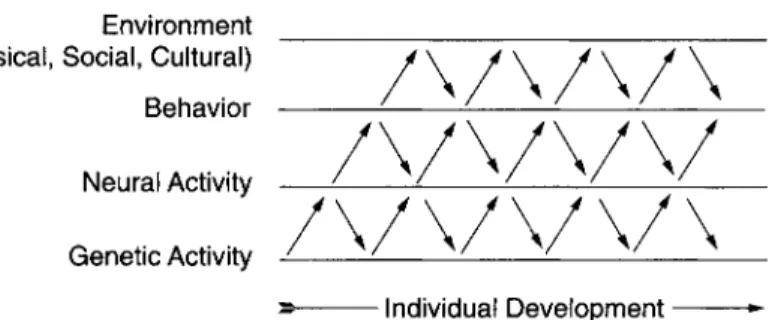
In fact, despite the fact that genes will be expressed differently in different environments, almost all members of a species (human or otherwise) develop in a species-typical pattern. The answer lies in the fact that humans (or chimpanzees or ducks) inherit not only a species-specific genome, but also a species-specific environment.
EVOLUTIONARY PSYCHOLOGY AND DEVELOPMENT Earlier in this chapter we introduced the four questions proposed by
In contrast, natural selection has no effect on genes that are expressed late in life, such as the one responsible for Huntington's disease, after individuals have already reproduced. One way to express this effect is to say that the power of natural selection to influence genes wanes with age, or as life-span psychologist Paul Baltes (1997) put it, “the benefits derived from evolutionary selection, indicate a negative age correlation" (p 367).
DEVELOPMENTAL ORIGINS OF HUMAN NATURE
What we call human nature has not only a phylogenetic history but also an ontogenetic one. The origin of human nature lies in the immortal genes and in the developmental processes necessary for their expression.
HISTORY AND CONTROVERSY 3
BRIEF HISTORY OF EVOLUTIONARY THINKING
It is for the latter idea of the inheritance of acquired characteristics that Lamarck is best remembered (and mocked) today. The modern synthesis adopted Weissman's idea of the separation of germ cells and somatic cells.
ROLE OF DEVELOPMENT IN EVOLUTION
Again, a trait that had been acquired in response to an environmental stressor had come to be expressed in the absence of the initial event, being adaptive for survival. Third, the response becomes genetically assimilated in that it is now expressed even in the absence of the environmental events that originally triggered the change.
ROLE OF EVOLUTION IN DEVELOPMENT
Few of the leading evolutionary theorists paid more than lip service to Darwin's ideas (Baldwin was an exception). For the most part, however, this research and theorists remained outside the mainstream of developmental psychology.
WHAT DOES IT MEAN WHEN WE SAY SOMETHING IS “INNATE”?
We introduced some of the ideas of Tinbergen (1963) in chapter 2, specifically his four questions that we must ask to fully understand any behavior: What is the immediate benefit (adaptive function) of a behavior. The difference between a fixed action pattern and a reflex is mainly in the complexity of the behavior.
EVOLUTIONARY DEVELOPMENTAL PSYCHOLOGY, BEHAVIORAL GENETICS, AND INDIVIDUAL DIFFERENCES
A smaller portion of the differences in IQ and personality is attributed to shared environmental influences, a result of siblings growing up in the same family. This is illustrated by the results of Scarr and Weinberg's transracial adoption study (1976; Weinberg, Scarr, & Waldman, 1992).
CONFLICTING TRADITIONS, A COMMON GOAL
We view the statistical techniques of behavioral genetics as convenient heuristics that reveal differences in the extent to which certain characteristics can be modified by postnatal environments. Remembering both the bidirectionality of structure and functionality at all levels of organization and the robustness of some traits to environmental fluctuations should help integrate evolutionary psychology and behavioral genetics.
THE BENEFITS OF YOUTH
DEVELOPMENTAL TIMING
For example, facial similarities between the skulls of adult humans and infant monkeys are thought to be due to a specific remodeling of the human face (see Shea, 1989) or even a structural consequence of the large brain (Deacon, 1997), rather than an actual developmental delay. However, Shea (1989) agreed with earlier neoteny theorists (S. J. Gould, 1977) regarding the role of neoteny in influencing the relative size of the human brain and skull (see discussion below).
EXTENDED GROWTH OF THE HUMAN BRAIN
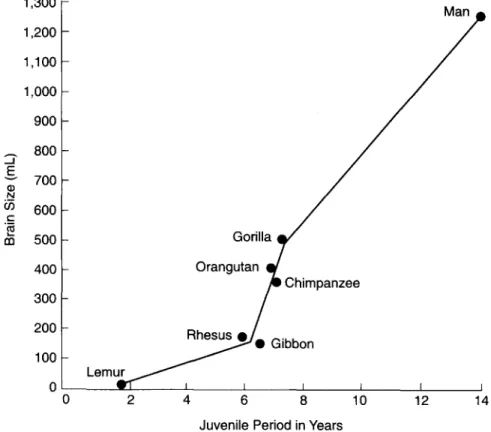
Thus, although the expansion of prenatal brain growth rates contributed to overall human brain size (a form of developmental delay), it cannot account for the differential rate of change for different brain areas. This takes time and, within mammals, brain size is also related to the length of the juvenile period (discussed below).

THE SLOW RATE OF GROWING UP
Big-brained animals tend to have smaller litters and give birth to babies at longer intervals than small-brained animals. In contrast, large-brained species are more likely to have fewer offspring, but to invest more care in each one (K-selection).
CONSEQUENCE TO HUMAN EVOLUTION Growing Up Slowly
Brain size of various primates and humans as a function of length of juvenile period. A large brain in primates is not only associated with the length of the juvenile period, but also with sociability.
BIG BRAINS, SLOW DEVELOPMENT, AND PLASTICITY Throughout this chapter, we have asserted that humans, more than
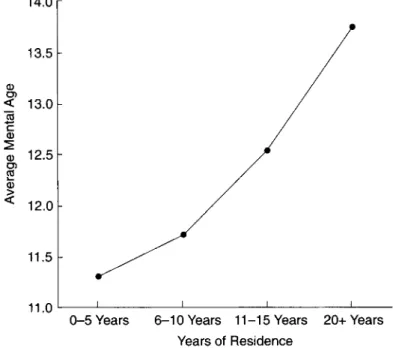
Although brains grow in size, most of the growth appears to be due to increases in the size of neurons. Children who spent more time in the orphanage naturally spent less time in their adoptive homes.
THE YOUNGEST SPECIES
It is not possible at this stage to say which aspects of the monkeys' experiences are responsible for the change in their cognitive abilities and behavior towards more human-like thinking. However, one attractive candidate was joint attention strategies, whereby adults direct the attention of the young animal to a third object.
CLASSIFYING COGNITION
In this chapter, we discuss aspects of cognition as they relate to evolutionary developmental psychology. In the process, we review several important evolutionary aspects of cognition and their development, and set the stage for the interpretation of other important aspects of cognitive development in later chapters.
IMPLICIT VERSUS EXPLICIT COGNITION AND MEMORY A hallmark of evolutionary psychological explication is that adaptive
An interesting question concerns the first display of explicit memory by human infants and whether there is evidence for explicit memory in non-human animals such as great apes. Following the interpretation of the findings by McDonough and her colleagues (1995) of the inability of amnesic patients to perform explicit memory tasks, including deferred imitation tasks, the finding of deferred imitation in great apes is consistent with the view that these animals possess symbolic representation and explicit ("conscious"), as opposed to only implicit memory.

IMMEDIATE VERSUS DEFERRED BENEFITS OF COGNITIVE ABILITIES
Nor should it be assumed that surface similarity of early and later behaviors necessarily means that early behavior "is about" later behavior. It is worth asking what a behavior or cognitive ability is for, but the dynamic nature of development requires that we distinguish the potential immediate and delayed benefits of any behavior.
GENERAL AND SPECIFIC DOMAINS OF MIND IN DEVELOPMENT
Stage 3 Stage 4 Stage 5 Stage 6
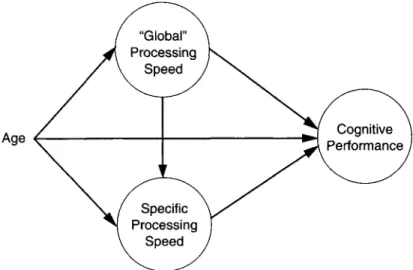
Our point is that human cognition and cognitive development include both domain-general and domain-specific abilities, each of which has evolved and is compatible with an evolutionary developmental psychology perspective. The coevolution of domain-general and domain-specific skills Parker and McKinney (1999) proposed that monkey cognition involves the use of different combinations of skills in different contexts, which requires cognitive flexibility, in contrast to the modular position that is advocated therein.
COGNITION, DEVELOPMENT, AND EVOLUTION
PREPARED TO LEARN
However, most neonativists advocate a more moderate view of what type of knowledge is innate; they argue that constraints within a domain may be more general in nature, consistent with the idea of architectural innateness as discussed in Chapter 3 (Gopnik & Meltzoff, 1997; Wellman. & Gelman, 1998). In this chapter, we sample some of the research relevant to the idea that human infants and children come into the world prepared to acquire some information more easily than others.
PREPARED LEARNING
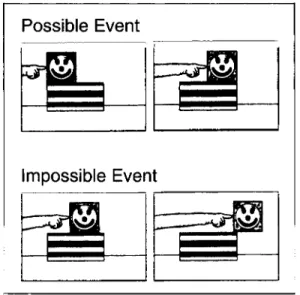
However, it is likely that the nature of the task reflects differences in the nature of knowledge. Perhaps we should not be too surprised that infants are prepared to quickly acquire information about physical objects in the world.
INTUITIVE MATHEMATICS
9 Simple Arithmetic - Early in development, there appears to be a sensitivity to increasing (adding) and decreasing (subtracting) the amount of small sets. In this study, children “performed” the false belief task earlier when a relatively passive, implicit measure (looking time) was used as opposed to a verbal (explicit) measure.
SPATIAL COGNITION
Another possibility refers to the difference between the implicit and explicit nature of the two tasks. An alternative possibility is that gender differences in movement play between boys and girls may be partly responsible for some of the gender differences observed in spatial cognition (Bjorklund & Brown, 1998; see also chapter 10 for a discussion of gender differences in play style).
ADAPTIVE NATURE OF COGNITIVE IMMATURITY
In accordance with the developmental systems approach, children's genetic disposition interacts with experiences to produce a particular developmental pattern. We are particularly intrigued by the idea that certain aspects of children's immature cognition can positively influence the ontogeny of other aspects of their thinking.
PREPARED TO THINK
And the greater the emphasis a preschool places on adult-oriented practices, the greater children's school-related anxiety. On the contrary, for most children from middle-class families, cognitive development and creativity are best fostered in a developmentally appropriate preschool program that takes into account children's limitations as well as their capabilities.
SOCIAL COGNITION
Second, we examine the theory of mind, looking at its development in human children, some of the factors that support its development, and its possible existence in great apes. Finally, we look at a more sophisticated type of social cognition that social learning and theory of mind enable—social reasoning—and explore the possibility that human children and adults are specially prepared to reason about problems involving social exchanges or violations of social rules.
SOCIAL LEARNING
It accurately reproduces the observed behavior, but does not understand the goal of the model. In imitation learning, the learner internalizes some of the model's behavioral strategies and intentions for performing the observed behavior.