In this context, it is believed that the development of SMEs in Makassar City can be improved by strengthening human resource capacity and using technology to increase the stability of developed economic enterprises. Thus, a qualitative approach was used to explain the significance of the dynamics of SME development in Makassar city. Depending on the chosen approach, i.e. case study, this type of research is a combination of quantitative and qualitative approaches [116].
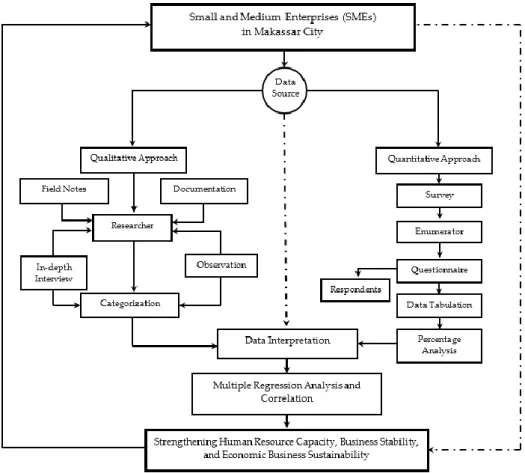
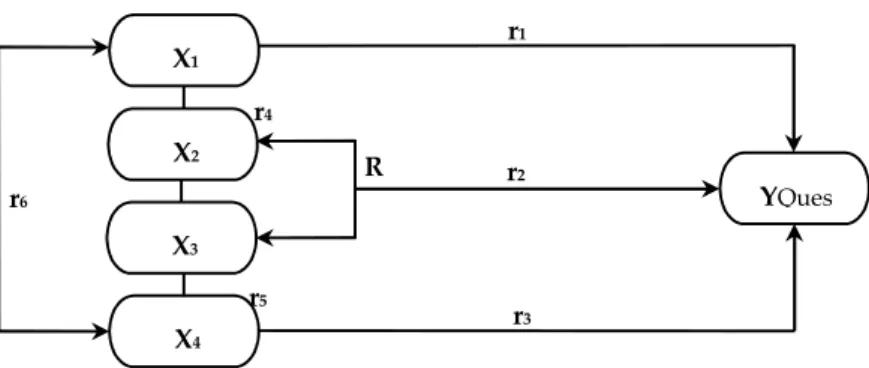
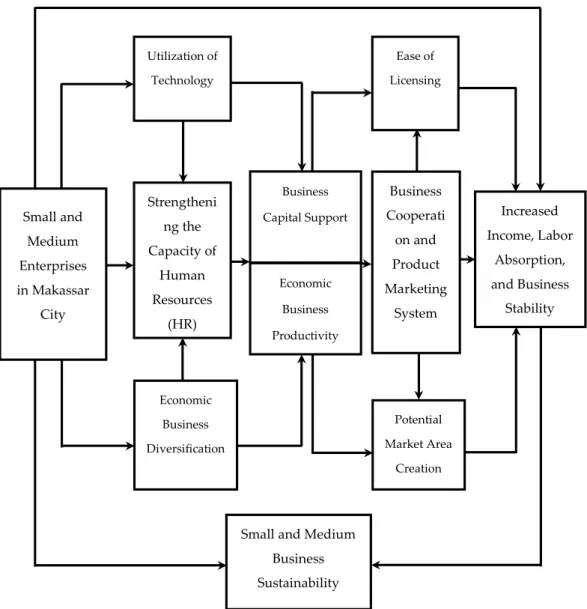
The combination of the qualitative and quantitative research in this study is presented in Figure 2. Furthermore, the results of data obtained through observation are used to compare and categorize the types of SMEs that are developing in Makassar City. The data collected through questionnaires in this study were used for two functions, namely (1) descriptive, describing the conditions and characteristics of the SMEs that developed in Makassar City and (2) measurement, in this case, referring to the characteristics of the data collected in the field.
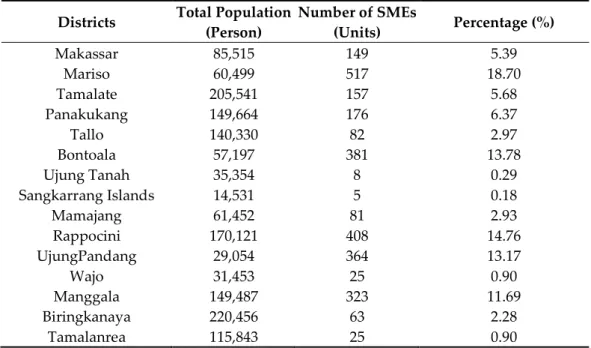
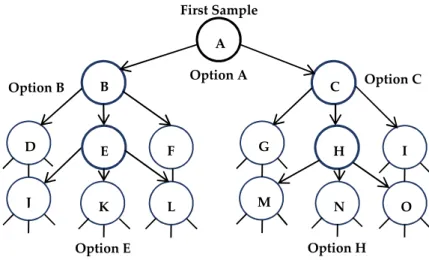
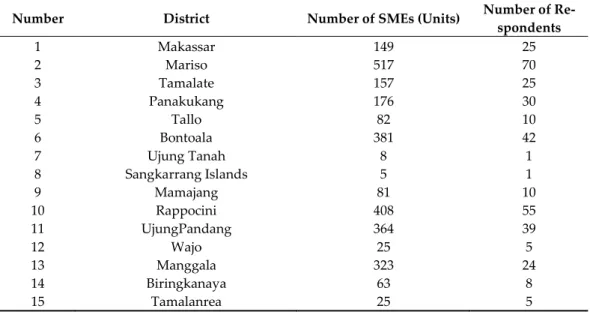
The research sample in this study was determined using purposive sampling, based on the conditions and characteristics of SMEs in Makassar City, which the researchers determined based on certain and specific characteristics, i.e. the sample (respondents) had to be local, residents of currently developing economic enterprises, with families and business actors who have been running their SMEs for at least five years, and with ordinary consumers. The validity of the data in this study was divided into two categories as follows: The first category is the validity of the qualitative data obtained from observations and in-depth interviews. Thus, the measurement of the validity of the data used is the biserial point correlation technique.
Results
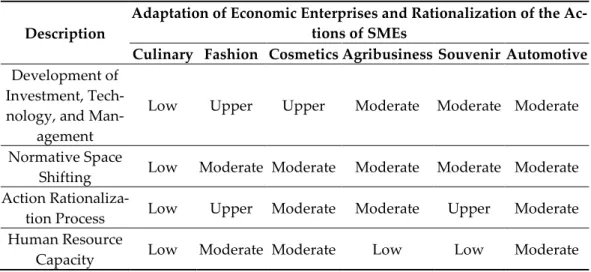
These five factors have an impact on the productivity of SMEs in Makassar City as the products produced are still limited. The results in the field show several factors that become obstacles to increase the productivity of SMEs in Makassar City in relation to the capacity of human resources. The results in the field illustrate that the rationalization of the actions of the SMEs in Makassar City in relation to the use of technology and human resource skills show differences based on the type of economic business being developed.
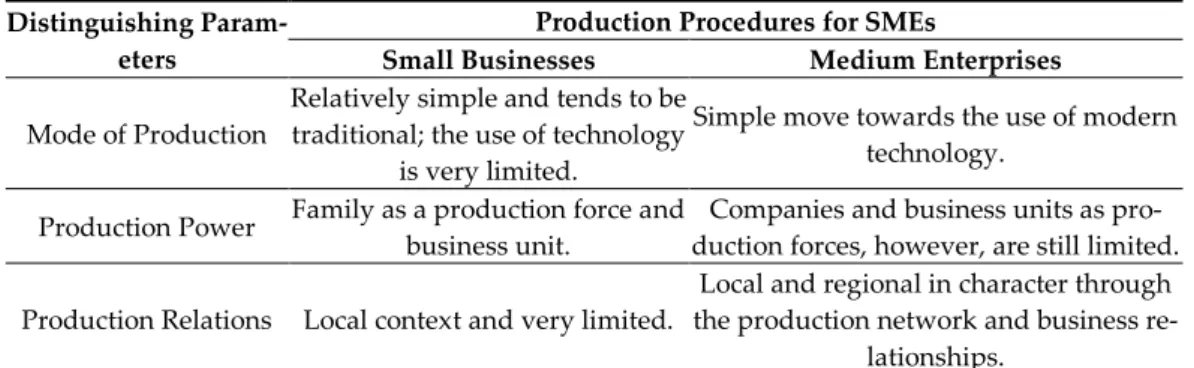
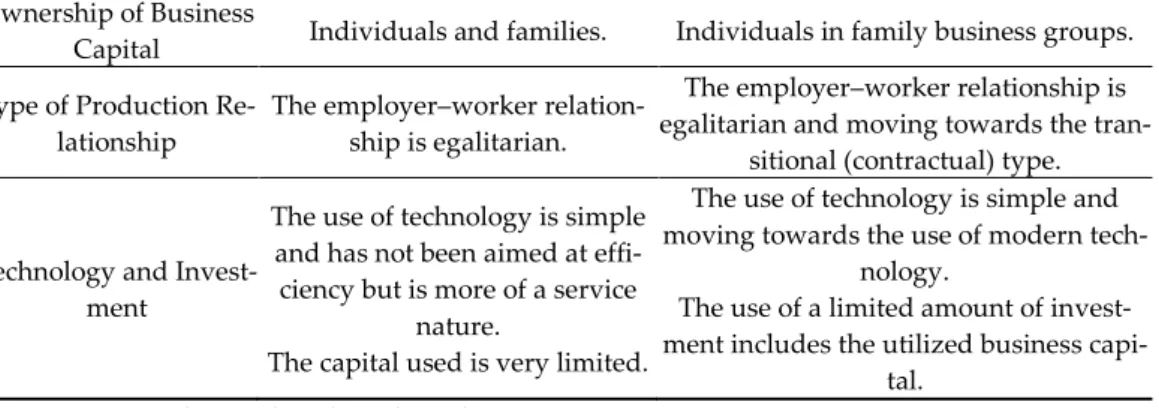
The adaptation and rationalization of the actions of SMEs in Makassar City, based on the type of business, is presented in Table 3. This is influenced by the ability of SMEs to access very limited sources of venture capital. These results indicate that the small and medium enterprises developing in Makassar City were not optimal to increase the productivity of SMEs.
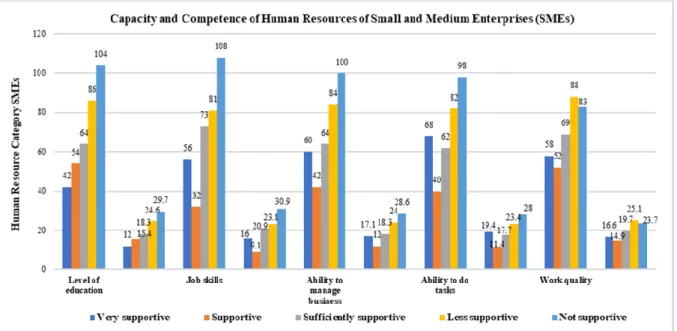
The available field facts illustrate that the human resource capacity of SMEs is categorized as low. There are three important categories that show the most basic characteristic elements - the forces of production, conditions of production and the use of technology and investment. Increasing the productivity of SMEs in terms of human resource competence is a key factor for their success and performance.
The responsibility of SMEs is reflected in their ability to implement change through the development and improvement of the quality of the workforce. These results can be interpreted as follows: (1) the productivity of SMEs in relation to the effectiveness and efficiency of the company was 28% in highly supportive categories, namely 24.3%. Possible interpretations of these results include the following: (1) the ability to use and control technology in SMEs was 22.2% in highly supportive categories, 16.1% in supportive categories, and 61.7% in non-supportive categories. supporting categories; (2) the skills and knowledge of SME actors were 20.9% in highly supportive categories, 21.7% in supportive categories and 57.4% in non-supportive categories; (3) the business promotion carried out by SME actors showed 15.2% in highly supportive categories, 16.3% in supportive categories and 68.5% in non-supportive categories; (4) Consumer confidence in the resulting products was 34.4% in highly supportive categories, 20.6% in supportive categories and 45% in non-supportive categories.
The following can be deduced from the results: (1) the ability to manage the complexity of economic enterprises for SMEs was found to be 27.1% in highly supportive categories, 16% in supportive categories and 62.3% in non-supportive categories; (2) the business governance of SME actors showed 19.4% in highly supportive categories, 18% in supportive categories, and 62.6% in non-supportive categories; (3) Business performance in relation to SME business productivity was 20.6% in highly supportive categories, 15.4% in supportive categories and 64% in non-supportive categories; (4) The business competitiveness of the products produced was 13.7% in highly supportive categories, 12% in supportive categories and 74.3% in non-supportive categories. The effect of strengthening human resources, business productivity, technology use and business diversification on SME sustainability is shown in Table 5 below. From these results it can be concluded that (1) human resource capacity; (2) the use of technology; (3) business diversification; and (4) strengthening human resources, business productivity, technology use, and business diversification all have a positive correlation with SME sustainability.
Thus, it can be concluded that the effect of human resource capacity building, business productivity, technology utilization and business diversification explains 72.3% of SME sustainability in Makassar City.
Discussion
Government support for increasing the productivity of SMEs in Makassar City will impact the stability of economic enterprises. The competence of human resources based on human capital is very important to consider as the lifeblood of an organization, and human capital is a crucial resource for innovating and developing an organization [157]. The strategic steps needed to achieve business stability and economic sustainability for SMEs in Makassar City include (1) establishing business independence and strengthening the capacity of the workforce, management and leadership; (2) build collaboration and networking among SME players through mutually beneficial information exchange processes; (3) managing corporate finance to increase productivity and business innovation; (4) technology-based financial management to facilitate efficient financial allocation of businesses; (5) providing additional operating capital through the support of formal, non-formal and government financial institutions; (6) increasing the managerial and personal capabilities of SME actors and ensuring adequate labor competence in the management of technology and information; and (7) building business partnerships through government policy support to enable SMEs to reach potential markets and become more sustainable.
The sustainability of SMEs in Makassar City will also require several forms of support, including (1) government collaboration with SMEs and private actors building and developing training and information centers based on research-oriented common production houses and development of possible products for SMEs; (2) helping SME managers to create a labor contract system based on improving the quality of labor resources and guaranteeing safety at work; (3) training in the management of SMEs in the industry to improve the quality of leadership; and (4) improving the quality of the workforce through rewards and punishments. These four factors – in addition to productivity growth, business innovation, technology mastery and product provision for consumers – will have an impact on business stability and business sustainability of SMEs. Sustainability in the context of the business world refers to a company's ability to survive and succeed in a dynamic, competitive and challenging business environment [158].
Conclusions
Thus, there is a need for government support in the form of actions and strategies to promote increased productivity of SMEs in Makassar City. The sustainability of small and medium enterprises (SMEs) in Makassar City will require assistance, including (1) cooperation between the government and SMEs and the private sector to build and develop training and information centers based on joint production houses that is oriented towards research and development of products UKM that can be managed collectively; (2) to assist the management of SMEs in developing a labor contract system that is oriented towards improving the quality of labor resources and ensuring occupational safety; (3) improving SME management through industry training to improve leadership quality; and (4) to improve the quality of the workforce through performance appraisals based on reward and punishment. Small and medium-sized enterprises (SMEs): The engine of economic growth through investment and innovation.
The Complexity of Space Utilization and Environmental Pollution Control in the Main Corridor of Makassar City, South Sulawesi, Indonesia. The opportunities and threats of small and medium enterprises in Pekanbaru: Comparison between SMEs in food and restaurant industries. Decision mode, information and network attachment in the internationalization of SMEs: A configurational and contingency analysis.
Convergence of a conceptual innovation model to reduce the challenges faced by small and medium enterprises (SMEs) in Bangladesh. Available online: https://media.neliti.com/media/publications/456-EN-reforming-policies- for-small-and-medium-sized-enterprises-in-indonesia.pdf (accessed 25 November 2020) . The role of management skills in the sustainable development of SMEs in Mehedinti County, Romania.
Expected impact of Industry 4.0 technologies on sustainable development: a study in the context of the Brazilian plastics industry. Human Capital Management in Transport Companies with Adoption of Sustainable Development in the Slovak Republic. Social change, spatial articulation in the dynamics of construction and development of Boomtown (Case Satudy of Metro Tanjung Bunga Boomtown, Makassar).
Commitment to sustainability in small and medium-sized enterprises: The influence of strategic orientations and management values. The role of small and medium-sized enterprises in development What can be learned from the German experience. Estimating the innovative capability of small and medium-sized enterprises using a non-parametric and integrative approach.
The causal effect of access to finance on the productivity of small and medium enterprises in Vietnam.