
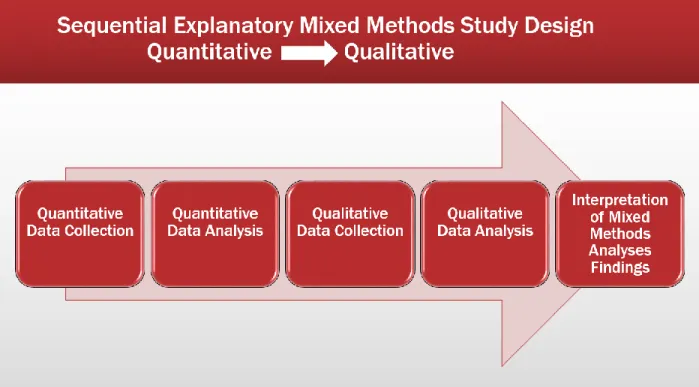
Using a sequential explanatory mixed methods approach, I developed a survey that JDCHF sent to their donors, followed by semi-structured qualitative interviews for selected foundation donors. Joe DiMaggio Children's Hospital treats nearly 700 cancer patients annually, performs heart and kidney transplants, as well as complex neurosurgery, and has one of the largest pediatric orthopedic programs in the southeastern United States (Joe DiMaggio Children's Hospital, 2021). The goals of this year-round effort are to form stronger donor relationships, raise money for the greatest needs of the Children's Hospital and its patients, and assist with the foundation's operating costs (J. Johnstone, personal communication, 2021 ).
These funds are critical to a nonprofit's financial well-being, as they allow the organization to budget for day-to-day expenses. This final study will specifically focus on the ability of the JDCHF Annual Giving program to successfully respond to these challenges to support the growing needs of the hospital and its pediatric patients. Showing annual support for the same causes (36%), giving back to the community (27%), and religious beliefs are identified as additional motivations for donors to give (Indiana University, 2016).
A review of the relevant literature on healthcare philanthropy and donor motivation facilitated the development of the conceptual framework for this final study. South Florida has one of the most diverse populations in the United States, and the employees at JDCH reflect that diversity. After reviewing the quantitative results, I attempted to further explore the research questions in subsequent semi-structured qualitative interviews to identify themes that fit the defined conceptual framework.
Of the 109 respondents to the quantitative donor survey, nine agreed to the semi-structured qualitative interview (8.3% volunteer rate).
Race/Ethnicity
For family income (see Figure 7), the largest group of respondents with 24.77% preferred not to answer. Using descriptive analysis, I examined donor motivations for each of these demographic categories by estimating the number of choices, donor percentages, standard deviation, and mean for survey questions 1–3.
Income
The most pleasant statement of all donors was question 2.1. Charitable giving is important to me, with a mean of 1.32 and the smallest standard deviation of 0.52, indicating the least variation in the response distribution. 38 The hospital is important to me and question 2.4 I donate because I feel compassion for those who benefit from my donation also turned out to be very pleasant for donors with means of 1.43 and 1.37 and standard deviations of 0.58 respectively and 0.63. Survey Question Q3 was an open-ended question asking respondents what would motivate them to continue or increase their donations to the JDCHF Annual Fund.
Assessing the theory of charitable giving in the first survey question provided the most concrete answer to this foundational study. When asked to answer the statement "I think my donations are important in supporting the mission of the Joe DiMaggio Children's Hospital Foundation," 97.25%. To understand any connection between charitable giving and JDCHF's goal of repeat donations, Survey Question 3 asked respondents the following: “Your support is vital to the continued success of the Joe DiMaggio Children's Hospital Foundation.
In survey question Q5 (see Figure 9), respondents were asked: "How do you prefer to be contacted by JDCHF?" The overwhelming response was Email at 70.6% followed by direct mail. As depicted in Table 2, each age group had specific preferences in how they wanted to be contacted. The two age groups that ranked highest in not wanting to be contacted were millennials at 19% and Gen Xers at 16%.
Survey question Q6 (see Figure 10) asked respondents: "What types of charity appeals do you usually respond to?" Email ranked highest among respondents at 20.17%, followed by personal requests at 18.03%, solicitation by mail at 14.16%, special events at 12.88%, social media at 9.01% and newsletter /annual report with 5.58%. For the Greatest Generation, their primary channels were mail solicitation at 45.5%, followed by in-person solicitation at 36.4%, and participation via email and special events at 27.3%. For Gen Xers, their primary channels were in-person requests at 52%, email at 48%, attending special events at 36%, followed by mail solicitation at 24%.
Donor responses by age to survey Q6: What types of charity requests do you typically respond to. During each interview, I took detailed notes with particular attention to responses that spoke specifically to the overarching project questions about donor motivation, retention strategies, and preferred communication channels. I noted these exceptions and created updates to the coding scheme that included some intersectional categories.
Relationship
Retention Strategies
Social Media
Age/Generation
Do you believe your donation makes a difference in the mission of JDCHF?
For each of the following questions below, choose the response that best characterizes how you feel about the statement utilizing the Lickert scale where 5= Strongly Agree, 4=
Your support is vital to the success of JDCHF. What would motivate you to continue or increase your donations? (Please check all that apply)
What channels do you typically use to make a charitable gift? (Please check all that apply) mail
74 6) What types of charity requests do you typically respond to? Please indicate which ones apply).
Which of the following are ways you currently or might consider making future charitable donations? (Please check all that apply)
How has the global pandemic impacted you as a donor and your donating process?
Race
Income
I am reaching out because you have expressed interest in a follow-up interview from a recent donor survey. Your feedback is important to better understand why you have chosen to invest in our work supporting hospitalized pediatric patients and their families, as well as improved access to health care in our community. You have been selected to participate in a one-on-one interview to share your thoughts about donating to JDCHF.
The interview will last approximately 20-30 minutes and can be scheduled at your leisure using Zoom, an easy-to-use video conferencing platform. To confirm your participation, please reply to this email (to: [email protected]) or call with your availability in the next two weeks. Following your response, our researcher, Beth Janser from Vanderbilt University, will contact you to confirm your interview time and additional details.
I wanted to follow up to see if you are still interested in having a conversation about Joe.
Can you describe what led you to being a charitable donor?
How does donating make you feel?
How does JDCHF being a children’s hospital impact your engagement?
What other non-profit organizations do you typically support?
How personally connected are you to JDCHF?
How would you describe the relationship you have with JDCHF?
How has the global pandemic impacted you as a donor and your donating process?
How do you typically make a gift to a nonprofit foundation?
How often do you use social media?
JDCHF is considering engaging more with donors on social media. What are your thoughts about social media engagement with donors?
What generation do you identify with?
What racial or ethnic group do you identify with?
Do you think recognition for charitable gifts is important? For example, if you received a personalized letter or phone call from JDCHF after making a donation, would that
How likely are you to continue supporting the JDCHF Annual Fund? Why?
