Proceedings of
the United States National Museum
SMITHSONIAN INSTITUTION • WASHINGTON, D.C.
Volume 1X8 1966 Number S52S
REVISION OF THE PILARGIDAE (ANNELIDA: POLYCHAETA), INCLUDING DESCRIPTIONS OF NEW SPECIES, AND REDESCRIPTION OF THE PELAGIC PODARMUS PLOA
CHAMBERLIN (POLYNOIDAE)
By MAMAN H. PETTIBONE Associate Curator, Division of Womts
In studying some polychaete material from the Chesapeake Bay, collected by Dr. Marvin Wass of the Virginia Institute of Marine Science, 5 species of pilargids were found, including 3 new species and a species that appeared to be one of the questionable species of Webster, 1879, from Virginia. This prompted a review of the family.
The Pilargidae was monographed by Hartman in 1947, including descriptions of 5 species, references to 21 species in all, and keys to the species of Pilargis, Ancistrosyllis, and Loandalia. Seven additional species and 3 genera were listed by Hartman in 1959 and 10 species and 1 genus have been added since 1959, bringing to 38 the number of species included up to the present time in this family. Aiwistrosyllis longicirrata Berkeley and Berkeley, 1961, was placed by the authors in the Pilargidae but an examination of the holotype, sent on loan through the kindness of Cyril Berkeley, shows that it should be re- ferred to Podarmus Chamberlin in the Polynoidae; it is redescribed in this paper.
156
156 PROCEEDINGS OF THE NATIONAL MUSEUM VOL. iis
In addition to the literature, this study is based on collections in the U.S. National Museum and additional material borrowed from the following sources: AUan Hancock Foundation (AHF), through Dr.
Olga Hartman, including type material of 5 species; American Museum of Natural History (AMNH), through Dr. Meredith Jones, including type material of 2 species; Mr. Cyril Berkeley, Marine Biological Station, Nanaimo, Canada, including type material of 2 species; Dr.
Roland Wigley, Bureau of Commercial Fisheries, Woods Hole, Mass.;
Mr. Pierre Brunei, Marine Biological Station, Gaspé, Canada. Í wish to express my deep appreciation to those mentioned for their cooperation and loan of material. I am particularly grateful to Dr.
Marvin Wass for the opportimity of studying the püargid material from Virginia, which led into a much more extended study than had been anticipated.
This study was aided in part by a grant from the National Science Foundation (NSF GS-1269).
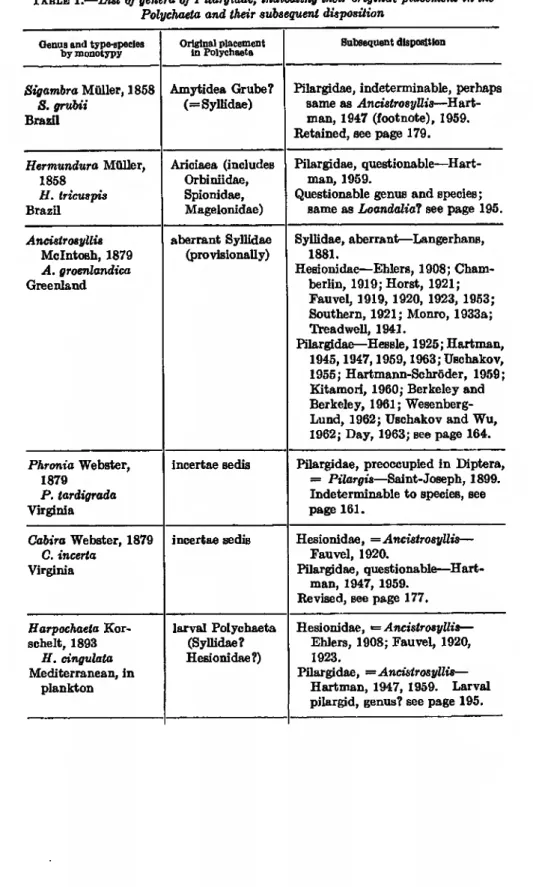
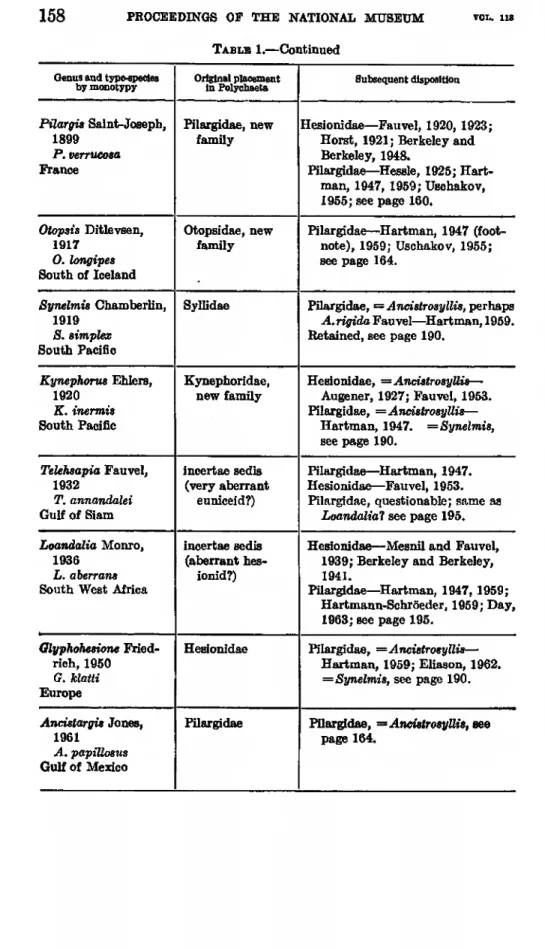
The genera that have been referred to the Pilargidae have had a checkered history, as shown by table 1, which gives for each genus its original placement in the Polychaeta and its subsequent disposition by various polychaete workera. Not all polychaete authorities have recognized the Pilargidae, referring the species instead to Hesionidae (Ehlers, Chamberlin, Horst, Fauvel, Mesnil, Augener, Southern, Monro, and Treadwell). Omitting the larval Harpochaeta and the questionable Hermundura, 4 of the 12 remaining genera that have been proposed were indicated to have doubtful family connections and were placed in "genera mcertae sedis"; 2 were placed in new families (Otop- sidae and Kynephoridae), 3 were considered to be aberrant Syllidae, 1 was placed in the Hesionidae, and 2 in the Pilargidae. This further emphasizes the heterogeneous and enigmatic characters of the family.
The pilargid genera that have been generally recognized are Pilargis, Ancistrosyllis, and Loandalia. As new species have been described, they have for the most part been added to one of these three genera and the groupings of species within the genera have become quite heterogeneous. In this revision, I have attempted to define and limit the genera more clearly, and I have made use of three additional genera which have been either ignored or considered to be questionable:
(1) Sigambra Müller, 1858, has been considered to be indeterminable, but the figures and description of S. gruhii seem to be sufficiently detailed to be used. (2) Cabira Webster, 1879, a questionable genus based on the confusing description of O. incerta, is reinstated, based on recent material collected in Chesapeake Bay. (3) Synelmis Chamberlin, 1919, with a single species, S. simplex, has been previously overlooked.
REVISION OF PILAEQIDAE•^PETTIBONB
157
TABLE 1.•List of genera of Pilargidae, indicating their original placement in the Polychaeta and their subsequent disposiiion
Genua and type-spedes
by roonotypy Original placement
In Polychaeta Suteequent disposition
Sigambra Müller, 1868 S. grubii
Brazil
Amytidea Grube?
(=Syllidae)
Pilargidae, indeterminable, perhaps same as Ancistrosyllia•Hart- man, 1947 (footnote), 1969.
Retained, see page 179.
Hermundura Müller, 1858
H. iricuspis Brazil
Ariciaea (includes Orbiniidae, Spionidae, Magelonidae)
Pilargidae, questionable•Hart- man, 1959.
Questionable genus and species;
same as Loandalial see page 195, Anñstro&yUis
Mclntosh, 1879 A. groenlandica Greenland
aberrant Syllidae (provisionally)
Syllidae, aberrant•Langerhans, 1881.
Hesionidae•Ehlera, 1908; Cham- berlin, 1919; Horst, 1921;
Fauvel, 1919, 1920, 1923, 1953;
Southern, 1921; Monro, 1933a;
Tread weU, 1941.
Pilargidae•Hessle, 1925; Hartman, 1945,1947,1969,1963; Usohakov, 1955; Hartmann-Schröder, 1959;
Kitamori, 1960; Berkeley and Berkeley, 1961; Wesenberg- Lund, 1962; Usohakov and Wu, 1962; Day, 1963; see page 164.
Phronia Webster, incertae sedis Pilargidae, preoccupied in Diptera,
1879 = PttorffîS•Saint-Joseph, 1899.
P. tardigrada Indeterminable to species, see
Virginia page 161.
Cabira Webster, 1879 incertae sedis Hesionidae, = Ancistrosyllis•
C. incerta Fauvel, 1920.
Virginia Pilargidae, questionable•Hart-
man, 1947, 1959.
Revised, see page 177.
Harpochaeta Kor- larval Polychaeta Hesionidae, >= Ancistrosyllii•
Bchelt, 1893 (Syllidae? Ehlers, 1908; Fauvel, 1920, H. cingulata Hesionidae?) 1923.
Mediterranean, in Pilargidae, = Ancistrosyllis•
plankton Hartman, 1947, 1959. Larval
pjlargid, genus? see page 195.
158 PHOCEEDINGS OF THE NATIONAL MUSEUM
TABLE 1.•Continued Genus and type-species
by monotypy Original placement
In Polycliaeta Subsequent disposition Pilargia Saint-Joseph,
1899 P. verrucosa France
Pilargidae, new family
Hesionidae•Fauvel, 1920, 1923;
Horst, 1921; Berkeley and Berkeley, 1948.
Pilargidae•Kessle, 1925; Hart- man, 1947, 1959; Uschakov, 1955; see page 160.
Otopsis Ditlevsen, 1917
0. Umgipes South of Iceland
Otopsidae, new family
Pilargidae•Hartman, 1947 (foot- note), 1959; Usehakov, 1955;
see page 164.
SynelmU Chamberlin, 1919
S. simplex South Pacific
Syllidao Pilargidae, = Ancistrosyllis, perhaps A.rigida Fauvel•Hartman, 1959.
Retained, see page 190.
Kynephorus Ehlere, 1920
K. inermi»
South Pacific
Kynephoridae, new family
Hesionidae, • AndâtrosyUia•
Augener, 1927; Fauvel, 1953.
Pilargidae, = Ancistrosyllis•
Hartman, 1947. =Synelmis, see page 190.
Teleksapia Fauvel, 1932
T, annandalei Gulf of Siam
incertae sedis (very aberrant
euniceid?)
Pilargidae•Hartman, 1947.
Hesionidae•Fauvel, 1953.
Pilargidae, questionable; same as Loandalial see page 195.
Loandalia Monro, 1936
L. aberran«
South West Africa
incertae sedis (aberrant hes-
ionid?)
Hesionidae•Mesnil and Fauvel, 1939; Berkeley and Berkeley, 1941.
PUargldae•Hartman, 1947, 1959;
Hartmaun-Sohröeder, 1959; Day, 1963; see page 195.
Olyphohesione Fried- rich, 1950 G. Iclatti Europe
Hesionidae Pilargidae, = Ancistrosyllis•
Hartman, 1959; Eliason, 1962.
=Synelmis, see page 190.
Ancistargis Jones, 1961
A. papiUosus Gulf of Mexico
Pilargidae Pilargidae, = Ancistrosyllis, see page 164.
REVISION OF PILARGIDAB•PETTIBONE 159
Based on this revision, many pilargid species are recombined and some species put into synonymy. Seven genera of Pilai^dae are herein retained: Ancistrosyllis (9 species), Sigambra (9 species), PUargis (4 species), Cabira (4 species), Loandalia (2 species), Synelmis (2 species), Otopsis (2 species). I have not included Telehsapia Fauvel, with the questionable T. annandalei, or Hermundura Müller, with the questionable H. iricuspis, except to place them both question- ably under Loandalia Monro. Phronia Webster, preoccupied, is referred to PUargis. Kynephorus Ehlers and Olyphohesione Friedrich are referred to Synelmis. Ancistargis Jones is referred to Ancistrosyllis.
Harpochaeta Korschelt is based on the larval form H. cingulata. For each genus, a synonymy, diagnosis, list of species, and key to the species are given. Where material was available for study, descrip- tions and figures of some of the species are included.
Descriptions are given for the following species (the 6 species of pilargids from Chesapeake Bay are noted by asterisks) :
PiLAEGIDAE
Aneiitrosyllis breviceps Hartman PUargis berkeleyae Monro
AncistrosylUs groenlandica Mclntosh Sigambra bassi (Hartman), new oombi- Ancistrosyllis hamata (Hartman), new nation
combination Sigambra gruhii Müller
* Ancistrosyllis hartmanae, new species *Sigamhra ientaculata (Treadwell), new
* Ancistrosyllis jonesii new Bpecies combination
Ancistrosyllis papillosa, (Jones), new *Sigarnbra wassi, new species combination Synelmis albini (Langerhans), new
*Cabira incerta Webster, revised combination Loandalia fauveli Berkeley and
Berkeley
POLYNOIDAB Podarmm ploa Chamberlin
Family Pilargidae Saint-Joseph, 1899
Body vermiform, cylindrical, somewhat depressed, or flattened, ribbon-like. Integument smooth or papillated. Prostomium, tentac- ular segment, and first setigerous segment more or less fused. Prosto- mium usually small, inconspicuous, usually with antennae (3 to 0) ; median antenna, when present, on posterior part of prostomium; with pair of biarticulate palps consisting of large palpophores more or less set off from prostomium and small palpostyles (filiform, button-like or absent) ; eyes usually absent. Tentacular segment achaetous, apodous, with usually 2 pairs of tentacular cirri (rarely one pair or none).
Dorsal cirri of first setigerous segment often longer than following.
160 PROCEEDINGS OF THE NATIONAL MUSEUM VOL. US
Parapodia subbiramous. Notopodia reduced to embedded notoacic- ula in cirrophores of dorsal cirri, with or without additional capillary setae or stout emergent acicular setae which may be straight or hooked.
Neuropodia cylindro-conical, with embedded neuroacicula and simple netirosetae (no compound setae, as in Hesionidae). Dorsal and ventral cirri usually present. Pygidium usually with pair of anal cirri.
Proboscis unarmed, bulbous or long cylindrical, usually with circlet of papillae around opening. Intestine usually with intestinal caeca (at least in forms with well-developed parapodia). Burrowing forms.
Key to the Genera of Pilargidae
1. With internal notoecicula only or with additional fine capUlary notosetae . 2 With stout emergent dorsal setae in addition to internal notoacicula ... 4 2. Without antennae, tentacular cirri, dorsal or ventral cirri (small cirri may be present at terminal parts of neuropodial lobes but not in usual position).
Notopodia with projecting stout notoacicula and few slender notosetae.
Body subcylindrical Loandalia Monro, p. 195 With antennae, tentacular cirri, dorsal and ventral cirri. Notopodia with internal notoacicula only. Body flattened, ribbon-Uke 3 3. Two small lateral antennae, without median antenna. Palps biarticulate, with small palpostyles. Ventral cirri short, conical. Integument minutely papillated Pilargis Saint-Joseph, p. 160 Three small antennae, median and lateral. Palps indistinct, without pal- postyles. Ventral cirri lameEiform. Integument smooth, not papil- lated Otopsis Ditlevsen, p. 164 4. Stout emergent dorsal setae straight, not hooked. Body subcyUndrical, with parapodia sharply marked oflf from body. Neurosetae capillary, limbate.
Integument smooth, not papillated Synelmis Chamberlin, p. 190 Stout emergent dorsal setae hooked 5 5. Body subcylindrical, with parapodia poorly developed. Dorsal and ventral cirri smaJl or lacking Cabira Webster, p. 177 Body elongate, depressed, with parapodia deeply cut. Dorsal and ventral cirri distinct 6 6. Proatomium small, inconspicuous, with antennae shorter than palps.
Tentacular cirri short. Dorsal cirri of first setiger similar to or slightly longer than following. Dorsal cirri short. Neurosetae longer to shorter, with tips slightly bent, smooth, %nd spiuous. Integument papillated.
Ancistrosyllis Mclntosh, p. 164 Prostomium larger, with antennae longer than palps. Tentacular cirri long.
Dorsal cirri of first setiger unusually long. Dorsal oirri long and slender.
Neurosetae with capillary tips. Integument smooth.
Sigambra Müller, p. 179 Genus Pilargis Saint-Joseph, 1899
Pilargis Saint-Joseph, 1899. [Type-species: P. verrucosa Saint-Joseph, 1899, by monotypy. Gender: feminine.]
Phronia Webster, 1879. [Type-species: P. tardigrada Webster, 1879, by monotypy.
Gender: feminine. Preoccupied by Winnerz, 1863, in Díptera.]
Diagnosis: Body long, flattened, ribbon-like, with parapodia deeply cut. Prostomium reduced, biarticulate palps with large ovoid palpo-
REVISION OF Pn^AEQIDAE•PETTIBONE 161
phores and small papiUar palpostyles, paired short lateral antennae, without median antenna. Tentacular segment with 2 pairs of ten- tacular cirri. Parapodia subbiramous. Notopodia with inflated cirrophores with internal notoacicula, without notosetae ; conical dorsal cirri more or less set off from dorsal cirrophores. Neuropodia conical lobes with stout neuroacicula; neurosetae simple, variable in length;
ventral cirri short, conical. Pygidium with or without short anal cirri. Proboscis unarmed, globular. Integument minutely papillated.
The following species have been referred to Püargis:
P. tardigrada (Webster, 1879, p. 258), as Phronia tardigrada. Virginia. See Fauvel, 1920, p. 212. Questionable species. Type-specimen not avail- able.
P. verrucosa Saint-Joseph, 1899, p. 175. France. See Fauvel, 1920, p. 212;
1923, p. 252.
P. perezii Charrier, 1924, p. 11. France. Referred to P. verrucosa, Fauvel, 1925, p. 88.
P. pacifica (Zachs, 1933, p. 128), aa P. verrucosa pacifica. North Japan Sea.
See Usohakov, 1955, p. 201.
P. berkeleyae Monro, 1933b, p. 673, as P. berkeleyi (named after Edith Berkeley). Washington, North Pacific. See page 161.
P. macúlala Hartman, 1947, p. 494. Central California. Referred to P. ber- keleyae, see page 161.
P. falcaia Day, 1957, p. 70. South Africa. Referred to Ancistrosyllis, see page 165.
P. matsunagaensis Kitamori, 1960, p. 1088. Seto-Inland Sea, Japan.
Referred to Ancislrosyllis, see page 165.
P. hamaius Hartman, 1960, p. 88. Southern California, Referred to Ancistrosyllis, see page 165.
Key to the Species of PUargis
1. Neurosetae uniformly simple, capillary 2 Some neurosetae with slightly hooked tips 3 2. Tentacular cirri subequal P. pacifica (Zachs)
Upper pair of tentacular cirri much longer than lower pair.
P. tardigrada (Webster) 3. Neurosetae smooth P. verrucosa Saint-Joseph Shorter neurosetae with spinous blades P. berkeleyae Momo
Pilargis berkeleyae Monro
FIGURES 1, 2
Pilargis berkeleyi [sic] Monro, 1933b, p. 673, figs. 1-4.•Berkeley and Berkeley, 1935, p. 768; 1948, p. 57, figs. 85, 86.•Hartman, 1947, p. 491, pi. 59, figs.
1-8; 1963, p. 16.
Pilargis macúlala Hartman, 1947, p. 494, pi, 60, figs, 1-5; 1963, p. 16.
Material examined: Elkhom Slough, Monterey Bay, Calif., loan from Cyril Berkeley. Paratype of P. maculata Hartman, Moss Beach, Calif., AHF 1716, loan from Olga Hartman (long specimen without anterior end).
162
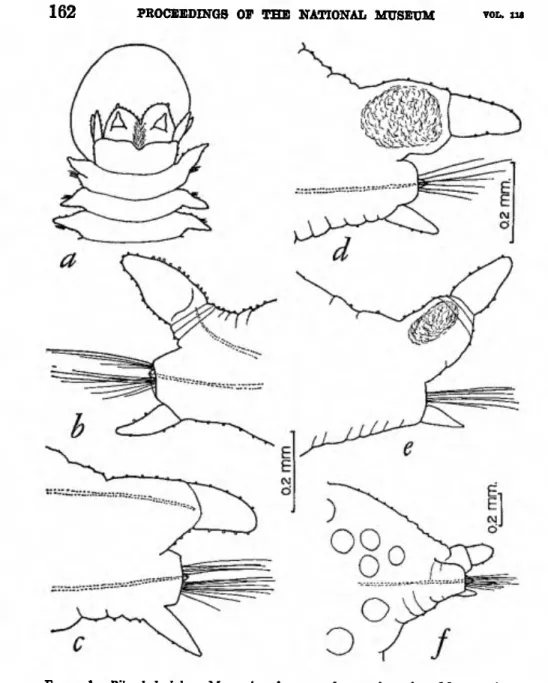
PROCEEDINGS OF THE NATIONAL MTJSEITM VOIu 11»FIGURE 1.•Püargis berkeleyae Monro (a-f from complete specimen from Monterey Bay;
/, from smaller incomplete specimen from same locality) : a, dorsal view anterior end, with proboscis extended; b, parapodium from setiger 18; c, same, from seliger 7S; d, same, from middle of body (about setiger 200), pigmented glandular area in dorsal cirrophore shown;
e, same, from posterior part of body (about setiger 400); f, same, from middle of body, with some large yolky eggs visible.
REVISION OF PILARGIDAE•PETTIBONE
163
Description: Length to 300 mm., width to 4 mm., segments to 500.
Body flattened, ribbon-like, tapered anteriorly and posteriorly.
Integument with low papillae on body and appendages, more nu- merous dorsaUy. Prostomium small, inconspicuous, with ovate palpophores indistinct from prostomium and minute palpostyles, with paired short lateral antennae. Tentacular segment fused with prostomium, with two pairs of short tentacular cirri, dorsal pair slightly longer than ventral pair. Dorsal cirri of first setigerous
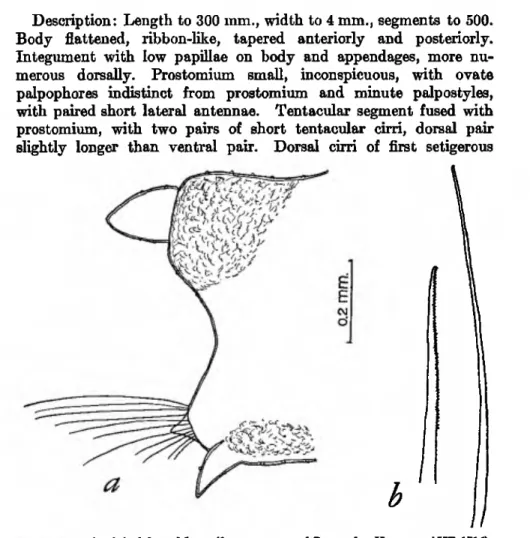
FIGURE 2.•Pilarais berkeleyae Monro (from paratype of P. macidata Hartman, AHF 1716):
a, parapodium from middle of body of inflated specimen, with pigmented glandular areas shown; b, neurosetae from same.
segment longer than following. Inflated dorsal cirrophores of noto- podia variable in shape, as indicated in figures drawn from different parts of body and individuals in different states of contraction;
notoacicula colorless, without notosetae; dorsal cirri conical to ovate.
Neuropodia conical, with stout neuroacicula and bundle of simple neurosetae; neurosetae variable in length; shorter neurosetae serrate, with tips slightly hooked, sometimes faintly bifid; longest neurosetae tapering to fine slightly hooked tips, smooth or very faintly serrated;
ventral cirri on all setigerous segments. Pygidium rounded, with 0, 2 or 3 anal cirri. Proboscis thin-walled translucent sac. Reddish to dark-brown glandular areas in notopodial cirrophores and ventral bases of neuropodia.
164 PROCEEDINGS OF THE NATIONAL MUSEUM VOL. iis
Distribution: Washmgton to southern California. Intertidal to 225 fms.
Genus Otopsis Ditlevsen, 1917
Otopsis Ditlevsen, 1917. [Ts^pe-species: 0. longipes Ditlevsen, 1917, by mono- typy. Gender: masculine.]
Diagnosis: Body long, flattened, with lateral parapodia deeply cut. Prostomium smaU, with 3 small antennae, 2 palps (without palpostyles). Tentacular segment achaetous, with 2 pairs tentacular cirri. Parapodia subbiramous. Notopodia with embedded noto- acicula only, without notosetae or emergent acicular setae. Dorsal cirri large, lameUiform. Neuropodia conical, with neuroacicula and simple capillary neurosetae. Ventral cirri lameUiform. Pygid- ium? Proboscis? Integument smooth, not papillated.
A single species and subspecies have been described :
Otopsis longipes Ditlevsen, 1917, p. 67. South of Iceland, 843 fms.
Otopsis longipes pacifions Uschakov, 1950, p. 171, as 0. longipes var. pacifica.
Okhotsk Sea, 709-757 fms.
Genus Ancistrosyllis Mclntosh, 1879
Ancislrosyllis Mclntosh, 1879. [Type-species: A. groenlandica Mclntosh, 1879, by monotypy. Gender: feminine.]
Ancigtargis Jones, 1961. [Type-species: A. papillosus Jones, 1961, by original designation. Gender: feminine.]
Diagnosis: Body elongate, depressed, with lateral parapodia deeply cut. Prostomium small, inconspicuous; 2 biarticulate palps with large palpophores and small palpostyles; antennae short, usually 3 in number, consisting of lateral antennae (rarely absent) and posterior median antenna (may be absent). Tentacular segment more or less fused with prostomium, achaetous, with 2 pairs of short tentacular cirri (rarely only 1 pair?). Dorsal and ventral cirri short. Parapodia subbiramous. Notopodia inflated, with notoacicula curved distaUy, with stout emergent hooked setae beginning on setigers 3-13. Neu- ropodia with conical to truncate setigerous lobes, with neuroacicula and simple neurosetae. Neurosetae variable in length, smooth, finely to coarsely spinous, usually ending in slightly hoolred tips (tips may be indistinctly bidentate). Pygidium with paired short and cirri.
Proboscis unarmed, cylindrical, globular, with or without papillae.
With intestinal caeca. Integument with scattered papillae.
Remarks: The chief distinction between Ancistargis and Ancistro- syllis is the absence of a median antenna in the former and its presence in the latter. The median antenna, when present, is small to minute and often difficult to detect. Located as it is on the posterior part of the prostomium, it may be hidden when the prostomium is retracted partially within the tentacular segment. Of the species listed below,
REVISION OF PILARGIDAE•^PETTIBONE 165
four lack a median antenna: A.jalcaia, A. matswnagaensis, A. hamata, and A. pa-piUosa. One species, A. quellina, lacks lateral antennae.
The following species have been referred to Ancistrosyllis:
A. groenlandica Mclntosh, 1879, p. 502. Davis Strait, Greenland. See page 166.
A. alhini Langerhans, 1881, p. 107. Canary Islands, North Atlantic, Re- ferred to Synelmis, sec page 191.
A. robusta EhlerB, 1908, p. 59. South Atlantic. Referred to Sigambra, see page 181.
A. rígida Fauvel, 1919, p. 337. Red Sea. Referred to Synelmis alhini, see page 191.
A. eon&tricta Southern, 1921, p. 573. India. Referred to Sigambra, see page 181.
A. gracilis Kessle, 1925, p. 34. Off Japan. Referred to Synelmis albini, see page 191.
A. gorgonensis Monro, i933a, p. 26. Pacific side of Panama. Referred to Synelmis albini, see page 191.
A. ientaculaia Treadwell, 1941, p. 1. Long Island, N.Y. Referred to Sigambra, see page 182.
A. basai Hartman, 1945, p. 15. Florida and North Carolina. Referred to Sigambra, see page 186,
A. ocellata Hartmann-Sehröder, 1959, p. 109. Central America. Referred to Sigambra, see page 181.
A. hanaokai Kitamori, 1960, p. 1086. Seto-Inland Sea. Referred to Sigambra, see page 181.
A. longicirrata Berkeley and Berkeley, 1961, p. 658. Off Peru, in plankton.
Synonym of Podarmus ploa, Polynoidae, see page 200.
A. quellina Wesenberg-Lund, 1962, p. 68, Chile.
A. pilargiformis Uschakov and Wu, 1962, p. 75. YeUow Sea. Referred to Cabira, see page 177.
A. parva Day, 1963, p. 395. South Africa. Referred to Sigambra, see page 181,
A. brevieeps Hartman, 1963, p, 13. Southern California, see page 168.
The following species are herein referred to Ancistrosyllis:
A. fálcala (Day, 1957, p. 70), as Pilargis fálcala. South Africa.
A. matsunagaensis (Kitamori, 1960, p. 1088), as Pilargis matsunagaensia.
Seto-Inland Sea, Japan.
A. hamata (Hartman, 1960, p. 88), as Pilargis hamatus. Southern Cali- fornia. See page 168.
A. papillosa (Jones, 1961, p. 3), as Ancistargis papillosus. Florida. See page 170.
A. kartmanae, new species. Chesapeake Bay. See page 172.
A. jonesi, new species. Chesapeake Bay, See page 173.
Key to the Species of Ancistrosyllis
1. Ventral cirri beginning on setiger 1. With lateral antennae. Tentacular cirri 2 pairs. With notoacicula 2 Ventral cirri beginning on setiger 3-4 5
166 PEOCEEDINGS OP THE NATIONAL MUSEUM ''OL. iis 2. Notopodial hooked eetae beginning on setiger 3-6. Dorsal cirri of first
setiger longer than following 3 Notopodial hooked setae beginning on setiger 7-13 4 3. Short median antenna. Notopodial hooked setae beginning on setiger 4-6.
A. groenlandica, p. 166 Without median antenna. Notopodial hooked setae beginning on setiger 3.
A. matsunagaensis.
4. Notopodial hooked setae Iseginning on setiger 7. Without median antenna.
With paired deep-set minute eyes. Dorsal cirri small, ovoid. Ventral cirri small, near tips of parapodial lobes A. falcata Notopodial booked setae beginning on setiger 13 (not emergent at first).
With short median antenna (sometimes difficult to detect). Without eyes.
Dorsal cirri short, subulate. Ventral cirri larger, at base of neuropodial lobes A. breviceps, p. 168 5. Ventral cirri beginning on setiger 4. Notopodial hooked setae beginning on setiger 4. Tentacular cirri 1 pair. Without lateral antennae. Without notoacicula. Eyespots 2 pairs A. quellina Ventral cirri beginning on setiger 3. Tentacular cirri 2 pairs. With lateral antennae. With notoacicula , 6 6. Notopodial hooked setae beginning on setiger 3. Eyes 1 pair 7 Notopodial hooked setae beginning on setiger 6. Without eyes 8 7. Without median antenna. Lateral antennae extending beyond palps. An- terior part of digestive tract not looped A. papulosa, p. 170 Short median antenna, which may be partially hidden by tentacular segment.
Lateral antennae shorter than palps. Anterior part of digestive tract looped A. hartmanae, p. 172 8. Without median antenna. Notopodial acicular lobe low, thick, not elongated, with short conical dorsal cirri A. hamata, p. 168 Small median antenna (easily overlooked). Notopodial acicular lobe en- larged, conical, extending nearly to tip of neuropodial lobe, with small dorsal cirri indistinctly separated from notopodial lobe . . A. jonesi.p. 173
Ancistrosyllis groenlandica Mclatosh
FIGURE 3
Ancistrosyllis groenlandica Mclntosh, 1879, p. 502, pi. 65, figs. 3, 20.•Pettibone, 1963, p. 110, fig. 30.•Hartman, 1965, p. 71.
Material examined: North Atlantic, Albatross III, 42°10' N., 69°18' W., 100 fms., 1955, K. Wigley; Delaware sta., 42°31' N., er'áS' W., 175 fms., 1959, R. Wigley. Gulf of St. Lawrence, P.
Brunei.
Description: Length to 40 mm., width to 1 mm., segments to 70.
Body flattened dorsoventrally, widest in middle region, tapering anteriorly and posteriorly, with parapodia deeply cut. Prostomimn with large palpophores and small button-like palpostyles (easily overlooked); 3 small subequal antennae shorter than palps; without eyes. Tentacular segment indistinct from prostomium, with 2 pairs of short subequal tentacular cirri, similar to antennae; irregular lateral pigmented areas may be present (fig. 3a; these are probably the lai^e lateral eyes mentioned and figured by Mclntosh). Dorsal cirri of
REVISION OP PILARGIDAE•^PETTIBONB
167
first setiger about twice as long as following. Dorsal cirri fusiform, short, extending slightly beyond neuropodial lobes. Notopodia with somewhat inflated notoaeicular lobes and emergent hooked setae
FIGURE 3.•AncistrosyUis groentandica {a, from specimen from Delaware sta.; ¿-/from speci- men from Albatross sta.): a, dorsal view anterior end; b, same, from another specimen;
c, ventral view anterior end; d, middle parapodium; i, notopodlal hooked seta;/, neurosetae.
beginning on setiger 4 to 6. Neuropodial lobe conical, with neuro- aciculum and neurosetae variable in length; shorter ones wider, tapering to slightly hooked tips, faintly spinous; longer ones more slender, smooth or very finely spinous, with fine slightly hooked tips.
168 PROCEEDINGS OF THE NATIONAL MUSEUM TOL. U»
Pygidium rounded, with paired short anal cirri similar to dorsal cam. Proboscis short, cylindrical, with few scattered papillae.
With conspicuous rust-colored glandular areas in anterior part of notopodial lobe (beginning on setiger 4) and Tentrally near bases of parapodia (fig. 3ci). Integument with numerous scattered short papillae.
Distribution: West Greenland, British Isles, Gulf of St. Lawrence to off-shore New Jersey, off northeastern South America. In 25 to 1611 fms.
AnctstrosyUis breviceps Hartman FlQUBB 4
Andstrosyllù brevicep» Hartman, 1963, p. 13, fig. 1, a-d.
Material examined: Holotype of Ancistrosyllis breviceps, Santa Monica Canyon, 386 fms., Sta. 7517, loan from Olga Hartman (AHF).
Description: Body depressed, parapodia longer than body width.
Prostomium small, with lai^e palpophores and small palpostyles (visible ventraUy) ; antennae very short, not extending beyond palps.
Tentacular segment with 2 pairs of subequal tentacular cirri, longer than antennae. Dorsal cirri of first setiger slightly longer than following. Notopodia low, with slender notoacicula and prominent emergent hooked setae beginning about setiger 13 (possibly irregular, not emergent at first) ; dorsal cirri short, subulate. Neuropodia long, subconical, with neuroacicula and simple neurosetae. Neurosetae variable in length, with tips slightly hooked (according to Hartman, all neurosetae taper to fine tips). Ventral cirri short, subulate, begin on first setiger. Proboscis? Pygidium? Integument minutely papil- lated, especially dorsally.
Distribution: Southern California. In 191-533 fms.
AnctstrosyUis hamata (Hartman) FiauBB 6
Pilargis hamatns [sic] Hartman, 1960, p. 88, pi. 7, figs. 4-6; 1963, p. 16.
Material examined: Paratype (anterior fragment of 60 segments) from off Long Beach breakwater Ught, southern California, 12 fms., sandy mud, Sta. 2311, loan from Olga Hartman (AHF).
Description: Length to 30 mm., width to 2 nmi., segments to 100.
Body flattened dorsoventrally, widest in middle region, tapering anteriorly and posteriorly, with parapodia deeply cut. Prostomium with large palpophores and small palpostyles, with low conical lateral antennae, much shorter than palps. Tentacular segment indistinct from prostomium, with 2 pairs of short subequal tentacular cirri.
Dorsal cirri of first setiger slightly longer than following. Notopodia
REVISION OP PII/ARGIDAE•^PETTIBONE
169
with low inflated notoacicular lobes, with very small conical dorsal cirri, much shorter than neuropodial lobes, with prominent stout emergent hooks beginning on setiger 6 (4- 7, according to Hartman).
Neuropodial lobes short, truncate, with retractile conical neuroacicular lobes, with bundle of about 7 simple neurosetae. Neurosetae variable
FIGURE 4.•AncistTOSylHs brevtceps (from holotype): a, dorsal view anterior end; b, ventral view anterior end; C, middle parapodium; d, neurosetae.
in length, faintly serrated, with tips slightly hooked, tips may be faintly bifid (according to Hartman, neurosetae of 2 kinds, slender, capillary and stouter, with bifid tips). Ventral cirri small, conical, beginning on setiger 3. Pygidium? Proboscis? With intestinal caeca. Integument with rather thick cuticle, with scattered minute papillae.
Distribution: Southern California. In 12 to 721 fms.
170 PROCEEDINGS OP THE NATIONAL MUSEUM
FIGURE S.•JncistrojyUis kamata (from paratype from Sta. 2311) : a, dorsal view anterior end; b, cross section in region of setiger 60; e, parapodium from same; d, neurosetae.
Ancistrosyllis papillosa (Jones) FiatrBB 6
AncistargiB papillosus [sic] Jones, 1961, p. 3, figs. 1-14.
Material examined: Holotype and 2 paratypes from Alligator Harbor, Fla., loan from Meredith L. Jones (AMNH). One small specimen, Port Aransas, Tex., 5 fms., mud, M. L. Jones (AMNH).
Description: Length, to 10 mm., width to 0.5 mm., segments to 64.
Body flattened dorsoventrally, widest in middle region, tapering an- teriorly and posteriorly, with segmental dorsal transverse ridges, parapodia deeply cut. Prostomium with large palpophores and small filiform palpostyles, with short digitiform lateral antennae extending slightly beyond palps, with paired small eyespots ventrally. Ten- tacular segment indistinct from prostomium, with 2 pairs of tentacular cirri, longer than palps. Doraal cirri of first setiger similar to follow- ing. Dorsal cirri fusiform, short, extending slightly beyond neuro-
REVISION OF PrLABGIDAE•^PETTIBONE
171
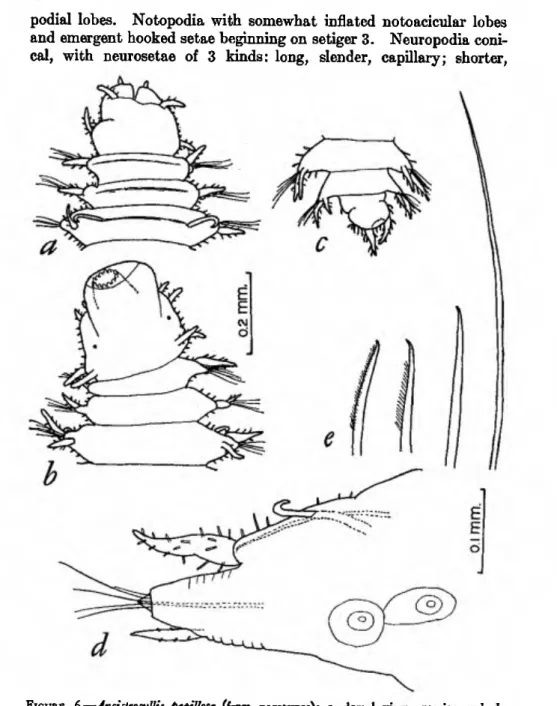
podial lobes. Notopodia with somewhat inflated notoacicular lobes and emergent hooked setae beginning on setiger 3. Neuropodia coni- cal, with nem'osetae of 3 kinds: long, slender, capillary; shorter,
FIGURE 6,•Ancîstrosyîlis papulosa (from paratypes): a, dorsal view anterior end; I, ventral view anterior end, with proboscis partially extended; c, ventral view posterior end; d, middle parapodium, with two large yolky developing eggs shown; e, neurosetae.
faintly serrated, with slightly hooked tips; shortest, spmous, with hooked tips. Ventral cirri short, fusiform, shorter than dorsal cirri, beginning on setiger 3. Pygidium rounded, with pair short anal
782-216•66 2
172 PROCEEDINGS OF THE NATIONAL MUSEUM ^oi" "«
cirri, similar to dorsal cirri. Proboscis cylindrical, with muscular core and thin transparent covering, with short papillae around opening.
With intestinal caeca. Integument with numerous papillae on dorsal surface and cirri, with fewer papillae ventrally; papulae especially long on dorsal cirri and notopodial lobes.
Distribution: Gulf of Mexico (Florida, Texas). Intertidal to 5 fms.
Anciatrosyllis hartmanae new species
FiauBEB 7, 8
The species is based on a single specimen from Chesapeake Bay off Rappahanock River, 37°32' N., YG^O?' W. in 7 fms. in mud, July 21, 1961, M. Wass, collector, holotype USNM 30989. The species is named for Olga Hartman, eminent worker on the polychaetes.
Description: Length 25 mm., width 0.5 mm., segments 110. Body long, threadlike, flattened dorsoventrally, tapering anteriorly and posteriorly, parapodia deeply cut, appearing moniliform. Prosto- mium small, büobed, partially retractable within tentacular segment, with paired biarticulate palps indistinctly set off from rest of prosto- mium, with palpophores large, papillated and small palpostyles visible ventrally, with pair of lateral antennae shorter than palps, with small unpaired median antenna posteriorly on prostomium, partially hidden by tentacular segment, with 2 deep-set eyes hidden by tentacular segment. Tentacular segment indistinctly separated from prosto- mium, achaetous, with 2 pairs of short subequal tentacular cirri, lateral and ventrolateral; ventrally forms lower lip of mouth. Dorsal cirri of first setiger similar to following. Parapodia subbiramous.
Notopodial lobe low, inflated, with internal notoaciculum curving distaUy, with short digitiform dorsal cirrus shorter than neiu:opodial lobe; with stout emergent hooked acicular setae beginning on setiger 3. Neuropodium, short, rounded, with retractile conical neuroacicular lobe, with bundle of about 5 neurosetae. Neurosetae simple, variable in length, longest ones smooth, tapering to fine tips, shorter ones finely spinous, all ending in slightly bent tips. Ventral cirri short, subequal to dorsal cirri, beginning on setiger 3. Pygidium rounded, with paired short subulate anal cirri. Proboscis not extended. An- terior part of digestive tract (in setigers 3-6) looped; with segmental intestinal caeca, 2 pairs per segment. Integument with scattered minute papillae, on body and appendages.
A. hartmanae may be separated from the other species of Andstro- syUis as indicated in the key on page 165.
Distribution : Chesapeake Bay. In 7 fms.
REVISION OP PII/ARGIDAE•^PETTIBONE
173
FIGURE 7.•AncistrosyÜis hartmanat, new species: a, general outline of animal; h, dorsal view anterior end, witli looped part of digestive tract in setigers 3-6 shown; c, ventral view anterior end.
AndstToaylUs Jonesi, new species
FIGURES 9, 10
The species is based on 3 incomplete specimens collected by Marvin Was3 in Chesapeake Bay ofif Kappahanock River in 7 fathoms in mud, July 21, 1961, holotype USNM 30983, 37°36' N., 76°06' W., and 2 paratypes USNM 30984, 37°32' N., 76°07' W. The species is named
174
PHOCEEDINGS OF THE NATIONAL MUSEUMfor Meredith Jones, expressing in a small way my appreciation for his help and cooperation in our fidd of common interest.
Description: Length of incomplete holotype 16 mm., width 1.5 mm., segments 44. Body long, flattened dorsoventrally, tapered gradually anteriorly, with parapodia deeply cut. Prostomimn with large subtriangular palpophores and minute palpostyles. Lateral
FIGURE 8.•Ancistrosyllis hartmanae, new species: a, dorsal view posterior end; h, dorsal view setiger 15, with intestinal caeca shown; c, same, from setiger 36; d, general outline of cross section through middle of body (about setiger 50); e, parapodium from same;
/, neurosetae.
antennae short, subulate, shorter than palpophores. Posterior median antenna minute, easily overlooked. Without definite eyes but with brownish scattered pigment on posteriolateral parts of prostomium and tentacular segment. Tentacular segment indistinct from prostomium, achaetous, with 2 pairs of short, subulate, sub- equal tentacular cirri; ventrally forms lower lip of mouth. Dorsal cirri of first setiger slightly longer than following.
BEVISION OF PILABGIDAE•^PETTIBONE 175 Parapodia subbiramous. Notopodia enlarged, inflated, conical, extending nearly to tips of neuropodial lobes, with notoacicula curving distaUy and enclosing extensions of intestinal caeca; dorsal cirri small, indistinctly separated from enlarged notopodial lobes; with stout emergent hooked notosetae beginning on setiger 6. Neuropodia
FIGURE 9.•Anctstrosyllis jonesi, new species (from holotype): a, general outliae of incom- plete holotype of 44 segments, outline of intestinal caeca shown in few segments; b, dorsal view parapodium, outline of intestinal caeca shown; c, dorsal view anterior end; d, ventral view anterior end.
176
PE0CEEDING8 OF THE NATIONAL MUSEUMconical, with, tips truncate, with neuroaciculum and bundle of about 8 simple neurosetae; neurosetae variable in length, longest smooth, tapering to fine tips, shorter very finely spinous, shortest more coarsely spinous, all with slightly hooked tips which may be indistinctly bifid. Ventral cirri digitiform, extending beyond neuropodial lobes,
FlGUS-E 10.•Ancisirosyliis jonesi, new species (from paratype) : a, dorsolateral view anterior end; b, dorsal view setigers 25-27; c, cross section body in region of setiger 30; d, para- podium of same, outline of intestinal caeca shown; e, neurosetae.
EEVISION OF PII/ARGIDAE•^PETTIBONE 177
beginning on setiger 3. Pygidium? Proboscis not extended. Intes- tine with intestinal caeca, two pairs per segment, shorter anterior pair and longer posterior pair extending into notopodia. Integument with scattered minute papulae.
A. jonesi may be distinguished from the other species of Ancistrosyllis as indicated in the key on page 165. It is closest to A. hamata, differing by the development of the enlarged conical notopodial lobes and the small median antenna.
Distribution: Chesapeake Bay. In 7 fms.
Genus Cabira Webster, 1879, revised
Cabira Webster, 1879. [Type-Bpecies: C. incerta Webster, 1879, by monotypy.
Gender: feminine.]
Remarks: Cabira was placed by Webster among "genera incertae sedis." The brief description of C. incerta is confused, particularly in regard to the parapodial rami. Fauvel (1920) referred the species to Ancistrosyllis among the Hesionidae, suggesting that perhaps the median antenna was lost. Hartman (1947) placed it in the Pilargidae and suggested that the name Cabira perhaps best be dropped, since the original account is much too faulty and incomplete.
The type of Cabira incerta has not been found in the U.S. National Museum, where most of Webster's polychaete material was deposited.
As far as can be determined, it no longer exists. Among the püargids collected in Chesapeake Bay off Rappahanock River, dredged in 7 fms.
in mud by Marvin Wass, are five specimens which can be identified with Cabira incerta. I am herewith revising the genus and species, based on this new material.
Diagnosis: Body subcylindrical, with parapodia poorly developed.
Prostomium small, with paired biarticulate palps consisting of large palpophores and very small palpostyles; with paired small lateral antennae (lacking in C. capensis) ; without median antenna. Tentacu- lar segment indistinct from prostomium, achaetous, with 2 pairs of very small tentacular cirri. Parapodia poorly developed, subbira- mous; notopodia represented by notoacicula and small dorsal cirri, with emergent stout hooked notosetae beginning on setigerous seg- ments 6-8; neuropodia small, with neuroacicula and few similar neurosetae; neurosetae simple, delicate, capillary (additional short setae in C. brevicirris) ; ventral cirri small, below or at tips of neuro- podia. Pygidium bilobed, without anal cirri. Proboscis cylindrical, sometimes ringed, with longitudinal basal rows of spines (in type- species) or with soft papillae (C. brevicirris).
According to this revision, Cabira includes the following:
C. incerta Webster, 1879, p. 267. Chesapeake Bay, Virginia.
C. pilargiformis (Uschalcov and Wu, 1962, p. 75), as Ancistrosyllis pilargi- formis. Yellow Sea.
178 PROCEEDINGS OP THE NATIONAL MUSEUM wi^ "•
C. capenaia (Day, 1963, p. 396), as Loandalia capensis. South Africa.
C. hrevicirrii (Rangarajan, 1964, p. 122), as Annstargis brevicirris. South India,
Key to the Species of Cabira
1. Lateral antennae lacking. Ventral cirri small, at tips of neuropodial lobes.
Hooked notosetae begin on setiger 8. Integument papillated. Proboscis soft sac C. capensis With pair small lateral antennae. Ventral cirri small, below neuropodial lobes.
Integument smooth or with only few scattered papiUae 2 2. Neurosetae of 2 kinds, slender capillary and short, with slightly recurved tips.
Hooked notosetae begin on setigers 6-8. Proboscis with numerous, conical, soft papillae C. breTicirris Neurosetae all similar, slender, capUlary 3 3. Hooked notosetae begin on setiger 7. Proboscis with longitudinal rows of spines basally C. incerta Hooked notosetae begin on setiger 6. Proboscis? C. pilargiformis
Cabira incerta Webster, 1879, revised FiauRES 11, 12
Cabira incerta Webster, 1879, p. 267, pi. 11, figs. 165-157.•Hartman, 1947, p. 510.
AricistTCsylli» incerta Fauvel, 1920, p. 211.
Material examined: Chesapeake Bay off Rappahanock Kiver, 37''32'N., ye'OV'W., 7 fms., mud, July 21, 1961, Marvin Wass, collector, 5 specimens.
Description: Length to 18 mm., width to 1.5 mm., segments to 54.
Body long, subcylindrical, flattened ventraUy, arched dorsally, nar- rowest anteriorly, with indistinct segmental bulges (more prominent posteriorly). Prostomium and tentacular segment fused, with paired biarticulate palps consisting of large palpophores and small ventral palpostyles, with numerous papillae concentrated on anterior tips (^membranous expansions or thin plates covered with papillae of Webster) ; with pair very short lateral antennae arising from swollen bases or ceratophores indistinctly set off from prostomium. Tentacu- lar segment achaetous, with 2 pairs of very short tentacular cirri.
Parapodia small, indistinct, subbiramous. Notopodium (=ven- tral ramus of Webster) represented by very small notopodial lobe or dorsal cirrus with internal notoaciculum, with stout emergent hooked notoseta (^strong hooked ventral seta of Webster) begmning on setiger 7 (setiger 6, according to Webster) ; sometimes with additional hooked seta in process of formation internally, iudicating probable replacement of hooked setae (figs. 12•, b). Neuropodium (=dorsal ramus of Webster) short, conical, with neuroaciculum, tip of which sometimes projects slightly and few (2-4) similar neurosetae (=dorsal setae of Webster); neurosetae simple, slender, delicate, tapering to capUlary tips; ventral cirri (=dorsal cirri of Webster) short, digitiform, below neuropodial lobe, beginning on setiger 3. Pygidium short,
REVISION OF PILARQIDAE•^PETTTBONI!
179
bilobed, without anal cirri. Proboscis cylindrical, 3-ringed, with large papillae around opening of distal ring and few scattered micropapillae, with thickened cuticle in basal ring forming longitudinal ridges, of
FIGURE II.•Cabira incerla: a, general outline of complete specimen; b, dorsal view posterior end; c, lateral view anterior end with proboscis extended.
jagged spines. Integument mostly smooth, with few scattered papillae.
Sometimes pigmented areas dorsal to tentacular cirri and ventral ¡to neuropodia on first 2 setigers (fig. lie).
Distribution: Chesapeake Bay, Va. In 7 fms.
Genus Sigambra Müller, 1858
Sigambra Müller, 1858. [Type-species: S. grubii Müller, 1858, by monotypy Gender: feminine.]
180
PROCEEDINGS OF THE NATIONAL MUSEUM VOL. 113The genus Sigambra either has been overlooked or has been con- sidered to be indeterminable (Hartman, 1947, p. 483; 1959, p. 195).
The original figures and brief description of Ä. grubii from Santa Cathariaa Island off Brazil seem to be sufficiently good to allow the genus to be retained, I have included on page 182 the figures and description of MüUer for S. grubii.
FIGURE 12.•CaUra incerta: a, parapodium from setiger 8; b, same, from seliger 18;
c, dorsal view anterior end; d, ventral view anterior end; e, parapodium from setiger 40.
Diagnosis: Body long, flattened, with parapodia deeply cut. Pro- stomium with 2 biarticulate palps, 3 antennae longer than palps.
Tentacular segment achaetous, more or less fused to prostomimn and first setigerous segment, with 2 pairs tentacular cirri. First setigerous segment with longer paired dorsal cirri. Parapodia subbiramous.
Notopodia with notoacicula and stout emergent hooked setae. Dorsal cirri long, slender, or flattened leaflike, extending beyond neuropodia.
REVISION OF PILARGIDAE•PETTIBONE 181
Neuropodia conical, with neuroacicula and simple neurosetae; neuro- setae capillary, smooth and spinous. Ventral cirri shorter, subulate.
Pygidium with paired long anal cirri. Proboscis unarmed, cylindrical, with distal circlet of large conical papillae or indistinctly papillate.
With intestinal caeca. Integument smooth (not papUlated), may be areolated or wrinkled.
The following species are herein referred to Sigamhra:
8. gruhii MüUer, 1858, p. 314. Santa CatharinaIsland, Brazil. Seepage 182.
iS. robusta (Ehlers, 1908, p. 59), as AncistrosyUis robusta. South Atlantic Ocean,
JS. constricta (Southern, 1921, p. 573), as Ancistrosyüü constricta. Chilka Lake, India.
S. terUacidaia (Treadwell, 1941, p. 1), as Áncütrosyüís tentaculata. Long Island, N.Y. See page 182.
S. fcossi (Hartman, 19í7,p.601), as Ancistrosyllis bassi. Florida. Seepage 186.
S. ocellata (Hartmann-Schröder, 1959, p. 109), as Ancistrosyllia ocellata. Cen- tral America.
S. hanaokai (Kitamori, 1960, p. 1086), as Ancistrosyllis hanaokai. Seto- Inland Sea, Japan.
S. parva (Day, 1963, p. 395), as Ancistrosyuis parva. South Africa.
S. ivasgi, new species. Chesapeake Bay. See page 186.
Key to the Species of Sigambra
1. Dorsal cirri only slightly longer than ventral cirri. Dorsal hooked setae beginning on setiger 7. Ventral cirri on setiger 2? Very small, young?
S. ocellata Dorsal cirri longer than ventral cirri 2 2. Stout hooked notosetae beginning anterior to setiger 20. Ventral cirri lacking on setiger 2 3 Stout hooked notosetae beginning posterior to setiger 20 6 3. Hooked setae beginning on setiger 4 4 Hooked setae beginning on about setiger 14 (11-15) . . . S. bassi, p. 186 4. Median antenna longer than lateral antennae. . . . S. tentaculata, p. 182 Antennae subequal 5 5. Longer neurosetae finely spinous basally, with capillary tips; shorter neuro- setae wide, coarsely spinous, tapering to very short bare tips . S. hanaokai Longer neurosetae smooth, capillary; shorter neurosetae coarsely spinous, with capillary tips S. parTa 6. Body constricted at setiger 4. Without ventral cirri on setiger 2. Notopodial hooked setae beginning about setiger 30-40. Dorsal cirri fusiform, tapered.
S. constricta Body not constricted at setiger 4. With ventral cirri on aU setigers ... 7 7. Dorsal cirri fusiform, tapered. Notopodial hooked setae beginning about setiger 70 S. robusta Dorsal cirri wide, flattened, leaflike. Notopodial hooked setae beginning about setiger 23-30 S. wassi, p. 186 Note: JS. grubii is omitted from key, since the original description failed to mention
on which setiger the hooked setae begin. See page 182.
182 PROCEEDINGS OF THE NATIONAL MUSEUM TOL. iis Sigambra grubii Müller
FlOUBE 13 Sigambra grubii Müller, 1858, p. 214, pi. 6, figs. 7-9.
The figures and description have been taken from Müller (freely translated from the German).
Description: Body with numerous short segments. Prostomium indistinct from longer tentacular segment and first setigerous segment, with bilobed frontal part and 2 minute frontal papulae (=biarticulate palps), with 3 occipital antennae, without eyes. Tentacular segment achaetous, with 2 pairs of tentacular cirri. First setigerous segment with upper pair of dorsal cirri very long, about 4 times longer than ventral cirri. Parapodia subbiramous. Notopodium with notoacicu- lum and single emergent notoseta (setiger on which hooked setae begin not indicated; at least posterior to setiger 3, as indicated by fig. 13a);
dorsal cirri long, slender, subulate, extending beyond neurosetae.
Neuropodium with neuroacicultun and bundle of simple neurosetae.
Ventral cirri short, filiform, lacking on setiger 2 (at least not shown in fig. 13a). Pygidiumwithpair of long anal cirri. Proboscis cylindrical, with row of papillae. Intestine with lateral projections in bases of parapodia. Blood yellowish.
Distribution: South Atlantic, Santa Catharina Island off Brazil.
Sigambra tentaculata (Treadwell) FiauBEB 14, 15
Ancistrosyllis terdacvlata Treadwell, 1941, p. 1, figs. 1-3.•Hartman, 1963, p. 13;
1965, p. 71.
Material examined: Holotype from Long Island, N.Y., loan from AMNH, no. 2893. York River, Va., mud, November 1960, M. Wass, coU. Chesapeake Bay off Rappahanock River, sand, June 1962, M.
Wass, coU. Off Port Aransas, Tex., 27°49' N., 97°01.6' W., 5 fms., mud, M. Jones, coU. (AMNH).
Description: Length to 15 mm., width to 2 mm., segments to 91.
Body somewhat inflated and widest anteriorly, tapered gradually posteriorly, flattened dorsoventrally, with parapodia deeply cut, as long as body width. Integument smooth, without papiUae. Prosto- mium variable in shape, posterior margin sometimes appearing indented posteriorly and extending on tentacular segment as indicated by Treadwell for the holotype (fig. 14a), possibly due to rather shrunken condition of specimen; biarticulate palps vrith large palpophores in- distinctly separated from prostomium, with small button-like to fili- form palpostyles; median antenna on posterior part of prostomium, extending far beyond palps; lateral antennae slightly more anterior than median antenna and extending slightly beyond palps; without definite eyes but sometimes with deep irregular pigmented areas lateral
REVISION OF PILABGIDAE•^PETTIBONE
183
to antennae and crescent-shaped areas posterior to lateral antennae (fig. 15a). Tentacular segment longer than followmg segment, with 2 pairs of tentacular cirri similar to lateral antennae. Dorsal cirri of first setiger longer than following ones, similar to and longer than median antenna.
FIGURE 13.•Sigambra grubii (figures taken from Müller, 1858): a, dorsal view anterior end; b, parapodium; t, notopodial hooked seta.
Parapodia subbiramous; notopodia low, conical, with notoaciculum curving distally; stout, hooked, emergent notoseta beginning on setiger 4. Dorsal cirri wide basaUy, tapering distally, extending be- yond setal lobes. Neuropodia conical, with neuroaciculum and nu- merous simple neurosetae. Neurosetae variable in length, longer ones smooth, capillary, shorter ones spinous with fine tips. Ventral cirri slender, subulate, shorter than setal lobes, lacking on setiger 2. Py- gidium with 2 long anal cirri. Proboscis with 14 papillae around opening, with additional basal papillae irregularly distributed.
Small specimens apparently of this species from Port Aransas, Tex.
{14 to 23 setigerous segments, fig. 15e) agree generally with the larger
184
PROCEEDINGS OF THE NATIONAL MUSEUM VOL. iiaFIGURE 14.•Sigambra Untaculata (a-d, from holotype from Long Island, N.Y.; e, f, from specimens from York River) : a, dorsal view anterior end, proboscis partially extended (specimen rather shrunken, the prostomial area extending on tentacular segment may not be natural); b, same, ventral view; e, parapodinm; d, neurosetae; e, curved notoaciculum and stout hooked notoscta;/, ventral view posterior end.
EEVISION OF PILARGIDAE•PETTIBONE
185
FIGURE 15.-•Sigambfa tentaculata (fl-d, from specimens from York River; /, from specimen from Port Aransas, Tex.)' "> dorsal view anterior end; b, same, from another specimen;
Í, ventral view anterior end, with proboscis extended; d, parapodium from middle region;
e, small specimen of 14 setigerous segments, with proboscis extended.
188
PROCEEDINGS OF THE NATIONAL MUSEUMposteriorly, with parapodia long (about as long as body width), thick, flattened anteroposteriorly. Integument smooth (not papillated), wrinkled and areolated, especially in anterior and middle regions of body. Prostoraium with biarticulate palps consisting of large palp-
FiGURE 17,•Sigambra wassi, new species (from holotype): a, dorsal view anterior end with proboscis extended; b, same, ventral view; c, dorsal view few segments from anterior region; i, same, from middle region; e, parapodium from setiger 15, with intestinal caeca indicated;/, neurosetae from same.
REVISION OF PIIiARGIDAE•PETTIBONE
189
ophores indistinctly set off from rest of prostomium and small palpostyles; medium antenna on posterior part of prostomium, ex- tending to tips of palps; lateral antennae more anterior and slightly shorter than median antenna. Tentacular segment achaetous, longer than following, with 2 pairs of subequal tentacular cirri, simüar to median antenna. Dorsal cirri of first setigerous segment longer than following.
FIGURE 18.•Sigambra wassi, new species {a, from holotype; h-e, from paratype) : a, para- podium from seliger 50, with intestinal caeca and eggs indicated; b, lateral view anterior end; f, dorsal view posterior end; d, parapodium from posterior region; e, notosetae from same.
Parapodia subiramous, as long as body width, thick, with lai^e intestinal dark caeca and with eggs in base (in holotype). Notopodial lobe low, indistinct, with notoacicula curving distally, with emergent acicular seta visible externally about setiger 25 (23/25 in holotype, 30/31 in paratype); in addition, with extra single curved pointed
190 PROCEEDINGS OF THE NATIONAL MUSEUM vot. iis
notoseta in posterior segments (figs. 18d,e). Dorsal cirri large, flattened, leaflike, wide basaUy, tapering distaUy, extending beyond nenropodial lobes. Neuropodiiun conical with neuroaciculxxm and numerous suky neurosetae. Neurosetae simple, shorter and coarsely spinous to longer and faintly spinous, all tapering to capillary tips.
Ventral cirri beginning on setiger 1, present on all setigers, subulate, slightly shorter than dorsal cirri. Pygidium with 2 long anal cirri.
Proboscis cylindrical, with indefinite papillae around opening and with irregular papülated area basally.
Remarks: S. wassi superficially resembles the figures given for Otopsis longipes Ditlevsen, both being large, flattened, with integument wrinkled and folded, with dorsal and ventral cirri large, lamelliform and with numerous capillary setae. They differ in the following characters :
Otopsis longipes Ditlevsen Sigambra wassi, new species
Segment I: Tentacular segment acbaetous, Same with 2 pairs of subequal
tentacular cirri
Segment II: Second tentacular segment First setigerous segment achaetous with 1 pair of with long dorsal cirri and tentacular cirri shorter ventral cirri Segment III: First setigerous segment with Second setigerous segment
dorsal and ventral cirri
Notopodia ; With 2 notoacicula, without With single notoacieulum notosetae and emergent hooked
notoseta beginning on setiger 23-31
S. wassi differs from the other species of Sigambra as indicated in the key on page 181.
Distribution: Chesapeake Bay, Va. In 6-7 fms.
Genus Synelmis Chamberlin, 1919
Synelmis Chamberlin, 1919. [Type-species: S. simplex Chamberlin, 1919, by original designation and monotypy; =S. albini (Langerhans, 1881). Gender:
neuter.]
Kynephorus Ehlers, 1920. (Type-species: K. inermis Ehlers, 1920, by mono- typy; = S. albini (Langerhans, 1881). Gender: masculine.]
Glyphohesione Friedrich, 1950. {Type-species: O. klatti Friedrich, 1950, by monotypy, Gender: feminine.]
Diagnosis: Body long, subcylindrical, stiff, wiry, with lateral parapodia sharply marked off from body. Prostomium small, with paired biarticulate palps, 3 antennae. Tentacular segment achaetous, with 2 pairs of tentacular cirri. Parapodia subbiramous. Notopodia with notoacicula and stout, emergent, straight or slightly curved,
REVISION OF PILARGIDAE•^PETTIBONE 191 acicular setae (not hooked) ; dorsal cirri short, subulate. Neuropodia cylindrical, with neuroacicula and simple neurosetae; neurosetae capillary, limbate; ventral cirri short, subulate. Pygidium with paired short anal cirri. Proboscis unarmed, cylindrical. Without intestinal caeca. Integument smooth, with thick, highly iridescent cuticle, not papiUated or areolated.
A single species has previously been referred to Synelmis, S. simplex Chamberlin, 1919, p. 177. Tuamotu Islands, South Pacific. Herein referred to S. albini (Langerhans), see below.
A single species has previously been referred to Kynefhorus, K.
inermis Ehlers, 1920, p. 27. Amboina, Indonesia. Herein referred to S. albini (Langerhans), see below.
A single species has been described previously imder Glyphohesione, G. klatti Friedrich, 1950, p. 169. Off Helgoland, North Sea. See Eliason, 1962, p. 29, as Ancistrosyllis klatti. Herein referred to Synelmis, perhaps young of S. albinil
Other species were described imder Ancistrosyllis and are being re- ferred to Synelmis albini. See below and page 165.
Key to the Species of Synelmis
1. Dorsal cirri of first setiger similar to following. Dorsal and ventral cirr subequal S. albin Dorsal cirri of first setiger about 2 times longer than following. Dorsal cirr longer than ventral cirri, extending beyond parapodial lobes . . S. klatt
Synelmis albini (Langerhaus)
FIGURES 19-21
Ancütrosyllts albini Langerhans, 1881, p. 107, fig. 16, a-e.•^Hartman, 1965, p. 70.
Synelmis simplex Chamberlin, 1919, p. 177, pi. 28, figs. 1-5.
Ancistrosyllis rígida Fauvel, 1919, p. 337, fig. 1, a-e; 1932, p. 64; 1953, p. 7.•
Augener, 1927, p. 50.•Hartman, 1947, p. 498, pi. 62, figs. 1-7; 1954, p. 629.
Kynephorus inermis Ehlers, 1920, p. 27, pi. 3, figa. 1-9.
Ancistrosyllis gracilis Kessle, 1925, p. 34, fig. 12.
Ancistrosyllis gorgonensis Monro, 1933a, p. 26, fig. 12, a-d.
Remarks: Ancistrosyllis albini, described by Langerhans in 1881 from the Canary Islands, was evidently overlooked by Chamberlin, 1919 (Synelmis simplex), Fauvel, 1919 {Ancistrosyllis rígida), and Ehlers, 1920 (Kynephorus inermis). Augener, 1927, synonomized ií".
inermis with A. rígida. He also suggested that both inermis and rigida might well be referred to A. albini and that the apparent differ- ences could be due to preservation, since A. albini was described and figured from a hving specimen and not contracted due to preservation, as in the specimens described by the other authors. Hessle, 1925 (A. gracilis) and Monro, 1933a (A. gorgonensis) indicated that their respective species were close to A. rigida and A. albini. Hartman,
![Pilargis berkeleyi [sic] Monro, 1933b, p. 673, figs. 1-4.•Berkeley and Berkeley, 1935, p](https://thumb-ap.123doks.com/thumbv2/123dok/11130894.0/7.699.74.610.175.945/pilargis-berkeleyi-monro-1933b-figs-berkeley-berkeley-1935.webp)