Therefore, emotional regulation and social support play a key role in relapse prevention and recovery. The goals of this intervention were to provide affective regulation and social support to individuals seeking recovery from substance abuse. As a result, social support is an important aspect of addiction recovery in addition to formal treatment.
Technology interventions can be helpful in building and maintaining the affective regulation and social support that are essential for long-term addiction recovery. An unconventional application of VR as a platform for an online peer support community can provide the affective regulation and social support that are essential for individuals. The basis for this intervention is the understanding that 1) maintenance of addiction recovery outcomes is often short-lived or unstable, and 2) affective regulation and social support are key components of recovery.
Furthermore, we predicted that individuals would experience a significant amount of social support from the virtual community, and that this would increase over time. Participants also complete the Online Social Support Scale (OSS) to assess the level of online social support they received during the virtual recovery sessions. Paired samples were also conducted to compare the change in perceived online social support through VR sessions.
Perceived online social support: On a scale of 0 to 120, participants rated perceived online social support an average of 81.65 with a standard deviation of 18.6.
Technological usability (n=55; 11 people)
Community (n=53, 11 people)
Comparison to other interventions/platforms (n=41, 11 people)
Psychological and psychoeducational impact (n=34, 11 people)
Challenges (n=32, 10 people)
Four participants mentioned technological challenges, such as general bugs and the need for program troubleshooting (for a total of 5 comments).
Immersion (n=27, 8 people)
Anonymity (n=21, 10 people)
Pandemic (n=8, 6 people)
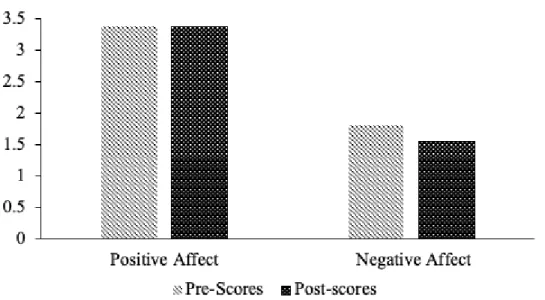
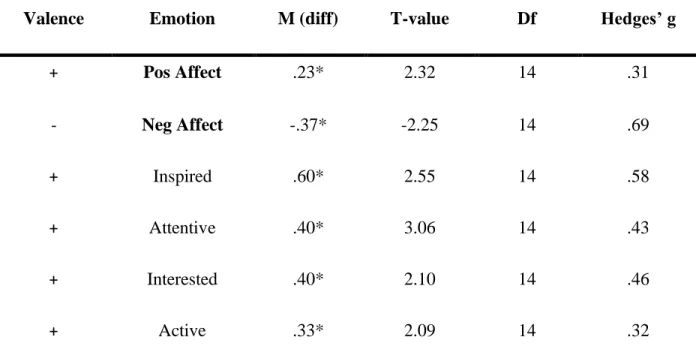
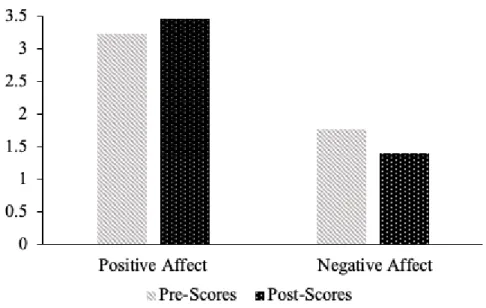
While we observed no significant differences in positive emotions and only a small difference in negative emotions from the first set of PANAS data, we saw a significant difference in both positive and negative emotions in the latest set of PANAS data. In addition, finding moderate effect sizes but no significance in the first set of PANAS scores suggests possible mood improvement, but represents the difficulty of finding significance with such a small sample size. For a wider study in the future, a larger community of individuals, more frequent meetings and increased.
The use of virtual reality technology in the treatment of anxiety and other psychiatric disorders. What behavioral interventions (such as therapy, support group meetings, etc.) have you personally experienced in the past. Remember your first time using Help Club and joining our meetings.
How did Help Club meetings of the past two weeks address any distressing situations, feelings or difficult times in your life, if at all. How does the Help Club app compare to other telehealth video platforms like Zoom. How do Help Club meetings compare to other behavioral interventions you've experienced in the past, such as therapy or personal support groups.
How and did the Help Club meetings live up to your expectations of what you hoped to get out of them. In addition, participants reported a significant difference between following in-app recovery sessions in a 2D versus 3D interface (n=8, 4 people). Participants described how they valued the sense of community in the Help Club through the shared experiences and emotional connections they built with others (n=30, 11 people).
Participants also reported that they valued the Help Club community because of the rich diversity of members in terms of geographic location, experience, and age (n=23, 6 people). This theme consisted of different sub-themes: VR as a unique new platform, Helping Club as a recovery intervention, similarities to other interventions/platforms and differences to other interventions/platforms. Participants also described Help Club as a recovery intervention that could be part of their or others' drug addiction recovery process (n=9, 5 people).
The general consensus among participants was that the Help Club could be useful as a complementary resource in someone's recovery. Right now it's a replacement for the group meetings I do several times a week, but I could move on from that.”
Psychological and psychoeducational impact (n=34, 11 people) This theme consisted of various subthemes: positive psychological impact, negative
And you want to solve problems - you want to be like "do this and everything will be fine." However, you shouldn't always give advice with SMART. You should share your experience and how it helped you and how it might help someone else who is going through something. So if someone is and you can tell they're still a little bit in turmoil, say, I'm just like "ahh, I wish I could help them more." I wish I could have said something that would have made them more relaxed.
But you know you can't change the world and there's only so much you can do. It's hard to say I'd come out of a meeting excited, because it's something I only enjoy once a week, and there's not too much in the way of connection.”. Beyond this, participants reported experiencing psychoeducational benefits, such as real-life applications of learning tools, from attending virtual meetings (n=6, 4 people).
It actually makes you feel like you are part of the meeting rather than just a spectator. Participants also mentioned technological challenges, such as general bugs and the need for program troubleshooting (n=5, 4 people). Additionally, some challenges specific to the VR user interface emerged (n=3, 2 people), such as accidentally grabbing things and the visual complexity of text tools and features.
It's kind of a question in my mind if people join in, especially when I think about myself when I was in the beginning of recovery, just like the patients. Three subthemes emerged under this theme: sense of physical presence/virtual interaction, escape into an alternate reality, and engagement. Participants reported that they felt their own physical presence together with others, which facilitated the experience of virtual interaction (n = 9, 5 subjects).
Participants also mentioned that they felt like they were escaping to an alternate reality when they entered the virtual app (n=10, 4 people). Especially giving some choices I feel is really good, like 'Where do you want to meet today. I try not to but I don't even have to focus on 'am I actually being honest right now' - I can just let things out..that layer of knowing that physically we are all in very different spaces but also there are like avatars attached to it so I don't know what any of these people look like.”.