Placing a Health Equity Lens on Non-Communicable Diseases: Origin and Destination Considerations
By
Helena Eyram Dagadu Dissertation
Submitted to the Faculty of the Graduate School of Vanderbilt University
in partial fulfillment of the requirements for the degree of
DOCTOR OF PHILOSOPHY in
Sociology August, 2015 Nashville, Tennessee
Approved:
C. André Christie-Mizell, Ph.D.
Daniel B. Cornfield, Ph.D.
Derek M. Griffith, Ph.D.
Evelyn J. Patterson, Ph.D.
Copyright © 2015 by Helena Eyram Dagadu All Rights Reserved
DEDICATION
This dissertation is dedicated in honor of my grandmother, Emma Tamashie Lorho who passed away shortly after I arrived to the United States from Ghana in 1988. Prior to her death, Mami (as we called her) suffered a series of strokes, the last of which left her paralyzed. Despite her debilitation, she remained sharp of mind and wit. She was the final arbiter on all dishes prepared in the kitchen. My sister and I were tasked with taking her teaspoons of meals to taste and inform the kitchen about any required adjustments in salt or pepper. She tolerated the rambunctious play of my sister and me; often humoring us as we dressed her hair. As a child, I could not fully understand the condition that left her unable to walk; but I fully understood her love and kindness. She was and continues to be a major inspiration in my work on non-
communicable diseases. I am blessed to count myself among her legacies. Thank you Mami.
ACKNOWLEDGEMENTS
I thank God for surrounding me with people who enabled me to successfully complete this dissertation. This work would not have been possible without the financial and professional support from the Robert Wood Johnson Foundation Center for Health Policy at Meharry Medical College. I am deeply indebted to my advisor and committee members. To my fearless advisor, Professor C. André Christie-Mizell, I cannot express in sufficient words how grateful I am for your guidance, patience, support, and encouragement. You are more than a mentor to me. You took me as a daughter and challenged me to be a better scholar and person as a result. I also would like to thank Professor Evelyn Patterson, whom I have come to regard as an older sister.
Thank you for believing in my ideas and accompanying me on my publication endeavors.
Because you believed in me, I came to believe in myself. I am also grateful to Professor Daniel Cornfield for inviting me to participate in the invaluable sociological enterprise that is Work and Occupations. Thank you also for supporting my grant activities and for the wisdom that you imparted during my tenure at Vanderbilt. You make me proud to be a sociologist. I am also thankful to Professor Derek Griffith for challenging me to look at my work from a different perspective. Your feedback has greatly expanded the reach of my work.
To my family, I thank you all for sustaining me through this process. Mom, thank you for being my biggest cheerleader, protector, and prayer warrior. Dad, I am so grateful for your unwavering support for me. Linda, Ellie, and Korkor, thank you so much for the smiles and laughter you infused in this process. I am grateful to my brothers Ephraim and Benoit for having my back. Finally, I want to acknowledge Emmanuel Korbla Edudzie. I would not have been in this program had it not been for you. Your faith in me is both awesome and humbling. Thank you for your steadfast support and listening ear. Your presence in my life is truly a blessing.
TABLE OF CONTENTS
Page
DEDICATION ... iv
ACKNOWLEDGEMENTS ...v
LIST OF TABLES ... viii
LIST OF FIGURES ... ix
Chapter I. Introduction ...1
Research questions ...8
Significance and contributions of this dissertation: The health equity lens ...10
II. Socioeconomic Determinants of Diabetes among Ghanaian Women and Men: Implications for a Country in Transition ...14
Introduction ...14
Background ...18
The LMIC case of Ghana ...18
Guiding frameworks: The epidemiologic transition & the reversal hypothesis ...20
The reversal hypothesis: Considering SES and gender ...22
Summary and hypotheses ...28
Data and measures ...29
Data...29
Measures ...30
Analytic strategy...36
Results ...37
Descriptive findings...37
Multivariate findings ...41
Discussion ...45
Conclusion ...48
III. Socioeconomic and Gender Determinants of Hypertension in Ghana ...51
Introduction ...51
Background ...55
The setting ...55
Guiding frameworks: The epidemiologic transition & the reversal hypothesis ...56
The reversal hypothesis: Considering SES and gender ...58
Summary and hypotheses ...63
Data and measures ...64
WHO SAGE data ...64
Measures ...65
Analytic strategy...71
Results ...73
Descriptive findings...73
Multivariate findings ...76
Discussion ...80
Conclusion ...85
IV. (Un)Healthy Immigrant Effect? Gender and Non-Communicable Disease among African Immigrants in the United States ...87
Introduction ...87
Background ...89
Theoretical framework: The healthy immigrant effect ...89
Changing health profiles of African countries of origin ...92
Gender and the healthy immigrant effect among Africans ...94
Summary and hypotheses ...96
Data and measures ...98
Data...98
Measures ...99
Analytic strategy...101
Results ...104
Descriptive findings...104
Multivariate findings ...108
Discussion ...120
Conclusion ...126
V. Conclusions ...128
REFERENCES ...135
LIST OF TABLES
Table Page 1. Descriptive Characteristics (Means and Percentages) for Diabetes,
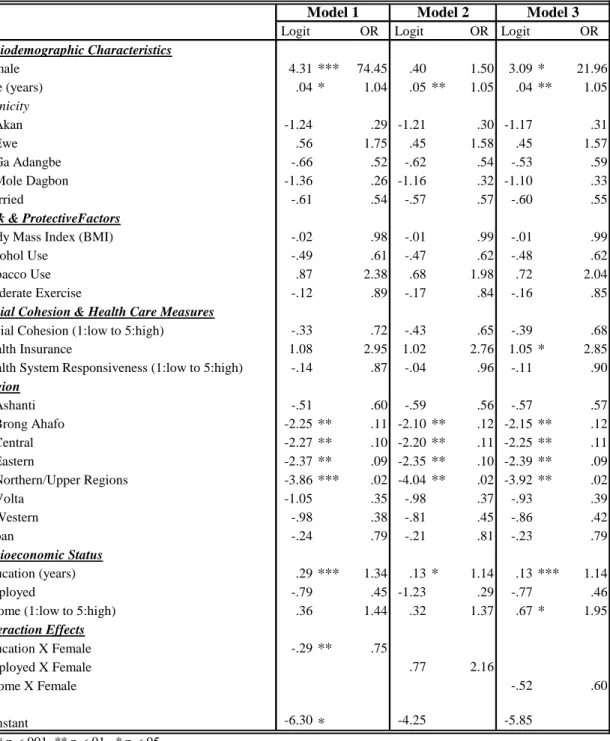
Adults Aged 18+, WHO SAGE Ghana, Wave 1 (N=4,219) ...38 2. Logistic Regression Models Predicting Diabetes, WHO SAGE Ghana,
Wave 1 (N=4,219) ...40 3. Logistic Regression Models of the Moderating Effect of Gender on the
Relationship between SES and Diabetes, WHO SAGE Ghana, Wave 1 (N=4,219) ...44 4. Descriptive Characteristics (Means and Percentages) for Hypertension,
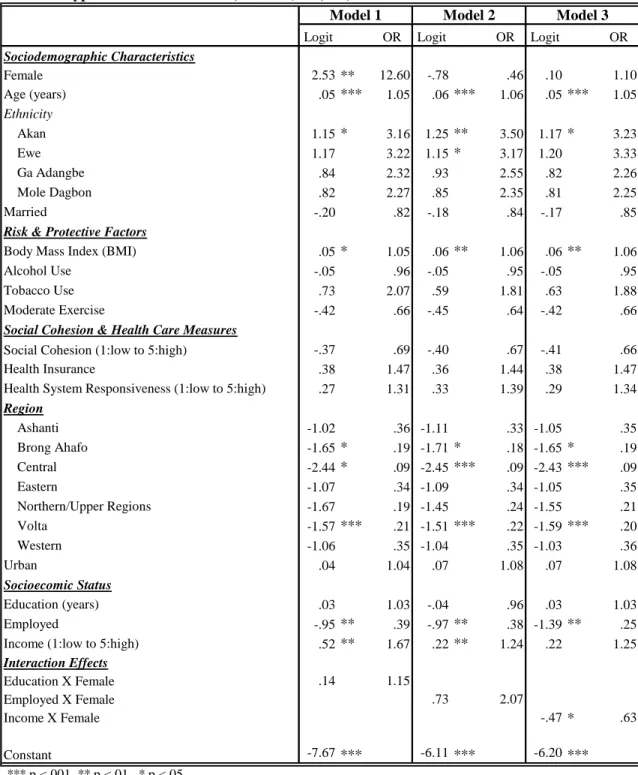
Adults Aged 18+, WHO SAGE Ghana, Wave 1 (N=4,219) ...72 5. Logistic Regression Models Predicting Hypertension, WHO SAGE Ghana,
Wave 1 (N=4,219) ...75 6. Logistic Regression Models of the Moderating Effect of Gender on the
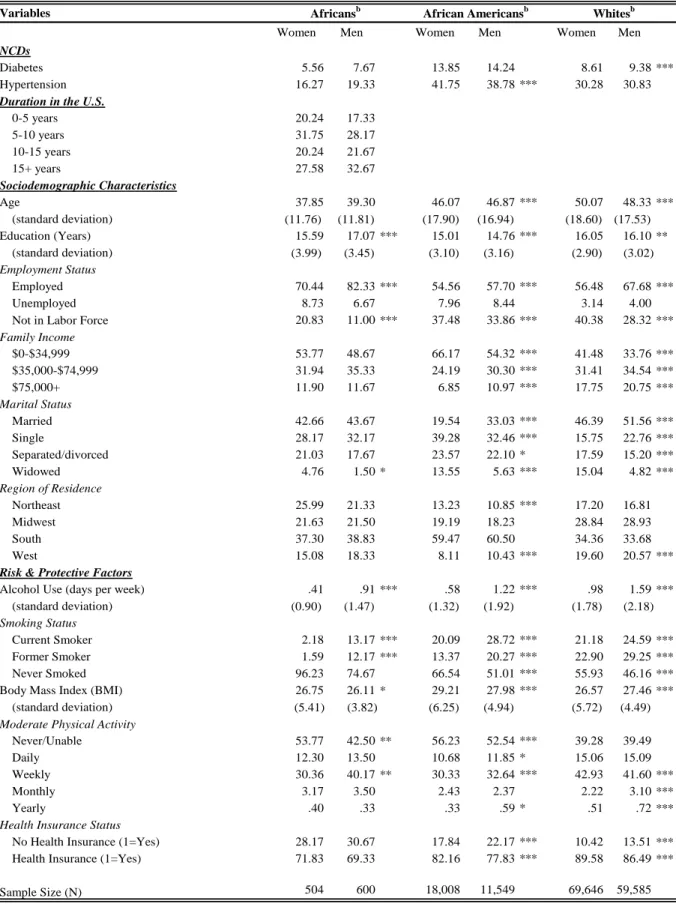
Relationship between SES and Hypertension, WHO SAGE Ghana, Wave 1 (N=4,219) ...79 7. Descriptive Characteristics for Foreign- & Native-Born Black U.S. Residents
Aged 18+, National Health Interview Survey, 2003-2012 ...103 8. Regression Models Predicting Diabetes and Hypertension, Women Aged 18+,
National Health Interview Survey, 2003-2012 ...107 9. Regression Models Predicting Diabetes and Hypertension, Men Aged 18+,
National Health Interview Survey, 2003-2012 ...111 10. Regression Models Predicting Diabetes and Hypertension with White Reference,
Adults Aged 18+, National Health Interview Survey, 2003-2012...115 11. Regression Models Predicting Diabetes and Hypertension with Black Reference,
Adults Aged 18+, National Health Interview Survey, 2003-2012...118 12. Regression Models Predicting Diabetes and Hypertension, African Immigrants
Aged 18+, National Health Interview Survey, 2003-2012 ...120
LIST OF FIGURES
Figure Page
1. Map of Ghana in Africa ...18
2. Interaction between Education and Gender in Predicting Diabetes ...45
3. Regional Map of Ghana ...55
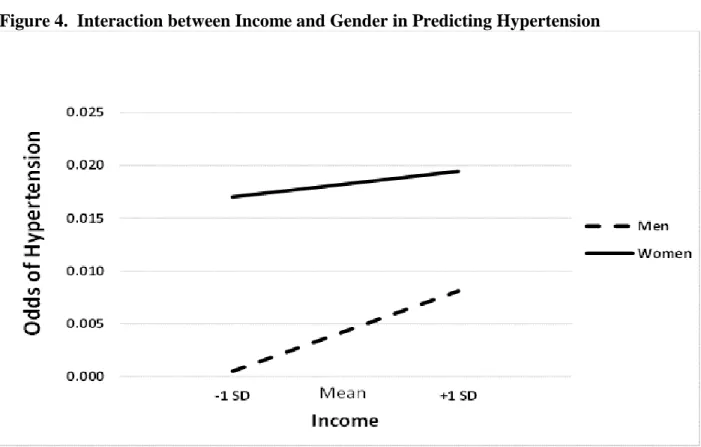
4. Interaction between Income and Gender in Predicting Hypertension ...80
CHAPTER I
Introduction
Sociologists have a long history of documenting and attempting to explain major transitions and upheavals in human history (e.g. Auguste Comte on the Enlightenment; Karl Marx on the Industrial Revolution; W.E.B. Du Bois on Jim Crow era in the U.S.). A major transition occurring today is the marked increase in non-communicable disease deaths
worldwide. Chronic non-communicable diseases are characterized as conditions that occur in or affect individuals over an extensive period of time and for which there are no known causative agents that are transmitted from one affected individual to another (Daar et al. 2007). According to the World Health Organization (WHO), 38 million people die each year from non-
communicable conditions such as cardiovascular diseases, diabetes, chronic respiratory diseases, and cancers (WHO 2014).
While non-communicable diseases are a familiar feature of morbidity and mortality in high-income countries like the United States (U.S.), they are rapidly becoming a part of the morbidity and mortality profiles of low- and middle-income countries. According to the World Bank’s current classification of world’s economies, high-income countries are those whose economies have a gross national income (GNI) of $12,746 or more per capita; upper-middle income countries are those with GNI between $4,125 and $12,746 per capita; lower-middle income countries those with GNI between $1,045 and $4,125 per capita; and low-income countries have economies with GNI per capita of $1,045 or less (The World Bank 2014).
Low- and middle income countries (LMICs), specifically those in sub-Saharan Africa, are projected to see the most rapid increase in non-communicable diseases over the next two decades (Abegunde et al. 2007; Dalal et al. 2011; Stuckler 2008; Unwin et al. 2001; WHO 2006).
The situation in Sub-Saharan Africa is especially dire because a historic focus on maternal-child health and infectious diseases like malaria, HIV/AIDS, and tuberculosis has meant less research and resources devoted to non-communicable diseases (Dalal et al. 2011; de-Graft Akins 2007).
Available data suggest that in 2004, 25% of all deaths in Sub-Saharan Africa were due to non- communicable diseases; but that number is expected to rise to about 46% by 2030 (WHO 2006).
Indeed, current WHO estimates indicate that 85% of the over 14 million plus non-communicable disease deaths occurring annually in people aged 30 and 70 years are in developing LMICs like the majority of countries in sub-Saharan Africa (WHO 2014).
One of the more influential frameworks that have been put forth to explain changing morbidity and mortality patterns like the one currently occurring in sub-Saharan African countries is the epidemiologic transition theory (Omran 1971/2005). The hallmark of the
epidemiological transition is the displacement of infectious communicable diseases with chronic non-communicable diseases as the primary cause of morbidity and mortality. The theory
describes transitions as occurring in three successive stages, with life expectancy increasing with each successive stage: from an age of pestilence and famine; through an age of receding
pandemics; and finally to an age of man-made and degenerative diseases. Furthermore,
progression through these stages are linked to the level of development within a given country.
As such, hypotheses derived from the epidemiologic transition theory would expect
communicable diseases as the main cause of death in low-income developing countries and non- communicable diseases as the main cause of high-income developed countries.
There are many critiques of the epidemiologic transition theory, a topic scholars
worldwide have dealt with extensively (Agyei-Mensah and de-Graft Aikins 2010; Avilés 2001;
Caselli et al. 2002; Dagadu and Patterson 2015; Frenk et al. 1989; Gaylin and Kates 1997). For this dissertation, I focus on three limitations. First, the epidemiologic transition theory
essentializes the experiences of high-income countries. Despite historical, structural and contextual differences in the morbidity and mortality transitions of LMICs compared to high income countries, much of the evidence Omran (1971/2005) offered in support of the
epidemiologic transition theory relied heavily on perspectives that hold the experiences of high- income countries—particularly those in Europe as well as the U.S.—as normative. The extent to which the framework applies to the experiences of LMICs in Sub-Saharan Africa is an ongoing empirical debate.
A second major limitation of the epidemiologic transition theory is that due to its focus on national trends, it does not explicitly take stratifying factors such as socioeconomic status (SES) and gender into account. Dating back to Karl Marx and Max Weber, social stratification has been a major feature of sociological study that has implications for health and life chances.
Socioeconomic status, a major stratifying factor typically assessed by educational attainment, income, and employment status, is important for both high-income and low- and middle-income countries with respect to non-communicable disease outcomes. A well-documented finding in social science research is the SES-health gradient (Adler et al. 1994; Boykin et al. 2011;
Braveman et al. 2010; Preston and Taubman 1994; Williams et al. 2010). In high-income countries, researchers have linked low income, low education, and low occupational status to poorer health outcomes across numerous conditions (Braveman et al. 2010). Because SES
impacts multiple health outcomes and involves access to resources that can be used to avoid risks
or to minimize the consequences of disease once it occurs, it has been described as a
fundamental cause of morbidity and mortality as well health inequities (Link and Phelan 1995;
Phelan et al. 2004). While SES has also been found to be a primary contributor to health in LMICs, the association between SES and non-communicable diseases in these countries is somewhat uncertain. There is what has been described as the reversal hypothesis, which states that in LMICs, high SES is associated with high morbidity and mortality from NCDs; that is, the opposite of the SES-gradient observed in high-income countries like the U.S. (Addo et al. 2009;
Akarolo-Anthony et al. 2014; Pampel et al. 2012; Ploubidis et al. 2013). One explanation provided by the reversal hypothesis is that in LMICs, it is those of high SES who can afford to consume excess calories, remain physically inactive, and who are more likely to be exposed to the stressors of living in an urban environment, all of which are important risk factors for non- communicable diseases (Pampel et al. 2012).
Like SES, gender is an important stratifying factor that is associated with and influences health outcomes. From a social constructionist perspective, gender is a set of socially constructed relationships which are produced and reproduced through people’s actions (Acker 2004;
Charmaz 1995; Courtenay 2000a; Griffith 2012; Risman 2004). Sociology emphasizes how gender is learned, changes over time as cultural definitions change, and how it varies
considerably in different contexts. Sociologists often use the terms masculinity and femininity to signify the expected attitudes and behaviors associated with being a man or woman, respectively.
Researchers have argued that health related beliefs and behaviors can be understood as means of constructing or demonstrating gender (Courtenay 2000a; West and Zimmerman 1987). Further, the construction of health and gender does not occur in isolation from other forms of social action. Black feminist perspectives emphasize the structuring role gender plays in the lives of
women and men as well as its intersection with race and class (Brown and Hargrove 2013;
Collins 1990/2008; Crenshaw 1991; Springer et al. 2012). SES both constrains and enables certain forms of gendered social action and influences women’s and men’s health behaviors.
Through gender socialization, women are often ascribed certain care roles and responsibilities for their families and communities that impact their health outcomes.
Across countries and ethnic groups, women live and average of five to eight years longer than men, but they also tend to be sicker than men (Waldron, 1998; WHO 2009) due to
biological and socio-behavioral factors. Compared to women, men tend to have higher death rates from both intentional and non-intentional injuries from events such as accidents, homicide, and suicide. In addition, gendered social norms and pressures have often been implicated in explanations of men’s poor health outcomes due to unhealthy behaviors such as alcohol
consumption and smoking that may be used to reestablish that men embody a particular form of masculinity; that is, that men are independent, self-reliant, strong, robust and tough (Charmaz 1995; Courtenay 2000b). Ultimately, men and women, those of low SES, those of high SES, and other sub-groups within a given country effectively live in different epidemiological worlds, and experience different risk factors for non-communicable diseases. As such, the epidemiologic transition theory’s focus on national averages/trends can hide some important disparities within countries.
A final limitation of the epidemiologic transition theory is its failure to account for the interconnectedness of countries and how morbidity and mortality patterns within a given country are influenced by larger global forces such as migration. Although this trend of increasing non- communicable disease is occurring in what may seem a world away, these changing morbidity and mortality patterns in LMICs in Sub-Saharan Africa have implications for health patterns in
high-income countries like the U.S. The avenue through which what is happening in Sub-
Saharan African countries affects the U.S. is immigration. Between 2001 and 2006, immigration contributed to at least 20% of the growth in the U.S. black population (Kent 2007). Further, foreign-born Africans represent one of the fastest growing immigrant groups in the U.S., increasing by 166% in just a decade between 1990 and 2000 (Capps et al. 2012). Because African immigration into the U.S. is increasingly a major contributor of the ethnic variation in the U.S. black population, the rapid epidemiologic transition occurring in Sub-Saharan Africa will be a major force impacting both the composition and health profile of the U.S. black
population. Specifically the growth in African immigrants in the U.S. has important implications for current understandings of racial/ethnic health disparities in the U.S. (Read and Emerson 2005).
Although scholarship exploring ethnic heterogeneity within the U.S. black population and various health outcomes has increased in recent years (e.g. Dagadu and Christie-Mizell 2014;
Griffith et al. 2011; Ida and Christie-Mizell 2012; Read and Emerson 2005; Williams et al.
2007), the majority of studies still portray the U.S. black population as homogeneous. While there are important commonalities in the black experience (e.g., shared history of slavery;
historic and contemporary experiences of racism and discrimination), there is significant variation within this group that may predict diversity in health status, including risk for non- communicable disease (Williams and Jackson 2000; Williams et al. 2007). For instance, with respect to socioeconomic characteristics, African immigrants tend to have higher educational attainment, higher levels employment, and higher rates of marriage compared to Caribbean Blacks, who in turn, are more likely to have to have higher educational attainment, higher levels employment, and higher rates of marriage compared to their native-born black counterparts
(Griffith et al. 2011; Ida and Christie-Mizell 2012; Kalmijn 1996; Kent 2007; Williams et al.
2007). The selectivity of African immigrants is due in part to the way they enter the U.S. Over 20% of recent African legal immigrants enter the U.S. through the diversity visa program, which is designed to admit immigrants from countries not well represented in the U.S. The program tends to attract well-educated and highly skilled African immigrants. The difficulty, high costs, and lengthy distance Africans face to enter the U.S. favors immigrants with exceptional ability, persistence, and resources (Kent 2007).
Despite representing one of the fastest-growing immigrant groups in the U.S., the health needs and practices of black Africans in the U.S. remain poorly characterized compared to other immigrant groups (Capp et al. 2012; Venters and Gany 2009). As a consequence, compared to their Latino or Asian counterparts, African immigrants are noticeably absent in policy
considerations surrounding the immigration and healthcare debates. For now, prevailing understandings of health between immigrant and native-born residents in the U.S. focus on the healthy immigrant effect (Antecol and Bedard 2006; David and Collins 1997; Elo et al. 2008;
Hamilton and Hummer 2011; Hummer et al. 1999; Singh and Siahpush 2002). The healthy immigrant effect describes a pattern observed among many researchers where immigrants arrive in the U.S. with a health advantage over their native-born counterparts. The research shows that black immigrants have lower morbidity and mortality rates, and more favorable self-reports of health than native-born blacks. In fact, across some indicators of health, black immigrants look more similar to U.S.-born whites than U.S.-born blacks. However, this health advantage dissipates over time; the longer immigrants are in the U.S. the closer their health profiles converge to that of their racial/ethnic native-born counterparts (Antecol and Bedard 2006; Goel et al. 2004; Venters and Gany 2009; Read et al. 2005). Furthermore, with a few exceptions (Read
and Reynolds 2012), much of the research on immigrant health has not differentiated between the experiences of men and women. Although African women are closing the gap, African migration to the U.S. is still predominantly a male enterprise.
Ultimately, while this line of research on the healthy immigrant indicates that black immigrants come to the U.S. with better health profiles than native-born blacks, this trend may shift as sending African countries like Ghana experience rapid increases in non-communicable conditions over the next decades. As the growing African immigrant population assimilates to U.S. society, the number of men and women within the U.S. black population disproportionately affected by non-communicable diseases will likely also increase unless research is available to inform policies and intervention efforts. This study is an important step in addressing this research challenge.
Research Questions
In this dissertation, I take on the issues arising from the global increase in non- communicable diseases by engaging literature on social stratification to examine the
socioeconomic and gender disparities in non-communicable disease trends in two contexts:
Ghana, a significant low-middle income country (LMIC) of origin for African immigrants in the U.S. and the U.S. a major high-income destination country for immigrants of Sub-Saharan African countries. I focus on these two geographic locations for three key reasons. First, as an LMIC that is increasingly influenced by globalization, Ghana is currently facing unprecedented increases in non-communicable diseases (Agyei-Mensah and de-Graft Aikins 2010). Second, Ghanaians represent one of the largest and most established African immigrant groups in the U.S. (Capps et al. 2012). According to Census data, for over three decades, Ghana has
consistently been among the top five countries of origin for African immigrants in the U.S.
(Gambino et al. 2014). Understanding the context from which Ghanaians come to the U.S. is critical to guiding intervention efforts in both Ghana and the U.S. Third, Ghana shares a long history of close and strong relations (political, economic, developmental, financial aid) with the U.S. (Cook 2009). Understanding the contextual underpinnings of this interrelationship is critical to guiding health policy interventions in the U.S. that are more inclusive of African immigrants as well as guiding national health policies in Ghana that are more inclusive of non-
communicable diseases.
Using Ghana and the U.S. as my two cases for this study, I develop two main research questions to better understand gender and socioeconomic determinants of non-communicable disease in these respective origin and destination countries.
1. a. What is the relationship between socioeconomic status (SES) and non-communicable disease outcomes in Ghana?
b. Does this relationship in 1(a) vary by gender?
2. a. What is the relationship between African immigrant status and non-communicable disease outcomes in the U.S.?
b. Does this relationship in 2(a) vary by gender?
While question 1(a-b) examines the stratifying role SES and gender play in an origin country like Ghana, question 2(a-b) examines gender differences in the healthy immigrant effect among African immigrants in the U.S. As such, the data I employ to explore these questions are derived from two sources, both of which are survey data. For question 1(a-b), I utilize Ghana specific data from the World Health Organization Study on Global AGEing and Adult Health (SAGE):
Wave 1, 2007-2008. For question 2(a-b), I utilize 10 years (2003-2012) of the National Health
Interview Survey (NHIS). Furthermore, in my analyses, I focus on two non-communicable diseases: diabetes and hypertension, which are important causes of morbidity and mortality in both high-income countries and LMICs. Diabetes is characterized by abnormally high levels of blood glucose due to a deficiency in the production of insulin by the pancreas or the
ineffectiveness in the use of the insulin produced (CDC 2011). The focus of my studies is on type 2 diabetes, which accounts for well over 90% of all diabetes cases in Sub-Saharan Africa (Hall et al. 2011). Hypertension, also known as high blood pressure, is characterized by high force of blood pushing against the walls of blood vessels over an extended period of time (WHO 2013). Another major reason for my focus on diabetes and hypertension is that while serious on their own, both often lead acute life-threatening conditions like heart attack, stroke, and kidney failure.
My dissertation is comprised of three separate but related articles that examine gender and SES determinants of diabetes and hypertension in Ghana and the U.S. The first paper addresses question one by examining the interaction between SES and gender in predicting diabetes in Ghana. The second paper addresses the same question but for hypertension. The third paper addresses the second question by examining gender differences in both diabetes and hypertension outcomes among African immigrants and native-born blacks in the U.S.
Significance and Contributions of this Dissertation: The Health Equity Lens
A health equity lens provides two critical insights to this dissertation’s examination of SES, gender, and non-communicable diseases in an origin LMIC experiencing rapid morbidity and mortality transition like Ghana and a destination high income country experiencing increased numbers of African immigrants like the U.S. First, a health equity lens provides practical
guidance on the operationalization of the concept as well as possible analytic strategies for conducting research given survey data as is the case for this dissertation. Like most abstract constructs, health equity cannot be directly measured; however, scholars such as Braveman and Gruskin (2003) have operationalized health equity based on measurable criteria: equity in health is the absence of systematic differences or disparities in health outcomes and/or key social determinants of health between social groups who have different levels of underlying social advantage/disadvantage; i.e., occupy different positions in a social hierarchy based on power, wealth, and/or prestige. Thus, variations in health inequities when they meet all three of the following criteria: 1) systematic; 2) socially produced; and 3) unfair (Whitehead and Dahlgren 2006). Systematic differences in health means that differences are significant and persistent, not distributed randomly. Socially produced means that there are no genetic or biological bases for differences in health. Rather, such differences are a product of social structures and processes (Braveman and Gruskin 2003).
In addition to operationalizing health equity, scholars have also proposed ways to assess health equity in quantitative research studies similar to the current investigation. There are three main components to the method. The first component to assessing health equity is to have an indicator of health or a modifiable determinant of health. In the current investigation, whether or not one was diagnosed with diabetes and hypertension will be used as the indicators of non- communicable disease health. The second component is to include an indicator of social
position, i.e., a measure of social stratification such as SES, gender, race, ethnicity, or geographic location. In this dissertation, I examine both SES and gender. The third component for assessing health equity is to have a method for comparing the health indicator across difference social strata, such as a ratio of rates of the health indicators across the least and most advantage groups.
In this investigation, I compare the odds of diabetes and hypertension between men and women in Ghana and the U.S. In addition to these three elements, it is also important to examine changes over time in rate ratios if feasible and to conduct multivariate analyses in the overall sample as within strata to identify factors warranting attention through further research and action
(Braveman 2006). While the data employed in this paper do not currently allow for consideration over time, they do allow for multivariate analyses in the overall sample as well between men and women in order to assess whether the association between SES and diabetes differ by gender.
Finally, and perhaps more importantly, a health equity lens provides guidance on interpretation and contextualizing findings so as not to recreate disparities. A health equity lens is attuned to the fact that different social, economic, political and cultural contexts require different ways of defining and explaining equity (Braveman and Gruskin 2003:256). As noted above, the epidemiologic transition theory focuses on macro level mechanisms and has not often considered the possibility that different groups within the same country go through different transitions. What the above discussion on SES in high-income and LMICs has shown is that different groups within the same country are impacted by transitions in different ways depending on factors like SES and gender. Within the health equity literature, the “highest attainable
standard of health” typically means the standard of health enjoyed by the most socially advantaged group within a given society (Braveman 2006; Braveman and Gruskin 2003). As such, equity in health implies (re)distributing resources in ways most likely to move towards equalizing the health outcomes of disadvantaged groups with the outcomes of their more
advantaged counterparts (Braveman and Gruskin 2003). In his influential piece, Caldwell (1986) points out that countries such as Sri Lanka, Costa Rica, and the Indian state of Kerala achieved low mortality despite their predominantly poor populations. Caldwell credits improvements in
the position of women and children, education (especially educating girls), a vibrant political sector that values egalitarianism, the building of health care systems and the provision of health services as the routes though which poorer countries can achieve low mortality. His findings, along with the findings of numerous scholars afterwards (Hosseinpoor et al. 2012; Hurt et al.
2004; Kuhn 2010; Marmot 2007), suggest that strategies that equitably distribute health and life affirming resources such as education in a population can lead to low mortality even within poor countries. Ultimately, by taking a health equity orientation, this dissertation (1) highlights the importance of stratifying factors like SES and gender in our understanding disease and mortality patterns in both LMICs and high income countries and (2) pushes the boundaries of current understandings of the health immigrant effect by taking the context of increased non- communicable diseases in LMICs like Ghana into account.
CHAPTER II
Socioeconomic Determinants of Diabetes among Ghanaian Women and Men:
Implications for a Country in Transition
Introduction
What is the relationship between socioeconomic status (SES) and diabetes in low-middle- income countries experiencing the epidemiologic transition? Does this relationship vary by gender? Like many African countries in Sub-Saharan Africa (SSA), the current epidemiologic profile of Ghana consists of a double burden of disease where communicable diseases like malaria coexist with non-communicable diseases like diabetes (Agyei-Mensah and de-Graft Aikins 2010). According to the World Health Organization (WHO), non-communicable diseases account for approximately 41 % of all deaths in Ghana, communicable diseases for about 51 %, and injuries account for the remaining 8 % (WHO 2014). In total numbers, non-communicable diseases result in approximately 80,000 deaths in Ghana each year (Bosu 2013).
Among non-communicable diseases, diabetes has emerged as an important cause of morbidity and mortality in Ghana (Danaei et al. 2011; Levitt 2008; Mbanya et al. 2010; Shaw et al. 2010). The focus of this paper is on type 2 diabetes (hereafter “diabetes), which accounts for well over 90% of all diabetes cases in Sub-Saharan Africa (Hall et al. 2011). Diabetes, a chronic condition caused by a deficiency in the production of insulin by the pancreas or the
ineffectiveness of the insulin produced, is characterized by abnormally high levels of blood glucose (CDC 2011). Diabetes wreaks havoc on vital organs, nerves, and blood vessels, leading
to extensive complications including heart disease, stroke, kidney failure, respiratory diseases, non-traumatic limb amputations, and blindness (CDC 2011).
In Ghana, what few studies are available indicate that diabetes has steadily increased from an early recorded prevalence of less than 1% during the late 1950s to almost 10% in 2009 (Amoah et al. 2002; de-Graft Aikins 2013; de-Graft Aikins 2007; Dodu and de Heer 1964).
Ghana currently lacks sufficient infrastructure to effectively address non-communicable diseases like diabetes. As a result, the economic and interpersonal costs of diabetes and its numerous complications for both patients and family members are massively expensive. For instance, the 2007 monthly cost of treating diabetes ranged from $106 to $638, while the monthly cost of treating diabetes complications such as dialysis for end stage renal failure was $1,383.
Meanwhile, the minimum daily wage in Ghana during 2007 was $2 and the average monthly salary for a civil servant was $213 (de-Graft Aikins 2007).
Attempts to explain the growing diabetes burden in countries like Ghana have often looked to the epidemiologic transition theory (Omran 1971/2005). The theory posits that as populations move away from traditional lifestyles and become industrialized, economically developed, and technologically dependent, morbidity and mortality profiles also transition from high infectious/communicable diseases to high chronic/non-communicable diseases. As
originally articulated by Omran (1971/2005), “the theory of the epidemiologic transition focuses on the complex change in patterns of health and disease and on the interactions between these patterns and their demographic, economic and sociologic determinants and consequences” (732).
Much of the scholarly focus on identifying the determinants of the transition from infectious to chronic diseases have been on macroeconomic factors (e.g., gross domestic product) to the detriment of meso and micro socioeconomic and cultural determinants of morbidity and
mortality transitions. In this paper, I use the case of Ghana, a low-and middle-income country (LMIC) sub-Saharan African country in transition, to explore if and how an individual’s socioeconomic status (SES) affects odds of diabetes. Additionally, I explore whether SES’s impact on diabetes varies by gender.
This study contributes to the sociological literature on SES and health in three important ways. First, although much work has been conducted on SES and non-communicable health outcomes in high-income countries like the U.S., less is known about how SES operates in LMICs like Ghana that are experiencing major transitions in their morbidity and mortality profiles. Studies in high income countries examining SES and non-communicable disease outcomes like diabetes have consistently found a negative relationship such that those of lower SES are more likely to develop and die from these conditions compared to their more affluent counterparts (Braveman 2006; Phelan et al. 2010; Williams and Collins 1995). While SES has also been found to be a primary contributor to health in LMICs like Ghana, the association has been described through the reversal hypothesis, which states that in LMICs, high SES is associated with high morbidity and mortality from NCDs; that is, the opposite of the SES- gradient observed in high-income countries like the U.S. (Akarolo-Anthony et al. 2014; Addo et al. 2009; Pampel et al. 2012; Ploubidis et al. 2013). A major goal of this paper is to test this hypothesis using Ghana as the LMIC case.
Second, whether the positive association between SES and non-communicable disease outcomes described by the reversal hypothesis varies by gender has not been considered in the extant literature. Across countries, women tend to live long but sicker lives than men (WHO 2009; Waldron 1983a; Waldron 1998, Yin 2007). Factors that researchers have noted influence gender differences in mortality include biological factors such as hormonal influences on
physiology (Rogers et al. 2010; Waldron 1983b), in addition to non-biological factors such as environment; and health behaviors (Courtenay 2000a; Luy 2004; Yin 2007). Like SES, gender is an important stratifying factor that influences health outcomes like diabetes (Acker 2004;
Charmaz 1995; Courtenay 2000b; Griffith 2012; Risman 2004; Rogers et al. 2010). As such, a major contribution of this paper is to test the reversal hypothesis by gender.
Furthermore, sociologists point to the social construction of health and gender as
occurring in concert with other forms of stratification (Brown 1995; Nettleton 1995; Waldron et al. 1998). Most notably, black feminist perspectives emphasize the structuring role gender plays in the lives of women and men as well as its intersection with race and class (Collins 1990/2008;
Crenshaw 1991; Brown and Hargrove 2013). SES both constrains and enables certain forms of gendered social action and influences women’s and men’s health behaviors. Through gender socialization, women and men are often ascribed certain roles and responsibilities within their families and communities that impact their health outcomes. Although politically a constitutional democracy, Ghana’s socio-cultural context remains predominantly patriarchal (Sossou 2011).
Consequently, Ghanaian men and women occupy social statuses, roles, and engage in behaviors that differentially impact their risk for non-communicable conditions like diabetes. For instance, Ghanaian norms are more tolerant of smoking and drinking—both significant risk factors for diabetes (Baliunas et al. 2009; Zhang et al. 2011)—among Ghanaian men than among Ghanaian women. As such, this study seeks to further clarify how gender interacts with SES to predict history of diabetes in Ghana.
Finally, although the epidemiologic transition theory provides an important framework to understand the pattern of increasing diabetes in Ghana, its tendency to focus on macro/country level determinants often ignores the role more micro/individual level (e.g., gender) meso level
factors (e.g., community involvement) play in morbidity and mortality transitions. By examining the socioeconomic determinants of diabetes among men and women in Ghana, I provide new insights into how socially stratified groups within a country may be experience the
epidemiologic transition differently.
Figure 1. Map of Ghana in Africa
Background
The LMIC Case of Ghana
Ghana. I selected Ghana (Figure 1) as an important case to examine the association
a traditional agricultural society to an industrialized urbanized society with concomitant changes in the non-communicable disease morbidity and mortality profile of its population (Agyei- Mensah and de-Graft Aikins 2010; Minicuci et al. 2014). This transition is challenging previous conceptions of class and gender. While there is some scholarship examining how this transition is affecting diabetes outcomes by gender (Amoah 2003) or SES (de-Graft Aikins 2013), few have examined them together. Second, Ghana’s location as an LMIC in sub-Saharan Africa makes it a compelling case because LMICs in that region are projected to see the most rapid increase in non-communicable diseases like diabetes over the next two decades (Abegunde et al.
2007; Dalal et al. 2011; Stuckler 2008; Unwin et al. 2001; WHO 2006). In 2004, 25% of all deaths in sub-Saharan Africa were due to non-communicable diseases; this percentage is expected to rise to about 46% by 2030 (WHO 2006). Third, the aging sub-Saharan African population is a major factor in the increased prevalence of diabetes in the region (Mbanya et al.
2010). The current population of adults in sub-Saharan Africa aged 60 years and above is 4.9%
and expected to increase to 7.6% by 2050. Ghana’s population is older than this regional average with 6.5% adults 60 years and older currently, increasing to 8.9% by 2050 (Minicuci et al. 2014).
Despite its growing number of older adults, Ghana has paid little attention to health and health care needs of this population (Minicuci et al. 2014; Parmar et al. 2014). Unless the country can adequately respond to changing demographic and epidemiologic realties, Ghana’s higher than average aging population means diabetes will pose significant challenges for its health system and other social institutions strained by diabetes care (e.g., the family) in the coming decades.
Finally, Ghana has historically served as a pioneering example for other sub-Saharan African countries. In 1957, Ghana (formerly the Gold Coast) became the first African country to declare independence from its European colonizer, Great Britain. Due to its pioneering
achievement, Ghana became a symbol of black achievement, influencing other African independence movements. How Ghana decides to address its increasing burden of non- communicable diseases will have implications for similarly situated African countries.
Guiding Frameworks: The Epidemiologic Transition & the Reversal Hypothesis
The epidemiologic transition theory (Omran 1971/2005) and its critiques (Agyei-Mensah and de-Graft Aikins 2010; Frenk et al. 1989) provide an important orienting framework for this study. The epidemiologic transition theory offers important but limited insight into
understanding morbidity and mortality transitions that LMICs like Ghana are currently facing.
As articulated by Omran (1971/2005), the hallmark of the epidemiological transition is the displacement of infectious or communicable diseases with chronic non-communicable diseases as the primary causes of morbidity and mortality. The theory posits communicable diseases as the main cause of death in low-income developing countries and non-communicable diseases as the main cause of high-income developed countries. Relying primarily on data from
industrialized/high-income countries, Omran (1971/2005) presented three successive stages of transition: 1) the age of pestilence and famine when mortality is high and fluctuating with average life expectancy hovering between 20 and 40 years; (2) the age of receding pandemics when mortality declines progressively and life expectancy increases from about 30 to 50 years;
(3) the age of degenerative and man-made diseases when mortality continues to decline and eventually approaches stability at a relatively low level and life expectancy exceeds 50 years.
As alluded above, the epidemiologic transition theory is not without limitations (Agyei- Mensah and de-Graft Aikins 2010; Dagadu and Patterson 2015; Frenk et al. 1989). For purposes of this study, I focus on two. First, the epidemiologic transition theory essentializes the
experiences of high-income industrialized countries. Despite structural and contextual differences in the morbidity and mortality transitions of LMICs compared to high income countries, much of the evidence Omran offered in support of the epidemiologic transition theory relied heavily on perspectives that hold the experiences of western industrialized countries as normative (Agyei-Mensah and de-Graft Aikins 2010; Avilés 2001; Caselli et al. 2002; Frenk et al. 1989; Gaylin and Kates 1997). The extent to a framework scholars have described as
Eurocentric (e.g., Avilés 2001; Caselli et al. 2002; Gaylin and Kates 1997) applies to the experiences of LMIC like Ghana is still up for debate. Ultimately, “the expectation that various developing countries including African countries go through stages and transitions in population structure and health shaped by changes in fertility and mortality by cause of death as they
progress toward fuller industrialization as it was documented in now-developed countries of Europe and North America, has not been materialized in many African countries and regions over the last 60 years” (Defo 2014:10).
The second limitation of the theory is that it does not consider if and how stratifying factors such as socioeconomic status and gender may impact certain groups within countries experience the epidemiologic transition. Instead, the theory emphasizes structural or macro-level factors such as industrialization as the primary drivers of morbidity and mortality transitions (Omran 1971/2005). These macro-level factors, which speak to the structural changes that occur as societies moved from agrarian to more industrial societies, are important and necessary to understanding morbidity and mortality transitions. At the same time, a singular focus on
industrialization ignores stratification by gender and SES. For example, scholars examining the epidemiologic transition in Ghana have implicated many communities’ preference for western foods, cultural products, and technology (Agyei-Mensah and de-Graft Aikins 2010; Prentice
2006) in the country’s growing non-communicable disease trend. Scholars have linked such preferences changing behavioral practices that increase the risk of diabetes; namely, diets high in saturated fat, salt, sugar, and physical inactivity (Abubakari et al. 2009; Agyei-Mensah and de- Graft Aikins 2010; Amoah 2003; de-Graft Aikins 2007; Prentice 2006). Access to western foods and lifestyles varies by ones social position and gender with those of high SES and women most at risk (de-Graft Aikins 2013; Prentice 2006). Ultimately, there are accompanying changes that industrialization introduces to groups stratified by SES and gender that have important
implications for non-communicable disease outcomes like diabetes.
The Reversal Hypothesis: Considering SES and Gender
Socioeconomic Status. Given the epidemiologic transition theory’s limitations, I engage literature on social stratification with a focus on socioeconomic status and gender to guide my study on diabetes in Ghana. Socioeconomic status (SES) is a key independent variable in most sociological research owing to the influence of early sociological theorists such as Karl Marx and Max Weber. Marx attempted a comprehensive theory of social stratification, emphasizing
ownership of property as the primary basis for class distinction (Marx 1848). Heavily influenced by his predecessor, Weber expanded on Marx’s view of social stratification beyond economic ownership with his three component theory of social stratification. Weber’s multidimensional view of social stratification focused on class, status, and party/power (Gerth and Mills 1946) and the extent to which these factors influence individuals’ life chances, i.e., their access to important societal resources such as food, shelter, and clothing as well as more intangible resources such as education and health.
Weber’s articulation of social stratification remains influential among contemporary sociologists (Williams and Collins 1995). Today, sociologists often use “socioeconomic status”
to capture Weber’s three-pronged articulation of social stratification. Although there are variations in indicators used to measure SES, the most commonly included are educational attainment, income, and occupational prestige (Williams and Collins 1995; Preston and Taubman 1994). While closely related, education, income, and occupation tap into different dimensions of SES that are important for health. Specifically, education taps into availability of
information/knowledge and with cognitive skills. Income signals the amount of resources
available to purchase health-related goods and services. Finally, occupation indicates a variety of physical and psychosocial features of the workplace/employment (Preston and Taubman 1994).
Today, much of the theorizing and research examining the association between SES and non-communicable disease outcomes have focused on the experiences of high-income countries like the U.S., which, because of their earlier transition to high morbidity and mortality from non- communicable diseases, have a longer history documenting experiences with these conditions (Link and Phelan 1995; Phelan et al. 2010; Preston and Taubman 1994; Williams and Collins 1995). In high-income countries, a well-documented finding in social science research is the SES-health gradient whereby low income, low education, and low occupational status are associated poorer health outcomes across various conditions (Adler et al. 1994; Boykin et al.
2011; Braveman et al. 2010; Williams et al. 2010). Because SES impacts multiple health outcomes and involves access to resources that can be used to avoid risks or to minimize the consequences of disease once it occurs, it has been described as a fundamental cause of morbidity and mortality as well health inequities (Link and Phelan 1995; Lutfey and Freese 2005; Phelan et al. 2004). According to Link and Phelan’s fundamental cause theory (1995) SES
is a fundamental cause because it encapsulates resources like knowledge, money, power,
prestige, and social connectedness that are transportable from one situation to another; as health- related situations change, those who command the most resources are best able to avoid risks, diseases, and the consequences of disease. As populations transition from one dominant cause of morbidity and mortality to another, people of higher SES are more favorably positioned to know about new health risks and have the resources to avoid these risks or to minimize the
consequences of disease once it occurs (Link and Phelan 1995; Phelan et al. 2004).
The Reversal Hypothesis. While SES has also been found to be a primary contributor to health in LMICs, the association between SES and non-communicable conditions like diabetes and key risk factors like obesity have not been as consistent in LMICs as documented for high- income countries (Addo et al. 2009; Akarolo-Anthonly et al. 2014; Pampel et al. 2012; Ploubidis et al. 2013; Sodjinou et al. 2008). There is what has been called the reversal hypothesis (Pampel et al. 2012), which states that in LMICs, high SES is associated with high morbidity and
mortality from non-communicable diseases; that is, the opposite of the SES-gradient observed in high-income countries like the U.S. More specifically, the reversal hypothesis, states that the association between SES and non-communicable conditions like diabetes is initially positive and then over the course of the epidemiologic transition reverses to being negative (Pampel et al.
2012; Subramanian et al. 2013). Explanations for the reversal hypothesis includes the social environment of risk factors and cultural values. With respect to the social environment, the reversal hypothesis suggests that in low-income countries, risk factors such as obesity and physical inactivity are relatively uncommon due to food shortages and the need to engage in physical labor to eat and live. Because food insecurity in LMICs means lack of any food and economies are not fully industrialized, it is only high SES groups that can afford excess calories
to consume and/or remain physical inactive. Conversely, in high-income countries, food insecurity often means lack of access to nutritiously healthy food. Because the social
environment in high-income countries is such that the economy is based primarily on service and technological industries, access to high calorie foods and minimum physical labor are more readily accessible to low SES groups (Pampel et al. 2012).
The second explanation for the reversal hypothesis focuses on cultural values within a given society. Cultural values explanation highlights how factors such as excess symbolize higher status in LMICs. For instance, in Nigeria—an LMIC located near Ghana—some ethnic groups encourage fattening of women in preparation for marriage and childbearing, believing that such fattening encourages fertility (Akarolo-Anthony et al. 2014). Research in Ghana has linked obesity in women to factors such as multiple child births due in part to cultural pressures to eat fatty foods and avoid strenuous activity during breastfeeding (de-Graft Akins et al. 2010).
Further, excess weight in LMICs like Ghana where weight loss is often associated infectious diseases like HIV/AIDS, malaria, and tuberculosis, is largely seen as a sign of health as well as beauty (de-Graft Aikins 2013; Prentice 2006). Ultimately, the reversal hypothesis asserts that in LMICs, sections of the population that undergo rapid social development (i.e., experience transitions) may also be at increased risk for non-communicable diseases like diabetes compared to people of lower SES (Addo et al. 2009; Pampel et al. 2012).
Gender. While the reversal hypothesis provides insight to assessing the relationship between SES and diabetes in Ghana, there has been a dearth of attention in the literature about the role of gender on non-communicable disease outcomes in LMICs in transition. Like SES, gender is a major component of social interactions and a determinant of access to resources.
Compared to women, Ghanaian men occupy a dominant status in most social spheres (Adinkrah
2012). Because Ghana is predominantly patriarchal, power relations between men and women are asymmetrical, creating unequal access to and utilization of resources within and outside the household (Dixon et al. 2014). For instance, women in Ghana have limited access to critical resources such as land, labor, and credit (African Development Fund [ADF] 2008).
Despite legal frameworks derived from the Ghanaian Constitution’s prohibition of
discrimination based on gender (ADF 2008), cultural norms around gender create expectations of women acquiescing to men (Akinkrah 2012). The fulfillment of the domestic role—household work, cooking, and childcare, are regarded as the primary obligations of women regardless of whether they work outside the home and earn higher incomes than men (Adinkrah 2012). The economic and social standing of Ghanaian women is still often tied to their husbands’, fathers’, and/or other male relatives’ social standing. For instance, in the context of subsistence farming, men often have access to and take custody of their wives earned proceeds and financial income because they are regarded at household decision makers (Buor 2004; Dixon et al. 2014).
At the same time, the incremental strides that women are making in Ghana are changing gender dynamics and disturbing traditional male roles and patriarchal identity as household breadwinners (Dixon 2014; Adomako Ampofo and Boateng 2007). For Ghanaian men, successful masculinity is often measured by the ability to meet the material needs of wives, children and other family members. “Men generally lose face and become socially stigmatized within the family and community whenever there is a significant role reversal, with the woman as the economic provider” (Adinkrah 2012: 475). Although seeking financial assistance is acceptable as a last resort, Ghanaian men’s ability to find solutions to economic difficulties is often seen as a sign of independence and personal strength. Ultimately, as a society, Ghana
places high expectations and pressure on men to succeed economically as an important way of confirming their masculinity.
Ghana’s gendered constructions of what it means to be a man or woman have important implications for health outcomes. Unfortunately, there is a dearth of research that specifically examine diabetes by gender in Ghana. The studies that have examined diabetes have generally found higher rates among Ghanaian men (Amoah et al. 2002, Addo et al. 2009, Hall et al. 2011).
Similar to economic hardship, diabetes can cause serious disruptions in the social identities and roles of Ghanaian men and women. Scholars have found that Ghanaian men experiencing sexual dysfunction or other complications such as loss of limbs, eyesight, and disabilities struggle to manage their lost or diminished masculine identities (Owiredu et al. 2012; de-Graft Aikins et al.
2013). These diabetes complication also cause disruptions in men’s ability to work and fulfill their provider role.
Ghanaian women are six times more likely than Ghanaian men to be obese, a significant risk factor diabetes (Prentice 2006). Moreover, when family members do become chronically ill, it is the primary responsibility of women to provide care (Addai and Adjei 2014). Existing literature has found that attending to the needs of chronically ill family members in non- institutionalized settings precipitates declines in in the caregivers’ own health and well-being (Addai and Adjei 2014; de-Graft Aikins 2006; Read et al. 2009). This burden of care for non- communicable diseases disproportionately effects Ghanaian women (Addai and Adjei 2014). Not surprisingly, scholars have found that Ghanaian women perceive their health status more
negatively than men (Addai and Adjei 2014).
Summary and Hypotheses
While the literature on the epidemiologic transition, SES, and gender in high income countries is robust, there is less scholarship connecting these areas to examine how SES affects men and women in LMICs experiencing morbidity and mortality transitions. In this paper, I bridge these areas by investigating the relationship between SES and diabetes among Ghanaian men and women. Current understandings of SES and non-communicable diseases in LMICs favor the reversal hypothesis, which posits a positive relationship between SES and health such that those of high SES experience higher rates of non-communicable diseases like diabetes because of their ability to afford foods and lifestyles that put them at higher risk for these conditions as well as socio-cultural norms that view excess weight as a symbol of status. Using Ghana as its LMIC case, this paper tests the reversal hypothesis to see whether there is a positive association between SES and diabetes. As such, I hypothesize that:
Hypothesis 1 (a-c): High SES—(a) education; (b) occupational status; and (c) income—will increase the odds of diabetes.
Further, given the patriarchal structure and gender norms in Ghana, I explore whether hypotheses 1 (a-c) to varies by gender. In the models I develop below, I control for factors that vary among men and women living in Ghana that prior studies have sown are associated with diabetes; including age, marital status, weight, alcohol use, smoking status, physical activity, community resources such as social cohesion, and health system measures such as health insurance status and health care responsiveness.
Data and Measures Data
The analyses for this study are based on data from Wave 1 of the World Health Organization Study on Global Ageing and Adult Health (SAGE). SAGE is a series of
longitudinal studies following a cohort of adults that WHO conducts in six countries of which Ghana is one. The succinct goal of SAGE is to strengthen, gather, process and manage data on older persons to respond to identified needs via policy, planning, and research. The sampling design aimed to obtain a nationally representative cohort of adults aged 50+ years, with a smaller cohort aged 18-49 for comparison. Built on the experience and standardized instruments of the WHO’s 2000/2001 Multi-country Survey Study and the 2002/2004 World Health Surveys, SAGE aims to address data gaps on aging, adult health and well-being in lower and middle income countries (LMICs) so as to achieve nationally representative surveys that are comparable to those in higher income countries; e.g., the Health and Retirement Survey in the U.S.
(Biritwum et al. 2013; Chatterji et al.2013).
The topics covered by SAGE Wave 1 are especially suited for the current investigation examining diabetes, SES, and gender in Ghana. Respondents answered questions about their household and related characteristics, individual socio-demographics, income and work history, perceived health status (i.e., self-rated health, risk factors and preventative health behaviors, chronic conditions (including diabetes, hypertension, stroke, and heart disease), health services coverage, health care utilization, subjective well-being and quality of life, and social networks (Biritwum et al. 2013). A total household population of 27,988 was drawn from 5,266
households. Those aged 50 years and older comprised 21% of the household population.
Households were spread evenly between rural and urban localities. For this dissertation analysis, there was a total sample size of 4,219 respondents with 2,002 women and 2,217 men.
Measures
Diabetes. The dependent variable of this study is diabetes. I used a single item where respondents were asked whether they had had ever been diagnosed with diabetes or high blood sugar (not including diabetes associated with pregnancy). I coded “Yes” responses as 1 to indicate presence diabetes and coded “No” responses as 0 to indicate absence of diabetes.
Socioeconomic Status & Gender. Socioeconomic status (SES) is my key independent variable. I used education, employment status, and income as my three measures of SES.
Education was measured as years of school attended. I coded employment status as 1 for respondents who responded “Yes” to currently working and 0 for those who responded “No”
(working part-time, unemployed or not in the labor force). SAGE measured income categorically as quintiles. I combined the quintiles to obtain a scale measure of income that ranged from 1: low income to 5: high income. Finally, with respect to gender, I coded females as 1 and compare them to males.
Sociodemographic Characteristics. Other socio-demographic variables I included in my analyses are age, marital status, urbanicity, region, and ethnicity. As mentioned above, Ghana’s aging population is a major force in the prevalence of diabetes in the country, with diabetes prevalence increasing with increased life expectancy (Ayernor 2012; Mbanya et al. 2010;
Minicuci et al. 2014). Age is measured in years, including adult respondents aged 18 years and above. With marital status, I compared those who are married or cohabitating (1= Yes) to those who are single, divorced, separated, or widowed.
Urbanicity and Region. Factors at the macro level that may impinge on the odds of diabetes include urbanicity and region of residence. Ghana is currently undergoing rapid urbanization, with an overall urban growth rate of about 4.6% (compared to a sub-Saharan average urban growth rate of 3%) (Owusu and Agyei-Mensah 2011; Mbanya et al. 2010).
Studies indicate that urban dwellers are more susceptible to diabetes risk factors such as
overweight, obesity and physical inactivity than their rural counterparts (Agyei-Mensah and de- Graft Aikins 2010; Danquah et al. 2012). At the same time, hospitals, clinics, and pharmacies are disproportionately concentrated in urban areas, with rural residents travelling great distances for health care and/or relying on traditional medicine and remedies (Dixon et al. 2011; Jehu-Appiah et al. 2011). While close to 79% of the urban population in Ghana have access to a health facility with a 30 minute distance, only 42% of the rural population has access (ADF 2008). In this study, I coded urban 1 and compare to respondents living in rural areas.
In addition to urbanicity, I also accounted for regional variations in diabetes. Ghana’s 10 regions have different histories and resources that matter for diabetes outcomes. For instance, urbanicity and educational attainment varies widely across regions. Over 90% of residents in the Greater Accra region, 61% in the Ashanti region, 47% in the Central region, 45% in the Brong Ahafo region, 43 % in the Eastern region, 42% in the Western region, 34% in the Volta region, and 23% in the Northern/Upper regions live in urban areas (Ghana Statistical Service 2012).
Further, while only 12% of residents aged 15 years and above in the Greater Accra region have never attended school, 20% in the Ashanti region, 21% in the Eastern region, 25% in the Central region, 26% in the Western region, 29% in the Volta region, 34% in the Brong Ahafo region, and 62% in the Northern/Upper regions 15 and older have never attended school (Ghana Statistical Service 2012. Furthermore, across all regions, a greater proportion of women have never
attended school compared to men (Ghana Statistical Service 2012). The Greater Accra region, where Ghana’s capital is located, is not only the most urbanized and educated, it also attracts a disproportionate share of investments in health facilities and infrastructure to address conditions like diabetes (Agyei-Mensah and de-Graft-Aikins 2010; Owusu and Agyei-Mensah 2011). As such, I compare the Greater Accra region to the other regions: Ashanti, Brong Ahafo, Central, Eastern, Northern/Upper Regions, Volta, and Western in my analysis. Given their relatively low number of respondents and because the three northern regions in Ghana (Northern, Upper East, and Upper West) are the least urbanized and least developed by all socioeconomic indices (Owusu and Agyei-Mensah 2011; Aryeetey et al. 2013), I combined these three regions:
Northern, Upper East, and Upper West.
Finally, I include ethnicity as a sociodemographic variable. Due to the newness of diabetes in Ghana’s health profile, there are currently no studies that examine diabetes among Ghanaians by ethnicity. However, like gender and SES, ethnicity structures the lives of
Ghanaians and influences living arrangements, kinship, and descent patterns—i.e., patrilineal or matrilineal (Tuller 2013) which may in turn influence diabetes outcomes. According to Ghana’s 2010 Census, Akans, the only matrilineal group in Ghana, are also the largest ethnic group (48%), followed by the Mole Dagbon (17%), the Ewe (14%), Ga-Abangbe (7%), and other ethnic groups comprising the remaining 14% (Ghana Statistical Service 2012). The Akans, Ga- Abangbes, and Ewes reside mainly in the urban and southern regions of Ghana, while the Mole- Dagbon reside in the more rural and less developed northern regions (Awuah and Afrifa-Anane 2013; Dake et al. 2010). The other ethnic grouping consists of small minority groups that are spread across Ghana’s regions. While there is a dearth of research on diabetes and ethnicity in Ghana, there have been studies examining ethnic differences in obesity—a significant risk factor
for diabetes. These studies have found higher obesity among Akan and Ga ethnicities (Amoah 2003; Dake et al. 2010). Given that few studies have taken ethnicity into consideration when examining diabetes among Ghanaians, this dissertation takes a small step in filling this gap. I included the four major ethnic groups in Ghana in my analysis: Akan, Ewe, Ga-Abangbe, Mole- Dagbon, as well as respondents selecting “Other” ethnicity. I compare the four major ethnicity to other ethnicities.
Risk and Protective Factors. SAGE, Wave 1 includes measures of risk and protective factors that research has shown matters for diabetes; specifically, weight, alcohol consumption, smoking/tobacco use, and physical activity. I used body mass index (BMI) as a measure of weight. SAGE includes both self-reported and measured height (in centimeters) and weight (in kilograms). Given the large number of unknown or unavailable self-reported height and weight, I used the more accurate measured height and weight values to first convert centimeters into meters and calculated respondents’ body mass index using the formula (CDC 2015):
𝐵𝑀𝐼 = 𝑊𝑒𝑖𝑔ℎ𝑡(𝑘𝑔) 𝐻𝑒𝑖𝑔ℎ𝑡(𝑚𝑒𝑡𝑒𝑟𝑠)2
I kept BMI as continuous rather than dividing it into dummy variables using the conventional cutoffs used in countries like the U.S. because research suggests that those cutoffs may be less meaningfully for LMICs like Ghana that have a shorter history with overweight and obesity compared to high-income countries (Sodjinou et al. 2008). Tobacco use measured respondents’
current use of tobacco with the question: “Do you currently use (smoke, sniff or chew) any tobacco products such as cigarettes, cigars, pipes, chewing tobacco or snuff?” I coded “Yes”
responses as 1 and compared to 0 or “No” responses. Similarly, alcohol consumption was assessed by asking respondents whether they had ever consumed a drink that contains alcohol (such as beer, wine, or spirits). Similar to tobacco use, I coded “Yes” responses to alcohol
consumption as 1 and compared to 0 or “No” responses. Physical activity was assessed by asking respondents: “In a typical week, on how many days do you do moderate-intensity sports, fitness or recreational (leisure) activities that causes a small increase in breathing or heart rate [such as brisk walking, cycling or swimming]?” I coded the variable to represent the number of days per week respondents engage in moderate physical activity.
Community Social Cohesion and Health Care Measures. Dating back to Durkheim, the relationship between social cohesion and specific health outcomes has been a major line of inquire in sociology (Bruhn 2009; Durkheim 1897/1979). Durkheim attributed differences in suicide rates to differences in social integration such that people with strong social ties had low suicide rates while those who were alienated had higher social rates (Durkheim 1897/1979).
Today, scholars continue to find a protective effect of social cohesion across a number of non- communicable diseases including diabetes (Shaya et al. 2013) as well as conditions for which diabetes itself is a major risk factor such as heart disease (Kim et al. 2014) and stroke (Kim et al.
2013). For example, a study by Shaya and colleagues (2013) found that diabetic patients who participated in a social network intervention that included recruitment of peers, monthly educational sessions, and peer support experienced lower blood glucose, increased diabetes knowledge as well as more favorable weight and quality of life outcomes than the control group.
The concept of social cohesion itself has been variously defined and has included other names such as social integration, social solidarity, and social networks (Bruhn 2009). In the SAGE, Wave 1 dataset social cohesion is best described as community or neighborhood social cohesion, which measures the level of trust or engagement an individual has for and with his/her
community. Specifically, SAGE asked respondents abo