PREACHING THE GOSPEL AS A MEANS OF PASTORAL CARE AT LAGRANGE BAPTIST CHURCH,
LAGRANGE, KENTUCKY
__________________
A Project Presented to the Faculty of
The Southern Baptist Theological Seminary
__________________
In Partial Fulfillment
of the Requirements for the Degree Doctor of Ministry
__________________
by
Anthony Lee Rose May 2011
APPROVAL SHEET
PREACHING THE GOSPEL AS A MEANS OF PASTORAL CARE AT LAGRANGE BAPTIST CHURCH,
LAGRANGE, KENTUCKY
Anthony Lee Rose
Read and Approved by:
__________________________________________
Robert A. Vogel (Faculty Supervisor)
__________________________________________
Stuart W. Scott
Date ______________________________
iii
TABLE OF CONTENTS
Page LIST OF TABLES . . . PREFACE . . . Chapter
1. INTRODUCTION . . . Goals . . . Context . . . Rationale . . . Definitions . . .
2. BIBLICAL, THEOLOGICAL, AND HISTORICAL SUPPORT
FOR PREACHING THE GOSPEL . . . Theological Understanding and Confidence in the Gospel of God . . . An Historical Model of Preaching the Gospel to Believers
for the Purpose of Soul Care . . . Biblical, Theological, and Historical Insights that Promote Preaching
of the Gospel to Believers in Order to Care for Their Souls . . . 3. CONTEMPORARY COMPLICATIONS FOR PREACHING
THE GOSPEL AS A MEANS OF CHRISTIAN SOUL CARE . . . Professionalization of Counseling and Separation of Soul Care
from the Pastor’s Work . . . Preaching the Gospel to Offer Genuine Christian Soul Care In the
Face of These Complications . . . v vi
1 3 5 7 8
10 22
35
47
49
58
62
iv
Chapter Page
4. PREACHING THE GOSPEL TO LAGRANGE BAPTIST CHURCH AS A MEANS OF CARING FOR SOULS . . .
Synopsis of Sermons . . . Conclusion . . . 5. ANALYSIS OF THE INFORMATION . . .
Initial Observations . . . Evaluation of Project Goals . . . Evaluation of Process . . . Theological Reflection . . . Conclusions . . . Implications for Further Study . . . Appendix
1. QUESTIONNAIRE AND DATA ANALYSIS . . . .. . . 2. PROJECT SERMONS . . . BIBLIOGRAPHY . . .
68 70 83 84 84 90 98 99 102 106
109 115 131
v
LIST OF TABLES
Table Page
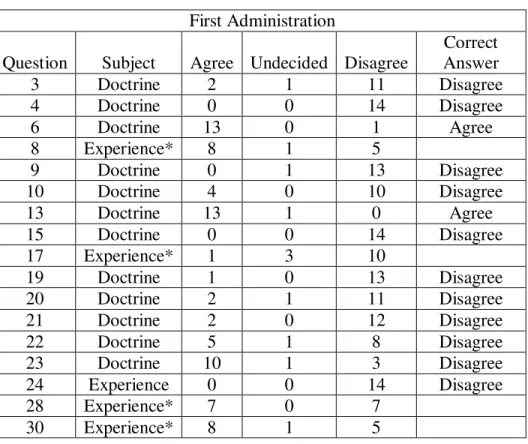
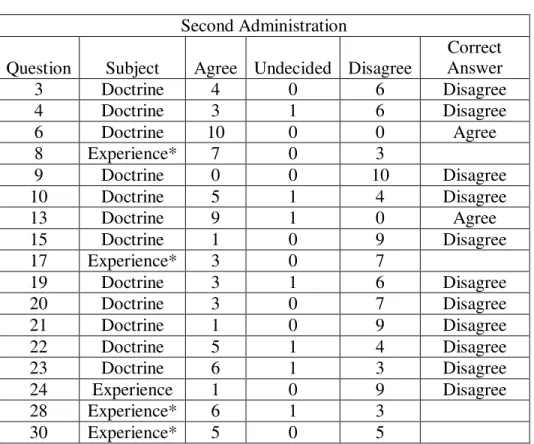
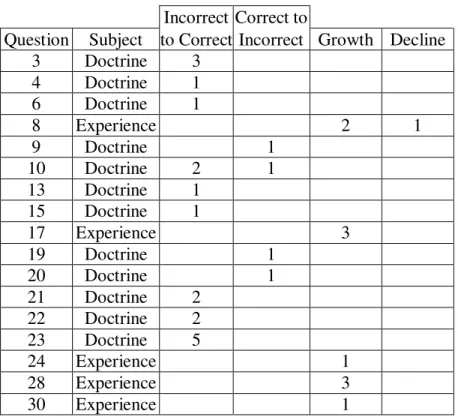
A1. At-large group, first administration . . . 112 A2. At-large group, second administration . . . 113 A3. Discussion group, statistical changes . . . 114
vi PREFACE
Too many people to thank individually have helped me to the completion of this project. Three groups of people have been most significant through this journey that has taken me far too long. First, I cannot say enough about the patience and
encouragement of the members of LaGrange Baptist Church. They have prayed for, supported, and encouraged me through the entire process. Second, my extended family have put fuel back in my tank every time I was ready to quit. There is no way to measure the power of an encouraging family. The third group is the most significant of all: my wife and our children. Our children have been arrows in my quiver and have helped me contend with my enemies at the gate. There were times when they provided the
inspiration I needed to write another page or re-write another page. Above all, my wife, Joie, has been my spiritual encourager and confidence builder. When I thought I had no business pursuing any kind of post-graduate degree, she helped clear my head and get me back on track. The Scriptures are indeed true when they say, “He who finds a wife finds a good thing and obtains favor from the LORD” (Prov 18:22).
Four other people must be named. Dr. Chuck Lawless has been relentless in his gracious determination to help me complete this project. Dr. Robert Vogel has provided detailed analysis of my writing and offered countless helps along the way. Dr.
Jim Orrick has been a friend, closer than a brother, pushing me to get the project done.
Finally, Dave Crater, my typist, served and encouraged me with a continual Christ-like spirit through some very difficult times.
vii
I am genuinely grateful to God for the people with whom He has surrounded me. I would be nothing without them. The work of this project has had a deep effect on my thinking about pastoral ministry, and I pray it results in lasting fruit in the people I serve.
Tony Rose LaGrange, Kentucky
May 2011
1 CHAPTER 1 INTRODUCTION
The purpose of this project is to investigate the use of expository preaching of the gospel as a means of pastoral care for the Christian soul. The New Testament reveals that God’s plan to care for His people involves providing them pastors. The Lord Jesus told Peter to feed his sheep (John 21:17). Years later, the apostle Peter instructed elders to “shepherd the flock of God that is among you” (1 Pet 5:2). The writer of Hebrews speaks of leaders in the church who are “keeping watch over your souls, as those who will have to give an account” (Heb 13:17). It is evident that pastors are called to be shepherds of souls. This involves leading them through unseeable territory, through an earthly life full of unexpected surprises and difficulties.
I have been observing the operations of the Christian soul closely for twenty- five years. I have been the pastor of LaGrange Baptist Church for fifteen years. During this time I have observed that many Christians live with deep agony in their souls and seem to have no cure for their ailments. My intent in this project is to learn how preaching the gospel can heal these wounded Christian souls. Much of the preaching I heard growing up as a Southern Baptist was focused on preaching the gospel for the purpose of evangelizing the lost. This was good and led to my salvation. However, the benefit of most of the preaching I heard stopped there.
When I entered college I faced questions and difficulties that surprised me
greatly. I began to doubt my salvation and to have seemingly unanswerable questions about God. The basic advice I was given in order to deal with my doubts was to “get saved,” or pray a simple prayer for assurance. Through three years of college and three more years of seminary I seldom heard anyone significantly deal with the gospel and the Christian suffering through doubts. I did not yet know of John Bunyan’s “Doubting Castle,” and it seems no one else did either.1 I felt like an outcast and a failure as a Christian, and I could find no one who understood the depth of my dilemma.
Through that difficult experience of doubting, combined with over twenty-five years of ministry experience, I realize there are many Christians whose souls are haunted by doubts. Doubts are not the only disturbance of the Christian soul. I have witnessed believers struggling deeply with guilt, forgiveness, worry, and other soul issues that greatly dampen their Christian zeal. The gospel must be preached in such a way as to care for these hurting souls.
The aim of this project was to discover how expositional preaching of the gospel to believers can lead to and sustain the health of their souls. Many people are convinced the gospel is sufficient to get them to heaven; but when earthly life is hard, some believers do not seem to know how to find their present help in the gospel.
Expositional preaching of the gospel is obviously nothing new, yet evidence in my pastorate is convincing me that God’s people do not understand how to apply gospel truths to their daily living. Is it possible that the gospel is not put to its full use in
preaching to the church? How can a pastor use the preaching of the gospel to care for the
1John Bunyan, The New Pilgrim’s Progress: John Bunyan’s Classic Revised for Today (Grand Rapids: Discovery House, 1989), 136.
desperate souls in his congregation? These are the questions that drove me to the work of this project.
Goals
This project aimed at accomplishing five goals.
Goal 1
The first goal of this project was to find a way to assess the knowledge of the gospel possessed by the members of LaGrange Baptist Church, as well as their practice of applying their knowledge in daily life. If I could gain a better understanding of their gospel knowledge and their application of it to daily living, my preaching could be more beneficial to the health of their souls.
Goal 2
The second goal was to establish a biblical and theological foundation for preaching the gospel to believers. This sounds quite unnecessary, but I do not think it is.
There are many indicators that the gospel preached in our contemporary churches does not stand on solid theological and biblical ground. Chapter 2 addresses these issues.
Goal 3
The third goal was to examine the preaching and writing of three Puritans, Richard Baxter, Christopher Love, and Samuel Rutherford, to learn how they used the gospel as a means of caring for the souls of their church members.
My choice of material from the Puritans had to be limited because the amount of writing they produced is overwhelming. Many Puritan writers could have been used in
this project. I chose Richard Baxter and Samuel Rutherford because they had been long- term companions in my own Christian growth. Their writings were profound in their abilities to directly, yet tenderly, address the needs of my own soul. My assumption was that if their writings helped me, their works would prove to be a valuable resource with which to help others.
I stumbled onto Christopher Love. In researching Puritan writers for this project, I discovered three volumes of Love’s sermons. He spoke with the same pastoral directness and tenderness as Baxter and Rutherford did. Love is not as well known as are Baxter and Rutherford, but I chose him because he demonstrated a consistency in the Puritan approach to preaching and applying the gospel.
Goal 4
The fourth goal of the project was to discover whether the contemporary professionalization of pastoral ministry has affected pastoral soul care. Specifically, I was trying to discern if it has affected how a pastor preaches the gospel to his church.
Goal 5
The fifth and final goal was to analyze the results from a church discussion and survey group in light of my biblical and theological research and the contemporary complications created by the professionalization of pastoral ministry. If the discussion group revealed common and recurring struggles among group members, the analysis would provide me with specific information with which to better preach the gospel to God’s hurting children.
Context
LaGrange Baptist Church is located in LaGrange, Kentucky, the Oldham County seat. The city of LaGrange is easily accessed from Interstate 71 and is located twenty-two miles from downtown Louisville, Kentucky.
Oldham County
Oldham County’s location has been the key factor determining its
demographic makeup. The county borders the northeast side of Jefferson County, where the city of Louisville is located. In 1975, Jefferson County Public Schools (JCPS) began a federally-mandated integration plan which served as the catalyst for what many people called “white flight.” Many Jefferson County residents moved into neighboring counties to avoid the JCPS integration. The residents of Jefferson County’s east side were
predominantly upper middle class families, and Oldham County became the recipient of a large influx of these well-to-do families. Current demographic data show the trend begun in 1975 is still in effect. The median household income for the state of Kentucky is lower than the national average of $52,029.2 The median household income for Oldham
County is $84,884.3 Presently Oldham County is quite homogeneous in its cultural makeup. Most people are white, and they generate an above-average income. This produces a general perception that people who live in Oldham County are successful.
Oldham County may be home to many people who are successful by the world’s standards, but money and possessions do not necessarily indicate a prosperous
2Oldham County, Kentucky census data [on-line]; accessed 16 September 2010; available from http://quickfacts.census.gov/qfd/states/21000.html; Internet.
3Oldham County, Kentucky census data [on-line]; accessed 16 September 2010; available from http://quickfacts.census.gov/qfd/states/21/21185.html; Internet.
soul. I have discovered that the soul cannot be protected by material prosperity or physical health. Working with the people at LaGrange Baptist Church has helped me realize no one is exempt from troubles of the soul.
LaGrange Baptist Church is made up of typical Oldham County residents. The vocational success of some of our people has put a misleading veneer over the real
condition of their lives. There are times when some people are living in confusion. Most things on the outside of their lives look good, while they feel like they are falling apart on the inside. I hope to see the gospel penetrate the successful surface and reach the core of their souls.
LaGrange Baptist Church
The Lick Branch Baptist Church was founded in 1802. In 1826 the
congregation moved to LaGrange and reconstituted themselves the Baptist Church of LaGrange. In 1895 Bettie DeHaven, the widow of a local judge, financed the purchase of a piece of property at the corner of Third and Main in LaGrange. She also paid for the construction of a new church facility. The property and building were provided to the church on the condition that the membership rename the church DeHaven Memorial Baptist Church. This change was made, but it upset some church members. The
distraught members believed that Judge DeHaven had gained his wealth from gambling.
The church thus experienced a split in membership. The division, however, lasted for just a short time, and the dissenting members returned to the fellowship of the church.
The church continued in the same location for the next 110 years. During that time it grew, acquired some of the surrounding properties and built additional facilities.
The last building at the DeHaven site was completed in 1986.
The church was already having two Sunday morning services when I became the pastor in 1993. We first moved the eleven o’clock service into the gymnasium in order to increase seating capacity. This change was drastic, as the church had held the main morning worship service in the same sanctuary for over a century. The next adjustment for growth was to add a second Sunday School hour and a third worship service. It soon became evident that these measures were insufficient to meet the need of our growing membership. The church responded to this challenge by voting on
November 3, 2002, to begin the process of relocation. We completed the relocation and moved into our new facilities the first Sunday of May, 2005.
We are greatly blessed of God to have these new facilities. Our capacities for numerical growth are now exponentially greater. Numerical growth, however, is not my only goal. As the shepherd of this flock, I am deeply concerned that our growth in size be matched by our growth in spiritual health and maturity. The present project was designed to help me learn more about leading the church into spiritual health.
Rationale
Working with the members of LaGrange Baptist Church for fifteen years is what defined my hope for this project. In one-on-one meetings, I would often find I was talking with a dear Christian who knew the gospel but had a big gap between his
knowledge of the gospel and his experience of the gospel. Individuals who believed the doctrine of eternal security were continually struggling with their own assurance of salvation. Other church members who knew that Christ offers full forgiveness of sin through his death were in an ongoing battle with guilt. Discovering these and other issues made me examine my preaching. I was confident the gospel was sufficient for the
soul struggles of God’s people, but somehow they were unable to get the gospel’s truth to the experiential level of their everyday lives. I acutely felt the need to discover how to help them know the comforts of the gospel they already believed.
Weakened Christians in this trying age make poor evangelists. If the God they trust to take them to heaven cannot get them through earthly life, then lost people have the right to question the power of our God—or of our faith. If believers clearly
understood all that God did for them in Christ’s death, burial, and resurrection, we would have many more believers with healthy, sturdy souls. The problems and challenges for Christians would remain the same, but solutions to those problems could come out of the certain truth of the gospel of Christ. A genuine place of safety could then be found in the gospel to maintain security of soul during the storms of life.
When life’s difficulties demand more of a believer than his gospel knowledge can support, the soul of the believer is wounded and the testimony of the believer is weakened. If the gospel is God’s tool to heal the hurts of the Christian soul, I want to know how to use it. The results would be a more healthy church that does more effective evangelism.
Definitions
A few terms require definition as to their use in this project. The first term is
“gospel.” When I refer to the gospel I chiefly have in mind the Apostle Paul’s expression in I Corinthians 15:3 “that Christ died for our sins in accordance with the Scripture, that he was buried, that he was raised on the third day in accordance with the Scripture.” This objective work of God in the death, burial, and resurrection of Christ is what the apostles gave witness to and what our faith rests upon. However, out of this work of God flows a
host of effects. I am speaking of things such as justification, redemption, propitiation, and sanctification. Things such as these are part of the gospel proper, but in this project they are viewed as the effects of the gospel that God worked in the death, burial, and resurrection of His Son. Explaining the work of God in the gospel and the effects of that work are both necessary to effective preaching of the gospel.
A second term is “soul.” Eugene Peterson offers a helpful definition that comes in the context of an explanation he offers on the work of pastoral ministry.
Until about a century ago, what pastors did between Sundays was a piece of what they did on Sundays. The context changed; instead of an assembled
congregation, the pastor was with one other person or with a small gathering of persons, or alone in study and prayer. The manner changed; instead of proclamation, there was conversation, but the work was the same: discovering the meaning of Scripture, developing a life of prayer, guiding growth into maturity.
This is the pastoral work that is historically termed the cure of souls. The primary sense of cura in Latin is ‘care,’ with undertones of ‘cure.’ The soul is the essence of the human personality. The cure of souls, then, is the Scripture-directed, prayer-shaped care that is devoted to persons singly or in groups, in settings sacred or profane.4
Theology offers three different views of the human soul: trichotomism, dichotomism, and monism. The views differ with regard to whether the essential nature of man is three-part, two-part, or singular. My view in this project is that man is
dichotomous, created by God as body and soul. These are two distinct yet inseparable parts. Though the soul and body are distinct entities, one cannot be addressed without consideration of the other. The condition of the body affects the soul, and the condition of the soul affects the body. This understanding is crucial to the work of this project.
4Eugene Peterson, The Contemplative Pastor (Grand Rapids: Eerdmans, 1989), 57.
10
BIBLICAL, THEOLOGICAL, AND HISTORICAL SUPPORT FOR PREACHING THE GOSPEL
Establishing New Testament support for preaching the gospel might seem unnecessary. The focus of this project, however, is preaching the gospel to believers. In the contemporary culture of the United States, “preaching the gospel” is equivalent to doing the work of evangelizing the lost. This assumption is proper, but not complete.
The gospel is God’s saving message to the lost world, but it is also God’s keeping message to His people. This project aims to explore the second part of the gospel’s purpose. To begin, a simple but often overlooked fact must be established: the chief audience of the New Testament was believers. This is a readily accepted truth, but its implications are usually overlooked.
The church has been commissioned by the Lord Jesus Christ to preach the gospel to all nations. We are to incarnate Christ’s mission of coming to seek and to save that which is lost. In the owning of this responsibility, the church may have lost the full aim of the gospel. The gospel may be viewed as a one-time fix. Once you have it, you have it, and it then is your responsibility to pass it on to someone else. With this over- simplified and yet widely accepted view of the gospel, we truncate its God-given purpose and miss the full application of the gospel to God’s people. This misconception has disguised the New Testament to the eyes of the church and has diluted its powerful message to the believer.
The New Testament was written to believers because they had been made citizens of heaven and were now pilgrims on the earth. They needed a guide for safe passage. It was also written to believers because they were God’s ambassadors, responsible for delivering the gospel to the world, and God wanted them to deliver an accurate gospel.
A brief look at the epistles of the New Testament reveals that the recipients of these letters were Christians. In these letters the gospel of our Lord Jesus Christ is most fully explained. Paul is clear in his letter to the Romans that he is addressing Christians.
He sent the letter to “all those in Rome who are loved by God and called to be saints”
(Rom 1:17). The letters of the New Testament are all addressed to a Christian audience.
The authors, under the inspiration of God, were explaining the gospel to the church.
The authors of the narrative sections of the New Testament do not make the identity of their audiences so clear. D. A. Carson, Douglas Moo, and Leon Morris say of the gospel of Mark that “extrabiblical sources point to a Gentile Christian audience.”1 They also remark that Mark’s translation of Aramaic expressions as well as his
explaining of Jewish customs demonstrate he is writing to Gentile believers.2 These same authors, commenting on Luke’s two-volume work of Luke and Acts, offer this perspective about Luke’s audience: it was written “to give valuable information to the Christian public about the life, death, resurrection and ascension of Jesus.”3 Commenting on the book of Acts they write, “We agree with a growing number of scholars who think
1D. A. Carson, Douglas J. Moo, and Leon Morris, An Introduction to the New Testament (Grand Rapids: Zondervan, 2002), 99.
2Ibid.
3Ibid., 118.
that Luke wrote with a variety of specific purposes, and these purposes are part of a larger general purpose—the edification of Christians.”4 Others agree with this position.
Darrell Bock writes, “Luke’s gospel is pastoral, theological and historical. The reality of God’s plan impacts how individuals see themselves and the community to which they belong.”5 R. A. Guelich expresses his understanding of Mark’s purpose in writing his gospel: “We conclude that pastoral concern was foremost in Mark’s mind as he wrote the
‘gospel concerning Jesus Messiah, Son of God.’ He wanted to address a community under duress, a duress that may well have given rise to questions about who Jesus really was and the nature of the kingdom he had come to inaugurate.”6
The gospel of John differs a bit in offering its own clear statement of purpose.
John says, “These are written so that you may believe that Jesus is the Christ, the Son of God, and that by believing you may have life in His name” (John 20:31). The gospel of Matthew is the only remaining book in the narrative portion of the New Testament. In his commentary on Matthew, Craig Blomberg writes, “It is usually assumed that all the Gospels are first of all addressed to Christian communities. Since the earliest days of Christian testimony that is where these documents are read.”7
That the New Testament was chiefly addressed to believers establishes two important perspectives. Simply stated, the gospel is to be lived and the gospel is to be
4Ibid., 198.
5Darrell Bock, “Luke,” in Dictionary of Jesus and the Gospels, ed. Joel B. Green, Scot McKnight, and I. Howard Marshall (Downers Grove, IL: Inter Varsity Press, 1992), 509.
6R. A. Guelich, “Mark,” in Dictionary of Jesus and the Gospels, 524.
7Craig L. Blomberg, Matthew, The New American Commentary, vol. 2 (Nashville: Broadman, 1992), 34.
told. The first perspective on the gospel highlights the following truths. Through the gospel a believer has been transferred from the kingdom of darkness to the kingdom of God’s dear Son (Col 1:13). Presently the believer is a new creation whose citizenship is in heaven (2 Cor 5:17; Phil 3:20). Until heaven becomes the permanent residence of the believer he is in exile here on earth and needs help and protection to make it to the end safely (1 Pet 1:17; 1 Cor 9:27; Matt 24:13). The gospel is God’s message to believers, enabling them to succeed through their trials on their way to heaven. The gospel is an eternal message.
The work of the gospel in the earthly life of the believer is always done with eternity in mind. This perspective keeps the use of the gospel in the church directed toward its divinely intended purpose of bringing glory to the God who saves by doing genuine good for His children. We too often remove the eternal perspective of the gospel. Instead of seeing it as God’s means of saving and keeping us, we tend to see it as God’s means of providing for us a comfortable and successful earthly life. When the eternal perspective of the gospel is lost it is robbed of its real power to heal the hurts of the believer’s soul.
The second perspective on the gospel, that it is to be told, then becomes clear.
When the church understands the gospel and lives by it, that church then is equipped and excited to tell a lost world of its real power to save fully.
The New Testament writers made many specific applications of the gospel to care for the souls of their readers. One of these applications was the apostle John’s using the gospel to help believers gain the assurance of their salvation. It is not easy for some contemporary believers to understand the struggles of early Christians. We have been
taught that assurance is something that automatically comes with true conversion. This is a faulty understanding and has led to faulty remedies to help believers gain full
assurance. The assumption that assurance automatically accompanies true conversion has not historically been held by the believing community.8
In his first letter, John dealt with a number of significant issues, but it is obvious his overall concern was for the assurance and faithfulness of this group of believers. In dealing specifically with his readers and their Christian assurance, the apostle describes a believer’s standing in Christ with four favorite expressions. First, we know “that we . . . know him” (2:3; cf. 5:20). Second, we know “that we are in him” and
“that we live in him and he in us” (2:5; 4:13; cf. 3:24). Thirdly, we know “that we are children of God” (5:19; cf. 3:19, belong to the truth). Fourth, we know “that we have passed from death to life” and that therefore we “have eternal life” (3:14; 5:13).9
One of the intensely focused uses of the gospel in John’s letter is in 1:5–2:2.
John is dealing with claims of false teachers who have bred confusion in the minds of believers about dealing with sin in their lives.10 Without a clear understanding of how the gospel dealt with present sin in their lives, these believers were left to wonder about the security of their relationship with God through Christ.
John, as a shepherd, longed for their security and for the truth of the gospel to be known. He guided them directly to the core of the gospel. He told them God would
8Richard Baxter, The Practical Works of Richard Baxter (Morgan, PA: Soli Deo Gloria, 2000), 2:911-12.
9John Stott, The Letters of John (Grand Rapids: Eerdmans, 2002), 58.
10Daniel L. Akin, 1, 2, 3 John, The New American Commentary, vol. 37 (Nashville:
Broadman, 2001), 74.
be faithful and just to forgive their sins (1 John 1:9). The phrase “faithful and just”
demonstrates both the character and the work of God. He is faithful. That is the character of a God who cannot lie. He is just. What He does in forgiving sins is not simply because He is love but because He performed an actual work in His Son whereby He maintained His justice and yet became the justifier of the one who has faith in Jesus (Rom 3:26).
John urged his readers on to a holy life, asking them to make it their aim not to sin. He knew because of their flesh they would at times sin. Therefore they needed a way to deal with present sin and have their hearts and minds reassured of their certain standing in Christ. Going directly to the core of the gospel, in two verses John offers a powerful remedy for the soul of a believer that is afflicted with doubts because of personal and yet confessed sin. Because of the death of Christ, God’s wrath toward sinners (that is, those who have placed their faith in Christ) has been satisfied.11
God will not strike a believer in eternal judgment because of his sin. God has already struck Christ, and His holy wrath is satisfied justly. John also takes his readers to Christ’s ascension. He now is at the right hand of God, and one of his heavenly
ministries is to be an advocate there for all believers. Christ’s continual presence at God’s right hand, because of his death, burial, resurrection, and ascension, is the believer’s assurance that neither our sin nor Satan can destroy our eternal relationship with God.
One way John uses the gospel in his ministry to struggling believers is to go right to the central meaning of the gospel and make direct application in their lives.
11I am aware of interpretive differences concerning propitiation or expiation in this verse. I hold that hilasmos is properly translated “propitiation.” See Akin, 1, 2, 3 John, Stott, The Letters of John, and Leon Morris, The Apostolic Preaching of the Cross (Grand Rapids: Eerdmans, 1955).
Obedience to the commands of Christ is then put in proper perspective. The obedience of a believer is not some effort toward sinless perfection but a reflection of the nature of the God of light who inhabits his soul. A continual life of sin, John teaches, is a sign that the life of God has never entered one’s soul. Here is where true assurance is found.
Believers are not left to some introspective emotional exercise to remember if they were sincere when they asked Christ to save them fifteen years ago. Instead they are led to look at the objective work of the gospel of Christ and then to the objective outworking of proper obedience in their lives.
A second application of the gospel to heal the hurting soul is found in Hebrews 9. The author is dealing with Jewish believers who are in the middle of serious
challenges to their faith. Some of the challenges are obviously external (Heb 10:32-36).
These Christians were being publicly reproached and afflicted. Some of them were thrown into prison and others had their property plundered (Heb 10:32-34). The challenges we will focus on are internal. These believers had made a drastic change in outward worship. They at one time worshipped in a temple with a priest they could see.
Now they have become the temple of God and worship Him through the great high priest, Jesus the Son of God, whom they cannot see.
The outward trappings of their former faith seemed more concrete than the gospel walk of faith. The writer of Hebrews uses the core of the gospel to demonstrate to them that the Old Covenant was only a shadow of the New that has now come. Through a comparison of the Old Covenant to the New Covenant, he demonstrates the effective reality of the New Covenant to do its promised work even to the depth of cleansing the conscience. The writer chooses to deal with guilt of conscience, both for the truth of the
gospel and the good of believers. Guilt is seen as a function of the conscience. In contemporary culture, the conscience is treated as an unpredictable and unreliable
disturber of personal peace. Freud saw the conscience “as the super-ego developed in the individual in childhood whereby we internalize the prohibitions imposed on us by those who parent and educate us. For Freud it was a repressive force, capable of doing great damage to the psychological health of a person.”12
Freudian influences have taught people to take the threatening of their
conscience as something subjective, inhibiting the expression of our true self. The Bible teaches a far different view of the conscience.
There are three basic biblical principles in understanding conscience: 1. Conscience is universal and is given to us by God (Rom. 2:12-16). This explains why those who have no knowledge of God’s law may still obey its requirements. Those who have no other guide should obey their conscience. 2. Consciences have been affected by the sinfulness of human nature. Although the conscience is a gift of God, it is not perfect and may be corrupt (Tit. 1:15). Thus it may accuse where there is no reason for accusation and remain silent when it ought to speak. 3. The saving work of Jesus cleanses guilty consciences (Heb. 9:14). The blood of Jesus can both cleanse us from the blight of a guilty conscience and also liberate us for the service of God.13
The writer of Hebrews treats the conscience as a God-given and concrete part of man’s makeup. Therefore, if the gospel is true, it must be able to cleanse the
conscience, and a believer must be able to objectively know that cleansing.
An overview of Hebrews 9 reveals the author’s strategic use of the gospel.
The writer hangs his entire argument on the death, resurrection, ascension, and return of
12J. W. Gladwin, “Conscience,” in The New Dictionary of Christian Ethics and Pastoral Theology, ed. David J. Atkinson et al (Downers Grove, IL: InterVarsity Press, 1995), 251.
13Ibid.
Christ.14 The author develops a beautiful picture and a tight argument through his close comparison of the Old and New Covenants. He begins by making a direct connection with his Hebrew audience by displaying a detailed understanding of their worship under the Old Covenant. A description of the structure and contents of the Tabernacle showed the readers that the author was quite aware of the environment of their worship (Heb 9:1- 5). The author skillfully used this historical connection with his readers as a base to connect with their present soul troubles. From a tender pastoral heart, he put himself in a position to address their longing for forgiveness of sin (Heb 9:7).
The groundwork is now laid for the point of his argument. All of the past means of worship were incomplete (Heb 9:8). What the readers hoped for in the Old Covenant was promised but not presently realized. The old arrangement of worship was insufficient to cleanse the conscience (Heb 9:9). Christ, however, has come and
accomplished what the Old Covenant could not. Nothing of Christ’s work of the gospel was a shadow. It was all actual. Christ entered the presence of God by means of the sacrifice of himself. He secured an eternal redemption and purified the consciences of his followers (Heb 9:11-14). The strength of the argument is that the author is dealing in objective realities, not subjective feelings. If one’s conscience is guilty by objective reality, then the gospel cleanses it by the objective work of Christ. Raymond Brown says, “The reader with a disturbed conscience is likely to find more help in Hebrews than almost anywhere in Scripture.”15
Brown draws out the drastic difference in the author’s comparison of the two
14On Christ’s death see Heb 9:12-18, 26. On Christ’s resurrection, ascension, and return, see Heb 9:15, 24, 28.
15Raymond Brown, The Message of Hebrews (Downers Grove, IL: InterVarsity, 1982), 154.
covenants to show the real work of the gospel. He magnifies the temporary Old Covenant contrasted with the eternal New Covenant, the blood of involuntary animals with the voluntary sacrifice of God’s Son, the repetitive sacrifice contrasted with the single perfect sacrifice of Christ, an annual reminder of sin contrasted with the promise of God forgetting our sin, and the priests who continued to stand and perform their
unfinished duties to the Priest who sits because his work of redemption is done.16 These all stand as objective evidence for the work of Christ to cleanse the conscience.
F. F. Bruce brings in another perspective on the literal nature of the work of Christ within the believer. He points out that the dwelling place of God is not the temple, but the people of God. Because of this, “They need inward cleansing, not only that their approach to God may be free from defilement but that they may be a fit habitation for Him.”17 This truth brings to the believer’s mind not only great confidence in the work of Christ, but comfort in the presence of God. John Brown shines another ray of light on the application of the gospel to a guilty conscience with this pastoral advice:
The effects of the sacrifice of Christ may be considered either in reference to God or in reference to the sinner. The blood of Christ, viewed as shed, renders the salvation of the sinner consistent with the perfections of the divine character, the principles of the divine government, the declarations of the divine Word. The blood of Christ, viewed as sprinkled on the believing sinner, relieves his mind from the constraints and terrors and jealousies and illusions of guilt and enables him to serve God without fear, with filial love and holy joy.18
The readers of this epistle had to be helped by the author’s effective use of the basic gospel to give them such a clear understanding of how the death and resurrection of
16Ibid., 155.
17F. F. Bruce, The Epistle to the Hebrews (Grand Rapids: Eerdmans, 1990), 228-29.
18John Brown, Hebrews (Carlisle, PA: Banner of Truth, 1994), 403.
Christ were the means and the eternal guarantee of a truly cleansed conscience.
One of the key issues of gospel ministry in the New Testament was teaching believers to have an eschatological perspective on life. Times were hard on believers, and their earthly difficulties were causing them to despair. The apostle Paul’s guidance was to teach believers how to see their troubles in light of the gospel’s eternal
perspective.
The core concept is held in Romans 8:32. Paul’s argument is that since God did not spare His own Son, proved in Christ’s crucifixion, then God certainly would not hold back anything else from His children. This is hard to understand when one is going through extreme suffering. Paul freely admits to his own earthly trials and to the trials of his readers, but because of the death and resurrection of Christ, he has hope and offers them hope. He tells both the Romans and the Corinthians that the sufferings of this world, no matter how difficult, do not compare to the glory that will be revealed (Rom 8:18-25; 2 Cor 1:8-9, 4:16-18). When a believer loses sight of the eschatological promises of the gospel, earthly hardships can cause him to doubt God’s goodness.
Maintaining an eternal perspective through the gospel is the key to getting through earthly suffering. Just as the cross stands as a reminder that God’s Son suffered unjustly by human hands, it also stands as a reminder that Christ’s followers will suffer. The cross being the central symbol of the Christian faith, it is amazing that contemporary Christians can somehow believe that the gospel is meant for them to have an easy and prosperous earthly life.
The resurrection of Christ, however, stands right beside the crucifixion of Christ to remind believers that after suffering comes glory. Christ, the living Lord,
promised to return and establish an eternal kingdom in which suffering will be no more.
Though the apostle Paul suffered many things in his earthly life, his perspective was not that God saves us from our troubles, but that God saves us through our troubles. In his second letter to Timothy, Paul sums up the gospel’s eternal perspective on suffering as he practiced it in his own life. “The Lord will rescue me from every evil deed and bring me safely into His heavenly kingdom. To Him be the glory forever and ever. Amen"
(2 Tim 4:18).
The gospel is the New Testament’s remedy for hearts troubled by false teaching (Gal 1:6-9, 3:1-6, 12-14; 1 John 4:1-3). Paul confronted what he called a
“different gospel” in the churches of Galatia (Gal 1:6). Paul had at least three major concerns. First was the honor of God. There was a group of men that came to Galatia from Jerusalem. They were teaching that believers in Christ still needed to follow Old Testament law (Gal 2:12, 21; 5:1-6). Paul knew that adding works of the law to the gospel of grace destroyed the true gospel. This dishonored God because it made the sacrifice of Christ insufficient to save men. Paul used the strongest of terms to condemn this false teaching (Gal 1:8-9).
Paul’s second concern was the individual Galatian believer. Experiencing the comforts of the gospel is inseparable from a correct mental understanding of the gospel.
The false teacher’s mixture of law and grace robbed the Galatian Christians of their freedom in Christ, and they found themselves in a double bondage to works and pagan superstitions (Gal 3:1-3, 23; 4:8-11; 5:1-6).
Paul’s third concern was the spread of the gospel to those who had not yet heard it. Just as the comforting power of the gospel is bound up in a right understanding
of the gospel, so the converting power of the gospel is bound to a right proclamation of the gospel. God had promised to bless all the nations of the earth through Abraham.
Paul knew the gospel of Christ was God’s plan to extend this blessing to the Gentiles. He even expressed that the Scripture “preached the gospel beforehand to Abraham” (Gal 3:8). The letter to the Galatians reveals that Paul’s zeal to maintain the purity of the gospel was driven by both a pastoral and a missionary heart. Paul believed that as God’s children grew in the grace and knowledge of the gospel the church would then faithfully spread the gospel, “so that in Christ Jesus the blessing of Abraham might come to the Gentiles, so that we might receive the promised Spirit through faith” (Gal 3:14).
Theological Understanding and Confidence in the Gospel of God
Keeping the gospel at the core of preaching is not for the sake of evangelism only; it is the key to effectively caring for the souls of believers. The biblical authors sought to explain the gospel to believers for the health and strength of the soul. Too many pastors and church members see the gospel as nothing more than God’s message to get people saved. Once the new birth occurs, it is time to leave the gospel and go on to deeper issues of the Christian life. This perspective weakens the understanding of
salvation as a continued process as much as an event occurring at a particular time. This viewpoint has fostered the apparent belief that the gospel work is complete at conversion and that life transformation is not needed for evidence that the gospel has done its work of converting.
I call this an apparent belief because of the large number of people who claim to be Christian but whose lifestyles contradict their confession. This apparent belief is
somewhat confirmed by the membership rolls of many Southern Baptist churches. It is common for a church to have as much as one half of the official members never attend a service. To me, this statistic may indicate a lack of conviction and concern for our members who lack evidence of a life that is being transformed by the gospel. No doubt some of our members are physically unable to attend, but many do not attend simply because they choose not to. Michael Horton bluntly confronts this false idea of a gospel that saves but does not transform: “You cannot claim to have been ‘saved’ (justified) unless you are being sanctified. Jesus Christ is Savior and Lord.”19 Horton is claiming that true justification always leads to a continual growth toward Christ-likeness that results in noticeable life changes, such as loving the Word of God and the people of God.
Regular church attendance is one of the most basic signs of Christ’s life in the soul. This contemporary perspective thus weakens the gospel’s use as a tool in caring for the souls of believers. It forces the assumption that there must be a further remedy for the hurting souls of God’s people and causes us to look beyond the gospel for our help.
Salvation is the free and eternal gift of God. Indeed, one of the most certain teachings of the New Testament is the eternal security of the believer. Some interpret eternal security to mean, “once saved, always saved,” which is a cheapened way to express the blood-bought eternal security of the child of God. It is as if we have forgotten the persevering side of eternal salvation. The Lord Jesus said, “The one who endures to the end will be saved” (Matt 24:13). The New Testament, which is addressed chiefly to believers, is full of exhortations to persevere (2 Pet 1:5-10; Jas 5:19-20; Heb
19Michael S. Horton, Putting Amazing Back into Grace (Nashville: Thomas Nelson, 1991), 152.
6:9-12, 10:39). The point is that a believer never outgrows the gospel. The ongoing work of the gospel can never be set aside. It is God’s work in the gospel that saves us and that keeps on saving us. Each believer has ongoing work to grow his faith in the gospel and to deepen his daily experience of the gospel. The apostle Peter told his readers to grow in the grace and knowledge of our Lord and Savior, Jesus Christ (2 Pet 3:18). The results in the life of a non-growing Christian are drastic. When a Christian ceases the pursuit of gospel transformation he becomes ineffective in his faith and can even forget that God has forgiven his sins (2 Pet 1:8-9). Growth is the normal, expected outcome of becoming a Christian.
When a person is converted, he becomes a partaker of the divine nature (2 Pet 1:4). His body has been bought with a price and has become the temple of the Holy Spirit (1 Cor 6:19-20). It is a biblical impossibility to have experienced such a
magnificent transaction and not have the on-going, visible effects of the work of God in one’s life.
The souls of men and women are innately insecure. They are created beings estranged from their Creator. Whether they are conscious of this fact or not does not keep them from experiencing a longing for more than this earthly life has provided them.
The gospel explains how man can have a relationship with God that grants the security the human soul longs for.
This security entails far more than the work of evangelism. Christian people are described in the Bible as being in a race, in a wrestling match, and in a war (1 Cor 9:24; Eph. 6:12; 2 Tim. 2:4-5). These metaphors show there is continued preparation, engagement, and restoration for anyone who is a believer. The great danger from life’s
difficulties is that they can cause believers to doubt the promises and goodness of God.
A more complete understanding of the gospel is God’s remedy by which weary believers can keep from losing their faith and hope.
The gospel becomes the believer’s strength as it teaches about the nature of God. The gospel magnifies two significant aspects of the character of God: His justice and His love. For the gospel to have its full healing effect on a person’s soul, these two aspects of God’s nature must be understood. Romans 3:21-26 is the core passage of the New Testament expressing the justice and love of God in relation to saving sinful people.
John Calvin wrote of this passage, “There is, perhaps, no passage in the whole Scripture which illustrates in a more striking manner the efficacy of His righteousness.”20
In Romans 3:21-26 the foundation is built for understanding the problem that the gospel solves. Man has fallen out of relationship with God due to sin. The
Creator/creature relationship was marred and became the core cause of all of creation’s problems. Romans 3:21-26 reaches to the heart of mankind and exposes the root and the totality of his terminal sickness. The words of this text define the righteous character of God and expose the immeasurable gulf between the righteous God and sinful man. Then Paul demonstrates how the righteousness and the love of God performed a work through Christ that not only reaches the darkened heart of man but shines light and life into it.
This work of the gospel is for evangelism, but it is also the daily balm that God uses to heal and strengthen the believer’s soul. A look at three key words in this passage, justified, redemption, and propitiation, shows how a sinful person comes into a
relationship with a holy God, and it reveals why these verses are foundational to caring
20John Calvin, Romans, Calvin’s Commentaries, vol. 10 (Waco, TX: Baker, 2003), 141.
for the believer’s soul.
The work of God in the gospel is an objective work that a Christian is not only to believe but also experience. As a believer continues in this earthly life and encounters hardships along the way such as sin, temptation, grief, guilt, emotional dilemmas, and relational difficulties, his soul becomes disturbed. The Scriptures acknowledge earth’s hardships and all the subjective feelings that go with them (Gen 3:6; Isa 50:10; Luke 7:18-23; Heb 2:14-15, 4:15-16). The gospel offers the believer a strong place of
objective truth to constantly return to for strength in times of weakness, temptation, and trouble.
Temptations come to every believer as a normal part of earthly life. Due to weakness or difficulties a Christian might succumb to a particular temptation and act sinfully. The Spirit of God will convict him of that sin. Guilt is sensed and the believer is to confess and forsake his sin. The work of God in the gospel is what provides the sure forgiveness of the wrong done. However, the reality of the forgiveness may not be subjectively experienced by the believer. The result is a Christian who is in fact forgiven but who in experience lives under the weight of false guilt and feels miserable. The soul- healing power of the gospel becomes effective in the Christian as he grows in his
understanding of the gospel and specific aspects of it, such as redemption. A clear understanding of the work of the gospel is what leads to an experience of the work of the gospel in the Christian’s daily life. The three key terms of Romans 3:21-26, justified, redemption, and propitiation, are the theological framework for genuine soul care that enable a pastor to help a child of God apprehend the effective work of the gospel in his soul.
There is one thing necessary to understand before these terms take on their full meanings and, in turn, have their due effects upon the troubled Christian soul. The meaning of these words and the work they describe are founded upon the unchangeable nature of God. The context of Romans 3:21-26 is the explanation of how a holy God made His righteousness known in a sinful world. Righteousness as an attribute of God asserted in Romans 1:17 and 3:21-26 is the foundation upon which the functions of God’s righteousness stand. How can God act in righteous judgment if He is not righteous?
How can God bestow righteousness if He does not possess it to give? Understanding that the work of the gospel is founded upon the character of God is the foundation for the believer’s sense of the unchanging and personal nature of his salvation.
Now we can look at the key terms. Douglas Moo gives a succinct definition of the verb “justify”:
Paul uses the verb “justify” for the first time in Romans to depict his distinctive understanding of Christian salvation. As Paul uses it in these contexts, the verb
“justify” means not “to make righteous” (in an ethical sense), nor simply “to treat as righteous” (though one is really not righteous), but “to declare righteous.” No
“legal fiction” but a legal reality of the utmost significance, “to be justified” means to be acquitted by God from all “charges” that could be brought against a person because of his or her sins.21
This justification is offered “by His grace as a gift through redemption that is in Christ Jesus.” This redemption has been bought with the price of Christ’s death. The fact that justification is offered as a gift and was bought through the personal sacrifice of Christ demonstrates that a Christian’s redemption comes at great cost.22 Here the word
21Douglas Moo, The Epistle to the Romans (Grand Rapids: Eerdmans, 1996), 227.
22Thomas R. Schreiner, Romans (Waco, TX: Baker, 1998), 190.
redemption means “liberation through payment of a price.”23
Propitiation deals with not only the forgiveness of sins but also the satisfaction of God’s wrath. There are two things revealed in the first chapter of Romans: the
righteousness of God (1:17) and the wrath of God (1:18). God’s wrath is His righteous response to evil. God’s wrath is not like man’s, in that God does not fly off the handle in fits of unpredictable rage. His wrath toward man is nothing more than the just response to sin in the lives of His rebellious creatures. We learn from Romans 3:23 that “all have sinned and fall short of the glory of God,” a verse that clearly places all people under the wrath of God. Such wrath presents a great problem that demands a clear remedy if a real salvation is to be offered to mankind. Romans 3:21-26 explains how God is righteous, acts righteously, and gives righteousness through justification, redemption, and
propitiation.
The wrath of God, as stated previously, is God’s righteous response to human sin. God’s required holy response to evil cannot simply be ignored by Him or by His human creatures. His wrath, flowing out of His perfect righteousness, must be satisfied.
This human rebellion that so provoked God must be justly punished. When God put Christ forward as a propitiation to be received by faith, He intended that the faith would be in the fact that His righteous wrath was fully satisfied and His children would no longer need to fear His wrath. If the propitiation offered through Christ’s death does not deal with a righteous satisfaction of the wrath of God, then God has not acted righteously in forgiving sins that have never been given due punishment. God cannot remain just and at the same time offer a salvation to man that leaves any sin unpunished. Such salvation
23Moo, The Epistle to the Romans, 229.
would be a kind of halved salvation that neither satisfied God’s just demands nor fully justified the believer in God’s sight. A mere expiation of man’s sin is not enough to satisfy God, nor is it enough to grant the believer a clear conscience. The sin of man must be paid for, and the wrath of God for that sin must be satisfied if God is to be both
“just and the justifier of the one who has faith in Jesus” (Rom 3:26).
All of this work of the righteousness of God is set over against the fact of man’s sinfulness. This passage shows us the actual character of God at work maintaining His own righteousness, actually purchasing forgiveness for sinners and pronouncing guilty people righteous forever in Christ. This work is all God’s, offered freely as a gift to all who believe (Rom 3:22, 24). Douglas Moo summed this up nicely with the statement, “God’s justifying verdict is totally unmerited.”24
One other issue needs to be brought out, though it has been hinted at throughout this chapter. The justification in this passage of Scripture does not deal with sinful people alone. There is a sense in which God is justified. There are three areas in which God’s justice must be seen. First, God is just in His wrath toward sinful humanity because He is judge of all the earth.25 Second, He is just in that “He passed over” (Rom 3:25) former sins and postponed full judgment to a future time and place in Christ on the cross. Third, God is just in pronouncing sinners righteous because Christ took His wrath for them on the cross.
The upshot is not only the gospel that saves the lost but the necessary foundation of all a pastor’s preaching, teaching, and care-giving to the souls of believers. The
problems faced by the Christian can cause him to doubt, feel guilty, be envious, fall into
24Ibid., 228.
25Mark Seifrid, Christ, Our Righteousness (Downers Grove, IL: InterVarsity, 2001), 40, 47-48.
deep grief, or even fall into gross sin. A proper understanding of the gospel equips shepherds of God’s people with what is needed to heal their wounds, confront their sin, or calm their doubts.
The gospel operates like a corrective lens for the Christian. It reorients a believer to a God-centered life-view instead of a self-centered life-view. A helpful way to see the soul-healing operation of the gospel is to consider the Christian who walks under the weight of the guilt of past sin, someone who understands the gospel and has genuinely trusted Christ for salvation. This person cognitively understands that Christ’s death was for the forgiveness of his sins, but he daily lives under a dark cloud of guilt feelings for his past sins.
Romans 3:22-25 explains that God put Christ forward for our justification, redemption, and as a propitiation to be received by faith. One of the first steps in helping any malady of the believer’s soul is to aid him in gaining a proper focus, and Christ is to become the focus of the believer’s gaze. In the case of the man suffering under the weight of his guilt, Christ is not his focus; his sin is. Many believers are deceived into thinking that the way to fix their spiritual problem is to focus on their problem. This is just a spiritual form of self-centeredness. God put Christ forward to be the object of our faith.
The gospel-grounded pastor gently guides the gaze of his troubled brother away from himself and toward his Savior. He does so by clearly explaining the work of God in the gospel. The pastor lays out the objective work of Christ before God, on behalf of this man, and teaches him the use of faith. Faith is the eye of the soul that perceives the work of the gospel. The more a believer looks in faith upon Christ, the stronger his faith grows. He learns to rest in the justifying, redeeming, satisfying work of Christ in the gospel.
No matter how well-meaning Christians may be in their spiritual efforts, any time their faith is not focused on Christ, daily experience in Christ will be harmed in some way. In the case of one who is plagued by guilt, his focus is his sin and not his Savior.
Deep inside the source of such a focus is not humility but a sneaky pride. The pride is manifest in a continual effort to gain God’s favor through feeling guilty over his sins. In truth this does not please God, but greatly disappoints Him. Though the man suffering from guilt does not realize it, he is actually offending God because he has formed an experiential belief that Christ’s sacrifice was not sufficient to forgive him of his sins.
Somehow he has become convinced that once he has felt guilty enough, God will then be satisfied with his repentance and his guilt will go away. He stays in a sense of guilt
because his focus in life is his own sin. His faith in Christ’s forgiveness cannot grow when sin is his constant focus. The depth of the believer’s experience of the gospel is in direct proportion to his faith being focused on Christ, the only proper object of our faith. The experience of guilt is inescapable for a believer who is constantly concerned about his past sins. His sins have been forgiven, and he will experience this forgiveness in daily life as he learns to focus on Christ and his objective work in the gospel instead of his own subjective feelings of guilt over past sins.
The gospel-grounded pastor’s effectiveness as caregiver comes from the gospel’s secure foundation, one that offers an objective and genuine cure for what ails the believer’s soul. Only the gospel shines a light bright enough to illumine the darkest cavern of human sinfulness. This light causes great alarm in the soul, but until the source of sickness can be found, the proper cure cannot be applied. In turn, this enables a believer to see himself for what he is. It takes away any need for rationalizations of
wrong behaviors or attitudes, because the Christian now knows he is a sinner who has been saved by the objective work of God in the gospel.
Though pronounced righteous in Christ before God, believers have not yet been made actually righteous. The pastor as caregiver is involved with a believer in the process of sanctification. Sanctification is the ongoing work of the Spirit of God in the life of one who has experienced the gospel as “the power of God for salvation” (Rom 1:16). This work of God’s Spirit in the life of a believer to make him holy is a work that will not be complete until glorification occurs at the consummation of God’s kingdom (Rom 8:30). Sanctification must not be confused with God’s work of justification.
Justification is an event. Sanctification is a process.26 Douglas Moo wrote, “While
‘sanctification’ and ‘justification’ are inseparable, they are distinct; and Paul is badly misread if they are confused or combined.”27
What good does this understanding offer a believer? What hope does it give?
Much in both cases. Every Christian fails in many ways in the process of sanctification.
When a believer stumbles in faith by doubting his salvation or fails by sinning and incurring guilt in his conscience, there is a real and ready remedy. First, there is no need to make excuses; the believer knows the darkness of his soul and admits to having a genuine capacity to sin, but he also recognizes there is a real and objective remedy that can take away the guilt of sin and restore his faith.
Guilt is objectively removed by Christ’s sacrifice. God’s wrath has been satisfied in Christ’s propitiation. Meditation on and the daily practice of living according
26Horton, Putting Amazing Back into Grace, 151.
27Moo, The Epistle to the Romans, 75.
to these truths is the path to a growing faith and a subjective sense of a healed soul in appropriate feelings of forgiveness, freedom, and joy founded upon the gospel. The faith of a doubter is strengthened as the believer is led to the objective and effective work of Christ’s death and resurrection. Genuine assurance is found in the objective truth of the gospel, not in the subjective experience of a decision. The believer then learns what it means to cast himself on Christ for a sure salvation.
This process of sanctification is no easy thing. The New Testament uses various metaphors to prepare the believer for the path ahead of him. The writers use vivid images like athletic contests, wrestling, and war as analogies to express the difficulty in the fight of faith (I Cor 9:24-27; Eph 6:10-18). These metaphors demonstrate that sanctification involves far more than a mental understanding of the gospel. The metaphors were chosen to show that obedience to the gospel must
accompany one’s understanding of the gospel. The transformational effect of the gospel takes place as the believer grows in his understanding of the objective gospel truths and lives according to them. Romans 3:23-26 is the pastor’s theological foundation and reason for using the gospel as a means of soul care. However, this is no simplistic process of throwing this passage of Scripture at a struggling believer and expecting it to work its magic. Using the gospel to nurture and heal the hurts of believers demands hard work in understanding the gospel and the people God’s gospel has saved.
The gospel itself goes counter to the nature of man’s thinking. To the Jews the idea of a crucified Messiah was a huge stumbling block. It made no sense to their human wisdom. To the Gentiles, the idea of a crucified God was downright foolish (I Cor 1:21- 25). Man cannot grasp the concept of the free and unmerited grace of the gospel. He is
incurably addicted to doing something for his own salvation. This human perspective does not go away at conversion. It lies deep within the flesh of all men, and it is a root issue to be dealt with in soul care. The Christian is transformed through the renewing of his mind (Rom 12:2). This transformation takes place as a believer grows in his
understanding of the mercy and grace of God in the gospel. It literally changes one’s view on God, life, and self. The gospel is the lens through which a human can begin to see life as God sees it, but the correctional process to his spiritual sight is continual and sometimes difficult. The pastor must always be aware that both he and his people have this built-in conflict with the idea of grace. The core of soul care is helping the Christian believe God instead of his own ideas and thoughts concerning the state of his soul.
Understanding the gospel is the foundation of pastoral soul care. In relation to the loss of a biblical understanding of the gospel, John Piper writes, “It seems to us that the full glory of Christ is at stake as well as pastoral ministry to trembling sinners and imperfect saints.”28 If we lose the gospel as the foundation of soul care, Christ will not be honored because sinners will not know they can look to him in saving faith. Without the gospel, the church has no real hope to offer hurting souls. Understanding the gospel is not enough for effective soul care. We must learn how to apply it to the real life experiences of Christians.
To find an historical example of such work I turned to the pastoral preaching of the Puritans.
28John Piper, Counted Righteous in Christ (Wheaton, IL: Crossway, 2002), 51.
An Historical Model of Preaching the Gospel to Believers for the Purpose of Soul Care
The Puritans offer an excellent historical model of gospel soul care for two reasons. First, they pre-date both modern psychology and Christian counseling, so they operate in an atmosphere clear of these influences. This serves as a safeguard against contemporary prejudices. Second, the Puritans were extremely biblical in their approach to life. They looked to God’s Word for guidance in all areas.
The work of three men will be used for this look into history: Samuel
Rutherford, Christopher Love, and Richard Baxter. Before examining the work of these three men, it is important to realize that Puritan pastors had a consistent pattern in how they observed the souls of men. This pattern was more clearly seen in their personal care of souls than it was in their preaching, but it did provide the grid through which they saw the people to whom they preached.
The Puritans were a practical and realistic people. They were well aware of the pitfalls of earthly Christian living. It was common for members of the local church to consult with their pastor for direction in life. Much of the help sought was spiritual help for their struggling souls. When someone came to a Puritan pastor with soul troubles, it appears the pastor worked according to a well-defined system.29 He would first try to determine if the person coming to him was truly converted.30 If the pastor could find no sorrow for sin accompanied by love for God, he assumed the ache of the person’s soul was the need of conversion.
29D. Martyn Lloyd-Jones, ed., Puritan Papers (Phillipsburg, NJ: Presbyterian & Reformed, 2000), 1:32.
30Ibid.