1 Gideon Welles, Diary of Gideon Welles, Secretary of the Navy under Lincoln and Johnson, vol. Johnson's time at the Treasury Department was significant as it was arguably the most tumultuous period in American history. The assassination of President Lincoln threatened to further upset the precarious balance at the end of the Civil War.
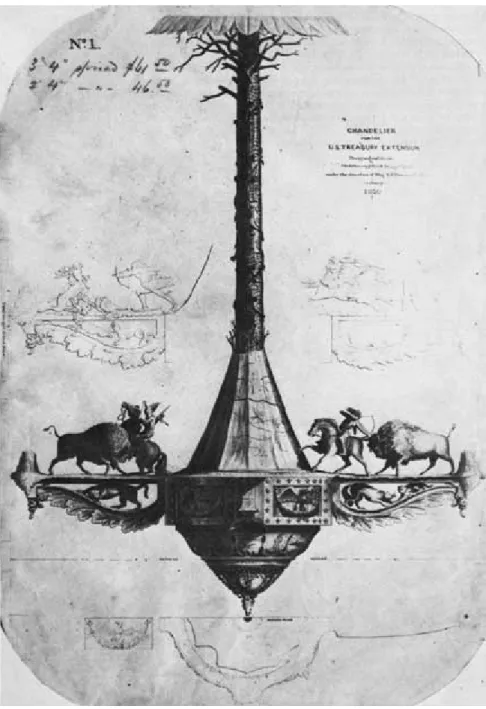
The outcome of the Civil War hung in the balance and spurred a search for American icons to rally public sentiment and bond. Conveying views of the reception room in the Secretary of the Treasury's office suite. Like Hale's metaphorical novel, the furniture in the Treasury suite was also a propagandist work, filled with symbolic images that reinforced the power of the Union.
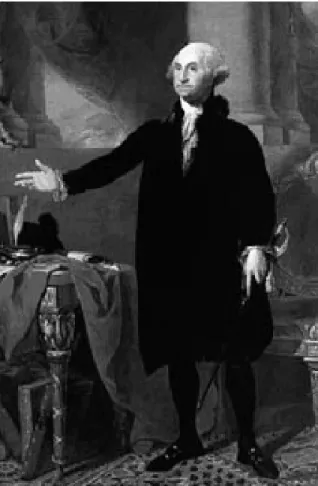
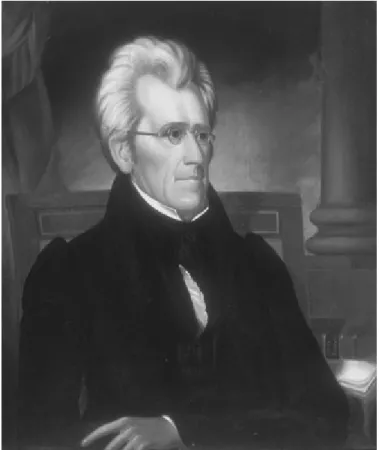
The colors, style, and ornamentation of the furniture and decorative art in the Treasury suite relate to those depicted in Gilbert Stuart's contemporary painting of George Washington and Ralph Earl's circa 1830 portrait of President Andrew Jackson. Similarly, the furnishings resembled in the finance minister's office on the lasting foundations of democracy.
The Pottier & Stymus Commission Introduction
Office of the Supervising Architect of the United States Department of the Treasury However, the partners primarily made furniture. Lee, Architects to the Nation: The Rise and Decline of the Supervising Architects Office (New York: Oxford University Press, 2000), xi. In 1861 he entered the Ministry of Finance as a clerk in the office of the Secretary of the Treasury.
68 Isaiah Rogers, supervising architect, to Pottier & Stymus, October 16, 1863, letters from supervising architect, Record Group 121, U.S. Mullett, Office of the Supervisory Architect, to Pottier & Stymus, December 3, 1863, Letters of the Supervisory Architect Architect, Record Group 121, US Mullett, Office of the Supervisory Architect, to Pottier & Stymus, February 8, 1864, Letters of the Supervisory Architect, Record Group 121, US.
Mullett's political acumen aided his meteoric rise to the Office of the Supervising Architect. The convergence of the talents of the architect's supervising office and Pottier & Stymus created the Treasury suite, which was a patriotic statement.
Pottier & Stymus and the Renaissance Revival Style Furniture Introduction
This confluence of classical elements connected the architecture and furnishings of the Treasury suite in a harmonious display of classicism. The shields that adorn the furniture in the Treasury suite are classically inspired Neo Grec motifs. In comparison with other American furniture from Pottier & Stymus' competitors, the furniture in the Treasury suite is markedly monochromatic, simple in shape and relatively unadorned.
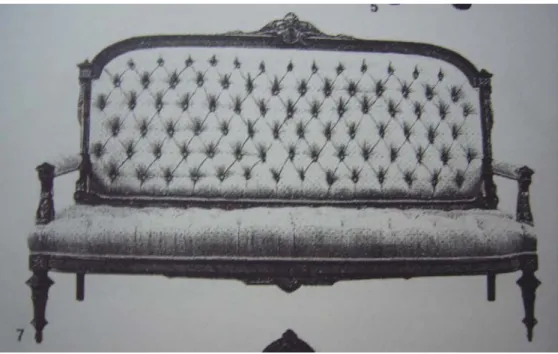
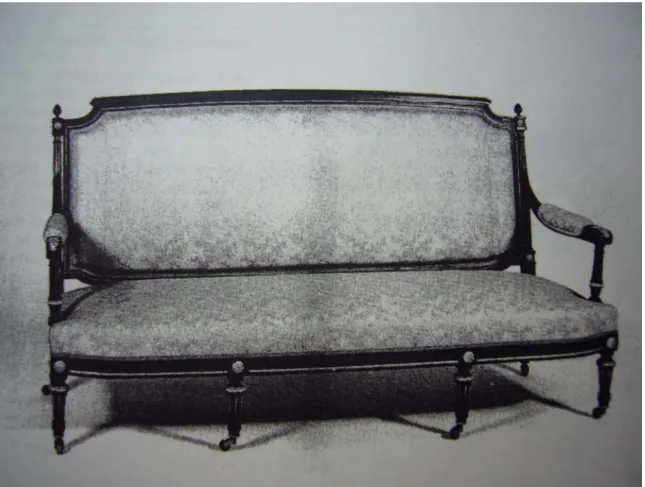
Comparisons between Treasury suite furniture and furniture available to the general public illustrate the marked simplicity of Treasury suite furniture. Compared to other sofas of the period, the sofa of the Treasury suite was plain and simple. The cushions on the sofa in the Treasury suite look simple compared to the other two sofas.
However, the carved decoration is more elaborate and pronounced on the Reilly bench than the bench in the Treasury suite, especially at the top of the bench. The crest rail of the bench in the Treasury Suite is flat except for the curved crest that holds the "USA" shield. The center of the Reilly's bank and the Treasury bank's skirt have a scalloped drop, a plain.
The ornamentation at the intersections of the sofas is greater on the Virginia Museum sofa than on the Treasury suite sofa. While the furniture forms from the firm of Pottier & Stymus were prohibitively expensive, the furniture in the Treasury suite was uncommonly sparse. But as with the rest of the furniture in the Treasury suite, the chair is less complicated than the Herter Brother chair.
While the Treasury Suite chair was simple, it was still expensive compared to other chairs from the same period. In addition, the Treasury suite chair was more than three times the price of the chair in Henkel's price list. The furniture in the Treasury Suite contained the usual Renaissance Revival decorations and forms, but sparse ornamentation and carvings were unusual in expensive furniture.
Shields on the Furniture in Treasury Suite
An analysis of the Great Seal of the United States, which contributed to the design of the unofficial "USA" shield on the Treasury bench, provides an understanding of the. 134 The motto on the Great Seal of the United States, E Pluribus Unum, which means means. Thompson's interpretations of the Great Shield of the United States of America, which was a resource for the artistic "USA" shield on the bench in the Treasury Suite, are useful in understanding the contemporary message of unity conveyed to the public. , to understand.
The stripes on the Great Seal of the United States and the American flag are also found on the unofficial "USA" shield on the couch and chair in the Treasurer's suite. A brief analysis of the symbolism and significance of the official American flag is appropriate to understand the "USA" shield on the furniture in the Treasury suite (see fig. 14). 136 "The colors of pale are those used in the flag of the United States of America.
The flag evolved with the formation of the United States becoming, in a sense, a symbolic map for the states. The lower two-thirds of the shields for both Latrobe's furniture in the White House and the bench in the Treasury Suite have thirteen vertical stripes. American Shield There is a centered "A" for America on the White House furniture instead of the "USA," for United States, found in the head of the shield on the bench in the Treasury Department.
The "USA" was especially significant since the Treasury package was created in 1863 at the height of the Civil War when the Union was fighting to literally reunite the states. The "USA" shield draws on the power of objects it is commonly associated with such as the Great Seal of the United States and the American Flag. The US coat of arms on the soldiers identified them with the Union, the "USA" on the shield on the furniture in the Treasury suite reinforced the association of Treasury Secretary and President Johnson with the Union.
Currency motifs featured symbols of the United States, some of which were also used on furniture in the Treasury suite. Thesauri Americae Septentrionalis Sigillum,” which in Latin meant “Seal of the Treasury of North America.”155. Fittingly, the shield, a classic representation of conflict, tops the sofa, chair and bookcase in the Treasury suite.
Influence of the Commission on Other Government Furniture Introduction
There are similarities that further demonstrate the influence of the Treasury Department commission on the White House Cabinet Room furnished by Pottier & Stymus. The chief was blank, but the lower part of the shield had thirteen vertical lines similar to those in the treasure pack. 158 Both Alfred Mullett and Pottier & Stymus, who collaborated artistically on the design of the Treasury Suite, were commissioned to design elements of the White House under Grant's auspices.
Betty Monkman, former curator of the White House, said that the sofa (see Figure 21) was included in the furniture set. By comparing these details closely, we can see that the Pottier & Stymus commission for the Treasury Department influenced the commission for the White House. Although there are fewer shields on the White House furniture set than on the Treasury Secretary's office, this may reflect the era in which the furniture sets were made.
In 1878, Alfred Mullett, the supervising architect for the Treasury Department, published his work, Drawings of Standard & Post Office Furniture for the U.S. Perhaps one of the most important comparisons between the furniture in the Treasury suite and Mullett's design book is the armchair in Furniture Drawing No. The furniture in the Treasury suite was part of an overall patriotic statement which was also reflected in the rest of the furnishings in the room including rugs and wall ornaments.
Neo Grec's classically inspired furniture designs in Mullett's book and the furniture in the Treasury suite paralleled the classic government buildings that heralded the democracy of the United States. The furniture in the San Francisco Mint resembled the drawings in Mullett's book, which was a simplification of the furniture shapes in the Secretary of the Treasury's office. The furniture in the Treasury suite, with all its American symbols, was important in creating the image of the American official.
The president is surrounded by symbols that proclaim him as the figurehead for the United States. Reports of the Grand Centennial Exhibition, Series 20 Golden Book of Celebrated Manufacturers and Merchants of the United States. The First President Johnson: The Three Lives of the Seventh President of the United States.
Billede taget fra: United States Embassy Stockholm, "The Flags of the United States, November 2001," http://stockholm.usembassy.gov/usflag/flaghist.html (tilganget december 2007). Billede taget fra: United States War Department, Uniform Regulations for the Army of the United States 1861 (Reprint, Washington, D.C.: Smithsonian Institution, 1961), 58.