Use of Probiotics for the Management of Acute Gastroenteritis Table S1. Summary of methods
Criteria for considering studies Type of
studies Systematic reviews and meta-analyses, and subsequently published or not included RCTs, quasi-RCTs. Search date: from September 2013 (end of the last search) to August 2019.
Type of
participants Children with clinically diagnosed acute gastroenteritis, including in- and outpatients, regardless of the location (however, with focus on children living in geographic Europe).
Type of
interventions • Active (e.g., live or viable) and lyophilized forms of probiotics as single ingredients or in combination with other probiotics in all delivery vehicles (and formulations).
• Six taxonomic groups (Lactobacillus, Bifidobacterium, Saccharomyces, Streptococcus, Enterococcus, and Bacillus).
• Studies in which it could not be verified what group of probiotics was consumed were excluded.
• Studies administering yogurt or milk products containing only Lactobacillus or Streptococcus organisms as starter cultures were not included (regardless whether alone or supplemented with probiotics).
Type of outcome measures
Outcome(s) • Duration of diarrhea
• Need for hospitalization for outpatients (or duration of hospitalization for inpatients)
• The percentage of children recovered by 48 h (or diarrhea on day Search methods of identification of studies 2)
Electronic
searches For systematic reviews/meta-analyses:
• The Cochrane Database of Systematic Reviews
• The DARE (Database of Abstracts of Reviews of Effects)
For systematic reviews/meta-analyses and subsequently published trials (starting from the date of the most recent search in the included reviews).
• CENTRAL (Cochrane Central Register of Controlled Trials).
• PubMed (National Library of Medicine, includes MEDLINE®).
• EMBASE (Biomedical and pharmacological bibliographic database).
The search strategy included the use of a validated filter for identifying controlled trials, which was combined with a topic-specific strategy. The search was carried out independently by two reviewers.
No language restrictions were imposed (provided the language is known to a member of the group).
Use of Probiotics for the Management of Acute Gastroenteritis Searching
other resources
The reference lists from identified studies and key review articles, including previously published meta-analyses.
Data collection and analysis Selection of
studies An initial screening of the title, abstract, and keywords of every record identified was performed. The next step was the retrieval of the full text of potentially relevant publications. Two reviewers independently assessed the eligibility of each potentially relevant trial with the use of inclusion criteria. If they had different opinions, these were resolved by discussion with at least one other member of the Data WG.
extraction The data extracted included baseline characteristics (including the definition of acute gastroenteritis), inclusion criteria, experimental and control treatments, setting, dose, outcomes of interest (with definitions), and funding.
Assessment of risk of bias in included trials
RCT: The Cochrane Collaboration’s tool for assessing risk, which includes the following criteria:
• adequacy of sequence generation;
• allocation concealment;
• blinding of participants, personnel and outcome assessors;
• incomplete outcome data were addressed.
Measures of treatment effect
If feasible, for dichotomous outcomes, the results for individual studies, and pooled statistics were reported as the risk ratio (RR) between the experimental and control groups with 95% confidence intervals (CI). For continuous outcomes, the results were reported as the mean difference (MD) with 95% CI.
Assessment of heterogeneity
Heterogeneity using the I2 statistic was assessed. The values of 25%, 50%, and 75% were used as edge limits for low, moderate, and high heterogeneity.
Assessment of reporting biases
When at least 10 RCTs were available, publication bias was assessed using the funnel plot proposed by Egger et al. (75). A P value less than 0.05 implicates publication bias.
Data
synthesis The data were analyzed using Review Manager (RevMan [Computer program]. Version 5.3. Copenhagen: The Nordic Cochrane Centre, The Cochrane Collaboration, 2014).
All pooled analyses were explicitly performed for the current report.
Use of Probiotics for the Management of Acute Gastroenteritis
Table S2. The grades of the certainty of evidence and strength of recommendation set by the GRADE Working Group
GRADE certainty of evidence
High Further research is very unlikely to change our confidence in the estimate of effect.
Moderate Further research is likely to have an important impact on our confidence in the estimate of effect and may change the estimate.
Low Further research is very likely to have an important impact on our confidence in the estimate of effect and is likely to change the estimate.
Very low Any estimate of effect is very uncertain.
GRADE strength of recommendations
Strong* When the evidence showed that the benefit of the intervention clearly outweighs the undesirable effects.
Weak
(conditional)* When the trade-offs were less certain (either because of the low quality of evidence or because the evidence suggests that desirable and undesirable effects are closely balanced).
GRADE: Grading of Recommendations Assessment, Development and Evaluations.
*Interpretation of strong and weak (conditional) recommendations
Strong recommendation Weak (conditional) recommendation For patients: Most individuals in this situation
would want the recommended course of action, and only a small proportion would not.
The majority of individuals in this situation would want the suggested course of action, but many would not.
For clinicians Most individuals should receive the intervention. Adherence to this recommendation according to the guideline could be used as a quality criterion or performance indicator. Formal decision aids are not likely to be needed to help individuals make decisions consistent with their values and preferences
Recognize that different choices will be appropriate for individual
patients and that you must help each patient arrive at a management decision consistent with his or her values and preferences. Decision aids may be useful in helping individuals to make decisions
For policy
makers The recommendation can be adopted as policy in most situations.
Policy-making will require
substantial debate and involvement of various stakeholders.
Use of Probiotics for the Management of Acute Gastroenteritis Table S3. Wording of recommendations
Strength of recommendation Example recommendation
Strong recommendation for Healthcare professionals should recommend X to Y.
Weak recommendation for Healthcare professionals may recommend X to Y.
No recommendation There is no recommendation for or against X to Y.
Weak recommendation
against Healthcare professionals may not recommend X to Y.
Strong recommendation
against Healthcare professionals should not recommend X to Where X is the intervention and Y is the population. Y.
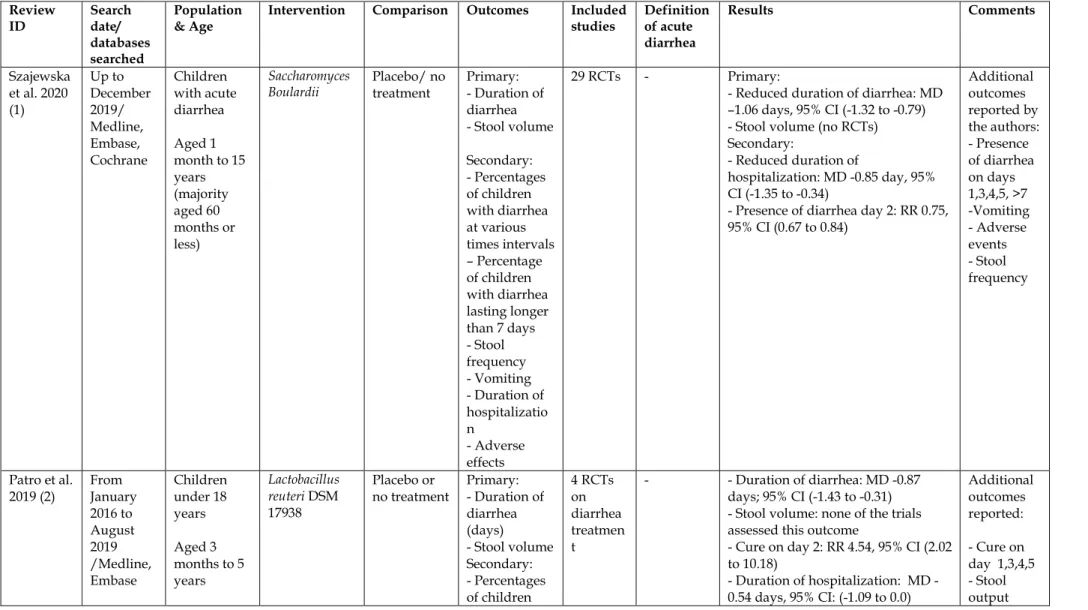
Table S4. Summary of systematic reviews/meta-analyses and network meta-analyses on probiotics for the management of acute gastroenteritis in children
Review
ID Search
date/
databases searched
Population
& Age Intervention Comparison Outcomes Included
studies Definition of acute diarrhea
Results Comments
Szajewska et al. 2020 (1)
Up to December 2019/
Medline, Embase, Cochrane
Children with acute diarrhea Aged 1 month to 15 years (majority aged 60 months or less)
Saccharomyces
Boulardii Placebo/ no
treatment Primary:
- Duration of diarrhea - Stool volume Secondary:
- Percentages of children with diarrhea at various times intervals – Percentage of children with diarrhea lasting longer than 7 days - Stool frequency - Vomiting - Duration of hospitalizatio n - Adverse effects
29 RCTs - Primary:
- Reduced duration of diarrhea: MD –1.06 days, 95% CI (-1.32 to -0.79) - Stool volume (no RCTs) Secondary:
- Reduced duration of
hospitalization: MD -0.85 day, 95%
CI (-1.35 to -0.34)
- Presence of diarrhea day 2: RR 0.75, 95% CI (0.67 to 0.84)
Additional outcomes reported by the authors:
- Presence of diarrhea on days 1,3,4,5, >7 -Vomiting - Adverse events - Stool frequency
Patro et al.
2019 (2) From January 2016 to August 2019 /Medline, Embase
Children under 18 years Aged 3 months to 5 years
Lactobacillus reuteri DSM 17938
Placebo or
no treatment Primary:
- Duration of diarrhea (days) - Stool volume Secondary:
- Percentages
4 RCTs on diarrhea treatmen t
- - Duration of diarrhea: MD -0.87 days; 95% CI (-1.43 to -0.31) - Stool volume: none of the trials assessed this outcome
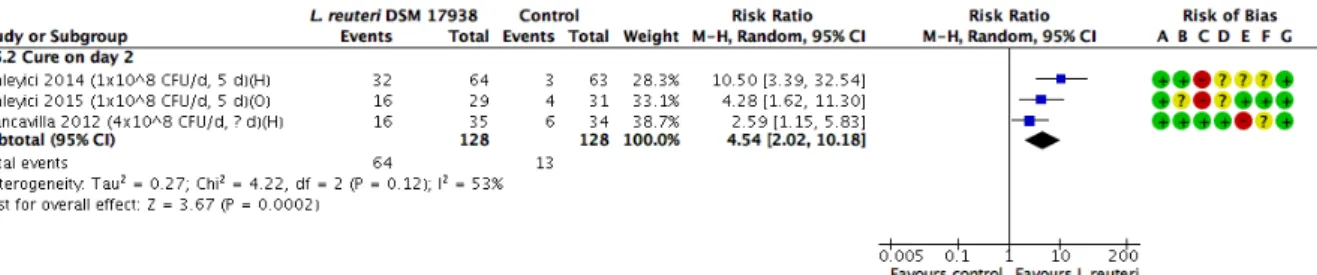
- Cure on day 2: RR 4.54, 95% CI (2.02 to 10.18)
- Duration of hospitalization: MD -
Additional outcomes reported:
- Cure on day 1,3,4,5 - Stool
Central,
others with diarrhea
at various times intervals - Percentage of children with diarrhea lasting longer than 7 days - Duration of hospitalizatio n (days)
- Adverse events: no adverse effects were observed
Szajewska et al. 2019 (3)
Up to January 2019/
Medline, Embase, Central, others
Children with acute diarrhea Aged 1 month to 7 years
Lactobacillus
rhamnosus GG Placebo/ no
treatment Primary:
- Duration of diarrhea - Stool volume Secondary:
- Percentages of children with diarrhea at various times intervals – Percentage of children with diarrhea lasting longer than 7 days - Duration of hospitalizatio n - Adverse effects
18 RCTs - Primary:
- Reduced duration of diarrhea: MD
−0.85 day, 95% CI (−1.15 to −0.56) - No effect on stool volume:
Total stool volume (ml/g): MD 8.97, 95%CI (−86.26 to 104.2)
- Stool volume on day 1 (g/kg):
MD 13.60, 95%CI (−13.11 to 40.31) - Stool volume on day 2 (g/kg): MD 12.40, 95%CI (−6.39 to 31.19) Secondary:
- Presence of diarrhea on day 2:
RR 0.37, 95%CI (0.17 to 0.84) - Duration of hospitalization: MD - 1.22 days, 95%CI (-2.33 to -0.10)
Additional outcomes reported by the authors (not presented):
- Presence of diarrhea on days 3,4,5,
>7,>10 - Dose - Setting - Inpatients/
outpatients - Etiology - Rotavirus vaccination status - Clinical severity score - Adverse effects Ianiro et
al. 2018 (4)
Up to October 2017/
Medline,
Children under 18 years of age with
Bacillus clausii Placebo and/or standard of
Primary:
- Duration of diarrhea
6 RCTs ≤14 days Primary:
- Duration of diarrhea:
MD -9.12 hours, 95% CI (-6.49 to - 1.75), p = 0.015
Embase, Central, others
acute
diarrhea care/or no
treatment - Stool frequency after intervention - Hospitalizatio n duration Secondary:
- Vomiting episodes - Quality of life - Adverse events
- Stool frequency after intervention:
MD -0.19 diarrheal motions, 95% CI (-0.43 to -0.06), p= 0.14
- Duration of hospitalization MD - 0.85 days, 95% CI (-1.56 to -0.15), p = 0.017
Secondary:
- Vomiting: No difference - No serious adverse events - Quality of life not reported
Florez et al. 2018 (5) Network meta- analysis
Up to May 2017/
Medline, Embase, Cochrane, others
Children under 18 years with acute diarrhea
Probiotics Placebo and/or standard treatment
Primary:
- Diarrhea duration Secondary:
- Stool frequency at day 2 - Diarrhea on day 3 - Vomiting - Adverse events
46 RCTs (probioti cs) among 174 studies included
- - Diarrhea duration:
All Probiotics:
MD -19.4 hours, 95% Credible Interval (-23.7 to -15.1) LGG (all):
MD -22.7 hours, 95% Credible Interval (-28.8 to -16.7)
LGG (high- income countries): MD - 38 hours, 95% Credible Interval (- 45.4; -30.5)
LGG (low-middle-income countries):
MD -11.7 hours, 95%(-19.7 to -3.8) Saccharomyces boulardii
MD -16.5 hours, 95% Credible Interval (-23.3 to -9.7)
Secondary outcomes:
- Stool frequency at day 2:
All probiotics MD -0.96, 95%
Credible Interval (-1.76 to -0.15) - Diarrhea at day 3:
Standard vs. all probiotics OR 2.87, 95%Credible Interval (1.78 to 4.55)
Additionall y assessed for diarrhea duration:
S boulardii+
Zn LGG+smect ite Zn+Probioti cs LCF+probio tics
OR 5.55, 95%Credible Interval (3.09 to 10.11)
- Vomiting:
-Standard vs. all probiotics OR 1.36, 95% Credible Interval (0.56 to 3.60) - Standard vs. LGG OR 1.30, 95%
Credible Interval (0.72 to 2.39) - Standard vs. Sacharomyces boulardii OR 1.69, 95%Credible Interval (0.65 to 4.48)
Padayache e et al.
2018 (6)
From April 2014 up to January 2015/
Medline, Embase, Central, others
Hospitalized children with rotavirus acute gastroenterit is <16 years old
Saccharomyces
Boulardii Control Primary:
- Duration of diarrhea (days) - Mean number of stools passed per day - Mean number of episodes of diarrhea at follow up - Frequency of diarrhea at start, mid- point, end of intervention- Stool frequency - Changes in stool consistency post
intervention Secondary:
10 RCTs ≥ 3 unformed stools in the last 24 h and of
≤ 48 h duration
- Duration of diarrhea:
MD –0.57 days, 95% CI (–0.83 to – 0.30)
- Mean number of stools passed per day:
MD -0.97, 95% CI (-1.56 to -0.39) - Frequency of diarrhea:
RR 0.66, 95% CI (0.35 to 1.23) - Number having <3 stools per day RR 1.13, 95% CI (0.97 to 1.31) - Duration of hospital stay:
MD -0.12 days, 95% CI (-1.90 to 1.65)
- Duration of hospital stay (days Sniffen et
al. 2018 (7) Up to June 2018/Pub med, Embase, Cochrane, others
Children aged 1-18 years with acute diarrhea
Probiotics Control - Percent cured - Duration of diarrhea (days)
59 RCTs in pediatric acute diarrhea treatmen t among 155 treatmen t RCTs
New onset of acute infectious gastroente ritis symptoms (< 7 days duration) due to viral or bacterial etiologies but may be idiopathic
Seven of the eight probiotic types had strong evidence for this disease indication
Zorzela et
al. 2017 (8) Up to February 2017/
Medline, Embase, Central, others
Children or adults using modified probiotics for either treatment or prophylaxis
Inactivated form of probiotics
Control group of either the identical living strain or strains of the probiotic or a
placebo/sta ndard treatment control, or both types of controls
- Efficacy - Adverse events
6 Pediatric RCTs among 26 treatmen t RCTs
- - Treatment of acute diarrhea:
modified L acidophilus vs. control SMD -0.81, 95% CI (-1.44 to -0.17)
Adverse events described in original publication
Freedman et al. 2015 (9)
Up to April 2012/
Medline, Embase, Central, others
Children under 18 years with acute diarrhea
Probiotics among other interventions
Placebo or
alternative Primary:
- Any subsequent healthcare visit (7 days) Secondary:
-
6 RCTs among (5 probiotic s 1 synbiotic )
- Primary outcome:
1 study reported no difference between groups in terms of return for additional ED care
Secondary:
-Hospitalization:
RCTs conducted in developed countries only
n of intravenous rehydration - Hospitalizatio n - Adverse effects
31 RCTs
included No difference for hospitalization within 7 days RR 0.53, 95% CI (0.26 to 1.07)
- Need to administer intravenous rehydration within 7 days
When analyzed by individual probiotic product, most comparison s included a single RCT and reported no significant differences between groups Gutierrez-
Castrellon et al. 2015 (10) Network meta- analysis
Up to February 2014/
Medline, Embase, Central, others
Children under 5 years with acute diarrhea
Lactobacillus GG ,
Saccharomyces Boulardii (among other interventions to reduce diarrhea in children)
Placebo Primary:
- Diarrhea duration (hours) Secondary:
- Stool output 48-72 hours - Adverse events
19 RCTs among 51 RCTs included
- - Diarrhea duration:
Lactobacillus GG > 1010 CFU vs.
placebo: SMD: –0.82, 95% CI (–1.31 to –0.34)
Lactobacillus GG ≤ 1010 CFU vs.
placebo: SMD –0.88, 95%CI (–1.97 to 0.20)
Saccharomyces boulardii vs. placebo:
SMD: -0.81, 95%CI (–1.07 to –0.55) Lactobacillus reuteri vs. placebo:
SMD: –1.11, 95%CI (–1.45 to –0.77) SUCRA analysis showed racecadotril as the first option followed by smectite and Lactobacillus reuteri Secondary outcomes not reported Ahmadi et
al. 2015 (11)
Up to June 2013/Pub med, Central, Ovid
Infants and children with rotavirus diarrhea Age range 1- 72 months
Probiotic
strains Placebo Duration of
diarrhea 14 RCTs (lactobac illus GG, non-lactobacil lus GG, all)
- - All probiotics:
SMD -0.41, 95% CI (-0.56 to –0.25, p<0.001)
Lactobacillu s GG subgroup and non- LGG:
presentatio n of results unclear
Feizizadeh et al. 2014 (12)
Up to September 2013/
Pubmed, Central, Embase, others
Children with acute diarrhea Aged 1 month to 15 years
Saccharomyces
Boulardii Placebo or
no control Primary:
- Duration of diarrhea - Diarrhea lasting ≥4 days - Stool frequency on day 2 after intervention Secondary:
- Diarrhea lasting ≥3 days - Stool frequency on day 3 after intervention - Harms
22 trials ≤14 days Primary:
- Reduction of diarrhea duration:
MD -19.7 hours, 95% CI (-26.05 to - 13.34), P <0.001
- Reduction of stool frequency on day 2: MD --0.74, 95% CI (-1.38 to -0.10), P = 0.023
- Diarrhea on day 4 after intervention compared with the control:
RR 0.38, 95% CI (0.24 to 0.59), P<0.001
- Reduced stool frequency on day 3:
MD -1.24, 95% CI (-2.13 to -0.35), P = 0.006
- Diarrhea lasting ≥3 days: RR 0.41, 95% CI (0.27 to 0.60), P=0.001
Randomize d and non- randomized trials Additional outcomes:
- Vomiting duration - Duration of hospitalizat ion - Weight gain
Applegate et al. 2013 (13)
Up to December 2012/
PubMed, Cochrane Library, WHO Regional Databases, Web of Science, Biosis, Popline, Global Health, Scopus, and Embase
Community- acquired acute diarrhea among children
< 5 years of age
Probiotics Suitable control group
Diarrhea duration Stool frequency on the 2nd day Risk of diarrhea hospitalizatio n
Diarrhea mortality
8 RCTs 3 loose or watery stools per day
- Diarrhea duration reduction:
14.0%, 95% CI (3.8 to 24.2%) - Stool frequency reduction on the 2nd day: 13.1%, 95% CI (0.8 to 25.3%) - Risk of diarrhea hospitalization: no difference
- Diarrhea mortality: no studies identified
Dinleyici
et al. 2012 Up to
October Adults and
children Saccharomyces
Boulardii placebo or
active Duration of
diarrhea 19 RCTs - - Duration of diarrhea: pooled WMD
-0.99 day (approximately 24 h, 95% Additional outcomes:
Med, Embase, Central, others
with acute
diarrhea control or no
treatment) Reducing percentage of children with diarrhea Duration of hospitalizatio n
Mean number of stools at different time intervals
17 RCTs
in children - Diarrhea at day 3: RR 0.52, 95% CI (0.42 - 0.65)
- Duration of hospitalizat ion;
- Diarrhea on days 2;4;5;6;7;
- Mean number of stools reported on days 1;2;3,4;5;6;7 Salari et
al. 2012 (15)
Search dates not reported/
Pubmed, Scopus, Cochrane, ISI
Children with diarrhea
Probiotics Placebo Duration of diarrhea (days) - Number of stools per day - Duration of fever - Duration of hospitalizatio n - Duration of vomiting
20 RCTs - - Duration of diarrhea: WMD -0.67 day, 95% CI (-0.95 to -0.38), P<0.0001
- Number of stools per day
WMD -0.81, 95% CI (-2.05 to 0.44), P=
0.20
Allen et al.
2010 (16)
Up to July 2010/
PubMed, Embase, Central, others
Adults and children with acute diarrhea
Specific
probiotic Placebo or
no probiotic Primary:
- Duration of diarrhea - Diarrhea lasting ≥4 days - Stool frequency on day 2 after intervention Secondary:
57 RCTs in children among 63 RCTs
Duration <
14 days.
Was proven or presumed to be caused by an infectious agent
Primary:
- Duration of diarrhea: MD -24.76 hours, 95% CI (-15.9 to -33.6) - Diarrhea lasting ≥4 days: RR 0.41, 95% CI (0.32 to 0.53)
- Stool frequency on day 2:
MD -0.80, 95% CI (-0.45 to -1.14) Secondary:
- Diarrhea lasting ≥3 days:
RR 0.62, 95% CI (0.56 to 0.70) - Mean stool frequency on day 3:
MD -0.63, 95% CI (-1.18 to -0.07)
- Diarrhea lasting ≥3 days - Stool frequency on day 3 after intervention
1. Szajewska H, Kołodziej M, Zalewski BM. Systematic review with meta-analysis: Saccharomyces boulardii for treating acute gastroenteritis in children- a 2020 update. Alimentary pharmacology & therapeutics. 2020:10.1111/apt.15659.
2. Patro-Gołąb B, Szajewska H. Systematic Review with Meta-Analysis: Lactobacillus reuteri DSM 17938 for Treating Acute Gastroenteritis in Children.
An Update. Nutrients. 2019;11(11):2762.
3. Szajewska H, Kolodziej M, Gieruszczak-Bialek D, Skorka A, Ruszczynski M, Shamir R. Systematic review with meta-analysis: Lactobacillus rhamnosus GG for treating acute gastroenteritis in children - a 2019 update. Alimentary pharmacology & therapeutics. 2019;49(11):1376-84.
4. Ianiro G, Rizzatti G, Plomer M, Lopetuso L, Scaldaferri F, Franceschi F, et al. Bacillus clausii for the Treatment of Acute Diarrhea in Children: A Systematic Review and Meta-Analysis of Randomized Controlled Trials. Nutrients. 2018;10(8).
5. Florez ID, Veroniki AA, Al Khalifah R, Yepes-Nunez JJ, Sierra JM, Vernooij RWM, et al. Comparative effectiveness and safety of interventions for acute diarrhea and gastroenteritis in children: A systematic review and network meta-analysis. PloS one. 2018;13(12):e0207701.
6. Padayachee M, Visser J, Viljoen E, Musekiwa A, Blaauw R. Efficacy and safety of Saccharomyces boulardii in the treatment of acute gastroenteritis in the paediatric population: a systematic review. South African Journal of Clinical Nutrition. 2019;32(3):58-69.
7. Sniffen JC, McFarland LV, Evans CT, Goldstein EJC. Choosing an appropriate probiotic product for your patient: An evidence-based practical guide.
PloS one. 2018;13(12):e0209205.
8. Zorzela L, Ardestani SK, McFarland LV, Vohra S. Is there a role for modified probiotics as beneficial microbes: a systematic review of the literature.
Beneficial microbes. 2017;8(5):739-54.
9. Freedman SB, Pasichnyk D, Black KJ, Fitzpatrick E, Gouin S, Milne A, et al. Gastroenteritis Therapies in Developed Countries: Systematic Review and Meta-Analysis. PloS one. 2015;10(6):e0128754.
10. Gutierrez-Castrellon P, Ortiz-Hernandez AA, Llamosas-Gallardo B, Acosta-Bastidas MA, Jimenez-Gutierrez C, Diaz-Garcia L, et al. [Efficacy of racecadotril vs. smectite, probiotics or zinc as an integral part of treatment of acute diarrhea in children under five years: A meta-analysis of multiple treatments]. Gac Med Mex. 2015;151(3):329-37.
11. Ahmadi E, Alizadeh-Navaei R, Rezai MS. Efficacy of probiotic use in acute rotavirus diarrhea in children: A systematic review and meta-analysis.
Caspian journal of internal medicine. 2015;6(4):187-95.
12. Feizizadeh S, Salehi-Abargouei A, Akbari V. Efficacy and safety of Saccharomyces boulardii for acute diarrhea. Pediatrics. 2014;134(1):e176-91.
13. Applegate JA, Fischer Walker CL, Ambikapathi R, Black RE. Systematic review of probiotics for the treatment of community-acquired acute diarrhea in children. BMC public health. 2013;13 Suppl 3:S16.
14. Dinleyici EC, Eren M, Ozen M, Yargic ZA, Vandenplas Y. Effectiveness and safety of Saccharomyces boulardii for acute infectious diarrhea. Expert opinion on biological therapy. 2012;12(4):395-410.
15. Salari P, Nikfar S, Abdollahi M. A meta-analysis and systematic review on the effect of probiotics in acute diarrhea. Inflammation & allergy drug targets. 2012;11(1):3-14.
16. Allen SJ, Martinez EG, Gregorio GV, Dans LF. Probiotics for treating acute infectious diarrhoea. The Cochrane database of systematic reviews.
2010(11):Cd003048.
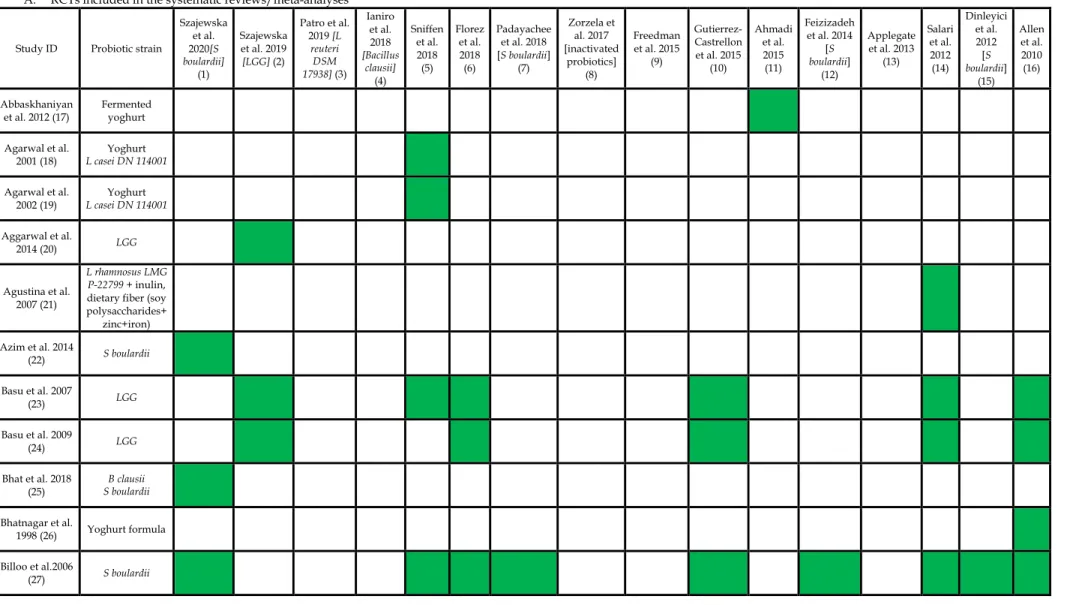
Table S5. Randomized controlled trials (RCTs) in children comparing probiotics with placebo/no intervention included in various systematic reviews/meta-analyses (A) and additionally identified (B).
A. RCTs included in the systematic reviews/meta-analyses Study ID Probiotic strain
Szajewska et al.
2020[S boulardii]
(1)
Szajewska et al. 2019 [LGG] (2)
Patro et al.
2019 [L reuteri 17938] (3) DSM
Ianiro et al.
2018 [Bacillus
clausii]
(4)
Sniffen et al.
2018 (5)
Florez et al.
2018 (6)
Padayachee et al. 2018 [S boulardii]
(7)
Zorzela et al. 2017 [inactivated
probiotics]
(8)
Freedman et al. 2015
(9)
Gutierrez- Castrellon et al. 2015
(10)
Ahmadi et al.
2015 (11)
Feizizadeh et al. 2014 boulardii] [S
(12)
Applegate et al. 2013
(13)
Salari et al.
2012 (14)
Dinleyici et al.
2012 boulardii] [S
(15) Allen et al.
2010 (16)
Abbaskhaniyan
et al. 2012 (17) Fermented yoghurt Agarwal et al.
2001 (18) Yoghurt
L casei DN 114001 Agarwal et al.
2002 (19) Yoghurt
L casei DN 114001 Aggarwal et al.
2014 (20) LGG
Agustina et al.
2007 (21)
L rhamnosus LMG P-22799 + inulin, dietary fiber (soy polysaccharides+
zinc+iron) Azim et al. 2014
(22) S boulardii
Basu et al. 2007
(23) LGG
Basu et al. 2009
(24) LGG
Bhat et al. 2018
(25) B clausii
S boulardii Bhatnagar et al.
1998 (26) Yoghurt formula Billoo et al.2006
(27) S boulardii
Boudraa et al.
2001 (28) L bulgaricus and S thermophilus Boulloche et al.
1994 (29) L acidophilus LB strain Burande et al.
2013 (30) S boulardii Burki et al. 2017
(31) S boulardii
Canani et al.2007 (32)
LGG, S boulardii, L delbrueckii var bulgaricus, L
acidophilus, Streptococcus thermophilus, B bifidum; B clausii;
Enterococcus faecium SF 68 Carague-
Orendain et al.
1999 (33)
Lactobacillus acidophilus and
bifidus Castaneda et al.
1995 (34) S boulardii chronic diarrhea Cetina-
Sauri et al. 1994
(35) S boulardii 1989
Chapoy et al.
1985 (36) S boulardii
Chen et al. 2010 (37)
Bacillus mesentericus, Enterococcus faecalis, Clostridium
butyricum Chouraqui et
al. 1995 (38) S boulardii Costa-Ribeiro et
al. 2003 (39) LGG
Correa et al.
2011 (40) S boulardii
Czerwionka- Szaflarska et al.
2009 (41) LGG
D’Apuzzo 1982
(42) Streptococcus
faecium Dalgic et al.
2011 (43) S boulardii Das et al. 2016
(44) S boulardii
Dash et al. 2016
(45) S boulardii
Dinleyici et al.
2009 (46)
S boulardii (Entamoeba histolytica) Dinleyici et al.
2011 (47)
S boulardii (Blastocystis
hominis) Dinleyici et al.
2014 (48) L reuteri DSM 17938 Dinleyici et al.
2015 (49) S boulardii Dinleyici et al.
2015 (50) L reuteri DSM 17938
Dubey et al.
2008 (51)
L acidophilus, L paracasei, L bulgaricus, L plantarum, B breve, B infantis,
B longum, S thermophilus (VSL#3) Dutta et al. 2011
(52)
L sporogenes (B coagulans) El-Soud et
al.2015 (53)
Milk formula supplemented
with B lactis Erdogan et al.
2012 (54) S boulardii
Eren et al. 2010 (55)
S boulardii vs L bulgaricus/Str thermophilus (no
noprobiotic group) Francavilla et
al. 2012 (56) L reuteri DSM 17938 Freedman et al.
2015 (57)
L helveticus Rosell- 52 + L rhamnosus
Rosell 11 Gaon et al. 2003
(58)
S boulardii (persistent diarrhea) Grandy et al.
2010 (59)
S boulardii L acidophilus, L
rhamnosus, Bifidobacterium
longum and S boulardii Guandalini et
al. 2000 (60) LGG
Guandalini et
al. 2010 (61) VSL#3 (IBS)
Guarino et al.
1997 (62) LGG
Hafeez et al.
2002 (63) S boulardii
Hegar et al.
2015 (64)
L rhamnosus R0011 & L.
acidophilus R0052
Henker et
al.2007 (65) E coli Nissle 1917
Henker et
al.2008 (66) E coli Nissle 1917
Hernandez et
al. 1998 (67) S boulardii
Htwe et al. 2008
(68) S boulardii
Huang et al.
2012 (conference presentation)
(69)
E faecalis, C butyricum and B
mesentericus Huang et al.
2014 (full paper of Huang et al.
2012) (70)
E faecalis, C butyricum and B
mesentericus Huseynova et
al. 2011 (71) S boulardii
Isolauri et al.
1991 (72)
LGG fermented milk LGG
Isolauri et al.
1994 (73) LGG
Javeed et al.
2018 (74) S boulardii
Jasinski et al.
2002 (75) LGG
Kaila et al. 1992
(76) LGG
Kaila et al. 1995
(77) LGG (viable vs
inactivated LGG) Khan et al. 2012
(78) S boulardii
Khanna et al. Tyndalized (heat-
Lactobacilus acidophilus Kianifar et al.
2009 (80) L acidophilus & B bifidum Kowalska-
Duplaga et al.
1999 (81)
Bifidobacterium ruminatum Kowalska-
Duplaga et al.
2004 (82)
L acidophilus, B bifidum, L bulgaricus Kumar et al.
2018 (83) S boulardii Kurugol et al.
2005 (84) S boulardii Lahiri et al.
2008 (clinical study report NCT00457353)
(85)
B clausii
Lahiri et al.
2011 (conference abstract) (86)
B clausii Lahiri et al.
2015 (87) B clausii Lahiri et al.
2015 (88) B clausii O/C, SIN, N/R, T Lee et al. 2001
(89)
L. acidophilus &
Bifidobacteria infantis
Lee et al. 2015 (90)
Bifidobacterium longum, Bifidobacterium lactis, Lactobacillus
acidophilus, Lactobacillus rhamnosus, Lactobacillus plantarum, Pediococcus pentosaceus Le Luyer et al.
2010 (91) S boulardii (infant formula)
Lievin-Le Moal
et al. 2007 (92) L acidophilus LB Majamaa et al.
1995 (93) LGG
Manyal et al.
2015 (94) Lactobacillus sporogenes + Zinc Mao et al. 2008
(95)
Milk formula + Streptococcus thermophilus, Bifidobacterium
lactis Maugo et al.
2012 (96) B claussi Miele et al. 2009
(97) VSL#3 (ulcerative colitis) Misra et al. 2009
(98) LGG
Moal et al. 2007
(99) L acidophilus LB Narayanappa et
al. 2008 (100) Bifilac (no strain specification) Nixon et al.
2012 (101) LGG
Oandasan et
al.1999 (102) L acidophilius and L bifidus Ozkan et al.
2007 (103) S boulardii
Pant et al. 1996 (104)
LGG [Data reported only for a subset
of recruited subjects with watery diarrhoea (26 ⁄ 40, 65%). No data for children with bloody
stools]
Pashapour et al. Pasteurized
bulgaricus & S thermophilus)
Phavichitr et al.
2013 (106)
Lactobacillus acidophilus + Bifidobacterium
bifidum viv.
lyophilisat with lactose + magnesium
stearate as excipients Pedone et al.
1999 (107) Fermented milk L casei DN 114 001 Pociecha et al.
1998 (108)
L rhamnosus E⁄N, Oxy, and Pen +
smectite vs L rhamnosus E⁄N, Oxy, and Pen only Raafey et al.
2008 (109) Lactobacillus acidophilus Raza et al. 1995
(110) LGG
Rerksuppaphol et al. 2010 (111)
Lactobacillus acidophilus + Bifidobacterium
bifidum at 4 Celsius Lactobacillus acidophilus + Bifidobacterium bifidum at room temperature Riaz et al. 2012
(112) S boulardii
Ritchie et al.
2010 (113) LGG
Rosenfeldt et al.
2002 (hospitalized)
(114)
L rhamnosus 19070-2 and L reuteri DSM
12246 Rosenfeldt et al.
2002 (non hospitalized)
(115)
L rhamnosus 19070-2 and L reuteri DSM
12246
Salazar-Lindo
et al. 2007 (116) LGG
Savas-Erdeve &
Gokay 2009 (117)
S boulardii (amebiasis)
Sarker et al.
2005 (118) Lactobacillus paracasei ST11
Schnadower et
al. 2018 (119) LGG
Sepp et al. 1995
(120) L casei GG +
trimethoprim
Shan et al. 2013
(121) S boulardii (part of AAD study)
Sharif et al.
2016 (122) S boulardii
Shornikova et
al. 1997 (123) LGG
Shornikova et
al. 1997 (124) L reuteri
Shornikova et
al. 1997 (125) L reuteri Simakachorn et
al. 2000 (126) L acidophilus LB Sindhu et al.
2014 (127) LGG
Sirsat et al. 2017 S boulardii
Sugita et al.
1994 (129) L casei
Szymański et al.
2006 (130)
L rhamnosus strains (573L/1;
573L/2; 573L/3) Szymański et al.
2019 (131) L reuteri DSM 17938 Taborska et al.
1997 (132) L acidophilus ND Teran et al. 2009
(133)
L acidophilus, L rhamnosus, B
longum, S boulardii Thibault et al.
2004 (134)
Infant formula with Bifidobacterium
breve c50 &
Streptococcus thermophilus 065 Tlaskal et al.
1995 (135)
L acidophilus (helveticum R52) +
L rhamnosus R11 Tlaskal et al.
2005 (136)
L acidophilus /helveticum R52 +
L rhamnosus R11 Upadhyay et al.
2014 (137) LGG
Urganci et al.
2001 (138) S boulardii Urtula and
Dacula 2008
(139) B clausii
Vandenplas et
al. 2007 (140) S boulardii Villarruel et al.
2007 (141) S boulardii Veereman-
Wauters et al.
2009 (142)
LGG, L acidophilus, L
casei, L plantarum, B
infantis Vidjadevan et
al. 2017/2018 (143) (144)
B clausii S boulardii
Vivatvakin et al. 2006 (145)
L acidophilus, Bifidobacterium
infantis
B. RCTs meeting the inclusion criteria but not included in the systematic reviews
Study ID Probiotic strain
Freedman 2018 (146) Lactobacillus rhamnosus R0011 and L. helveticus R0052 Hamid et al. 2019 (147) B clausii
Houeiss et al. 2018 (148) B clausii
L acidophilus + B lactis Hong Chau et al. 2018 (149) L acidophilus Hung-Hsiang Lai et al. 2019 (150) Lactobacillus casei Sudha et al. 2019 (151) B clausii UBBC-07
REFERENCES
1 Szajewska H, Kołodziej M, Zalewski BM Systematic review with meta-analysis: Saccharomyces boulardii for treating acute gastroenteritis in children – a 2020 update. 2020.
2 Szajewska H, Kolodziej M, Gieruszczak-Bialek D, et al. Systematic review with meta-analysis: Lactobacillus rhamnosus GG for treating acute gastroenteritis in children - a 2019 update. Aliment Pharmacol Ther 2019;49(11):1376-84.
3 Patro-Gołąb B, Szajewska H Systematic Review with Meta-Analysis: Lactobacillus reuteri DSM 17938 for Treating Acute Gastroenteritis in Children. An Update. Nutrients 2019;11(11):2762.
4 Ianiro G, Rizzatti G, Plomer M, et al. Bacillus clausii for the Treatment of Acute Diarrhea in Children: A Systematic Review and Meta- Analysis of Randomized Controlled Trials. Nutrients 2018;10(8).
5 Sniffen JC, McFarland LV, Evans CT, et al. Choosing an appropriate probiotic product for your patient: An evidence-based practical guide.
PLoS One 2018;13(12):e0209205.
6 Florez ID, Veroniki AA, Al Khalifah R, et al. Comparative effectiveness and safety of interventions for acute diarrhea and gastroenteritis in children: A systematic review and network meta-analysis. PLoS One 2018;13(12):e0207701.
7 Padayachee M, Visser J, Viljoen E, et al. Efficacy and safety of Saccharomyces boulardii in the treatment of acute gastroenteritis in the paediatric population: a systematic review. South African Journal of Clinical Nutrition 2019;32(3):58-69.
8 Zorzela L, Ardestani SK, McFarland LV, et al. Is there a role for modified probiotics as beneficial microbes: a systematic review of the literature. Benef Microbes 2017;8(5):739-54.
9 Freedman SB, Pasichnyk D, Black KJ, et al. Gastroenteritis Therapies in Developed Countries: Systematic Review and Meta-Analysis. PLoS One 2015;10(6):e0128754.
10 Gutierrez-Castrellon P, Ortiz-Hernandez AA, Llamosas-Gallardo B, et al. [Efficacy of racecadotril vs. smectite, probiotics or zinc as an integral part of treatment of acute diarrhea in children under five years: A meta-analysis of multiple treatments]. Gac Med Mex 2015;151(3):329-37.
11 Ahmadi E, Alizadeh-Navaei R, Rezai MS Efficacy of probiotic use in acute rotavirus diarrhea in children: A systematic review and meta- analysis. Caspian J Intern Med 2015;6(4):187-95.
12 Feizizadeh S, Salehi-Abargouei A, Akbari V Efficacy and safety of Saccharomyces boulardii for acute diarrhea. Pediatrics 2014;134(1):e176-91.
13 Applegate JA, Fischer Walker CL, Ambikapathi R, et al. Systematic review of probiotics for the treatment of community-acquired acute diarrhea in children. BMC Public Health 2013;13 Suppl 3(S16.
14 Salari P, Nikfar S, Abdollahi M A meta-analysis and systematic review on the effect of probiotics in acute diarrhea. Inflamm Allergy Drug Targets 2012;11(1):3-14.
15 Dinleyici EC, Eren M, Ozen M, et al. Effectiveness and safety of Saccharomyces boulardii for acute infectious diarrhea. Expert Opin Biol Ther 2012;12(4):395-410.
16 Allen SJ, Martinez EG, Gregorio GV, et al. Probiotics for treating acute infectious diarrhoea. Cochrane Database Syst Rev 201011):Cd003048.
17 Abbaskhanian A, Rezai MS, Karami H, et al. The effect of fermented yogurt on rotavirus diarrhea in children. Health Med 2012;6:1600-4.
18 Agrawal KN, Bhasin SK, Faridi MA, Mathur M, et al. Lactobacillus casei in the control of acute diarrhea-a pilot study. Indian Pediatrics 2001;38:905-910.
19 Agarwal KN, Bhasin SK Feasibility studies to control acute diarrhoea in children by feeding fermented milk preparations Actimel and Indian Dahi. Eur J Clin Nutr 2002;56 Suppl 4(S56-9.
20 Aggarwal S, Upadhyay A, Shah D, et al. Lactobacillus GG for treatment of acute childhood diarrhoea: an open labelled, randomized controlled trial. Indian J Med Res 2014;139(3):379-85.
21 Agustina R, Lukito W, Firmansyah A, et al. The effect of early nutritional supplementation with a mixture of probiotic, prebiotic, fiber and micronutrients in infants with acute diarrhea in Indonesia. Asia Pac J Clin Nutr 2007;16(3):435-42.
22 Kiran Azim TSS, Saba Naim Khan Efficacy of Probiotics ( Sacchromyces bulardii ) in Acute Watery Diarrhoea in Children. Journal of Rawalpindi Medical College (JRMC); 2014;18(2):213-215 2014;18(:213-15.
23 Basu S, Chatterjee M, Ganguly S, et al. Efficacy of Lactobacillus rhamnosus GG in acute watery diarrhoea of Indian children: a randomised controlled trial. J Paediatr Child Health 2007;43(12):837-42.
24 Basu S, Paul DK, Ganguly S, et al. Efficacy of high-dose Lactobacillus rhamnosus GG in controlling acute watery diarrhea in Indian children: a randomized controlled trial. J Clin Gastroenterol 2009;43(3):208-13.
25 Bhat S, G. N. S, Savio CD Efficacy of probiotics in acute diarrhoea in children. 2018 2018;5(4):5.
26 Bhatnagar S, Singh KD, Sazawal S, et al. Efficacy of milk versus yogurt offered as part of a mixed diet in acute noncholera diarrhea among malnourished children. J Pediatr 1998;132(6):999-1003.
27 Billoo AG, Memon MA, Khaskheli SA, et al. Role of a probiotic (Saccharomyces boulardii) in management and prevention of diarrhoea.
World J Gastroenterol 2006;12(28):4557-60.
28 Boudraa G, Benbouabdellah M, Hachelaf W, et al. Effect of feeding yogurt versus milk in children with acute diarrhea and carbohydrate malabsorption. J Pediatr Gastroenterol Nutr 2001;33(3):307-13.
29 Boulloche J, Mouterde O, Mallet E. Management of acute diarrhoea in infants and young children. Controlled study of the anti-diarrheal efficacy of killed L. acidophilus (LB strain) versus a placebo and a reference drug (loperamide). Annales de Pediatrie 1994;41(7):457–63.
30 Burande MA Comparison of efficacy of Saccharomyces boulardii strain in the treatment of acute diarrhea in children: A prospective, single-blind, randomized controlled clinical trial. J Pharmacol Pharmacother 2013;4(3):205-8.
31 Burki MFK, Jabeen F Efficacy of saccharomyces boullardii in children with acute diarrhea. Medical forum monthly 2017;28(2):112‐16.
32 Canani RB, Cirillo P, Terrin G, et al. Probiotics for treatment of acute diarrhoea in children: randomised clinical trial of five different preparations. BMJ 2007;335(7615):340.
33 Carrague-Orendain A Randomized, double blind placebo- controlled trial on the efficacy and safety of lactobacillus (Infloran Berna capsules) in the treatment of acute non-bloody diarrhoea in children two to five years of age. Not published 1999;NR(NR).
34 Guillot GC, Garcia BE, Santa Cruz DM, et al. Effects of saccharomyces boulardii in children with chronic diarrhea, especially cases due to Giardiasis. Rev Mex de Puericultura y Pediatria. 1995;2(12):1-11.
35 Cetina-Sauri G, Sierra Basto G Evaluation of Saccharomyces boulardii for the treatment of acute diarrhea in pediatric patients. [French].
Annales de Pediatrie 1994;41(6):397-400.
36 Chapoy P [Treatment of acute infantile diarrhea: controlled trial of Saccharomyces boulardii]. Ann Pediatr (Paris) 1985;32(6):561-3.