The background of the theme selection is related to the rapid development of science and technology in the 21st century that has contributed to change or innovation in various areas of life, including Applied Sciences, Management and Artificial Intelligence. Moreover, through this conference, participants can develop research networks and collaborate with research partners in the field of information technology and management in Indonesia and researchers from abroad. Of the 145 papers, 65 papers in Applied Science, 28 Papers in Management and 52 papers in Artificial Intelligence.
The location of the conference ICAISD-2020 was virtual using Zoom Meeting Topic: UBSI ICAISD 2020 "SCIENTIFIC INFORMATION FOR LIFE. The implementation started with the handover of the schedule by the MC, and it was opened by the president of Aptikom (Association of Computer and Informatics Higher Education) Prof. Of the 148 articles received, 145 authors of the articles uploaded the presentation file and the revision file from the author and then presented it on August 6-7, 2020.
Technical obstacles in the conduct of the ICAISD-2020 conference were mostly issues of participants unable to display the presentation file, but since participants previously submitted/uploaded the presentation file (ppt/pptx) via the icaisd.info page, the committee can help the display presentation files of the seminar participants. The positive side of seminar implementation is that participants and keynote speakers can provide seminar materials without holding a meeting, because the Covid-19 pandemic will make it easier for participants far away from Bekasi, West Java, Indonesia. For this reason, on this occasion we would like to thank the Rector of the Universitas Bina Sarana Informatika and his staff, the Dean, the Head of the Study Program, the Head of the Technology Office, the Head of Communications Marketing and his staff, advisors, Chairmen of Program Committees , executive chairs, committee chair and co-hosts who participated in this conference.
Towards a quantitative, measurement-based assessment of uncertainty in photon mass attenuation coefficients at radiation therapy energies.

Location of the event
Plenary of Each Speaker
ICAISD 2020
INTERNATIONAL CONFERENCE ON ADVANCED INFORMATION SCIENTIFIC DEVELOPMENT
34; Scientific Information For Living Welfare "
The Discussions, the Feasibility, Room for Q&A?
The participants: location and the overall attendance number expected
LIST OF SPEAKERS
Sentiment analysis of Facebook comments about Indonesian presidential candidates using the na¨ıve bayes method. Kartika Handayani, Eka Herdit Juningsih, Dwiza Riana, Sri Hadianti, Achmad Rifai and Rosi Kusuma Serli. Analysis of community satisfaction level towards the Department of Health's new infection websites using Webqual 4.0.
Aliyah Kurniasih, Aloysius Kurniawan Santoso, Dwiza Riana, Abdul Rahman Kadafi, Wulan Dari en Arif Ismail Husin. Bagus Dwi Wicaksono, Dwin Indrawan, Dwiza Riana, Andi Taufik, Yamin Nuryamin en Dian Ambar Wasesha. Ahmad Nuryanto, Okki Setyawan, Dwiza Riana, Sri Hadianti, Achmad Maezar Bayu Aji en Endang Pujiastuti.
Nissa Madaniyah Fadhilah, Siti Fauziah, Dwiza Riana, Andrian Eko Widodo, Agus Yulianto and Besus Maula Sulthon. Analysis of Legislative Candidate Motivation and Goal in the 2019 General Election Using the Author-Topic Model and Node2vec. Maintaining continuity of company operations using the NIST Framework for Small and Medium Enterprises.
The implementation of the MFEP (Multi Factor Evaluation Process) Method in determining the learning model. Optimizing the decision tree algorithm Using particle swarm optimization in the selection of digital payments. Sri Rahayu, Nurul Qhomariyah, Jajang Jaya Purnama, Dwiza Riana, Yuni Eka Achyani and Fattya Ariani.
High accuracy in forex forecasting using the neural network method based on particle swarm optimization. Analysis of factors affecting the quality of the corona.jatengprov.go.id website by user satisfaction using the Webqual 4.0 method. Evaluation of the usability of the website services using the WEBUSE method (a case study: covid19.go.id).
Analysis of Internal Auditors' Role in Self-Assessment of Control of Materials Planning Strategic Business Unit Engine Maintenance. Analysis of debt ratio (DER) and underwriter reputation effects on underpricing phenomena in companies conducting initial public offerings (IPOs) on the IDX.
The technology needed to deliver the meeting successfully
All papers published in this volume of the Journal of Physics: Conference Series have been peer-reviewed through processes administered by the editors. Reviews were conducted by expert referees to the professional and scientific standards expected of a journal of proceedings published by IOP Publishing. Type of peer review: Single-verb / Double-Blind / Triple-Blind / Open / Other (please describe) Of the 213 articles received by the committee, there were 2 articles that did not describe) Of the 213 articles received by the committee, there were 2 articles that did not include the full paper, so the committee rejected the article.
In addition, 211 articles were submitted to the reviewer for a screening process using a single-blind method (the reviewer knows the author of the article). The reviewers at the ICAISD-2020 workshop consist of experts in the fields of Applied Science, Artificial Intelligence and Management who have at least 5 Scopus-Index qualifications in their respective fields. In addition, based on the provisions of the workshop committee meeting, accepted articles are those that have a score of 0 to 3 with the number of articles 148 which will then be ready for cameras by uploading the reviewed article to icaisd .info.
Conference submission management system: Conference Management System used is easychair
Number of submissions received: 213 Number of submissions sent for review: 211
Number of submissions accepted: Numbers of accepted articles are 148 however, 3 authors do not do the presentation of their articles
Acceptance Rate (Number of Submissions Accepted / Number of Submissions Received X 100): 69,48
Average number of reviews per paper: Each article is on average reviewed by 2 reviewers, if one reviewer accepts and one reviewer rejects, we will give it to the third
Total number of reviewers involved: Total numbers of reviewers involved are 22 persons
Any additional info on review process: After the review process is complete, the accepted article will be informed to the author to be corrected / revised and re-uploaded the revised
Contact person for queries: Mr. Agus Priadi
- Introduction
- Method
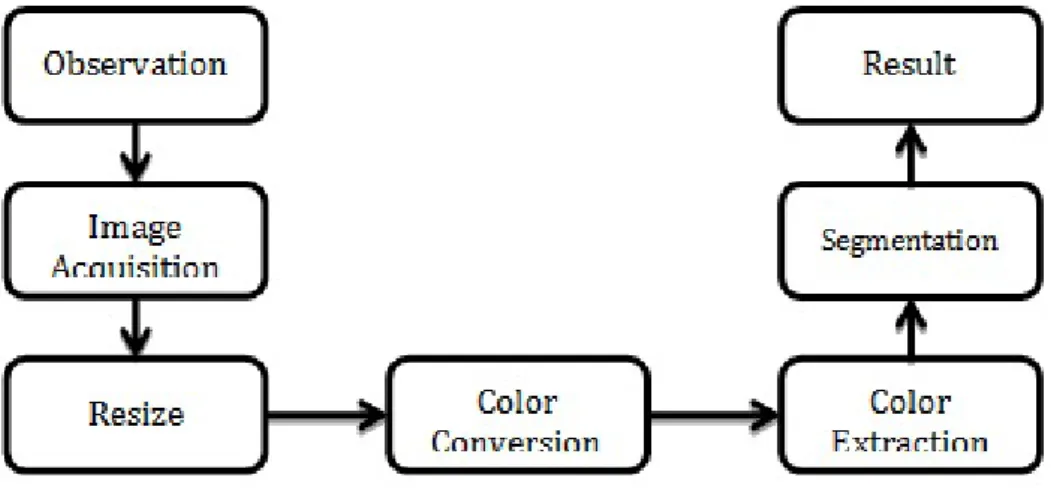
- Observation
- Image Acquisition
- Color Convertion
- Color Extraction
- Segmentation
- Result and Discussion
- Original Image
- Color Convertion
- Defect Segmentation
- Success Rate of Segmentation
- Conclusion
The quality of wood is closely related to wood defects, the faster the detection of wood defects would be, the faster also determines the quality of the wood. Current technology has developed rapidly to aid productive human activities, imaging has been a breakthrough to detect wood defects. This study aims to detect wood defects by segmenting Swietenia Mahagoni wood images using YIQ color space and Thresholding has resulted in a fairly good segmentation that is successful in segmenting the types of bark grown wood defects on bontos and defects in healthy knot on the body of wood with each percentage of 83.3%.
The tropical rainforests of Southeast Asia had more than 15,000 different plant species, which include about 3,000 categories of wood species. Image processing research on wood defects is not the first, before researchers have written various studies, An improved binarization algorithm of wood image defect segmentation based on non-uniform background by [7] has the segmentation of wood defects using the proposed method, namely image binarization optimization algorithm based on local threshold shows that it can improve the segmentation for wood defect images in complex backgrounds. From these various sources, the authors feel compelled to conduct research on wood defects using datasets obtained from Indonesian Forests by segmenting defects in mahogany wood that occur frequently and have a large impact on quality with segmentation techniques. using the threshold which were previously converted to YIQ color space (Luminance, Inphase, Quadrature).
The data that will be processed is taken from observations to a TPK (Wood Storage Area) in West Java by digging information directly from a team of wood testers who have proven competent by the Ministry of Environment and Forestry. Before segmentation, the initial image with RGB (Red Green Blue) color space is converted to YIQ color space. The YIQ color space is defined by the NTSC (National Television System Committee), Y represents illuminance or image intensity, while I and Q (in-phase and quadrature) represent chroma or color information, Q also shows the color depth in the image[ 10][11 ].
If in previous studies [7] the optimization of binary images by local threshold can be segmented into 2 types of defects, black spherical peak defects and creep cracks, then this study segmented 3 different types of wood defects that have almost the same texture color no as highlighted as the node defects in the previous case, then the last stage performed in the previous study produced a binary image showing the position of the defect area while in this study the image is returned to the RGB color space as the original image with a mark yellow in the disability area so that users know in real terms from the original image. Given Indonesia's potential for its abundant timber production, the quality of the timber must be maintained. Based on the problems that occur in the field that the classification of wood quality can be seen by how many defects occur and in which part of the phenomenon that is done by hand, it is so long and a high level of accuracy, it is really. necessary to have technological assistance that can detect wood defects in order to be faster, more accurate and more efficient.
Image processing performed using YIQ color space and Thresholding proved to be able to segment well, i.e. successfully detect wood defects frequently occurring in Swietenia mahagoni wood, including bark grown on bontos detected as many as 15 images from 18 images of wood defect (83.3%), healthy knot defect on bodies successfully detected as many as 15 images from 18 defective wood images (83.3%) and rotten body knot defect detected as many as 11 images out of 18 defective tree images (61.1%). Sun, 2019 "An Improved Binarization Algorithm for Tree Image Defect Segmentation Based on Nonuniform Background," J.P and V.Rajini, 2014 "YIQ Color Space-Based Satellite Image Segmentation Using Modified FCM Clustering and Histogram Equalization," Int.