R E S E A R C H A R T I C L E Open Access
Exploring psychosocial interventions for people with dementia that enhance
personhood and relate to legacy- an integrative review
Bridget Johnston*and Melanie Narayanasamy
Abstract
Background:Epidemiological predictions suggest that dementia will continue to rise and that this will have social and economic ramifications. Effective interventions, beyond pharmacological management are needed.
Psychosocial interventions have largely been investigated in relation to carers of people with dementia, or with regards to their ability to manage dementia symptoms, improve cognition, and reduce challenging behaviour. However, since dementia is a life-limiting illness and people with dementia are at risk of having their personhood compromised, psychosocial interventions should seek to enhance personhood, and offer the potential for the person to leave a legacy.
Methods: An integrative review was carried out to identify, assess, appraise and synthesise studies featuring interventions, which relate to both personhood and legacy. Search strategies were developed in key databases:
MEDLINE; PsycINFO; Embase; Joanna Briggs Institute; CINAHL; Cochrane Database of Systematic Reviews; ASSIA. Grey literature was also identified through free-text searches.
Results:Thirty six articles were included in the final review, these were tabulated and were assessed based on how the intervention related to personhood and legacy. Classification resulted in three themes being identified:Offering aspects of legacy; Acknowledging the person behind the patient; Facilitating meaningful engagement.Generally, personhood aspects of interventions were well reported, but further research is required to explore legacy potential of psychosocial interventions for people with dementia.
Conclusion:The integrative review provides an overview and exploration of an under-researched area, and provides directions for future research, which will help expand the evidence base and ultimately help improve patient care for people with dementia and their families.
Keywords:Dementia, Alzheimer’s disease, Cognitive impairment, Personhood, Legacy, Dignity, Integrative review
Background
Dementia affects almost 50 million people worldwide, manifesting as deterioration of cognitive functions, such as memory, thinking and behaviour (World Health Organisation/WHO). There are many types of dementia including vascular dementia, mild cognitive impairment and Alzheimer’s disease [1, 2]. Dementias have been
identified as progressive, life-limiting illnesses resulting in complex needs [3], dementia can be a burden both socially, and economically, and has been regarded as a key health and public health priority [4, 5]. Epidemio- logical predictions suggest that dementia will continue to rise [3, 6, 7] with estimated figures suggesting that there will be 1.7 million people living with dementia in the UK by 2051 [8]. Therefore, social and economic ramifications can be expected to persist. This means that effective interventions and treatments, grounded in the- oretical and empirical evidence bases, are required to
* Correspondence:[email protected]
Sue Ryder Care Centre for the Study of Supportive, Palliative and End of Life Care, School of Health Sciences, The University of Nottingham, Queen’s Medical Centre, Nottingham NG7 2HA, England, UK
© 2016 Johnston and Narayanasamy.Open AccessThis article is distributed under the terms of the Creative Commons Attribution 4.0 International License (http://creativecommons.org/licenses/by/4.0/), which permits unrestricted use, distribution, and reproduction in any medium, provided you give appropriate credit to the original author(s) and the source, provide a link to the Creative Commons license, and indicate if changes were made. The Creative Commons Public Domain Dedication waiver (http://creativecommons.org/publicdomain/zero/1.0/) applies to the data made available in this article, unless otherwise stated.
manage dementias and reduce the social and economic burden for people. Dementia care and services have be- come more prominent on government agendas in recent years, with greater media coverage also capturing the public’s attention and awareness [9].
However, it is argued that care provision has failed to meet the complex needs affecting the growing propor- tion of people living with dementia [10]. It has been pos- tulated that post-diagnostic support should be effective and holistic [4], focusing on enabling people with de- mentia to live well with their condition [11], and be committed to maintaining the person’s independence as much as possible, ultimately adhering to the ethos of person-centred care [8]. The pharmacological manage- ment of dementia has often involved addressing what the literature term “challenging behaviour” [12], with antipsychotic medication. This has had negative out- comes [10, 13]. Associated side effects of antipsychotic medications have been described as adverse [14] and particular medication has been found to be ineffective for certain aspects of dementia, such as agitation [12].
Therefore, there is increasing attention being given to incorporating non-pharmacological psychosocial interven- tions in dementia care [15–18], which can improve quality of life. These include life story work, reminiscence ther- apy, music therapy, approaches to interaction and com- munication, environmental modifications and reality orientation [8, 17]. The variety of psychosocial interven- tions that are available may help people with dementia to build coping strategies, reduce distress, provide interper- sonal connections and optimise remaining abilities [18].
Previous systematic reviews of psychosocial interventions for people with dementia
Nevertheless, previous systematic reviews on psycho- social interventions for people with dementia have neglected to give specific attention to how they may enhance personhood and/or offer the person an op- portunity to leave a legacy. The majority of reviews have focused primarily on psychosocial interventions for caregivers of those with dementia to support them in their caregiving activities and enhance their well- being, rather than looking at the person with dementia [19–24]. Those which have addressed psychosocial inter- ventions for people with dementia, have focused on the agenda to ameliorate symptoms [25–27], reduce chal- lenging behaviours, (including agitation and wandering) [12, 28–32]; enable a reduction of medication [33], im- prove cognitive function [34, 35], or a combination of all of these [36]. Whilst important to the landscape of de- mentia research, such foci steers away from the areas this current review desires to investigate.
Lawrence and colleagues [37] explored psychosocial intervention benefits for people with dementia through
qualitative evidence synthesis. This included identifying interventions’ability to facilitate meaningful engagement and contributions. However, this work was mainly ex- plored in the context of finding out how to best imple- ment interventions into practice. Bates et al. [38]
systematic review on psychosocial interventions for people with mild dementia identified reality orientation, procedural memory stimulation and counselling. Whilst the first two interventions were discussed in relation to their effect on mental health, the identified outcome measures for counselling were related to wellbeing.
However, in addition to this only focusing on people with mild dementia, the review was conducted over a decade ago. In addition, Kasl-Godley and Gatz’s review [18] provided a useful overview of six different psycho- social interventions for people with dementia. The au- thors present both the theoretical background and empirical evidence of these interventions. The psycho- social interventions reviewed were psychodynamic ap- proaches including psychotherapy; reminiscence and life review. The findings acknowledge that reminiscence allows interpersonal functions to be achieved such as leaving a legacy; support groups, recognising the applic- ability of these for the person with dementia as well as the people caring for them; reality orientation, which targets confusion amongst people with dementia; mem- ory training, targeted at improving memory performance and memory functioning; and behavioural approaches, focusing on reducing what are perceived to be undesir- able behaviour. No previous systematic reviews were found particularly concerned with life review.
Therefore, there is still sparse recent evidence offering specific focus on the aims we wish to address. We hy- pothesise that psychosocial interventions could do much more to promote personhood as well as serve a purpose of leaving a legacy of the person as they become more cognitively impaired. We argue that this should be fo- cused on in evidence synthesis.
Personhood and legacy
Person-centred care is endorsed as part of good health care practice and encompasses a holistic and persona- lised ethos, as well as, being part of conserving the dig- nity of the person [39–41]. Dignity-conserving care is highlighted as a necessary element of all health care and a responsibility for all healthcare professionals [39, 42].
The notion of“personhood”is inherently part of person- centredness [43], and is even more prominent in health- care conditions involving dementia, which can challenge person-centredness [44]. Personhood denotes the ele- ments of human beings that make them a person and is a status that is given by others, assuming recognition, re- spect and trust, [43–45]. Stein-Parbury et al. [46] argue that person-centred care for people with dementia is
driven by the belief that it is possible to maintain per- sonhood regardless of cognitive impairment. Further- more, personhood is made up of personal, relational, existential and moral elements [47].
It is acknowledged that people with dementia may be at risk of having their personhood compromised [48].
Given this acknowledgment, this review will focus on identifying and appraising psychosocial interventions, which enhance personhood. Moreover, although not widely acknowledged, dementia is a life-limiting illness by nature of it significantly shortening the person’s life [49]. Thus, the review also seeks to explore the extent to which interventions offer the potential to allow the person to leave a legacy. The definition of legacy is:
1. Law.a gift of property, especially personal property, as money, by will; a bequest.
2. anything handed down from the past, as from an ancestor or predecessor [50].
The second definition informs our understanding of a legacy component to psychosocial interventions. There- fore, for the purposes of this review, leaving a legacy de- notes situations in which the person with dementia can reveal and/or leave behind aspects of their personhood, for example their life story, identity, or insights into their former roles and achievements. With psychosocial inter- ventions such as life story work, this results in a tangible object, such as a book [51] or memory box [52]. Since dementia can lead to erosion of personhood and aspects of identity being lost [47], psychosocial interventions which serve to facilitate and preserve personhood are welcomed. We postulate that the ability to leave a legacy can support enhancement of personhood. Therefore, in- terventions such as life story work involve reviewing a person’s past life and producing their individual biog- raphy [51]. This allows the personhood of the individual to be demonstrated and can give a sense of the‘person behind the patient,’ this may involve making links be- tween the person’s past and present [45]. This may help health and social care staff to respond more appropri- ately and sensitively to people’s needs, because they have a better-informed insight into the person.
How and why the psychosocial interventions were chosen
An initial scoping stage navigating existing literature to help identify psychosocial interventions, ascertain their theoretical origins and empirical evidence-base, and assess their potential to help people with dementia symptoms retain and/or enhance their personhood, as well as, allow them to leave a legacy. The psychosocial interventions were identified through initial MEDLINE, Google Scholar and Google searches using the MeSH
headings and free text terms around“psychosocial inter- vention”, “Dementia”, “Alzheimer’s Disease”, Mild Cog- nitive Impairment”, “Person-centred” and “Personhood”
and appropriately combining them. Including“legacy”as a term was unsuccessful in returning articles featuring such psychosocial interventions. Therefore, consulting with experts (in person and via email) in the field was also necessary (in conjunction with searches) to help interventions of interest to be identified. These two methods allowed seven different “types” of psychosocial interventions to be identified all of which had clear the- oretical origins. Biographical approaches included Life Story Work, Dignity Therapy, Reminiscence Therapy and personal profile documents, which all in some form or another apply narrative theory to healthcare. Each of these encourages individuals to reflect and disclose as- pects of their life experiences [18, 53–55]. Doll therapy has its roots in a psychological approach linking to Bowlby’s [56] attachment theory and involves the person interacting with a doll or similar object [57]. Also stemming from psychological origins is person-centred counselling, influenced by humanistic psychology. This intervention sees the person have sessions with a trained therapist who uses attentive listening and empathy to help the person resolve problems [58]. Finally, creative therapies, such as art, music and drama therapy were identified, these engage the person in creative activities and are underpinned by both psychology and the psychi- atric approach of moral treatment [59].
These seven interventions were then considered more critically by two authors (BJ and MN) based on the extent to which they related to both personhood and legacy in the context of the person having a dementia condition. This was undertaken by further searching the theoretical and empirical evidence around them. The decision was made to discount person-centred counselling, since the legacy potential could not clearly be established. Therefore, the search strategy was developed around the six remaining psy- chosocial interventions.
Methods
Aims and objectives
The integrative review identifies, appraises, selects and synthesises existing research on psychosocial interven- tions for people diagnosed with dementia. Specifically, it seeks to address the following questions:
What is the evidence for effective psychosocial interventions used for people with dementia, which enhance their personhood and offers the potential for them to leave a legacy?
What recommendations can be made for clinical practice?
Furthermore, the review was guided by the following aims:
1. To identify, select, appraise and synthesise available evidence regarding psychosocial interventions for people with dementia, which enhance personhood and allow the person to leave a legacy.
2. To compare and contrast the different psychosocial interventions based on their ability to enhance personhood and allow the person to leave a legacy.
3. To make health and social care recommendations regarding psychosocial interventions relating to legacy and enhancement of personhood for people with dementia.
4. To outline future research avenues to expand the evidence base regarding psychosocial interventions relating to legacy, which enhance personhood for people with dementia.
Ethics
Since this was a literature review no ethical permissions or informed consent were needed. Any supporting data related to the review, not in the article can be obtained from the corresponding author.
Search of the literature
Dementia symptoms were taken to include the different types of dementia conditions identified by UK charity Alzheimer’s Society, such as Alzheimer’s disease, vascu- lar dementia, dementia with Lewy bodies, and mild cognitive impairment. In the identification stage, psycho- social interventions were chosen based on their potential to enhance personhood of the individual with the condi- tion and allow them to leave a legacy.
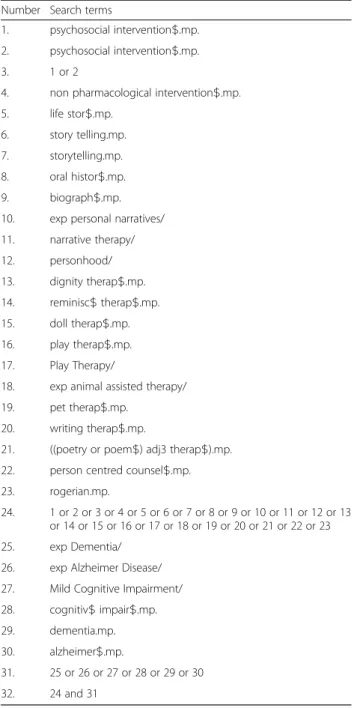
The initial scoping stage was pivotal to allow a search strategy to be developed, which was modified appropriately for the key electronic databases. Please see Table 1 for the search strategy developed for Ovid MEDLINE. The databases consulted for this integra- tive review were: Ovid MEDLINE; Ovid PsycINFO;
Ovid Embase; Ovid Joanna Briggs Institute; CINAHL;
Cochrane Database of Systematic Reviews; and Pro- Quest ASSIA. Searches were carried out between Feb- ruary and March 2015 using a combination of Medical Subject Headings (MeSH)/ EMTREE key words and free text terms. Free text terms were largely set to be identified within the whole docu- ment, but were refined for some databases to be limited to title and abstract, if more appropriate.
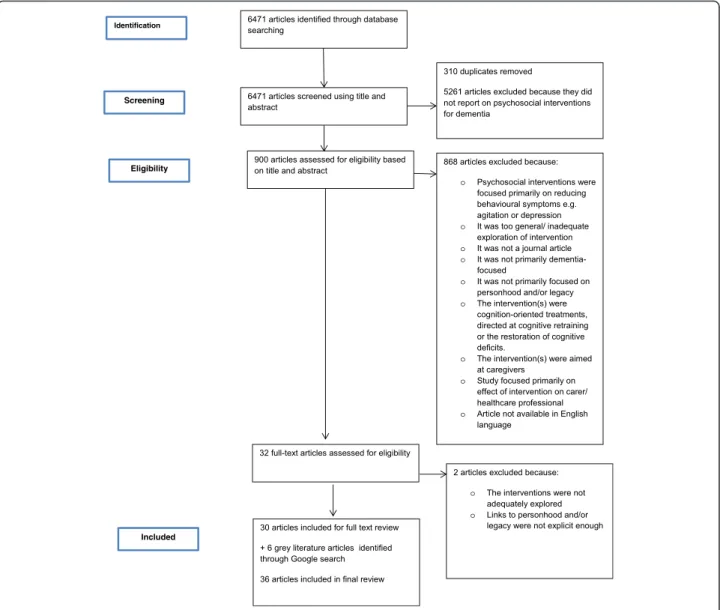
Figure 1 displays a “Preferred Reporting Items for Systematic Reviews and Meta-Analyse” (PRISMA) flow diagram which captures the phases of the integrative review undertaken to reach the final num- ber of included articles. Guidance for producing the
PRISMA diagram were gained from the PRISMA website and divide the process into four steps: “Identification”,
“Screening”,“Eligibility”and“Included”.
Search outcomes
After search strategies were performed, 6471 articles were identified and retrieved. These underwent initial screening by one author (MN), based on title and ab- stract. This resulted in 5261 articles being excluded for not sufficiently focusing on psychosocial interventions in dementia. Articles were exported from host websites of selected databases to Endnote × 6 reference manager.
Table 1MEDLINE search strategy Number Search terms
1. psychosocial intervention$.mp.
2. psychosocial intervention$.mp.
3. 1 or 2
4. non pharmacological intervention$.mp.
5. life stor$.mp.
6. story telling.mp.
7. storytelling.mp.
8. oral histor$.mp.
9. biograph$.mp.
10. exp personal narratives/
11. narrative therapy/
12. personhood/
13. dignity therap$.mp.
14. reminisc$therap$.mp.
15. doll therap$.mp.
16. play therap$.mp.
17. Play Therapy/
18. exp animal assisted therapy/
19. pet therap$.mp.
20. writing therap$.mp.
21. ((poetry or poem$) adj3 therap$).mp.
22. person centred counsel$.mp.
23. rogerian.mp.
24. 1 or 2 or 3 or 4 or 5 or 6 or 7 or 8 or 9 or 10 or 11 or 12 or 13 or 14 or 15 or 16 or 17 or 18 or 19 or 20 or 21 or 22 or 23 25. exp Dementia/
26. exp Alzheimer Disease/
27. Mild Cognitive Impairment/
28. cognitiv$impair$.mp.
29. dementia.mp.
30. alzheimer$.mp.
31. 25 or 26 or 27 or 28 or 29 or 30 32. 24 and 31
This allowed a total of 310 duplicate articles to be iden- tified and removed. This then led to the next stage of assessing eligibility, where two authors (BJ and MN) assessed the remaining articles based on title and ab- stract, against inclusion criteria (please see Table 2). This helped exclude a further 868 articles. Full texts were re- trieved for these remaining articles, which were then assessed against the inclusion criteria. Two articles were excluded through this assessment, which led to 30 full text articles being included in the final review.
In addition to empirical and theoretical research studies, the grey literature was also consulted for relevant papers.
Two authors (BJ and MN) used Google search engine searches to identify and assess the grey literature, against the inclusion criteria, which led to 6 sources of grey litera- ture being included in the final review. Therefore, for the final review 36 articles/reports were included.
Methodological and theoretical rigour of included articles Sources of information were kept broadly open to allow thorough exploration of the full evidence base regard- ing our selected psychosocial interventions. The full spectrum of evidence was accepted, also, because per- sonhood and legacy aspects have not been the foci of previous research regarding psychosocial interventions and dementia. However, some limits were placed to focus on databases renowned for returning results rele- vant to nursing, health and social care-related disci- plines. This approach meant that a methodological assessment of articles was not included, since the na- ture of evidence pertinent to the review enquiry was found to be heterogeneous, with varied empirical and theoretical research identified. Nevertheless, as identi- fied in the initial scoping stage, the theoretical basis of all included interventions was ascertained.
Fig. 1PRISMA flow diagram
Classifying previous research
The full text included articles were then read and ana- lysed for themes which summarised the consistent ideas and patterns present in the data through the use of key words. Analysis was directed to focus on anything rele- vant to addressing the first research question and there- fore centred on legacy and personhood. This has resulted in the themes relating significantly to aspects of legacy and personhood. Analysing the literature in this way enables conceptual constructs to be classified under specific themes, and helps to generate new knowledge.
As a result, this review fulfils the aims of an integrative review [60]. Classifying literature evidence under themes also allows gaps and shortcomings to be apparent, thus helping to inform a future research agenda [39].
Data synthesis
Through the process of classifying previous research, data from the articles were placed appropriately under the relevant developed theme. By presenting the data under themes, this enabled the data to be understood with regards to how the interventions offered the person
with dementia the opportunity to leave a legacy and also how the interventions enhanced personhood.
Results
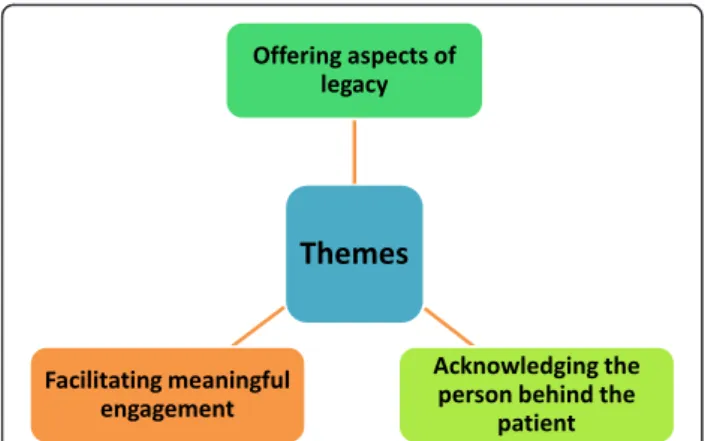
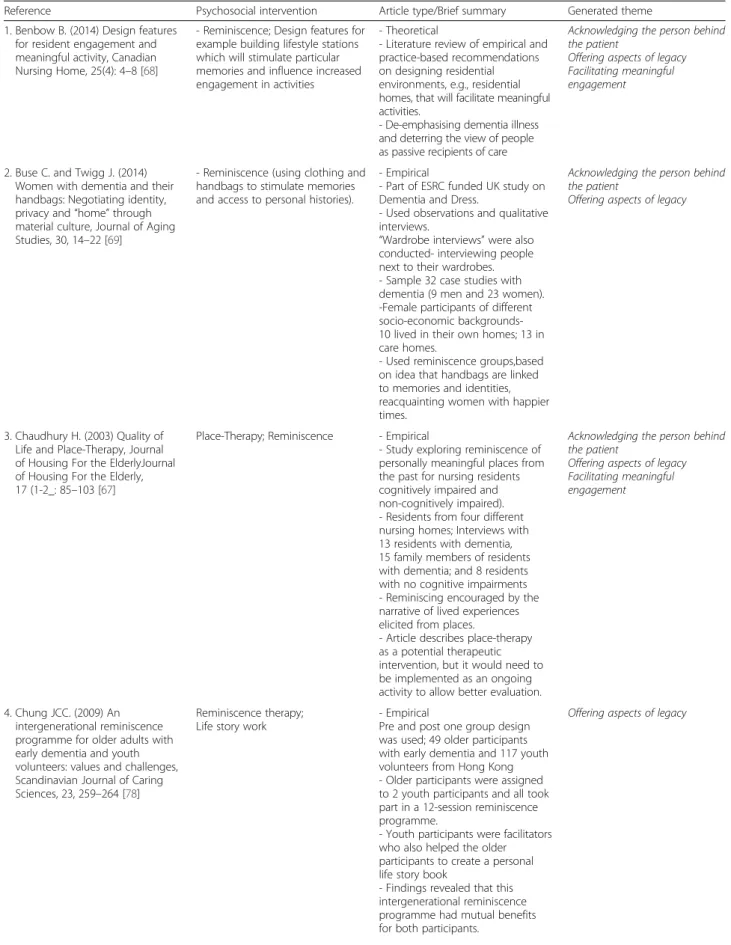
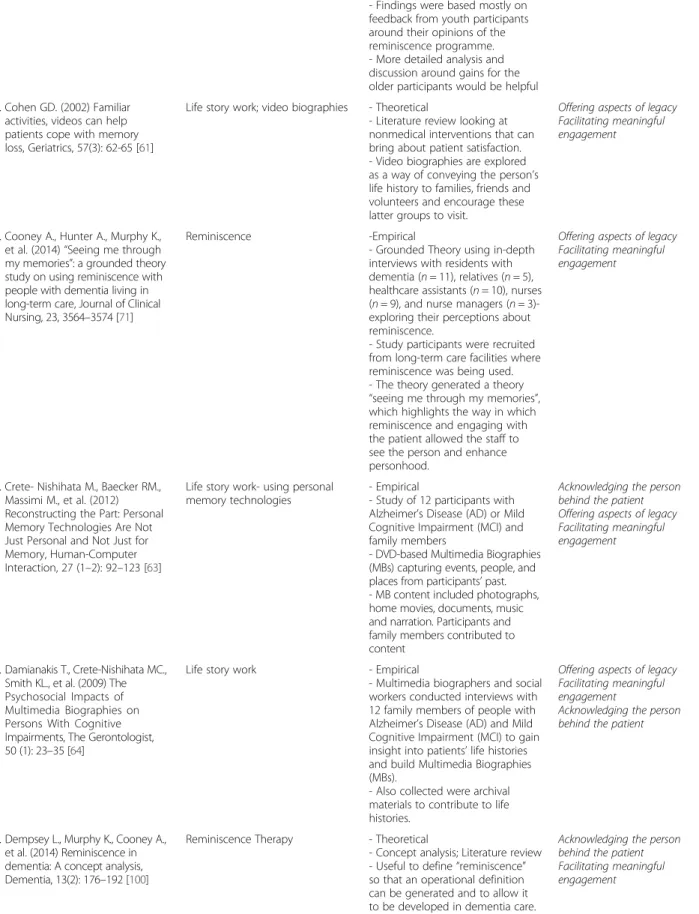
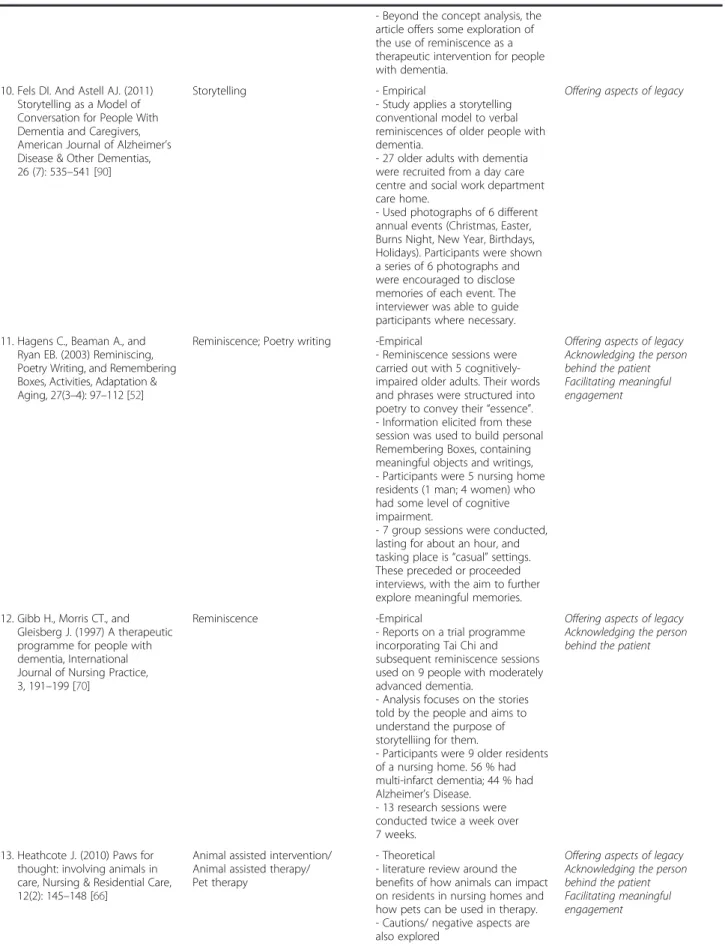
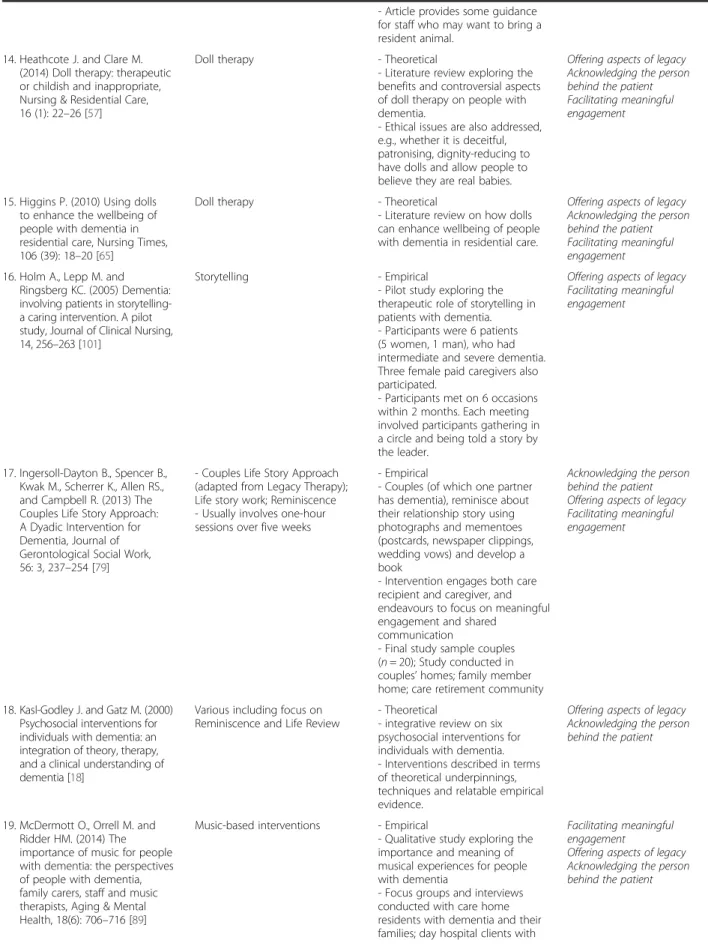
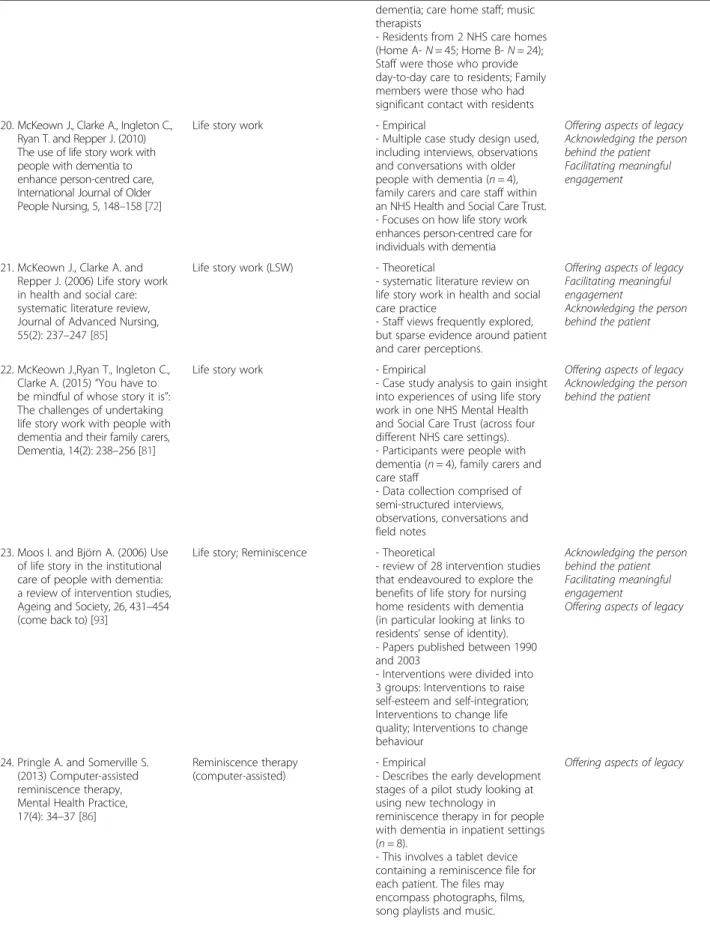
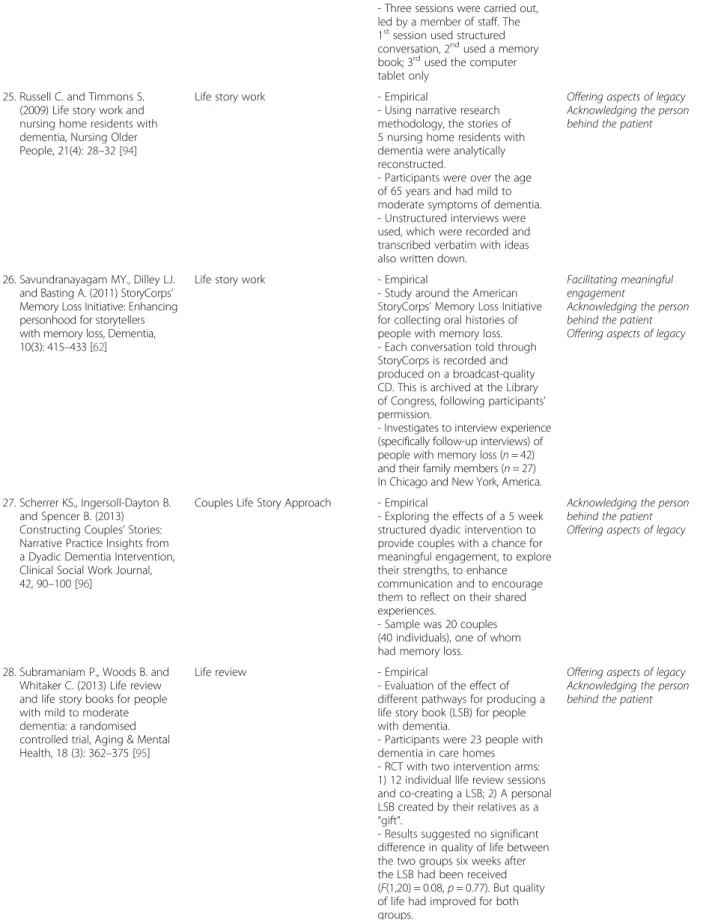
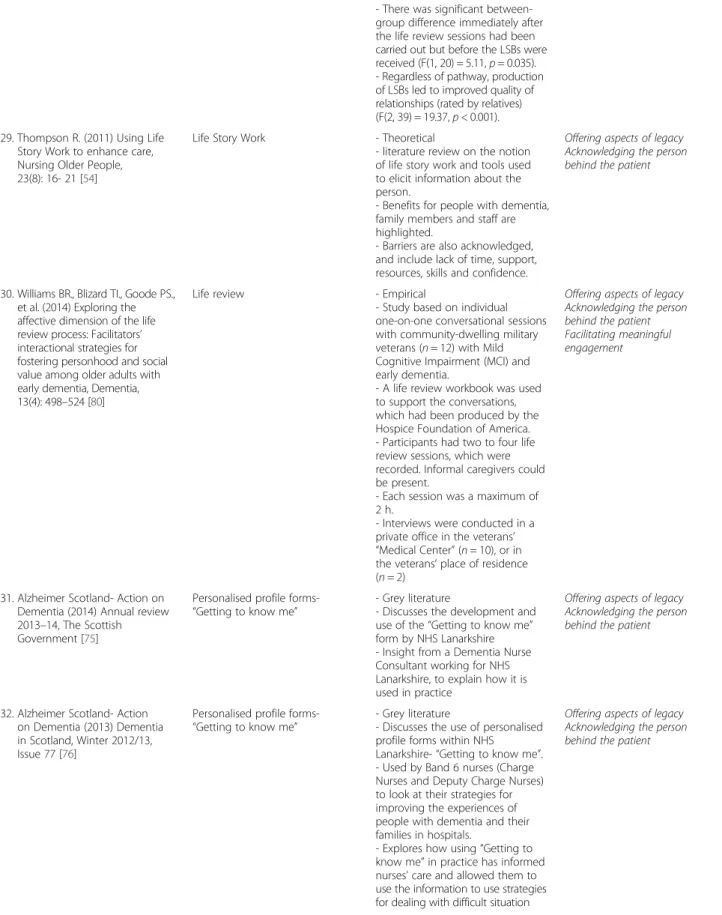
The themes generated from the included articles are captured in Fig. 2 and are indicated for each study in Table 3 where relevant. These themes enable assessment of the interventions in terms of their ability to enhance personhood and offer the potential for legacy (a key aim of this review as indicated in the Methods section).
Offering aspects of legacy captures examples where the psychosocial interventions within the included articles allow the person with dementia to leave a legacy through tangible or non-tangible means or the potential to do so.
It was not always an explicit aim of the article to show or acknowledge how the intervention linked to legacy.
Therefore, offering aspects of legacy is partly based on our (BJ and MN) recognition of the intervention’s legacy potential. Acknowledging the person behind the patient denotes ways in which the interventions enable aspects of the person to come to the fore beyond their illness.
This includes their past and present roles and elements Table 2Inclusion criteria
Inclusion criteria Rationale
Literature published since 1990 Initial scoping indicated that some interventions had relevant literature from the 1990s. Accepting literature from 1990 onwards ensures that key empirical and theoretical evidence on relevant interventions are not missed.
Intervention(s) must be psychosocial in nature i.e., as according to the Oxford English Dictionary definition of psychosocial:“Of or relating to the interrelation of social factors and individual thought and behaviour” (OED, 2015).
The review is focused on psychosocial intervention(s) for people with dementia
Intervention(s) must be non-pharmacological The review is not concerned with drug-related interventions and therefore focuses on non-pharmacological intervention(s) only Intervention(s) must have the potential to enhance personhood and
enable the person to leave a legacy
Personhood and legacy factors are major foci of this review.
Intervention(s) must be designed for human adults with dementia The review is concerned with relevant psychosocial intervention(s) that are used on adults with dementia. For the purposes of this review, dementia is understood in accordance with the definition present on Alzheimer’s Society’s (2015) website:“a set of symptoms that may include memory loss and difficulties with thinking, problem-solving or language”. Describes the results of empirical and theoretical research studies This review is concerned with identifying, appraising, and synthesising
best available evidence. As such empirical studies are deemed the strongest source of evidence-base. Theoretical studies are also included if evidence was deemed relevant.
Consults evidence from grey literature Initial scoping suggested that some psychosocial interventions used for people with dementia have not have been theoretically and/or empirically investigated. Therefore, grey literature provides the best insight into these particular interventions. For the purposes of this review, grey literature is understood to be literature that has not formally been published in sources such as books or journal articles (as advised in the Cochrane Handbook, 2011)
English language Budgetary constraints have meant that only English texts can be reviewed,
to save on translation costs
An exclusively Western focus The findings of this review will contribute to recommendations for health and social care practice and future research avenues. These will be made with Western settings in mind.
of identity. This was seen to contribute to insights into both legacy and personhood. Finally Facilitating mean- ingful engagement focuses on the person’s response to the intervention, with regards to participation, enjoy- ment and enhancement of personhood.
Offering aspects of legacy
The identified psychosocial interventions that directly allowed people with dementia to leave a legacy were life story work and reminiscence therapy. In most cases, this materialised as a tangible document, such as, a life story book, which contained photographs, text, postcards, letters and memorabilia [18].
Moreover, there were also variations such as memory boxes [52], video biographies [61], multimedia biograph- ies and CD recordings [62–64]. Memory boxes allowed meaningful objects to be contained beyond photographs, for example a smoking pipe [52]. Hagens et al. [52]
study involved reminiscence sessions with five older adults who had cognitive impairment. Participants’
words and phrases were incorporated into a personal poem. In addition, Remembering Boxes were also pro- duced to include meaningful objects and writings. The poems and Remembering Boxes came to be person- centred communication tools since they helped staff to learn more about residents, serving to be particularly useful when the latter were sleepless or agitated. The poems were framed and were placed in the residents’
rooms along with the Remembering Boxes. Both tangible objects were found to provide staff with insights into the residents and encouraged staff to take further interest in the resident. Moreover, in contrast with books and boxes, some tangible objects did not always convey an obvious biographical narrative. For example, interven- tions such as doll therapy [57, 65], animal therapy [66], place therapy [67] and object-stimulated reminiscence therapy [68–70], served to enable reminiscence of earlier life experiences, as opposed to conveying experiences immediately, as with a book. The legacy component
could be inferred in the fact that the resulting reminis- cing allowed insight into people’s identity and selves, which had been unknown previously to family members and healthcare professionals [52, 54, 57, 64, 71]. In some cases, knowledge of the person’s life story gave care- givers guidance to implement person-centred care and helped them to understand reasons behind people’s behaviour and learn what was important to them in the present [71, 72].
Furthermore, the grey literature provided insight into how life story work has been adapted for different healthcare settings. This has led to personalised profile form versions such as “This is me” [55, 73, 74] and
“Getting to know me”[75–77]. These personalised forms allow people with dementia (often on admission to hos- pital settings) to provide a snapshot of themselves by inserting brief information in response to questions on the forms. An RCN resource [55] highlighted “This is me”as a version of the life story books that usually ma- terialise from life reviews, thus making a link to an established, evidence-based body of work. This RCN resource suggests that personalised profile forms may be more amenable to hospital settings compared to life story books, due to their brief form and the fact that they are quick to fill in. However, there was also recogni- tion that such forms should be appropriate for use in any setting where professional care is being received [73]. The grey literature confirmed that such persona- lised profile forms were present in patient health re- cords, which highlights that they may be applicable to clinical practice. [77]. Moreover, one source recom- mended personalised profile forms to be used in practice in all settings catering for people with dementia, as a way of promoting dignity [74]. The legacy component for such forms can be seen as preserving the personal preferences of patients as individuals and letting these be known to people caring for them.
Where there was a legacy component inherent in the intervention, this was referred to in some of the studies [18, 62, 64, 78–80] and the intervention was com- mended for allowing the person’s life story to be in a form that could endure, be revisited, prevail and be accessed by future generations within and out of the family. This was largely the case for life story work inter- ventions, where in most cases, a life story book, in some form or another, is produced. Cohen’s [61] literature re- view described life story products, such as video biog- raphies, as an exit gift. Savundranayagam et al. [62]
empirically explored a life story initiative known as StoryCorps, which aims to preserve a record of the life stories of people with memory loss by means of broad- cast CDs. Some family members declared that they would save listening to the CD for when their loved one died. Moreover, family members often saw this strategy
Fig. 2Themes generated from the included articles
Table 3Overview of included articles
Reference Psychosocial intervention Article type/Brief summary Generated theme
1. Benbow B. (2014) Design features for resident engagement and meaningful activity, Canadian Nursing Home, 25(4): 4–8 [68]
- Reminiscence; Design features for example building lifestyle stations which will stimulate particular memories and influence increased engagement in activities
- Theoretical
- Literature review of empirical and practice-based recommendations on designing residential environments, e.g., residential homes, that will facilitate meaningful activities.
- De-emphasising dementia illness and deterring the view of people as passive recipients of care
Acknowledging the person behind the patient
Offering aspects of legacy Facilitating meaningful engagement
2. Buse C. and Twigg J. (2014) Women with dementia and their handbags: Negotiating identity, privacy and“home”through material culture, Journal of Aging Studies, 30, 14–22 [69]
- Reminiscence (using clothing and handbags to stimulate memories and access to personal histories).
- Empirical
- Part of ESRC funded UK study on Dementia and Dress.
- Used observations and qualitative interviews.
“Wardrobe interviews”were also conducted- interviewing people next to their wardrobes.
- Sample 32 case studies with dementia (9 men and 23 women).
-Female participants of different socio-economic backgrounds- 10 lived in their own homes; 13 in care homes.
- Used reminiscence groups,based on idea that handbags are linked to memories and identities, reacquainting women with happier times.
Acknowledging the person behind the patient
Offering aspects of legacy
3. Chaudhury H. (2003) Quality of Life and Place-Therapy, Journal of Housing For the ElderlyJournal of Housing For the Elderly, 17 (1-2_: 85–103 [67]
Place-Therapy; Reminiscence - Empirical
- Study exploring reminiscence of personally meaningful places from the past for nursing residents cognitively impaired and non-cognitively impaired).
- Residents from four different nursing homes; Interviews with 13 residents with dementia, 15 family members of residents with dementia; and 8 residents with no cognitive impairments - Reminiscing encouraged by the narrative of lived experiences elicited from places.
- Article describes place-therapy as a potential therapeutic intervention, but it would need to be implemented as an ongoing activity to allow better evaluation.
Acknowledging the person behind the patient
Offering aspects of legacy Facilitating meaningful engagement
4. Chung JCC. (2009) An intergenerational reminiscence programme for older adults with early dementia and youth volunteers: values and challenges, Scandinavian Journal of Caring Sciences, 23, 259–264 [78]
Reminiscence therapy;
Life story work
- Empirical
Pre and post one group design was used; 49 older participants with early dementia and 117 youth volunteers from Hong Kong - Older participants were assigned to 2 youth participants and all took part in a 12-session reminiscence programme.
- Youth participants were facilitators who also helped the older participants to create a personal life story book
- Findings revealed that this intergenerational reminiscence programme had mutual benefits for both participants.
Offering aspects of legacy
Table 3Overview of included articles(Continued)
- Findings were based mostly on feedback from youth participants around their opinions of the reminiscence programme.
- More detailed analysis and discussion around gains for the older participants would be helpful 5. Cohen GD. (2002) Familiar
activities, videos can help patients cope with memory loss, Geriatrics, 57(3): 62-65 [61]
Life story work; video biographies - Theoretical
- Literature review looking at nonmedical interventions that can bring about patient satisfaction.
- Video biographies are explored as a way of conveying the person’s life history to families, friends and volunteers and encourage these latter groups to visit.
Offering aspects of legacy Facilitating meaningful engagement
6. Cooney A., Hunter A., Murphy K., et al. (2014)“Seeing me through my memories”: a grounded theory study on using reminiscence with people with dementia living in long-term care, Journal of Clinical Nursing, 23, 3564–3574 [71]
Reminiscence -Empirical
- Grounded Theory using in-depth interviews with residents with dementia (n= 11), relatives (n= 5), healthcare assistants (n= 10), nurses (n= 9), and nurse managers (n= 3)- exploring their perceptions about reminiscence.
- Study participants were recruited from long-term care facilities where reminiscence was being used.
- The theory generated a theory
“seeing me through my memories”, which highlights the way in which reminiscence and engaging with the patient allowed the staff to see the person and enhance personhood.
Offering aspects of legacy Facilitating meaningful engagement
7. Crete- Nishihata M., Baecker RM., Massimi M., et al. (2012) Reconstructing the Part: Personal Memory Technologies Are Not Just Personal and Not Just for Memory, Human-Computer Interaction, 27 (1–2): 92–123 [63]
Life story work- using personal memory technologies
- Empirical
- Study of 12 participants with Alzheimer’s Disease (AD) or Mild Cognitive Impairment (MCI) and family members
- DVD-based Multimedia Biographies (MBs) capturing events, people, and places from participants’past.
- MB content included photographs, home movies, documents, music and narration. Participants and family members contributed to content
Acknowledging the person behind the patient Offering aspects of legacy Facilitating meaningful engagement
8. Damianakis T., Crete-Nishihata MC., Smith KL., et al. (2009) The Psychosocial Impacts of Multimedia Biographies on Persons With Cognitive Impairments, The Gerontologist, 50 (1): 23–35 [64]
Life story work - Empirical
- Multimedia biographers and social workers conducted interviews with 12 family members of people with Alzheimer’s Disease (AD) and Mild Cognitive Impairment (MCI) to gain insight into patients’life histories and build Multimedia Biographies (MBs).
- Also collected were archival materials to contribute to life histories.
Offering aspects of legacy Facilitating meaningful engagement
Acknowledging the person behind the patient
9. Dempsey L., Murphy K., Cooney A., et al. (2014) Reminiscence in dementia: A concept analysis, Dementia, 13(2): 176–192 [100]
Reminiscence Therapy - Theoretical
- Concept analysis; Literature review - Useful to define“reminiscence” so that an operational definition can be generated and to allow it to be developed in dementia care.
Acknowledging the person behind the patient Facilitating meaningful engagement
Table 3Overview of included articles(Continued)
- Beyond the concept analysis, the article offers some exploration of the use of reminiscence as a therapeutic intervention for people with dementia.
10. Fels DI. And Astell AJ. (2011) Storytelling as a Model of Conversation for People With Dementia and Caregivers, American Journal of Alzheimer’s Disease & Other Dementias, 26 (7): 535–541 [90]
Storytelling - Empirical
- Study applies a storytelling conventional model to verbal reminiscences of older people with dementia.
- 27 older adults with dementia were recruited from a day care centre and social work department care home.
- Used photographs of 6 different annual events (Christmas, Easter, Burns Night, New Year, Birthdays, Holidays). Participants were shown a series of 6 photographs and were encouraged to disclose memories of each event. The interviewer was able to guide participants where necessary.
Offering aspects of legacy
11. Hagens C., Beaman A., and Ryan EB. (2003) Reminiscing, Poetry Writing, and Remembering Boxes, Activities, Adaptation &
Aging, 27(3–4): 97–112 [52]
Reminiscence; Poetry writing -Empirical
- Reminiscence sessions were carried out with 5 cognitively- impaired older adults. Their words and phrases were structured into poetry to convey their“essence”. - Information elicited from these session was used to build personal Remembering Boxes, containing meaningful objects and writings, - Participants were 5 nursing home residents (1 man; 4 women) who had some level of cognitive impairment.
- 7 group sessions were conducted, lasting for about an hour, and tasking place is“casual”settings.
These preceded or proceeded interviews, with the aim to further explore meaningful memories.
Offering aspects of legacy Acknowledging the person behind the patient Facilitating meaningful engagement
12. Gibb H., Morris CT., and Gleisberg J. (1997) A therapeutic programme for people with dementia, International Journal of Nursing Practice, 3, 191–199 [70]
Reminiscence -Empirical
- Reports on a trial programme incorporating Tai Chi and subsequent reminiscence sessions used on 9 people with moderately advanced dementia.
- Analysis focuses on the stories told by the people and aims to understand the purpose of storytelliing for them.
- Participants were 9 older residents of a nursing home. 56 % had multi-infarct dementia; 44 % had Alzheimer’s Disease.
- 13 research sessions were conducted twice a week over 7 weeks.
Offering aspects of legacy Acknowledging the person behind the patient
13. Heathcote J. (2010) Paws for thought: involving animals in care, Nursing & Residential Care, 12(2): 145–148 [66]
Animal assisted intervention/
Animal assisted therapy/
Pet therapy
- Theoretical
- literature review around the benefits of how animals can impact on residents in nursing homes and how pets can be used in therapy.
- Cautions/ negative aspects are also explored
Offering aspects of legacy Acknowledging the person behind the patient Facilitating meaningful engagement
Table 3Overview of included articles(Continued)
- Article provides some guidance for staff who may want to bring a resident animal.
14. Heathcote J. and Clare M.
(2014) Doll therapy: therapeutic or childish and inappropriate, Nursing & Residential Care, 16 (1): 22–26 [57]
Doll therapy - Theoretical
- Literature review exploring the benefits and controversial aspects of doll therapy on people with dementia.
- Ethical issues are also addressed, e.g., whether it is deceitful, patronising, dignity-reducing to have dolls and allow people to believe they are real babies.
Offering aspects of legacy Acknowledging the person behind the patient Facilitating meaningful engagement
15. Higgins P. (2010) Using dolls to enhance the wellbeing of people with dementia in residential care, Nursing Times, 106 (39): 18–20 [65]
Doll therapy - Theoretical
- Literature review on how dolls can enhance wellbeing of people with dementia in residential care.
Offering aspects of legacy Acknowledging the person behind the patient Facilitating meaningful engagement 16. Holm A., Lepp M. and
Ringsberg KC. (2005) Dementia:
involving patients in storytelling- a caring intervention. A pilot study, Journal of Clinical Nursing, 14, 256–263 [101]
Storytelling - Empirical
- Pilot study exploring the therapeutic role of storytelling in patients with dementia.
- Participants were 6 patients (5 women, 1 man), who had intermediate and severe dementia.
Three female paid caregivers also participated.
- Participants met on 6 occasions within 2 months. Each meeting involved participants gathering in a circle and being told a story by the leader.
Offering aspects of legacy Facilitating meaningful engagement
17. Ingersoll-Dayton B., Spencer B., Kwak M., Scherrer K., Allen RS., and Campbell R. (2013) The Couples Life Story Approach:
A Dyadic Intervention for Dementia, Journal of Gerontological Social Work, 56: 3, 237–254 [79]
- Couples Life Story Approach (adapted from Legacy Therapy);
Life story work; Reminiscence - Usually involves one-hour sessions over five weeks
- Empirical
- Couples (of which one partner has dementia), reminisce about their relationship story using photographs and mementoes (postcards, newspaper clippings, wedding vows) and develop a book
- Intervention engages both care recipient and caregiver, and endeavours to focus on meaningful engagement and shared
communication
- Final study sample couples (n= 20); Study conducted in couples’homes; family member home; care retirement community
Acknowledging the person behind the patient Offering aspects of legacy Facilitating meaningful engagement
18. Kasl-Godley J. and Gatz M. (2000) Psychosocial interventions for individuals with dementia: an integration of theory, therapy, and a clinical understanding of dementia [18]
Various including focus on Reminiscence and Life Review
- Theoretical
- integrative review on six psychosocial interventions for individuals with dementia.
- Interventions described in terms of theoretical underpinnings, techniques and relatable empirical evidence.
Offering aspects of legacy Acknowledging the person behind the patient
19. McDermott O., Orrell M. and Ridder HM. (2014) The importance of music for people with dementia: the perspectives of people with dementia, family carers, staff and music therapists, Aging & Mental Health, 18(6): 706–716 [89]
Music-based interventions - Empirical
- Qualitative study exploring the importance and meaning of musical experiences for people with dementia
- Focus groups and interviews conducted with care home residents with dementia and their families; day hospital clients with
Facilitating meaningful engagement
Offering aspects of legacy Acknowledging the person behind the patient
Table 3Overview of included articles(Continued)
dementia; care home staff; music therapists
- Residents from 2 NHS care homes (Home A-N= 45; Home B-N= 24);
Staff were those who provide day-to-day care to residents; Family members were those who had significant contact with residents 20. McKeown J., Clarke A., Ingleton C.,
Ryan T. and Repper J. (2010) The use of life story work with people with dementia to enhance person-centred care, International Journal of Older People Nursing, 5, 148–158 [72]
Life story work - Empirical
- Multiple case study design used, including interviews, observations and conversations with older people with dementia (n= 4), family carers and care staff within an NHS Health and Social Care Trust.
- Focuses on how life story work enhances person-centred care for individuals with dementia
Offering aspects of legacy Acknowledging the person behind the patient Facilitating meaningful engagement
21. McKeown J., Clarke A. and Repper J. (2006) Life story work in health and social care:
systematic literature review, Journal of Advanced Nursing, 55(2): 237–247 [85]
Life story work (LSW) - Theoretical
- systematic literature review on life story work in health and social care practice
- Staff views frequently explored, but sparse evidence around patient and carer perceptions.
Offering aspects of legacy Facilitating meaningful engagement
Acknowledging the person behind the patient
22. McKeown J.,Ryan T., Ingleton C., Clarke A. (2015)“You have to be mindful of whose story it is”: The challenges of undertaking life story work with people with dementia and their family carers, Dementia, 14(2): 238–256 [81]
Life story work - Empirical
- Case study analysis to gain insight into experiences of using life story work in one NHS Mental Health and Social Care Trust (across four different NHS care settings).
- Participants were people with dementia (n= 4), family carers and care staff
- Data collection comprised of semi-structured interviews, observations, conversations and field notes
Offering aspects of legacy Acknowledging the person behind the patient
23. Moos I. and Björn A. (2006) Use of life story in the institutional care of people with dementia:
a review of intervention studies, Ageing and Society, 26, 431–454 (come back to) [93]
Life story; Reminiscence - Theoretical
- review of 28 intervention studies that endeavoured to explore the benefits of life story for nursing home residents with dementia (in particular looking at links to residents’sense of identity).
- Papers published between 1990 and 2003
- Interventions were divided into 3 groups: Interventions to raise self-esteem and self-integration;
Interventions to change life quality; Interventions to change behaviour
Acknowledging the person behind the patient Facilitating meaningful engagement
Offering aspects of legacy
24. Pringle A. and Somerville S.
(2013) Computer-assisted reminiscence therapy, Mental Health Practice, 17(4): 34–37 [86]
Reminiscence therapy (computer-assisted)
- Empirical
- Describes the early development stages of a pilot study looking at using new technology in reminiscence therapy in for people with dementia in inpatient settings (n= 8).
- This involves a tablet device containing a reminiscence file for each patient. The files may encompass photographs, films, song playlists and music.
Offering aspects of legacy
Table 3Overview of included articles(Continued)
- Three sessions were carried out, led by a member of staff. The 1stsession used structured conversation, 2ndused a memory book; 3rdused the computer tablet only
25. Russell C. and Timmons S.
(2009) Life story work and nursing home residents with dementia, Nursing Older People, 21(4): 28–32 [94]
Life story work - Empirical
- Using narrative research methodology, the stories of 5 nursing home residents with dementia were analytically reconstructed.
- Participants were over the age of 65 years and had mild to moderate symptoms of dementia.
- Unstructured interviews were used, which were recorded and transcribed verbatim with ideas also written down.
Offering aspects of legacy Acknowledging the person behind the patient
26. Savundranayagam MY., Dilley LJ.
and Basting A. (2011) StoryCorps’ Memory Loss Initiative: Enhancing personhood for storytellers with memory loss, Dementia, 10(3): 415–433 [62]
Life story work - Empirical
- Study around the American StoryCorps’Memory Loss Initiative for collecting oral histories of people with memory loss.
- Each conversation told through StoryCorps is recorded and produced on a broadcast-quality CD. This is archived at the Library of Congress, following participants’ permission.
- Investigates to interview experience (specifically follow-up interviews) of people with memory loss (n= 42) and their family members (n= 27) In Chicago and New York, America.
Facilitating meaningful engagement
Acknowledging the person behind the patient Offering aspects of legacy
27. Scherrer KS., Ingersoll-Dayton B.
and Spencer B. (2013) Constructing Couples’Stories:
Narrative Practice Insights from a Dyadic Dementia Intervention, Clinical Social Work Journal, 42, 90–100 [96]
Couples Life Story Approach - Empirical
- Exploring the effects of a 5 week structured dyadic intervention to provide couples with a chance for meaningful engagement, to explore their strengths, to enhance communication and to encourage them to reflect on their shared experiences.
- Sample was 20 couples (40 individuals), one of whom had memory loss.
Acknowledging the person behind the patient Offering aspects of legacy
28. Subramaniam P., Woods B. and Whitaker C. (2013) Life review and life story books for people with mild to moderate dementia: a randomised controlled trial, Aging & Mental Health, 18 (3): 362–375 [95]
Life review - Empirical
- Evaluation of the effect of different pathways for producing a life story book (LSB) for people with dementia.
- Participants were 23 people with dementia in care homes - RCT with two intervention arms:
1) 12 individual life review sessions and co-creating a LSB; 2) A personal LSB created by their relatives as a
“gift”.
- Results suggested no significant difference in quality of life between the two groups six weeks after the LSB had been received (F(1,20) = 0.08,p= 0.77). But quality of life had improved for both groups.
Offering aspects of legacy Acknowledging the person behind the patient
Table 3Overview of included articles(Continued)
- There was significant between- group difference immediately after the life review sessions had been carried out but before the LSBs were received (F(1, 20) = 5.11,p= 0.035).
- Regardless of pathway, production of LSBs led to improved quality of relationships (rated by relatives) (F(2, 39) = 19.37,p< 0.001).
29. Thompson R. (2011) Using Life Story Work to enhance care, Nursing Older People, 23(8): 16- 21 [54]
Life Story Work - Theoretical
- literature review on the notion of life story work and tools used to elicit information about the person.
- Benefits for people with dementia, family members and staff are highlighted.
- Barriers are also acknowledged, and include lack of time, support, resources, skills and confidence.
Offering aspects of legacy Acknowledging the person behind the patient
30. Williams BR., Blizard TI., Goode PS., et al. (2014) Exploring the affective dimension of the life review process: Facilitators’ interactional strategies for fostering personhood and social value among older adults with early dementia, Dementia, 13(4): 498–524 [80]
Life review - Empirical
- Study based on individual one-on-one conversational sessions with community-dwelling military veterans (n= 12) with Mild Cognitive Impairment (MCI) and early dementia.
- A life review workbook was used to support the conversations, which had been produced by the Hospice Foundation of America.
- Participants had two to four life review sessions, which were recorded. Informal caregivers could be present.
- Each session was a maximum of 2 h.
- Interviews were conducted in a private office in the veterans’
“Medical Center”(n= 10), or in the veterans’place of residence (n= 2)
Offering aspects of legacy Acknowledging the person behind the patient Facilitating meaningful engagement
31. Alzheimer Scotland- Action on Dementia (2014) Annual review 2013–14, The Scottish Government [75]
Personalised profile forms-
“Getting to know me” - Grey literature
- Discusses the development and use of the“Getting to know me” form by NHS Lanarkshire - Insight from a Dementia Nurse Consultant working for NHS Lanarkshire, to explain how it is used in practice
Offering aspects of legacy Acknowledging the person behind the patient
32. Alzheimer Scotland- Action on Dementia (2013) Dementia in Scotland, Winter 2012/13, Issue 77 [76]
Personalised profile forms-
“Getting to know me” - Grey literature
- Discusses the use of personalised profile forms within NHS Lanarkshire-“Getting to know me”. - Used by Band 6 nurses (Charge Nurses and Deputy Charge Nurses) to look at their strategies for improving the experiences of people with dementia and their families in hospitals.
- Explores how using“Getting to know me”in practice has informed nurses’care and allowed them to use the information to use strategies for dealing with difficult situation
Offering aspects of legacy Acknowledging the person behind the patient