INTRODUCTION
Benefits of quality
Getting things right the first time means reduced rework and product failure, resulting in cost savings. Once problems are identified, actions can be taken to improve the service or product.
Continuous quality improvement
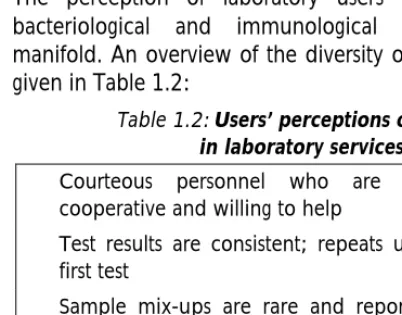
Users’ Perception of health laboratory services
From this developed a broader picture of quality and concepts such as good laboratory practice (GLP) followed by customer satisfaction. Although user perception of quality is important, it is only a small part of a comprehensive quality assurance program.
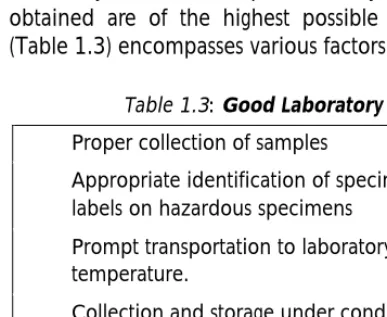
Good laboratory practices
The needs and benefits of quality assurance have been amply demonstrated in those countries that have established national quality assurance programs.
International standards organization
Traceability
Clear definitions of the criteria on which the results will be based must be established by the organizer. The objective of the exercise should be to audit the quality of the system and not the staff.
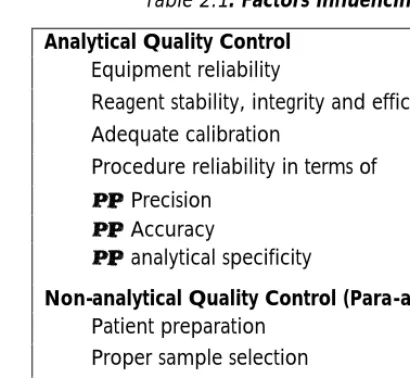
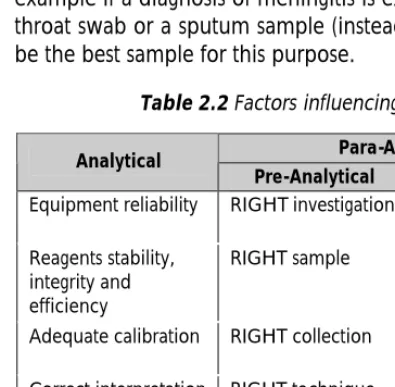
FACTORS INFLUENCING QUALITY
Pre-analytical factors
The sample for analysis of a particular analyte must be sent to the appropriate laboratory performing that particular study. A laboratory that does not perform a test and still receives the samples for analysis causes excessive delay and a deterioration in the quality of the sample.

Analytical factors
Post-analytical factors
The purpose of the validation and the user requirements must be clear (what does the user want it to do and what does it need to be able to do it?). The frequency of performing quality control procedures should be determined from the experience of the laboratory.
OVERVIEW OF QUALITY ASSURANCE
Quality assurance
Quality assurance is a broad concept that encompasses all matters that individually or collectively affect the quality of a product. It is a set of arrangements to ensure that the quality of the product is as required for its intended use.
QUality assurance programme
Quality assurance (QA) in bacteriology and immunology encompasses a broad spectrum from monitoring the performance of equipment and reagents to examining the clinical value of services and information.
Objectives of quality assurance
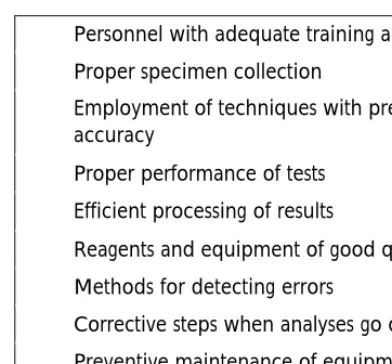
Components of a quality assurance programme
The fundamental purpose of quality assurance is to generate user confidence in the final report.
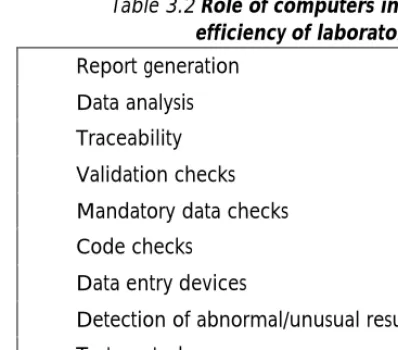
Computers in quality assurance
The statistical analysis of the results and the methods of displaying them should be easily understood by all participating laboratories. The choice of cleaning agent to be used depends on the nature of the contamination.
QUALITY SYSTEM
Key elements
The quality system of the laboratory will define, document and maintain procedures to control all documents and information (from internal and external resources). The quality system is only as good as the staff who actually work with it.
Development of a quality system
The results of the test must therefore be constantly monitored by a quality control program, which should be considered part of the procedure itself.
ORGANIZATION AND FUNCTIONS OF LABORATORIES
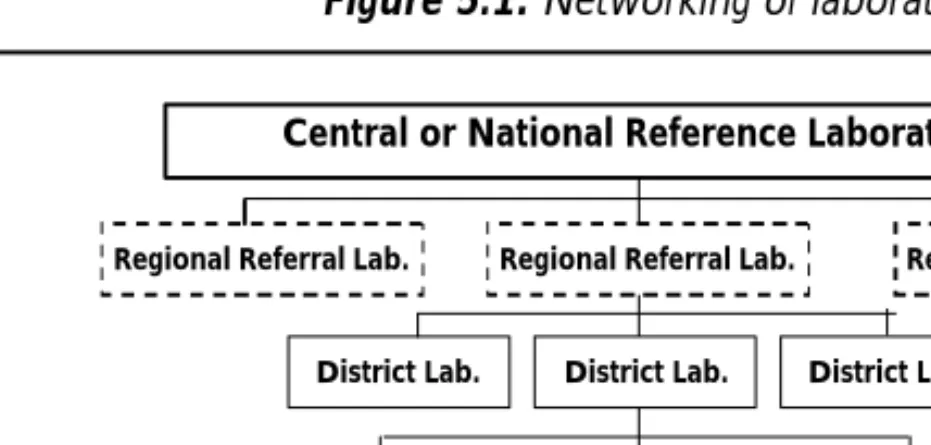
Peripheral laboratory services
Staffing in peripheral laboratories should include at least one technician and one laboratory technician/attendant. Peripheral laboratories are expected to perform tests of public health and clinical relevance.
Intermediate laboratory services
Rapid diagnostic tests for Detection of HBsAg for hepatitis B, HIV antibody, Meningococcal antigen KOH preparation of.
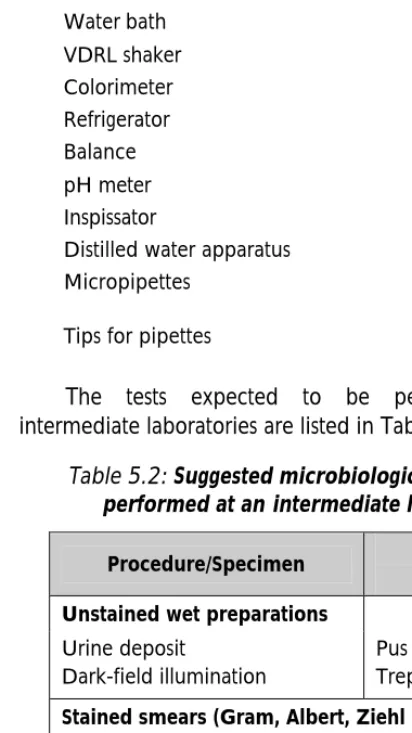
Rapid diagnostic tests at peripheral and intermediate
Laboratories should be encouraged to test samples in the same routine manner as for other similar samples.
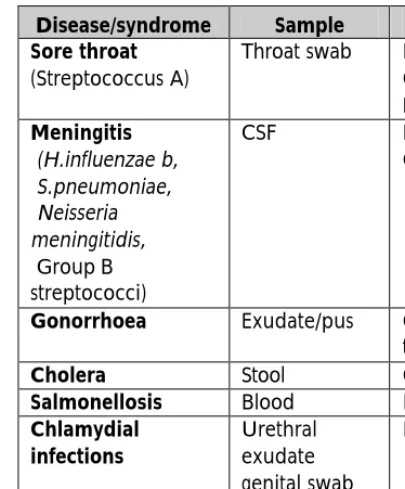
DOCUMENTATION IN THE LABORATORY
Value of documentation
Types of documentation
Layers of documentation
Documentation structure
Review and revision
Document control
Proof of issue and the proof of the recipient who received the document are also documented. To identify the controlled copies of the document, they must either be written with "CONTROLLED".
Dangers of overdocumentation
Laboratory records
STANDARD OPERATING PROCEDURES
Structure of SOP
Each SOP should have two broad parts: one provides information about the SOP and the other describes the procedures themselves.
Dos and don’ts on SOPs
VALIDATION
Definition
Process of validation
ASSESSMENT OF QUALITY
Monitoring
The decision on what to monitor depends on the work area and activities. Once the decision is made to monitor and what to monitor, the question is how to collect the relevant data and analyze the same.
Assessment of quality
The external quality assessment scheme compares the performance of different test sites and challenges other components of the quality assurance system (internal quality control). The material supplied must be homogeneous, so that all participating laboratories receive the same material.
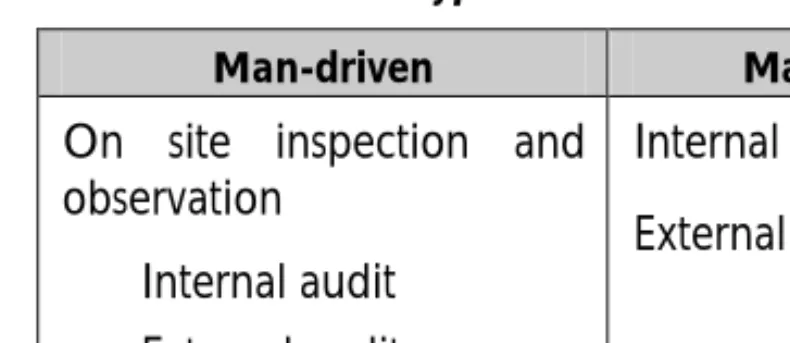
Organization of EQAS
A frequency distribution should be chosen that allows good preparation of the material to be distributed and careful analysis of the results of the laboratories. The important point is that the participants must be fully aware of these criteria and of the calculations that the organizer will make.
Scoring system in EQA
The presentation of the analysis of results should be clear and precise so that the participants can easily assess the quality of their work and correct errors where necessary. Such scoring systems can allow assessment of trends in interlaboratory agreement, and provide means of assessing the overall success of the scheme in stimulating improvement.
Internal quality assessment
If contaminants appear in the medium due to inadequate sterilization, a new batch must be obtained. In addition, sterility indicators (chemical or biological) should be used in hot air ovens.
QUALITY AUDIT AND ACCREDITATION
Quality audit
External audits (2nd party audits) are usually supplier audits carried out to ensure that the goods supplied are of the required standard. Auditors must observe and inspect the following factors to assess the quality of the laboratory's overall operation.
Accreditation of laboratories
AR chemicals are of very high purity and, when available, should be used in all analyzes in the clinical laboratory. Each batch of medium, whether prepared in the laboratory or received from a commercial source, must be sampled for sterility.
SAFETY IN THE LABORATORY
Practice of laboratory safety
The storage area for flammable substances must be equipped with explosion-proof electrical switches and fittings and suitable fire extinguishers. To prevent this, all electrical equipment must be grounded; information about the location of the main switch must be clearly visible and an uninterrupted power source must be available.
Biohazard levels
However, many agents not associated with the disease process in humans may prove to be opportunistic pathogens capable of causing infection in the very young, the elderly, and immune-compromised or immunosuppressed individuals. These practices, equipment and facilities are applicable to clinical, diagnostic, educational and other facilities working with a broad spectrum of indigenous, moderate risk agents present in the community and associated with human disease of varying severity.
Administrative responsibility
Eating, drinking or smoking must not be done in any work area of a microbiology laboratory. Pans with solid bottoms and side walls and/or instrument carts or trolleys must be used for the transfer.
Accidents in the laboratory
Categories of pathogens
Laboratory exposure rarely causes infection and effective prophylaxis or treatment is available (eg, Salmonellae, Staphylococcus aureus, hepatitis B). There is a high risk of spread in the community and usually no effective treatment or prophylaxis is available (eg Ebola virus, yellow fever virus).
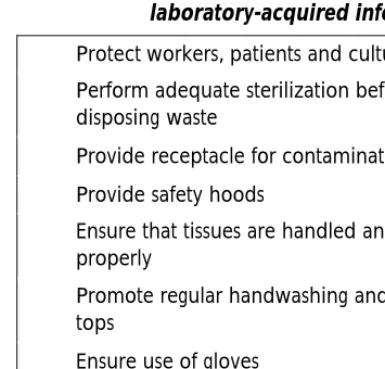
Laboratory-acquired infections
An adequately equipped first aid kit must be available in the laboratory in a place known and accessible to all employees. A first aid chart must be prepared and displayed in the laboratory, detailing the immediate treatment of cuts, burns, poisoning, shock and collapse.
General laboratory directions
The box should be clearly marked and preferably made of metal or plastic to prevent damage by pests.
Waste management
Dehydration of the medium can be reduced by preparing only the required number of plates. The clinical sensitivity of a method being evaluated should be compared with that of other methods, but the purpose of the test must also be considered.
QUALITY ASSURANCE IN CLINICAL LABORATORY
Quality assurance parameters
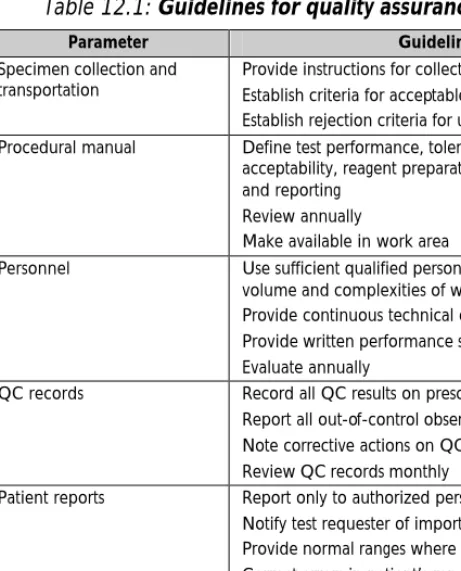
This is achieved by assessing the quality of samples; monitoring the performance of test procedures, reagents, media, equipment and personnel; view test results and. Correct errors in patient reports in a timely manner Keep records for at least two years.
Monitoring and evaluating tests and use of test results
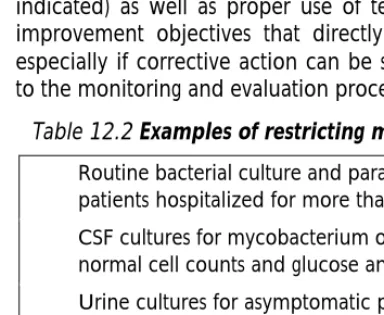
In many cases, such as solitary blood cultures or solitary sputum cultures for mycobacterium, underutilization can be a problem. On the other hand, methods to ensure that appropriate tests are ordered when indicated (as opposed to preventing inappropriate tests from being ordered when not indicated) as well as appropriate use of test results are quality improvement measures that directly benefit the patient, especially if corrective actions can be simultaneously linked to the monitoring and evaluation process.
Statistical challenges in quality assurance program
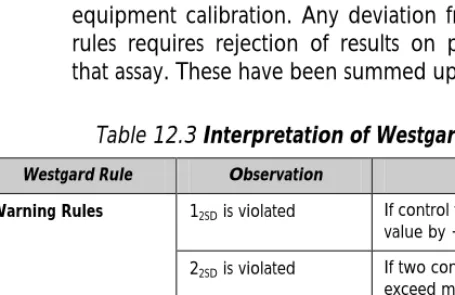
THE QUALITY of clinical laboratory determinations largely depends on the quality of the materials used. The results obtained with the panel should reflect the sensitivity and specificity of the reagents being compared.
QUALITY CONTROL OF LABORATORY MATERIALS
Pipettes
Apply slow suction to draw the liquid into the pipette for approx. 2 inches above the calibration mark using a rubber ball mounted on the top end of the pipette. Wipe the lower outside of the pipette that was in contact with the liquid during suction. f) Do not hold the wiping cloth directly under the opening.
Cleaning glassware
When the liquid level reaches the lower end of the pipette, touch the tip of the pipette to the side of the collection container until the flow is complete.
Reagents and standards
Chemicals
Proper use of reagents and standards
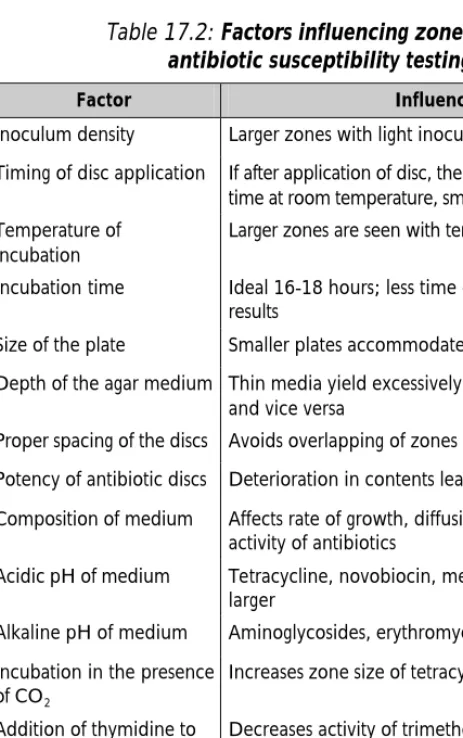
Microbiological assays involve checking the density of the inoculum, which should be prepared according to a standard method and checked against turbidity standards. Six discs can be placed evenly spaced about 15mm from the edge of the record, and 1 disc can be placed in the center of the record.
QUALITY CONTROL OF MEDIA AND STAINS
Quality control of media
Determine the ability of the medium to support the growth of suspect organisms by inoculating the medium with a typical stock culture isolate. This suspension will provide greater assurance that the medium is sufficient for the growth of a small number of organisms in a patient's sample.
Performance of plated media
To meet certification requirements, laboratories must perform quality control procedures according to a defined model. Quality control of cultural media should not be a blind procedure, but should be handled in a rational and disciplined manner.
Quality control of stains
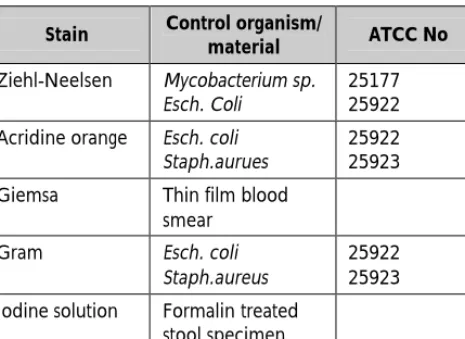
Escherichia coli (ATCC 25922) is required as one of the test organisms in performing antibiotic susceptibility testing by the Kirby-Bauer technique. Staphylococcus aureus (ATCC 25923) is required as one of the test organisms for performing antibiotic susceptibility testing by the Kirby-Bauer technique.
QUALITY CONTROL OF BACTERIOLOGICAL TECHNIQUES
PRESERVATION OF STOCK CULTURES
Preservation of stock cultures
Each reagent and each step in the test must then be investigated until the cause of the error is found and eliminated. However, if this is not possible, the temperature should be recorded daily and before opening the incubator.
QUALITY ASSURANCE IN ANTIBIOTIC SUSCEPTIBILITY
Indications for routine susceptibility testing
Antibiotic susceptibility testing has become a very essential step for the proper treatment of infectious diseases and the monitoring of antimicrobial resistance in various pathogens. The choice of antibiotic should be made taking into account the susceptibility profile of the pathogen, the pharmacology of the antibiotic, the need for antibiotic therapy and its cost-effectiveness.
Susceptibility test as a guide for treatment
Susceptibility test as an epidemiological tool
Continuous monitoring of routine susceptibility testing results is an excellent source of information on the prevalence of drug-resistant staphylococci and gram-negative bacilli that may be responsible for hospital cross-infections. Periodic reporting of the susceptibility pattern of the prevalent strains is an invaluable aid in shaping sound antibiotic use policies in the hospital through restriction and/or rotation of life-saving drugs, such as the aminoglycosides and cephalosporins.
Choice of drugs
Direct versus indirect susceptibility tests
General Principles of antimicrobial susceptibility testing
For quantitative assessments of antibiotic activity, dilutions of the antibiotic can be incorporated into broth or agar medium, which is then inoculated with the test organism. Proper adjustment of the turbidity of the inoculum is essential to ensure that the resulting growing lawn is confluent or nearly confluent.
Clinical definitionS of terms resistant and susceptible: the
Resistant: This term implies that the organism is not expected to respond to a given drug, regardless of the dosage and the location of the infection. Plate size Smaller plates hold fewer discs. Depth of the agar medium Thin media give too large zones of inhibition.
Need for quality control in susceptibility test
Standard procedure for quality control
Culture for daily use should be grown on nutrient agar slants (tryptic soy agar is convenient) and stored in the refrigerator.
Frequency of quality control testing
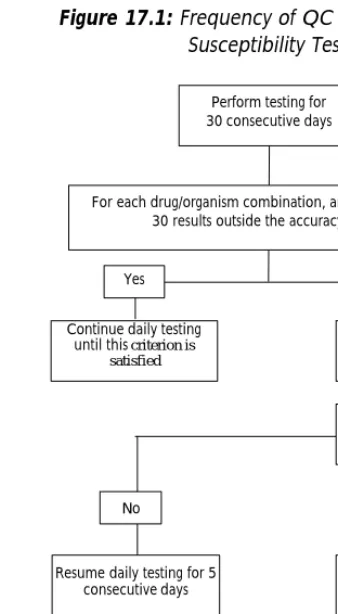
Sera to be used as controls should be standardized against international reference materials when available. The temperature of water baths, incubators, refrigerators and freezers should be checked at regular intervals and records kept.
QUALITY CONtROL IN SEROLOGY
Procedure manual
It should include instructions for collecting, transporting, and storing specimens, for preparing and storing reagents, and for performing tests. In addition, the controls and calibrators to be used should be listed along with instructions for their use, expected results, and instructions for corrective action if expected results are not obtained.
Selection of test or procedure
Many factors affect precision, but one factor often overlooked in serological testing is the size of the dilution steps. With all other variables held constant, serological tests tend to become less accurate as the dilution increment increases.
Collection of specimen
Control sera
Reagents
Before new reagents are introduced into a system, they should be tested in parallel with the old reagents against a panel of appropriate reference eras to ensure that consistent responses are obtained. Reagents must be clearly labeled to indicate their identity, hazards associated with their use, recommended storage conditions and preparation, and expiration dates.
Equipment and instruments
Performance of tests
Reporting and record keeping
Recording thermometers and barometers should be used for chambers for steam sterilizers and thermocouples may be inserted within the load. All volumetric glassware, such as flasks and pipettes, should be checked for proper calibration before use.
QUALITY CONTROL IN STERILIZATION
Indicators of the sterilization process
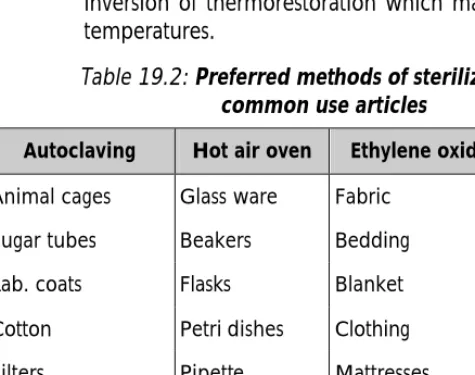
The wide application of sterilization processes makes it mandatory to introduce strict control measures to validate the results obtained (Table 19.1). Biological indicators manufactured today are generally impregnated with a spore population to meet a performance requirement of surviving a certain period of time in a sterilizing atmosphere but being killed in a longer period of time under the same sterilizing conditions.
General principles for testing sterilizing agents
The rheostat control should be checked with a tachometer at various loads and at frequent intervals (eg six months) to ensure correct gravity fields. Mechanical timers should be tested regularly to determine their accuracy by comparing them with electronic or electric clocks.
QUALITY CONTROL FOR EQUIPMENT
Purchase of equipment
The buffer solution should be checked monthly with another pH meter and discarded if the pH deviates more than ± 0.4 or if the buffer is contaminated with microorganisms. Any pipette, whether manual, semi-automated or automated, should be tested periodically to determine if it is delivering the correct volume.
Function checks
Documentation
Preventive maintenance
Snell JJS, Farell ID, Roberts C. Eds Quality control: principles and practice in the microbiology laboratory.
SUGGESTED FURTHER READING