Published by McGraw-Hill, an imprint of The McGraw-Hill Companies, Inc., 1221 Avenue of the Americas, New York, NY 10020. No part of this publication may be reproduced or distributed in any form or by any means, or stored in a database or retrieval system, without the prior written consent of The McGraw-Hill Companies, Inc., including, but not limited to, in any network or other electronic storage or transmission, or broadcast for distance learning. The inclusion of a website does not indicate an endorsement by the authors or McGraw-Hill, and McGraw-Hill does not guarantee the accuracy of the information presented on these websites.
Communication as Interaction: The Interaction Model 12 Communication as Transaction: The Transactional Model 14 Ethics and Communication 15. The Social-Psychological Tradition 30 The Socio-Cultural Tradition 31 The Critical Tradition 31 Putting It All Together 32. Themes and Assumptions of Symbolic Interaction Theory 79 The Importance of Meanings for Human Behavior 79 The importance of self-esteem 82.
Cognitive Dissonance Theory 112
Expectancy Violations Theory 129
Uncertainty Reduction Theory 147
Social Penetration Theory 167
Social Exchange Theory 185
Relational Dialectics Theory 201
Communication Privacy Management Theory 219
Structuration Theory 258
Organizational Culture Theory 274
Organizational Information Theory 290
The Rhetoric 310
Dramatism 328
The Narrative Paradigm 343
Cultural Studies 360
Cultivation Analysis 376
Uses and Gratifications Theory 392
Spiral of Silence Theory 410
Media Ecology Theory 427
Face-Negotiation Theory 448
Communication Accommodation Theory 465
Muted Group Theory 483
Standpoint Theory 501
Moving in New Directions 519
The success of the previous three editions shows that communication theory courses are thriving and teachers and students of communication understand the importance of theoretical thinking. This exciting interdisciplinary orientation is reflected in the selection of the various theories presented in the text. The first four chapters of the book continue to provide students with a solid foundation for studying the subsequent theories.
The first four chapters of the book continue to provide students with a solid foundation for studying the theories that follow. In this chapter, we provide students with an understanding of the nature of theory and the characteristics of theory. First, our work rests on the shoulders of the theorists whose creations we describe in this book.
We thank each of these individuals for their contributions to the fourth edition of the text. He is a past recipient of the Outstanding Alumni Award in Communication at Illinois State University and Ohio University.
As We Begin
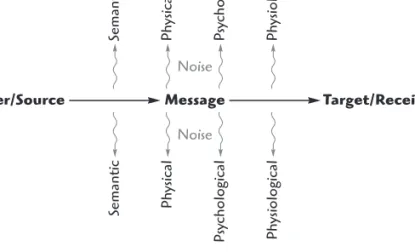
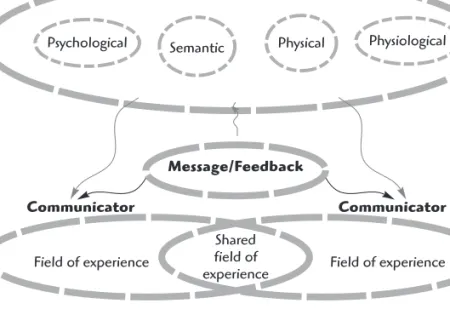
But the dominant criticism of the interactive model concerns the issue of feedback. This was an important addition to understanding the communication process because it demonstrates an active process of understanding. As you read and understand each chapter, you will likely develop your own understanding of the importance of communication theory.
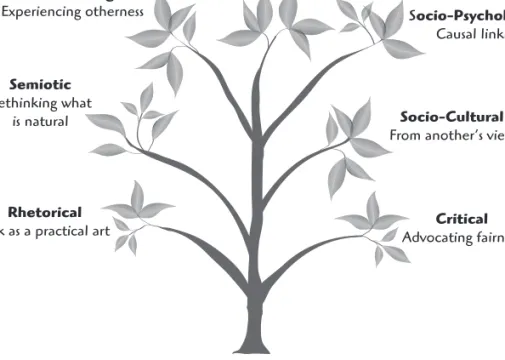
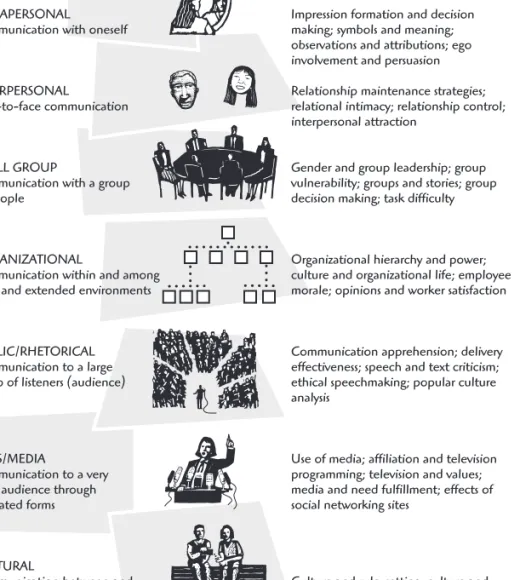
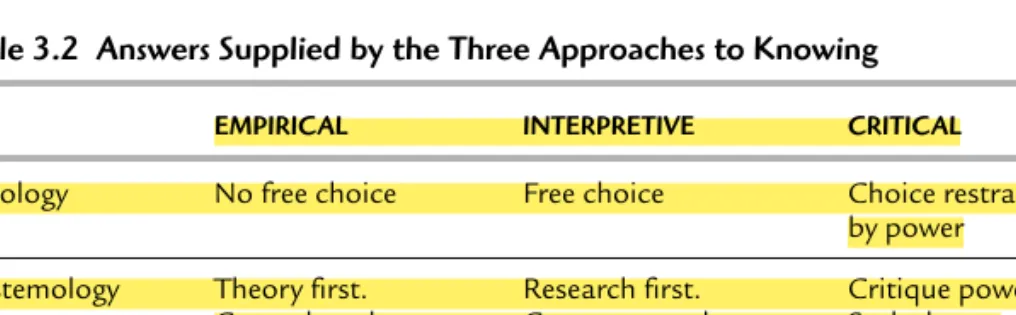
You now have an understanding of the communication process and a sense of how complex it can be. Let's begin our discussion of the communication field by looking at seven traditions in communication. Robert Craig (Craig, 1999; Craig & Muller, 2007) outlines communication theory in one of the more thoughtful, intellectually valuable ways.
At the heart of the rhetorical tradition is what Craig notes as "practical art." Our discussion of interpersonal communication has focused on the role of the self in the communication process. Concepts in some of the theories we will discuss include cohesiveness (Groupthink), dissonance (Cognitive Dissonance Theory), Self (Symbolic Interaction Theory), and scene (Dramatism).
It is always the job of the theorist to provide a clear definition of the concepts used in the theory. Stevens was operating in the interpretive tradition, she would not be satisfied with her own analysis of the conversations. In the example at the beginning of this chapter we illustrated how theory and research processes are connected.
But what if the people in these organizations don't talk much in the public areas of the office. Furthermore, the claims of the theory must be consistent with the assumptions of the theory. One of the biggest issues related to testability concerns the specificity of the concepts central to the theory.
Many theorists refer to the Chicago School and the Iowa School as the two main branches of the theory. People act towards others based on the meanings others have for them.
Research Notes
Eight months later these students showed significantly greater gains in IQ compared to the rest of the children in the class. The theory is well developed, beginning with the role of the self and progressing to an examination of the self in society. Clearly, the theory requires an understanding of the co-creation of the "social worlds" that Pearce believes exist.
Before delving into the central features of the theory, we first consider three assumptions about the coordinated management of meaning. Coordination exists when two people try to make sense out of the sequence of messages in their conversation. We are able to understand another person's intent because of the applicable rules.
Identify the part of the theory that is relevant to you and the reasons for its applicability. The theory's third assumption suggests that when people experience psychological dissonance, the resulting dissonance is aversive. In the conflict relationship example, Juan might look for friends who also struggle a lot but seem to be happy in their relationships.
Another group was not contacted between the signing of the contract and the delivery of the car. This finding speaks to the importance of the decision and of manipulating the dissonance ratio, factors we discussed earlier in this chapter. Consistent with the predictions of Cognitive Dissonance Theory, the researchers found that ratings of the chosen horse increased after the choice was made.
Most criticisms concern the utility and testability of the theory. I have noticed that I use some of the ways to reduce dissonance that the theory talks about. Our opening story by Margie Russo and Janet Mueller represents the nature of the theory.
Finally, studying the spatial framework that underpins EVT will give you a historical understanding of the theory. Expectancy violation theory is one of the few theories that specifically focuses on what people expect—and their reactions to others—in conversations.
Research NotesIntegration
On the other hand, behavioral uncertainty refers to “the extent to which behavior is predictable in a given situation”. When strangers meet, their main focus is to reduce the level of uncertainty in the situation because uncertainty is uncomfortable. Receiving information from the assessment reduced uncertainty and increased satisfaction with communication processes in the organization.
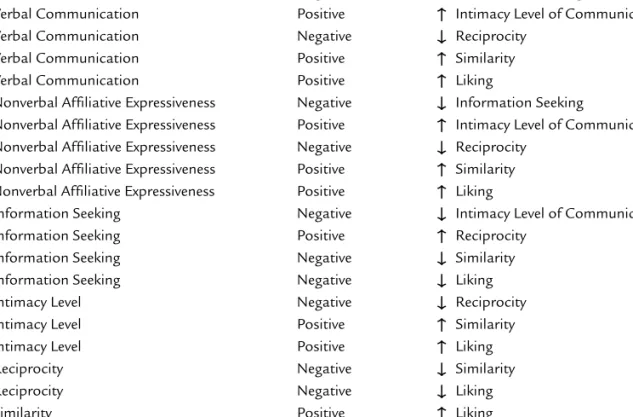
Uncertainty reduction theorists believe that initial interactions are key elements in the development process. Berger and Calabrese extrapolated this axiomatic reasoning from earlier researchers (Blalock, 1969), who concluded that causal relationships should be expressed in axiom form. They must be accepted as valid because they are the building blocks for everything else in the theory.
However, in the intervening years, the theory has expanded to include developed relationships, as the acceptance strategy discussed earlier shows. Another example of how Uncertainty Reduction Theory has been extended to developed relationships is found in the research of Malcolm Parks and Mara Adelman (1983). Most of the work has been done in the context described in Chapter 2, and we will discuss that first.
In high-context cultures, nonverbal messages play a more significant role, and most of the meaning of a message is internalized by listeners or resides in the context. Extensions of Uncertainty Reduction Theory 161 low-context cultures cultures, such as the United States, where most of the meaning is in the code or message high-context cultures. Additionally, some work has set uncertainty reduction principles in the context of the workplace (Hargie, Tourish, & Wilson, 2002; Morrison, 2002) and through computer-mediated communication (Flanagin, 2007; Tidwell & Walther, 2002).
People engage in communication, therefore, not to reduce uncertainty, but because they care about the other, are interested in the other, or both. The two conducted extensive research in the area of social bonding between different types of couples. Social Penetration Theory (called a "stage theory" by Mongeau & Henningsen, 2008) has enjoyed wide acceptance by a number of researchers within the communication discipline.