SAES is also a founding member of the International Council for the Advancement of Independent School Accreditation (ICAISA) and. Each accreditation on-site visit (OSV) team includes at least one member of the SAES staff. The self-study is provided before the three-day Site Visit (OSV) by a.
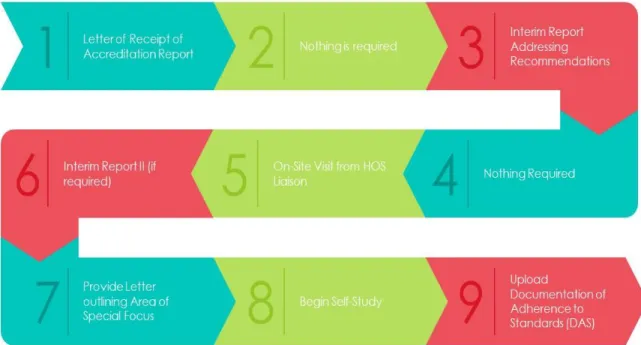
However, there is no requirement to focus on school improvement to address problems, and there is no current means of promoting commitment to a continuous improvement process in the remaining years of the accreditation cycle. Several studies indicate that the role of the school leader is key, both in the accreditation process and in. Therefore, it may be beneficial in the restructuring of the accreditation cycle to use the educational criteria adapted from Malcom Baldrige's framework for continuous performance improvement in business and industry.
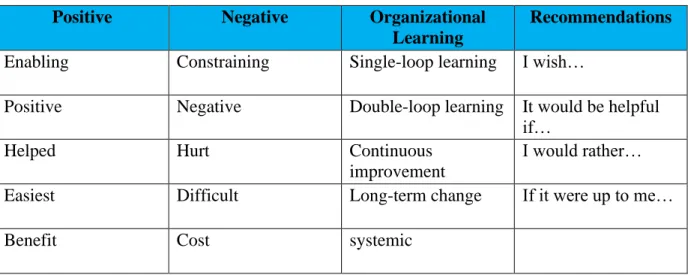
Since evaluative inquiry is a concept that supports both single- and double-loop learning, it works with the design of the accreditation process. Evaluative inquiry through the accreditation process allows organizations to learn both through involvement in the evaluation process itself and through the results of the. School leaders (n=34) responded to the questionnaire, which was designed to collect demographic data as well as gather information regarding the accreditation experience, including which aspects of accreditation were completed at which point in the 10-year cycle.
Accreditation plays a large and defining role in the trajectory of schools, according to respondents in this research project. The professional development opportunities offered during the accreditation process were mentioned by many of the respondents. Others noted that sharing the OSV team's recommendations led to opportunities for improvement.
School leaders were the least satisfied with the amount of effort required to complete the various parts of the accreditation process. Finally, the current structure of the 10-year accreditation cycle was seen as restrictive for schools. Those who ran preschool-only campuses perceived the accreditation process very differently than those who handled multiple levels.
Many of the principals interviewed mentioned the isolation that so many schools feel on a regular basis. Finally, SAES can play a greater role in educating governing boards about their role in the long-term management of the school. I look forward to working with SAES, my partner organization, to incorporate the principles of the Baldrige Model of Excellence into the accreditation self-study and cycle.
The costs of the accreditation process: A case study of community colleges in North Carolina (Order No. 10969843).

Interview Guide
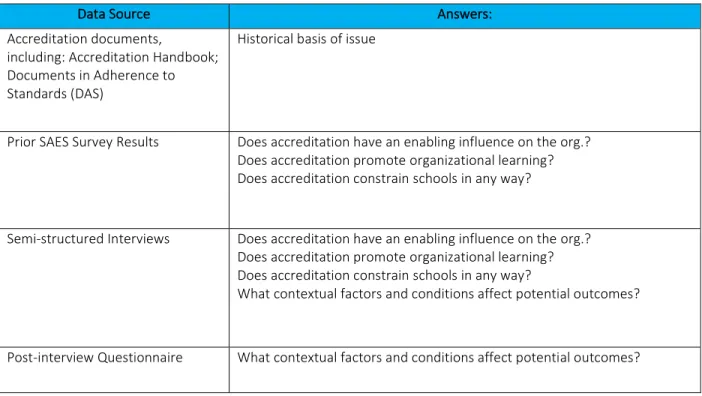
QC.3 If so, can you provide some examples of positive incremental changes you have made as a result of the process. QC.4 Organizational learning refers to both incremental change and 'double-loop' learning, which involves a more dramatic change in mindset, questioning the underlying paradigm or values on which programs or decisions may be based are drawn. QC.6 Which parts of the accreditation process offer the applicant schools the most opportunities for ongoing organizational learning.
How can the SAES accreditation cycle for your school be improved to promote more learning. VD.2 Which parts of the accreditation cycle, if any, were of little benefit to your organisation. How would you describe the degree of formalization you have had in your business practices and procedures.
QD.5 Do you believe there were parts of the accreditation process that were overwhelming for your organization? QE.1 What do you consider to be the most important benefits you have gained from accreditation? What do you think are the dollar costs and time spent on SAES and the accreditation process?
QF.1 Can the 10-year accreditation cycle be arranged differently to provide more opportunities for continuous organizational improvement to the applicant schools. QF.2 Can the accreditation process be changed to promote a culture of continuous organizational learning and improvement. What other comments or questions do you have about SAES accreditation at your school and its impact?).
Interview questions adapted from Understanding the Context, Effects and Implications of Accreditation for Canadian University Business Schools, C.J.
SAES
ACCREDITED SCHOOLS
- Gender
- Your age is
- Highest degree earned
- How long have you worked in K12 education?
- How many years (if any) have you worked in public K12 education?
- How many years have you worked in private K12 education?
- How many years have you worked in Episcopal K12 education?
- How long have your served in your current position at this school?
- I was employed at this school during the last accreditation visit
- Year of your school's last accreditation visit
- I was employed at THIS school during its last accreditation visit
- I have participated in the writing of a self-study for accreditation
- I have been trained to serve on an On Site Visit Team
- I have served on an On Site Visit Team
- Please answer the following
- I believe a 10-year accreditation cycle is
- I find the 10-year cycle to be (please check all that apply)
- During Year 1 of our school accreditation, we
- During Years 2-4 of our school accreditation, we
- During Year 5 of our school accreditation, we
- During Years 6-8 of our school accreditation, we
- During Year 9 of our school accreditation, we
- During Year 10 of our school accreditation, we
- As a result of our last accreditation visit, the following were strengthened
- Since the last accreditation visit occurred
- After the last accreditation visit occurred
- Following the last accreditation visit
- Since the last accreditation visit
- Preparing for the accreditation visit
- These were the areas that seemed overwhelming for our school: (select all that apply)
- Our overall experience with the accreditation process was
- To pay for the accreditation visit, our school
- I believe preparing for an accreditation visit and all that is required in the accreditation process takes
- What do you believe are weaknesses in the SAES accreditation process?
Sent headmaster's letter to SAES Submitted interim report or special interim report Updated/amended governing statutes Work to improve customer/public relations Updated/amended student handbook Updated/amended employee handbook Updated/amended employment contracts Updated/amended study plan. Created new standing committees among the staff/faculty Created new standing committees at management level Changed the school's mission or vision. Wrote/updated crisis plan Wrote/updated strategic plan Wrote/updated strategic financial plan Wrote/updated board policy book Reviewed OSV recommendations Reviewed OSV proposal.
This is your opportunity to share what worked and what didn't before, during and after the accreditation visit. Find enough hours in the day to adequately prepare Preparation for the on-site visit. Work it into the budget for that year Annualize the cost over a 10-year period Depend on a donation from a wealthy benefactor Other (please specify).
I believe that preparing for an accreditation certificate and everything required in the accreditation process takes: the process takes:.