Understanding System Complexity
Despite many well-intentioned policies and changes to our management practices, our natural resources continue to decline. The roles and interplay between science and policy in the regional broadacre agriculture landscape are examined here, offering readers a thorough understanding of the complex interactions that occur across spatial scales to produce the regional-scale impacts. The fundamental causes of resource degradation, social decline and environmental pollution are addressed, examining the cross-scale drivers from the individual farm level to the global level of commodity systems. Broadacre agriculture is a common land use throughout all continents of the world and is driven by the same type of dynamics, and this case study of the Western Australian agricultural region can be used to clearly demonstrate the principles for other commodity systems. Aimed at academics and researchers through to policy analysts, this book will inspire innovation and action in sustainable natural resource management.
He l e n E. Al l i s o n is a researcher into complex systems and has experience working with terrestrial and aquatic systems in tropical, temperate and Mediterranean climates in Australia, Europe and South Africa. She is a Post-Doctoral Fellow at Murdoch University in Perth, Western Australia.
Ri c h a r d J. Ho b b s is Professor of Environmental Science at Murdoch University, where he teaches Environmental Restoration. He is the author of over 230 refereed publications, many magazine articles and unrefereed publications, and author/editor of 12 books.
His particular interests are in vegetation dynamics and management, fragmentation, invasive species, ecosystem restoration, conservation biology and landscape ecology.
Management
Understanding System Complexity
H E L E N E . A L L I S O N R I C H A R D J . H O B B S Murdoch University, Perth, Australia
Cambridge University Press
The Edinburgh Building, Cambridge cb2 2ru, UK
First published in print format
isbn-13 978-0-521-85883-0 isbn-13 978-0-511-24544-2
© Helen E. Allison and Richard J. Hobbs 2006
2006
Information on this title: www.cambridg e.org /9780521858830
This publication is in copyright. Subject to statutory exception and to the provision of relevant collective licensing agreements, no reproduction of any part may take place without the written permission of Cambridge University Press.
isbn-10 0-511-24544-0
isbn-10 0-521-85883-6
Cambridge University Press has no responsibility for the persistence or accuracy of urls for external or third-party internet websites referred to in this publication, and does not guarantee that any content on such websites is, or will remain, accurate or appropriate.
Published in the United States of America by Cambridge University Press, New York www.cambridge.org
hardback eBook (EBL) eBook (EBL)
hardback
List of illustrations pagex
List of tables xii
Foreword xv
Preface xix
Acknowledgements xxi
List of abbreviations xxiv
1 Introduction 1
1.1 Introduction and motivation 1
1.2 Structure of this book 8
2 Historical and policy context 12
2.1 Introduction 12
2.2 Historical periods 14
2.2.1 The First Sixty Years (1829–89) and The Move
Forward (1889–1929) 15
2.2.2 Depression and the War (1929–45) 19 2.2.3 Recovery (1945–9) and The Rural Boom
(1949–69) 20
2.2.4 A Troubled Decade (1969–79) 22
2.2.5 Environmental Awareness (1980–90) 24 2.2.6 The Decade of Landcare (1990–2000) 25 2.2.7 The Turn of the Century (2000–5) 33
2.3 Drivers of change 36
2.4 Concluding remarks 37
v
3 Natural resource degradation: a resistant problem of the
twentieth century 40
3.1 Introduction 40
3.2 Natural resource degradation 41
3.2.1 Costs of land degradation 43
3.3 Resistant problems 47
3.4 Concluding remarks 50
4 The epistemology of natural resource management of the
twentieth century 51
4.1 Introduction 51
4.2 The conflict between the perception and the reality of nature 53
4.3 Paradigms 54
4.3.1 Ontology, epistemology, human nature and
methodology 55
4.3.2 Normal science paradigm 56
4.4 Organisational analysis 58
4.4.1 The framework of Burrell and Morgan for
sociological paradigms of organisation 59 4.4.2 Quinn and Rohrbaugh’s competing values
approach for organisational analysis 62 4.4.3 Blann and Light’s ‘root metaphor’ framework 64 4.5 Underlying paradigm of command and control policy 67
4.5.1 Multidisciplinary methodology 68
4.5.2 Normal science methodology in relation to
command and control policy 68
4.6 Underlying paradigm for integrated natural resources
management 69
4.6.1 Adaptive management 71
4.6.2 Integrated catchment management 73
4.7 Policy evaluation 74
4.7.1 Command and control policy 74
4.7.2 Integrated natural resource management 78
4.8 Concluding remarks 80
5 A contemporary epistemology and framework for natural
resource management of the twenty-first century 83
5.1 Introduction 83
5.2 A framework for understanding problem-solving processes 84
5.2.1 Element 1: problem situation (methodological
context) 87
5.2.2 Element 2: intended problem solver
(methodological user) 88
5.2.3 Element 3: the problem-solving process
(methodology) 89
5.3 Messy problems in natural resource management 89
5.4 Complexity 90
5.5 Post-normal science paradigm 92
5.6 Systems approach 96
5.6.1 General systems theory 97
5.6.2 Ecology theory 98
5.6.3 Resilience theory 101
5.6.4 The adaptive cycle 104
5.6.5 Synthesis of organisational analysis and the
adaptive cycle metaphor 109
5.6.6 System dynamics 110
5.7 The social-ecological system perspective 118
5.8 A framework for a new approach 119
6 Model conceptualisation of the Western Australian
agricultural region. Part 1: resilience analysis 121
6.1 Introduction 121
6.2 Integration of resilience analysis and system dynamics
analysis 122
6.3 Conceptual model 124
6.3.1 Understanding the situation of concern 124 6.3.2 Ecological reference modes of system behaviour:
the dynamics of land use 125
6.3.3 Socio-economic reference modes of system
behaviour 127
6.4 Resilience analysis 131
6.4.1 Model diagnosis 131
6.4.2 Long-wave economic Kondratiev Cycles 134
6.4.3 Pathological states 137
6.5 Organisation and change 141
6.5.1 Cross-scale dynamics 142
6.5.2 Thresholds, stability and resilience 143
6.5.3 Policy responses 145
6.6 Concluding remarks 146
7 Model conceptualisation of the Western Australian
agricultural region. Part 2: system dynamics 149
7.1 Introduction 149
7.2 Behaviour of commodity systems 151
7.2.1 Commodity growth drivers 153
7.2.2 Commodity traps 156
7.3 The qualitative system dynamics model of the WA
agricultural region 158
7.3.1 System dynamics model 160
7.3.2 Ecosystem Loop 163
7.3.3 Social Capacity Loop 166
7.4 Integration of resilience analysis and system dynamics
analysis 171
7.4.1 Panarchy and delays 172
7.5 Policy implications 173
7.5.1 Structural and high leverage interventions 173 7.5.2 Examples of natural resource economies that
incorporate social and environmental goals 174
7.6 Concluding remarks 175
8 Synthesis 177
8.1 Contributions to natural resource management 178
8.2 Post-normal science paradigm 178
8.3 The WA agricultural region 180
8.3.1 The WA agricultural region: management
implications 185
8.3.2 Four scenarios 187
8.3.3 The Sustainability Paradox of the behaviour of
complex social-ecological systems 190 8.3.4 Surprisingly unsurprising or is the surprise still to
come? 191
8.4 Governance, institutions and resilience: policy change, real
world constraints and possibilities 192
8.4.1 The enigma of cross-scale interactions,
self-organisation and the capacity for change 193 8.4.2 Do we understand the dynamic behaviour of the
system? 194
8.4.3 Is it physically possible to change the ecological
systems? 194
8.4.4 Are we willing to make the necessary changes? 195
8.5 Implications for other broadacre agricultural regions 196
8.6 Further research 197
8.7 Education: integration of the natural and the
social sciences 199
8.8 Concluding remarks 200
Epilogue 202
Glossary 203
References 212
Index 237
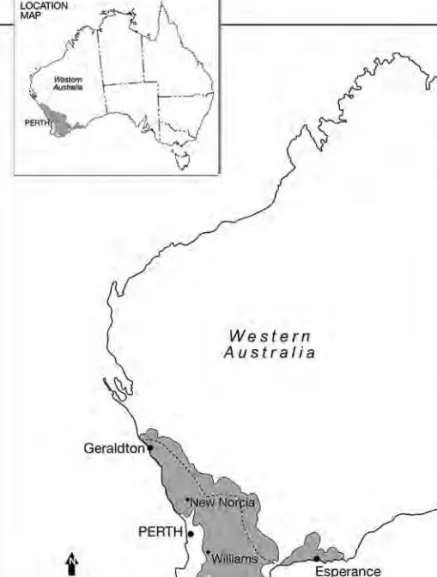
1.1 Map showing the WA agricultural region and the
Brockman Line page3
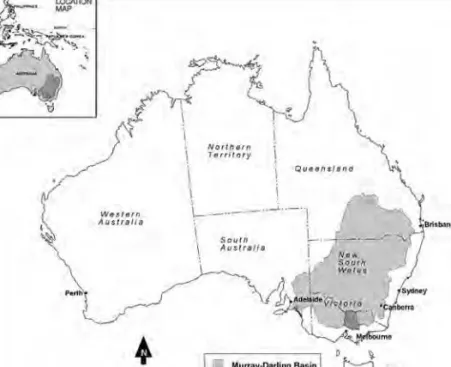
1.2 Map showing the location of the Goulburn Broken
Catchment within the Murray–Darling Basin 4
1.3 Guiding framework showing the key questions and the
progression through the book with the chapters identified 9 2.1 Influential events and factors in the history and policy of
natural resources relating to agriculture 1889–2005 16 2.2 Rates of clearing of native vegetation in the WA agricultural
region between 1890 and 2000 20
2.3 Farm numbers in the agricultural region of Western
Australia, 1900–2000 23
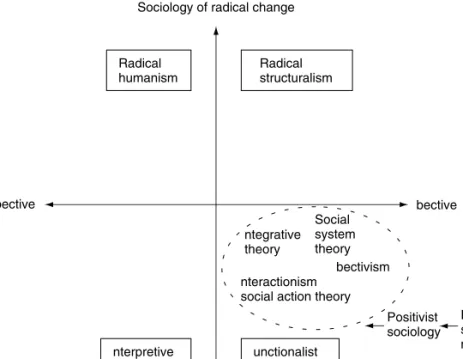
4.1 The subjective–objective dichotomy for analysing
assumptions about the nature of social science 55 4.2 Framework proposing four paradigms for the analysis of
social theory 61
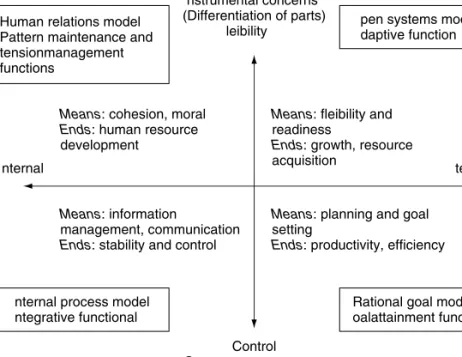
4.3 Quinn and Rohrbaugh’s effectiveness framework 63 4.4 Consequence of applying the normal science paradigm to
complex problems 65
4.5 Blann and Light’s framework for analysing alternative
worldviews 66
4.6 Single- and double-loop learning 78
5.1 The essential elements of the systemic evaluation framework 86 5.2 The mental construct of the intended problem solver 88
5.3 A genealogy of systems science 91
5.4 A typology of approaches to science 96
5.5 Heuristic model of the adaptive cycle 107
5.6 Structure of a boundary diagram 114
x
5.7 Feedback loops and causal loop diagram construction 116 5.8 Combination of positive and negative loops 117 5.9 A framework for a new approach comprising the paradigm,
approach, theories, perspective and methods 119 6.1 A conceptual model of land use change patterns in the WA
agricultural region 126
6.2 Changes in land use in WA agricultural region between
1900 and 2050 126
6.3 Socio-economic reference modes. (a) Trends in wheat yields. (b) Trend in Australian farmer terms of trade.
(c) Trend in the numbers of farms. 129
6.4 The Kondratiev Cycle 135
6.5 Heuristic model of the adaptive cycle 138
6.6 A heuristic model showing eight possible phases of the
adaptive cycle 139
7.1 The three positive feedback loops that cause commodity
growth 153
7.2 The three positive feedback loops that cause commodity
growth expanded 154
7.3 Goal-seeking structure and behaviour of balancing
feedback loops 156
7.4 Three commodity system traps: (1) Resource Depletion,
(2) Environmental Pollution, and (3) Social Decline 157 7.5 World grain prices with predictions to 2007 159 7.6 Area of wheat production as a land use in Australia since
1860 159
7.7 Boundary diagram for the commodity system 161 7.8 Boundary diagram for the WA agricultural region as a SES 162
7.9 The Ecosystem Loop 163
7.10 Causal loop diagram of the WA agricultural region
showing the commodity system and the social system 169 7.11 Causal loop diagram of the WA agricultural region
showing a summary of the three production growth drivers
and the balancing feedback loops 172
8.1 Intersection between physical feasibility and decision
processes 185
8.2 Four scenarios, Dystopia, Conventional, Policy Reform and
Transformational 188
2.1 The five goals and performance of the Decade of Landcare
Plan page26
3.1 The seven themes of Australian National Land and Water
Resources Audit 42
3.2 Categories of land and water degradation 42
3.3 Estimated economic losses due to land degradation 45 3.4 Estimated annual costs and time to mitigate land
degradation 45
3.5 The behavioural biases that generate environmental policy
problems 48
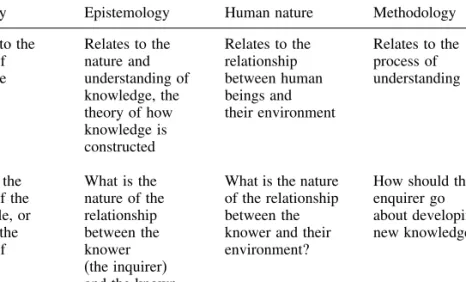
4.1 Ontology, epistemology, human nature and methodology 56 4.2 Assumptions and characteristics of the normal science
paradigm 57
4.3 The Hawkesbury Hierarchy of approaches to
problem-solving and situation improvement 58
5.1 Systemic analysis vs. systemic design 87
5.2 Contrasting paradigms between the twentieth century and
the twenty-first century 93
5.3 Categories of uncertainty 95
5.4 Ecology: a theoretical framework 99
5.5 Forrester’s seven properties of complex adaptive systems 101 5.6 Two paradoxes of regional resource management 103 5.7 Four provisional propositions about large-scale systems 103 5.8 Assumptions of systems under resilience theory 104
5.9 Twelve conclusions of resilience theory 105
5.10 The level of each of the three variables that characterise
the four phases of the adaptive cycle 108
5.11 The system dynamics modelling process 112
xii
6.1 A four-step framework proposed by Walkeret al. (2002) for
the analysis of resilience in social-ecological systems 124 6.2 Historical profile of major events in natural resource
management in the WA agricultural region between 1889
and 2003 132
6.3 Four temporal cycles identified in the economy 135 6.4 The four Kondratiev Cycles described for the period 1785
to 2000 136
6.5 Relationship between the phases of the Kondratiev Cycle
and the adaptive cycle 137
6.6 The level of each of the three variables that characterise the two identified pathological states called the Poverty Trap
and the Rigidity Trap and the proposed Lock-in Trap 139 7.1 Five characteristics of agriculture commodity systems 152 7.2 Factors influencing rural producers’ capacity to change to
sustainable practices 168
This is probably the first study that has used resilience, the adaptive cycle and panarchy as a major part of the conceptual foundation for the work. Resilience (as used here) has been explored in the literature for about 30 years, the adaptive cycle originated about 18 years ago and both have been integrated within the panarchy concept for only a few years. The authors combine these concepts with soft systems science conceptual modelling tools to review and assess the character of agricultural development from an integrated perspec- tive of economic, social and ecological changes over about 100 years. They then apply these methods in a strategic analysis of the Western Australian agricultural region.
In the process the authors explore the significance of paradigms of science and policy that come from renewable resource management and practice.
These emerge from and create different modes of scientific enquiry, different philosophical foundations of theory, and different modes of management. The latter range over time from traditions of command and control, to integrated management and adaptive management, to the synthetic kind of understanding and action that comes from recent work on complex adaptive systems. The authors find that the earlier approaches of science and management have been part of the cause of the erosion of the system because of their inability to lead to remedial policy and action. They are conceptually limited and too constrained. All elements are necessary but insufficient. The science of complex adaptive systems, however, is very different from traditional disciplinary, reductionist science. It is integrated across disciplines; it assumes non-linearities, multi-stable states and operations interacting over multiple scale ranges. In this case these are over scales from the individual farm to the global market for wheat. It argues for ‘just sufficient’ parsimony to find the simple sets of explanation for the complex behaviour.
Change is seen as being both regular and abrupt. Uncertainty is high and an integral part of the concepts and methods. Versions of booms and busts are
xv
common, as are continual efforts to partially or wholly recover and redesign.
The purpose is not only to reduce uncertainty where possible, but equally, to live with and learn from unexpected results. Models are useful but transient in their usefulness. Systems of people and nature adapt so that an evolutionary change perspective is essential. That is, the system you start with need not be the same as the one you have or will have.
The authors review and assess all that history of approach, science and policy with great clarity, knowledge and sense. They write extremely well and clearly. I really have not seen a better review and assessment than the one they have done. And they do it by vividly exploring the strategic events and processes in the region over a hundred-year period.
Because their analysis is strategic, it aims to define the problems and directions for response. Although any strategic analysis needs data, narrower analysis and models, those do not appear directly in this book. Instead, they are drawn on from the extensive literature available. Therefore few graphs, tables of numbers or graphs from models appear here. Those exist elsewhere in the published literature and reports, allowing the authors to use them and concentrate on their strategic study. I believe they have taken exactly the right course for their strategic purpose.
The authors have extensively reviewed the literature emphasising social and ecological knowledge, and some economic theories and studies as well. Their survey is really admirable. Parts of that survey deal with resilience, adaptive cycles and panarchy. They present an accurate description and assessment of the theories and practices from which the concepts were developed. I find the accuracy of their review to be surprising, since so many such reviews still appearing in the narrower literature are simply wrong, or incomplete or narrowly disciplinary. I found it to be simply excellent.
The authors add to that a review and assessment of economic cycles that, together with the cycles observed in the agricultural developments, clearly shows the degree of influence of internal causes vs. external commodity and international market causes. They show through the use of the adaptive cycle and soft modelling diagrams how the system is dominated by external economic commodity forces outside Western Australia. That is the panarchy in operation. In contrast, endogenous (local) forces that drive other social and ecological elements are not strong enough to be contributing to the evolution of a sustainable system. That has led to progressive resource impoverishment, major destruction of native vegetation, increasing salt concentration of soils, biodiversity loss and social decline. Technological quality and innovation for agriculture has continually advanced and the value of wheat has regularly declined. Some policy reform is possible that might add perennial vegetation,
introduce crop diversity and add new agricultural innovations. Some of these would be useful. But the essential story and analysis leads to the conclusion that the deleterious changes in the agricultural region are irreversible.
The critical change or transformations now needed are global – in trade, in international markets that involve changes in the World Trade Organisation and in geopolitical relations and trade agreements. These need to better inte- grate economic, social and ecological elements than occurs at present. The authors are right, but such integration occurs so slowly that the beneficiaries will not likely be Western Australia, but other places and other times. It represents a major focus for research, action and policy. That represents a true transformation – partly the double loop learning they refer to, but more transformational learning across scales.
The example of Western Australian agriculture is of great value as the lessons learnt can be applied elsewhere, since the authors end appropriately on questions of institution and governance. The authors do offer a set of actions that are now appropriate. The key ones involve imaginative ways to commu- nicate the story within the region; major changes in education; advances in interactive modelling methods and practices. They offer suggestions for the directions needed in such circumstances – ones that essentially focus on trans- formation of governance – on institutional reform, on recognition of multiple values on a panarchy of scales across time and space. And they recognise that fundamental change has to wait for the critical time for transformation to be possible. Prepare for it, but wait for it.
C. S. (Buzz) Holling
‘I strongly advise you to stay within the discipline’ was the advice from the Head of School in the mid 1970s, when the first author Helen Allison was proposing to take a course in History and Philosophy of Science, conducted in another department, as an option in her Zoology Honours year at Aberdeen University. The reason she was told was that timetabling was difficult and it couldn’t be done. In retrospect confining her education to the accepted scientific paradigm would preserve the credibility of the established set of protocols proposed by the zoology discipline thus avoiding any potential for her to ask probing questions on theoretical issues, controversies and paradoxes.
Now 30 years later this book is the result of a course-altering event during the research for a Ph.D. dissertation by Helen, when she discovered an alterna- tive to reductionism. On reading the bookComplexity: The Emerging Science at the Edge of Order and Chaos(Waldrop, 1992) Helen wondered why she had not been exposed much earlier in her career to the integrating ideas of complexity and self-organising adaptive systems. However, on reflection it is not surprising, given the tacit agreement and protocols of the scientific paradigm. Helen is grateful to the author M. Waldrop who introduced her to the new sciences for the twenty-first century.
Now it is becoming acceptable to talk about diverse epistemologies, different ways of understanding the world, alternative worldviews and different ways of investigation. We now recognise that the complex problems of human societies require new approaches in science to understand the fundamental drivers of their dynamics and to be able to intervene with appropriate policies. Novel approaches and greater integration of the sciences have been advocated by an increasing number of people, including the second author Richard Hobbs. These approaches are receiving much greater attention while still remaining fragmented and marginalised not only within
xix
academic institutions but in the thinking that still informs policy for natural resource management.
In this book we wish to share with the reader what we have learnt about these new sciences integrated with our combined 60 years experience on natural resource management. We also wish to challenge the reader to think both broadly and deeply on the issues that are facing broadacre agricultural systems ‘What are the big or distal drivers that are impacting on these types of regions?’ To investigate what these drivers might be we have to go beyond the single discipline, and look at relationships between factors and find the tools that can help us investigate these broad integrative relationships.
We are greatly indebted to C. S. (Buzz) Holling, Lance Gunderson and Tim Haslett who recognised the importance of this work in its original form, and to Alan Crowden for having the confidence in it to support our approach to Cambridge University Press.
We wish to express our appreciation to two institutions for supporting this research in various ways. Firstly, our thanks to Murdoch University, Western Australia, for financial support by way of a University Scholarship to Helen over the period 2000–3. Secondly, our thanks to Land & Water Australia, in particular Dr Nick Schofield, manager of the Innovation Program, who facil- itated our grant approval which provided support for the final transformation of the dissertation into this book.
This book is the result of the generosity of many people who gave their time and contributed in many ways, helping us to integrate the many exciting and new ideas being explored to help understand and manage intractable problems in social-ecological systems.
Helen would like to thank colleagues past and present for their generous contributions of information and time: Associate Professor Frank Murray, Murdoch University, supported my initial proposal, and patiently followed my path of discovery of alternative ways of understanding; Dr Jennifer Robinson, Murdoch University, for her eclectic intellect, robust arguments, forthright approach and discussions on system dynamics; Charlie Nicholson, CALM, a former manager, original thinker and always a systems thinker; Dr Neil Pettit, Washington University, for encouragement and incisive comments on the final draft; Dr Julia Hobson, Murdoch University, who provided positive feedback on drafts of my papers; Dr Bryan Jenkins, Murdoch University, for his partic- ipation, energy and interest in conceptualising models; the members of the Task Force for the Review of Natural Resource Management and Viability of Agriculture in Western Australia (Dr Paul McLeod, Dr Libby Mattiske,
xxi
Dr George Gardiner, Norman Flugge and Margaret Agnew) for whom I was Executive Officer, for sharing their progressive views on the future of natural resource management and policy; Will Fey for choosing to coach me in system dynamics ‘his way’; Dr Tim Haslett, Monash University, and his students who took me under their wing at my first system dynamics confer- ence and who very kindly provided me with his system dynamics modelling course notes ‘Mastering ithink’; Professor Nimal Jayaratna, Curtin University Business School, who encouraged the extension of my enquiring mind in the genre of systemic analysis; others include Dr Michael Booth, Dr Frank Harman and Dr David Annandale of Murdoch University; Dr David Egan, Curtin University Business School; Dr Sarah Lumley, University of Western Australia; Dr William Hutchinson, Edith Cowan University; Aldo Zagonel, University of Albany, SUNY; Dr Andrea Hinwood, Edith Cowan Univer- sity and Deputy Chair of the Environmental Protection Authority; Dr Brian Walker, The Resilience Alliance; Kristen Blann, University of Minnesota;
Annie MacBeth, Futurist; Peter Curry and Dr Denis Saunders.
There are also innumerable friends and colleagues who have encouraged me in my endeavour, including Dr Sue Moore, Murdoch University, who gave me the final encouragement I needed to start my Ph.D., and Dr Viki Cramer, who always made herself available for academic, diverse and interesting discussions; friends who reminded me that there was a world outside of my research and provided support in their own ways: Agriculture Breakfast Group (Ross George Agriculture WA, Dr Donald Burnside URS, Martin Wells, John Duff, Nic Watson, Commissioner for Soil Conservation, Dr David Bennett and others mentioned individually elsewhere); Wednesday morning beach swimming group, a constant source of inspiration on summer and winter mornings; Envirodrinks colleagues; my dear friends Lindy Brookes and Joe Tonga who on numerous occasions provided me with dinner, bed and breakfast; Peter Krawec; Kellie and Peter Pendoley; Helen Fordham;
Dr Ann Hamblin; and to all those not named individually.
Thanks for support and friendship goes to fellow students in the wind tunnel that we postgraduates called home for the duration of our candidature.
I am grateful for the support of the staff in the Division of Science and Engineering: Jeanne Clarke, Frank Salleo, Colin Ferguson, Sarah Xu, Susan Flay, Heather Gordon and Lindsay Lincoln, and in the Division of Research and Development, Ann Randell and Karen Olkowski. Thanks go to Alan Rossow and Kevin Hardman for drafting the maps and some of the more difficult figures and to Ted Lamont and Richard Krumins, Murdoch Univer- sity, for advice on the tricks to making acrylic moulds when I struggled with a three-dimensional acrylic model of the adaptive cycle.
Finally, special thanks to Jay Whitely, a fellow Ph.D. colleague and friend, who gave so willingly of his time, provided much humour, and guided me in the art of LaTeX for the document preparation, and Dr Iain Allison, Senior Science Adviser, Glasgow University, who supplied me from an early age with his brotherly advice and encouragement, introduced me toZen and the Art of Motorcycle Maintenance: An Inquiry into Values (Pirsig, 1976) and Sophie’s World: A Novel About the History of Philosophy (Gaarder, 1994) and who holds no responsibility for the consequences of those actions and the content of this work. All errors and interpretation are our sole responsibility.
In addition to the above, Richard would also like to thank the many people who have shaped his thinking in this area and provided him with the confi- dence to pursue this new and challenging way of working, including Brian Walker, Ted Lefroy, Buzz Holling, Viki Cramer and Sue Moore. I’d also like to thank my wife Gillian and my two children Katie and Hamish for keeping me grounded and reminding me that there is a real world out there, as well as putting up with my long hours holed up in the study and periods away from home.
The original text for the dissertation was proofread by Jan Knight of Flying Edits.
Parts of this book appeared in a paper published inEcology and Society 9(1): 3, www.ecologyandsociety.org/vol9/iss1/.
We are grateful to the following for permission to reproduce copyright material: Figures 4.1 and 4.2 from Sociological Paradigms and Organisa- tional Analysis: Elements of the Sociology of Corporate Lifeby G. Burrel and G. Morgan (1979) reprinted by permission of Harcourt Education; Figures 4.4 and 4.5 reprinted by permission of K. Blann; Figure 4.3 by R. Quinn and J. Rohrbaugh (1993) reprinted by permission of Management Science;
Figures 5.1 and 5.2 from Understanding and Evaluating Methodologiesby N. Jayaratna (1994) reprinted by permission of The McGraw-Hill Companies;
Figure 5.4 reprinted by permission of J. Ravetz; Figures 5.5, 6.5 and 8.1 fromPanarchy, edited by Lance H. Gunderson and C. S. Holling, Copyright 2002 Island Press, reproduced by permission of Island Press, Washington, DC; Figures 7.1, 7.2 and 7.4 from Commodity System Challenges Moving Sustainability into Mainstream of Natural Resource Economics, reprinted by permission of The Sustainability Institute; extract in the Epilogue from Zen and the Art of Motor-cycle Maintenanceby R. M. Pirsig, published by Vintage, reprinted by permission of The Random House Group Ltd.
ABARE Australian Bureau of Agriculture and Resource Economics ABS Australian Bureau of Statistics
AEAM Adaptive Environmental Assessment and Management
AM Adaptive Management
CCP Command and Control Policy CVA Competing Values Approach EPA Environmental Protection Authority EPPs Environmental Protection Policies ESD Ecologically Sustainable Development ESRC Economic and Social Research Council, UK EVAO Estimated Value of Agricultural Output ICM Integrated Catchment Management
NAP National Action Plan on Salinity and Water Quality Australia
NIMSAD Normative Information Model-based Systems Analysis and Design
OCM Office of Catchment Management
PRIME Planning, Research, Implementation, Monitoring and Evaluation Framework
SES Social-Ecological System WA Western Australian
xxiv
Introduction
A common perspective until recently was that our problem-solving abilities have been improving over the years. In the area of resource and environmental management, for example, there was a great deal of faith in our growing scientific understanding of ecosystems, our bag of increasingly sophisticated tools and technologies, and the application
of market mechanisms to problems such as air pollution control and fishery management through individually allocated quotas. However,
the experience over the last few decades does not support such optimism. A gap has developed between environmental problems and
our lagging ability to solve them.
Fikret Berkes, Johan Colding and Carl Folke, 2003
1.1 Introduction and motivation
Despite some impressive progress over the past 30 years, protecting the natural environment is still one of today’s top global issues and sustainable use is a widely accepted goal for the management of renewable resources (Rosenberget al., 1993). The global scale of the negative impacts on the environment from human use are now well documented (Daily, 1997; ESRC Global Environmental Change Programme, 2000; McNeill, 2000). It is believed that these changes are so vast, pervasive, intractable and yet so important that they require our immediate attention (Jasanoff et al., 1997;
Lubchenco, 1998). However, global problems are the product of human actions across spatial scales, from the local through the regional and national scales to the global scale, and across temporal scales, in which time delays between cause and effect contribute to fluctuations and instability in the system. Recognition of the increasing number of interacting agents, the inter- relatedness in time and space, across hierarchies, and oscillations in variables
1
in the system all serve to increase the complexity of these problems as knowl- edge of the interacting process increases difficulties for decision-making (Funtowicz and Ravetz, 1993). Therefore, protecting the environment has been recognised as a broader and more challenging task than it once seemed (Hollinget al., 2002b).
In Australia human use of the environment has been changing ecosys- tems for at least 60 000 years and for possibly as long as 140 000 (White, 1994). However, the rate of change has increased since European settlement began about 200 years ago. Agriculture has played an important role in the development of Australia and has had both positive and negative impacts on the society and the environment. In the late 1950s Australian agricultural products accounted for more than 80% of the value of Australia’s exports, contributing not only to the local, regional and national economies, but also to the country’s history and culture. Since then the proportion of exports contributed by agriculture has markedly declined as the Australian economy has become increasingly diverse. Farmer terms of trade have followed a nega- tive trend, contributing to negative social impacts in rural areas associated with declining farm numbers, such as fewer jobs, reduced services and rural disadvantage (Tonts and Black, 2002). The direct contribution of agriculture to gross domestic product is now around 3%, having remained stable throughout the last decade despite the continuous increase in total agricultural produc- tion (National Land and Water Resources Audit, 2002; Australian Bureau of Statistics, 2003).
Most Australian ecosystems have experienced some change, although the most extensive and intensive changes have occurred in temperate, Mediter- ranean and coastal ecosystems developed for agriculture rather than the trop- ical and semi-arid regions. For example, two such areas are the Western Australian (WA) agricultural region (Figure 1.1) and the Murray–Darling Basin in eastern Australia (Figure 1.2). The WA agricultural region is the focal region in this study and the Goulburn Broken Catchment (Figure 1.2), which comprises 2% of the Murray–Darling Basin, is used as comparison for resilience analysis in Chapter 6.
In Western Australia, an area that has undergone extensive change is the WA agriculture region (Figure 1.1). In this region, which covers approx- imately 18 million hectares (180 000 square kilometres), widespread areas of native vegetation have been cleared and replaced to a large extent with annual cropping systems. The climate is a dominant factor that dictates the predominant land use and type of cropping system. These cropping systems provide grain, wool, meat and other commodities that are part of the Australian domestic and global economies.
Fig. 1.1. Map showing the WA agricultural region and the Brockman Line. The Brockman Line was an outcome of the Royal Commissions in 1917–18 identified as what was believed to be the inland safe rainfall limit for wheat growing.
Source:derived from Burvill (1979)
The Murray–Darling Basin is a large, very shallow drainage basin covering more than one million square kilometres with only one exit flowing out of Lake Alexandrina in South Australia (Murray–Darling Basin Ministerial Council, 2000a). Changing patterns of land use have caused impacts on groundwater throughout the catchment, some of which are felt hundreds
Fig. 1.2. Map showing the location of the Goulburn Broken Catchment within the Murray–Darling Basin.
and even thousands of kilometres downstream. The Murray–Darling Basin generates about 40% of the national income derived from agriculture and grazing. It supports one-quarter of the nation’s cattle herd, half of the sheep flock, half of the cropland and almost three-quarters of its irrigated land.
The Murray–Darling Basin contains more than twenty major rivers as well as important groundwater systems and is an important source of fresh water for domestic consumption, agricultural production and industry, a supply now being threatened. The development that made the economic productivity of the Murray–Darling Basin possible has also caused many biophysical changes.
Broadscale clearing has reduced biodiversity and threatens the potential of economic production in the future. Groundwater levels are now rising in many parts of the Murray–Darling Basin causing widespread and serious salinity problems.
Agricultural land use in Western Australia, like that in eastern Australia, has had direct and indirect, negative and unintended effects on the quality of land and water resources, shown by declining trends in many of the indicators of the quality of these resources (National Land and Water Resources Audit,
2001a,b, 2002). Agriculture in south-western Western Australia produces agricultural goods worth over $4.5 billion (AUD) annually for local and export markets. Systems in which interactions occur across broad scales, from the individual farmer level to the global level through export into commodity markets, have been defined as large-scale systems (Gundersonet al., 2002c), hence the WA agricultural region is considered to be a large-scale system.
Clearing of native vegetation is causing saline groundwater to rise, impacting on land and water resources and rural infrastructure (Government of Western Australia, 1996a).
The WA agricultural region comprises around 18 million hectares of land of which the predominant land use is broadacre agriculture. Within this region 16 million hectares is in private ownership and is extensively cleared. Very little native vegetation remains either in the formal conservation system or on private land. Land set aside for nature conservation is restricted to a system of over 600 small nature reserves covering about 1.1 million ha (Department of Conservation and Land Management, 2005). On private land native vegeta- tion remains as small and scattered remnants covering 1.3 million ha. Few of these remnants are fenced from sheep and cattle and most are being affected by hydrologic forms of land degradation (Georgeet al., 1996). In the whole of the south-west of Western Australia an estimated 4.3 million hectares or 16% have a high potential to developing soil salinity from shallow waterta- bles (National Land and Water Resource Audit, 2000). Production from this salinised land has either been lost or reduced. It is estimated that the total value of this loss is in the order of $1.4 billion (AUD) (Government of Western Australia, 1996a). Of the Australian total, 70% of soil salinity is in Western Australia, 36% of Western Australia’s potential water resources are saline or brackish, and few freshwater ecosystems remain unaffected, contributing to biodiversity loss. Without action it is estimated that the area that may become salt affected will rise to 33% over the next 50 to 300 years depending on the landscape characteristics (Hodgsonet al., 2004). The current trend towards a drier climate in the region may alter the predictions about the area that will potentially become salt affected.
The trends reported for indicators of natural resource degradation and social capacity in WA agriculture are consistent with the national trends and those of modern agricultural societies in Europe (Prettyet al., 2001; National Land and Water Resources Audit, 2002; Tonts and Black, 2002), which raises the question of the long-term sustainability of modern agriculture in certain contexts (Hill, 1998). For example, farms have become fewer in number, larger in size, and in Europe farms have also been abandoned. It is antici- pated that in the marginal agricultural areas of the WA agricultural region,
farmland may become abandoned and research is currently investigating the potential for secondary native vegetation re-establishment to occur in these areas (Hobbset al., 2003). Interest in managing the negative unintended effects of agricultural land use throughout the last century is reported to be linked to the culture of the day, Australian society’s values and government policy (Burvill, 1979; Frost and Burnside, 2001; Government of Western Australia, 2002a). Despite the implementation of policies designed to address natural resource degradation, these problems remain intractable to the current policy and decision-making methods.
In order to change to more sustainable land management practices, people require the willingness, capacity and the understanding to make the necessary decisions (Gallopin, 2002). Understanding the dynamics of the interactions of human and ecological systems poses problems for the traditional scientific paradigm and ecological theory on which current policy and management of human use of natural resources are based (Kayet al., 1999; Holling, 2000).
The prevalent analytic traditional scientific (normal science) paradigm and associated intellectual perspectives are extremely limited as a means to under- stand and inform policy (Brewer, 1986; Jasanoff, 1990) when people’s history, values and worldviews are involved in solving what have become known as complex problems. Hence in natural resource management systems (which have three interrelated systems, the social, the economic and the ecological systems) researchers are increasingly calling for a new paradigm; firstly, to help understand how these systems interact, and secondly, how to manage them (Holling, 1995; Costanzaet al., 1997; Lubchenco, 1998; Patterson and Williams, 1998).
The critical issue confronting problems in science, whether it is environ- mental change and degradation, population, or social capacity, is how to accommodate the changing role of science and technology and the respon- sibilities of science to the confronting decisions that society has to make (Capra, 1983; Jasanoffet al., 1997); particularly as normal science is unable to deal effectively with either the need to accommodate diverse perspectives and values, or the uncertainty of future system behaviour. Normal scientific methodology with its emphasis on precision, accuracy, probability and defi- nitions of proof is difficult to apply as situations become more variable, less controllable and less predictable as complexity increases. In response to these complex problems science is developing new theories to help the cause–effect relationships. Three sets of overarching ideas have been identified as impor- tant to the future paradigm of science to address these critical issues. They come under the headings of complex causes, interdisciplinary research and
the related issue of breadth of expertise of individual scientists (Jasanoffet al., 1997), concepts investigated in this book.
The emerging paradigm comes under the rubric of complexity (Waldrop, 1992; Manson, 2001) and post-normal science (Funtowicz and Ravetz, 1993), focussing on new and adequate ways of dealing with and managing uncer- tainty. Situations in which facts are uncertain, values are in dispute, stakes are high and decisions are urgent require very different practices from normal science (Bateson, 1979; Funtowicz and Ravetz, 1992; Gibbonset al., 1994;
Tognetti, 1999; Robertson and Hull, 2003). Based on the earlier research of Bateson (1979), Funtowicz and Ravetz (1992) proposed the adoption of a post-normal science paradigm while emphasising that normal and post-normal science paradigms are complementary.
Post-normal science provides a means of enquiry within the social context that is concerned with the relationship between humans and their environment in a hierarchical framework of systems, because ecological systems provide the means for growth, or constraints, for social systems at different scales (Tognetti, 1999). In these situations systems approaches are replacing the reductionist methodology of traditional science. Systems approaches in prin- ciple are concerned with the structure of the elements in a system and their interactions to investigate the patterns of behaviour of that system and the interactions between systems. A key feature of the systems approach is the requirement for making the assumptions explicit; for example, it is assumed that a system exhibits emergent properties, which means that at any defined level of complexity the system’s behaviour cannot be solely explained by reference to the lower levels (Clayton and Radcliffe, 1996). Other important assumptions are those of hierarchical control and communication, which are involved with regulation and feedback control.
Since the 1970s it has been suggested that a new approach to natural resource management is required to address emerging challenges (Holling, 1973). There is an expanding literature that investigates the application of the principles of a systems approach to natural resource problems within the social context (Emery, 1969; Meadowset al., 1972; Vayda and McCay, 1975; Holling, 1978; De Greene, 1993; Gundersonet al., 1995; Holmes and Wolman, 2001). This literature has developed the theory of resilience applied to linked social, economic and ecological systems, henceforth referred to as social-ecological systems (SES). The aim of resilience theory is to analyse the complex structural–functional and causal relationships in order to improve natural resource policy and management to create SESs which can reorganise and adapt following changes or perturbations (Walker, 2000; Gunderson and
Holling, 2002; Gunderson and Pritchard, 2002; Walkeret al., 2002; Costanza and Jorgensen, 2002; Berkeset al., 2003).
Based on these emerging theories a key aim in this book is to develop an understanding of the dynamics of natural resource management in the WA agricultural region. We explore the central theme of how to define, formu- late and conceptualise natural resource problems through the application of complex systems theory, resilience theory and the adaptive management cycle, organisational analysis and qualitative system dynamics in the WA agricultural region. The purpose is to identify the means to build resilience to deal with uncertainty and change into the WA agricultural region, a system made up of people and nature. This will be achieved through the examination and appli- cation of the above interconnected theories. The obstacles to changing land management practices lie in two fundamental areas, firstly, in decisions and choices that the individual makes and, secondly, in the collective decisions and choices that society makes. We explore the theories on which natural resource management is based and the consequences of that understanding at the collec- tive level. The social theory of individual decisions and choice is outside the bounds of this book although social capacity is discussed briefly in Chapter 7.
We adopt an interdisciplinary systems approach within the post-normal science paradigm, using basic laws, principles, concepts and findings across ecology, economics, history, social sciences and other disciplines to address the issues. Particular attention is paid to the parallels identified among multiple disciplines in order to highlight the linkages among disciplines that enable new insights and understanding to be gained. In bringing together ideas from a variety of disciplinary areas, there seems to be a notable amount of coherence (both within and between disciplines) and mutual theoretical support of the conceptual elements within resilience theory.
1.2 Structure of this book
We draw from diverse literatures in the sciences, the philosophy of science, ecology, social science, organisational theory, organisational ecology and economics in order to make comparisons, integrate and synthesise information in these disciplines. By drawing on diverse literatures one can observe a convergence of research on complex systems. We show how theories from diverse literatures are being applied to problem situations that have similar characteristics, namely complexity and uncertainty.
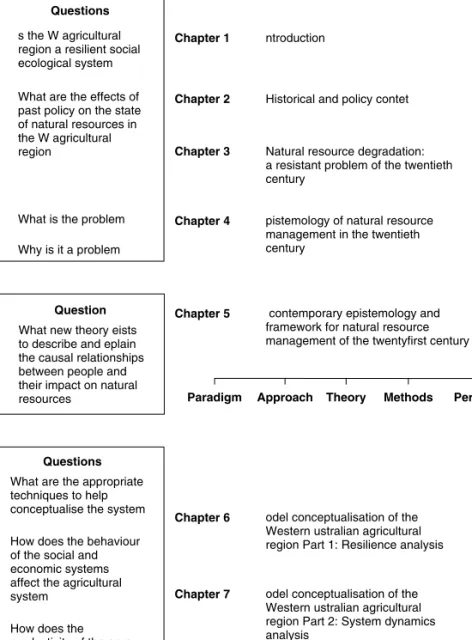
We have developed a guiding framework for a strategic analysis (Figure 1.3). It provides the reader with an overview of the book chapters and
Questions
• What are the appropriate techniques to help conceptualise the system?
• How does the behaviour of the social and economic systems affect the agricultural system?
• How does the productivity of the agro- ecological system affect the social system?
Chapter 6 Model conceptualisation of the Western Australian agricultural region. Part 1: Resilience analysis
Chapter 7
Chapter 8 Synthesis
Model conceptualisation of the Western Australian agricultural region. Part 2: System dynamics analysis
Introduction Chapter 1
Chapter 2 Historical and policy context
Chapter 3
Chapter 4 Epistemology of natural resource management in the twentieth century
Questions Is the WA agricultural region a resilient social- ecological system?
What are the effects of past policy on the state of natural resources in the WA agricultural region?
What is the problem?
Why is it a problem?
••••
Natural resource degradation:
a resistant problem of the twentieth century
Chapter 5 Question
• What new theory exists to describe and explain the causal relationships between people and their impact on natural resources?
A contemporary epistemology and framework for natural resource management of the twenty-first century
Paradigm Approach Theory Methods Perspective
Fig. 1.3. Guiding framework showing the key questions and the progression through the book with the chapters identified.
shows the questions to be addressed. This book is composed of eight chapters.
Chapter 1 provides an introduction to the issues, sets the context and poses a number of questions and sub-questions to be addressed. In this introductory chapter we establish the breadth and interdisciplinary nature of this book
while focussing on the particular issues of complexity and uncertainty in problems of natural resource management in the agricultural context.
How we understand ‘the problem’ and go about the process of problem- solving in complex issues is introduced as an issue for science and policy, particularly when people’s values are concerned and need to be taken into account in the problem-solving process. Natural resource management deci- sions must be taken with serious regard for whole contexts, including impor- tant cultural, social and political dimensions that have contributed to the current state of the system and condition of our natural resources. Any natural resource problem caused by human actions is a result of prior events and processes that develop and are portrayed as historical patterns over genera- tions or even centuries. Rarely will the experience of one generation be able to unravel the origin of an event or a process fully enough to make decisions to explicitly influence future system behaviour. The way we interpret what we see is based on history, our mental models and other techniques created to help make sense of what we see. In Chapter 2, we provide the historical and policy context of the WA agricultural region and an evaluation and assessment of natural resource management. The historical account spans the 116-year history, between 1889 and 2005, of the development of agriculture in Western Australia and the evolution of policy for natural resource management relating to agriculture. In Chapter 3, we describe the key features of the negative impacts or unintended effects of the management of agricultural landscapes in Australia with a focus on the WA agricultural region. One of our central concerns is that if society is not to repeat the same problems with each succes- sive policy as those encountered with command and control policy and with the integrated and adaptive management approaches as currently practised, then it is apparent that we will need to approach the problem-solving process in a very different manner to past measures.
It is important that we critically analyse the applicability of past measures to addressing natural resource problems not only from a methodological perspective but also from a paradigmatic perspective. The key characteristics of the current dominant paradigm and methodology of science and its rela- tion to social action and organisational analysis are described in Chapter 4.
The key characteristics of alternative frameworks are examined for organ- ising competing values and alternative worldviews of how ‘reality’ may be understood. We outline the tenets of traditional or normal science philos- ophy and its influence on natural resource management and policy. Command and control and integrated and adaptive management are then appraised as approaches to policy implementation. This is done by comparing the episte- mology and methodology of these approaches.
Following on from how we have understood natural resource management in the past, in Chapter 5, we review the systems literature relevant to the new and evolving basis for understanding natural resource problems. We develop a heuristic framework composed of the paradigm, approach, theory, perspective and methods that we adopt and subsequently apply to the WA agricultural region. The framework, based on systemic notions, is designed to explore the fundamental causal relationships in systems made up of people and nature.
In Chapters 6 and 7 we integrate the information from Chapters 2 to 5 and explore what the findings may mean for the future dynamics of the WA agricultural region. In Chapter 6, we apply resilience theory to analyse and evaluate the WA agricultural region’s resilience and capacity for change and renewal. In Chapter 7, we use qualitative system dynamics, at the highly aggregated level, to develop further insights into understanding the phenomenon known as ‘the counterintuitive behaviour of social systems’
and ‘policy resistance’. These phenomena describe the tendency for inter- ventions to be delayed, diluted or defeated by the response of the system to the intervention itself (Meadows and Robinson, 1985; Forrester, 1995). In addition we integrate system dynamics with resilience theory to identify high leverage policy points in the system that might be used to effect fundamental and lasting change. In Chapter 8 we provide the synthesis, conclusions and potential extensions that arise from this work.
Historical and policy context
Rather than float in an unconnected present, environmental history can provide some context and story as to how we got here. So we can
proceed, believing that environmental history can speak to environmental policy, to some extent at least.
Stephen Dovers, 2000
2.1 Introduction
Some societies may count their history in thousands of years, for example Aboriginal society has been a component of Australian landscapes for between 60 000 and 140 000 years (White, 1994) whereas European explorers visited these shores around 500 years ago, with significant settlement and changes in land use for less than 200 years in Western Australia.
Over the long period of Aboriginal occupation there have been great changes in the geography of Australia. Some 30 000 years ago the country was mainly a green and pleasant land in which giant animals roamed, lakes were full, and mountains were snow covered. Conversely 15 000 years ago the land had a larger desert core. Around 10 000 years ago the climate and vegetation patterns reached approximately their present condition. Through all this time sea levels were also fluctuating. At their lowest point Australia formed one giant land mass from the bottom of Tasmania through to New Guinea (Figure 1.2). Archaeological research has shown the kinds of adap- tive responses that Aboriginal people made to these changes (Horton, 1994) emphasising the dynamic nature of Aboriginal culture and technology.
Although it was once thought that Aboriginal Australians made little and only simple use of the land, and had little attachment to it, we now under- stand more of the complex interrelationships that they have with the land
12
and how they have changed it. Structural and organisational, and prac- tical and technical aspects were closely interwoven; tribal territory size, social structure and totemic beliefs were linked to methods of resource exploitation such as the use of fire, animal hunting, harvesting of plants, the construction of fish traps and the building of dams and canals. Their tradi- tional land use systems brought about significant changes in the structure of Australian ecosystems (Stephens, 1986; Horton, 1994) prior to European settlement.
From the 1600s various Dutch explorers visited Australia’s shores, for example Dirk Hartog in 1616, Volkesson in 1658 and Willem de Vlamingh in 1696. The first of the British explorers, Captain James Stirling, arrived in Western Australia in 1827 while exploring the ‘great southern land’.
Settlement followed rapidly when land grants were offered by the British government, which required settlers to reach Western Australia before October 1829. The small colony struggled for the first 60 years to 1889 when dramatic changes began to take place, and this is where our account of the history of the WA agricultural region begins.
This review and evaluation of natural resource management and policy starts where there is adequate history of the interaction between people and nature at a regional scale to identify patterns of change that have elicited policy responses. This chapter provides a review of the 116-year history, between 1889 and 2005, of the development of the WA agricultural region and an analysis of policy for natural resource management relating to agriculture.
Although the focus is on the WA agricultural region, it is set within the state and national contexts to show the relationships among policies at the various political hierarchical levels.
Agriculture is a dominant use of the landscape in many western soci- eties. In Australia 60% of the continent has been modified for agriculture including pastoral and cropping activities (National Land and Water Resources Audit, 2002). The WA agricultural region comprises approximately 18 million hectares or about 12% of the State of Western Australia, where rainfall is sufficient to support cropping. Agricultural development has had to overcome many difficulties to maintain productivity and this history is well documented (see for example, Rintoul (1964); Bolton (1972); Burvill (1979); Davidson (1981); Beresfordet al. (2001)).
Agricultural land management methods, particularly those of annual crop- ping, continue to cause changes in ecosystems resulting in extensive degra- dation of land and water both on and off farm. The widespread modification of the landscape into agro-ecosystems has had major negative impacts on the soil, water, biodiversity and ecosystem services of Western Australia.
Consequently land degradation has been the subject of numerous Common- wealth and State enquiries from the first Commission of Agriculture report in 1891 (Western Australian Commission on Agriculture, 1891) and has been reviewed elsewhere (Department of Environment, Housing and Community Development, 1978; Burvill, 1979; Chisholm and Dumsday, 1987; Legislative Assembly, Western Australian Parliament, 1990; McTainsh and Boughton, 1993). In response to the early symptoms of soil erosion, Australia has devel- oped various soil conservation policies since the first statute was proclaimed in 1893.
History reveals three eras in policy development: command and control policy (CCP), integrated natural resource management policy approaches, including strategic regional approaches and the emerging market-based policy, depicting a trend from a reduction in regulation to a market-driven approach (Industry Commission, 1998; Pannell, 2000a; Department of Agriculture, Fisheries and Forestry-Australia, 2002). Much has been written as separate issues about:
1. the history of land development;
2. natural resources management relating to agriculture in Australia; and 3. increasingly about the problems of policies required to effect improvement
in complex natural resource management.
However, little attention has been paid to the integration of these three factors in a dynamic analysis. The aims of this chapter are (1) to present a summary of the historical background of the development of the WA agricultural region, (2) to examine the evolution of policy from the initial specific soil conservation policies to the current multi-objective sustainable natural resource management policies; and (3) to provide the context for the application of emerging theories of the behaviour and dynamics of the WA agricultural region.
2.2 Historical periods
In the history of Western Australia, agriculture and natural resource policies were reactive in response to reports on the declining condition of soil, land or water. Of the numerous reports, Royal Commissions and enquiries into soil conservation and land management in Australia only those considered to be the most significant and influential in either changing the direction of policy or identifying the direction of change are discussed in this review and
are presented in Figure 2.1. This figure shows the links between Australian Government and State policies.
A comprehensive history of the development of agriculture in Western Australia is given by Burvill (1979), agricultural development of WA valley floors by Frost and Burnside (2001), the economic history of Australian farming by Davidson (1981), the development of salinity by Beresfordet al.
(2001) and Bekle (2002), land clearing for agriculture in the period 1970 to 1990 by the Australian Greenhouse Office (2000) and an audit of land and water resources by National Land and Water Resources Audit (2001a,b,c,d,e).
These publications have been used extensively in this analysis.
In the development of agriculture in Western Australia, Burvill (1979) identified six distinct temporal periods between 1829 and 1979. These are labelled as:
1. The First Sixty Years (1829–89);
2. The Move Forward (1889–1929);
3. Depression and the War (1929–45);
4. Recovery (1945–9);
5. The Rural Boom (1949–69); and 6. A Troubled Decade (1969–79).
We have added three periods to cover the period from 1979 to 2005, labelled Environmental Awareness (1980–90), The Decade of Landcare (1990–2000) and The Turn of the Century (2000–5). We have used these temporal periods as they are convenient categories for conducting this historical analysis and are used as the basis for resilience analysis in Chapter 6.
2.2.1 The First Sixty Years (1829–89) and The Move Forward (1889–1929)
For the first sixty years of the WA colony’s history, pastoral activities were developed ahead of agriculture and only 28 000 hectares were developed for cropping by the 1880s. This figure rose to 5.8 million hectares by 1929, the end of the period labelled The Move Forward. After the discovery of gold in Western Australia in the 1880s and the establishment of responsible govern- ment in 1890, the WA Government saw a need to diversify the economy through the development of an agricultural industry. The WA Government was proactive in financing and establishing the necessary infrastructure to encourage farming, including land subdivision and railways. Generally the railways were constructed along the valley floors and consequently the land adjacent to the railways was cleared for agriculture first (Frost and Burnside,
DateInfluential events & FactorsFederal Government ReportsFederal Government ActionsWA State Government Reports 1889–1920sWind erosion 1930s–1940sWind and water erosion severe and widespread nationally and in the USA Soil Conservation Act 1938 Standing Committee on Soil Conservation established 1946
Enquiry into Soil Erosion Soil Erosion Committee established 1936 1950s–1960sPro-development ethos, extensive clearingLittle interest in soil and natural resource policy at Federal or State level 1970sWidespread land degradation following the pro-development years Conservationist ethos
Study of Community Benefits of and Finance for Soil Conservation (Standing Committee on Soil Conservation 1971) A Basis for Soil Conservation Policy (Dept of Environment, Housing and Community Development, 1978)1980sSoil and water salinity Australian Conservation Foundation and National Farmers Federation joint action (1988)Review of soil conservation legislation in Australia (Bradsen, 1988)
National Soil Conservation Program (1983) Fig.2.1.Influentialeventsandfactorsinthehistoryandpolicyofnaturalresourcesrelatingtoagriculture1889–2005. (Continuedonnextpage)
1990sConservationist ethos strengthened to include ESD The Earth Summit (1992) Biodiversity National Land & Water Resources Audit 1997–2002 Industry Commission Report (1998) National Landcare Program Land and Water Resources Research and Development Corporation established (1990) (Land and Water Australia) Intergovernmental Agreement on the Environment (1992) National Strategy on ESD National Dryland Salinity Program phase 1 (1993–8) Natural Heritage Trust (I) (1997–2002) National Dryland Salinity Program Phase 2 (1998–2003)
Select Committee into Land Conservation (1990–1) Review of natural resource manage- ment & viability of agriculture legislation (1996–7) 2000s 2005
Markets for ecosystem services
National Action Plan (NAP) for Salinity and Water Quality (2000) Native Vegetation Management Policy (2001) Natural Heritage Trust (II) (2002–07) National Market-Based Instruments Pilots Program Natural Heritage Trust (II ext) (2007–8)
Salinity Taskforce Report (2001) Fig.2.1.(cont.)