Siblings of Children with Autism:
Social Behavior in Early Childhood Emily A. Tremaine, M.A./C.A.S.
Alfred University
Siblings of Children with Autism:
Social Behavior in Early Childhood
BY Emily A. Tremaine St. John Fisher College, B.S. (2004)
Alfred University, M.S. (2006)
APPROVED BY: Cris Lauback, Psy.D.
Committee Chairperson
Nancy Evangelista, Ph.D.___________________
Committee Member
Ellen Faherty, Ph.D.
Committee Member Alfred Mancuso, Psy.D.
Committee Member
ACCEPTED BY Cris Lauback, PsyD.
Chairperson, Division of School Psychology
ACCEPTED BY Nancy Evangelista, Ph.D.
Associate Provost and Director of Graduate Studies
ACCEPTED BY William Hall, Ph.D.
Provost & Vice President for Academic Affairs
DEDICATION
I would like to dedicate this dissertation to the siblings and families of children with autism. It is without question that the trials and tribulations that you face each day are challenging. Your participation in this project is appreciated and will hopefully lead to extended research in the field.
ACKNOWLEDGEMENTS
It is a pleasure to thank those who made this dissertation possible. I specifically want to acknowledge my committee members: Drs. Al Mancuso, Ellen Faherty, and Nancy Evangelista for their suggestions, expertise, and support throughout this process. A
special thank you should also be directed toward my dissertation Chair, Dr. Cris Lauback.
Without his motivation, knowledge, and encouragement, I could not have made it to my final defense. It is also without question that I recognize my friends and family for sticking with me. Thank you, mom and dad for being my number one support system since I was a little girl and never giving up on me. Without both of you, I would have never made it to this point in my life. I love you! I also have to acknowledge another person that has been in my since I was four years old and has always stood behind my decisions and been there when I have needed to vent. That is my sister Sara. To my very large extended family, thank you all! Each one of you has been an important contributor to my success. Finally, I need to acknowledge my best friend, and person that was there for me each and every day, Mike. You always said “keep going, you can do it!” and you were right. Thank you for dealing with the long days and nights of research and writing.
You never once complained and always stayed positive. Without each and every one of you, I could not have reached my personal goal of receiving my doctoral degree. I am extremely grateful and appreciative.
TABLE OF CONTENTS
Chapter 1: Siblings of Children with Autism: Early Childhood and Behavior...8
Social Interactions...9
Social Learning Theory...10
Aggressive versus Prosocial Behavior...12
Attachment...15
Sibling Relationships...16
Autism ...21
Siblings of Children with Autism...24
Early Childhood and Social Development...29
Conclusions...32
Research Hypotheses...33
Chapter 2: Research Methods ...34
Participants...34
Measures...37
Gilliam Autism Rating Scale, Second Edition (GARS-2)...38
Social Skills Improvement System (SSIS)...38
Behavioral Assessment System for Children-Student Observation....39
Independent/ Dependent Variables...41
Procedure...43
Chapter 4: Results...46
Demographic Data...46
Formal Observation Data...46
Teacher Ratings Data...50
Chapter 5: Discussion...52
Limitations...55
Future Research...59
Implications for Practice...61
References...65
Appendix A...76
Appendix B...77
Appendix C...79
Appendix D...80
Appendix E...82
Appendix F...83
Table 1...84
Table 2...85
Table 3...86
Table 4...87
Abstract
Sibling relationships have been shown to impact the development of young children, specifically in the areas of social skills and behavior. Previous research has provided mixed results in regard to having a sibling with autism and its impact on social and behavioral development. Participants were included in the current study, based on meeting the criteria of being between the ages of 2 and 6, and having an older sibling with a diagnosis of autism or no diagnosis at all 1 to 5 years older. The children were then split into 2 groups of 14 children each, based on the siblings’ diagnoses. Parents were asked to complete a demographic questionnaire and teachers were asked to complete the Social Skills Improvement Scale (SSIS). Formal observations were also conducted in each of the participants’ classrooms to assess peer and teacher interactions.
Results from the teacher’s ratings determined significant findings, indicating that teachers rate their students who have an older sibling with autism as displaying less prosocial and more problematic behavior than siblings of children without any identified disabilities.
Results from the formal observations indicated significance for peer interactions, but not for teacher interactions. The overall findings of this study will support researchers in further investigating this topic and addressing how to support siblings of children with autism in developing appropriate social skills and behavior.
CHAPTER 1:
Siblings of Children with Autism: Early Childhood and Behavior
Growing awareness of Autism spectrum disorder has led to increasing interest in the effects the disorder may have on the siblings of children with this diagnosis. Sibling relationships, in general, have been shown to affect psychological and social
development in young children (Moser, Jones, Zaorski, Mirsalmi, & Luchner, 2005; Pike, Coldwell, & Dunn 2005). Specifically within the autistic population, areas such as social skills have been found to be affected, based on the sibling relationship (Rodrigue &
Geffken, 1993). Unfortunately, the results of this research have been inconsistent
(Hastings, 2003). It is unclear whether or not the autistic sibling relationship differs from other sibling relationships between typically developing children (Kaminsk & Dewey, 2002; Pilowsky, Yirmiya, Shalev, & Gross-Tsur, 2003). Previous research in this area has focused on school-aged siblings and there has been a lack of focus on the preschool- aged population. Because social interactions increase in complexity during the preschool years, it is necessary to make this the next step in the research (Pike et al., 2005).
The current study is an analysis of social interactions within the classroom for preschool-aged children who have an older sibling diagnosed with Autism spectrum disorder. More specifically, and for the purpose of this research, the term Autism spectrum disorder will encompass children with a diagnosis of Autism, pervasive
developmental disorder- not otherwise specified (PDD-NOS), and Asperger’s syndrome.
Autism includes various levels of severity, and it is beneficial to understand the impact that each level has on the child’s behavior. That behavior, in turn, may impact their
sibling without a disability. The social skills of these children have been compared with other children who have a sibling with no known disorders. Findings from this
comparison will allow researchers to have a more concrete understanding as to whether or not aggressive or prosocial skills are impacted through sibling relationships during early childhood. Future research can then focus on preschool programming with this information taken into account.
Social Interactions
Social interactions begin to develop early in a child’s life. It is during the early childhood years (between the ages of two and six) that these interactions become very complex (Pike et al., 2005), as there are specific behaviors that influence how social interaction is approached and performed. DeMulder, Denham, Schmidt, and Mitchell (2000) explained social interactions during the early childhood years as follows: “A major developmental task of this period is to manage emotional arousal within social interaction while successfully moving into the world of peers” (p. 274). This is the first time that children begin to understand the meaning of feelings and are able to empathize with others. They are introduced to such constructs as peer popularity, social
competence, aggressiveness, and anxiety. Previously, they were accustomed to the idea that they were the center of the universe. During the early childhood years, children begin to recognize the presence of others in their world (Pike, et al., 2005). At this point in their lives, children often begin to absorb the behaviors of others and make them their own. For example, this type of behavior is often seen after a child watches their favorite television show. They will attempt to imitate the behaviors that the actors display and
include them throughout their day. More specifically, they learn what behaviors seem to be accepted by society and include them into their own personality. Because this is such a critical component in how behavior is developed, research has focused directly on how the influence of others can impact an individual.
Social learning theory. Social learning research suggests that it is a combination of environmental and psychological factors that influence behavior (Berry, 2003; Ward &
Gryczynski, 2009). Albert Bandura’s social learning theory outlines three requirements for people to learn and model behavior. They include attention/retention (remembering what one observed), reproduction (ability to reproduce the behavior), and motivation (good reason) to want to adopt the behavior (Bandura, 1977). Bandura continues to utilize the principles of social learning theory in his more current research. He has expanded these ideas to concepts such as social cognitive theory and self-efficacy (Bandura, 1989; Bandura 1997).
Bandura defined self-efficacy as having the belief in our ability to succeed in specific situations. Self-efficacy contributes to how one might approach goals, tasks, and challenges. The concept of self-efficacy is a major element of Bandura’s social cognitive theory. This theory emphasizes the role of observational learning and social experience in the development of personality. According to social cognitive theory, people with high self-efficacy (those who believe they can perform well) are more likely to view difficult tasks as something to be mastered rather than something to be avoided (Bandura, 1977).
Bandura clearly explains how social learning theory is incorporated into the lives and behavior of all people in the following quote:
Learning would be exceedingly laborious, not to mention hazardous, if people had to rely solely on the effects of their own actions to inform them what to do.
Fortunately, most human behavior is learned observationally through modeling:
from observing others one forms an idea of how new behaviors are performed, and on later occasions this coded information serves as a guide for action (Bandura, 1977, p. 22)
Supporters of this theory feel that children all act uniformly until they are exposed to outside factors that introduce them to new elements of behavior. Keenan and Shaw (1997), for instance, argued that gender differences emerge because socializing agents, such as parents, selectively encourage traditional sex-typed behaviors (e.g., shyness, fearfulness, and withdrawal in girls) and/or discourage non-sex-typed behaviors (e.g., aggressive behavior in girls). Other advocates of a social learning approach generally argue that gender differences do not exist early in life, but only emerge later during the preschool period, at a time when gender-differentiated socialization pressures are
believed to be well established (Baillargeon et al., 2007). This is another example of the environment having an impact on behavior. When considering sibling relationships, the social learning theory would support the possibility of children learning certain behaviors from interactions at home and then carrying them out into other social environments. For example, a child who observes a sibling acting out aggressively at home and then being reinforced for that behavior, could think that the behavior was acceptable and transfer it to another setting.
In contrast, those in favor of a biological origin of behavioral development argue that gender differences in aggressive behavior are presented very early on in life before gender-differentiated socialization pressures could cause them. Research done by
Maccoby and Jacklin (1974), for instance, found that boys and girls differ in their degree of preparedness toward aggression. They determined that boys are more inclined than girls to respond in aggressive ways to their environment. Similarly, Brennan, Hall, and Bor (2003) found that the processes that are related to persistent aggressive behavior patterns in boys and girls are somewhat different. They determined that boys act out aggressively early in life, prior to being exposed to social influences, whereas girls are more likely to have a delay in their aggressive tendencies until something in their social environment triggers them. Other factors may also be responsible for these gender differences early on in life; such as prenatal exposure to androgens, as well as pregnancy, labor, and delivery complications (Raine, 2002). No matter what a child’s predisposition might be, an understanding of the development of behavior should be sought out in order to provide him or her with the appropriate tools necessary for being successful early in life.
Aggressive versus prosocial behavior. The type of social interactions that a child is exposed to can at times influence whether or not they display positive or negative behavior in the future. This concept of an individual’s behaviors being shaped by
patterns of social interactions previously observed has been described as transformational tendencies (VanLange et al., 1997). For example, repeated exposure to those who pursue self-interest activities may lead people to develop a more individualistic or competitive
orientation, rather than a prosocial orientation. In contrast, a child who observes his or her parents giving to others would be likely to display prosocial behavior in the future.
Because these orientations are influenced by outside factors, it is possible for some tendencies to change, depending on life experiences (VanLange et al., 1997).
More specifically, VanLange et al.’s (1997) study examined two hypotheses in relation to this topic. The two mentioned were: “(a) the hypothesis that the percentage of prosocials increases with age, whereas the percentage of individualists and competitors decreases with age (i.e., prosocial-growth hypothesis) and (b) the hypothesis that the percentage of prosocials decreases with age, whereas the percentage of individualists and competitors increases with age (i.e., proself-growth hypothesis).” To do this, 728
participants were asked to complete questionnaires and a set of biographical questions to assess age, gender, and level of education. A series of six decomposed games were also administered to assess participants’ social value orientations. These games allowed the researchers to determine which participants were prosocial, individualistic, and
competitive. It was determined that the number of prosocial people in their sample increased with age, indicating that the more exposure to social experiences a person endures, the more likely he or she is to possess that characteristic.
Two factors associated with interactions between children are prosocial and aggressive behaviors. These factors are separate and can occur independently or it is possible that they co-exist with one another. The behaviors should be identified and analyzed as early as possible in order to determine whether or not a child needs intervention for his or her social skills. When analyzing children’s poor behavior in
social settings, Beach and Laird (1968) determined that the development of social skill programming intended specifically for this population will decrease the intensity of serious problems in society later in life.
Prosocial behavior is defined as a voluntary action by an individual that is intended to benefit someone else (Garner, 2006). Most individuals exhibiting this behavior tend to maximize outcomes for themselves and others, while at the same time;
they are trying to minimize their differences. They have clear tendencies toward cooperation (VanLange, De Bruin, Otten, & Jorreman, 1997). For the most part, these individuals act in a selfless manner. They view everyone as equal and hold the opinion that people should be granted equivalent opportunities to succeed in life. Prosocial behavior is an important feature of childhood friendships and predicts positive
interactions among peers (Garner, 2006). Clearly, it is behavior that will positively affect a child’s ability to have successful social interactions throughout his or her life.
On the other side of the behavioral continuum is aggressive behavior. Aggression is often divided into proactive and reactive aggression. Proactive aggression occurs when a child’s action is goal-oriented, calculated aggression that is motivated by external reward. For example, a child in preschool might grab another child’s toy out of his or her hands in order to meet a need for personal satisfaction, even though doing so will harm his or her peer. This child is not worried about hurting the other child; rather he or she is solely focused on getting what he or she wants.
Reactive aggression is when a child’s action is in response to behavior that is perceived as threatening or intentional (Fite, Colder, Lochman, & Wells, 2007). This is
often seen in young children. An example would be a group of children sitting in circle, and by accident, one child gets up and steps on another child’s finger. The child who was stepped on might retaliate out of anger and hit the child who accidently stepped on him.
In this situation, the child acts out in response to an event that occurred outside of his or her control. It is not a planned act, and in many cases, the child acts without allowing him or herself time to analyze the situation. There is also the possibility that the child has observed similar behavior in the past when certain events have occurred, and only knows one way to respond.
Attachment. Children that display prosocial tendencies develop more secure attachments than do individualists and competitors. Furthermore, Creasey and Hesson- McInnis (2001) found that adolescents with insecure attachment orientations were predicted to report more negative affect during disagreements, less confidence in coping during arguments, and less optimal conflict tactics (e.g., more conflict escalation) than adolescents with more secure representations. VanLange and Visser had similar finding in their 1999 study on social dilemmas. They determined that an uncooperative
individual elicited not only relatively low levels of cooperation but also movement towards low interdependence when compared to prosocials and individualists.
Having a secure attachment bond with another individual has led adolescents to display prosocial behavior as well (Henry, 2008). Whether within the family or with a peer, having a positive attachment where appropriate behaviors can be observed and adopted is critical. One example of how this can impact daily functioning for a child is described. Henry (2008) determined that when an individual removes his or herself from
prosocial entities (e.g., family and school) and either simultaneously or subsequently interacts with antisocial entities (e.g., friends who use drugs); it is a critical contributor to adolescent drug use and delinquency. For young children, the first opportunity to form attachments with other individuals of their similar age may be with their sibling, however, that is not always possible.
Depending on the home environment, a child may have a sibling that requires significant attention from his or her parents. Under stressful family conditions, the quality of parent supervision and the consistency of social opportunities may be
minimized, the child may be exposed to poor socialization models, and the child may be less open to socialization practices (DeMulder et al., 2000). What a child learns from the relationship he or she creates with a sibling can influence the development of appropriate attachments and peer relationships later in life.
Sibling Relationships
Sibling relationships are unique in character and play an important role in a child’s individual adjustment (Pike et al., 2005). What a child learns from relating to a sibling can influence cognitive, affective, and social skills, as well as positive self-image (Rodrigue, Geffken, & Morgan, 1993). Interestingly, it is not only sibling conflict that often correlates with a child’s adjustment, but also the positivity in the relationship. Both elements of conflict and positivity in a relationship are able to foster a young child’s behavior over a period of time (Pike et al., 2005). In any given situation, it is how the child interprets and copes with the situation that determines whether it will end well or not.
For example, if two children spend a majority of their day fighting with one another, they might have the tendency to be more aggressive when playing with other friends. If they spend most of their time sharing and cooperating, those similar behaviors might be displayed in other situations. More specifically, the siblings’ relationship with one another contributes greatly to the way they will interact with other people in their lives in other social situations.
Sibling relationships begin to have a significant impact on a child during early childhood. This is the time when children engage in cooperative and pretend play, which are the types of interactions that foster the development of the child’s ability to
understand others (Pike et al., 2005). In many cases, siblings will use impressions of one another to form their own identity. As children grow older, the experiences that they go through with their sibling will help shape their future adult functioning, perceptions, expectations, self-care, and self-worth (Moser, Jones, Zaorski, Mirsalimi, & Luchner, 2005).
Multiple factors, including personality and behavior, can be transferred from the older to the younger sibling (Dunn, 2005; Moser et al., 2005; Pike et al., 2005). Overall, it is important to keep in mind that siblings are very influential towards one another, in both positive and negative ways. In many cases, younger children will attempt to be just like their older sibling and display the acceptable and unacceptable behaviors they have learned.
Moser et al.’s 2005 study determined that children have an easier time separating from their parents at an early age when they have an older sibling that they are able to
seek for protection. It is these older siblings that the children look to for guidance.
VanLange et al. (1997) also reported that children with more siblings tend to be more prosocial than children with few or no siblings. Specifically, they had 631 participants (adults looking back at their own lives as children) answer several surveys that included questions relevant to number of siblings, birth order, and sex ratio of siblings. For each participant, social value orientation (prosocial, individualist, or competitor) was assessed.
The individuals who reported being more prosocial had larger numbers of siblings. This could be because the child is able to interact with other children at an early time in their life. They are put into a position where cooperative bonds must be formed in order to get through the day. Children who grow up without siblings are not given that opportunity.
They are forced to seek out social situations on their own.
In Pike et al.’s (2005) study, families with children between the ages of 4 and 6, who had an older sibling, eight years or under, were asked to complete a number of questionnaires that targeted the children’s opinions of their relationships with one another, as well as the parents’ opinions of their children’s relationships with their siblings and how they react to their children’s behavior. It was determined that older siblings were more dominant, having an impact on the quality of the sibling relationship.
They also found that the siblings used each other as resources for developing social skills.
Specifically, brothers and sisters who spent more time playing together in a positive manner could develop skills such as sharing, cooperation, and empathy.
When examining sibling relationships, it is evident that other members of the family could also have an impact on how the relationship develops. A study performed
by Hoffman (1991) found that the environment that parents provide for their children early on contributes to the personality traits that the children tend to exhibit in the future.
Hoffman identified specific elements that can significantly influence parents to treat their children differently. Those elements included the order in which the children were born, the difference in age between the children, gender, physical appearance, and the
experiences that each child has been exposed to. For example, parents will often give more responsibility to their older child and “baby” their younger child. They may also urge their child who is considered to be better looking to be more outgoing and social, and possibly discourage this behavior with their other children. Once the children
understand the roles that their parents have created for them, the relationship between one another often reflects that.
Sibling relationships do not end within their family’s walls. In many cases, siblings are also each other’s peers. Ardelt and Day (2002) studied sibling/peer
relationships and found that adolescents who had a sibling that was also considered a peer were highly likely to identify them as their role model. In order to be considered peers, the siblings had to be close in age and/or grade. In total, 498 families from inner city Philadelphia agreed to be a part of the sample. For each of these families, a standardized interview, along with a questionnaire, was administered. After analyzing the data, it was determined that the more defiant older siblings were reported to be and were perceived to be by their younger siblings; (a) the lower the younger siblings’ own feelings of
competence tended to be; (b) the more defiant friends and defiant attitudes younger siblings tended to have; and (c) the more likely they were to report engaging in defiant
behaviors themselves. The mean age difference between the siblings in these families was 3 years. This research established that the younger sibling was more likely to adopt similar behaviors as their older sibling if he or she was able to relate to their older sibling, as in considering them a peer.
A study performed by Brotman et al. (2005) also found the strong impact that an older sibling can have on their younger brother or sister. When examining the behavior of preschool-age children who had older siblings of adolescent-age, it was determined that the preschooler’s behavior reflected the adolescent child’s antisocial behavior or positive peer relationships in school. These positive and negative behaviors often need to be identified early in a child’s life so that appropriate intervention can take place before negative behavior is engrained into the child’s life, resulting in him or her following the negative path that the older sibling took.
Kramer and Kowal (2005) provide another example of how sibling relationships that are created at home can be carried out and displayed in other environments. Their study determined that any negativity experienced between a child and his or her new sibling was also seen with the child and a friend. Young children are often unable to discriminate between their home life and separate environments. Because many children spend a majority of their time at home, the behaviors they learn in the home environment are likely to transfer to other areas of their life. Overall, research has indicated that many children who are well-adjusted psychologically, have families, as well as the sibling relationships, that are close, open, warm, emotionally connected, and flexible (Richmond
& Stocker, 2006).
Autism
Before attempting to understand the significance of a sibling relationship where one of the siblings has a diagnosis on the Autism spectrum, one must first have a clear understanding of the disorder itself. Currently, there is a wide range of definitions that all attempt to describe Autism spectrum disorder, with each being slightly unique. Although there are conflicting views of what characteristics should be associated with the disorder, authorities have agreed that Autism can be defined at three interdependent levels: as a neurological disorder related to brain development; as a psychological disorder of cognitive, emotional, and behavioral development; and as a relationship disorder in which there is a failure of normal socialization (Kabot, Masi, & Segal, 2003). It is also understood by authorities that Autism is a spectrum disorder. This means that children can exhibit many unique forms of the disorder at different levels (Kusch & Peterman, 1995). Some individuals may be able to function very successfully and independently throughout life with little to no assistance, whereas others with Autism rely on intense one-on-one support to complete simple daily life skills.
The Diagnostic and Statistical Manual of Mental Disorders- Revised Fourth Edition (American Psychiatric Association [DSM-IV-TR], 2000) defines Autism as a pervasive developmental disorder (PDD) that is caused by a dysfunction of the central nervous system leading to disordered development. All children with Autism spectrum disorder are characterized by qualitative impairments in social interactions, imaginative activity, and both verbal and nonverbal communication skills. They also have a limited
number of interests, which tend to be repetitive, and the manifestation of symptoms sets in before age three (Kabot et al., 2003).
Autism is currently on the rise. Most recent reviews tend to estimate a prevalence of 1–2 per 1,000 for Autism and close to 6 per 1,000 for Autism (Newschaffer, C.J., Croen, L.A., Daniels, J., et al., 2007). It is actually considered the best-documented disorder in child psychiatry (Erba, 2000). 75-80% of people diagnosed with Autism are also diagnosed with mental retardation, 15-20% are considered severely retarded (IQ below 35), and more than 10% have an average to above average IQ (National Institutes of Mental Health, 1997). Unfortunately, it is often difficult to determine if a child has Autism because of the wide range of possible characteristics. Every child that has Autism is unique and may or may not be able to do some of the things that another child with Autism can or cannot do. This is much different than other disorders where the criteria for diagnosis are more rigid.
Identification of Autism spectrum disorder in a child often occurs at an early age.
These children have difficulties orienting to social stimuli, an impoverished social gaze, and impairments in the areas of shared attention and motor imitation (Kabot et al., 2003).
Unfortunately, these deficits make it extremely difficult for children to share
understanding, communicate with others, or engage in interactive play. On the other hand, if children with Autism have been taught socialization skills and put into situations where they must practice these skills, their disruptive behavior decreases and their positive interactions with other children increases (Gonzalez-Lopez & Kamps, 1997).
Socialization skills can be taught through constant exposure, both in the home and at
school. The more comfortable the child is within social situations, the better off they are going to be when functioning in school and in later years; the work setting.
As stated previously, one of the major deficits displayed by children with Autism involves their social behavior. Their ability to develop reciprocal social interactions is limited by the lack of responsiveness to others’ initiations and the absence of social initiations on their part (Gonzalez-Lopez & Kamps, 1997). The lack of these specific skills makes it difficult for a child with Autism to develop relationships with others.
There have been many attempts to assist children who have this deficit including verbal prompts and feedback systems; teaching specific social initiations and skills; training with multiple peers; and the selection of specific objects and social settings to produce more positive effects (Gaylord-Koss, Haring, Breen, & Pitts-Conway, 1984; Strain, Danko, & Kohler, 1995; Tremblay, Strain, Hendrickson, & Shores, 1981). Gonzalez- Lopez and Kamps’ (1997) research specifically examined the usefulness of social skills training for autistic children. The participants for this study included four children with Autism and 12 typical children from the same elementary school. The experimental conditions included baseline, social skills training, social skills training plus
reinforcement, return to baseline, and social skills training plus reinforcement again. It was determined that the combination of social skills training and reinforcement produced the largest increase in duration and frequency of peer interactions of the children with Autism.
With the strong impact that this disorder has on the socialization that a child displays, it is likely that the family, more specifically the sibling, will also be affected.
Research has shown that siblings are 10-20% more likely to develop Autism than other children who do not have a sibling with the diagnosis (Kabot et al., 2003). This includes children who, otherwise, have no other identified deficits deemed diagnosable. These children often display similar characteristics that they have imitated from their autistic sibling. Because so many siblings are now being diagnosed with a disorder on the Autism spectrum, it is necessary to examine their own characteristics and how exactly they interact and engage with their already identified sibling.
Siblings of Children with Autism
In the past decade, there have been a number of studies that examined the siblings of children with Autism. With a strong acceptance that genes could play a role in
Autism, it is understandable why the behaviors and learning patterns of siblings of a child diagnosed with Autism should be studied. The behaviors that a child with Autism
displays could potentially provide insight on the way that child’s younger brother or sister may act in the future (Goldberg et al., 2005). Unfortunately, the studies’ findings have lacked cohesiveness. Previous research has found that behavioral issues displayed by the child with Autism did not have an effect on his or her sibling. One study
determined that siblings of children with Autism were not at an inflated risk for
adjustment difficulties, loneliness, or deficits in social competence (Kaminsk, & Dewey, 2002). Kaminsk and Dewey had 90 adolescents and their parents participate in their study on siblings of children with Autism. The adolescents either had a brother or sister who had been diagnosed with Autism, Down Syndrome, or a brother or sister without a known disability. A battery of questionnaires was completed by each participant and the
responses were analyzed. The study found that siblings of children with Autism are not at inflated risk for adjustment difficulties or loneliness. These siblings also did not display deficits in social competence. Interestingly, Kaminsk and Dewey did find that better psychosocial adjustment in siblings of children with Autism was associated with being surrounded by a greater number of siblings in the family. This would indicate that the siblings have a better chance of developing appropriately when they are exposed to other children who are typical and have no diagnoses. It is also critical to note the age of the participants in the study. The children were of adolescent age, indicating that they had a number of years where they could have been exposed to other children without disabilities. Over time, that exposure may have assisted in the siblings adopting more typical-like behavior.
A study by Rodrigue et al. (1993) found opposing results, reporting that older siblings of children with Autism had more internalizing and externalizing behavior problems. This could be due to the fact that they experience more pressure and stressors taking care of and defending their younger sibling.
Other findings have also determined that siblings of children with Autism have increased emotional problems, conduct problems, peer problems, and a lack of prosocial behavior. More specifically, Hastings (2003) collected data for 26 mothers of children with Autism recruited from a local school for children with Autism. The mothers were asked to assess their other child without a disability’s behavior through the use of a behavior checklist and rating scale. The researchers determined that siblings of children
with Autism had an increased risk for poor psychological adjustment and difficulty with prosocial behavior.
Female siblings of children with Autism seem to have higher social competence and self-concepts than the male siblings (Verte et al., 2003). This may be because the females are able to take on a motherly role with their sibling. This role playing makes them feel important. In Van Lange et al.’s 1997 study, it was determined that children who display prosocial behavior are likely to have more sisters than brothers. This finding emphasizes the idea that females seem to possess more positive social skills attributes that are able to translate to their siblings.
When specifically comparing these siblings with other typical children, as well as children with a diagnosis of Autism, it was determined by Goldberg et al. (2005) that the siblings resembled the children with Autism much more than the typically developing children when it came to social situations, initiating joint attention, and initiating requests. For this study, the sample was divided into three groups: (1) 8 children with Autism spectrum disorder; (2) 8 untested younger siblings of children with Autism spectrum disorder; and (3) 9 typically developing children from families without Autism spectrum disorder. The participants were all between the ages of 10 months and 33 months old. The children were each administered the Autistic Diagnostic Interview- Revised (ADI-R) and the Autism Diagnostic Observation Schedule-Generic (ADOS-G).
Control children were screened for participation using the Childhood Autism Rating Scale. Each child was then given the Early Social Communication Scales (ESCS) and
was videotaped interacting with a trained experimenter, who attempted to engage the child in various play situations.
Overall, Goldberg, et al. (2005) determined that the siblings group played in isolation more often than they played with other children and they were unlikely to initiate a social interaction or make a request. This study is significant, in that it explores the specific behaviors that are necessary for appropriate social development for a child.
However, there are some elements of the study that warrant further investigation. More specifically, Goldberg, et al. utilized a sample of children who averaged under the age of two. Children without siblings who have a disability may have difficulties socializing appropriately at this age. Also, the participants were evaluated based on their interactions with an experimenter. Observing them in a more naturalistic setting, around same-age peers, would provide a more relevant picture of their actual social behavior.
Two other areas that have been examined for the siblings are their communication and language abilities. Again, varying results have been presented. A study performed by Tomblin et al. (2003) determined that language disabilities are often found within families of children who are diagnosed with Autism. For example, if a child in a family is autistic, it is likely that either a sibling or parent has some sort of difficulty with speech or communication. The level of difficulty could range from severe to mild. In contrast, Pilowsky et al. (2003) found that siblings of children with Autism functioned better than siblings with developmental language delays, with respect to their own language abilities.
Interestingly, when this same population was compared to children with other
developmental delays, such as Down Syndrome, it was determined that siblings of children with Autism had similar ability in regard to language.
In general, having a sibling with any disability potentially influences a child’s development. These children are given more responsibilities that can both be seen as positive and negative. Like siblings of children with Autism, children who have siblings with mental retardation are often called on more frequently to help out with household chores and may lose out on some one-on-one attention with their parents that other children without a disabled sibling might receive (McHale, & Gamble, 1989). When it comes to a child having a disability, it is clear that their sibling is at some level affected, and should be a major focus of intervention.
Research has been done comparing siblings of children with Autism and siblings of children with other disabilities such as Down Syndrome, mental retardation, and developmental language delay. Children with Down Syndrome represent a homogenous group of individuals that have fewer social and communication deficits than children associated with Autism (Kaminsk & Dewey, 2002). Rodrigue et al. (1993) found that the psychological functioning of siblings of children with Autism did not differ significantly from siblings of children with Down Syndrome. Another study performed by Pilowsky, Yirmiya, Shalev, & Gross-Tsur, (2003) examined the language abilities of siblings of children with Autism in comparison to the abilities of siblings of children with mental retardation or a developmental language disorder. Their findings indicated that language abilities of siblings of children with Autism were within normal limits, were similar to those of siblings of children with mental retardation, and were slightly better than those
of siblings of children with developmental language delays. Both of these studies would indicate that siblings of autistic children are not affected more prominently than other disabilities.
It is evident that there have been many studies done on siblings of children with Autism. These studies vary significantly in their focus, but all together provide a strong body of research dedicated to these individuals. And although the results vary from study to study, they make it clear that the siblings of children with Autism should not be
disregarded. It is critical to understand that their lives are likely to be affected by the disability.
Early Childhood and Social Skill Development
Unfortunately, a majority of the research done on siblings of children with Autism does not focus directly on children of preschool-age. These are the years when children are able to spend the most time with both siblings and peers, and patterns of interaction are formed (Lobato, Miller, Barbour, Hall, & Pezzullo, 1991). It is also the first time that they leave the walls of their home and are exposed to and influenced by people outside of their family.
The preschool years are also the time when maladaptive behaviors can be identified and appropriately dealt with before becoming problematic (Hill, Degnan, Calkins, & Keane, 2006). Some of these maladaptive behaviors include being physically aggressive, acting out in class, talking back to the teacher, unwillingness to share, etc. In contrast, persistence during challenges, frustration tolerance, and compliance with demands are hallmarks of successful emotional self-regulation later in life (Eisenberg et
al., 2001). Being successful in these areas requires the ability to manage emotional arousal.
DeMulder et al. (2000) indicated that there is continuity in adaptation across key developmental stages, including during the transition from early childhood in the home to preschool. Unfortunately, preschool is sometimes the only environment where a child can learn these important skills. The homes that some children grow up in may be a hindrance on their development. For instance, Kershner et al., (1996) found that elevated levels of psychological distress in parents is a risk variable for children. When a child lives with a parent who experiences this distress, they are more likely to develop behavior problems. DeMulder et al. (2000) found that experience in a good secure-base
relationship at home facilitates a child’s ability to use the preschool teacher as a secure base in the school-setting. If a child does not have that attachment at home, it will be more difficult for them to develop successful relationships in school.
Interactions with same-age peers are often first introduced during the preschool years. Persson (2005) explored preschoolers’ prosocial and aggressive behaviors, with a focus on theinferred underlying motives of these behaviors. Forty-four children were observed in naturalistic interactions withpeers. Three categories of prosocial behavior andthree categories of aggressive behavior were explored. It was found that prosocial performance was developed and highly influenced at this point in the child’s life. It was also noted that prosocial behavior increased in frequency as the children got older.
Other behaviors, such as aggression and compliance are observed during peer interactions at this age as well. For many children, it is the first time that they are given
restrictions, limitations, and rules to follow from the other children that they are
attempting to socialize with. Some children will act out aggressively in response to these, while others will comply. Odom, Zercher, Li, Marquart, Sandall, and Brown, (2006) found that it is crucial for all preschool children to develop appropriate social acceptance and rejection during preschool, as these behaviors remain stable through the elementary school years and have the potential to affect academic performance and school
adjustment. Social interactions can be very difficult for typically developing young children, so one can imagine the stress on preschool children with a disability being exposed to social situations.
Odom et al. (2006) noted that at this current point in time, the United States’
government is requiring the provision of special education services in classes where typically developing children function. This is commonly referred to “push-in” services in the school. It is much less restrictive and allows the child with a disability the chance to interact with other typically developing children. With this movement introduced, access to social interactions with “typical” peers is more readily available in many preschool programs.
A pivotal study of preschool age children who had a sibling with Autism found that these children were at risk for atypical development (Goldberg et al., 2005).
Specifically, the social interaction, joint attention, and requesting behaviors of the siblings all occurred significantly less often than typical developing children. The findings also indicated that the behaviors of siblings of children with Autism resembled children with Autism more than typical developing children. Fortunately, if maladaptive
behaviors are identified when the child is still in the preschool-age range, there is time for remediation before it becomes a larger issue (Odom et al., 2006).
Conclusions
The research reviewed has shown that children begin to learn in social situations during early childhood. Social learning theory specifically explains how a child is able to take social experiences that he or she has learned and apply them to his or her own
behavior. At this time, children are exposed to behaviors that allow them to express themselves in both prosocial and aggressive manners. For many families, the sibling relationship is the first time that a child is able to associate with his or her peer. It is that relationship where behaviors are first transferred.
As previously mentioned, Autism spectrum disorders have been frequently researched. More specifically, the effects that it has on the individuals surrounding a child with Autism appear to be significant. The siblings of children with Autism are often observed in various settings, displaying behaviors similar to their sibling.
Unfortunately, little research has been aimed directly towards children between the ages of 3 and 5, where it has been documented that a significant amount of behavioral
development occurs (Pike et al., 2005). Also, in a study (Goldberg et al., 2005) that did aim to examine young siblings, the interactions that the children had with peers and teachers in their classroom were not analyzed, but rather just the interactions with the test administrator.
The current study examines social interactions within the classroom for early childhood-aged children who have an older sibling diagnosed with Autism spectrum
disorder. These children have been compared with other children who have a sibling with no known disorders. Data related to each child’s peer interactions and interactions with the teacher was then collected and analyzed.
Research Hypotheses
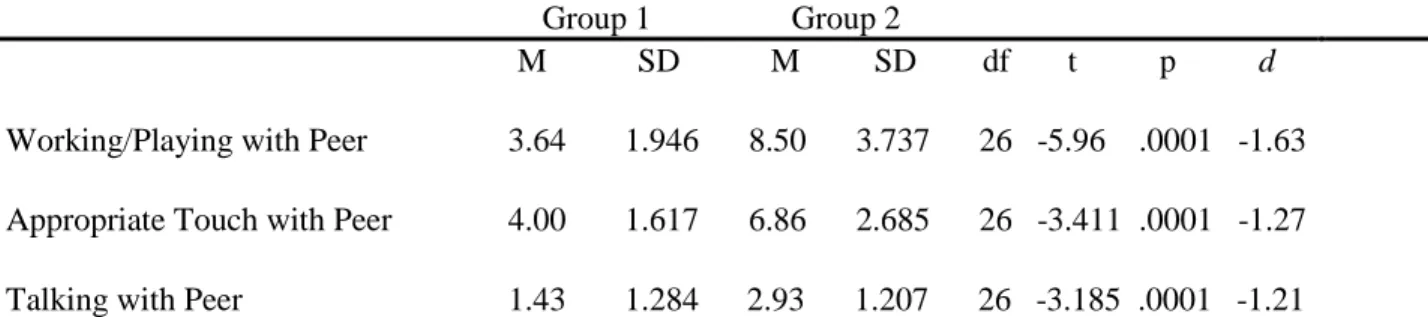
It was hypothesized (H1) that children who have an older sibling with a diagnosis of Autism display less socially appropriate behavior when interacting with their peers, (such as playing or working with other children, touching others when the teacher has indicated that it is appropriate, and initiating conversations during free play), than children who have an older sibling considered to be typical. A second hypothesis (H2) was that children who have an older sibling with Autism have less socially appropriate behavior when interacting with their teacher, as compared to children with an older typically developing sibling. Specific behaviors targeted included: following directions, raising hand when appropriate, and engaging in appropriate physical touch with the teacher. A final hypothesis (H3) was that teachers rate siblings of children with Autism as demonstrating less prosocial behavior and more problematic behavior than siblings of children without any diagnosis.
CHAPTER 2:
RESEARCH METHOD Participants
Twenty-eight preschool-aged children who have a sibling with an ASD who is one to five years older than them participated in this study. In order for a child to have been considered in the early childhood age-range, they needed to be between the ages of 2 years, 0 months and 5 years, 11 months. For this study, the average age of the 28 participants is 4.5 years old (mean age= 54 months). Group 1 included 14 children who have an older sibling with a diagnosis on the Autism spectrum, including Autism,
Asperger’s Disorder, and Pervasive Developmental Disorder (PDD-NOS). Asperger’s is a neurological disorder that, like others on the Autism spectrum, is marked by difficulties in communication and social interaction. PDD-NOS is a condition on the spectrum with some, but not all, of the symptoms associated with classic Autism. Included are difficulty socializing with others, repetitive behaviors, and heightened sensitivities to certain stimuli (Autism Speaks, 2011). All of the children in Group 1 were identified through various agencies in the northeastern United States who provide support for families who have a child with a disability. A 15th child was excluded from the study due to elevated ratings on an Autism screener (Gilliam Autism Rating Scale, Second Edition) given to each teacher for completion. Group 2 was composed of 14 children who have an older sibling without any diagnosed disability. These children were chosen by the
preschool/elementary school teachers of the children in Group 1. This was done in order to minimize the differences between the two groups, which could have impacted the
overall results. However, in some cases, children in different classes were utilized due to the lack of parental consent and to allow participation by peers in the classroom. In total, 16 teachers participated in the study. Ten teachers rated pairs of both children in Group 1 and Group 2. In 1 case, the teacher rated more than just 1 child from each group. The remaining 5 teachers rated either a child from Group 1 or Group 2.
The children in Group 1 were identified with the assistance of Upstate New York Families for Effective Autism Treatment (UNYFEAT), the Central New York Chapter of the Autism Society of America (CNY ASA), Chemung ARC, Preschool Learning Center (PLC), KidsOutAndAbout.com, Shelton Public Schools in Shelton, CT, and the Parent Child Resource Center (PCRC). Each of these agencies distributed information
regarding the present study to the families they serve. The families then had the opportunity to contact the researcher to participate. This self-election method of participating impacted the overall small sample size, as the families were required to make the additional step of reaching out to the researcher to be considered. Although only 28 participants were included in the study, a total of 32 families made initial contact to participate. One of those families ceased communication early in the selection process and 3 families did not meet the appropriate criteria. After completing the GARS-2, 1 participant was eliminated due to an elevated score, indicating a possibility of Autism.
In total, 43% of the Group 1 participants were between the ages of two and four and 57% were between the ages of five and six. Fifty percent were males and 50% were females. All fourteen of the participants were Caucasian. When asked to rate the sibling’s place on the Autism spectrum, 21% of the parents indicated PDD-NOS, 29%
indicated Asperger’s Disorder, and the remaining 50% indicated Autism. Additional descriptive statistics and frequencies for Group 1 may be found in Table 1.
The children in Group 2 were identified by the preschool or elementary school teachers of the children in Group 1. Some parents were aware of the study being conducted and indicated an interest in having their child participate. All of the participants were required to attend preschool for at least half of the day on a regular basis and not have any diagnosed disability nor a sibling with a diagnosed disability.
50% of the participants in Group 2 were between the ages of two and four and 50% were between the ages of five and six. Group 2 was also split evenly between males and females. 86% of the participants were Caucasian and 14% were Indian. Additional descriptive statistics and frequencies for Group 2 may be found in Table 1.
A letter of informed consent was provided to each family. The consent explained the research project and the rights of the participants (see Appendix A). A signed copy was required from each family prior to the participant being included in the study. The participants’ teachers were important contributors to this study. They had the most consistent and direct contact with the participants during the data collection. Each teacher was provided with a written explanation of the study and a specified description of the tasks that they would be asked to complete and be responsible for (see Appendix B). Their informed consent was also required prior to the study beginning.
Measures
Gilliam Autism Rating Scale, Second Edition (GARS-2). Every child’s preschool teacher (from Group 1 only) was asked to fill out the Gilliam Autism Rating
Scale, 2nd Edition (GARS-2) (Gilliam, J.E., 2006) to rule out the chance that the
participating child might have Autism. When this screening tool indicated that the child could be on the Autism spectrum, he or she was not included in the study.
The GARS-2 is a revision of the popular Gilliam Autism Rating Scale. It assists teachers, parents, and clinicians in identifying and diagnosing Autism in individuals ages 3 through 22. The scale also helps estimate the severity of the child's disorder. Items on the GARS-2 are based on the definitions of Autism adopted by the Autism Society of America and the Diagnostic and Statistical Manual of Mental Disorders: Fourth Edition- Text Revision (DSM-IV-TR). With respect to reliability, the GARS-2 shows good
internal consistency for the three subscales and the total scale with coefficient alphas ranging from .84-.94. Garro (2000) indicates that the test manual reports one study for test-retest reliability, results of which indicated good stability over a one-week interval.
Please refer to the Appendix C for a copy of the scale.
In the current study’s screening protocol, one sibling from Group 1 was identified as having elevated levels (SS = 86) high levels of autistic-like behavior. Any standard score above 85 indicates that the individual is very likely to have some level of Autism.
Due to the significantly elevated ratings, this child was not asked to continue with the study. For ethical reasons, the information collected from this screening was shared with the parents and school that this child attended and further evaluation was advised. In order to keep the groups even, one child from Group 2 was then eliminated from the study. This process resulted in 14 children in Group 1 and 14 children in Group 2. No
other information was analyzed from the GARS-2, as it was only utilized as a screener to determine who would be the most appropriate participants for the current study.
Social Skills Improvement System (SSIS). The SSIS is a nationally
standardized series of questionnaires used to obtain information on the social behaviors of children and adolescents from teachers, parents, and the students themselves. This tool can be used for individuals between the ages of 3 and 18. The SSIS was developed by Gresham and Elliot (2007) to replace the Social Skills Rating System (SSRS). For the present research, the teacher rating scale was utilized. This scale assesses three domains:
(a) Social Skills, (b) Problem Behaviors, and (c) Academic Competence. The social skills domain includes subdomains labeled communication, cooperation, assertion, responsibility, empathy, engagement, and self-control. The problem behaviors domain includes externalizing, bullying, hyperactivity/inattention, internalizing, and Autism spectrum. The Academic Competence section addresses reading achievement, math achievement, and motivation to learn for children in grades K-12. The revised tool also includes national norms for preschool. Please refer to Appendix D for a copy of the SSIS.
According to the SSIS Rating Scales Manual, the internal consistency reliabilities support the idea that behaviors comprising each subscale reflect a common dominant trait and are relatively free from the influence of random error. The manual also explains that validity evidence was obtained through studies on content, internal structure, and correlation with other measures. Overall, it was found that the SSIS measures what is intends to measure and that appropriate inferences from the results can be made with confidence.
Although a relatively new tool, one study completed by Kettler, Elliott, Davies, and Griffin (2009) did utilize the SSIS when exploring student performance on national tests in Autralia. The purpose of this study was to collect reliability and validity evidence for the SSIS. Their findings indicate that the SSIS is an appropriate instrument for
measuring social skills and related constructs. The various items, guides, and subscales from the SSIS fit together in much the same way with the Australian sample as they did with the national standardization sample from the United States. These results indicate that academic skills and social behavior are related constructs. This relationship provides a rationale for using a brief measure of both academic skills and social behavior to predict academic achievement.
Behavioral Assessment System for Children- (2nd Edition) – Student Observation System (BASC-2 SOS). The BASC-2 was created by Reynolds and Kamphaus (2006). It includes a comprehensive set of rating scales and forms including the Teacher Rating Scales (TRS), Parent Rating Scales (PRS), Self-Report of Personality (SRP), Student Observation System (SOS), and Structured Developmental History
(SDH). Together, they assist in the understanding of the behaviors and emotions of children and adolescents. Any individual between the ages of 2 and 21 can be evaluated using this system.
The rating scales and forms can be used in conjunction with one another or independently. For the purpose of this research, portions of the BASC-2 SOS were utilized. This measure was chosen in order to provide observational data that could be coupled with formal rating scales, with the expectation of more comprehensive results.
The form creates an outline of information to be collected during a direct observation.
Using momentary time sampling during 3-second intervals, each spaced 30 seconds apart for 15 minutes, an observer can objectively rate a wide range of behaviors. The SOS assesses both adaptive and maladaptive behaviors, from positive peer interaction to repetitive motor movements. To address the research questions for this study, the following behaviors were observed: Response to Teacher/Lesson and Peer Interaction.
Within the 2 general behaviors observed, data was collected on 6 more specific behaviors. Those behaviors included listening and/or following directions,
interacting with the teacher by asking/answering questions, appropriate physical touch with the teacher, talking with another student, playing, or working with another student, and touching another student appropriately.
Research has been conducted to determine the validity of this measure. Lett and Kamphaus (1997) evaluated the differential validity of the BASC: TRS and the BASC:
SOS in the differentiation of the nondisabled children from children with ADHD diagnosis, and children with an ADHD-only diagnosis from children with ADHD co- morbid diagnoses. The results indicated that the TRS and the SOS exhibited good differential validity. The group differences that were found were consistent with the definition of ADHD. A Predictive Discriminant Analysis also indicated, however; that the SOS does not contribute a sufficient amount of information above and beyond that obtained by the TRS alone. Unfortunately, according to the BASC-2 manual, the reliability of the measure has only been analyzed for the teacher, parent, and self rating scales, not the observational component.
Independent Variables
Two participant groups were formed based on whether the child’s older sibling had Autism or no disability at all. These two groups were identified by the preschool teachers and parents, based on the necessary requirements to participate. Data was collected for each participant from the preschool teacher and the parents, and examined anonymously by the researcher.
Dependent Variables
Four variables were measured for this study; peer interactions, interactions with the teacher, prosocial skills, and problem behaviors. Peer interactions and interactions with the teacher were determined through the classroom observations, utilizing the BASC-2 SOS. Prosocial skills and problem behaviors were examined through the teacher ratings from the SSIS.
Peer interactions were characterized by talking, playing, sharing, and appropriate physical touch with other children in the classroom. Appropriate physical touch was determined to be touching in a non-aggressive form that was accepted by the child receiving it.
Interactions with the teacher included listening and/or following directions, asking/answering questions, and appropriate physical touch with the teacher.
Appropriate physical touch was determined to be touching in a non-aggressive form that was accepted by the teacher. An example of this type of behavior could be a high-five or holding a hand.
Prosocial skills of communication, cooperation, assertion, responsibility, empathy, engagement, and self-control were measured.
Problem behaviors were grouped as externalizing, bullying,
hyperactivity/inattention, and internalizing behavior. This variable also included an Autism behavior subscale.
Demographic Variables
Information on several variables was collected in order to gain a better understanding of the participants. These were:
Age: Parents of the participants were asked to identify their child’s current age on the demographic questionnaire. The questionnaire asked for both an age including year and month, however most of the questionnaire returned only included a year. Due to that response, only the year was taken into account.
Gender: Parents of the participants were asked to identify their child’s gender (male or female) on the demographic questionnaire.
Ethnicity: Parents of the participants were asked to identify their child’s ethnicity on the demographic questionnaire. Due to the lack of diversity in the communities that were polled for participants, 100% of the Group 1 participants and 86% of Group 2 participants were Caucasian. The second ethnicity identified in Group 2 was Indian.
Number of Siblings: Parents of the participants were asked to identify the number of siblings the participating child has on the demographic questionnaire. Again, in order to reduce error, it was important to keep the participants in Group 1 and Group 2 as
similar as possible. For each group, the majority of participants had 1 sibling (Group 1=
57% and Group 2= 64%).
Sibling’s Disability: Parents of the participants in Group 1 were asked to identify the specific degree of Autism their older child has on the demographic questionnaire.
This information was important, as Autism is a spectrum disorder with varying levels of severity. It is likely that a child with an older sibling who has Autism that is high
functioning will have a much different experience growing up versus a child with an older sibling with a more severe level of Autism. For this study, 50% of the participants in Group 1 had a sibling with Autism, 21% had a sibling with PDD-NOS and 29% had a sibling with Asperger’s.
Procedure
In order to initiate the current study, informed consent forms were either mailed out or hand delivered to the families and teachers. They were then required to sign and return the forms to this researcher. Along with the consent form directed to the families was a brief questionnaire reflecting the participants’ demographics (See Appendix F).
After consent was granted, the teacher of each child in Group 1 only was given the GARS-2 to complete, in order to rule out any possibility that the participating child may have a diagnosis of Autism. This was not done for Group 2, as the children had already been identified by their teachers as typically developing students. If a rating on the GARS-2 was elevated, the child was not included in the research project and the school was notified of the areas of weakness or concern. The children who cleared this screening were placed in one of two predetermined groups; children with an older sibling
who has been diagnosed with Autism and children who have a sibling with no identified disabilities.
Once the groups were created, the teachers were asked to complete and return an SSIS rating form on each child participant. Data collection also included two direct observations of the child in the classroom. Observations were conducted solely by this examiner to rule out the potential of weak inter-rater reliability. This observer entered the classroom where the child was located and performed two 15-minute observations using the BASC-2 SOS.
One observation was during direct instruction, and the other was during free play.
This observer kept track of each partial-interval the child interacted with a child in the classroom, with the teacher, and the type of interaction that occurred. The teachers were notified ahead of time when to expect the observation, so that conflicts could be
minimized. Due to age differences and various curricula being used in the schools, the actual observations ended up being unique for each child. More specifically, the younger children had more exposure to social skills instruction and were encouraged to participate in more group-based activities than the older children, whom were expected to already know appropriate social behavior and encouraged to complete activities on a more independent level. This was specifically observed when the observations were being completed during academic instruction. Because of the uniqueness of behaviors between age groups in this setting, as well as the limited encouragement for socialization for all participants, the data from the direct instruction setting was not further analyzed.
Following the data collection, including the rating scales and the formal observations in the free play setting, it was analyzed, and Group 1 was compared with Group 2. Qualitative information that was gathered from the demographic questionnaire was also compiled and relative findings are discussed. At the end of the study, the
parents and teachers of the participants were debriefed and thanked for their participation.