Jl. Perintis Kemerdekaan I No. 33 Kota Tangerang, Banten 15118 Website : http://jurnal.umt.ac.id/index.php/nyimak
Email : [email protected]
DAFTAR ISI (TABLE OF CONTENT)
A Content Analysis #pecatluhut on The Political Ethics of Government in Indonesia
––Asriadi, Cici Sundari, Zuly Qodir––
1 – 20
Social Media Twitter @BGRM Indonesia as a Medium of Information Communication and Outreach
––Herlan, Hermansyah, Irfandi Pratama, Eko Priyo Purnomo, Aqil Teguh Fathani––
21 – 38
Self-concept on @Nge.review Instagram Account as a Representation of User Character
––Farrasepta Deandra Sanubari, Sigit Surahman, Yudhistira Ardi Poetra––
39 – 53
The Role of Local Mass Media in Anticipating Hoax Information (Case Study at Radar Tasikmalaya)
––Doddy Iskandar Cakranegara, Dadi Ahmadi, Septiawan Santana Kurnia, Firmansyah, Satya Indra Karsa––
55 – 70
The Wisdom of Sundanese Intercultural Communication in Social Interaction with Javanese Ethnic Communities
––Alex Abdu Chalik, Lely Arrianie, Riska Sarofah––
71 – 88
#PrayForKanjuruhan On Twitter: Public Response to the Kanjuruhan Stadium Disaster
––Gusti Naufal Rizky Perdana, Bambang Irawan, Paisal Akbar––
89 – 107
Power Relations and Patriarchy Politics on Dating Violence
––Umaimah Wahid, Rafeah Legino–– 109 – 130
Citation : Herlan, Hermansyah, Pratama, I., Purnomo, E. P., & Fathani, A. T. (2023). Social Media Twitter @BGRM
Social Media Twitter @BGRM Indonesia as a Medium of Information Communication and Outreach
Herlan1, Hermansyah2, Irfandi Pratama3, Eko Priyo Purnomo4, Aqil Teguh Fathani5
1,2 Universitas Tanjungpura
3,4,5 Universitas Muhammadiyah Yogyakarta
Email: 1[email protected], 2[email protected], 3[email protected],
4[email protected], 5[email protected]
ABSTRACT
This study aims to analyze how social media, Twitter @BRGM Indonesia, is used as a communication medium for disseminating information and outreach and environmental campaigns related to peatland restoration and mangrove rehabilitation. This study uses a qualitative research approach with data analysis using the Nvivo 12 Plus software. This type of research data uses secondary data obtained and collected from @BRGM Indonesia’s twitter activity from March 2019 to October 2021, while supporting data is obtained from literature and social media. The research findings show that social media Twitter @BRGM Indonesia in its tweets is dominated by information related to peat restoration rather than mangrove rehabilitation. The findings reinforce that the previous BRGM was a BRG that focused on restoring peat after the great fires in 2015, and was considered to have completed its task in 2020, then added workload to rehabilitate mangroves. But the use of @BRGM Indonesia’s social media Twitter, still needs to be more effective, and the interaction only focuses on government agencies. At the same time, the information contained in the tweets mentioned does not match the contents.
Keywords: Social media, environmental campaigns, peat restoration, mangrove rehabilitation, BRGM
ABSTRAK
Penelitian ini bertujuan untuk menganalisis bagaimana media sosial Twitter @BRGM Indonesia digunakan sebagai media komunikasi untuk menyebarluaskan informasi dan sosialisasi serta kampanye lingkungan terkait restorasi gambut dan rehabilitasi mangrove. Penelitian ini menggunakan pendekatan penelitian kualitatif dengan analisis data menggunakan software Nvivo 12 Plus. Jenis data penelitian ini menggunakan data sekunder yang diperoleh dan dikumpulkan dari aktivitas twitter @BRGM Indonesia pada bulan Maret 2019 hingga Oktober 2021, sedangkan data pendukung diperoleh dari literatur dan media sosial. Hasil penelitian menunjukkan bahwa media sosial Twitter @BRGM Indonesia dalam cuitannya didominasi oleh informasi terkait restorasi gambut daripada rehabilitasi mangrove. Temuan itu memperkuat bahwa BRGM sebelumnya adalah BRG yang fokus memulihkan gambut pasca kebakaran hebat pada 2015, dan dianggap selesai tugasnya pada 2020, lalu menambah beban kerja untuk merehabilitasi mangrove. Namun penggunaan media sosial Twitter @BRGM Indonesia, masih perlu lebih efektif, dan interaksinya hanya terfokus pada instansi pemerintah. Sementara itu, informasi yang terkandung dalam tweet yang dibubuhi mention tidak sesuai dengan isinya.
Kata Kunci: Media sosial, kampanye lingkungan, restorasi gambut, rehabilitasi mangrove, BRGM
INTRODUCTION
The use of social media in Indonesia continues to experience a significant increase; as of January 2021, there are 170 million users, an increase of 20 million from 2019, which only had 150 million users (Kemps, 2021). From the perspective of users, social media sites like Twitter and Facebook have been used to build social power by facilitating online connections between individuals and campaign activists and providing platforms for group communication that are inextricably linked to society (Wu, 2021; Zahra et al., 2020). So it cannot be denied that the community is active in various public issues on social media and encourages participation in various government programs (Chen et al., 2020). It is marked by an increase in response to different government policies, especially those deemed wrong (Liao et al., 2020). Therefore, the government must be responsive in communicating policy formulations that prioritize the people’s wishes (Kim & Xu, 2019).
Currently, Twitter is being massively used as a social movement platform as well as a means of dissemination, information, and interactive communication between users (Pratama, Nurmandi, et al., 2022). This is consistent with the rise in Twitter social media users in Indonesia, reaching 14.5 million users as of January 2021 and becoming the fifth most popular application after Facebook, YouTube, WhatsApp, and WhatsApp (Kemps, 2021). Thus, the government should make social media Twitter a communication mediation media to disseminate information, obtain input from the public, and create two-way communication (Khan et al., 2014). Citizens’ trust in state media acts as a moderator, enabling them to extend public trust in government from the institutional level to the rest of the government (Venkatesh et al., 2016).
To raise public awareness about the sustainability of peatland and mangrove ecosystems from degradation caused by land conversion, fires, deforestation, and pollution, the government can use social media, specifically Twitter, to disseminate information on peatland restoration and mangrove rehabilitation policies (Novita, 2021). Thus the community can be involved and support the acceleration of peatland restoration and rehabilitation policies implemented by the Peatlands and Mangrove Restoration Agency%Badan Restorasi Gambut dan Mangrove (BRGM). Before receiving the mandate for mangrove rehabilitation through Presidential Regulation Number 120 of 2020, retracts Presidential Regulation Number 1 of 2016 concerning Peatland Restoration Agency%Badan Restorasi Gambut (BRG). So that the function carried out by BRGM continues the previous program and is added to the workload to rehabilitate mangroves because they are considered capable of overcoming post-fire peatland fires in 2016-2017 through the peatland restoration program. Besides that, BRGM’s
tasks include outreach and education on peatland restoration and mangrove rehabilitation (Anwar & Farhaby, 2021).
Policies for peatland restoration are crucial for mitigation and adaptation to natural changes since peat soil can water absorb up to 90% of its volume, allowing it to withstand flooding during the rainy season and, conversely, release water when the dry season arrives (Fuad et al., 2020; Huang & Rein, 2017). Meanwhile, peatlands are degraded due to land conversion and drainage, which cause drought and are easily flammable, releasing carbon into the air (Murdiyarso et al., 2019). Natural and anthropogenic factors cause damage to peatlands that occur in Indonesia. For example, the project to develop a million hectares of peatland for agriculture and settlements during the era of President Soeharto in 1995 had an impact on the environmental damage which caused various problems technically, socially, economically, and culturally (Harini et al., 2019; Roziqin, 2018). Apart from that, Indonesia’s 13,430,517 ha (Hectare) of peatlands support the surrounding community’s economy and are home to unique biodiversity (Maftu’ah et al., 2021).
Meanwhile, mangroves grow along the coast in temperate to tropical climates, which are unique because they are a combination of plants that live between land and sea (Feller et al., 2017). Mangroves have an essential biological, ecological, and economic role. The existence of mangrove ecosystems along the coast as a barrier to waves, preventing storms and coastal abrasion, and seawater intrusion. Apart from that, it is a place for the development of various types of marine biotas, such as fish, shrimp, crabs, and other kinds of animals, because it has economic value for the community plus, the mangrove ecosystem can be used as a tourist attraction, agriculture and aquaculture (Harini et al., 2019; Untari et al., 2020). Mangrove ecosystems in good condition can contribute USD 1.5 billion from fisheries to the national economy. The economic value of mangroves is even higher if ecosystem services such as protecting coastal infrastructure from erosion, waves, storms, and carbon sequestration are considered (Roziqin, 2018).
The total area of mangrove ecosystems in the world is only 16,530,000 hectares, of which 3490,000 ha, or 21%, are found in Indonesia, which has 1.32 million ha of land and 2.17 million ha of forested area. However, this number kept dropping until statistics on one Indonesian mangrove map of 3,311,208 ha were released. In addition, Indonesia’s mangrove environment boasts the second-longest coastline in the world, measuring 95,181 km2, and the most diversified range of biodiversity (Direktorat Jenderal Pengelolaan Ruang Laut, 2021;
Marlianingrum et al., 2019). Numerous causes harm the mangrove ecology, including natural elements like large waves, east winds, and long dry seasons. However, the impact is less
significant than other non-natural variables brought on by human activity, such as land conversion for aquaculture, garbage disposal, and deforestation (Utami et al., 2018).
Therefore this research is pivotal, considering the role of peat and mangrove ecosystems for survival and humans. Therefore, efforts are needed to encourage the preservation of peatland and mangrove ecosystems through environmental campaigns by utilizing social media BRGM Twitter as a communication medium and disseminating very urgent information.
This is supported by the fast and extensive information transmission offered by the Twitter platform, the ability to immediately solicit comments from other users, i.e., the general public, and the fact that prices are significantly less high (Antoniadis et al., 2014). Social media Twitter shows a trend in use for environmental movements that can facilitate public engagement. With its flagging and chat features, Twitter can create a more democratic conversation space and, as a result, can be used to publicize various situations of environmental damage (Division, 2016; Hersinta & Sofia, 2020; Kuppuswamy, 2020).
Thus, this study aims to analyze how social media, Twitter @BRGM Indonesia, is used as a communication medium for disseminating information and outreach and environmental campaigns related to peatland restoration and mangrove rehabilitation. So this research is expected to answer questions about peatland restoration efforts and mangrove rehabilitation as well as the dissemination of information through social media, Twitter as a medium of information communication. Then the occurrence of two-way communication from the dissemination of the information followed by the involvement of other users also disseminates the information as a form of socialization achievement. To reach this answer, this researcher used a qualitative research method using the Nvivo12 Plus software as a data analysis tool while collecting data through social media Twitter @BRGM Indonesia, as well as supporting data obtained through journal literature, books, and other social media.
RESEARCH METHOD
Based on the research background previously described, this study aims to analyze the use of social media Twitter @BRGM Indonesia as a communication medium for disseminating information and socialization, as well as environmental campaigns related to peatland restoration and mangrove rehabilitation. This research consists of several sub-discussions focusing on BRGM tasks, then the distribution of narratives in the @BRGM Indonesia social media account as a medium of information communication. Then an analysis of interactions through mentions and hashtags as part of campaigns related to peat restoration and mangrove rehabilitation. So based on this research study can offer a novelty associated
with the use of social media Twitter by non-ministerial government agencies such as BRGM, related to the use of social media as communication for information dissemination and socialization, which is part of a campaign for environmental sustainability and peatland restoration policies and mangrove rehabilitation.
Therefore, to answer the questions in this study, the research method used is qualitative, with a qualitative data analysis approach using Nvivo 12 Plus software. So that it can display data quantitatively in the form of pictures and graphs; besides that, it can also process words and explore word frequencies and attributes so that it can categorize factors or sub- factors in this study (Edhlund & McDougall, 2019). This study uses secondary data obtained and collected from @BRGM Indonesia’s Twitter social media activities from March 2019 to October 2021, out of a total of 7993 tweets. Only 3250 tweets were able to capture.
Meanwhile, research-supporting data comes from journal literature, books, and social media related to research. Underlying the selection of the @BRGM Indonesia social media account is because this institution is in charge of implementing peatland restoration policies and mangrove rehabilitation. In addition, research still rarely focuses on using social media as a communication medium for disseminating information and campaigns for the sustainability of peatland and mangrove ecosystems and other environments.
Meanwhile, the use of the Nvivo 12 Plus software to analyze qualitative data has several stages; 1) capture data using the Ncapture feature to capture the view of the @BRGM Indonesia account homepage, 2) import data in RIS format, 3) data encoding, 4) data classification, 5) display data. The data displayed is analyzed by graphical, cluster, and word cloud analysis (Dalkin et al., 2021; Rahmat & Purnomo, 2020). This research is expected to be a reference for scholars to identify the beneficiaries of social media Twitter and for stakeholders to serve as a consideration material for future improvement. At the same time, the benefits for the community are increasing attention and involvement in information on peatland restoration and mangrove rehabilitation policies. Then, the framework built in this study uses a social media theory approach as a communication tool, information tool, and socialization tool (Priyanto et al., 2021). The framework built aims to make it easier for researchers to do analysis and make it easier for readers to see the novelty of this research.
Figure 1. Theoretical Framework
a. From the perspective of social media as a two-way communication tool, social media is used by the government by the Peatlands and Mangrove Restoration Agency.
b. Information tools, social media as a means of information to provide updated information on peatland and mangrove restoration by the Peatlands and Mangrove Restoration Agency.
c. A socialization tool, in this perspective where the Peatlands and Mangrove Restoration Agency use social media to disseminate information that invites participation in preserving the environment.
DISCUSSION
BRGM’s Efforts in Peatland Restoration and Mangrove Rehabilitation
Indonesia’s peatlands occupy the fourth position in the world with an area of 13,430,517 ha, scattered over the islands Sumatra 5,850,561 ha, Kalimantan 4,543,362 ha, Papua, 3,011,811 ha and Sulawesi 24,783 ha (Pratama, Purnomo, et al., 2022). However, fires in 2015 destroyed at least 2.6 million ha of forest and land, with 33% of it in peatland areas.
The distribution of forest and land fires occurred in the provinces of Riau, Jambi, Kalimantan Tengah , Kalimantan Barat, and Papua, and the largest was in Sumatra Selatan, reaching 646 thousand ha. The World Bank estimates that the loss due to the fire is USD 16.1 billion consisting of damage to water resources, loss of biodiversity, health costs, travel disruption due to haze, and ecosystem restoration costs (Purnomo et al., 2017). In addition, it causes an increase in carbon emissions of 1.2 billion tons of CO2, and peatlands are the most significant contributor (Uda et al., 2019).
Therefore, the Government of Indonesia seeks to restore post-fire peatlands in 2015 by forming a BRG to facilitate and coordinate the acceleration of peat restoration in 7 priority provinces; Riau, Jambi, Sumatera Selatan, Kalimantan Barat, Kalimantan Tengah, Kalimantan Selatan dan Papua. An integrated approach to peat restoration is known as the 3R: Rewetting (building infrastructure for wetting peat canal blocking, drilling wells, and backfilling canals),
Revegetation (replanting with endemic plants that have economic value), and Socio-economic revitalization of communities living on peatlands (Dohong, 2019).
Furthermore, based on a presidential regulation regarding the formation of the BRG, its term of office ends on December 31, 2020. It is considered to have completed the program’s target of 2.67 million ha of peatland restoration and reduced the number of fires (Osaki et al., 2021). However, based on the considerations of the government and environmental activists, BRG still needs to continue supervising restoration and campaigning for ecosystem sustainability and the permanent prevention of forest and land fires in peatland areas (Nugraha, 2020). Therefore, on December 23, through a Presidential Regulation, the Official BRG extended its term of service by adding work assignments to the mangrove area. So that it becomes BRGM, with the additional task of accelerating mangrove rehabilitation in 9 Provinces; Sumatra Utara, Riau, Kepulauan Riau, Bangka Belitung, Kalimantan Barat, Kalimantan Timur, Kalimantan Utara, Papua, and Papua Barat.
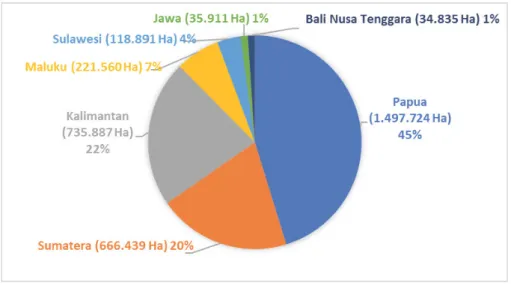
Figure 2. Indonesia’s Mangrove Area by Island Source: Authors’ elaboration, 2022
Based on figure 2, the most expansive area of mangroves in Papua is 45%, while Bali and Nusa Tenggara are only 34,835 ha. But overall, Indonesian mangroves are in good condition, covering an area of 2,673,548 ha or 80.74%. While in critical condition, it reaches 637,624 ha (19.26%), which is a forest area of 460,210 ha (72.18%), then that which is outside a forest area is 177,415 ha (27.82%). Meanwhile, the division of authority for mangrove rehabilitation consists of; BRGM covering an area of 483,194 ha (75.78%), then the Ministry of Environment and Forestry surrounding an area of 89,685 ha (14.07%), while the Ministry
of Marine Affairs and Fisheries, Ministry of Village Development of Disadvantaged Regions and Transmigration, Corporate Social Responsibility, and Non -Governmental Organization covering an area of 64,745 ha (10.15%) (Direktorat Jenderal Pengelolaan Ruang Laut, 2021).
Meanwhile, in implementing mangrove rehabilitation, the approach is labor intensive;
this aims to increase community involvement and encourage economic growth around the mangrove ecosystem. So that the mangrove rehabilitation program not only restores the ecosystem but also transforms the damaged system into a more stable one to achieve social, economic, and environmental (Abubakar et al., 2020). Therefore, the complexity of mangrove rehabilitation requires the accommodation or involvement of the community and stakeholder actors who work together to achieve this goal (Damastuti & de Groot, 2019).
Utilizing Social Media @BRGM Indonesia as a Medium for Information Communication and Outreach
The general public is to be informed of policies and updates about the implementation of peatland restoration and mangrove rehabilitation by BRGM through its official social media platforms in addition to performing technical tasks, empowering communities, and monitoring. It is an act of accountability and a campaign to raise awareness of marginal ecosystems in the community to win their support and enable direct or indirect participation.
Figure 3. Narration Distribution on Twitter Social Media @BRGM Indonesia Source: Processed by Researchers with Nvivo 12 Plus
Figure 3, based on the coding of the social media Twitter account @BRGM Indonesia, shows that the most dominant narrative distribution of the word “gambut”%”peat” appears with a weight of 2.60%. This explains that the social media account @BRGM Indonesia is dominated by narratives related to peat rather than information about mangroves, which only weigh 0.52%. So it can be concluded that the information provided is not balanced between peat and mangroves. This is because it is in line with the previous function of the Twitter social media account @BRGM Indonesia, the BRG Twitter social media account, which previously had the task of informing about peatland restoration activities. However, in the end, this imbalance in information dissemination will have implications for focusing public attention on only one issue, which can cause other issues to be neglected or less desirable.
Furthermore, the narrative word “sob”%”Brother” occupies the second proportion with a weight of 1.01%; the word is used as a nickname for followers on social media Twitter. Then the word “#brgmindonesia” is in third position with a weight of 0.91%; the term is the hashtag most often used in every tweet concerning peatland restoration and mangrove rehabilitation.
As a form of personal branding to identify @BRGM Indonesia. Meanwhile, in the fourth position of the narrative, the word “desa”%”village” with a weight of 0.87%, is in line with village representatives as the spearhead of efforts to restore peatland and mangrove rehabilitation. Because the village is the smallest administrative area, it knows the conditions.
It is the one who feels the most impact from the damage and activities of peat restoration and mangrove rehabilitation (Osaki et al., 2021). Peat Care Village%Desa Peduli Gambut and Independent Villages Caring for Mangroves%Desa Mandiri Peduli Mangrove s a form of the BRGM program that focuses on driving village progress through participatory planning (village policy), community socio-economic revitalization, and ecosystem management based on local wisdom and sustainability (Minayeva et al., 2017).
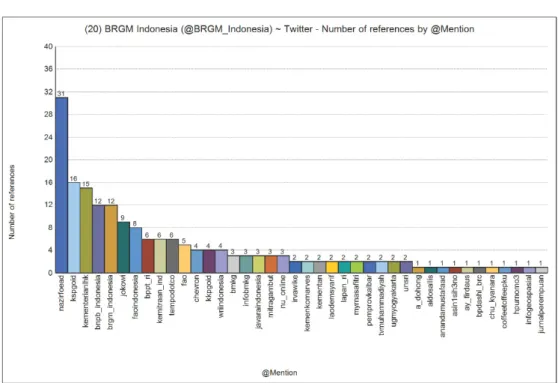
Figure 4. @BRGM Indonesia’s Twitter Social Media Interactions Through the Mention Feature Source: Processed Using Nvivo 12 Plus By The Author
@BRGM Indonesia’s social media interaction with the mentioned feature shows communication patterns for information dissemination. In addition, tweets with mentions usually contain information related to the account or are just markers for the report to retweet.
Based on figure 4, on the Twitter social media account @BRGM Indonesia, 40 accounts are mentioned. The most frequent dimension is account; @nazierfoead, @Kspgoid,
@kementerianlhk, @bnpb_indonesia, @jokowi, @faoindonesia, @bppt_id, @kemitraan_ind.
As can be seen in Figure 4, the five most frequently mentioned accounts belong to the Indonesian government. Twitter social media account @nazierfoead, 31 times dimension, is the Head of BRG whose term of office ends on December 31, 2020, and when he became BRGM, it was led by Ir Hartono Praeiraatmadja M.Sc. As the head of the BRG, Nazier Foead is also responsible for disseminating information through social media and Twitter to communicate for campaigning for the peatland restoration program. However, the Twitter social media account @nazierfoead is not very active, and only 223 tweets and retweets from 2013-2021, while only 23 tweets related to peat.
Furthermore, @BRGM Indonesia’s interactions through mentions also occurred with the
@Kspgoid account (Executive Office of the President%Kantor Staf Kepresiden (KSP) in several tweets to provide information related to peatland restoration and mangrove rehabilitation
activities. KSP has the function of monitoring progress towards the implementation of national priority programs by being directly responsible to the president for conveying the implementation of federal priority programs and providing strategic data and information analysis in supporting the decision-making process (Suyadi, 2018). In line with BRG as an institution directly responsible to the president through the KSP, in addition to the peatland restoration and mangrove rehabilitation programs as a national priority to achieve zero deforestation and zero emissions by 2060 (Nurrochmat et al., 2023).
Next, the mention by @BRGM Indonesia to @kementerianlhk (Ministry of Environment and Forestry) has a cooperative relationship in peatland restoration policies, as well as the division of work areas for mangrove rehabilitation by cooperating with the Ministry of Marine Affairs and Fisheries. To determine criteria and map status and functions in providing an overview of the authority chain of the location. Thus, the mention here serves as a marker in joint engagement and expands information. So synergy is needed to achieve common goals and disseminate information on performance achievements in a credible manner.
Then, in the @BRGM Indonesia account, a mention network emerged for the account
@bnpd_indonesia (National Disaster Management Agency%Badan Nasional Penanggulangan Bencana (BNPB), related to information on cooperation in peatland restoration, one of which was rewetting. One of the efforts made by BNPB is Operation Rapid Wetting of Burnt Peatlands%Operasi Pembasahan Cepat Lahan Gambut Terbakar (OPCLGT). In dry season conditions where drought or fire occurs on peatlands, BNPB is involved in sowing salt in the clouds so that artificial rain occurs. The mention here also expands the dissemination of information through retweets by BNPB; besides, the information provided is a socialization step to campaign for peatland management without burning. Meanwhile, the @jokowi account shows the information on President Jokowi’s activities and involvement in peatland restoration and mangrove planting.
In addition, @BRGM Indonesia’s interactions through mentions also occur with international NGO Twitter social media accounts focusing on peatland restoration and mangrove rehabilitation. Such as @faoindonesia (Food and Agriculture Organization (FAO), which is involved in collaborating to improve the peatland restoration monitoring system by adding the System for Earth Observation Data Access, Processing & Analysis for Land Monitoring (SEPAL) platform. Then, @kemitraan_ind is involved in peatland governance, targeting the village level to realize good landscape and village governance to prevent fires and improve community welfare for preserving peat ecosystems. In the end, the mention activities carried out by @BRGM Indonesia show a pattern of communication within the
scope of cooperation. However, with the intensity of two-way communication, what happens to Twitter users who are public members almost does not occur.
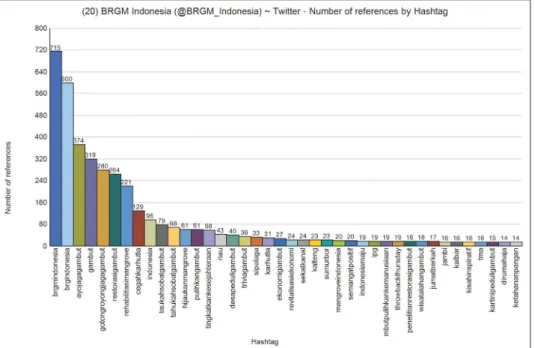
Figure 5. Hashtag Usage by @BRGM Indonesia Source: Processed by Author Using Nvivo 12 Plus
The hashtag is a Twitter feature for bookmarking, making it easier for a topic to be discussed and distinguishing one issue from another. In some countries, the Hashtag feature is used to make people understand the topic being discussed or to raise a surface issue so that it reaches a trending topic. This means that hashtags can expand information and increase public attention, leading to social movements. (Pratama, Nurmandi, et al., 2022).
The same thing happened in Indonesia, where the goal of using hashtags is to increase the popularity of a particular topic (Juditha, 2015). However, if you refer to figure 5, @BRGM Indonesia uses hashtags to improve the distribution of information, and each hashtag has a different purpose. Among the hashtags used #brgmindonesia, #brgindonesia,
#ayojagagambut, #gambut, #gotongroyongjagagambut, #restorasigambut,
#rehabilitasimangrove, #cegahkarhutla #indonesia #tahukansobatgambut,
#hijaukanmangrove. If you look closely, hashtags related to peat dominate more than those related to mangroves, reinforcing previous findings.
The hashtag #brgmindonesia is used as BRGM branding to show its existence in providing information, communication, and outreach. This hashtag is a differentiator indicating a change in the institution’s name that was previously BRG with the hashtag #brgindonesia.
Meanwhile, the hashtags #ayojagagambut%(Let’s take care of the peat) and
#gotongroyongjagagambut%(cooperation to protect peat) are used as a campaign movement to protect peatland ecosystems and encourage the general public to be involved in peatland restoration activities. The two hashtags contain the topic of peatland restoration activities on land that has been burned and degraded due to unsustainable land management. The hashtag reflects the fifth Pancasila value of Social Justice for All Indonesian People, meaning that the management of peatlands must uphold the principles of sustainable development that consider future generations. Besides that, the value of gotong-royong (mutual cooperation) as the identity of the Indonesian nation in the vision of the importance of social life is in the spirit of collective struggle, the nature of mutual respect, and the organization of competitive cooperation (Dewantara, 2019).
Meanwhile, the hashtag #restorasigambut%(peat restoration) is to mark tweets related to information on restoration peatland activities so that it becomes a differentiator from the hashtag #rehabilitasimangrove%(mangrove rehabilitation), which is to draw mangrove rehabilitation activities that are generally associated with planting mangroves on critical coastlines. Meanwhile, the hashtag #cegahkarhutla%(prevent forest and land fires) marks tweets for socialization to prevent forest and peatland fires and peat-wetting activities, as well as canal blocking, which involves the Community Fire Brigades%Masyarakat Peduli Api (MPA). But in conclusion, the hashtags used by @BRGM Indonesia should be more focused on the topics discussed or related to hashtags. Hence, the information contained in each hashtag is almost the same. It is different from the research findings of Heidbreder et al.
(2021) regarding the use of hashtags as communication that is in line with the focus of the topics discussed in the campaign so that the information disseminated can be accessible by the public and is solution-based.
CONCLUSION
Peatlands and mangroves are marginal ecosystems often neglected in sustainable land management; eventually, these ecosystems are degraded and dominated by anthropogenic activities. Awareness of the benefits provided by carbon sequestration and socio-economic, so that the Indonesian government is trying to restore peatlands and rehabilitate mangroves.
The task given to BRGM is to facilitate seven peatland restoration priority areas and nine mangrove rehabilitation priority areas. Meanwhile, in communicating policy information and
campaigning for peatland and mangrove ecosystems, present via social media Twitter with the name @BRGM Indonesia. However, information is still dominating about peat rather than mangroves issues. Therefore, the BRGM was established a new task since 2021 to promote more about mangroves as well. Meanwhile, the mention interaction activities are still dominated by government accounts, while interaction with the general public still needs to be improved, marked by the absence of two-way communication. Meanwhile, the hashtags used do not match the tweet’s contents, so the information in the hashtags needs to be clarified. Then the hashtag used by @BRGM Indonesia to campaign for peatland restoration and mangrove rehabilitation is not in line with the tweet’s contents.
REFERENCES
Abubakar, S., Subur, R., Malik, F. R., & Akbar, N. (2020). Damage level and area suitability of mangrove in small island Indonesia. IOP Conference Series: Earth and Environmental Science, 584(1). https://doi.org/10.1088/1755-1315/584/1/012037
Antoniadis, K., Zafiropoulos, K., & Vrana, V. (2014). Exploring Potential Communities of Followers in Governmental Twitter Accounts of EU Countries. Proceedings of the 2014 Conference on Electronic Governance and Open Society: Challenges in Eurasia, 167–174.
https://doi.org/10.1145/2729104.2729108
Anwar, M. S., & Farhaby, A. M. (2021). Analisis Kebijakan Pemanfaatan Lahan Dalam Wilayah Hutan Mangrove Di Provinsi Bangka Belitung. University Of Bengkulu Law Journal, 6(1), 20–38. https://doi.org/10.33369/ubelaj.6.1.20-38
Chen, Q., Min, C., Zhang, W., Wang, G., Ma, X., & Evans, R. (2020). Unpacking the black box:
How to promote citizen engagement through government social media during the COVID- 19 crisis. Computers in Human Behavior, 110, 106380.
Dalkin, S., Forster, N., Hodgson, P., Lhussier, M., & Carr, S. M. (2021). Using computer assisted qualitative data analysis software (CAQDAS; NVivo) to assist in the complex process of realist theory generation, refinement and testing. International Journal of Social Research Methodology, 24(1), 123–134. https://doi.org/10.1080/13645579.2020.1803528
Damastuti, E., & de Groot, R. (2019). Participatory ecosystem service mapping to enhance community-based mangrove rehabilitation and management in Demak, Indonesia.
Regional Environmental Change, 19(1), 65–78. https://doi.org/10.1007/s10113-018-1378- 7
Dewantara, A. W. (2019). “Gotong Royong” As Indonesian Philosopy In Max Scheler Perpectives. LAP LAMBERT Acadeic Publishing.
Direktorat Jenderal Pengelolaan Ruang Laut. (2021). Kondisi Mangrove di Indonesia.
Kkp.Go.Id. https://kkp.go.id/djprl/p4k/page/4284-kondisi-mangrove-di-indonesia
Division, H. E. (2016). Social Media as a new Mass Media tool for environmental consciousness. Social Media as a New Mass Media Tool for Environmental Consciousness, 2–65.
Dohong, A. (2019). Restoring Degraded Peatland in Indonesia: the 3R Approach. RSPO Manual on Best Management Practices (BMPs) for Management and Rehabilitation of Peatlands, 57, 2016–2017.
Edhlund, B., & McDougall, A. (2019). NVivo 12 essentials. Lulu. com.
Feller, I. C., Friess, D. A., Krauss, K. W., & Lewis, R. R. (2017). The state of the world’s mangroves in the 21st century under climate change. Hydrobiologia, 803(1), 1–12. https:/
/doi.org/10.1007/s10750-017-3331-z
Fuad, M., Ariyani, F., Suyanto, E., & Shidiq, A. S. (2020). Exploring teachers’ tpck: Are indonesian language teachers ready for online learning during the covid-19 outbreak? Universal Journal of Educational Research, 8(11B), 6091–6102. https://doi.org/10.13189/ujer.2020.082245 Harini, R., Ariani, R. D., Fistiningrum, W., & Ariestantya, D. (2019). Economic Valuation of Mangrove Management in Kulon Progo Regency. IOP Conference Series: Earth and Environmental Science, 256(1). https://doi.org/10.1088/1755-1315/256/1/012036
Heidbreder, L. M., Lange, M., & Reese, G. (2021). #PlasticFreeJuly – Analyzing a Worldwide Campaign to Reduce Single-use Plastic Consumption with Twitter. Environmental Communication, 15(7), 937–953. https://doi.org/10.1080/17524032.2021.1920447 Hersinta, & Sofia, A. (2020). Social Media, Youth and Environmental Low-Risk Activism: A
Case Study of Savesharks Indonesia Campaign on Twitter. Aspiration Journal, 1(2), 113–
134.
Huang, X., & Rein, G. (2017). Downward spread of smouldering peat fire: the role of moisture, density and oxygen supply. International Journal of Wildland Fire, 26(11), 907–918.
Juditha, C. (2015). Fenomena Trending Topic Di Twitter: Analisis Wacana Twit #Savehajilulung Trending Topic Phenomenon on Twitter: Discourse Analysis of Tweet #Savehajilulung.
Penelitian Komunikasi Dan Pembangunan, 16(2), 138–154.
Kemps, S. (2021). DIGITAL 2021: INDONESIA. Data Portal.
Khan, G. F., Yoon, H. Y., Kim, J., & Park, H. W. (2014). From e-government to social government:
Twitter use by Korea’s central government. Online Information Review.
Kim, H., & Xu, H. (2019). Exploring the effects of social media features on the publics’
responses to decreased usage CSR messages. Corporate Communications: An International Journal.
Kuppuswamy, S. (2020). Environmental Campaigns in Traditional and Social Media. 207–
223. https://doi.org/10.4018/978-1-7998-4796-0.ch013
Liao, Q., Yuan, J., Dong, M., Yang, L., Fielding, R., & Lam, W. W. T. (2020). Public engagement and government responsiveness in the communications about COVID-19 during the early epidemic stage in China: infodemiology study on social media data. Journal of Medical Internet Research, 22(5), e18796.
Maftu’ah, E., Susilawati, A., & Sulaeman, Y. (2021). Agroforestry for restoration of degraded peatlands. E3S Web of Conferences, 305, 3001.
Marlianingrum, P. R., Kusumastanto, T., Adrianto, L., & Fahrudin, A. (2019). Economic analysis of management option for sustainable mangrove ecosystem in Tangerang District, Banten Province, Indonesia. IOP Conference Series: Earth and Environmental Science, 241(1).
https://doi.org/10.1088/1755-1315/241/1/012026
Minayeva, T. Y., Bragg, O., & Sirin, A. A. (2017). Towards ecosystem-based restoration of peatland biodiversity. Mires and Peat, 19(1), 1–36.
Murdiyarso, D., Lilleskov, E., & Kolka, R. (2019). Tropical peatlands under siege: the need for evidence-based policies and strategies. Mitigation and Adaptation Strategies for Global Change, 24(4), 493–505. https://doi.org/10.1007/s11027-019-9844-1
Novita, A. A. (2021). Environmental Governance and Climate Change Adaptation in Indonesia.
Jurnal Ilmiah Administrasi Publik, 7(1).
Nugraha, I. (2020). Empat Tahun BRG: Daya dan Upaya Pulihkan Gambut Negeri.
Mongaboy.Co.Id. https://www.mongabay.co.id/2020/01/28/empat-tahun-brg-daya-dan- upaya-pulihkan-gambut-negeri/
Nurrochmat, D. R., Nurrochmat, N. A., Tarigan, S., Siregar, I. Z., Rizki, D. L. Y., Radjawali, I., &
Sulistio, H. (2023). Indonesia’s options in becoming a high-income country: Accelerating the turning point in deforestation? Forest Policy and Economics, 148, 102905.
Osaki, M., Tsuji, N., Foead, N., & Rieley, J. (2021). Tropical Peatland Eco-management. In Tropical Peatland Eco-management. Springer. https://doi.org/10.1007/978-981-33-4654- 3
Pratama, I., Nurmandi, A., Muallidin, I., Kurniawan, D., & Salahudin. (2022). Social Media as a Tool for Social Protest Movement Related to Alcohol Investments in Indonesia BT -
Human Interaction, Emerging Technologies and Future Systems V (T. Ahram & R. Taiar (eds.); pp. 138–146). Springer International Publishing.
Pratama, I., Purnomo, E. P., Mutiaran, D., Adrian, M. M., & Sundari, C. (2022). Creating Peatland Restoration Policy for Supporting in Indonesian Economic in a Sustainable Way. IOP Conference Series: Earth and Environmental Science, 1111(1). https://doi.org/10.1088/
1755-1315/1111/1/012004
Priyanto, A., Purnomo, E. P., Fadhlurrohman, M. I., Fahamsyah, H., & Khairina, E. (2021). The Influence of Social Media (Instagram) of Bantul’s General Election Commissions on Voters Participation in the 2019 Elections. Journal of Government and Civil Society, 5(1), 79.
https://doi.org/10.31000/jgcs.v5i1.2924
Purnomo, H., Shantiko, B., Sitorus, S., Gunawan, H., Achdiawan, R., Kartodihardjo, H., &
Dewayani, A. A. (2017). Fire economy and actor network of forest and land fires in Indonesia. Forest Policy and Economics, 78, 21–31. https://doi.org/10.1016/
j.forpol.2017.01.001
Rahmat, A. F., & Purnomo, E. P. (2020). Twitter Media Platform to Set-Up Political Branding:
Analyzing @Kiyai_Marufamin in 2019 Presidential Election Campaign. Nyimak: Journal of Communication, 4(1), 73. https://doi.org/10.31000/nyimak.v4i1.2268
Roziqin, A. (2018). Environmental Policy of Mangroves Management in Rembang Regency.
E3S Web of Conferences, 31, 1–6. https://doi.org/10.1051/e3sconf/20183109002 Suyadi, A. (2018). Pembentukan dan Kewenangan Kantor Staf Presiden (KSP) Dalam Struktur
Lembaga Kepresidenan Republik Indonesia. Jurnal Surya Kencana Satu/ : Dinamika Masalah Hukum Dan Keadilan, 10(2), 91–102.
Uda, S. K., Hein, L., & Atmoko, D. (2019). Assessing the health impacts of peatland fires: a case study for Central Kalimantan, Indonesia. Environmental Science and Pollution Research, 26(30), 31315–31327. https://doi.org/10.1007/s11356-019-06264-x
Untari, Darma, R., Betaubun, P., & Arief, A. A. (2020). Review of the use of mangrove forests in supporting the socio-economic life of fishing communities. IOP Conference Series:
Earth and Environmental Science, 575(1). https://doi.org/10.1088/1755-1315/575/1/012042 Utami, N. D. N., Susiloningtyas, D., & Handayani, T. (2018). Community Perception and Participation of Mangrove Ecosystem in Ngurah Rai Forest Park Bali, Indonesia. IOP Conference Series: Earth and Environmental Science, 145(1). https://doi.org/10.1088/
1755-1315/145/1/012147
Venkatesh, V., Thong, J. Y. L., Chan, F. K. Y., & Hu, P. J. H. (2016). Managing citizens’ uncertainty in e-government services: The mediating and moderating roles of transparency and trust.
Information Systems Research, 27(1), 87–111.
Wu, S. (2021). As Mainstream and Alternative Media Converge?: Critical Perspectives from Asia on Online Media Development. Journalism Practice.
Zahra, A. A., Purnomo, E. P., & Kasiwi, A. N. (2020). New Democracy in Digital Era through Social Media and News Online. Humaniora, 11(1), 13. https://doi.org/10.21512/
humaniora.v11i1.6182