PROTECTION SYSTEM IN INDONESIA:
SOCIAL PROTECTION FOR ALL
THE NATIONAL TEAM
FOR THE ACCELERATION OF POVERTY REDUCTION
Office of the Vice President of the Republic of Indonesia Jl. Kebon Sirih No. 14, Jakarta Pusat 10110
Telephone : (021) 3912812 Faximile : (021) 3912511
E-mail : [email protected] Website : www.tnp2k.go.id
THE FUTURE OF THE SOCIAL PROTECTION SYSTEM IN INDONESIA: SOCIAL PROTECTION FOR ALL
PROTECTION SYSTEM IN INDONESIA:
SOCIAL PROTECTION FOR ALL
First Edition, October 2018 All rights reserved.
© 2018. The National Team for the Acceleration of Poverty Reduction (Tim Nasional Percepatan Penanggulangan Kemiskinan or TNP2K)
You are free to copy, distribute and transmit this work, for non-commercial purposes.
To request copies of this paper or for more information, please contact the TNP2K Social Assistance Policy Working Group.
THE NATIONAL TEAM FOR THE ACCELERATION OF POVERTY REDUCTION Office of the Vice President of the Republic of Indonesia
Jl. Kebon Sirih No. 14, Jakarta Pusat 10110 Telephone : (021) 3912812
Faximile : (021) 3912511
E-mail : [email protected] Website : www.tnp2k.go.id
FOREWORD
A
s mandated by the constitution, Indonesia continues to reform its social protection system to provide needed coverage for its citizens.The social assistance program that began in 1998 is intended for low-income and other vulnerable groups. Although the law on the national social security system was enacted in 2004, the national health insurance system didn’t begin until January 2014.
However, it now reaches two-thirds of Indonesia’s population, with nearly half of its cost being government-funded. The social insurance for employment system that began in January 2015 is currently reaching only a small percentage of the formal sector workers, government employees and military personnel.
Moving forward, social protection in Indonesia needs to reach every individual, whether through social assistance or social insurance, and including the most poor and vulnerable.
Social assistance aims to prevent families from falling below the poverty line and is a form of support as well as an investment in resources, such as health and education assistance whereas social insurance aims to provide adequate protection from the working period until the end of a citizen’s life and needs to be fully funded via contributory schemes.
Various schemes have been implemented to reach these objectives. A major reform was improving the targeting performance of Indonesia’s major social assistance portfolios including: (1) Food assistance for poor families (Rastra and BPNT/non-cash food assistance); (2) Education assistance for poor children; (3) Conditional cash transfers for poor families (Program Keluarga Harapan – PKH); and (4) Subsidised beneficiaries of the national health insurance program (Jaminan Kesehatan Nasional-Penerima Bantuan Iuran – JKN-PBI) for poor and at-risk individuals.
Efforts are continuously being made to improve the targeting of government-funded premiums for the national health insurance program. In addition, several initiatives have aimed at expanding the number of contributing members for the social security employment program (Badan Penyelenggara Jaminan Sosial – BPJS) although it mostly benefits formal sector workers. But major gaps still exist, especially for the emerging middle-income groups who typically work in the informal sectors. They have yet to receive the protection needed to sustain their social and economic growth. The same is true for other at-risk populations, including the elderly, at-risk children and people with disabilities.
Beginning in 2017, the National Team for the Acceleration of Poverty Reduction (TNP2K) under the vice president’s office, has been initiating different reforms to gradually address vulnerabilities across the life cycle and prioritise support to the most at-risk populations, particularly the elderly, young children and people with disabilities.
This publication, the Future of the Social Protection System in Indonesia: Social Protection for All, is one of the early efforts to establish, refine and develop a comprehensive social protection system in the future. The direction of the Indonesian social protection system in the future is a system that will protect children through inclusive child grants, build a social security system that benefits the productive age group in both formal and informal sectors, ensure social protection for the elderly and guarantee the availability of protection for people with disabilities across all age groups.
We would like to express our appreciation and gratitude to the social assistance policy working group at the TNP2K secretariat, as well as the Australian government through the Department of Foreign Affairs and Trade (DFAT), that have provided support and collaboration in developing this publication. May this prove useful.
Jakarta, October 2018
Bambang Widianto
Deputy to Indonesia’s Vice President for Human Development Policy Support and Development Equity and TNP2K Executive Secretary
ACKNOWLEDGEMENTS
ACKNOWLEDGEMENTS
T
his publication was authored by the social assistance policy working group at the TNP2K secretariat and the MAHKOTA program (Towards a Strong and Prosperous Indonesia Society).The drafting team included: Sri Kusumastuti Rahayu (Head of the Social Assistance Working Group, TNP2K secretariat); Dyah Larasati (Senior Social Protection Policy Specialist, Social Assistance Policy Working Group, TNP2K Secretariat), Martin Daniel Siyaranamual (Social Protection Policy Quantitative analyst, Social Assistance Policy Working Group, TNP2K Secretariat), Karishma Alize Huda (Social Protection and Labour Market Specialist, MAHKOTA), Stephen Kidd (Social Policy Specialist, Development Pathways) and Bjorn Gelders (Social Policy Specialist, Development Pathways).
We are also very grateful to Dr Bambang Widianto (Deputy for the Vice President of Indonesia for Human Development Policy Support and Development Equity/TNP2K Executive Secretary); Dr Elan Satriawan (Chief of Policy, TNP2K Secretariat) and Dr Sudarno Sumarto (Senior Policy Advisor, TNP2K Secretariat) for their critical guidance and support through the development of this strategy.
Our special thank you to Prof Dr Suahasil Nazara (Head of the Fiscal Policy Agency, Ministry of Finance), Dr Hidayat Amir (Head of the State Budget Policy Department, Fiscal Policy Agency, Ministry of Finance) and Jurist Tan (Assistant Deputy of Deputy II of the Presidential Staff Office) for suggestions, input and ongoing support for the initiatives proposed in this strategy.
The team also extends our appreciation to Dr Vivi Yulaswati (Director for Poverty Reduction and Social Welfare, Ministry of National Development Planning) and Dr Maliki ST (Director for Population Planning and Social Protection, Ministry of National Development Planning), for taking the time to listen to our ideas and providing useful feedback throughout the process.
Furthermore, we would like to thank Bapak Sumarjono (Director for Strategic Planning and Information Technology, Social Security Agency for Employment) and Bapak Isnavodiar Jatmiko (Deputy Assistant for Quality Control, Operational and Claim Investigation, Social Security Agency for Employment) for generously providing useful and up-to-date information regarding the implementation of employment insurance. We are also grateful to officials of the Directorate of State Budget Policy, Fiscal Policy Agency and Directorate
General of State Budget Planning of the Ministry of Finance for their valuable input on Indonesia’s fiscal space which served as our reference and consideration for the proposed recommendations in the strategy.
The team also would like to express our appreciation to Joanne Sharpe (First Secretary, Department of Foreign Affairs and Trade – DFAT), Hector Salazar Salame (Team Leader, MAHKOTA) and Lisa Hannigan (Director for Poverty and Social transfers, DFAT) for timely and useful feedback as well as technical support during the development of the strategy.
Our appreciation also goes to Bayu Agnimaruto and Armando Siagian (members of the Social Assistance Policy Working Group, TNP2K Secretariat) for their support with data management – both with national datasets (Susenas, Sakernas, SUPAS and IFLS), as well as the Unified Database (UDB). Thanks, are also due to the support and feedback from all members of the social assistance policy working group, the economic working group, the research team and the communication team at the TNP2K secretariat.
The English version of this publication was edited by Margo Bedingfield and translated from English to Indonesian by Amalia Belmika. Substantive editing on the Indonesian version was done by Sri Kusumastuti Rahayu and Dyah Larasati and editing to the English version was done by Karishma Alize Huda. The design and layout of the publication was prepared by Mohamad Reza with support from Farrah Mardiati Soeharno (Mahkota). A sincere thank you to everyone for your hard work in finalising the document and preparing it for publication.
Finally, the team is also grateful to the Ministry of National Planning and Development (Bappenas), the Indonesian Central Bureau of Statistics (BPS), the Social Security Agency for Employment, the Social Security Agency for Health, the Ministry of Social Affairs (MoSA), Ministry of Education and Culture (MoEC) and Ministry of Health (MoH) for providing access to a wide array of useful literature and program information which was critical to the thinking and analysis that went into developing this publication.
CONTENTS
Foreword
Acknowledgement List Of Figures List Of Tables List Of Box List Of Photo
Abbreviations And Acronyms Executive summary
Introduction
Chapter 1: Rationale for the Social Protection Strategy 1.1 Contributing to economic growth and development 1.2 Conceptual framework
1.3 The right to social security in Indonesia’s legislation and international commitments
Chapter 2: The Economic, Social and Demographic Context 2.1 Broad economic challenges and inequalities
2.2 Demographic change in Indonesia 2.3 Challenges across the life-cycle 2.4 Disability
Chapter 3: Indonesia’s Current Social Protection System
3.1 An overview of Indonesia’s current social protection system 3.2 Implementing non-contributory schemes
3.3 Implementation contributory schemes
3.4 Social protection coverage and gaps across the life-cycle
i-ii iii- v ix - xii xiii-xvi xv xvi xvii -xviii 2-14 16-21 22-34 24-27 27-30 30-34
35-65 36-47 48-51 52-62 63- 65 67-91 68- 70 70-78 78-84 84- 91
Chapter 4: The Way Forward 4.1 Rationale
4.2 Proposed social protection programs for 2020–2024
4.3 Using the reformed social protection system to respond to shocks 4.4 Overall impacts of proposed programs
4.5 Levels of investment required for the 2020–2024 reforms 4.6 Institutional Reform/Arrangement
References and Annexes References
Annex 1: Overview of social protection programs in Indonesia Annex 2: Notes on the methodology
Annex 3: Simulated impacts of alternative grant options
Annex 4: Coverage of the national social protection schemes in 2030, by Province
Annex 5: Government assistance program for individuals, families and poor groups
93-125 94- 96 96-111 111 - 112 113- 115 115 - 120 120 - 125 128 - 164 128 - 140 141 - 145 146 - 149 150 - 156 157 - 162 160 - 164
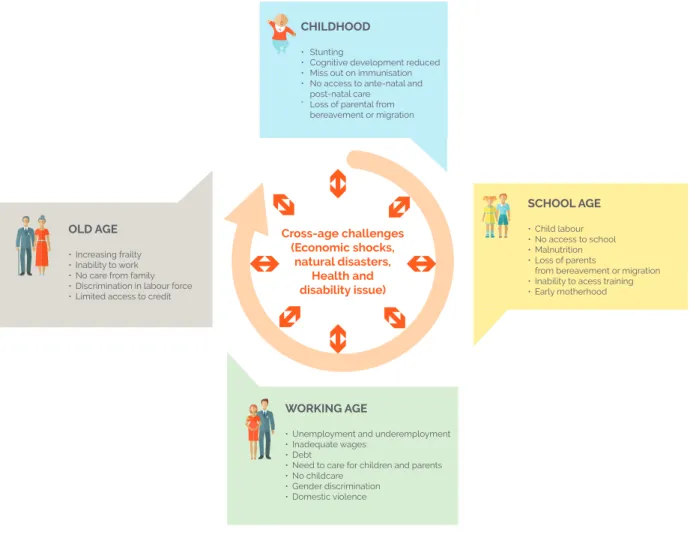
Risks and challenges that can affect people across the life cycle
Percentage of the population below the national poverty line, by age group, 2017
Indonesia’s existing social protection system
Coverage of Indonesia’s social protection programs across the life cycle (contributory and non-contributory) among the bottom 40 per cent and across the entire population, 2017 (percentages)
The coverage of Indonesia’s social protection system offering income transfers
Proposed reforms in the national social protection system, 2020–2024
Indonesia’s future three-tiered social protection system for the elderly
The social protection system’s reformed institutional structure, 2020–2024
Levels of investment in social protection across a range of low-income and middle-income countries, excluding civil service pensions
Factors that positively and negatively impact the wellbeing of a middle-income household
The main types of social protection schemes found in many countries addressing challenges people face across the life cycle
Summary of how social protection is incorporated in the Sustainable Development Goals
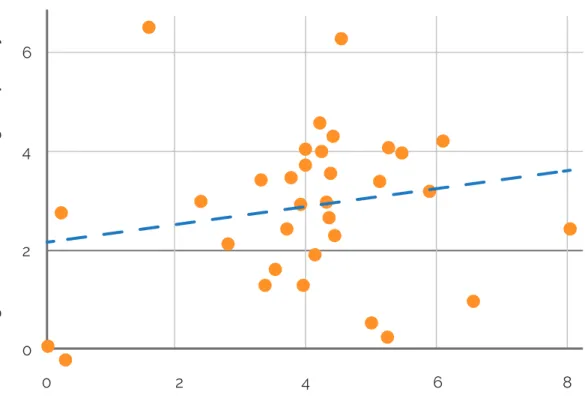
Relationship between economic growth and poverty reduction at provincial level, 2011–2016
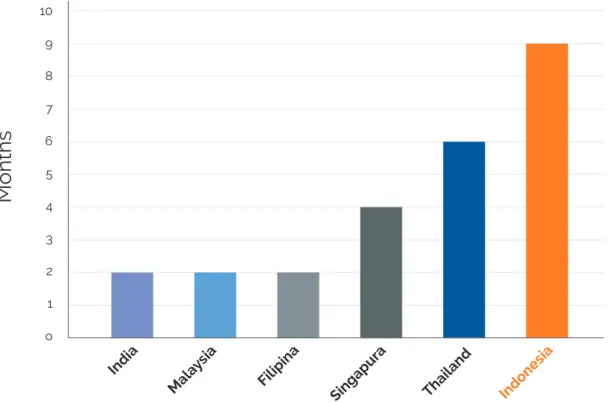
Severance pay rates after four years of employment across a range of Asian countries
Annual rate of poverty reduction, 2007–2016
Official poverty rates and number of people living below national poverty lines, by province
BPS and World Bank Poverty Line Income distribution, percentages, 2017
Quintile transition matrix of households, 2007– 2014 and 2014–2015
ES Figure 1:
ES Figure 2:
ES Figure 3:
ES Figure 4:
ES Figure 5:
ES Figure 6:
ES Figure 7:
ES Figure 8:
Figure 1 :
Figure 2 : Figure 3 :
Figure 4 : Figure 5 : Figure 6 :
Figure 7 : Figure 8 :
Figure 9 : Figure 10 : Figure 11 :
2 4 5
8 9 10 12 14
27 29
30 34 37 38 39 40 42 42 43
LIST OF FIGURES
Average monthly per capita expenditure by ventile (groups of 5 per cent of the population), 2017
Gini coefficient in Indonesia, 1990–2017
Percentage change in Gini coefficient between 2007 and 2017, by province
Annualised growth rate of per capita consumption for every percentile of the consumption distribution, 2004–2016 Projected growth in the older population in Indonesia, 2015–2050
Percentage of the population below the national poverty line, by age groups, Indonesia, 2017
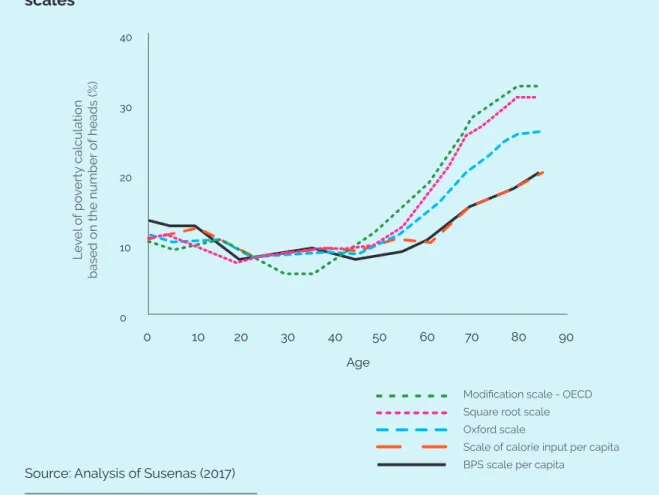
Poverty rates by age group using different measures of equivalence scales
Total dependency ratios, Indonesia, 1955-2095
Risks and challenges that can affect people across the life cycle
Proportion and number of children under five who are stunted in each province
Average performance on cognitive tests of individuals in 2014, according to their height-based anthropometric Z-scores in 1993
Percentage of children under five who attended some form of early childhood education, 2017
Wealth disparities in selected indicators among young children
Primary, junior secondary and senior secondary school completion rates across the consumption distribution, 2017
Percentage of young people (15–24 years) who were neither at work nor at school in the week before the survey
Percentage of working-age people (over 15 years) by sector of work and gender
Percentage of people working in the week before the survey
Poverty rates linked to number of children in the household
Percentage of older people who are widowed, by gender and age groups
Proportion of older people, by living arrangements and gender
Figure 12 :
Figure 13 : Figure 14 : Figure 15 : Figure 16 : Figure 17 : Figure 18 :
Figure 19 : Figure 20 : Figure 21 : Figure 22 :
Figure 23 : Figure 24 : Figure 25 :
Figure 26 : Figure 27 : Figure 28 : Figure 29 : Figure 30 : Figure 31 :
44 45 46 47 48 49 50 51 52 53
54 55 56
57 58 59 60 61 62 62
Prevalence of disability and distribution of people with moderate or severe disabilities in Indonesia, across age groups
Poverty rates in Indonesia according to disability status, by age group
Indonesia’s existing social protection system
Targeting effectiveness of the Rastra program, 2017 Targeting effectiveness of Program Keluarga Harapan, 2017
Value of the Program Keluarga Harapan transfer per child, according to household size
Targeting effectiveness of Program Indonesia Pintar, 2017 Change in the value of the Program Indonesia Pintar transfer, adjusted for inflation, 2008–2016
Distribution of (mainly civil service) pensions across consumption deciles, 2016
The coverage of Indonesia’s social protection system offering income transfers
Social protection programs in Indonesia across the life cycle
Indonesia’s social protection programs across the life cycle, bottom 40 per cent and all of the population, 2017 (percentages)
Value of Indonesia’s proposed child benefit, compared to similar schemes in selected countries worldwide, as a percentage of per capita gross domestic product
Projected increase in consumption among households with children across the welfare distribution due to the child grant of IDR200,000 per child per month
Indonesia’s future three-tiered social protection for the elderly
Value of elderly grant options relative to universal coverage pensions in selected low- and middle-income countries,2018
Projected increase in per capita consumption among households that include people of 70 years and above, by welfare decile and different elderly grant options
Global increase in social pensions showing wealth of country at time of introduction, selected countries, 1890–2018
Figure 32 :
Figure 33 :
Figure 34 : Figure 35 : Figure 36 : Figure 37 :
Figure 38 : Figure 39 : Figure 40 : Figure 41 : Figure 42 : Figure 43 :
Figure 44 :
Figure 45 :
Figure 46 : Figure 47 :
Figure 48 :
Figure 49 :
63 64 69 72 74 75 76 77 82 84 85
86
98
99 106
108
110
111
Projected coverage of households by social protection schemes, 2030, by province
Potential impacts of the reforms to the national social protection system on poverty rate and poverty gap across age groups, using the proposed values, 2020–2024
Potential impacts of the 2020–2024 social protection system reforms on inequality levels, using different benefit options
Proposed coverage of the national non-contributory social protection system – for schemes offering income support – across the wealth distribution, 2024
Percentage of poor and non-poor households receiving electricity and liquified petroleum gas subsidies in 2017 Institutional arrangements for the existing social protection system
The social protection system’s reformed institutional structure, 2020–2024
Potential impacts of the national social protection system reforms, 2020–2024, on the poverty rate and poverty gap across age groups, using IDR200,000 as the value for the elderly grant and child disability benefit
Potential impacts of the national social protection system reforms, 2020–2024, on the poverty rate and poverty gap across age groups, using IDR400,000 as the value for the elderly grant and child disability benefit
Figure 50 : Figure 51 :
Figure 52 :
Figure 53 :
Figure 54 : Figure 55 : Figure 56 :
Figure Annex 3.1:
Figure Annex 3.2:
112
113
114
115 119 121 123
152
154
LIST OF TABLES
Table 1 : Table 2 : Table 3 : Table 4 : Table 5 :
Table 6 : Table 7 :
Table 8 : Table 9 : Table 10 :
Table 11 : Table 12 : Table 13 : Table 14 : Table 15 : Table 16 : Table 17 :
Table Annex 1 : Table Annex 2.1:
Table Annex 3.1:
Indonesia’s social protection investment, 2017
Coverage of employment insurance under the Social Security Agency forEmployment
Beneficiaries of the national health insurance program, 2014–2017
Coverage of people with disabilities with access to social protection programs for people with disabilities
Coverage of population aged 60 and above with access to social protection programs for the elderly
Overview of the proposed child grant (2020–2024) Proposed coverage of the reformed child grant (2020–2024)
Overview of the graduation incentive (2020–2024) Proposed coverage of the graduation incentive (2020–2024)
Overview of non-contributory schemes for people with disabilities (2020– 2024)
Coverage of people with disabilities in proposed programs (2020–2024)
Overview of non-contributory schemes for the elderly (2020–2024)
Coverage of the elderly in proposed programs (2020-2024)
Impacts on poverty rates and the poverty gap of diffrent elderly grant options
Levels of investment required for the 2020–2024 reforms as a percentage of gross domestic product
Cost projection for the reformed social protection programs (in IDR - trillions)
Subsidy budget allocation, 2018 (IDR – billions)
Social protection programs in Indonesia 2017
Poverty lines by province and place of residence, IDR per month per person, March 2017
Simulated impact on poverty rates
70 81 83 89 90 97 97 97 97 103 103 106 106 109 116 117 118
141-145 147-146 151
Table Annex 3.2:
Table Annex 3.3:
Table Annex 3.4:
Table Annex 4.1:
Table Annex 5 :
Simulated impact on poverty gap
Simulated impact on percentage increase in households’ per capita expenditure
Simulated impact on percentage increase of eligible households’ per capita
expenditure
Coverage of households by social protection schemes in 2030, by province Government assistance program for individuals, families and poor groups
153 155
156 157 158-162
LIST OF BOXES
Box 1 : Box 2 : Box 3 :
Box 4 : Box 5 : Box 6 : Box 7 : Box 8 : Box 9 :
Defining social protection in Indonesia
Distinction between non-contributory and contributory schemes
Right to social security (protection) in international conventions
Social protection floor
Determining the poverty line in Indonesia
Relative poverty across age groups, using alternative assumptions
Local government innovations to address gaps in the national social protection system
Severe disability: what is it and what are the means of determining beneciary eligibility?
Global evidence of social pension investments
16 28 32 33 41 50 91 104 111
LIST OF PHOTOS
Photo 1 123RF/Ferli iii
Photo 2 123RF/Jasmin Merdan 1
Photo 3 123RF/Paul Prescott 19
Photo 4 123RF/ Leblond Catherine 27
Photo 5 123RF/Tjui Tjioe 39
Photo 6 123RF/Vasilis Ververidis 75
Photo 7 123RF/project1photography 103
Photo 8 123RF/dani3315 141
ABBREVIATIONS AND ACRONYMS
ADB ADL APBD
APBN ASABRI
ASLUT ASPDB Bappenas
BPJS Ketenagakerjaan BPNT
BPS GDP GoI IDHS IFLS ILO IMF
JAMKESMAS JAMSOSTEK
JHT JK JKK JKN-PBI
JP JPS JSLU JSPACA
Asian Development Bank Activities of daily life
Local government budget (Anggaran Pendapatan dan Belanja Daerah)
State budget (Anggaran Pendapatan dan Belanja Negara) Social insurance for Indonesia’s military, police and civil service under the Ministry of Defence (Asuransi Sosial Angkatan
Bersenjata Republik Indonesia)
Social assistance for the elderly (Asistensi Sosial Lanjut Usia) Social assistance for people with severe disability (Asistensi Sosial Penyandang Disabilitas Berat)
Ministry of National Development Planning (Badan Perencanaan dan Pembangunan Nasional)
Social Security Agency for Employment (Badan Penyelenggara Jaminan Sosial Ketenagakerjaan)
Indonesia non-cash food assistance program (Bantuan Pangan Non Tunai)
Central Bureau of Statistics (Badan Pusat Statistik) Gross domestic product
Government of Indonesia
Indonesia Demographic and Health Survey Indonesia Family Life Survey
International Labour Organization International Monetary Fund
Health insurance (Jaminan Kesehatan Masyarakat)
Social insurance/Security for Employment (Jaminan Sosial Tenaga Kerja)
Old age savings with disability benefit (Jaminan Hari Tua) Survivors’ benefit insurance (Jaminan Kematian)
Casualty/work injury insurance (Jaminan Kecelakaan Kerja) National health insurance - fully subsidised beneficiaries (Jaminan Kesehatan Nasional - Penerima Bantuan Iuran) Elderly pension (Jaminan Pensiun)
Social safety net (Jaring Pengaman Sosial)
Social insurance for the elderly (Jaminan Sosial Lanjut Usia) Social insurance for people with severe disabilities (Jaminan Sosial Penyandang Cacat Berat)
KPS/KKS
MoEC MoF MoRA MoSA NGO NPL Perpres PPA-PKH
PIP PKH PKSA
PPP PT Taspen
OECD Raskin
Rastra Riskesdas RPJMN RPJPN Sakernas
SAPER SDGs SUPAS Susenas TNP2K UDB
Social protection card/social welfare card (Kartu Perlindungan Sosial/Kartu Kesejahteraan Sosial)
Ministry of Education and Culture Ministry of Finance
Ministry of Religious Affairs Ministry of Social Affairs
Non-governmental organisation National poverty lines
Presidential regulation (Peraturan Presiden)
Child labour elimination through the conditional cash transfer program (Program Penarikan Pekerja Anak melalui Program Keluarga Harapan)
Indonesia’s education cash assistance program (Program Indonesia Pintar)
Indonesia’s conditional cash transfer program (Program Keluarga Harapan)
Social welfare program for poor children (Program Kesejahteraan Sosial Anak) Purchasing power parity
Old age saving program for civil servants (Program Tabungan dan Asuransi Pensiun Pegawai Negeri Sipil/PNS)
Organization for Economic Co-operation and Development Rice subsidy program for the poor (Subsidi Beras untuk Masyarakat Miskin)
Rice subsidy for the poor and at-risk (Subsisdi Beras Sejahtera) Indonesia basic health research data (Riset Kesehatan Dasar) Indonesia’s medium-term national development plan (Rencana Pembangunan Jangka Menengah)
Indonesia’s long-term national development plan (Rencana Pembangunan Jangka Panjang Nasional)
Indonesian national labour survey (Survei Angkatan Kerja Nasional)
World Bank Social Assistance Public Expenditure Review Sustainable Development Goals
Inter Census Population Survey (Survei Penduduk Antar Sensus) Indonesia’s national socio-economic survey (Survei Sosial Ekonomi Nasional)
National Team for the Acceleration of Poverty Reduction (Tim Nasional Percepatan Penanggulangan Kemiskinan)
Unified Database
EXECUTIVE
SUMMARY
I
Indonesia was among the few countries globally to experience an average growth rate of approximately 7 per cent annually prior to the Asian economic crisis. However, this dropped to approximately 5.6 per cent a year between 2007 and 2016, signaling the need to stimulate the economy, generate demand and increase consumption. Furthermore, while government efforts have had a positive impact in reducing the official poverty rate, the pace of poverty reduction has been slowing down. Even households living above the official poverty line are still subsisting on vulnerable incomes and are still susceptible to falling back into poverty. Household incomes are highly dynamic, as people react to shocks and crises, and respond to opportunities.Indonesians face a wide range of risks throughout their lives, beginning in the womb and continuing through to their final days (see ES Figure 1). Life-cycle risks and challenges can affect people’s standard of living, particularly when a comprehensive social protection system is not in place. These risks are exacerbated by widespread low incomes that mean people are less able to respond effectively to a crisis. If these issues are tackled effectively, poverty levels would be reduced significantly and the wellbeing of all citizens would be enhanced.
ES Figure 1: Risks and challenges that can affect people across the life cycle
The low incomes and insecurity most people experience highlight some key issues for social protection policy. Social protection is a system of regular and predictable transfers, in cash or in kind, that aim to protect people from risks and provide them with income security and the ability to smooth their consumption over the life cycle. In the Indonesian context, the social protection system is comprised of social assistance or non-contributory schemes financed through the government budget and social insurance or social security schemes that are financed through contributions from members. The health insurance scheme is a hybrid, with a government-financed, non-contributory component for the poor and a contributory component for those who can afford it.
While the government is committed to expanding the national social protection system and has increased its spending on non-contributory schemes, significant challenges persist. Existing non-contributory programs currently target those living in poverty and focus on reducing the expenditure burden of the poorest. However, they do not comprehensively address the vulnerability of most citizens across the economic spectrum. Most of the population on middle incomes – the so-called ‘missing middle’ – are still extremely vulnerable to risks and shocks but, apart from health insurance, do not currently benefit from Indonesia’s social protection system.
Furthermore, the current investment of 0.35 per cent of gross domestic product (GDP) in social assistance schemes is less than expected for a middle-income country like Indonesia, resulting in major gaps in coverage. Other countries, such as Nepal, have a much lower GDP than Indonesia but invest approximately 2 per cent of GDP on tax- financed social protection.
Based on the experience of other middle-income countries, Indonesia will generate significant social, economic and political benefits by investing more in social protection.
This will not only reduce poverty and inequality levels but also enhance children’s wellbeing and boost labour productivity, thereby accelerating economic growth. Furthermore, all Indonesians – even those who currently feel disenfranchised by the growing inequality – will understand that they are entitled to social protection. This strong social commitment may generate greater national cohesion and a more peaceful and harmonious society.
Indonesia’s vision for social protection is enshrined in the constitution which stipulates the right to social security (inclusive of social protection) for all Indonesian citizens. In this report, we present a long-term vision for a comprehensive social protection system and a strategy to improve Indonesia’s social protection system over the next five years (2020– 2024). The proposals presented in this strategy are intended to ensure that citizens
across the life cycle – from childhood to old age and if faced with a disability – have access to Indonesia’s social protection system. This includes greater coverage for the
‘missing middle’.1
Children and the elderly should be prioritised by the social protection system given that Indonesia’s poverty has a strong age dimension. The highest rates of poverty – defined as living below the national poverty line of IDR11,994 per day (equivalent to USD2.39)2 – are found among children, adults raising children and people over 60, with particularly high rates among people over 80 (see ES Figure 2).
ES Figure 2: Percentage of the population below the national poverty line, by age group, 2017
1 Cain (2009)
Percentage below poverty line
Note: national poverty line (IDR11,994 per day per capita) Source: Susenas 2017
Male Female
3 Indonesia’s national health insurance (JKN) is funded predominantly by members’ contributions but also
Providing social protection to citizens across the life cycle forms the basis of social protection in countries with mature social protection systems, with developing countries increasingly following suit. In many countries, the core schemes include benefits for the elderly, for people with disabilities and for children, with residual social assistance programs for poor families.
The current social protection system
Indonesia’s social protection system consists of contributory schemes (health insurance3 and employment insurance programs) and non-contributory schemes (social assistance programs financed by the government through general tax revenue) (see ES Figure 3).
ES Figure 3: Indonesia’s existing social protection system
Currently, the total investment of Indonesia’s social protection system is 0.73 per cent of GDP (2017 figures). The contributory social insurance schemes have collected premiums from members that equate to 0.18 per cent of GDP, particularly from civil servants and military and police personnel. Indonesia invests 0.35 per cent of GDP on social assistance or non-contributory schemes and 0.20 per cent on fully subsidised national health insurance for the poor (penerima bantuan iuran-jaminan kesehatan nasional – JKN-PBI), equating to an investment of 0.55 per cent of GDP on non-contributory schemes.
Non-contributory schemes
Major non-contributory schemes include food assistance programs (Rastra4 and Bantuan Pangan Non Tunai – BPNT), conditional cash transfers (Program Keluarga Harapan – PKH) and a cash transfer for students from poor and vulnerable families (Program Indonesia Pintar – PIP).
In 2017, Rastra was reformed and moved from providing in-kind rice to an electronic food voucher system, known as Bantuan Pangan Non Tunai (BPNT). The process of converging Rastra support and BPNT is still ongoing and is likely to be completed in 2019. BPNT helps poor households purchase foodstuffs, such as rice and eggs,5 improves financial inclusion targets and is the government’s largest income transfer program with spending of 0.18 per cent of GDP. Indonesia’s flagship conditional cash transfer program, PKH, reached its target of 6 million poor families with children and pregnant mothers in 2017 and as of 2018 has increased coverage to 10 million families. PKH is the second largest income transfer program with an investment of 0.08 per cent of GDP. PIP is helping 19.7 million school-age children from poor and vulnerable families to cover the personal costs associated with education and represents roughly the same level of investment as PKH. Poor families, particularly those with school-age children, are the primary targets for social assistance in Indonesia. However, elderly people and those with a disability are still missing out, as evidenced by Indonesia’s 0.001 per cent of GDP investment in elderly and disability grants.6
Contributory schemes
Based on Law No 40 of 2004 on the national social security system (Sistem Jaminan Sosial Nasional – SJSN), four health and employment insurance schemes are currently being implemented: national health insurance (Jaminan Kesehatan Nasional – JKN), casualty or work injury compensation (Jaminan Kecelakaan Kerja – JKK), survivors’
benefit (Jaminan Kematian – JKM), old age savings with disability benefit (Jaminan Hari Tua – JHT) and elderly pension (Jaminan Pensiun – JP). Under Law No 24 of 2011 the government established the Social Security Agency for Employment (BPJS
4 The difference between the previous Rastra program and the current Rastra social assistance is the cost of the subsidised rice. Previously, beneficiary families paid IDR1.600 per kg for the rice and received 15kg per month. While in the current program, the beneficiary families do not pay for the rice and they get a maximum of 10 kg per month.
5The food items on offer may change in the future depending on evolving national policy.
6As of 2017, PKH and the social assistance for older persons program (Asistensi Sosial Lanjut Usia Terlantar – ASLUT) only cover around 150,000 out of the 23.4 million elderly people (Susenas 2017).
Ketenagakerjaan) and the Social Security Agency for Health (BPJS Kesehatan) to manage these schemes.
By 2017, the Social Security Agency for Employment covered 15 per cent of the working age population and consisted mainly of formal sector workers, referred to as wage-recipients (pekerja penerima upah – PU) and small numbers of informal workers, referred to as non-wage recipients (bukan penerima upah – BPU). However, contributing members (based on Presidential regulation No 109 of 2013) are obliged to join the casualty or work injury compensation scheme (JKK) and survivors’ benefit scheme (JKM) as a prerequisite to joining the old age savings scheme (JHT) which can potentially discourage those in the informal sector with limited contribution capacity from saving for their retirement.
It will be some time, however, before the contributions are enough to deliver adequate old age pensions. There are also well-established private pension funds for civil servants.
PT Asabri caters for employees in the military, police and Ministry of Defence, while PT Taspen caters for all other government employees and employees of state-owned enterprises.
ES Figure 4 shows coverage of contributory and non-contributory schemes across the life cycle for those estimated as being in the bottom 40 per cent of the population and for the entire population. Given that social assistance is currently targeted at the poor and vulnerable, social protection coverage is higher among the bottom 40 per cent across the life cycle. However, both figures show significant under-coverage across most stages
in the life cycle.
ES Figure 4: Coverage of Indonesia’s social protection programs across the life cycle (contributory and non-contributory) among the bottom 40 per cent and across the entire population, 2017 (percentages)
Indonesia’s contributory schemes within the social protection system are currently reaching the more affluent members of society in the formal sector. For those living in poverty, the government provides social protection through several non-contributory programs. However, the ‘missing middle’ still have limited government support to ensure their basic economic security (see ES Figure 5).7
7 In reality, large parts of the target groups for both social assistance and social insurance programs are also excluded.
Source: Susenas 2017 and 2017 program administrative data – compiled and calculated by TNP2K (2018) Notes:
• The percentage calculation of PKH and PIP outreach in the early childhood and school age groups assume perfect targeting among the poorest 40% of households;
• For the contributory schemes, the coverage among the elderly and productive age groups only represents contributions made into the schemes as there are very limited benefit pay-outs to date
The social protection system should cover these middle-income households to ensure inclusive economic growth. Furthermore, the ‘missing middle’ are the category of the population that make up a large portion of the voter population and they have been contributing members of society. As tax-paying citizens, benefits to this group should be seen as giving back a small percentage of their contributions in order to secure their continued loyalty and investment in the state.
Proposals for reforming the existing social protection system
Through this strategy, TNP2K recommends a social protection system that will protect poor and vulnerable citizens through social safety net schemes designed across the life cycle, as well as prevent health and employment related risks through accessible social insurance schemes. The proposed social protection system will also try to directly address many of the key challenges facing Indonesia and its citizens – particularly stunting in early childhood, low enrolment in secondary level education, disability and old age poverty.
Source: Designed by TNP2K-MAHKOTA (2017)
ES Figure 5: The coverage of Indonesia’s social protection system offering income transfers
Emerging middle income group
Poor Vulnerable
It is recommended that Indonesia gradually move from a social protection system that targets the poorest through social assistance, towards a system that is inclusive of those on middle incomes. Those in the formal sector and those who can pay into the contributory system will receive benefits from social insurance. Progressively, the government should ensure that every citizen is protected, either through contributory or non-contributory schemes.
This strategy focuses on policy recommendations for expanding and reforming the system for 2020–2024. A subsequent publication will provide technical recommendations for this 2020–2024 period, followed by policy recommendations for the longer term.
ES Figure 6: Proposed reforms in the national social protection system, 2020–2024
Source: TNP2K 2018 ELDERLY
Elderly grants for those of 70 plus years
CHILDREN
• PIP - PKH Integration
• Child benefit for maximum of 3 children
• Graduation incentives
PRODUCTIVE/WORKING AGE
• Expand membership of employment insurance ( formal and informal)
• Design mechanism for sustainable financing
ALL INDIVIDUALS ACROSS AGE
• Expand membership of health insurance
PEOPLE WITH DISABILITY
• PwD grants ( especially childen and individual with severe disability)
Over the next five years, TNP2K proposes a reformed social protection system as shown in ES Figure 6 where each scheme is described in turn:
•
Child benefit: PKH and PIP have the same target group, particularly among school- age children, and it would therefore be more efficient to offer these benefits from a single program. In 2020, the two programs should be integrated into one and provide a unified child benefit, increasing coverage to the poorest 15 million families with children. Each family should receive IDR200,000 per month per child for a maximum of three children in the family.8•
Graduation incentive for school-age children: Given the low rates of secondary school enrolment, this strategy proposes an innovative scheme providing children with a lump-sum payment if they enrol in grade seven and in grade ten. Students would receive a further graduation incentive payment through an individual savings account if they graduate from senior secondary school. The scheme should begin in 2020 and would initially offer the following sums based on enrolment: entering grade seven: IDR750,000, entering grade ten: IDR1,500,000 and graduating from senior secondary school: IDR3,000,000.•
Disability grant: As a means of compensating families for the additional costs they incur in raising family members with a disability and giving disabled children and individuals more equal opportunities, extra financial support to families with severely disabled members (especially children) should be offered. In 2020 children and working age adults who have severe disability should receive a disability benefit set at IDR300,000 per person per month.•
Social insurance for working-age people: As a starting point, a change in Presidential regulation No 109 of 2013 is required, allowing non-wage earners to flexibly join any Social Security Agency for Employment program that best suits their needs and priorities, enabling them to actively save for old-age retirement. In parallel, incentive mechanisms such as matching defined contributions (MDCs) into the elderly pension scheme (JP) should also be established to encourage contributions from non-wage earners with savings capacity.•
Elderly grant: In line with best practice globally, this strategy recommends building a three-tiered social protection system for the elderly (see ES Figure 7). The first tier8 The benefits are based on 2018 values.
would be a non-contributory elderly grant starting at IDR300,000 per month, offered to all Indonesians above the age of 70 who are not benefitting from a contributory pension.
The second tier would be the old age savings with disability benefit (JHT) and elderly pension (JP) programs managed by the Social Security Agency for Employment and civil service and military pensions which will benefit members of these schemes who have made sufficient contributions. The third tier would be private and employment- based pensions for a small proportion of the population who earn higher incomes and can afford the contributions.
•
Food assistance for the poor: Given that nearly 30 per cent of household income is spent on food consumption among the bottom three deciles of the population, food assistance support (currently in the form of Rastra or BPNT) to the poorest 25 per cent families should continue to be offered. However, the program should be evaluated to inform its continuation beyond 2024.•
National health insurance (JKN): The government has planned for all Indonesian citizens to have access to JKN by 2019. While monitoring and evaluation efforts leading to improved implementation is recommended, no further reforms are required.ES Figure 7: Indonesia’s future three-tiered social protection system for the elderly
Source: Proposal TNP2K-Mahkota 2017
The reforms over the next five years should contribute to the national poverty rate falling from 10.649 per cent to 6.18 per cent and the national poverty gap contracting by 41.9 per cent. There would also be significant impacts on inequality with the Gini co- efficient falling from 0.392 to 0.376, resulting in greater social cohesion.
A comprehensive national social protection system such as the one proposed would significantly increase coverage, with 30 per cent of households receiving at least one program over the next five-year period. Coverage should reach most people over the age of 70.
The increased coverage would also lay the foundation for a shock-responsive social protection system. If a region of the country is hit by a shock – such as a drought, flood, earthquake or an economic shock – the government will be able to use the national social protection system to immediately send additional financial support to households.
The current investment in social assistance transfers is 0.35 per cent of GDP and the proposals, if implemented, will require an investment of 0.85 per cent of GDP over the next five years. This investment will decrease to 0.70 per cent of GDP by 2024, assuming that transfers are indexed to inflation. This increased level of investment would boost consumption and stimulate economic growth in Indonesia.
A reformed institutional structure for implementing social protection
In order to improve the potential impacts of Indonesia’s social protection schemes, a reform of the system’s institutional structure, as represented in ES Figure 8, is critical for the next five-year period. Beyond 2024, however, rather than assigning these programs to existing ministries, it is suggested that a new independent agency, similar to the Social Security Agency (BPJS), be established to implement all non-contributory social assistance schemes through the issuance of a presidential regulation. This agency would be supervised by a steering committee consisting of related ministries, also appointed by presidential regulation and chaired by the president or vice president.10
9 Based on Susenas 2017 data, although at time of publication the poverty rate had fallen to 9.82 per cent.
10 The governance proposals beyond 2024 will be discussed in greater detail in the subsequent publication.
ES Figure 8: The social protection system’s reformed institutional structure, 2020–2024
INTRODUCTION
T
his report, The future of the social protection system in Indonesia:social protection for all, presents a long-term vision for a comprehensive social protection system in Indonesia and a strategy consisting of concrete proposals, to improve the system over the next five years (2020–2024).11 It outlines the current social protection context of Indonesia and provides a justification for increasing national investment in the social protection system. It suggests a change of approach, with access to social protection for citizens across all life stages, inclusive of the ‘missing middle’, those who are living on vulnerable incomes and not receiving social protection benefits in Indonesia, and it shows how this can be achieved.
Box 1: Defining social protection in Indonesia
For this publication, social protection is defined as a system of regular and predictable transfers, in cash or in kind, that aim to protect poor and vulnerable citizens through social safety net schemes designed across the life cycle, as well as to prevent health and employment related risks through accessible social insurance schemes.
Social protection in Indonesia consists of two schemes, social assistance and social insurance. Social assistance is non-contributory and financed through the government budget while social insurance, consisting of health insurance and employment insurance, is financed through the contributions of its members. The social health insurance scheme is currently a hybrid, with a government-financed component for the poor and a contributory component for those who can afford it.
Indonesia’s social protection system will be further discussed in section 1.2.
11 A subsequent publication detailing proposals for the 2025–2040 time period is currently planned.
This introduction outlines the current policy context in Indonesia and the methodology and structure used in compiling the strategy document.
Policy context
Following independence in 1945, Indonesia benefitted from decades of strong economic growth which resulted in consistent and significant increases in living standards alongside reductions in extreme poverty. For many years, the prevailing view was that the country could rely on strong economic growth to increase prosperity and reduce poverty for all Indonesians.
Towards the end of 1997, however, the Indonesian economy contracted dramatically as a consequence of the Asian monetary crisis. In the space of a few months, the economy reduced by 13 per cent, the rate of inflation soared and unemployment rose. In less than two years, the poverty rate increased from 15 to 27 per cent.12 After having one of the most consistently high economic growth rates in the world, in 1997 Indonesia was forced to approach the International Monetary Fund (IMF) for assistance to overcome the crisis.
In response to the crisis, the government established a social assistance package for those living in poverty. This package is known as the Jaring Pengaman Sosial (JPS) or Social Safety Net (SSN). The objective of these initiatives was to ease the economic burden on citizens and they included: a rice subsidy to counter scarce supplies and price increases; an education assistance program for poor students to keep children in school;
and a community health insurance to reduce health costs for the family. These initiatives as well as a series of subsidies to offset the costs of fuel, fertiliser and electricity, influenced the shape of Indonesia’s current social assistance system in many ways.
From 2000, however, the national poverty rate began to fall once more, although at a slower rate than prior to the 1997/98 economic crisis.13 While Indonesia had been one of a number of countries globally to experience an average annual growth rate above 7 per cent from 1968 to 1981, economic growth reduced to approximately 5.6 per cent a year between 2007 and 2016. This signalled that government needed to consider economic stimulus measures to generate demand and increase consumption. Furthermore, inequality has been rising with the Gini co-efficient increasing from 0.35 in 2008 to 0.39 in 2017.14 According to Grigoli and Robles levels of above 0.27 have a negative effect on economic growth15 and may potentially disrupt social cohesion.
12 Suryahadi, Sumarto and Pritchett (2003)
13 TNP2K (2014)
14 BPS (2017)
Indonesia’s current long-term development plan (Rencana Pembangunan Jangka Panjang Nasional – RPJPN 2005–2025) shows government’s commitment to expanding the national social protection system. The plan states that social protection and social insurance mechanisms to fulfil people’s basic rights and ensure they have access to services must be in place by 2025. In meeting the RPJPN target, the current medium- term development plan (Rencana Pembangunan Jangka Menengah – RPJM 2014–2019)16 includes significant steps towards this, particularly in developing the legal regulations to extend health insurance (JKN) to most of the population. JKN currently reaches 200 million individuals and the employment insurance programs currently reach 25 million workers.17
To ensure the plan is achieved, Indonesia has also increased social protection spending to 0.73 per cent18 of gross domestic product (GDP) resulting in significant expansion of social assistance schemes, such as the conditional cash transfer program for poor families, Program Keluarga Harapan (PKH) and the cash transfers for poor students, now known as Program Indonesia Pintar (PIP).19 However, overall coverage remains low. In 2017, overall investment in social assistance schemes that offer income support will amount to 0.35 per cent of GDP.20 This is low in relation to investment in other sectors, such as infrastructure. Indonesia’s current investment in social protection is still below what is expected of a middle-income country, resulting in major gaps in coverage, particularly regarding young children, the elderly, people with disabilities and most of the population on middle incomes – the so-called ‘missing middle’ – who are still vulnerable to risks and shocks.
Despite the achievements, significant challenges persist within the social protection sector. A strong legal framework to expand the social assistance sector is yet to be established. Existing regulations21 focus on meeting the basic needs of those living in poverty, rather than comprehensively addressing the vulnerabilities of citizens.
16 Long-term development is defined by the national long-term development plan (RPJPN). The current long-term plan runs from 2005 to 2025. Medium-term development is defined by the national medium-term development plan (RPJMN). The current medium-term plan runs from 2015 to 2019 (Bappenas 2014).
17 Law No 40 of 2004 on the national social security system and Law No 24 of 2011 on the administration of social security (Bappenas 2014)
18 Inclusive of government spending on health insurance, employment insurance and social assistance schemes
19 According to World Bank (2017), PKH doubled its number of beneficiaries between 2010 and 2016, and PIP quadrupled its number of beneficiaries.
20 Ministry of Finance (2017)
21 Law No 13 of 2011 on Penanganan Fakir Miskin (Law of Handling Poor People)
22 USD1 = IDR 5,013 (PPP 2017)
23 ibid
24 Calculations performed by the National Team for the Acceleration of Poverty Reduction (TNP2K) and MAHKOTA using the National Socio-economic Survey (Survei Sosial dan Ekonomi Nasional – Susenas) 2017.
25 UN DESA (2017)
A large proportion of Indonesians remain vulnerable to falling into poverty and many still face barriers to accessing the social protection system. A quarter of the population live below the national poverty line of IDR11,994 (equivalent to USD2.39) 22 per person per day and more than 86 per cent of the population live on less than IDR55,824 (equivalent to USD11.14) 23 per day24. Additionally, approximately 36 per cent of children under five years old are stunted which may lead to irreversible damage in their cognitive development. The population is ageing and by 2030 nearly 14 per cent will be over 60 years old, with the vast majority currently having no access to pensions.25 Around 9 per cent of the population have a moderate or severe disability but receive limited financial assistance from the government while children with disabilities are also barely covered by the social protection system.
To address these challenges, this strategy advocates greater coverage so that the missing middle has improved access to the social protection system and the system gradually moves towards addressing vulnerabilities across the life cycle (see Chapter 4).
Vision, goal and principles
Indonesia’s vision for social protection is enshrined in the constitution which stipulates the right to social security (inclusive of social protection) for all Indonesian citizens.
The goal of this strategy is to present concrete proposals to reform and improve Indonesia’s social protection system over the next five years (2020–2024). Both the vision and goal aim to achieve this constitutional mandate and propose an Indonesian society that protects all citizens from risks and challenges through an inclusive social protection system.
The principles guiding the strategy are aligned to life-cycle based analyses, gender sensitivity and being disability inclusive
Methodology
The strategy is underpinned by a range of different analyses, including:
•
Analyses of poverty dynamics and life-cycle risks using the national socio-economic survey (predominantly Susenas 2017),26 the Indonesian Family Life Survey (IFLS 2007- 2014), national basic health research (Riskesdas 2013), labour force surveys (Sakernas 2015) and the intercensal population surveys (SUPAS 2015). At the time of publication, the Central Bureau of Statistics (Badan Pusat Statistik – BPS) announced the national poverty rate as 9.8 per cent. Given that Susenas 2018 is not yet publicly accessible, this document uses the poverty rate of 10.6 per cent, derived from Susenas 2017.•
Analyses of social protection coverage at national and regional levels using the 2015 Unified Database (UDB) and administrative data from existing social protection programs in 2017;•
Reviews of the current institutional arrangements and political economy of the social protection sector in Indonesia;•
Qualitative case studies of innovative social protection programs implemented at the sub-national level;•
Analyses of fiscal space and financing options for expanding the social protection system.Structure and contents
This strategy report is structured as follows:
Chapter 1 Rationale for the social protection strategy
This chapter provides the background to the strategy, briefly describing the rationale, presenting relevant conceptual frameworks and also analyses of how social protection can create the preconditions for economic growth.
Chapter 2 The economic, social and demographic context
This chapter analyses the broader economic challenges that Indonesia currently faces, particularly around poverty, low incomes and insecurity, and rising inequality. The discussion includes an analysis of the challenges across the life cycle – covering early childhood, school-age children, young people, people of working age and the elderly.
Crosscutting issues, such as gender and disability, are also explored.
26 At the time of the publication, BPS has already published the national poverty rate at 9.8 per cent (March 2018). Nonetheless, since Susenas 2018 is not available yet for public use, the publication uses the poverty rate of 10.6 per cent based on Susenas 2017.
Chapter 3 Indonesia’s current social protection system
This chapter elaborates on the current social protection system in Indonesia. The four subsections focus on: (1) the current social protection investment levels and the scope and coverage of existing social protection programs; (2) the non-contributory or tax- financed social protection system; (3) the contributory system or social insurance; and (4) the coverage and gaps in the Indonesian social protection system across the life cycle. It also describes the institutional arrangements of the existing social protection programs and presents case studies of local-level innovations.
Chapter 4 The way forward
This chapter outlines the rationale for increased investment in social protection in Indonesia and articulates a vision for the future of social protection in the country. The chapter suggests alternative social protection programs and analyses their coverage, benefit levels, and costs as well as impacts on the poverty level and inequality for the next five years (2020–2024). It also explores alternative institutional arrangements for implementing social protection in Indonesia.
1
1 RATIONALE FOR THE SOCIAL PROTECTION STRATEGY
T
his strategy sets out the future of social protection in Indonesia. It focuses on the potential reform and expansion of the social protection system so that in the future all citizens have access to social protection.The proposed strategy presents the case for a much-needed, increased and sustained investment in Indonesia’s social protection system. There is strong international evidence that when countries invest in comprehensive social protection systems, they enjoy significant reductions in poverty and inequality.27
1.1 Contributing to economic growth and development
Social protection plays a critical role in generating sustainable economic growth and building a cohesive society. For example, there is strong evidence that investing in cash transfers can significantly reduce stunting by enabling parents and carers to purchase more and higher quality food. Stunting can have an irreversible impact on children’s cognitive development and reduce their future productivity in the labour force, resulting in a loss to any economy. A person who suffered from stunting as a child is likely to earn 26 per cent less than those who reached their full development potential.28
Furthermore, social protection also plays a key role in helping children access school – particularly among families struggling with the costs of schooling – thereby enhancing the skills of the future labour force. Improvements in the home environment resulting from income security also help children perform better at school.29
Access to social protection in the form of regular and predictable transfers also enables recipients to engage in paid work and micro-enterprises. The guarantee of a regular transfer and income security means that recipients no longer need to worry about feeding their families and they can make longer-term plans. This includes investing in their own income-generating activities and entering into higher-return activities. In Mexico’s Oportunidades program, for example, recipients invested 14 per cent of their transfers in productive assets, including animals and land.30
Recipients of cash transfers are more likely to participate in employment.31 People use their transfers to cover the costs of finding and engaging in work, such as transport, clothing and child care. Child support grant beneficiaries in South Africa, for example, are
27 See, for example: Kidd (2014); Bastagli et al. (2016); Barrientos and Scott (2008); Bukuluki and Watson (2012)28
28 Richter et al. (2017)
29 Veras et al. (2007); Samson et al. (2004); de Carvalho Filho (2008); IEG (2011); Mendizabal and Escobar (2013);
and, Huang and Zhang (2016)
30 Gertler et al. (2007, 2012)
31 Handa et al. (2017)
32 Samson et al. (2008); Barrientos and Villa (2015); Daidone et al. (2014)
33 OPM and IDS (2012)
34 Kassouf and Oliviera (2012); Galiani et al. (2014)
35 Llewellin and Kuss (2017)
36 Kidd (2017)
37 FAO (2016)
15 per cent more likely to be in work and 18 per cent more likely to look for work. Labour force participation increased by 8 per cent among recipients of Colombia’s Familias en Accion program and there was an 8 per cent increase in women working when they participated in Lesotho’s child grants program.32
Social protection helps families hit by shocks by reducing the likelihood that they will sell productive assets as a coping strategy. In Ethiopia, 60 per cent of households on the productive safety net program avoided selling assets to purchase food when they experienced a shock.33 By not selling their assets, families can bounce back to higher productivity more quickly once the crisis dissipates, offering a significant boost to the economy.
The provision of old age pensions means people can withdraw from the labour force once they reach the age of eligibility, freeing up opportunities for younger people.
A social pension in Brazil led to a reduction in hours worked among those aged 65 and above while Mexico’s social pension reduced the proportion of recipients undertaking paid work by 20 per cent, although most switched to working in family businesses.34<