Lakmia is a Reader in the Faculty of Built Environment, University of the West of England, Bristol. She is a senior lecturer at the University of the West of England, and also teaches at Reading. Greed is a Reader in the Faculty of Built Environment, University of the West of England, Bristol.
Context
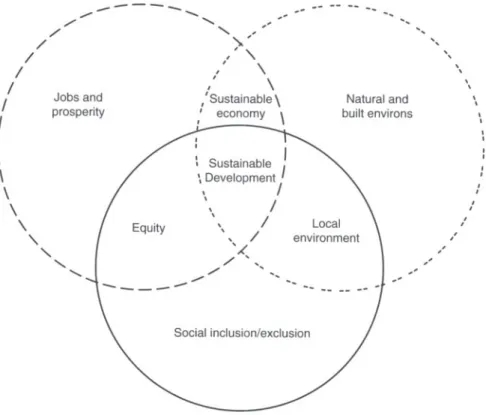
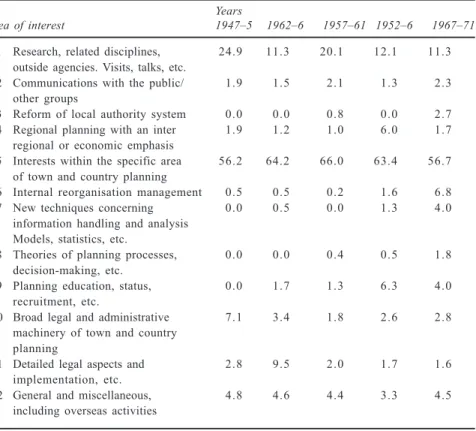
The influence of the sustainability movement on social city planning deserves a digression because it is a concept that determines the approach of many of the contributors. This book seeks to capture key aspects of the diverse and evolving manifestations of social city planning. Central to the analysis will be a discussion of the growth of the planning profession itself.
This is a claim about the type of activity that urban planning is (in fact). But does it follow from this that the goals of urbanism are not social. So much, then, for the various forms of the claim that urban planning is not social.
Groups and issues
Focusing on gender differences and inequality in rural areas has led to a much clearer understanding of the difficulties faced by women living in rural areas. There is a requirement that all sectors are represented in the offer and that the chosen schemes have the support of the local community. The emphasis in the policy is on the development of partnerships for the delivery of rural regeneration and in particular the involvement of the private sector.
Emphasis is placed on business needs and these are assumed to be the needs of the local community. None of the schemes include any special emphasis on the needs of women, either in terms of business development or employment provision. The masculine ethos or culture of the RC scheme is perpetuated by the ways of working.
This masculine culture is also important in the more general underpinning of the RC scheme itself. Both aspects of the chapter have attempted to demonstrate the importance of space in the social construction of gender roles and gender relations. Planners and other professionals need to be aware of the ways in which all these groups have been marginalized and disempowered.
Some current attempts have ignored issues of power, and the resulting tokenism is evident to the elders themselves: The case studies actually show the interaction of the social and the physical in the design process. Future investments by the new Labor government, regardless of funding arrangements, will need to take into account the needs of people with disabilities.

Conclusion
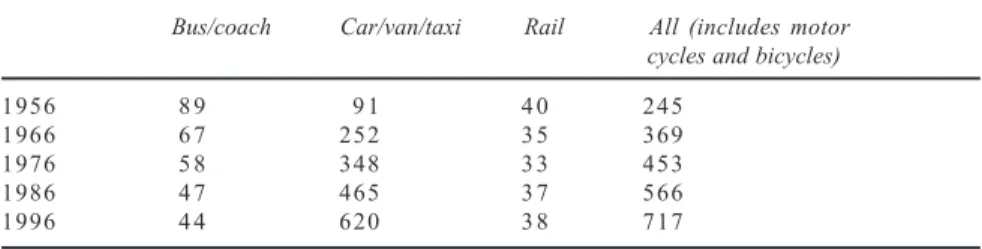
As suggested earlier, issues of disability and its solution in the built environment should be linked to the new government's holistic approach to dealing with cities and the redevelopment of the built environment in general. While transportation planning is often considered to be the domain of engineers and economists, land use planning is beginning to play an increasing role in transportation policy consideration. What can be said is that if existing patterns of activity are examined, there are clear and widespread social inequalities in distances traveled and services accessed.
On a global scale, the current transport trends of developed countries are uneven, not only in terms of the use of scarce finite resources such as oil, but also in the production of transport by-products such as exhaust emissions. The second of Whitelegg's points is perhaps the most important in the context of this discussion. There are a number of other tools in the land use planner's toolbox for dealing with these issues.
This chapter has highlighted a recent neglect of social issues in transport planning and the marginalization of transport issues in the considerations of business and government decision makers. Change is particularly difficult in the UK in the wake of the neo-liberal agenda of the Conservative administrations of the 1980s and 1990s. This view, one of 'roads to prosperity' (as the 1989 road building program was called) is deeply embedded in the minds of local politicians and others.
Such a transport policy will require changes both in the lifestyle of the traveling public and in the attitudes and mindsets of government and business decision makers.
What was disturbing at this conference was that a number of the women (White) from developed countries were highly dismissive of the other women (Black) and the lessons they could learn from them. The book covered issues such as public space, housing and women's experience of the built environment and the architectural profession. However, many aspects of the mainstream feminist argument have failed to take into account, for example, the position and realities of Black and Ethnic Minority women.
The chairman of the interview panel was informed that Matrix had arrived and was in the waiting area. A starting point for much of this is the standard for the method for determining inclusion in the consultation process. A number of studies have been done on the representation of women and ethnic minority groups among students.
Part of the brief was to look at women's representation and attitudes towards equality in schools of architecture and planning. The influence of architecture from other parts of the world is not picked up. One of the focuses was the content of the courses, and SOBA made a strong case for including world architecture in the course.
None of the other main groups achieved representation as architects in the population as a whole.
New policy horizons
The social dimension of the EU generates its share of rhetoric, as illustrated by a quote from Commissioner Padraig Flynn. This section is followed by a systematic overview of the main components of EU social policy that are of interest in the context of social urban planning, focusing on the structural funds, the single market, cohesion policy and the social chapter. The key to understanding this connection lies in understanding the meaning attributed to the word "social" in the context of the social democratic consensus of the authors of the Treaty of Rome (1957).
The main areas of EU social policy that are relevant to the topic of social city planning and its context in the EU are discussed thematically. Some of the specific measures of social urban nature are only available within these areas. The main role of the FME will be the fight against social exclusion, supported by the employment title in the new treaty.
One use of the word 'social' in the context of the ERDF is worth noting, namely the concept of social infrastructure. The major part of the budget goes to the guarantee part of the European Agricultural Guidance and Guarantee Fund (EKUJS). The appeal of the single market program for the UK government at the time lay in the aspects of free trade, competition and access to European markets.
Issues of the Structural Funds and social exclusion are complicated by the issue of enlargement.
The single market and the enlargement of the European Union are further forces for urban change. How a European "urban policy" will be designed to deal with global competition and improvements in the quality of life of all citizens, while striving to meet global environmental targets and contributions (eg the Kyoto Climate Treaty). The WHO document The Solid Facts (Wilkinson and Marmot, 1998) explains ten different but interrelated aspects of the social determinants of health.
Local Sustainability – the European Information System for Good Practice uses new information technologies to provide better opportunities for integrating the work of the Sustainable Cities Project, linking policy to implementation, providing a 'hallmark' standard for good practice in throughout Europe and the widest possible dissemination of this work is ensured. These organizations include the Environment Committee of the Council of European Municipalities and Regions (CEMR), the Environment Committee of EUROCITIES, the International Council for Local Environmental Initiatives (ICLEI), the United Towns Organization (UTO) and the WHO. The European Commission (DG
Box 10.1 Main requirements for participation in the second phase of the WHO Healthy Cities project. Liverpool became one of the first cities to participate in the WHO Healthy Cities Project in 1988. These derive to a large extent from part of the policy report of the expert group on the urban environment European Sustainable Cities (CEC 1996c).
The results of the Urban Forum are likely to influence urban planning in Europe in the next millennium.

We are taking steps to integrate these issues which are inextricably linked in the pursuit of sustainable development. It is more than an environmental charter and emphasizes the need for global and local partnership for sustainable development. Further advisory bodies established in the mid-1990s include the UK Round Table on Sustainable Development (UK Round Table, 1996) and the House of Lords Select Committee on Sustainable Development (House of Lords, 1995).
Later that year, a minister at the Scottish Office interpreted this as "a commitment to sustainable development itself". Additionally, a new Parliamentary Environmental Audit Committee has been set up to monitor progress in delivering sustainable development across the machinery of government (DETR, 1998c, p. 23). In England, government departments were combined to form the new Department for the Environment, Transport and the Regions (DETR), and it is this department that leads policy and action on sustainable development.
It sponsors research, for example on sustainability indicators (DoE, 1996), and produces reports on good practice, for example on strategic environmental assessment (DoE, 1993) in the field of sustainable development; In the spring of 1998, a consultation paper on a revised UK sustainable development strategy was circulated (DETR, 1998c). The Minister responsible for sustainable development in Scotland says that 'the integrated nature of the Scottish Office enables a very different approach to sustainable development in Scotland, simplifying the simultaneous concern for the environment, economic growth and social progress' (Sewel, 1997b, p. 4).
The Scottish Office (five ministries and sustainable development teams) the Secretary of State's Sustainable Development Advisory Group (provides independent advice to the Secretary of State) (House of Commons, 1997b, 1997c) Proposed Scottish Parliament: The John Wheatley Report (John Wheatley Cente, 1997) considers its role for sustainability.