THE SOCIOLOGICAL AND ECONOMIC FACTORS IMPACTING A WORKFORCE DEVELOPMENT PROGRAM IN AN IMPOVERISHED COMMUNITY
By Elena Bauer
A thesis submitted to the faculty of The University of Mississippi in partial fulfillment of the requirements of the Sally McDonnell Barksdale Honors College
University, Mississippi May 2017
Approved:
_______________________________
Advisor: Dr. Albert Nylander
_______________________________
Reader: Dr. Mark Bing
_______________________________
Reader: Dr. Dwight Frink
ii
2017 Elena Bauer
ALL RIGHTS RESERVED
iii ACKNOWLEDGEMENTS
First, I would like to acknowledge Dr. Albert Nylander for being an empowering thesis advisor. He inspired me throughout my time as a scholar of the Catalyzing Entrepreneurship and Economic Development Program of the McLean Institute to identify factors that have created the systemic poverty that affect communities in Mississippi, and confidently and wisely pursue a solution to promote change and solve those problems. I would like to thank him for challenging me to dream big and not allowing me to become complacent. I also want to thank my readers, Drs. Mark Bing and Dwight Frink, who provided important comments throughout the thesis.
Second, I would like to thank the Sally McDonnell Barksdale Honors College and McLean Institute for giving me the opportunity to write my honors thesis and conduct research about workforce development in Clarksdale, Mississippi. This opportunity was invaluable in that it merged my passion for the community of Clarksdale with my academic studies and
enlightened me to my academic pursuits going forward. I would also like to thank the cohorts of the McLean Institute with whom I was able to work with during my time as a CEED scholar.
Their dedication and commitment to help communities in Mississippi was vital in my
determination to do the same through workforce development. Also, I would to thank Dr. JR Love, project manager of the CEED program, for his support and the Robert M. Hearin Support Foundation for the scholarship support.
Lastly, I would like to thank my family and friends who have supported me during my time at the University of Mississippi. Without your patience and encouragement in deciding my academic pursuits and passions in life I would not be where I am today. I would also like to thank Griot Arts Inc. for employing me and allowing me to volunteer with remarkable young adults and program staff to serve the Clarkdale community.
iv ABSTRACT
ELENA BAUER: The Sociological and Economic Factors Impacting a Workforce Development Program in an Impoverished Community
The purpose of this study is to inform about the best practices of workforce development, and to consider the sociological and economic factors in impoverished areas that are to be
considered for successful traditional business principles to work. Through an in-depth study of eight African American male respondents who were participants in a job training program in Clarksdale, Mississippi, this study explores the impact of the vestiges of past discrimination embedded in the institutions and culture to make a Mississippi community particularly
challenging for providing equitable opportunities for low income residents (Cobb, 1992; Duncan
& Blackwell, 2014; Myers Asch, 2011).
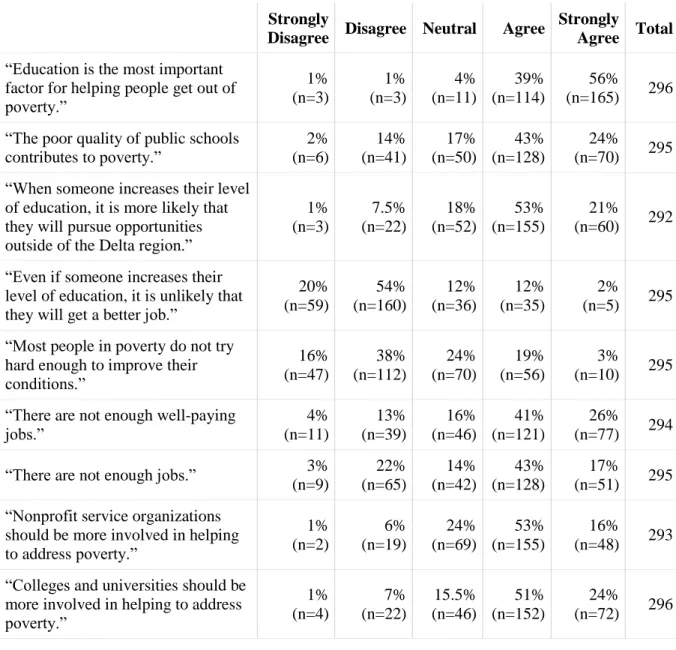
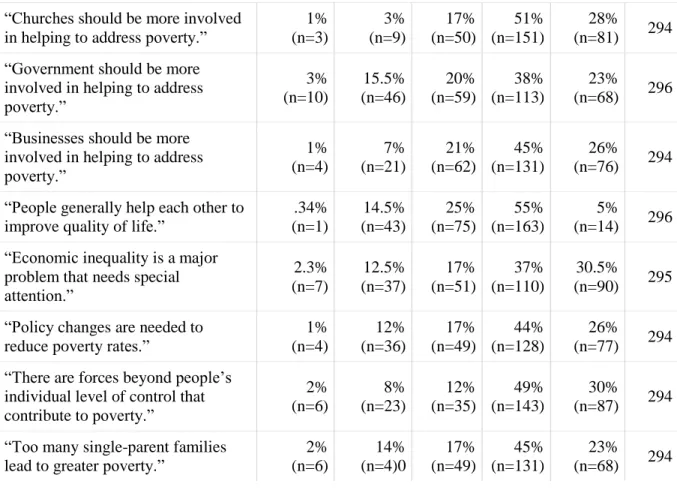
In this analytical case study of the Meraki Job Training Program, I describe the day-to-day realities of survival for underprivileged male youth ages 17-26 living in Clarksdale. Interviews with the participants in the program were conducted over a year-long period. Findings demonstrate that job training programs operating in regions with persistent and deep poverty must consider strategies beyond the traditional workforce development techniques to have success. In addition to the traditional economic challenges such as the lack of transportation, housing, affordable childcare, there were sociological factors like the social normative beliefs of learned helplessness and failure that were prominent in the community. Research also shows that building strong and functional social infrastructures, such as having a strong effective leadership structure in a community to develop networks and resources for residents, are critical for community development (Brown & Nylander, 1998; Brown, Nylander, King, & Lough, 2000). Therefore secondary data (n=335) were utilized on Delta leaders’ perceptions of poverty and workforce
v development throughout the Mississippi Delta Region to explore their beliefs regarding these inhibiting factors.
vi TABLE OF CONTENTS
ABSTRACT……….…iv
CHAPTER I: INTRODUCTION………..1
CHAPTER II: LITERATURE REVIEW………..8
CHAPTER III: METHODOLOGY……….………26
CHAPTER IV: FINDINGS AND DISCUSSION………32
CHAPTER V: CONCLUSION………56
WORKS CITED……….………..59
APPENDICES………..63
1 Chapter 1: Introduction
An assumption of how to get out of poverty is that working harder, with more determination, will eventually create the necessary economic wealth to move out of
impoverished conditions. This study suggests that determination alone will not be sufficient to avail against the forces of poverty. Transitional and supplementary support programs such as job training programs, after school programs, and professional training programs have come
alongside impoverished communities to create advancement opportunities. However the expectation remains that if the opportunity was within arm’s reach then surely people would mobilize themselves out of poverty. But what if that assumption is flawed? What if the supplemental and transitional support necessary for change is also equally about one’s human agency as well as structural factors?
The purpose of this study is to inform about the best practices of workforce development, and to consider the sociological and economic factors in impoverished areas that are to be
considered for successful traditional business principles to work. These practices will be identified through an analysis of a workforce development job training program in Clarksdale, Mississippi. Through a better understanding of these micro-level factors, this study will analyze the challenges encountered in the job training program and offer recommendations for improving workforce development programs in a highly stressed region. These recommendations provide opportunities for positive social change for the Mississippi Delta and its future workforce development strategies.
Although the overall understanding of the harshness and helplessness that people experience in poverty is universally acknowledged, how that reality impacts an individual’s motivation and determination to “get out” of poverty needs more examination. The impact is not
2 easily quantified. This thesis takes an analytical case study approach of a community workforce development program in the Mississippi Delta to consider what factors impacted those trying to create the necessary economic wealth to move out of their impoverished community. This approach will be informed through my personal experience leading a job-training program for underprivileged male youth in Clarksdale, and my continued engagement with this program as a part of my Catalyzing Entrepreneurship and Economic Development (CEED) work with the McLean Institute for Public Service and Community Engagement at the University of Mississippi. Additionally supplementary data are utilized on perceptions of poverty and workforce development collected by the McLean Institute.
Clarksdale, Mississippi is the “crossroads of culture and quirkiness with a heavy dose of blues” according to its tourism committee (Coahoma County Tourism, 2017). However the community has also become “a place of stunning divides and dramatically disparate life
expectations between the rich and poor” (Abramsky, 2015). This division is grounded to a great extent in historical racist institutions beginning with slavery (Cobb, 1992). The hallmarks of the ensuing Jim Crow era are progressively phasing out of communities in the Delta, but a reluctance to pivot from divided institutions and a mentality that once defined the region still lingers. And that reluctance is captured acutely in Clarksdale (Hamlin, 2012).
Other important factors that have contributed to the market destabilization of Clarksdale and the Mississippi Delta are the decline of jobs in the labor and agricultural industries. The exploitable labor force needed in the agricultural industry declined after the end of
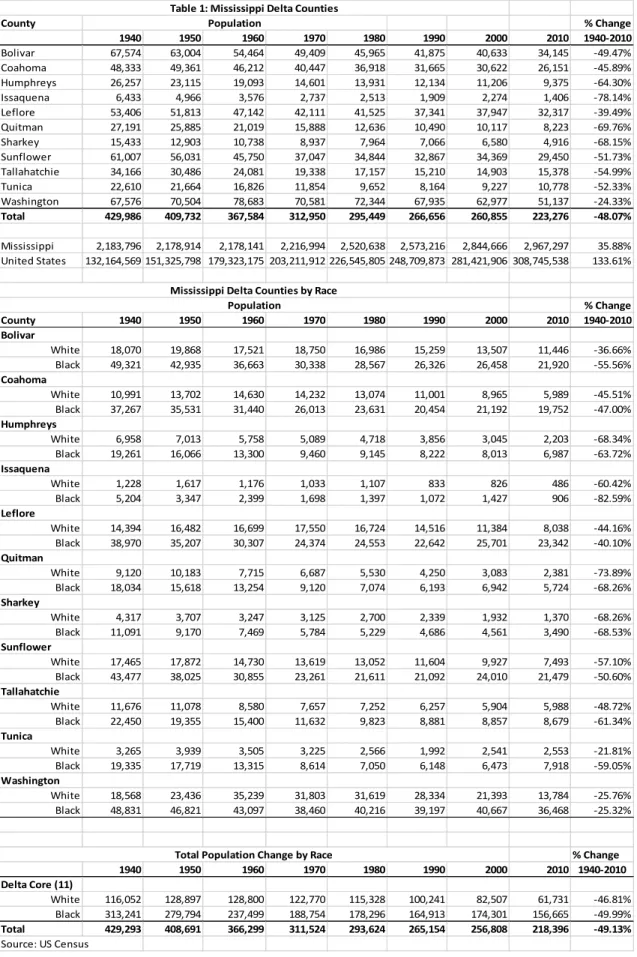
sharecropping, with the resulting depopulation of the Delta (see Table 1). Furthermore as the agricultural industry continued to mechanize, the need for labor continued to decrease. Since the 1980s and 1990s, outmigration of whites in many communities throughout the Delta has created
3 negative consequences for the local economies, with the departure of wealth leading to a
reduction in taxes that help to fund local social services. The limited educational and economic opportunities have contributed further to the population losses in these communities, which has made it more difficult for local businesses to remain in operation with the reduced cash flow.
Green et al. (2014) found that in the case of education and workforce development:
“That attending to the cultivation of people’s motivations and aspirations combined with an identification and reduction of the structural barriers that prevent the realization of these goals, led to positive impacts on individual, household, and community
wellbeing…. Livelihood development for improved wellbeing requires attention to individuals’ motivations and aspirations combined with exposing and addressing the procedural and structural barriers that people face in their everyday lives. More focus is needed on opening opportunity pathways, particularly in areas where youth and young adults have historically had to leave a region in order to pursue their aspirations.”
(Kerstetter, Green, & Phillips, 2014, p 267).
Clarksdale has experienced an exodus of the white population since 1970, with
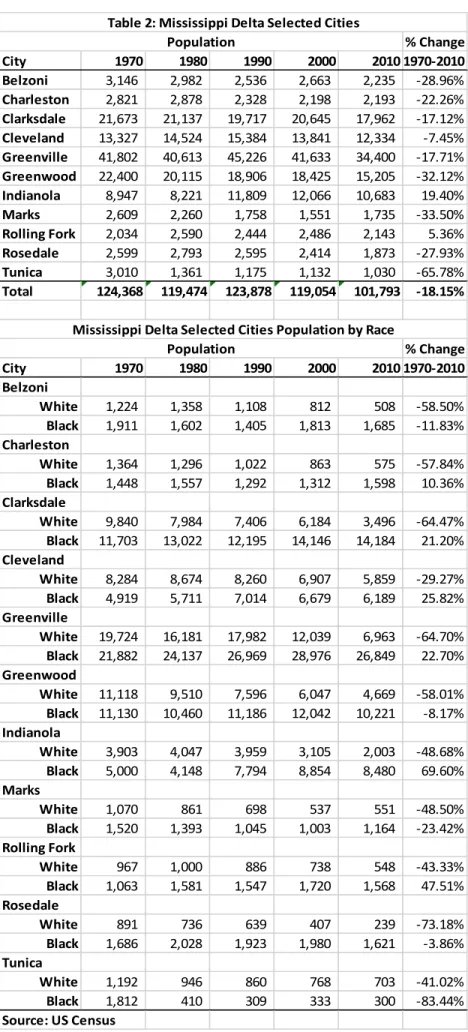
approximately 65% of its white population departing (see Table 2).What remains is a community determined to change while trapped in a sense of indifference, with a significant portion of people living below the poverty line, and seemingly stuck in a cycle of poverty (Hamlin, 2014).
A small segment of the community remains wealthy and tends to inhabit the outskirts of the community. Community partners and initiatives are located in the city where community programs serve a variety of needs ranging from maternal care and early childhood development to high school arts programs, to professional trade schools and community college scholarship
4
County % Change
1940 1950 1960 1970 1980 1990 2000 2010 1940-2010
Bolivar 67,574 63,004 54,464 49,409 45,965 41,875 40,633 34,145 -49.47%
Coahoma 48,333 49,361 46,212 40,447 36,918 31,665 30,622 26,151 -45.89%
Humphreys 26,257 23,115 19,093 14,601 13,931 12,134 11,206 9,375 -64.30%
Issaquena 6,433 4,966 3,576 2,737 2,513 1,909 2,274 1,406 -78.14%
Leflore 53,406 51,813 47,142 42,111 41,525 37,341 37,947 32,317 -39.49%
Quitman 27,191 25,885 21,019 15,888 12,636 10,490 10,117 8,223 -69.76%
Sharkey 15,433 12,903 10,738 8,937 7,964 7,066 6,580 4,916 -68.15%
Sunflower 61,007 56,031 45,750 37,047 34,844 32,867 34,369 29,450 -51.73%
Tallahatchie 34,166 30,486 24,081 19,338 17,157 15,210 14,903 15,378 -54.99%
Tunica 22,610 21,664 16,826 11,854 9,652 8,164 9,227 10,778 -52.33%
Washington 67,576 70,504 78,683 70,581 72,344 67,935 62,977 51,137 -24.33%
Total 429,986 409,732 367,584 312,950 295,449 266,656 260,855 223,276 -48.07%
Mississippi 2,183,796 2,178,914 2,178,141 2,216,994 2,520,638 2,573,216 2,844,666 2,967,297 35.88%
United States 132,164,569 151,325,798 179,323,175 203,211,912 226,545,805 248,709,873 281,421,906 308,745,538 133.61%
% Change
County 1940 1950 1960 1970 1980 1990 2000 2010 1940-2010
Bolivar
White 18,070 19,868 17,521 18,750 16,986 15,259 13,507 11,446 -36.66%
Black 49,321 42,935 36,663 30,338 28,567 26,326 26,458 21,920 -55.56%
Coahoma
White 10,991 13,702 14,630 14,232 13,074 11,001 8,965 5,989 -45.51%
Black 37,267 35,531 31,440 26,013 23,631 20,454 21,192 19,752 -47.00%
Humphreys
White 6,958 7,013 5,758 5,089 4,718 3,856 3,045 2,203 -68.34%
Black 19,261 16,066 13,300 9,460 9,145 8,222 8,013 6,987 -63.72%
Issaquena
White 1,228 1,617 1,176 1,033 1,107 833 826 486 -60.42%
Black 5,204 3,347 2,399 1,698 1,397 1,072 1,427 906 -82.59%
Leflore
White 14,394 16,482 16,699 17,550 16,724 14,516 11,384 8,038 -44.16%
Black 38,970 35,207 30,307 24,374 24,553 22,642 25,701 23,342 -40.10%
Quitman
White 9,120 10,183 7,715 6,687 5,530 4,250 3,083 2,381 -73.89%
Black 18,034 15,618 13,254 9,120 7,074 6,193 6,942 5,724 -68.26%
Sharkey
White 4,317 3,707 3,247 3,125 2,700 2,339 1,932 1,370 -68.26%
Black 11,091 9,170 7,469 5,784 5,229 4,686 4,561 3,490 -68.53%
Sunflower
White 17,465 17,872 14,730 13,619 13,052 11,604 9,927 7,493 -57.10%
Black 43,477 38,025 30,855 23,261 21,611 21,092 24,010 21,479 -50.60%
Tallahatchie
White 11,676 11,078 8,580 7,657 7,252 6,257 5,904 5,988 -48.72%
Black 22,450 19,355 15,400 11,632 9,823 8,881 8,857 8,679 -61.34%
Tunica
White 3,265 3,939 3,505 3,225 2,566 1,992 2,541 2,553 -21.81%
Black 19,335 17,719 13,315 8,614 7,050 6,148 6,473 7,918 -59.05%
Washington
White 18,568 23,436 35,239 31,803 31,619 28,334 21,393 13,784 -25.76%
Black 48,831 46,821 43,097 38,460 40,216 39,197 40,667 36,468 -25.32%
% Change
1940 1950 1960 1970 1980 1990 2000 2010 1940-2010
Delta Core (11)
White 116,052 128,897 128,800 122,770 115,328 100,241 82,507 61,731 -46.81%
Black 313,241 279,794 237,499 188,754 178,296 164,913 174,301 156,665 -49.99%
Total 429,293 408,691 366,299 311,524 293,624 265,154 256,808 218,396 -49.13%
Source: US Census
Table 1: Mississippi Delta Counties Population
Mississippi Delta Counties by Race Population
Total Population Change by Race
5
% Change City 1970 1980 1990 Percent Change 1970-20102000 2010 Belzoni 3,146 2,982 2,536 2,663 2,235 -28.96%
Charleston 2,821 2,878 2,328 2,198 2,193 -22.26%
Clarksdale 21,673 21,137 19,717 20,645 17,962 -17.12%
Cleveland 13,327 14,524 15,384 13,841 12,334 -7.45%
Greenville 41,802 40,613 45,226 41,633 34,400 -17.71%
Greenwood 22,400 20,115 18,906 18,425 15,205 -32.12%
Indianola 8,947 8,221 11,809 12,066 10,683 19.40%
Marks 2,609 2,260 1,758 1,551 1,735 -33.50%
Rolling Fork 2,034 2,590 2,444 2,486 2,143 5.36%
Rosedale 2,599 2,793 2,595 2,414 1,873 -27.93%
Tunica 3,010 1,361 1,175 1,132 1,030 -65.78%
Total 124,368 119,474 123,878 119,054 101,793 -18.15%
% Change City 1970 1980 1990 Percent Change 1970-20102000 2010 Belzoni
White 1,224 1,358 1,108 812 508 -58.50%
Black 1,911 1,602 1,405 1,813 1,685 -11.83%
Charleston
White 1,364 1,296 1,022 863 575 -57.84%
Black 1,448 1,557 1,292 1,312 1,598 10.36%
Clarksdale
White 9,840 7,984 7,406 6,184 3,496 -64.47%
Black 11,703 13,022 12,195 14,146 14,184 21.20%
Cleveland
White 8,284 8,674 8,260 6,907 5,859 -29.27%
Black 4,919 5,711 7,014 6,679 6,189 25.82%
Greenville
White 19,724 16,181 17,982 12,039 6,963 -64.70%
Black 21,882 24,137 26,969 28,976 26,849 22.70%
Greenwood
White 11,118 9,510 7,596 6,047 4,669 -58.01%
Black 11,130 10,460 11,186 12,042 10,221 -8.17%
Indianola
White 3,903 4,047 3,959 3,105 2,003 -48.68%
Black 5,000 4,148 7,794 8,854 8,480 69.60%
Marks
White 1,070 861 698 537 551 -48.50%
Black 1,520 1,393 1,045 1,003 1,164 -23.42%
Rolling Fork
White 967 1,000 886 738 548 -43.33%
Black 1,063 1,581 1,547 1,720 1,568 47.51%
Rosedale
White 891 736 639 407 239 -73.18%
Black 1,686 2,028 1,923 1,980 1,621 -3.86%
Tunica
White 1,192 946 860 768 703 -41.02%
Black 1,812 410 309 333 300 -83.44%
Source: US Census
Table 2: Mississippi Delta Selected Cities
Mississippi Delta Selected Cities Population by Race Population
Population
6 programs. Because the community is in a state of considerable need there is a palpable
movement to improve the standard of living for inhabitants.
Historically, the social, economic, and political systems of the Delta have blocked people’s movement from poverty. In addition to the mere strains of living in poverty, the lack of a quality education, appropriate health care, and an opportunity for achieving economic and psychological independence add to the burden of this entrapment. These challenges, along with the vestiges of past discrimination, are embedded in the institutions and culture to make
Mississippi particularly challenging to policy makers who are charged with providing equitable opportunity for the poor (Cobb, 1992; Duncan & Blackwell, 2014; Myers Asch, 2011).
In addition to recognizing the structural economic impediments that exist in
impoverished communities, this thesis also focuses on better understanding the sociological factors the economically disadvantaged young adults in Clarksdale encounter when seeking access to the labor market. This case study explores the variables evident for success in a
workforce development program for young adult men, ages 17 to 26 years. Many of these young men come from unstable home environments, with inadequate preparation for education,
irregular access to health care, opportunistic access to illegal markets for economic means, and the attractions of a violent gang subculture. However, these individuals voluntarily enlisted into a workforce development program, and they were self-determined to alter their economic
conditions.
Research indicates that economic improvement or development is often the byproduct of a strong social infrastructure. And building a strong local infrastructure takes a strong unified leadership structure in the community. To enhance an impoverished community, the community needs positive social interactions and favorable characteristics of localities. For example,
7 communities with higher levels of social capital and social trusts among its leaders and residents will be better able to achieve its goals together. Social theorists maintain that the local setting is important (Wilkinson, 1991), and that strong social infrastructures yield stronger support for workforce development (Brown, Nylander, King, & Lough, 2000; Nylander & Brown, 2004;
Robinson & Meikle-Yaw, 2007).
The creation and development of strong local social infrastructures (public and private partnerships for community and workforce development) enhance the success of such projects.
An analysis of the factors influencing workforce development in Clarksdale will allow for the debunking of misconceptions about those facing persistent poverty, and reshape the ideas and practices of future training and development programs. The significance of discovering these factors will alter the focus from only measuring workforce development through individual successes to understanding the need for collective action at the community and regional level that transforms individuals, who then will mobilize their social and economic capital for success (Robinson & Meikle-Yaw, 2007).
In spite of dire circumstances, communities can improve attitudes and participatory behaviors through workforce development, and in turn, foster more positive results by enhancing the local social infrastructure. For a workforce development program to succeed in creating an employable workforce, it must help individuals develop the skills for the job, while
simultaneously assisting participants in recognizing the importance of believing in their own self-worth and the need for strong social support systems. This study reveals the mutually- beneficial actions of community engagement and civic participation, which will add to the literature in understanding how to more successfully accomplish workforce development.
8 Chapter 2: Literature Review
Political decision makers at all levels of government often mirror the power arrangements of the dominant society and its institutions (Bullard, 2000). Creating an employable workforce is essential in developing a community with better healthcare, education, and raising the standard of living. Workforce development is thus critical for community development. The WIN Job center is housed in downtown Clarksdale in order to address that need. The services provided include job placement, job corps, veterans’ services, Trade Adjustment Assistance, job search skills training, Information Technology Academy, and referral to special services for migrant seasonal farm workers.
Some researchers have argued that community development precedes economic development (Grisham, 1999; Robinson & Christensen, 1989); however, whether community development precedes economic development it is more complicated than basic community or economic development principles. Community leaders have vested interests in the development of places and often influence political and economic structures to their favor by developing unified policies advancing their agendas (Logan, 2007). In impoverished communities, residents are typically unaware of these decisions and market forces. Moreover, in historically divided communities built on extractive and exploitive industries, a common pattern seen is entrenched systems of segregated leadership structures and unfair economic practices, such as wage gaps between blacks and whites (Brown & Nylander, 1998; Brown et al., 2000; Hill, 2008;
McMichael, 2016).
Job placement, job corps, job search skills training are valuable services for the
community. The skill sets that these programs develop are applicable for individuals who have strong social support systems,but are not structured to address some of the persistent and
9 systemic poverty issues limiting workforce development. For a workforce development program to succeed in creating an employable workforce, it must help individuals develop the skills for the job, while simultaneously assisting participants in recognizing the importance of believing in their own self-worth and the need for strong social support systems.
Building Social, Community, and Economic Development: Theory
The Mississippi Delta has identifiable regional organizations (infrastructures) that focus on economic development; however, many Delta towns lack the needed diverse and effective public and private sector partnerships dedicated to improving their community through community and economic development efforts. To create strong social infrastructures and to fight persistent poverty, development work needs to expand the civic engagement efforts in the community by increasing the number of public and private sector partnerships, which focus on the social betterment (Robinson & Green, 2011).
For this to happen, community leadership needs to recognize that everyone in the community is a valuable member, and their input important for the overall community growth.
The challenge is to identify and develop leaders who recognize this need in rural places, and also for them to take ownership of the historical practices of the past and its limitations structurally, and to then move forward with effective leadership (Brown & Nylander, 1998; Brown et., 2000;
Stovall, Robinson, Nylander, & Brown, 2011).
In “The Precariat: The New Dangerous Class,” Standing described the precariat as a new class in society. This new class’ labor was insecure and unstable, creating an informal nature to their work often described by part-time labor. Their livelihoods were characterized by chronic uncertainties (Standing, 2014), and, in many ways, this analysis is appropriate for the Deltans and their consistent struggle for day-to-day survival. For example, the majority of available jobs
10 in Clarksdale are minimum wage, which is often insufficient for meeting monthly house rents.
The median household income is $28,988, and the poverty level is 35 percent, with whites at 11.6 percent and blacks at 41.2 percent. Of the 57.3 percent of the population 16 years and over in the labor force, 11 percent are unemployed (Census fact finder, 2017). A large percentage of the population finds themselves unemployed, and therefore they have little income to meet basic housing expenses. This creates stressful living conditions in which families face evictions and are forced to live with family and friends. Providing stable living conditions should be an accommodation for helping individuals transition in a workforce development program. This weak social infrastructure adds enormous psychological strain on individuals.
Classical social theorist, George Herbert Mead, argued that society takes priority over the individual mind. In other words, an individual’s self is carefully constructed through the
significant social interactions one encounters as they move through life. For Mead, the creation of the individual mind (self) was a process, not a fixed thing; meaning it is the compilation of all of those significant social interactions with others in society and it continues throughout one’s life. Mead developed components within his theory that showed how society dominates the individual through the accepting of an organized set of attitudes from others. This is not a deterministic view of social change, but an ongoing negotiation between the individual’s creativity, and the established patterns of society that tend to have more influence on one’s actions (Mead, 1934).
Wilkerson (1991) extended this symbolic interactionist thinking to more pragmatic ways to study community. His work examined community in a geographical place where significant social interactions happened. Researchers have argued that the Delta has a unique history with its old South community and economic practices, which, as stated already, are characterized by
11 divisions in the social and physical structures. Moreover, in the early to mid-1900s, the modern technological changes in agriculture in the Delta displaced workers, and altered the social and economic patterns throughout the region, marking a substantial structural transformation of people’s lives. This transformation brought multiple community and economic shifts within a generation, with efforts to promote community and economic development in the Delta failing to offset the market forces. Theorists and researchers argue over the importance of community leaders and others recognizing market forces as rational actors, and then whether or not their work on community development initiatives will successfully alter economic structures or markets (Brown, Nylander, King, & Lough, 2000, Gnuschke, Hyland, Wallace, Hanson, &
Smith, 2008; Polanyi, 1944).
Although recognizing that theorist Karl Polanyi (1944) argued that there was nothing natural about the free market, community development experts have documented that social change and improved economic conditions are possible when local citizens take responsibility for their own communities (Christenson & Robinson, 1989; Grisham, 1999). When all
community residents have opportunities to participate in development projects, they learn new leadership skills and come together to make better decisions for the community. However, Delta residents consistently here negative connotations of their region and its failures. These
descriptions of being the worst in the nation, and far different than any other place in the United States, lead to self-fulling prophecies of despair and helplessness. These forces then tend to be internalized within the collective psyche, leading Deltans to act on what they perceive to be real, whether true or not.
Understanding these perceptions are critical in evaluating workforce development in Clarksdale. In order to identify what motivates young adults to become employed, we must
12 consider how they have internalized these societal forces that make up the social infrastructure.
Their everyday realities and social interactions are constructed on their limited understanding of their local worlds and how others define it for them. To capture the best practices of workforce development, the meaning participants perceive is essential to understand, and the obvious deleterious impact of the social problems encountered must also be understood.
One social challenge impeding the advancement of one’s opportunity for successful workforce training in the Clarksdale community is viable access to healthy food. Receiving regular access to healthy food is a major concern for young adults who may not have completed school or who are unemployed. Also, living in an economically depressed community results in high dependence on welfare payments, which make up a substantial source of income for a large percentage of the residents throughout the Mississippi Delta. These assistance programs provide a consistent and dependable income for individuals, and they are essential for the livelihood of many families. Because many of the jobs available in the Clarksdale community are minimum wage, there is little income boost for individuals working a minimum wage job over receiving government assistance. This creates tension for some individuals seeking employment because there is no motivation or satisfaction perceived from gainful employment. Understanding the motivating factors of participants in a workforce development program is important because they determine the participant’s commitment to the outcome.
As previously mentioned, lack of affordable housing is another factor affecting workforce development in communities. “When people have a place to live, they become better parents, workers, and citizens” (Desmond, 2016, p. 295). A lack of home is therefore destabilizing for people, destroying ones sense of self. It weighs heavily on their minds and triggers mistakes at work or in school. It overwhelms people with stress. In an expose of poor renting families and
13 their struggles with evictions, one tenant stated, “[She] could feel the house sucking their energy.
We just hit a mud hole with this house. No one’s trying to get better. Makes me not want to get better. If you're around people all day that doesn’t want to do anything, eventually you will feel like doing nothing” (Desmond, 2016, p. 258).
The lack of adequate paying jobs in rural communities throughout the Delta often results in this type of response. Unfortunately for most who are wealthy or who have never experienced poverty or the historical oppression that permeates the entire social infrastructure, there is a gap in their understanding of these decisions. When government assistance becomes more
dependable than the struggles of overcoming a broken social structure, the realities of
dependency become true; thus, the perception by others of a lack of interest and reluctance to change.
Falling ill, having a family emergency, or having the car break down on the way to work will not impact the government assistance. However, any of these issues occurring often result in a days’ lost wages if not more. The lost wages in conjunction with the cause for the absence or tardiness at work can easily snowball into unmanageable financial obligations which spirals into further financial difficulties. This is another factor that must be understood for a workforce development program that is to guide participants into becoming fully employed members of the community.
For individuals living in an environment of scarcity and insecurity, income dependability determines their livelihood. The Federal Welfare Reform Law was passed in 1996 as an attempt to end dependence of welfare recipients on the government. The reform law replaced Aid to Families with Dependent Children (AFDC) with Temporary Assistance for Needy Families (TANF). Under TANF, a recipient can receive benefits for a maximum of 60 months. TANF’s
14 primary goal is to prepare recipients to become self-sufficient, and to end their need for financial assistance from the government. Recipients who are not exempt are therefore required to find work within 24 months of receiving assistance. The TANF recipient is also aided by a case worker to create a plan of action.
All of these factors are exacerbated by the racial tensions in a community. The majority of whites in Clarksdale are in the middle and upper class. Whereas the working class community is predominantly black. This creates a power tension dynamic that reinforces many of the
stereotypes between the races. The majority of employers are white, whereas the majority of employees are black. Perceptions of the opposite race through the lens of this continued power struggle maintain the racial inequality that was fostered through slavery and sharecropping. This creates a dynamic that fails to promote change and growth, and fosters animosity between sides within the community. Many black residents in the community feel as though they have no chance against the forces of historical institutional discrimination. Many white residents feel as though the black community chooses to keep themselves down. And although these are
perceptions, they create a dynamic that hinders growth and becomes real in their consequences.
Not recognizing and discussing these issues must also be considered as factors that limit the success of participants striving to achieve employment through workforce development programs.
Meraki Job Training Program
One successful program in Clarksdale is Griot Arts Inc. This program originally began as an after school program for underprivileged high school students in the community. The mission was to provide a safe space in which students could tell their story through the arts. As students matriculated through the program, the staff struggled with how to support students upon
15 graduation from high school. It was apparent that these students lacked the soft skills to become employed, and there was no opportunity for them to develop these skills in Clarksdale. These soft skills include self-efficacy, self-esteem, confidence, integrity, responsibility,
communication, professionalism, teamwork, and work ethic.
To address this issue, the Griot staff started the Meraki job training program for young adults. In this two-year program participants would develop soft skills as well as a variety of skill sets appropriate for entry-level manual labor jobs. The program’s primary focus was for
participants to tend to an acre vegetable farm. After growing the vegetables, the participants would sell their produce at the local farmers market and local restaurants in town. The job of taking care of the crops until harvest and selling it reinforced the soft skills of responsibility, integrity, and work ethic. Participants’ activities with the director, businessmen, and community members, reinforced the soft skills of communication, courtesy, professionalism, and teamwork.
The goal of the program was not only to provide training in skills needed to achieve employment, but also for participants to achieve personal growth to become independent, responsible young adults in the community.
During the program’s operation, financial issues began to arise and eventually caused the program to end. Funders backed out of funding the program due to the length of time before the program could prove to be successful. After a sixth-month evaluation, funders found that other than progress reports which demonstrated some improvement, there were no identifiable changes among the participants that could clearly determine whether they would successfully gain
employment. From the Meraki staff end, progress reports that indicated that the participants showed up on time prepared to work, engaged with others in a positive manner, and successfully
16 completed their tasks were a tremendous success. However these were not the measurements funders consider significantly important.
Without continuing funding for the program, Meraki was forced to end. Transforming the lives of young adult men intoresponsible young adults was not what the funders envisioned for their dollars going into a workforce development program. The grantors failed to recognize the significance of these improvements in the social psychological factors, which were transforming and mobilizing participants to define success for themselves. In turn, this success would have resembled the outcomes desired by the funders and program staff, which included achieving employment and motivation to partake in workforce development.
For funders this work had to happen within a six-month period; however, such
transformation and ensuing workforce development preparation will only occur through a long- term approach. This requires outcomes assessment to also include the integrity and sustainability of the program. The current measures through which funding is determined fails to consider the difficulties in areas of high poverty and does not permit programs to address the multifaceted needs of underprivileged individuals.
Several of the aforementioned issues began to impact the Meraki Program. One issue was the stipend that participants received while employed at Meraki. The stipend was insufficient for participants to meet their financial needs to live independently. The stipend did not cover rent payments or bills for the participants. Much of the participants’ motivation to gain employment was to support themselves to live independently. Without the ability to provide for themselves, forcing the majority to remain at their families’ homes, lessened their motivation. Not only was the stipend insufficient to support independent living, it was also insufficient for meeting other financial obligations such as weekly groceries or phone and power bills. The inability for the
17 stipend to create food, housing, or income security for participants continued to reinforce
limiting factors that resulted from living in an economically depressed environment, rather than eliminate them.
As a Catalyzing Entrepreneurship and Economic Development (CEED) Scholar with the McLean Institute for Public Service and Community Engagement at the University of
Mississippi for the 2016-2017 academic year, I have examined numerous community
engagement theories and practices for understanding work in impoverished communities. The McLean Institute CEED team’s curriculum was the Ice House Entrepreneurship Program, which was a framework for understanding and implementing an entrepreneurial mindset (Stangler &
Jordan, 2015; Taulbert & Schoeniger, 2010). This training has been valuable, along with the knowledge I gained from serving as the cofounder of the Meraki Job Training Program. Leading and working at this job training program grounded my experience in the realities of the day-to- day challenges for this local community program.
Workforce Development in Historical Context
Anderson (2010) states that sustainable development demands a continued emphasis on economic development to provide the financial capital needed to eradicate poverty and solve environmental problems. This definition captures the interdependence of building social and human capital in order to promote sustainable development and fight poverty. In the South, poverty and environmental decline are interdependent parts of the cycle of underdevelopment.
The current approach perpetuates a discrepancy by promoting economic development without reinvesting enough in building human capital. However sustainable growth requires meeting the basic human needs of all people and improving the imbalance of resource consumption between the rich and poor (Anderson, 2010). Restoring this imbalance occurs when the community
18 actively engages in achieving sustainable living for its community members. And although everyone unanimously agrees in the successfulness of this model and reasoning, this community engagement model needs additional practice and resources in Clarksdale.
Investing capital needed to eradicate poverty means allocating funds from the community into the common good of the impoverished. “A primary argument in community development is that functional leaders will concentrate their efforts on behalf of the larger citizenry rather than simply acting in their own individual interests, a problem which often threatens the well-being of the community” (Brown et al., 2000, p 192). For leaders in Clarksdale the reluctance to engage in this community and economic development strategy might be justified due to the uncertainty of the outcome. Without a guarantee that the investment can result in more income for those forgoing present economic benefits, long term sustainable growth for all is unclear. Often times this is justified through past prejudices, historical economic decline, and increasing poverty.
However, effective leadership structures solve these problems by engaging diverse community members and including the community-at-large in the decision-making activities (Stovall et al., 2011).
Extensive research has been collected regarding the social ills troubling the Mississippi Delta (Cobb, 1992; Myers Asch, 2011). According to Harvey (2013), race is a critical variable for understanding the obstacles to community development in the Mississippi Delta. Harvey argues that “white leaders who dominate the private sector generally see ‘‘community development’’ as secondary to and distinct from ‘‘economic development’’ proper, which, in their view, entails industrial recruitment and the expansion of industrial agriculture” (Harvey, 2013, p 265).
A black middle-class leader in a Delta town captured it this way for Harvey.
‘‘What you’re stuck with [here] are people who can’t go anywhere. There are two kinds of people who can’t go anywhere and those are the people that have so many resources
19 tied into the community [economic and political] that they can’t . . . and . . . those that just literally cannot afford [to leave] . . . [T]hat gap is exacerbated by the difference in those two cultures [i.e., races] and they don’t come together at all. So then what you see is that ‘have-not’ group becomes an extreme drain on the ‘haves’ and they resent that and so they end up resenting one another: ‘I resent you because you have everything and you don’t help me and you don’t give me whatever.’ And on the other hand, ‘I resent you because you’re dragging down my community; you’re lazy and you won’t get up and do things.’ . . . And in that gap, people are going at each other and they’re very suspicious of one another. It’s hard to put together good social programs when people are so
suspicious.” (Harvey 2013)
Building community and economic development initiatives with such weak social infrastructures is difficult. This persistent and systemic poverty cannot be addressed with a single solution, but must utilize a holistic and integrated approach to transcending poverty. Therefore there has to be a shift of belief systems of the leaders and community members. Healing the community from scars of hundreds of years will have to happen in concert with advancing the individual for success. As Mead (1934) theorized the individual is a socially constructed reflection of the society it inhabits. Thus, any program fighting poverty in the Mississippi Delta must include the whole community in the decision-making process to understand the appropriate structures for improving the community and economy. Obviously these principles apply to workforce development in the region. The apparent disparities between the wealthy and impoverished become embodied in programming such as workforce development. Workforce development programs must then not only reeducate and train for job employability, but also address the pervasive social ills and weak social infrastructure if they are to be successful.
Although this may be a difficult task for impoverished communities, it is needed if the leadership and business community desire continued economic growth moving forward, as training human capital is the prime engine for growth. Workforce development alone cannot solve
20 the larger brokenness within a community, but it must be part of the solution with many other social and developmental programs.
Support for Workforce Development
Community colleges are designated as the lead agency to provide workforce training in 19 states, including Mississippi. Training in high demand fields, training disadvantaged students, including ex-offenders in Mississippi, customized training for employers, noncredit occupational training, and funding of training equipment are some programs offered through community colleges. The Workforce Investment Act (WIA) was enacted to coordinate funding for workforce development initiatives. However, coordination of workforce funding remained an issue for almost all states in which the policy was enacted. Furthermore, most states found that the lack of coordination from funding sources further restricted the responsiveness to workforce needs (Davis
& Boswell, 2003). At the time, Mississippi expressed no such concerns. This suggests that adequate resources were being made available to address the workforce development in the state.
However, workforce development in Clarksdale was underdeveloped. This may be due to the lack of funding and coordination for the region, or an inappropriate program structure to serve the needs of the community.
An existing trend in workforce development on employment and employee behaviors further emphasizes the need for holistic programs that help the individual transform, in addition to acquiring trade specific skills. This new business landscape creates company obligations to help people explore opportunities, and promote lifelong learning. These changes in attitudes and values suggest the importance of workforce development in the long term interest of companies, due to the need for adaptable employees that create value for the company. These methods will only be
21 adoptable and successfully implemented if the employees and employers are convinced that this career resilience program will serve them (Waterman, Waterman, & Collard, 1994).
Another concern for workforce development awareness is the lack of workforce planning among organizations. The reasons for reluctance to participate in workforce planning resembles those given in opposition to workforce development programs. These reasons included lack of available staff to create a program, lack of time, and workforce planning not being viewed as a pressing issue, since we have always “gotten by.” Justification to refrain from implementing a workforce development program included agencies’ uncertainty that there was no current overall mandate to conduct workforce planning, and the necessity to focus on short term needs and results due to current performance objectives (Johnson & Brown, 2004).
Resistance to work with human capital to achieve corporate, economic, and social benefits reveals a greater issue on behalf of citizens. Meeting individuals’ needs and identifying how best to work with those individuals requires meaningful time and effort. The results of such an investment are long term and sometimes difficult to identify. And the majority of people, even with consistent data suggesting that such an investment is necessary and worthwhile, refrain from doing so. This tendency can only be overcome by policy changes that mandate that the time and effort be placed in developing human capital.
Taking a holistic approach in workforce development programs is critical, as it is for communities to focus on strengthening their social infrastructure. The American Academy of Political and Social Science has conducted research and collected findings on evaluations of positive youth development programs, and concluded that programs aimed at successfully promoting positive youth development must address social, emotional, behavioral, and cognitive
22 development (Catalano, Berglund, Ryan, Lonczak, & Hawkins, 2004). These objectives are valuable for youth development as they will constantly be applied throughout their adult lives.
The Role of Public Assistance in the Mississippi Delta
The question that often arises during conversations about workforce development in the Delta is whether there are sufficient jobs available for all work-ready welfare recipients in the area.
The response to that question is, as John Ferguson of the Mid Delta Work Force Alliance answered at the Welfare Conference, “no”. However, in response to the question of whether more jobs can be developed, Ferguson stated that “yes, more jobs can be developed, but for the jobs to be developed, there must be adequate training for the individual job and the person has to be job ready.” This response is problematic for two reasons. The first is that the response maintains the status quo by shifting the responsibility of developing the jobs onto the incumbent workforce, rather than the community employing the incumbent. The question is therefore answered, but no productive next step is proposed. The second issue is that with the responsibility placed on the incumbent employee, any workforce development program is faced with yet another hurdle for participants to overcome in order to become employable. As such, it is also very difficult to prepare individuals for future employment for which they have no idea what training and skills will be applicable. It creates a precarious situation where the objectives are obscure, and unclear objectives are difficult to achieve and measure in order to develop a program.
Ferguson concluded his remarks by stating, “We have to train people and the jobs will come.” This comment presents challenges regarding seeking funding. Funding for programs must have clear outcomes for evaluation purposes. Attempts to fund a program to train people, without knowing for what and where to become employed, are generally futile. A number of factors can prevent employment for trainees. However, as funders determine the success of a program through
23 the objective of becoming employed, the intermediate factors that can deter employment will be overlooked. Funding for the program would then decrease because the objectives of the program are not being met.
Jean Denson of the Employment Training Division Department of Economic and Community Development shared findings on the training opportunities through the Welfare Reform Act. She stated that “the most prevalent training assistance for welfare recipients would be either the Pell Grant, or the Job Training Partnership Act” (Les, p. 15). Although education is universally agreed to be a positive catalyst for employment and improved standard of living, these resources do not automatically provide this. The highest education that the majority of welfare recipients received was a high school diploma, with many not possessing one. This means that higher education opportunities through the Pell Grant, whether college or junior college, was not a practical resource for many. They would likely need further academic guidance and counseling to successfully complete such a program. And they would need to seek and secure that support themselves, which given the context of the prevailing socioeconomic challenges facing welfare recipients it is highly unlikely. The Job Training Partnership Act has been successful preparing welfare recipients for employment mostly in the medical field, although basic academic proficiency is still assumed for this.
The Temporary Assistance for Needy Families (TANF) agreement allows participants one year of training, and six months on the job training. This time period is not sufficient for most who live in a high poverty region, particularly if the goal is to successfully help TANF recipients become self-sufficient, employed members of the community. As indicated already, these rural communities have broken social infrastructures; thus, more time is needed beyond basic skill-set instruction to successfully move participants into the labor market. The individuals must also learn
24 new habits of living, how to manage their time and resources, how to build self-efficacy, and how to maintain employment.
Much of the feedback given at the Welfare Conference by community members and welfare recipients expressed concern about the inherent disconnect between the objectives of the program and the necessary resources for productive and positive outcomes. Further concerns were made on the program treatment and existing operating procedures. Critics indicated that the participants were not being listened to and decisions were made without their input.
A Mississippi Senator suggested that the Department of Human Services look into dismissed cases and consider why participants dropped out of the program. This intensive work is difficult to implement as the Department of Human Services is currently burdened with their own staff shortage. However, some meaningful documentation through which the government can identify the problems and concerns with the welfare reform administration might be useful for worthy amendments.
The next chapter will discuss the methodological approach for this thesis. The primary analysis will be a qualitative study of a workforce development program, with the goal of understanding how to increase community engagement. Supplementary data are utilized on community leaders’ perceptions of poverty and workforce development collected by the McLean Institute for Public Service and Community Engagement.
The argument has been made that community leaders are integral to the success of building strong social infrastructures. This happens when leaders and residents in communities connect to the development of the whole place, ultimately improving lives for all. These results will suggest a course of action to improve workforce development in the community, resulting in stronger people and economies. I also will share the successes and failures of the participants in the Meraki
25 Job Program. An analysis of this workforce development training for young adults in Clarksdale will offer insight into the sociological and economic factors impacting workforce development programs in the Delta. Additional research was collected on the participants post Meraki through interviews. These findings will also offer information on why some participants are no longer employed, and which factors prohibited them from seeking further employment.
26 Chapter III: Methods
As a Catalyzing Entrepreneurship and Economic Development (CEED) scholar, I participated in the 2016-2017 community engagement course and field work. CEED is one of the McLean Institute’s signature projects to fight poverty through education in Mississippi. This thesis utilized a mixed-methods approach through in-depth interviews, the use of secondary data, and participant observation through personal experience leading a workforce development program.
Through in-depth interviews this study explored the sociological and economic factors that impacted eight participants in the Meraki Job Training Program over a year-long period. In-depth interviewing is a qualitative research technique that can involve intensive individual interviews with a small number of respondents. In this case, this qualitative research technique was used to explore their perspectives on a particular phenomenon, which for this study was the workforce development program.
Workforce development programs in the Delta have been unable to provide sustainable employment for the community. The primary resource for individuals seeking employment are the WIN job center in downtown Clarksdale, and through the local community college, Coahoma Community College. Another workforce development program that provided job training for young adults was the Meraki Job Training Program. This program was created in partnership with Griot Arts Inc., an after school program serving underprivileged youth in the community. The mission of the program is to provide young men and women meaningful work throughout their adulthood to break the generational poverty in Coahoma County and in the Mississippi Delta. This study examined the journey of all eight participants through the Meraki program, as well as conducted interviews with participants following their immediate employment after the program.