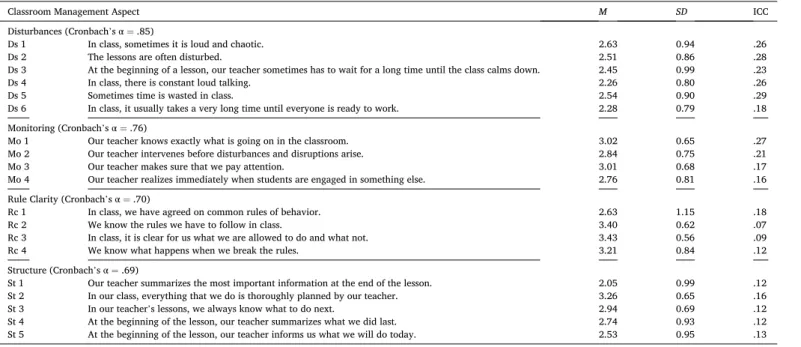
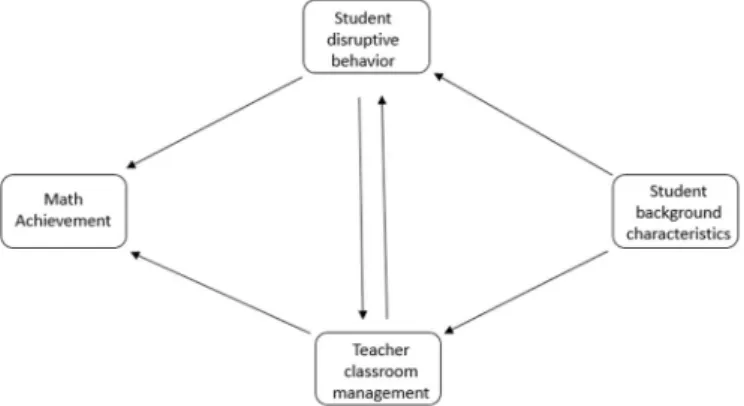
In contrast, both classroom management factors were associated with students' mathematics achievement at the intermediate level. Second, the considered classroom management aspects were associated with students' mathematics performance: A high level of disruptions in the classroom was associated with lower mathematics.
Background
The effect of classroom management based on the cooperative learning approach on the scientific educational achievements of students of. Background: The purpose of this study is to investigate the effect of classroom management based on the cooperative learning approach on the educational achievement of students in the sixth primary subject in the science subject. Conclusions: Based on the present results, the implementation of classroom management based on the cooperative learning approach can have positive effects on educational achievement in the Science classroom.
There is difference between elementary sixth stu- dent’s educational achievement in science class based on
There is difference between elementary sixth boys and girls’ student’s educational achievement in science
Methods
The statistical population of the study includes all male and female elementary sixth graders in Piranshahr in the school year. These tests were constructed based on the related table of characteristics and according to the experts in primary education in the region, using the recommendations of 3 experienced primary school teachers. Two parallel tests were administered to a group of elementary sixth students at a different school within an interval of two weeks to check the reliability of the educational achievement tests.
Results
So we can say that the mean of control and experimental group in post-test is different and this difference was statistically significant. According to the average obtained in Table 6, we can say that the average score of the experimental group (15.69) is higher than the average score of the control group (14.10). The results of Table 7 show that the average score for male students in the experimental group is equal to 15.63, and the average score for female students in the experimental group is equal to 15.75.
Discussion
However, it is not consistent with the findings of the studies conducted by Saeed Khan et al. The results of the study also showed that there was no significant difference between the male and female experimental classes that were taught through a cooperative learning approach. The results of the present study also indicated that although the average score of the female students.

Holding regional conferences, effective in-service courses, and workshops can help to utilize this approach
Conversely, studies such as Webb (22) reported that male students' performance was overall better than that of female students. In this approach, students individually try to develop and their failure is in their own interest and not that of the public. One of the ways to limit this limitation is to conduct the study for a longer period of time, for example a whole period.
Training teachers is the main recommendation for education authorities and managers who should inform
In addition, Khodadadnezhad (20) found that male students performed better than female students in a cooperative learning approach; however, this difference was not significant. For example, Johnson (21) reported that male students performed better in cooperative learning groups, while other studies such as Keramati (19) found that female students outperformed their male counterparts. Like other studies, this study also had some limitations such as: The sampling method was one of the limitations of this study in which instead of classifying the subject into a group, they took classes as the subject of the study.
Teachers can share issues and questions that they
The results of hundreds of studies on this approach indicate that students in cooperative groups not only have more positive attitudes, but also learn and perform more effectively compared to students in competitive groups. Since the present study and previous studies have confirmed the important role of the cooperative learning approach in achieving educational objectives, the following suggestions are proposed to further utilize it. Prospective researchers are encouraged to study the application of this approach to other courses.
Prospective researchers are recommended to study the application of this approach for other courses and
This study examined the extent to which the relationships between student-reported mathematics scores and different types of student variables (standardized mathematics test scores, interest and effort in mathematics, parental education) were predicted by class composition and teacher classroom management. Despite this, classroom management has received almost no attention in the assessment and evaluation literature (Brookhart, 2004). In addition, we propose that classroom management influences attribute–grade relationships by moderating the influence of classroom composition on teachers' assessment practices, judgmental accuracy, and susceptibility to bias.
Accuracy of Teacher Judgments of Student Achievement
Thus, examining systematic differences in the relationship between noncognitive outcomes and grades can provide insight into how teachers use grades as an instructional tool (Rakoczy, Klieme, Bürgermeister, & Harks, 2008). Thus, examining systematic differences in the relationship between students' background variables and grades may help to account for bias in grade-based decisions. The current study focuses on the relationship between two types of variables, namely (a) the composition of students in the classroom and (b) teachers' classroom management, and the relationship between student characteristics and grades.
STUDENT ATTRIBUTES AND GRADES 291
Compensation for Social Disadvantage
Thus, we expected interactions between classroom composition and classroom management in predicting the relationship between test scores and grades and parental education and grades. with both an unfavorable student composition and classroom management problems. Furthermore, because ineffective classroom managers have difficulty creating a functioning learning environment, they should exhibit a greater tendency to base their grades on noncognitive outcomes, such as efforts to ensure collaboration in unfavorable classrooms. Thus, we expected interactions between classroom composition and classroom management in predicting the relationship between noncognitive outcomes and grades, which implied a stronger relationship between interest and grades, and effort and grades, in classes with both unfavorable student composition and an ineffective classroom. management.
Variables
Consequently, grades should tend to be (a) less closely related to measures of academic knowledge and (b) more closely related to student background variables in classrooms where an unfavorable student composition and poor classroom management coincide. Previous research suggests that class-level student ratings are valid indicators of institutional characteristics, including classroom management (Kunter & Baumeri, 2006). Two items covered the clear rules aspect ("In maths lessons everyone knows the rules we have to follow In maths lessons the teacher explained the consequences of rule violations"), and two items the monitoring aspect ("My maths teacher always knows exactly what in the classroom happens During mathematics lessons the students are attentive and concentrated") of classroom management.
Analyses
The internal consistency of the student ratings was Cronbach's ct = .64, the internal consistency of the ratings aggregated to the class level Cronbach's a = .86. To improve the interpretability of the regression coefficients, the outcome and all continuous predictors were standardized before entering them into the models (M = 0, SD = 1). Class-level predictors (classroom management, classroom composition variables) were standardized based on their mean and variance across the classes (i.e., at the class level).
Predicting Student Attribute-Grade Relationships by Classroom Composition
Student-level predictors (test performance, interest, effort) were standardized based on their overall mean and variance in the sample. All categorical predictors (Level 1: parent education dummy variables; Level 2: school type dummy variables) were retained in their original metrics. Since traditional approaches (eg, listwise deletion) can produce biased results, we applied multiple imputation, a modern method of handling missing data (Schäfer & Graham, 2002).
STUDENT ATTRIBUTES AND GRADES 295
Discussion Summary of Findings
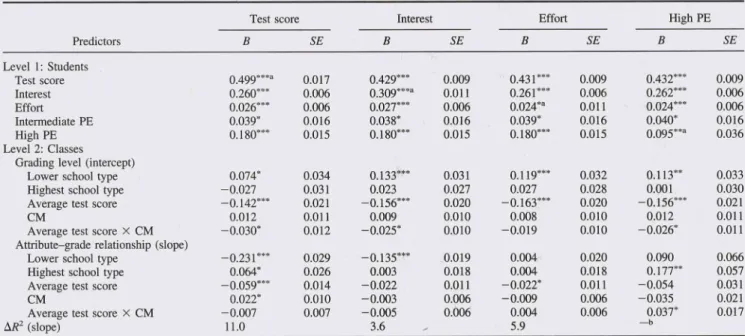
Predicting the Student Trait-Grade Relationships by Average Test Performance of the Class and Its Interaction with Classroom Management. Predicted effect of average test performance of the class and teachers' classroom management on the relationship between high parental education and mathematics grade. Finally, we found evidence for an interaction between average test performance and classroom management in predicting the relationship between parental education and grades.
STUDENT ATTRIBUTES AND GRADES 297
Classroom Composition and Accuracy/Bias in Teachers' Grading
Our findings suggest that teachers adapt their grading practices to classroom conditions by placing more emphasis on factors of academic achievement or non-achievement, but also that making judgments that accurately and impartially reflect student outcomes is more challenging. in "difficult" classes. Correlations are in the lower left triangle, variances are on the diagonal, and covariances are in the upper right triangle. The copyright of the Journal of Educational Psychology is the property of the American Psychological Association, and its contents may not be copied or emailed to multiple sites or posted to a listserv without the express written permission of the copyright holder. of the author.
Corresponding author
Rules and routines as effective classroom management techniques on perceived
Imafidon Adesuwa 1 , Airemwen Osariemen Joy 2
INTRODUCTION
Abstract
Key words: Academic achievement, classroom management techniques, routines, rules, shorthand
Classroom organization has been discussed across many research studies as one of the most important factors influencing students' academic performance (Marzono and Pickering, 2003). Rules are one of the basic techniques a teacher can use to curb excessive student misbehavior in class. Student academic performance means performance results that show the extent to which a student has achieved a specific goal that was the focus of the activity in the educational environment.
Statement of the Problem
Purpose of the Study
The extent teachers’ classroom rules influence students’ academic achievement in shorthand in public
The extent to which, classroom routines, introduced by teachers of business studies, influence students’
Research Questions
What is the extent teacher’s classroom rules influence achievement of students in shorthand in public schools
What extent do classroom routines introduced by teachers of business studies influence students’
Null Hypotheses
There is no difference between male and female business studies teacher classroom management
There is no significant difference between business studies teachers’ in rural and urban secondary schools
Research Design
Population
Instrument
Indian Journal of Commerce & Management Studies • Vol XIII • Issue 1 • January 2022 • 4 Furthermore, to determine the validity of the questionnaire, we have. The reliability of the data collection tool was ensured by administering it to 20 teachers of business studies from the state of Impact. In particular, these teachers were not part of the main study; using Cronbach's alpha, the coefficients obtained herein were 0.70 and 0.80 for the two clusters.
Data Collection and Analysis
This was done by giving the instrument to the researcher's supervisor, along with two other experts at the Department of VTE, University of Benin, Benin City.
RESULTS
Research question 2: What extent does business studies teachers’ classroom routines influence
Null Hypotheses 1
Null Hypothesis 2
FINDINGS
Classroom rules technique highly influences students’
Classroom routines technique highly influence student academic achievement in shorthand
There is no significant difference between male and female business studies teachers’ classroom management
There is no significant difference between rural and
1 Enforcing classroom rules creates a quiet and friendly shorthand class 2.95 1.02 High Volume 2 Enforcing classroom rules creates a conducive environment for effective teaching. 5 A well-explained rule improves the teaching and learning process of shorthand 3.68 0.88 High volume 6 Real and immediate feedback thereby improves class management. 8 Effective classroom routines in shorthand lessons increase student focus 2.55 1.13 High level 9 Classroom routines make shorthand teaching easier for the student.
DISCUSSION
CONCLUSION
RECOMMENDATIONS
Business studies teachers in Edo state should be able to apply classroom management rules technique. This
Business studies’ teachers in Edo state should put
AUTHOR’S CONTRIBUTION
FINANCIAL SUPPORT
ACKNOWLEDGEMENTS
CONFLICT OF INTEREST