
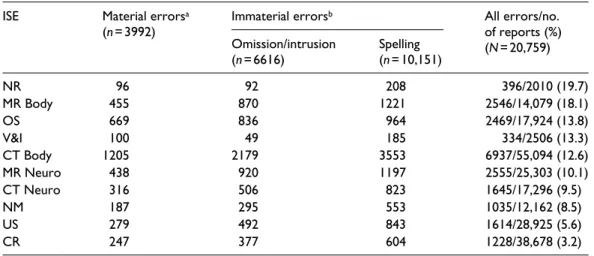
Errors were classified as "material" if they were thought to change the interpretation of the report. This can result in underestimation of the number of errors, as well as misclassification of error types.
Conclusion
Frequency and spectrum of errors in final radiology reports generated with automatic speech recognition technology. Comparative evaluation of three software packages for continuous speech recognition in medical report generation.
Identifying an appropriate Content Management System
Sandeep Reddy, Sally Herring and Allison Gray
Introduction
A project team, funded by the Australian Government, manages the development and publication of the RPHCM suite. The authors are part of the RPHCM project team and report to a Steering Committee made up of representatives from partner organisations.
CMS: general concepts and features Definition
The CMS must be able to interact with the software already used to present the content. Using a CMS should reduce costs and time in the preparation, presentation and management of content.
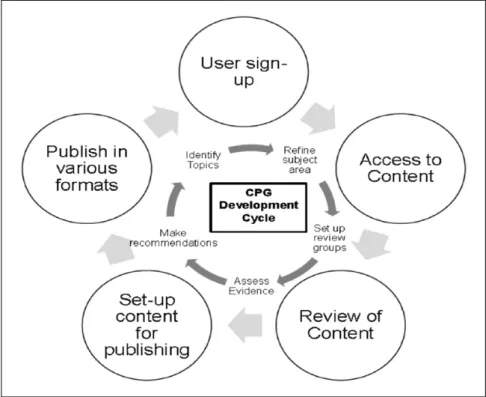
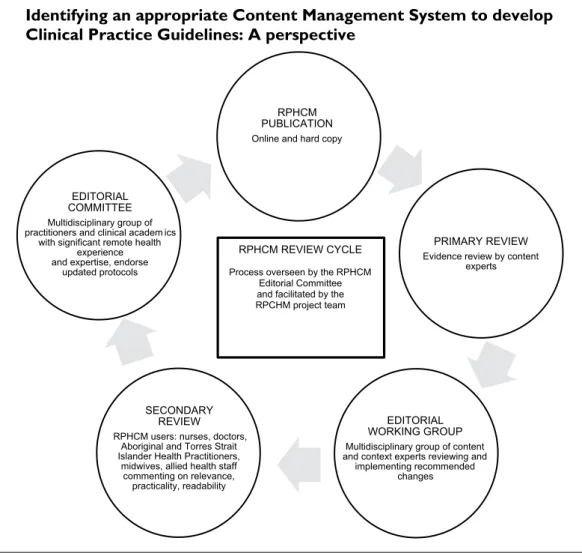
The RPHCM experience Role of CMS in RPHCM publishing
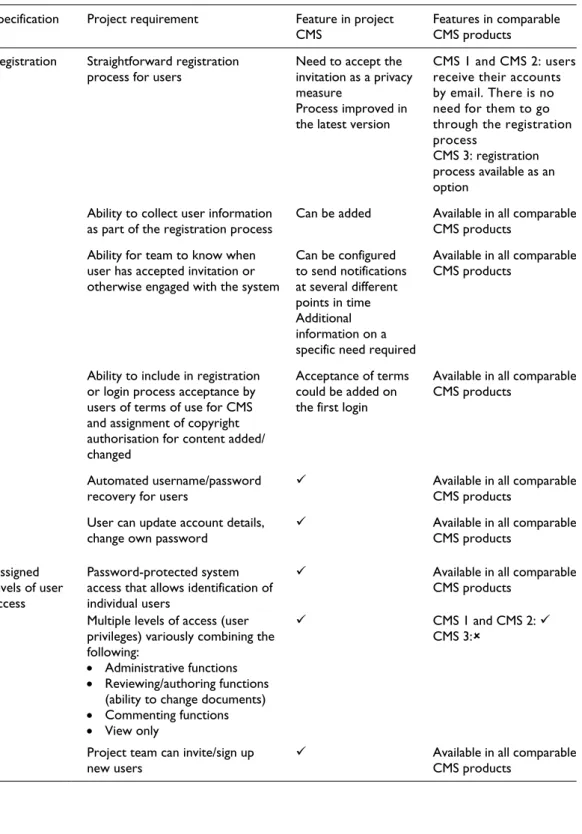
Non-technical users with lower levels of computer skills had to be considered in the design, appearance and usability of the CMS. Access to the system was therefore expected to be straightforward while maintaining the integrity and security of the system.
Outcome of the review
In addition, even though CPG development occurs over specific and planned time periods, CMS development timelines may be uncertain. Although unique to their context, the authors hope that the outline of their lessons will assist guideline developers in the assessment and selection of a CMS that will promote high-quality CPG development and publication.
Limitations
This change in itself has greatly improved the supplier's ability to respond to project needs, complete deliverables on time, and generate project satisfaction. In CMS 2, feature of third party software Fixed program structure/layout in CMS 1 may not suit project needs for flexibility. Ability to create new documents. Ability to tag index terms in the CCMS and transfer this data to the paper publishing software for automatic compilation of the index.
Possibly available in CMS 2, but depending on how the connection to the website is designed. Ability to export. Ability to publish CCMS XML to other electronic modalities, for example e-book, mobile or PDA apps.
Development and evaluation of a record linkage protocol for Utah’s
April F Mohanty
Jacob Crook
Christina A Porucznik
Erin M Johnson and Robert T Rolfs
Brian C Sauer
Patient identifier % missing in raw CSD % missing in cleaned CSD. Required by the link king. We also included the following Link King recommended variables, when available: patient's middle initial and gender. The Link King has numerous options for customizing linking procedures and supporting documentation to help users understand how the various settings affect link security.
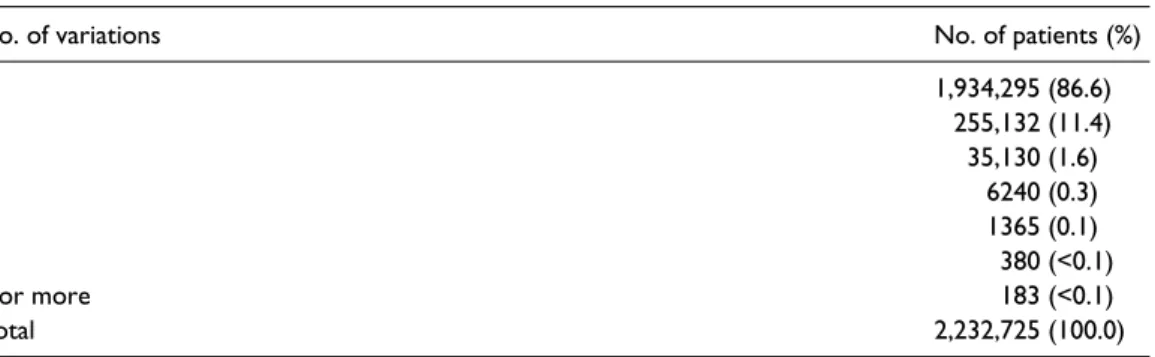
Link King uses the "rarity/frequency" of a name as part of the decision criteria in a deterministic protocol. For record set review, we categorized patients into 10 different sample set sizes based on the number of records linked to The Link King protocol (Table 3).
Results
Patients with more linked records in the Utah CSD were more likely to be selected for review, and multiple pairs of records could be selected for a given patient. Reviewers manually examined all linking variables and classified each record pair into one of five “linking certainty” categories: (1) definitely not the same person, (2) probably not the same person, (3) there is not enough information to determine whether they may or may not be the same person, (4) probably the same person, or (5) definitely the same person. Raters manually examined the linkage variables in all records corresponding to each set, and each set was classified according to the same linkage certainty categories described for the record pair assessment.
This work was reviewed and approved by the Institutional Review Boards of the University of Utah and the Utah Department of Health. However, contrary to our expectations, there was no evidence that the proportion of incorrect pairings increased with higher set sizes.
Discussion
We are not aware of previous studies of The Link King that included manual reviews of record sets (more than 2) corresponding to a single patient; previously the focus was on record pairs. Our manual review of record pairs revealed that The Link King's decision making appears valid, and for the record sets, unlike the manual judges, The Link King is able to make a decision on sets in the context of all record pairs. Finally, since we did not retain certainty levels assigned to The Link King, we were unable to examine the concordance of certainty assignments given by The Link King and the manual review for the record pairs.
Record linking software in the public domain: a comparison of Link Plus, The Link King, and a "basic" deterministic algorithm. Olympia, WA: Division of Alcohol and Substance Abuse, 2006, http://www.the-link-king.com/user_manual.zip.
Using smartphone-based
Anita Dunkl and Paul Jiménez
Applications in health promotion have multiple advantages, such as being relatively inexpensive, reaching a large number of individuals even in remote locations, supporting highly stigmatized groups without exposing them, sharing health information on social media, 24- hours of accessibility, providing updated content to the app at any time, implementing visual materials (eg charts, videos), and repeating lectures/trainings as often as you want. A major challenge is quality assurance, as almost everyone is currently allowed to develop an application.20 Another potential risk is data security and privacy.1,21 The user's lack of technical skills or knowledge related to the use of new media is an additional barrier. which may prevent persons from trying app-based health promotion programs.20. Moreover, the benefits of EHP activities are less obvious in the short term, as problems such as health issues or accidents rarely occur in small organizations.8,27 However, there is evidence that although larger companies usually organize more health promotion activities, the participation levels in smaller organizations are higher.9.
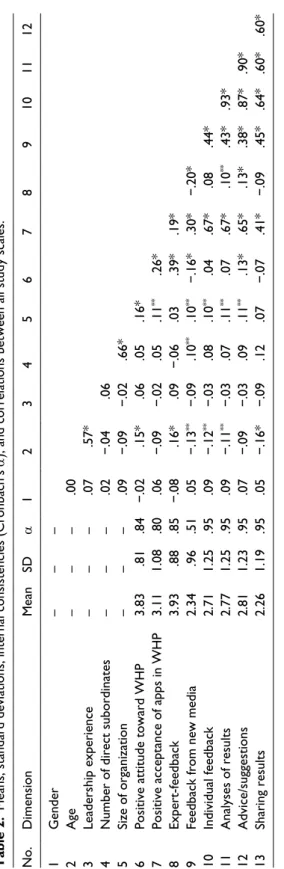
Leadership experience is positively related to the acceptance of applications and their feedback options in the WHP, as experienced leaders have the information and skills to carry out and promote workplace health promotion projects. Similar to findings that healthier individuals participate more frequently in health promotion activities, we propose that executives with a more positive attitude toward health promotion are more interested in using an app and have a more positive opinion of the feedback. associated with the application.
Materials and methods Recruitment and selection
Female managers have a more positive attitude towards using apps in WHP and their feedback opportunities. Younger managers have a more positive attitude towards using apps in WHP and their feedback opportunities. Working in a larger organization is positively related to a higher acceptance of apps in WHP and its feedback opportunities.
A higher number of direct reports is positively related to a higher acceptance of applications in WHP and its feedback possibilities. As hypothesized in Hypothesis 2, age is negatively related to application acceptance in WHP and application feedback options.
Knowledge-guided mutation in classification rules for autism
Kelley Engle
Roy Rada
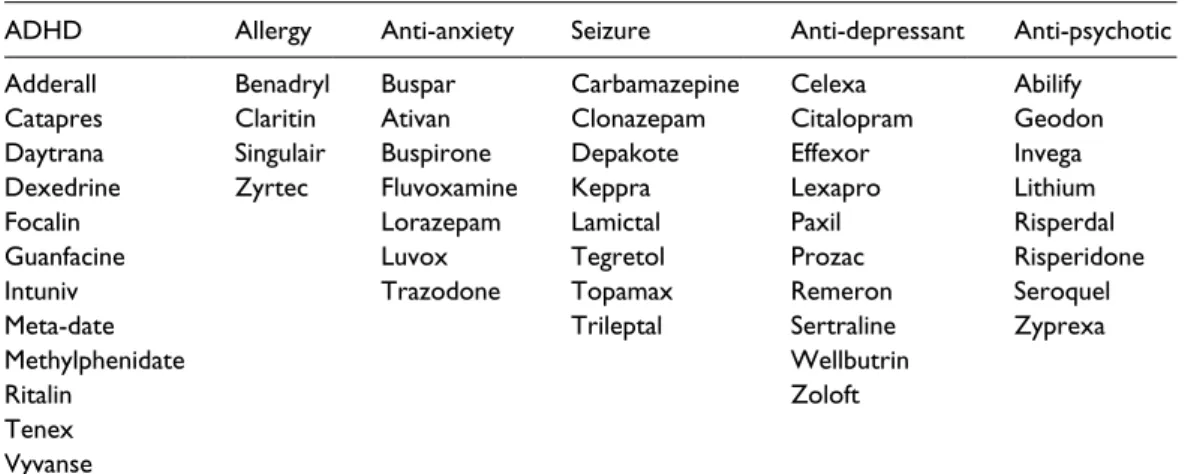
A disorder termed “autism spectrum disorder” affects 11 out of 1,000 children in the United States.3 Decision support tools can support the management of such prevalent pediatric disorders.4. Evolutionary algorithms that incorporate heuristic-based knowledge can outperform those without such knowledge.7 Domain knowledge can be introduced at any stage of a genetic algorithm—including the initialization, representation, selection, crossover, and mutation stages.8 Idea Incorporating domain knowledge into the evolutionary process has also been used for neural network applications in medicine.9. In the work presented here, a memetic algorithm is used to construct classification rules for the effectiveness of autism treatments.
The algorithm operates on a population of classification rules (for autism treatment effectiveness) created from the IAN dataset. The results of these empirical tests will help determine how best to incorporate domain knowledge into both classification rules and genetic algorithms.
Theory
In this section, the results of the experiment comparing the different knowledge-guided mutation levels (KG1 to KG4) will be presented. Many of the starting rules in the dataset as well as the number of mutated rules suffered from extremely low accuracy. The experiment is in the first column, and the mean and SDs are in columns 2 and 3. The number of rules in the population was 1027 for each of the four experiments.
The second method of including multiple generations would start with the initial population (i.e. the 1026 lines dataset) and apply KG1, ..., KG4 as was done in this experiment. A mutation that is limited to make a small semantic difference in the classification rule tends to lead to a small change in the accuracy of the offspring rule.
An innovative capstone
Laura M Custis and Shelley Y Hawkins
Tanna R Thomason
Healthcare systems worldwide have undergone unprecedented expansion and restructuring, in part to successfully implement initiatives such as integrating patient medical records that provide certain incentives and reimbursements to compliant healthcare systems.
Health care informatics education
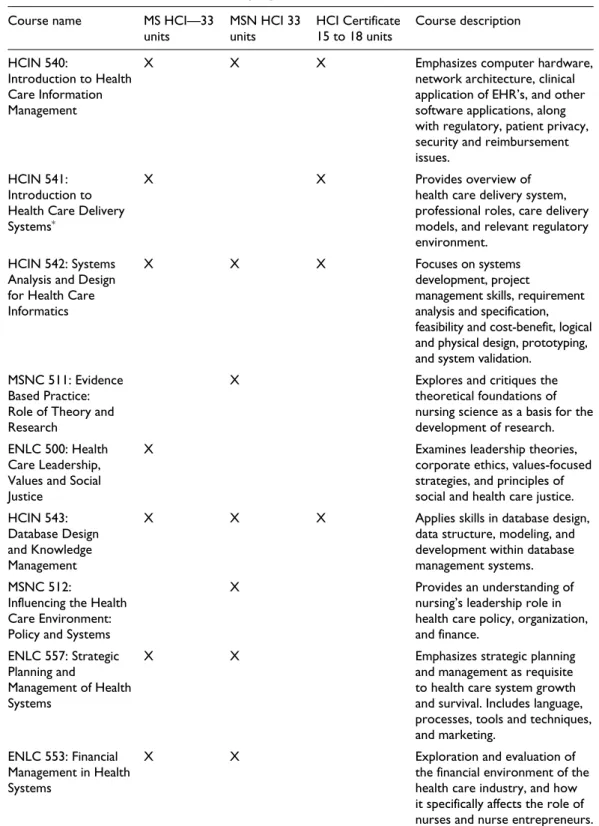
MS HCI: Master of Science in Healthcare Informatics; MSN HCI: Master of Science in Nursing – Healthcare Informatics; HCIN: Healthcare Informatics; MSNC: Master of Science in Nursing Course; ENLC: Executive Nurse Leadership Course; EPD: electronic patient file.
HCI residency: telehealth (TH) research study
Development of quality monitoring process to ensure accuracy of patient data (correct patient with correct data) Daily monitored biometric transmissions. Creation of secure website for team communication of patient data Facilitated postal data collection (in person or by phone) using survey instruments.
Research study team and mentors
Donabedian’s structure, process, and outcome model
With this educational module, the HCI students gained a fundamental understanding of the importance of protecting human subjects. As participants were enrolled in the home TH device group of the study, the HCI student team registered each patient's demographics on the data collection website. One of the two HCI students who installed the home device played a “lead role” in assessing daily biometric data and providing updates to the team (Figure 1).
Timely installation of the TH device at home was an important variable to ensure that participants maintained interest in the program. Some of the participants were intimidated by the equipment and needed positive feedback to continue.