
The rights of David Clutterbuck and Sheila Hirst to be identified as the authors of this work have been asserted in accordance with the Copyright, Designs and Patents Act 1988. 3 The internal communication community 33 4 The employee as stakeholder – an identity crisis 53 5 Vision and values: mirage and feeling.
What is the need for internal communication?
Part of the problem is that people's expectations have risen alongside the capacity of organizations to deliver. However, wherever we look at large organizations, we see that the bulk of communication spending is on the media, which are largely one-sided in their application and impact.
Common myths about communication in organizations
This is like saying that Human Resources (HR) is the responsibility of the HR function. In both cases, the role is little more than a coordinator and facilitator – the provider of support systems and advice to managers on how they can contribute.
Why do businesses need to communicate better?
2 The speed of change means that top management must maintain people's interest and commitment and overcome their resistance to initiatives. 4 Fear by top management about losing control over communication as technology gives people access to almost anything and encourages people to communicate directly rather than through hierarchical silos.
A bedrock theory of employee communication
There is now a gradual evolution towards an internal consultancy, which enables the company to use communications for competitive advantage – that is the challenge for IC for the next decade. skills), people tend to assume that they have a common understanding of what communication is, what it is for, and how it works. The breadth of the assignment is evident from the involvement of the internal communications function.
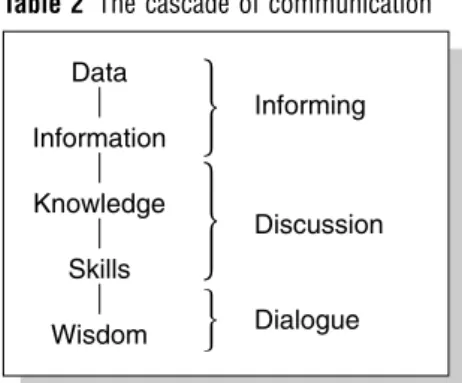
Signposts and structure of what follows
The percentage of communication that is under the control of the internal communication function is very small – typically less than 2 percent. We also assess the potential of electronic technologies to improve communication and how to overcome some of the more serious barriers.
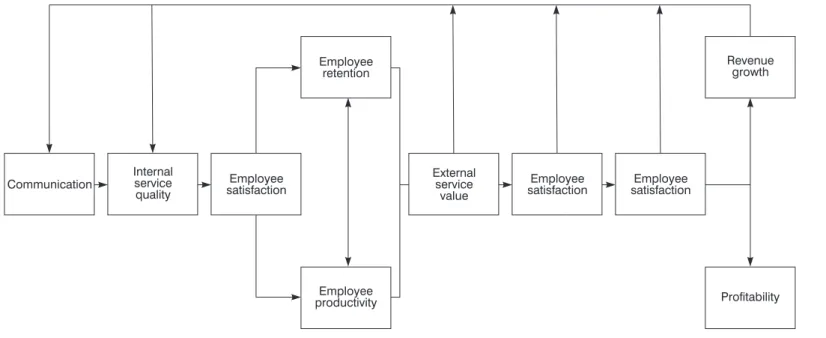
Many management gurus refer to the importance of communication in achieving strategic objectives, but offer little in the way of evidence, or even an explanation of the contributing mechanisms. The role of the leader is to articulate a vision, accept and implement it.
Cracking the code
Given the origin of the study, the focus of this element was the communication function. This gave us the data to assign a numerical value to each of the four factors in each company.
Implications of the four pillars of communication excellence
They explain new thinking and important events—external and internal organizations—in the context of business purpose. The strategic planning responsibility of the internal communications function can ensure that media is initiated and designed with these criteria and processes in mind.
Linking strategy and performance – all aboard?
Similarly, each of the other three factors communication professionals identified as core to the function can be adapted to bring real focus to the communication activity. Furthermore, the process of influencing people to communicate better is not the sole responsibility of the communication function; it is shared with senior management, HR, IT and a number of other functions, which we will explore in Chapter 3, 'The Internal Communications Community'.
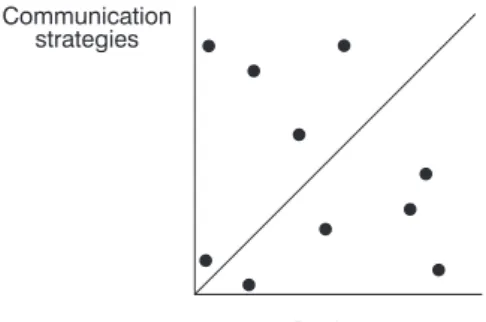
Pairing off the pillars
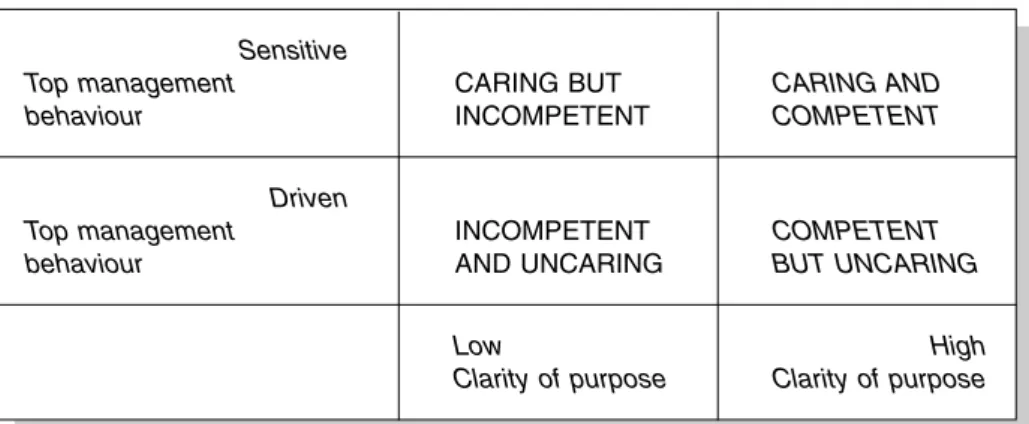
In organizations with a high level of knowledge sharing and a strong clear purpose there should be very positive attitudes and opportunities for change (Table 1.2). Where there is no trust or clarity of purpose, the organization is at war with itself.
Summary: so where does all this take us?
With trust but little clarity of purpose, a cozy kind of club emerges, something like what might be found in an old-fashioned law practice, where everyone does their own thing. Where trust is low but clarity of purpose is high, people cooperate as long as it suits them.
Receptivity: turning on and tuning in
However, misuse of the emergency signal (again, as perceived by the receiver) makes it less effective. For example, the recipient's conscious or unconscious emotions toward the subject. Do they see the source as credible and well-intentioned?). like communication time.
Interactive measurement – how long is a piece of string?
䊉 the ability to be noticed (having a presence).䊉 being proactive in volunteering for interesting and, somewhat paradoxically, challenges. This leaves no time for ideas to sink in and undergo critical internal scrutiny.). How are we going to keep the enthusiasm going?
The team dialogue process – suspending beliefs
The team wins when it gains a deeper understanding of issues and a consensus on how to tackle them.䊉 always start by relating topics to the team and/or business goals; and to the shared values.
Getting to dialogue
䊉 see a problem in both the micro (what it means for me/us) and the macro (what it means for the organization/our customers).䊉 to proactively seek input from senior management, to inform the dialogue and ensuring that it is linked to the political reality of the organisation.
Internal communication as an enabler
Table 2.2 contains a short checklist to compare your function with its role as a facilitator. If you score above thirty, your position is well on its way to fulfilling a facilitating role.
Summary
The portion of communications that is under the control of the internal communications function is very small – usually only a few percent. We speak of the internal communications community because this is generally a useful metaphor.
Functions versus activities
Let's start by looking at the relationship between internal communication and each of the activities. And the detail typically belongs to the people who are at the end of the decision-making chain.
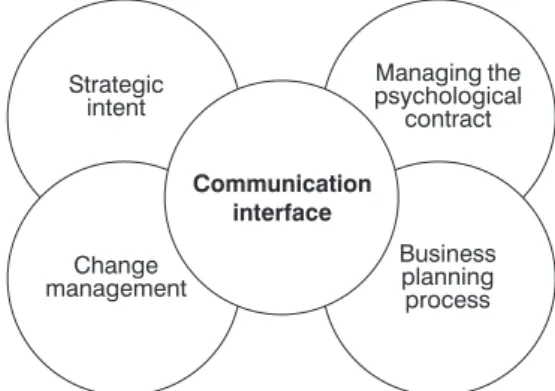
Supporting other business functions
䊉 develop a real understanding of the issues (so people focus their enthusiasm where it will have the most impact on building value). And of course, the same basic factors will apply to the leaders of the internal communications function.
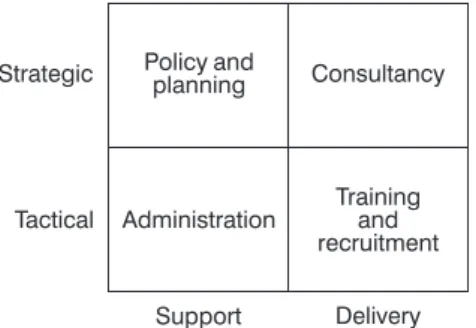
Developing a positive communication climate
However, the starting point for the communication professional should be the overall picture of the organization: is the communication climate positive or negative and where improvements can be made. However, even before internal communicators seek to handle these tasks, the organization's leadership must be clear on their strategy – both business and communications.
Understanding your stakeholders
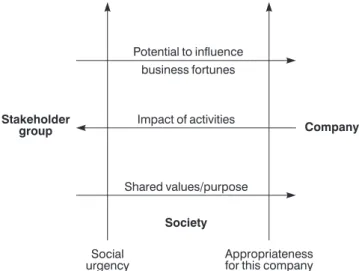
Which stakeholders matter most?
That dialogue becomes easier the greater the alignment of values between the company and the stakeholder group. It is important to note that society at large – whether the board likes it or not – will act as an arbiter between each of the stakeholder groups and the company.
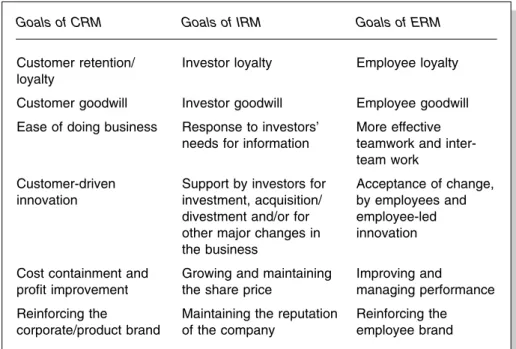
Employees, customers and investors: the triumvirate of key stakeholders
1 Psychological contract: clarity about what the client expects from the organization and vice versa; the consensual agreement of who does what. Likewise, investor relations are not strengthened by isolating him from the rest of the business.
Setting the strategy
Some of this information can be obtained if the lead internal communicator attends the top team strategy sessions. In many cases, the top team may not have thought through some of the implications.
Explore means of inspiring employees to act as (proactive) ambassadors
It also involves regular personal contact with those in the organization charged with other communications (e.g. investor relations, liaison with regulators, corporate counsel, health and safety, etc.). All employees will find themselves in situations where they can act as ambassadors and therefore they all need access to such information – the final nail in the coffin of those who claim 'need to know' rules.
Stakeholder communication and the four pillars of communication
Cumulatively, these very small encounters have a material impact on every strategically critical aspect of the company'. The intellectual desire to be open is often overcome by the emotional need for security and control of the environment.
Case study
The data in the Shell Report has been increasingly verified over time, and the verification process is now one of the largest performed by a company. The vogue for vision and values was strongest in the 1980s as one of the trappings of the business excellence movement.
How do you arrive at the right vision and values in the first place?
The matter becomes more complicated when we ask, whose vision and values? It is unlikely that the world view of top management will be the same as that of people at middle management levels. To be inclusive, the vision and values must engage people in intellectual understanding and emotional commitment.
How communication supports V2
It is often forgotten that the best statements are not textual (actions speak louder than words). Some companies have begun to integrate this approach with the idea of zero-base management – where every system and activity in the business is viewed in light of how it contributes to the vision and whether it is managed in accordance with the values.
How the IC function can make a difference
The objective of the program was to identify what needed to change and how best to solve it. In this case, the individual can speak to the new behavior by rejecting the spirit of the promise.
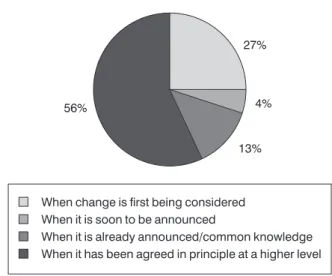
Why people resist change
Where intellectual resistance can often be dealt with in one or two sessions of dialogue, conscious emotional resistance often takes much more time and several meetings to overcome. Another common source of unconscious emotional resistance is guilt – for example among those left behind after a merger or downsizing.
The worry index
Accurately assessing the nature of resistance to change and applying appropriate communication solutions is not easy. In the extreme, the saying "if you can't change people, change people" can apply.
Co-ordinating change streams
However, a planned approach that measures all four types of resistance and provides sufficient communication tools to overcome them is a crucial element in effectively managing major changes. Major changes often go wrong because managers either do not allocate sufficient resources to one or more of the streams, or because they fail to view all three streams as interconnected and mutually supportive.
A structured approach to communicating change
䊉 macro – related to understanding the big picture and how the changes progress across the organization as a whole.䊉 mini – related to the team's goals and priorities within the framework of the change programme.
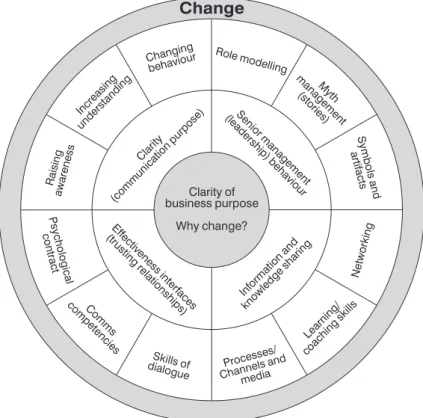
Branding change
One thing the communications team realized early on in the ownership saga was that the rules, agendas and timelines were completely out of the hands of the business and its employees. We smashed all targets, employees got their bonuses and our staff retention rate was 6 per cent – the same as usual for us and well below the national average.'
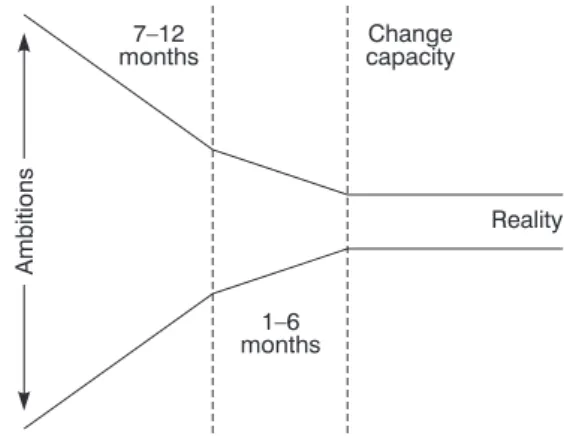
Changing the culture
In terms of communication, 75 percent believed that they had received just the right amount of information from the company, and a further 77 percent believed that they had enough opportunity to ask questions about the acquisition. One of the most respected authorities on the nature and implications of culture is Professor Ed Schein of the Sloan School of Management at MIT.
Culture change and structural change
For some, the brand is an expression of the corporate personality - how the organization is perceived by different audiences. that is, the degree to which the organization is able to create its unique identity.
Four expressions of brand
Regardless of where the core brand lies, it will be compromised if the brand expressions do not reflect the same values and priorities.䊉 How well are the four brand expressions integrated? If there is any conflict between the brand terms, you have an identity problem.
Brand management and the four pillars of communication
Do employees feel supported by each other and their managers in adhering to the brand values? Do employees receive (and provide) meaningful and accurate feedback on performance in living the brand values.
The internal communication function and management of the four brands
The role of the IC function here is one of mediator between the good intentions of top management and the reality of internal public perceptions. If employees sense that top management isn't living up to the message, or isn't really taking one or more of the brand values seriously, encouraging them to live up to the brand is a waste of effort.
Managing brand inconsistency
Each of the four brands can be measured in terms of how well it delivers. The extent to which this catalog of woes has damaged the company's reputation remains to be seen, but the conflict between brands is one of the biggest challenges facing the Virgin Group.
Internal branding
Winners were selected each month for demonstrating one or more of the four guiding principles of Vision ON. Nevertheless, there are cases where companies are acquired precisely because of the strength of their management, who then occupy dominant positions in the acquiring company.
Why is major structural change so traumatic?
We have a clear vision of the future – We have some half-baked ideas and we're blowing it / We've lost the plot. We intend to invest in this business – we will have to cut wages to fund changes.
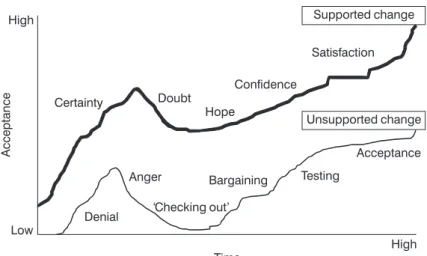
Managing the M&A communication process
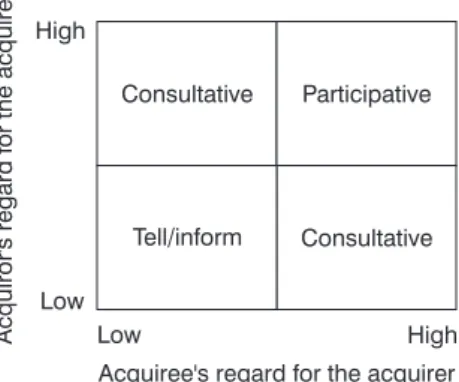
Where the psychological contract is clear, even if employees do not see it as fair and just, it is relatively easy for both parties to agree on what each gives and receives. For example, employees may work extra hours without being asked to meet urgent customer needs, or the company may spontaneously relax its dress code.
The structure of M&A communication with employees
While the communications team is only one part of the larger M&A team, top management must simultaneously view themselves as part of the communications team. How extensive the internal communications team should be will depend on the impact of the acquisition.
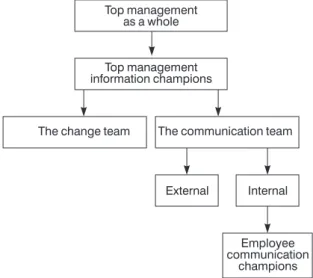
Role of the internal communication professional
To what extent can we balance employees' need for clarity and explicit information against our need to keep options open? Thereisa plan; where structural changes will and will not make a difference; this is a good company to work for; these are our values; a clearer picture of the scale of likely changes; what we appreciate you for; we hope to learn from you and vice versa; headlines about the necessary cultural change.
Key processes in M&A communication with employees
People's receptivity will also be influenced by their concern about the outcomes of the change (Figure 8.6). M&A communications can be one of the greatest learning experiences of a communicator's life.
Communication capability = communication competence + context
Capability is the combination of competence with an environment in which the competence can be applied. On an individual level, what is the potential for me to influence those around me to pursue the goals that are important to me?
Performance = the exercise of capability