Morgan co-organized the 16th UNESCO-APEID International Conference, The Heart of Education: Learning to Live Together in November 2012 in Bangkok, Thailand. Increase understanding and knowledge of the concept of learning in general, and learning to live together in particular;.
Key findings from the conference
Several papers touched on the use of information and communication technology (ICT) in the teaching and learning process for learning to coexist and enriching the learning experience of students. Partnerships were prominently featured at the conference with the participation of several private sector organisations, with interesting discussions on tripartite partnerships between public, private and international organizations in promoting learning to live together.
Conclusions
Similarly, empowering teachers to have the vision, motivation, knowledge and pedagogical skills to integrate different elements of learning to live together into their daily classroom teaching practices is a critical area that needs more attention. This report is not intended as a compendium of learning to live together philosophies, concepts and principles.
They reflect the scope and potential impact of learning to live together on all aspects of our lives and how important it is to integrate the concept and practice of learning to live together into our education systems. Recalling the Chinese proverb in the preface, UNESCO hopes that the information and examples in this publication will help to light the light in the soul, to reveal the beauty of the person, leading to harmony in the house and order in the nation, so that there will be Peace in the world.
The Heart of Education Is the Education of the Heart
Introduction
Such a practice has a better chance of sustainably instilling the ethos of learning to live together and this is the clarion call of this article. This article highlights the affective role of education in the education of the heart through a heart education framework that integrates elements of (a) emotional intelligence, (b) empathy, and (c) pedagogy of love.
Background
Johnson (2008), citing Soliday (2003) and Shaughnessy (2003), argued that teachers considered skill building so important that bringing emotions into the teaching-learning process would detract from the time it takes to build skills. This deadly link between education and building competitive skills must be broken down so that the social-emotional practice of being a fellow human being can be ushered in.
Educational roots
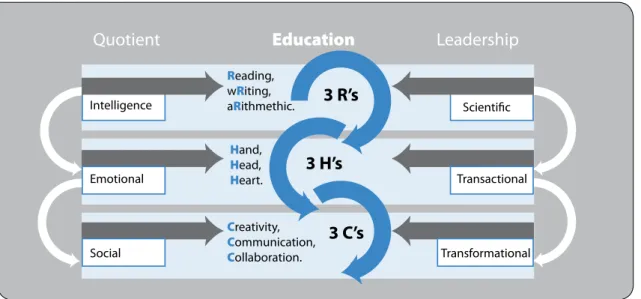
Consequently, these paradigm shifts in the teaching and evaluation processes have been reflected in the leadership foundations adopted by society – from being purely scientific at the dawn of the industrial age to being transactional and ultimately demanding a transformational leadership in line with modern times. conditions. The commentary above clearly shows the great distance that education and evaluation have come from merely being society's literacy agent to a vehicle for social impact, and how society has gradually adapted these changes through analogous leadership principles.
Social offshoots
Historically, love, justice and joy - some of the most important components of the "skills of the heart" - have never been more than a glimpse into the whole educational process. It certainly cannot be handled in a classical way, where the students are taught about the 'skills of the heart' and then evaluated in a classical examination style.
A framework for Developing the Skills of the Heart
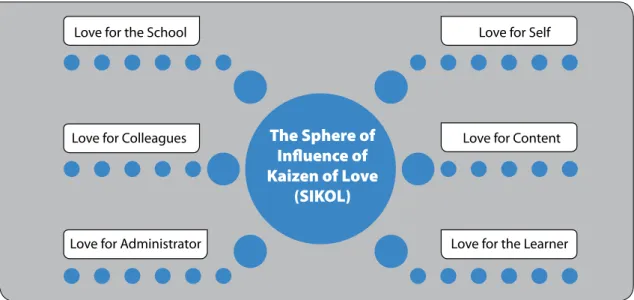
But in practical terms, what are the concrete markers for this abstract concept of the pedagogy of love. The dimensions in the table help to break down the abstract concept of the pedagogy of love into more concrete components.

Helping Children to Make Wise Choices
Some challenges to learning to live together
Need for ethical competencies
Social orientation: moral behavior stems from an interest and concern for other people (Hoffman, 1976; Lamb and Feeny, 1995);
From moral judgement to moral action: research findings
At the front of the brain, we create response images (somatic maps). The use of everyday behavioral situations appears to be one way of introducing such learning.
Model of helping children to make wise choices: Super Six Heroes
Naming the virtuous action by the adult strengthens the child's empathetic and cooperative behavior. The kit comes with a user guide that supports the adult to use a facilitated reflection process with the child on daily behaviour.
Application of the Super Six Heroes model
Modernization in Timor-Leste: the ‘Community’
This not only characterizes the topography of the district but also gives an insight into the Aileu Mambai culture. With a cool and mild climate for most of the year, the altitude and temperature of the district are ideal for growing coffee - Aileu's main contribution to the country's economy.
Modernization theory
I believe it is a fundamental part of nurturing a stable and peaceful society because of the caring spirit it inspires. For Beck and Beck-Gernsheim, the process of individualization begins with the disintegration, or abstraction, of the modern family.
An Introduction to Mambai Culture
Adopting the "continuist" perspective of Giddens (1990), this article acknowledges the respective shortcomings of traditional and modern community intuitions. For easy analysis, one can call these cultural processes and institutions as 'the continuity of community', while the above social tensions can come from 'the discontinuities of community'.
Continuities of Aileu Community
According to Mambai legend, all uma lulik in Aileu and parts of neighboring districts are spiritually descended from Raimansu, located in the southern mountains of Aileu Vila (field notes Traube, 1986). The community of uma lulik (plural) can be seen in public in the congregation of Aileu kings (luirai) invariably at important public events, such as visits by the prime minister or bishops of Timor-Leste (eg, in St. Peter and feast of St. Paul, field notes 06/29/12).
Community conceptions
Preservations of community
This fact is a clear identifier of the traditional life that is still strong in Aileu, although it is also expressed in religious events such as the Catholic ceremony of Coração de Jesus (Heart of Jesus). 25 According to the results of a 2011 survey, 92% of respondents (N = 148) either agreed or strongly agreed with the statement My faith inspires me to help people.
Discontinuities of Aileu Community
Youth appear to be increasingly detached from Mambai institutions, including the uma lulik, family and community obligations because they appear outdated and redundant in rationalistic, 'modern' Timor-Leste (interview, AA 10/7/11; interview, JV -interview , PD survey26). Within this emerging culture of entitlement in Aileu society, there is an attitude of “when I come, just give me some money.
Democratic individualism
There is a high level of cynicism and distrust of politicians and political parties in the Aileu electorate (2011 survey131; interview, AB 18/07/2011). As explained above, this obligation is enshrined in the process of fetos umane, where a man has the obligation to take care of his umane (man's house).
What are the lessons for educational development in Timor-Leste?
Given that today's 21st century model of modernity consists mainly of democratization and liberal economics, Timor-Leste's educational development process needs to be more mindful of the country's community desires before they are lost, by cultural side. The discussion of the Aileu people presented in this paper suggests that some cultural transformations are challenging the value to the community.
Beyond Insular Education Policy: Learning to Live together in the Face of Climate Change in
Beyond Island Education Policy: Learning to Live Together in the Face of Climate Change. As a result, there is a wide variety of landscapes – forested areas in Samoa; mangrove forests in Micronesia; desert in Australia; lagoons in the Marshall Islands; and high mountains in Hawaii and New Zealand.
Climate and impacts of climate change in the Pacific region
For example, climate models suggest that a 10 percent reduction in average rainfall by 2050 is likely to correspond to a 20 percent reduction in the size of the freshwater lens (the source of well water) on Tarawa Atoll, Kiribati. Another major challenge for the people of the Pacific Islands is the issue of displacement.
Importance of education in climate adaptation
In fact, according to Oxfam, more than 75 million people living in the Pacific will be forced to relocate their homes by 2050 due to sea level rise (Oxfam Australia, 2009). These words reflect the strong sentiments of leaders across the Pacific, many of whom foresee a dramatic shift in the way of life for their current and future generations.
Current landscape of Pacific island policies surrounding climate adaptation and education
Major global climate change policy action
As such, this convention, like previous conventions, was a recognition that climate change must be tackled at an international level. Climate change will still happen, Pacific islands will still be affected earlier than other locations, and education will still have an important place in climate adaptation plans.
Climate change and education
In the Pacific, the link between climate change and education was only formally established over a decade ago. Thus, awareness of the link between education and climate change has developed significantly in the Pacific region in the past decade.
Suggestions moving forward
Education will help ensure that a new generation of leaders will be more knowledgeable and better prepared to adapt their communities and environments to the impending impacts of climate change. Therefore, it is essential that the link between climate change policy and education policy be strengthened throughout the Pacific as well as globally.
Pacific islands Climate Education Partnership
Each Pacific island has a unique story, and climate change is now a major part of each island's story. Vulnerability of island states in the South Pacific to sea level rise and climate change.
Learning and Living Together in Higher Education
How Co-curricular Efforts Enhance Curricular Education and Foster Thriving Communities
Background and rationale
Improving the quality of higher education is an important part of achieving economic integration within ASEAN. Wherever co-curricula have been studied, it has been shown to play a vital role in higher education.
Primary emergent themes
More broadly, English language acquisition can be greatly aided by co-curricular endeavors, which can be more frequent, enjoyable and less stressful than classroom study. Whether it's residence halls, student activities or leadership programs, co-curricular opportunities are vital for students to build a sense of community.
Secondary emergent themes
Fostering this type of moral development can be curricular in nature, but it can also be greatly aided by co-curricular efforts such as student programming, guest speakers, and service-learning. As cultures continue to intersect in a globalizing world, co-curricular endeavors provide important contexts for socio-cultural adjustment.
Payap University: a case study
In workforce environments, non-academic qualities such as emotional intelligence (EI) are becoming increasingly important. Yet co-curricular efforts offer various opportunities for valuable interpersonal interactions that are likely to mediate these types of concerns.
Discussion
Third, the implications of this research depend entirely on the quality of co-curricular programming that is implemented. While total self-sufficiency may not be a viable option, creating joint professional bridges to local industries through work study programs and service learning can help in this endeavor.
Conclusion
As it stands, higher education in Thailand is still highly subsidized by the government (Schiller and Liefner, 2007). Regional quality assurance activity in higher education in Southeast Asia: its characteristics and drivers.
How to Support Innovative Practices of Learning and Learning to Live Together?
The case of capacity development of teacher education institutions in Cambodia and Viet Nam
Support to aspects of learning and learning to live together
The MoEYS has repeatedly stated its commitment to improve the quality of education according to the policy of Child Friendly Schools. In Vietnam, major directives for educational reform from the Ministry of Education and Training (MOET) focus on the renewal of general education (Directive 14) and the acceleration of learning and teaching methods in teacher training (Directive 15).
Analytical framework, research questions and methodology
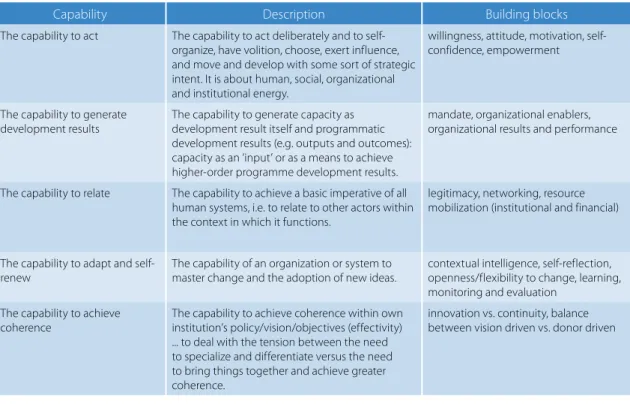
These questions led to the evaluation of the capacity development programs implemented by VVOB in TEIs in Cambodia and Vietnam. An initial analysis was carried out based on a desk research of the multi-year plan, progress reports and monitoring and evaluation reports of the programs in Cambodia and Vietnam.
Findings
In addition to the members of the core groups, national and international experts are closely involved in the development of the modules. In the second phase of the program, the focus shifted to capacity development of the management of the TEIs in the areas of planning, monitoring and evaluation.