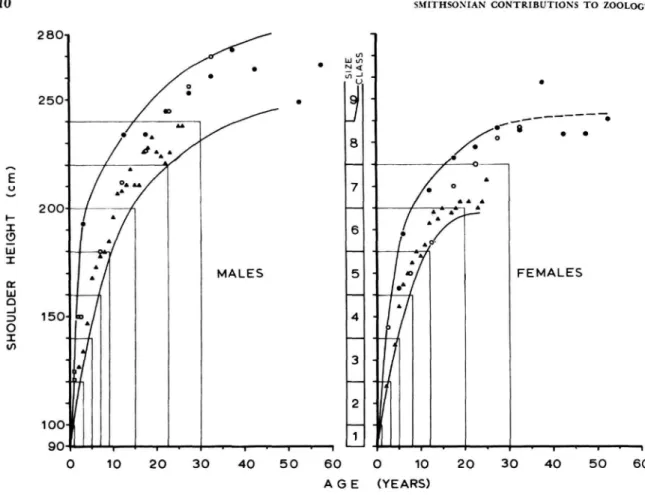
Stracey (1963) provides a brief summary of the history of elephant domestication in India, and Armandi (1843) provides an overview of the use of the elephant in war. Sanderson of the Mysore Civil Service (whose own account of the method appears in Sanderson, 1878). The sex of adults can also be determined by the general conformation of the body.
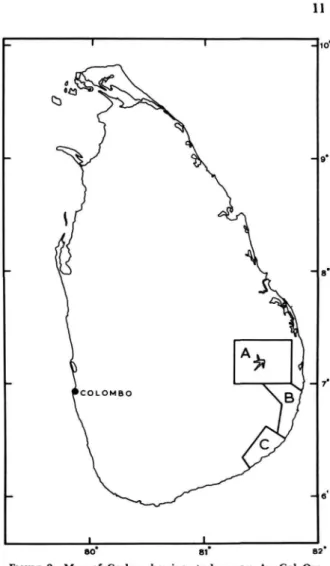
Adult males can be recognized by the enlargement of the head and the distinct penis sheath. This zone extends from the southwestern part of the island to the northeastern coast north of Trincomalee.
Batticaloa
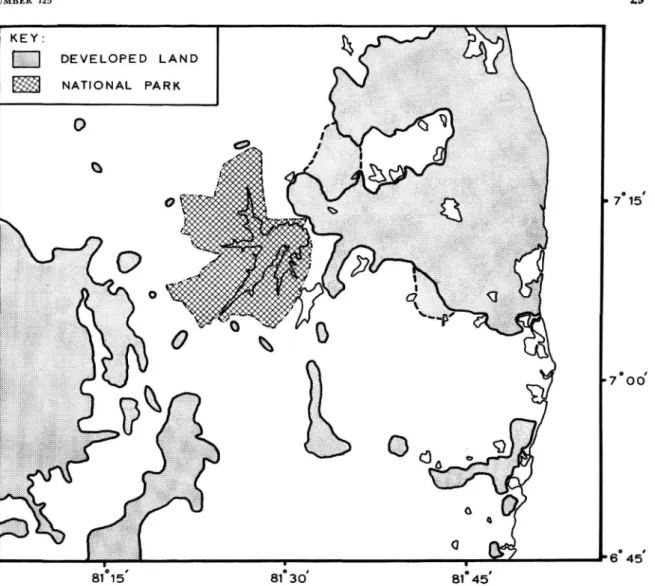
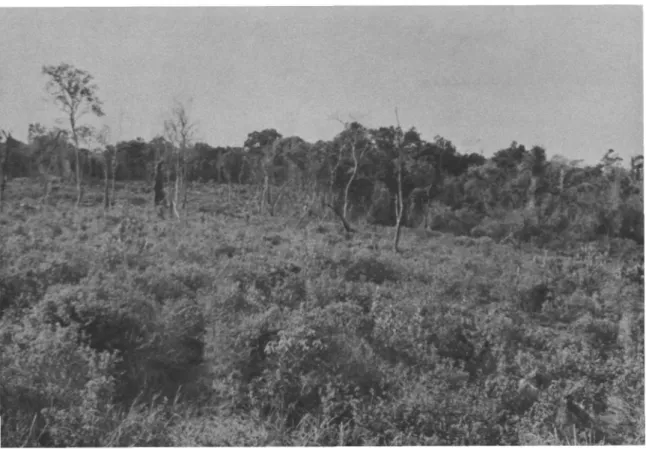
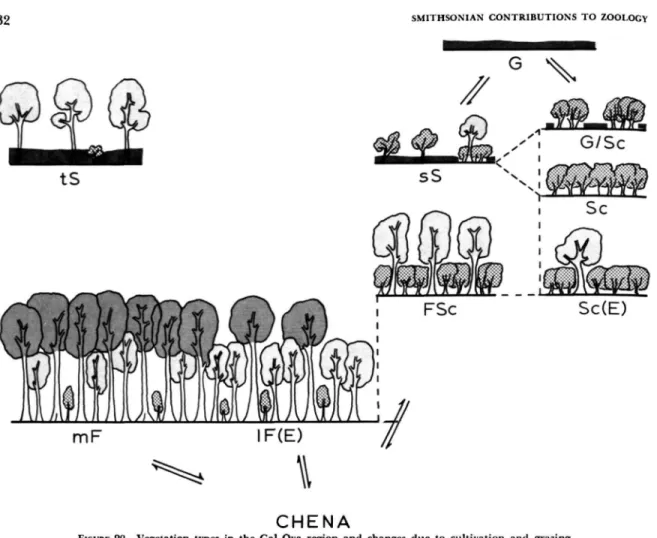
Many other species besides those listed above occur in this area, but these seemed to be most characteristic of the Gal Oya region. Savanna Talawa makes up 33 percent of the total area and is the dominant type in the western sector of the park. The grassy land is entirely artificial, created by cuts in the reservoir bed and by periodic flooding of the land.
Although there was no study of phenology in the forests of the Gal Oya region in terms of Over most of the talawa area, the fires are confined to the savanna and the forest remains unaffected.

CHENA
It would be absurd to attempt to collect the invertebrate fauna of this region. Aquatic leeches occur in many of the tanks in this region and are particularly abundant at Lahugala. The top digits indicate the estimated number of adult males living within the pack's range; the lower figures are the estimated sizes of the herds.
The relatively large area in the northern part of the island (Figure 23: area II) has not been explored in detail, either by myself or by Eisenberg and Lockhart (1972), although I have made two trips to this area. The areas north and west of the Ruhunu region are again characterized by the alternation of forest areas and agricultural lands.

During both the slow and fast steps, the position of the trunk and tail is quite variable. The trunk hand is placed flat on the ground and curled ventrally as it is dragged along the ground. When feeding on twigs and small branches, the end of the trunk is used to grasp a twig.
Instead, Loxodonta makes extensive use of the tusks and trunk to remove small parts of branches. The elephant stands at the edge of the water or in shallow water. There seems to be no general pattern or order for spraying the different parts of the body.
Covering the body with mud generally appears to occur independently of bathing in water (either as an alternative to bathing in water or as an entirely independent phenomenon). In addition to rubbing against objects, the elephant will also use its own trunk and tail to rub different parts of the body. The tail is used to rub the perineal region and between the legs in the area of the external genitalia.
The tip of the trunk is often extended directly in front of the animal and pointed toward the ground as the animal moves. During all observations, the animals were feeding in the tank and were completely away from any potential shade. As shown in Figure 31, the number of ear fans in a period prior to the.
Males
TIME
TIME (HALF-HOUR INTERVALS)
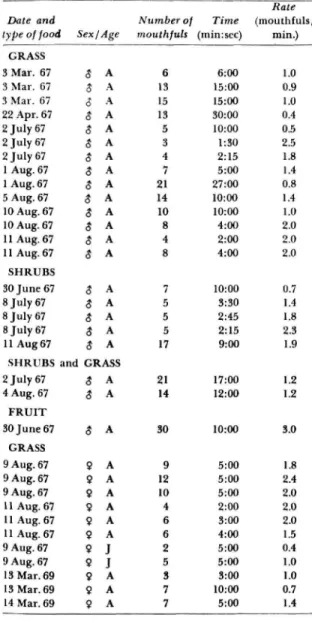
For example, the five protocols of herds where observations were recorded in detail for all individuals plus a further two, not included in Figure 40, give a total of 185 animal-hours of. Of this total, 167.5 animal hours or 91.1 percent were spent on feeding, including movement components of feeding. The next largest category was that of locomotion or walking without feeding which occupied 9.6 animal hours or 5.4 percent.
A similar estimate, based on a much smaller sample size of 15 animal hours for solitary males (Figure 39), gives 87.1 percent eating, 10.1 percent walking, 2.0 percent resting, and 0.9 percent for all other activities combined. A much larger sample from the Lahugala Tank for males is shown in Table 9 for daytime hours only, which includes data from tour observation periods totaling more than 108,000 animal minutes or 1600 animal hours. Even if an elephant were to sleep for two hours at night, which seems much longer than one would expect, the total time spent feeding would still be on the order of 80 percent.
However, several factors can influence the percentage of time spent on different activities for certain individuals. The first of these was the man mentioned on page 55, who was observed for several days in the Lahugala Tank. For example, on a normal day he spent about two hours in the water, standing and resting, and only half an hour, out of a total of two to two hours of observations, eating.
On the first, third and sixth days of these observations, he spent a relatively large proportion of time in interactions with other individuals in the area. An additional record of time spent by an individual during social interactions was by a male associated with. Out of 100 minutes of observation, 23.35 were spent on sexual behavior, 18.35 on contact-promoting behavior, and 58.3 on feeding and other activities unrelated to his interaction with females.
Mi nutes
Occasionally, examination of the genitals and anal region may be followed by insertion of the trunk into the mouth (p. 65). As the first man approaches the second, the second's penis is partially erect. The first animal has now come out of the water and is standing on the bank.
At 10:18 a.m., one of the animals that has been in the tank the longest (which I will call A) approaches the larger of the two new males (B) and begins to rub the base of his trunk against B's forehead. A continues to push with the bottom of the torso, then lifts his torso over B's back and pushes down. The larger male now extends his trunk toward the temporal gland area of the tusk and both extend their trunks over the other's neck.
The tusk again rams its tusks under the larger male's jaws, then turns and the two now stand side by side. The larger animal continues to push and the tusk turns and moves its tusk down the side of the larger male. At 1715, a male, also feeding in the same area, approached one of the groups.
During attack, the head is lowered, the ears are held back against the side of the neck, and the trunk is curled ventrally. Frade has described a perforation in the septum of the trunk near the tip, approximately with two cartilaginous valves. In such cases, all females appear to share equally in the care of the young.

Number of individuals per group
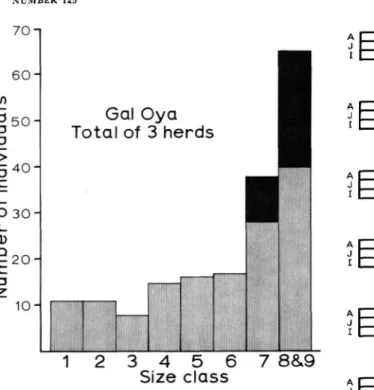
Use the mean percentages of the Gal Oya and Yala distributions as the expected distribution and apply a Chi-square test to the. These sightings come from a particular herd of elephants that inhabited the area of the eastern part of Gal Oya National Park. Big Fanny and Cysty were the only members of the group not observed on this occasion.
Although Hole Ear was most often seen with Big Fanny, she was also seen in the company of the other females with infants. This seems reasonable given the differences in mobility between infants and adolescents. This group consisted of a care unit and a youth unit, which seemed to stay together most of the time.
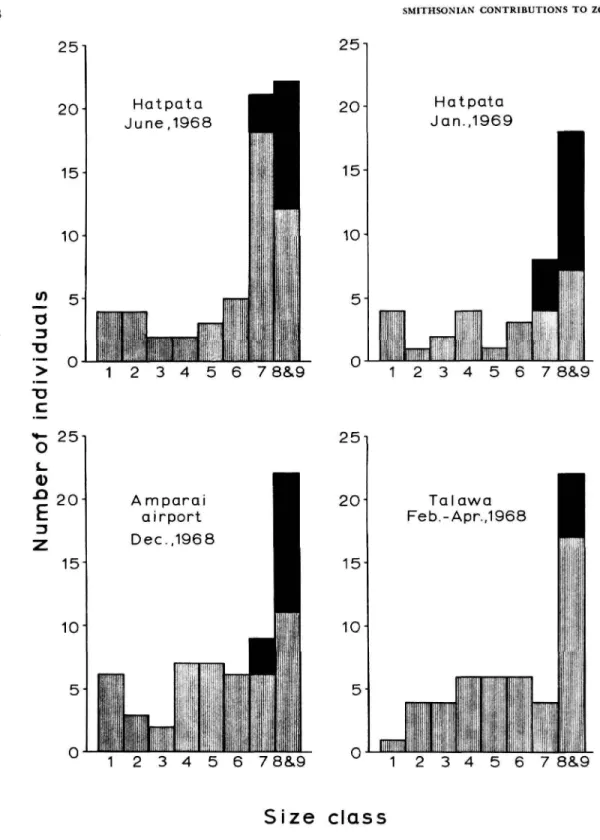
The movements of the Amparai Airport Herd (Figure 49) were somewhat similar, with the animals using only small areas of their entire range for periods of one to three months. Subsequent movements of the Hatpata herd between 14 and 16 June indicated that the herd had assembled for the purpose of a relatively long move to a. If this is the case, these movements will account for the majority of sightings of groups larger than 15 in the Gal Oya area.
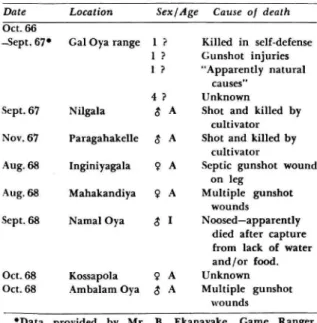
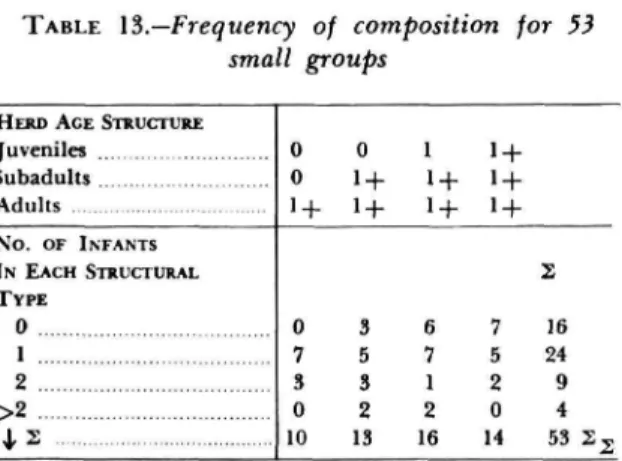
From all the above observations, the following conclusions can be drawn regarding the long-term organization of herds. Of the 73 counts of herds in which sex could be accurately determined, 44 were not accompanied by a male. Males appear to remain relatively dispersed, at least for most of the year, and tend to remain restricted to relatively small home ranges.
Data on Flapping of Ears
Identify the author on the first page of the text with an unnumbered footnote that includes his professional mailing address. An index, if required, can be provided by the author when he returns the page proofs. In taxonomic keys, number only the first article of each pair; if there is only one pair, remove the number.
For easy reference, also number the taxa and their corresponding titles throughout the text; do not include page references in the key. In synonymy, use the short form (taxon, author, date: page) with a full reference at the end of the paper under "Literature Cited". Begin each taxon on the left margin with the following lines indented about three spaces. Plain text tables (eg, columns of data) may or may not have headings, but they must not contain rules.
Formal tables should be submitted as separate pages from the text, and each table, no matter how large, should be pasted as a single sheet of copy. Submit all captions on pages separate from the text and not attached to the artwork. A guidebook for preparing illustrations is available from the Press on request.
In a bibliography (commonly called "Literature Cited"), capitalize the titles of books, journals, and articles in all words except for smaller terms such as "and, from." When capitalizing titles in foreign languages, follow the national practice of each language. For free copies of one's own paper, the Smithsonian author must state their requests on "Form 36" (print submitted with the manuscript). A non-Smithsonian author will receive 50 free copies; order forms for quantities above this amount with payment instructions will be supplied when the proof page is sent.