Inquiries to the Publisher should be addressed to the Permissions Department, John Wiley & Sons Ltd, The Atrium, Southern Gate, Chichester, West Sussex PO19 8SQ, England, or emailed to [email protected], or to be sent by fax. It is sold on the understanding that the Publisher is not engaged in rendering professional services.
A TYPOLOGY OF BRAND IDEAS 87 Building Your Molecule: 32 Brand Elements 89
DEVELOPING BRAND STRATEGIES 263
Thanks to all my clients, supporters, and colleagues who helped me develop the thinking in this book. Method Beauty Soaps (with the slogan People Against Dirty) used a very old cultural idea – the confessional – to create a very modern marketing campaign.
SECTION I
BRAND THEORY REVISITED
From Ad Idea to Media-Neutral Idea
The glitzy shopping and celebrity culture of the last ten years shows that we are far from the end of the consumer dream of the "good life". It is easy to overestimate how settled life was in ancient times and how rapidly it is changing now.
The Old School
It is design companies that use this concept the most, to the extent that they sometimes seem to assume that a brand is only an identity and aesthetics are the entirety of the subject. Our assignment earlier asked WHY. the customer problem) and HOW. what kind of idea can solve it – for example the assignment for the IKEA Chuck Out Your Chintzad suggested "furniture feminism").
Protestant vs Catholic
These new channels have also inspired new ideas about what is possible in the old channels. As with religious schisms, there are debates over the interpretation of history: which came first: the big brand or the big ads.
What Is a Brand?
The 501s - Levi's flagship brand - in particular suffered from the so-called 'Jeremy Clarkson effect', dating men in middle youth. In short, Levi's (which have been around since the 1850s) were becoming the kind of jeans worn by people's fathers.
Brand as Strategic Cultural Idea
Many are spontaneously created on the market; for example, when a scene takes over a brand. And most average brand marketing starts with the idea of “brand advertising” as if that were a business goal in itself.
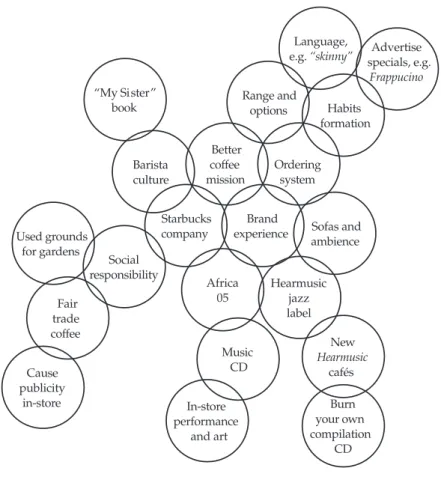
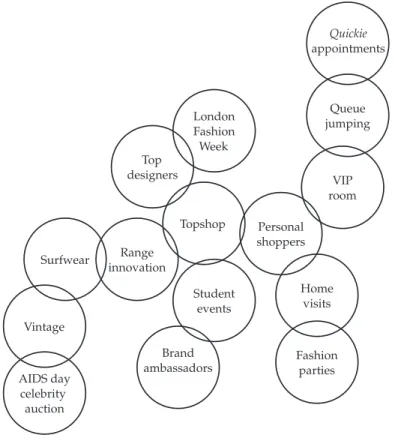
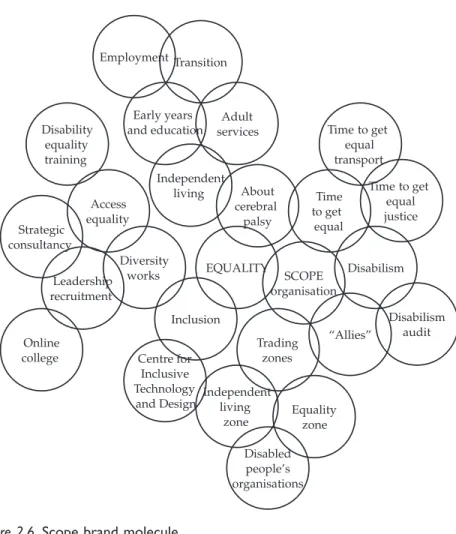
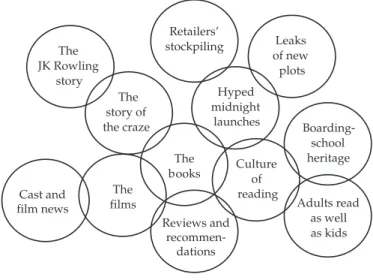
Brand as a Cluster of Cultural Ideas
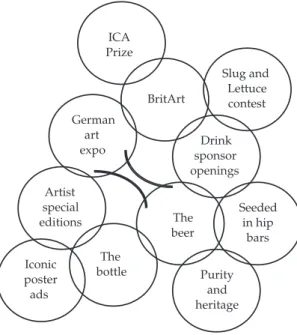
But once Beck's found a credible link – the German exhibition and the provision of free drinks at openings – it became a natural extension (see Figure 2.2). Nike women's campaign: It's not about the shape you are, it's about the shape you are in.
The Brand Innovation Imperative
It seems that as a species we are fascinated with how things are done these days/in these parts. PG Tips considered itself an unassailable brand leader in the British tea market until rival Tetley launched a simple innovation in 1989 – the round tea bag – which increased its brand share by 30% and took over the position of market leader.
Hybrid Vigour: Brand Partnerships, Feuds, Leaps and Properties
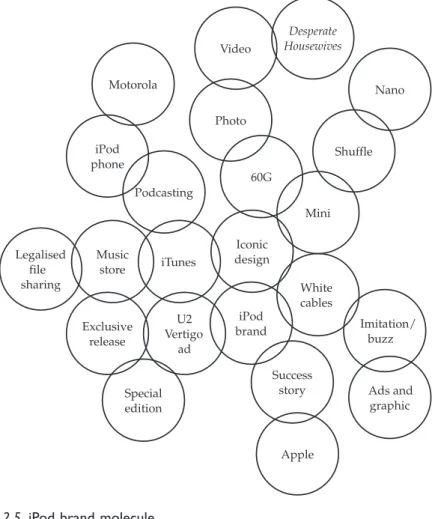
It was a credible connection for the brand, as the iPod was the latest in a series of high-tech ventures (such as U2's massive video and light show on their Zootour). Branson's evidence at the High Court also claimed that BA's PR people had been tipping off the media and the city against Virgin. But as a cultural idea to boost the Virgin brand, it was up there with Branson's balloon flights around the world.
The Equivalence of Brand Creation and Brand Communication
It's a good example of taking an existing idea (fun run/run with friends) to the next level using new community media like the web and viral emails. Besides selling a lot of running shoes, raising awareness and demonstrating brand leadership, it's refreshing to see a brand doing something good (helping people motivate themselves to get fit) with their marketing budget. Even if it is a packaged food product, it is – in anthropological terms – an artefact.
A Shift from Targeting an Audience to Adoption
But it's often easier to convey cultural significance by doing things in real life—especially today, when consumers are literate; they are used to perceiving a disconnect between the appeals and exaggerated images of advertising and the buzzing experience of products.
Establishing New Lifestyles
A BRAND IS A CLUSTER OF STRATEGIC CULTURAL IDEAS Culture is a very diverse subject and there are over 200 definitions of what it is. And it is based on outdated psychological theories, compared to the latest findings of cognitive neuroscience. Given any real concern for engaging with culture, marketers will not read trends ("the new street sport") but instead spend time understanding their customers as people (go and kick a ball with them).
The Difference between Cultural Trends and STEPs
In fact this is hindered; The task is to create new trends and connections, not follow them. And another thing against trends, reported in this way, is that they are of dubious validity (even on their own terms)—they are dubious cultural and social science. The problem with these tangible and measurable changes is that they are often poor predictors of how people will react.
Real Trends
All they're really saying is that the iPod is “in” – unless they also report an explicit agenda among the manufacturers (like the agenda that fashion designers seem to agree on behind closed doors before producing their virtually identical collections! ). Even once you've identified these real trends, there's little point in jumping on the bandwagon once they're well accepted. On the other hand, there is everything to be gained from trying to establish and formulate such an agenda – as IBM did with e-Business, for example.
Made-up Trends
People have dreamed of adventures in all ages - this is what most myths are about. Even if there is a simple obvious trend in terms of STEP (eg the world is falling apart), it is not safe to predict that there will be a single response or even a general direction of change. A picture of changes in the "average household"; the idea is that people (in the US, in the 1990s) would turn away from the hostile, crime-infested society "outside" and spend more time and more money on home comforts and security systems.
Problem Finding
There is something about sharing a strong conviction that is also important; it is much more than an intellectual exercise, it is about commitment to a course.
Finding a Third Way
Unfortunately (in my opinion) the company had jumped right into a store concept project that made cosmetic changes without necessarily addressing the cultural rationale for the retailer's continued existence. The vision I had come in to see the company, which I titled From WHS to WHY?, was all about developing and entering the lifelong learning market. This would involve a realignment in terms of what the shores owned, but it would be more about what the company built around it.
A Bigger Context or Market
WH Smith had a rag bag of product lines including stationery, entertainment, newspapers and magazines and greeting cards. What WH Smith seems to be missing is a third way, something between the supermarket and bookshop/music store models: a reason to exist and a place in people's lives. No one wants to work in a context where clients and media do not fully respect them.
Outside-In Thinking
Brand Archaeology
The Business of Character became a story that brought together issues like corporate governance (Enron), "fat cat" pay/executive respect, shareholder revolt over appointments, and so on. They come up with things that suit the agency's creative ethos, the creatives' lifestyles and tastes, and so on, ignoring the distinct voice of the client. Ministry corresponds to creative ideas that are tight, hard, simple, brash, ambitious, arrogant but approachable and so on.
Brand Renaissance
Some of the outside proposals I see for Ministry of Voice (a situation where I'm effectively the "client") just aren't us. An outside agency had participated in this name review and came up with ideas including Jericho, Bonobo and Morphos. One service that has just taken off with integrated collaboration is Zopa (launched by one of Egg's founders), where people deposit and borrow money in a system that's kind of like eBay for personal finance.
What Is the Other Side of the Story?
Strategy as Scripting
What Is Lacking?
The Cultural RNA
What Are We Here to Do?
It is merely intended to illustrate how a logic from another part of the culture (in this case the tried and true classical design – aka 'don't reinvent the wheel') can be grafted.
Busting the Tradeoff in Your Market
Model a Distant Parallel
Information Saturation
Having worked on a Labor election campaign in the past I had a sense of a kind of authoritarian discipline that seemed to be lacking at BT. How many agencies would go to the trouble of interviewing executives – plus key technologists, industry analysts, etc. Going through all of this with the production company has helped us come up with some common ideas that will both promote and populate the channel (liters). - ally to populate it, in the case of our "search for a presenter" idea).
Deconstruction, Reconstruction
This is the standard starting point for any management consulting project, and consultants are even paid to do it. The Marketing Director (Oxo) looked at the entire report, which was over 100 pages of mostly (quite appropriately) pie charts, and said it was obvious; we had to launch avegetable cube. Here we were losing share to Knorr for health, vegetarianism and cooking styles.
Demolish the “Ad in Your Head”
It almost doesn't matter what that direction is - it's simply a matter of being freed from the inner voice that presided over every idea and said: it doesn't look like what I expect. Of course, most strategy isn't done in workshops, and it's much harder to defeat our own preconceptions. I think it's partly about cultivating a value system, for yourself or a team you work with, where not knowing is okay – actually more exciting.
Rekindle Your Curiosity
Bring the Strategy to a Point of Focus
It doesn't have to be about the brand, it's just as often about what you set out to do. In line with brands being defined as clusters of cultural ideas, I think it is better to state your strategy in terms of a cultural logic. It is always possible to supplement this by saying what the commercial logic is as well.
SECTION II
A TYPOLOGY OF BRAND IDEAS
Even "classic" image brands like Nike have many touchpoints - stores, newspaper stories, sporting events - where people encounter an organization and not. This is a combination of two thoughts: "What are they good for?" and "What will this do for me?" The benefit should not be rational. It was a research company Boots that first discovered the drug, so it can rightfully claim to be "the original".
Safari, Explorer and Netscape – the brand names say it all, as the metaphor of geography and exploration was brought to the World Wide Web in web browser software. Or seen on the news, reported as "the new craze sweeping the world".