The longirostris group is found at lower elevations on both sides of the Andes in Ecuador, while most of the taxa in the ignescens group are high elevation forms. The members of the longirostris group are balios, elegans, longirostris, palmatus, planispinus and pulcher. Head length is from the tip of the snout to the posterior edge of the skull at the dorsal midline.
The colors of the rectangles are reversed from one sex to another to allow quick recognition. Most members of the ignescens group give values below 50, while species in the longirostris group usually show ratios above 51. In some Ecuadorian species, males are almost smooth on the sides of the body and in the temporal region, while females have prominent ridges on it the same area.
In the same paper, Rivero (1968:22) stated that some AMNH specimens from Rio Pescado belong to Atelopus spurrelli Boulenger, a Choc6an species. The two taxa, bomolochos and ignescens, cannot be distinguished based on any of the measurements shown in the figures, with the possible exception of head width/length. Collectors of type material from the California Academy were in the area during the months of January and February.
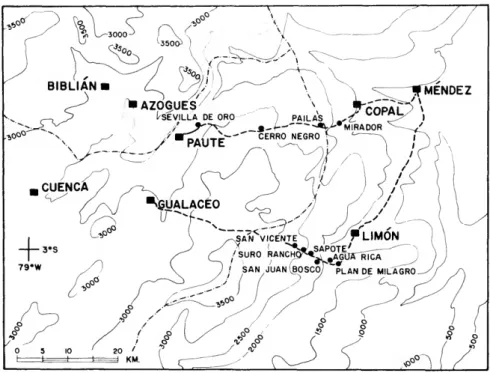
The main distinguishing characters noted by Noble in describing the two-tone were the development of the strap and some dimensions. The type series for boulengers came from Gualaquiza, a town in the valley of the Rio Zamora, at 950 meters. The larger of the two syntypes is the individual for which measurements are presented in the original description.
It has also moved up the slopes of the highest mountains above tree line, where it is found in the cold, windy and dry paramos. The species engages in mass migrations, apparently at the start of the breeding season, and can be seen in the hundreds at such a time. Photographs of the holotype were taken and are deposited at the National Museum of Natural History.
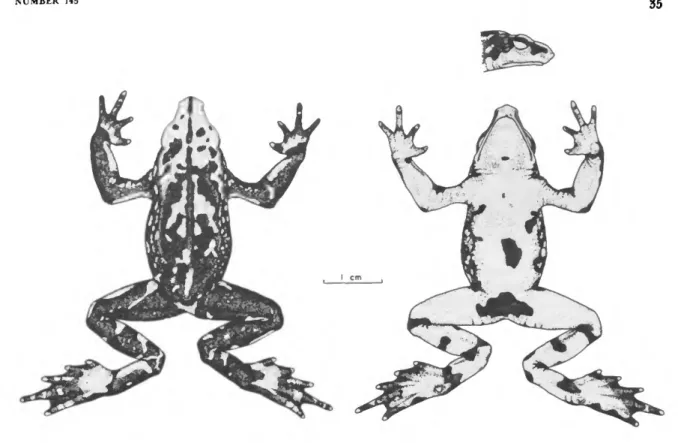
The heel reaches the back edge of the head when the hind leg is brought forward; the heels overlap slightly when the tibiofibulae are parallel with the femur perpendicular to the body. ETYMOLOGY.—The species name is derived from the name of the type locality, a very pleasant little town where Beatriz Moisset and I spent several delightful days in the field in 1965. One of the syntypes is now in the USNM collection, courtesy of the British Museum (Natural History ) (USNM 193575).
Taxa from the genus Atelopus are suitable for the study of these phenomena due to their sensitivity to environmental factors, which was already observed by Rivero.

4--I7 INTO
In terms of distribution, the taxa in the longirostris group are almost exclusively low-altitude species. Since this taxon is part of the longirostris group, and since it has not been taken elsewhere in the Amazonian lowlands, as would be expected if it actually occurred in San Jose Nuevo (the modern name for San Jose de Moti or Mote) , I predict that it will eventually be found occupying the slopes of Sumaco at lower to medium elevations (perhaps 1000 to 2000 meters) and probably only on the eastern slope (due to habitat changes on the back or west side of the mountain). The taxa in the ignescens group, on the other hand, are almost all high-elevation forms.
For example, it tends to fall halfway between groups in almost all analyzes of proportional measures. Leaving this species to one side, the remaining members of the resurgence group all show a common zoogeographical pattern. I would further suggest that each of the highland taxa (with the probable exception of A. ignescens and the possible exception of A. bufoniformis) is the product of a separate, successful invasion of the highlands by lowland stock.
With the initial uplifts of the Andes in Peru and Ecuador in the Late Cretaceous. The ancestral origin probably came from the southeastern parts of the Guyana Shield, where the more primitive Atelopus flavescens is found today. The only species from the ignescens group that managed to exceed the above limits for other species is A.
It has been a very successful invader of the inter-Andean valleys in Ecuador, and its vertical range is such that the nudos or junctions between valleys are no obstacle to horizontal movement. But materials in the UKMNH collections show it from 3400 meters and up to the highest parts of the Inter-Andean Plateau. An examination of the Reptilia and Batrachia obtained by Orton's expedition to Ecuador and the Upper Amazon, with Notes on other Species.
Comparative morphology and evolution of frogs of the neotropical genera Atelopus, Dendrophryniscus, Melanophryniscus and Oreophrynella. Manuscripts for serial publications are accepted by the Smithsonian Institution Press, subject to substantive review, only through departments of the various Smithsonian museums. If submissions are invited, the following press format requirements will apply to copy preparation.


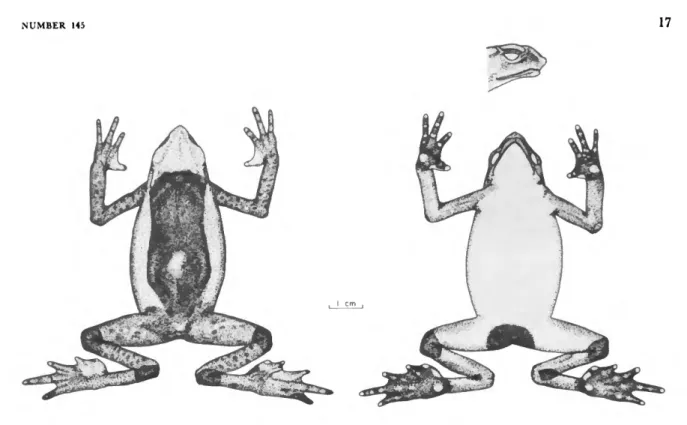
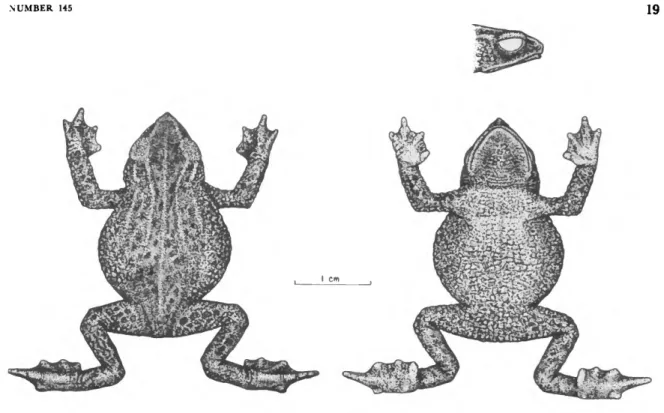
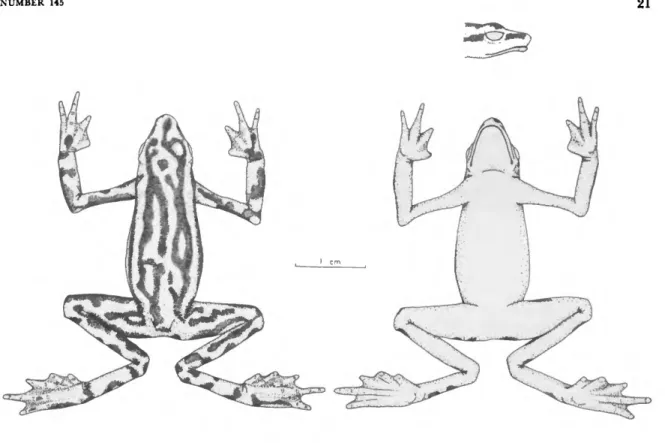
![FIGURE 19 Atelopus [species].—Rivero, 1968:21.](https://thumb-ap.123doks.com/thumbv2/123dok/11131895.0/28.867.125.775.600.979/figure-19-atelopus-species-rivero-1968-21.webp)