1
IMPROVING STUDENTS’ READING ACHIEVEMENT IN DESCRIPTIVE TEXT USING STUDENT TEAM ACHIEVEMENT
DIVISIONS (STAD) STRATEGY FOR THE SEVENTH GRADE STUDENTS OF MTS. AL-ISHLAH PONOROGO
IN ACADEMIC YEAR 2015/2016
THESIS
By:
ERNI LAILATUL UMAMAH NIM: 210912058
FACULTY OF EDUCATION
ENGLISH EDUCATION DEPARTMENT STATEISLAMIC COLLEGE OF PONOROGO
JUNE 2016
ABSTRACT
Umamah, Erni L. 2016. Improving Reading Achievement Using STAD Strategy for the Seventh Grade Students of MTs. Al-IshlahPonorogo in Academic Year 2015/2016.Thesis, English Education Department, Faculty of Education, State Islamic College of Ponorogo, Advisor NurulKhasanah, M.Pd.
Key words: Reading Achievement, Student Team Achievement Divisions.
Reading is one of the skill in English that can help us to get information and knowledge. In reading achievement, the students are expected to be able to understand the meaning of the text perfectly, especially in descriptive text. The lack of the language and experience are still the main problem faced by the students of MTs. Al-Ishlah especially grade 7B.They are difficult to express their ideas, difficult to read the text,and difficult in understanding the main idea. To solve the problems of reading achievement, the researcher tries to use STAD Strategy in teaching reading of descriptive text.
This research was aimed at improving students‟ reading achievement in descriptive text using STAD strategy for 7B students of MTs. Al-Ishlah in academic year 2015/2016.The problem statement of this research is: 1) canthe implementation of STADStrategy in improving students‟ reading achievement in descriptive text for the 7B students of MTs.Al-Ishlah in academic year 2015/2016.The purpose of the study is to describe the implementation of STAD Strategy in improving students‟
reading achievement for the 7B students of MTs.Al-Ishlah in academic year 2015/2016.
The research was done inMTs. Al-Ishlah started on 08-28 April 2016.The subject in this research was the students of VIIB that consist of 22 students. The research was done in three cycles and used three instruments. There were observation, documentation, and the test. The KKM of the test was 75. Based on the result of the test in cycle one, it was found that the students who got score 75 are 11 students or 53%. But 11 students got score under KKM. The researcher decided to do the cycle two and revises the plan. The researcher given more explanation about descriptive text. After conducting cycle two, 17 students get score ≥ 75 or 78%. The researcher decides to do the cycle three and revises the plan.Finally, after conducting cycle three, 21 students get score ≥75. From the observation showed that students are more active, cooperative and enjoy in the class. It could be seen from the result of observation that increased 53%, 78%, to 93%.
The use of STAD strategy in reading achievement helps the students in improving reading achievement in descriptive text. STAD strategy can give information about the learning process. It makes the students easier in understanding about descriptive text. Thus, the researcher suggests for the English teacher to be creative and innovative to create learning for the students. And for the future researcher, it is hoped to conduct the action research and present the result better than this.
CHAPTER I INTRODUCTION A. Background of the Study
Language is an instrument to express ideas, opinion and feeling. It is important for our society, moreover in modern life. Language is a part of the culture of a people and the chief means by which the members of a society communicate.1 Language is used to communicate and to give information to other people and society. If students have more than one language, the students can communicate and support the development of knowledge and culture easily.
English as an international language is spoken in most international events and used as the medium of information on science, technology, and culture. It is also a reality that English has an important role in most of international science books. However, the science of this language still often regarded as a difficult language by most of people. It is because the foreign language has completely different aspects and systems, which should be understood by the students or the learners. Such as pronunciation, spelling and cultural background of the language.
Generally, English involves some skills. They are identified as receptive skills and productive skills. Receptive skills concern with the ability to encode other messages; reading and listening. Productive skills deal with the ability to
1 Robert Lado, Language Teaching (New York: Tata McGraw-Hill, 1976), 23.
decode messages to other; speaking and writing. All of the language skills support each other.
In Indonesia, education is one of the important sectors in national development to increase the qualities and the quantities of human living and the effectiveness of all education activities especially in a formal education.
English is taught in junior high school and senior high school, even in elementary school. Studying English is not the new thing for the seventh grade students of senior high school. Although English is not the new thing for Senior High School students, in fact, they still have many difficulties in studying English. As we know English is not the Indonesian first language. It is difficult for the students to remember English vocabularies and to understand when someone speak English.
One of the important components in learning English is reading because reading is essential skill to be mastered in order to ensure success for learners in learning English as a second language.2 Through reading activity, students can enlarge their knowledge. It is a reason that students‟ reading skill must be developed. Teacher has duties to develop their skills. Everything that teachers do in reading class should be designed to build students‟ skills to increase understanding about the complex content of the text. The strategy, method and
2 David Nunan, Practical English Language Teaching Contemporary (USA: E.J.
Brill, 2003), 69.
teaching media that is chosen and used bythe teacher will influence the success of teaching learning process and students‟ achievement.
A great proportion of students in our school system today struggle to learn and achieve English for a variety of reasons. Research has shown that
“struggling readers are likely to avoid reading or behave helplessly with text.3 The ability to write articulately gives power and opportunity to share and influence, thought, ideas, and opinions with others.
Reading is a mental process. Although the eyes are involved in sending information about print to the brain, the brain performs the real act of reading.
The mental process we call “reading” has two parts: word recognition and comprehension4. To perform the act of reading is to recognize words in print and to comprehend their collective meaning. One without the other is not reading.
When a student correctly pronounces the words of a sentence in print but does not understand anything about their collective meaning, he has low qualification in reading.
Most student are not natural born readers. In fact, reading is not a naturally occurring skill at all, but rather a complex process that requires a careful and systematic instructional approach according to the research gathered by the National Reading Panel. It is dependent upon a number of factors including a
3 ChelseaPierleoni, Student Perceptions of Their Own Reading Achievement and the Motivational Factors Which Affect this Achievement (New York: St. John Fisher College, 2012), 3.
4Gough Hoover,Advancing Reading Achievement: Becoming Effective Teachers of Reading through Collective Study (California: National Education Association, 1996), 9.
student‟s world knowledge, vocabulary and memory skills. Of all the skills, student must acquire in their daily reading is the most critical one for future success in school as well as throughout life.5
Reading is one of the big problems faced by the students. Reading is one of the skills that need concentration to understand. Some students feel bored to pass reading process in the class because the teacher doesn‟t have the varieties method to deliver the material.6
In this research, the research only focuses on reading aspect because the researcher wants to improve the student‟s reading achievement to the seventh grade students at MTs. Al-IshlahPonorogo in academic year 2015-2016. The fact shows that there are still something that need to be repaired in the English Learning Process at MTs. Al-IshlahPonorogo, especially in teaching reading at seventh grade. According to interview with some students, they simply does not like reading. The lack of the language and experience are still the main problem faced by the student. According to the observation, they are difficult to express their ideas; sometimes they have difficulties to read the text using correct pronunciation; they have difficulties in understanding about the main idea with limited vocabularies that they know. When the students believe that they cannot
5Healy Cathy, International Journal of Reading-Teaching and Learning What the Experts Say (US: Parent Educational Advocacy Training Center, 1997), 1.
6 Transcript documentation and interview with Mrs. NurainiSyah in MTs. Al-IshlahPonorogo at thursday March 10th 2016 11.30 o‟clok
write, they disengage themselves from the reading process.7It is important for the teacher to identify students who have negative attitude toward reading.
To cover reading, Student Teams Achievement Divisions (STAD) Strategy can be judged as a resolution because it is one of the strategy that have contributed to our understanding of the process of reading. According to Slavin there are some advantages of STAD Strategy. Slavin finds in his study that STAD Strategy increases the number of friendship between black and white students.
This finding proves that STAD Strategy gives a positive effect to students‟ social life. Another advantage of STAD Strategy is the lower achiever can also participate more in the classroom. Besides, this Strategy can also increase students‟ self-esteem and motivate the students to learn more. The students are also intrinsically motivated to do their best. In addition, the last advantage of STAD Strategy is that students come to the class every day because they realize that their team score depends on them.8
So, since reading as a process; students have huge opportunities to explore their understanding in catching the mind message that write on the text which they read and expand it without any fear to get error-less. In the same cases, classroom activities cannot be separated from teacher‟s role. The teacher holds
7 Transcript documentation and interview with Mrs. NurainiSyah in MTs. Al-IshlahPonorogo at thursday March 10th 2016 11.30 o‟clok
8HayatunisaLinta, Student Team Achievement Divisions (STAD) Technique in Teaching (Journal of English and Education, 2014), 18.
the control of the class during teaching-learning process and the students must be more active to create the success of learning-teaching process.
Based on the phenomenon above, the writer is interested in conducting research entitled” Improving Student‟s Reading Achievement in Descriptive Text Using Student Teams Achievement Divisions (STAD) Strategy For The Seventh Grade Students of MTs. Al-IshlahPonorogo In Academic Year 2015- 2016”
B. Identification and Limitation of the Problem 1. Identification of the Study
From the background of the study, there are a lots of problems concerning with the reading skill. Those problems can be stated as follows:
a. The students simply does not like reading.
b. The students cannot read well eventhough it is short text.
c. The students have difficult to express their ideas; sometimes they has difficulties to read the text using correct pronunciation; they has difficulties in understanding about the main idea of the limited vocabulary that they know.
d. The students disengage themselves from the reading processwhen the students believe that they cannot write, 9
9 Transcript documentation and interview with Mrs. NurainiSyah in MTs. Al-IshlahPonorogo at Thursday March 10th 2016 11.30 o‟clock
2. Limitation of the study
To avoid a far ranging discussion, this study focuses on some concerns identified as follow:
a. This research will focus on knowing whether the use of Student Teams Achievement Divisions (STAD) Strategy can improve student‟s reading achievement or not.
b. The object of this study is improving students reading achievement in reading descriptive text by using Student Team Achievement Divisions (STAD) Strategy.
C. Statement of the Problem
To get focus on the research and to avoid irregularity toward research object, it is important to determine the statements of the problem toward the scope of the research.
Based on the identification and limitation of the study, it can be stated the formulated problem as below:
1. Can the implementation of Student Team Achievement Divisions (STAD) Strategy improve student‟s reading achievement in Descriptive Text for the seventh grade students of MTs. Al-IshlahMa‟arifPonorogo in academic year 2015-2016?
D. Objective of the Classroom Action Research
Based on the statement of the problems above, it can be figured out the purpose of the study as following:
1. To describe the implementation of Student Teams Achievement Divisions (STAD) Strategy in improving student‟s reading achievement for the seventh grade students of MTs. Al-IshlahMa‟arifPonorogo in academic year 2015- 2016 or not.
E. Significances of the Classroom Action Research
The results of this research are expected to give useful information and contributions for educational environment, theoretically and practically.
1. Theoretically
a) The results of this study will be useful and contribute to scientific treasure in the field of education.
b) People who want to conduct a research in English teaching learning process can use the results of the research as the reference.
2. Practically a) Teachers
This study is expected to help MTs. Al-Ishlah‟s teacher to improve the use of teaching methods which are suitable with each subject they teach. Particularly Student Teams Achievement Divisions (STAD)
Strategy can be used as a good strategy which is appropriate in teaching reading for junior high school students.
b) Students
Especially for the seventh grade students of MTs.Ma‟arif Al- IshlahBungkal, Ponorogo in academic year of 2015/2016, this study is expected to give them an awareness of improving their reading achievement in descriptive by using Student Team Achievement Divisions (STAD) Strategy.
c) Researcher
This research is expected to add the researcher‟s knowledge and experience in teaching reading. Beside it, the researcher will know how to improve student‟s achievement in reading descriptive text for the seventh grade students of MTs.Ma‟arif Al-IshlahBungkalPonorogo in academic year2015/2016.
d) For the Readers
This study is expected to give a contribution for readers, particularly the students of English Department of STAIN Ponorogo in enriching references concerned with the improving reading achievement in descriptive text using Student Team Achievement Divisions (STAD) Strategy.
F. Organization of the Thesis
To facilitate preparation of the thesis, the discussion in a research report will be grouped in to five chapter. It chapter consist of sub-units associated with the systemic as follow:
CHAPTER I INTRODUCTION
This chapter consists of some discussions about background of the study, identification and limitation of the problem, and statement of the problem, objective of the classroom action research, significances of the classroom action research, and organization of the thesis.
CHAPTER II REVIEW OF LITERATURE
This chapter explains about theoretical background, definition of reading, reading skill, the goals of reading, kinds of reading, the reading process, teaching reading, Strategy, kind of Strategy Student Team Achievement Divisions (STAD) Strategy, basic concept of Student Team Achievement Divisions (STAD) Strategy, the benefit of Student Team Achievement Divisions (STAD) Strategy, the step can be applied in Student Team Achievement Divisions (STAD) Strategy; previous research finding; theoretical framework; and hypothesis.
CHAPTER III RESEARCH METHODOLOGY
This chapter explains about classroom action research object setting and research subject characteristic; research variable; classroom action research
procedure, definition of action research, model of action research, planning, action, observation, reflection, preparation, application, evaluation; data collection technique; data analysis.
CHAPTER IV RESEARCH FINDINGS
This chapter explains about research setting, cycle explanation, data analysis and discussion.
CHAPTER V CLOSING
This chapter is the last chapter of the thesis that contains conclusion related to the research. In addition, the researcher gives some recommendation based on the research done already.
CHAPTER II
REVIEW OF RELATED LITERATURES
A. Theoretical Background 1. Reading
a. Definition of Reading
According to Allington,” Reading is a basic life skill. It is a cornerstone for a child's success in school, and, indeed, throughout life.
Without the ability to read well, opportunities for personal fulfillment and job success inevitably will be lost10.
According to Emerald Dechant,”Reading is a part of language skills.
It is closely linked to other skills such as speaking, writing, and listening.
These language skills cannot be separated each other. The important reading activity is comprehension of the text beside the knowledge of letters and punctuation, reader need the skill to comprehend a text. This is intended to encourage students to enjoy reading and have a comprehension skill of reading.”11
Reading is a process to get information by understanding meaning from the text. According Henry Guntur Tarigan,”Reading-is a process that
10Ricard Allington A, Teaching Struggling Readers: Articles from the Reading Teacher.1998, 23.
11Marta Dallman, the Teaching of Reading (New York: College Publishing. 1982), 43.
12
is done and practice by readers to get the main message that delivered by writer through written media”12
Reading means process that is done by a reader to get message and information from the text. According to David Nunan, reading is fluent process of readers combining information from a text and their own background knowledge to build meaning.13 Reading is likewise a skill that teacher simply expects learners to acquire. Reading arguably is the most essential skill for success in all education contexts.
b. The Components of Reading
Reading has some components, they are:
1. Phonemic awareness
A phonemic is the smallest unit of sound in a word. For example:
the word “eat” is made up of three phonemes (or three sounds): /e/a/ and /t/. The word fish also made up three phonemes (or three sounds) even though “fish” has four letters: /f/i/sh/.
2. Phonic
Phonic is the relationship between a specific letter and its sound, only as it relates to the written word. Phonic is used, for example, when a reader comes across an unknown word. With knowledge of phonics,
12Henry Guntur Tarigan, Membaca sebagai Suatu Ketrampilan Berbahasa. (Bandung:
Angkasa. 2008), 7.
13 David Nunan, Practical English Language Teaching (America: Contemporary, 2003), 68.
he can try to feat the word by focusing on the specific sound of each letter or combination of letter.
3. Fluency
Fluency is the ability to read text accurately and smoothly.
When fluent readers read aloud, their expressions, intonation, and pacing sound natural-much like speaking. Fluency develops from reading practice.
4. Vocabulary
When children learn to read, they begin to understand that the words on the page correspond to the words they encounter every day in spoken English.
5. Text Comprehension
Text comprehension is the interaction that happens between readers and text. More than, merely decoding words on a page, comprehension is the intentional thinking process that occurs as we read.14
14http://www.scsk12.org/SCS/subject-areas/kweb/images/NationalReading Panel _FAQ.pdf accessed on 14/01/2013. 09:30.
c. The Skills of Reading
Reading is either hard or easy, a person makes it.15 So people need to know what the basic skills of reading are. There are some basic skills of writing such as:
1. Skimming
Reading text to get the general idea of a passage.For example, most readers are able to read a newspaper headline and the first paragraph or two to determine what it is about.
2. Scanning
Successful readers can scan things they read to locate facts or specific information.For example, to locate a number in the phone book or a file from a list on a computer screen.
3. Reading Comprehension
The reader read to understand the total meaning of a passage.
4. Critical reading
It requires that readers evaluate what they read, considering, whether or not they share the author‟s point of view or are convinced by the author‟s argument or position.
15 Charles A. Perfetti. Learning Research and Development Center University of Pittsburgh (America: Contemporary: 2001), 67.
5. Reading extensively
The reader reads broadly in areas interest, such as mystery novels, or in a field of study, such as history or cooking. 16
2. Teaching Reading
a. Definition of Teaching
Teaching is an educative activity. According to Douglas Brown, teaching is guiding and facility learning, enabling the learner to learn, setting the condition for learning.17 In teaching, teacher must make a good interaction with the students in order to make the students able to accept the materials presented easily.
Brown states,” Teaching is showing or helping someone how to do something providing with knowledge causing to know or understand”.18 There is an opinion from the English expert that teaching is a process of transforming knowledge to the students.
Thus, teaching is an activity of helping students how to learn the subject matter and guiding them to understand new knowledge. For this case, the teacher has to give students an opportunity to construct new knowledge. Students must be involved in teaching process. On the other words, teaching is a process of helping students to understand new
16 Ibid, 68.
17Douglas Brown, Practical English Language Teaching Reading(San Francisco:
Longman.2000), 7.
18Ibid, 8.
knowledge that they have never experienced and to achieve the better understanding.
Reading is one of language skills in teaching learning and process.
Iskandar Wassid and Dadand Sunandar said, “Reading ability is one of the language skill that is taught and concentrated with language student”.19 This process in an activity to know students‟ reading ability, such as getting meaning, understanding meaning and knowing information from the materials written.
Reading for students is one of materials in teaching and learning of foreign language. Reading involves texts which have many topics. They are for example can be about sport, profession, and holiday. Reading is the process done and used by means of words or written language.
Certain words or phrases in the text or in the material surrounding the text will activate prior knowledge or some kinds in the mind of the teacher.
This is demonstrate by current research into the reading process which has uncovered what happens in silent reading by asking subject to think‟ aloud periodically reporting on how they are catching and responding to the text and by recording their thought. Teaching reading as what Ghani Johan proposed is classified into five items.20 They are:
1. Deducing the meaning of words from context.
19Iskandar Wassit and Dadang Sunendar, Strategi Pembalajaran Bahasa (Bandung:
Rosdakarya 2008), 247.
20 Ghani Johan, Reading and Translation(Yogyakarta: Pustaka Pelajar.2006), 9.
Deducing the meaning of words from context is looking the word or phrase that precede or follow the words. By doing this process, it is hoped that we can catch the meaning of words easier because we already matched a certain words or phrase that we have been tries to looking for their meaning whether they are suitable or not with the precede following words.
2. Understanding the forms and meaning of non-idiomatic phrase.
Different from idiomatic phrase that have the constant form and meaning while non-idiomatic phrase doesn‟t have the constant meaning and form. It is because non-idiomatic phrase is formed based on certain rules and it has no limited number.
3. Understanding sentences meaning through syntactical structure.
The skill is the application of grammar especially syntax in the identification of words, phrase or sub-clause that have the function as the element of sentence.
4. Recognizing and understanding rhetorical structure.
Rhetoric structure has the relationship with the functional meaning that is formed by the elements of language in the reading text.Recognizing and understanding rhetorical structure skill include the understanding of the meaning and function of the words, phrase, sign of words, and certain structure used by the writer to convey the idea or message.
5. Critical reading skill.
In reading skill, it is very essential for the students to have the application of knowledge or grammar mastery, English vocabularies, organization or reading text, and supported by the background of knowledge related with the topic and high cognitive skill.21
So in reading ability of teaching and learning, students are not only see and read the text, but also understand and know the meaning along with information from the text.
b. Process of Teaching Reading
Generally, activities during a reading instructional processes are consisting of three phase:
1. Pre-reading
The activities in the pre-reading phase are intended to make students ready for the task of reading. Teacher is mentioning the topic to be read and asking students the prior knowledge of the topic.
2. Whilst-reading
The activities in the whilst-reading phase are aimed at training the students to grasp meaning from the text. Therefore, during this stage the teacher‟s role is to facilitate the students‟ comprehension such as identifying words which are difficult for the students.
21 Ibid,10-11.
3. Post-reading
The activities in the post-reading are done to provide inputs on the student‟s achievement.22 So, the teacher can analysis students‟
ability in reading.
3. Descriptive Text
a. Definition of Descriptive Text
According Linda Gerot, Peter Wignell, descriptive text is a kind of text with a purpose to give information. The context of this kind of text is the description of particular thing, animal, person, or others, for instance:
our pets or a person we know well.23
Descriptive text is a text which says what a person or a thing is like.
Its purpose is to describe and reveal a particular person, place, or thing.24 So, wecan say that the descriptive text is the text that describes what kind of person or an object described, good shape, properties, number and others in particular. Goal (purpose) of the descriptive text is clear, namely to explain, descriptive or disclose a specific individual or object
b. Generic Structure of Descriptive Text.
According to Jenny Hammond, the Generic Structure of Descriptive Text consists of Identification and Description.
22 Caroline Woods, Teaching And Assessing Skills In Foreign Languages (Cambridge:
Cambridge University Press, 2005), 65.
23 Linda Gerot and Peter Wignell, Making Sense of Functional Grammar (Antipadean Educational Enterprises (AEE), Australia, 1995), 4.
24 Ibid, 7.
Identification : Identifies phenomenon to be described.
c. The Language Feature:
Descriptive often uses 'be' and 'have'. Tense which is often used is Simple Present Tense. However, sometimes it uses Past tense if the thing to be described doesn't exist anymore.
1) Significant Grammatical Features:
A descriptive text is comprised of specific participants and using Simple Present Tense.
1. Focus on specific participants
Example: My English teacher, Andini's cat, my favourite place.
2. Use of Simple Present Tense 2) The Learning of Descriptive:
a. Use of Simple Past Tense if Extinct.
b. Verbs of being and having
Example: My mum is really cool, she has long black hair.
c. Use of descriptive adjectives
Example: Strong legs, white fangs
d. Use of detailed Noun Phrase to give information about the subject.
Example: A very beautiful scenery, a sweet young lady, very thick fur
e. Use of action verbs 'Material Processes' Example: It eats grass, It runs fast.
f. Use of adverbials to give additional information about behavior Example: Fast, at tree house.
John is as white as chalk.25
4. Student Team Achievement Divisions (STAD) Strategy
a. Definition of Student Team Achievement Divisions (STAD) Strategy According to Slavin, Student Team Achievement Divisions (STAD) is
“a cooperative learning method developed.26 According to Palmer, STAD is the “easiest technique” to be applied in the classroom among the other cooperative learning techniques.27
STAD is a cooperative teaching method which was developed as part of a student learning approach program along with other cooperative methods such as Teams-Games-Tournaments, Jigsaw II, and Team Assisted Individualization.28
According to Rai, STAD (Students team achievement division) is one of the many strategies in cooperative learning, which helps promote collaboration and self-regulating learning skills. The reason for the selection of STAD is good interaction among students, improve positive
25 Reading Achievement Standards End of Grade 3 Appropriate Achievement.
26 Hayatunisa Linta, Graduated in December 2013 from English Education Study Program of Indonesia University of Education (Journal of English and Education 2014), 18.
27 Ibid, 18.
28 Ibid, 19.
attitude towards subject, better self-esteem, increased interpersonal skills.29
According to Slavin, STAD has the appropriate steps, detailed steps are as follows:
1. Class Presentations.
The teacher presents the material in front of the class in the classical style that focuses on the concepts of matter to be discussed only. Furthermore, students are asked to learn in small groups to work on tasks assigned by the teacher.
2. The formation of study groups (Teams).
Students are organized into groups whose members are heterogeneous (both academic ability and gender). The trick with rank students based on grades or the last value obtained before the student STAD cooperative learning models. The function of this grouping is to encourage cooperation in the group study the material and complete the tasks assigned by the teacher.
Provision of test or quiz (Quizzes). After studying the group completed the test, quiz was held with the objective of identifying, or the ability to measure student learning of the material has been studied. In this case, the student was not allowed to work with his
29Ray Michael L, Advertising and Communication Management (Englewood Cliffs Prentice Hall. 1982), 34.
friend. The purpose of this test is to motivate students to try and individually responsible. Students are required to do my best as a result of group learning. In addition to individual responsibility, the students also have to realize that businesses and their success will be very valuable to contribute to the success of the group. This test is performed after one to two servings of classes and learning in groups.
3. Improved scoring individual (Individual Improvement Scores). This is done to give the students a goal that can be achieved if they work hard and showed good results compared with previous results. Manager scores the results of the cooperation of students performed in the following order: score early, score tests, and score of the group increased.
4. Awards group (Team Recognition) award is given to the group to give a gift in appreciation of the efforts that have been made during the study.30
b. Principles and Characteristics of STAD
1. The basic principles of cooperative learning as follows:31
1) Each member of the group (students) are responsible for everything that is done in a group.
30 Armstrong Scott and Palmer Jesse. Student Team Achievement Divisions (STAD)(Englewood Cliffs Prentice Hall, 1982), 28.
31 Slavin Robert E. Cooperative Learning. Diterjemahkan oleh: Narulita Yusron (Bandung:
Penerbit Nusa Media, 2010), 32.
2) Each member of the group (students) should know that all of the group members have similar goals.
3) Each member of the group (students) has to split the duties and responsibilities equally among group members.
4) Each member of the group (students) will be evaluated.
5) Each member of the group (students) to share leadership skills and need to learn together during the learning process.
6) Each member of the group (students) will be required to be individually accountable for the material is handled in a cooperative group.
Palmer also said that in STAD strategy, “students are divided into some small groups consisting four or five members who have heterogeneous grouping of high, average, and low achievers of diverse ethnic backgrounds and different genders”, Slavin also argued that, in STAD Strategy, “the students dividing a big class into some small groups can help the students to develop their own potential in writing a text. outlines four key components in the implementation of STAD in the classroom. They are “class presentations, teams, quizzes, and team recognition, then, adds another key component of STAD that is “individual progression score”. 32
32 Hayatunisa Linta, Graduated in December 2013 from English Education Study Program of Indonesia University of Education,(Journal of English and Education) 2014,19
According to Alijanian, in the class presentation, teacher introduces new material through lecturing, class discussion, or some form of a teacher presentation. Slavin also added that teacher needs to make the presentation focused on STAD unit so that the students realize they have to give their attention to this class presentation so that it will help them to do the quiz. After the class presentation, teacher makes team groups consist of four or five heterogeneous team members. Team is “the most important feature in STAD which emphasizes on doing the best for the team to help each other in achieving their study” states that in this stage, team members cooperate together on the worksheets designed to extend and help boost the material taught by the teacher. The main function of the team is for ensuring all of members of the team to overcome the material and ready to do the quiz well.
The next step is individual quizzes. In this stage, “all of the students have to work individually and their team mates are not allowed to help one another during these quizzes”.33
According Slavin in Karmawati Yusuf,” A learning strategy has advantages and disadvantages. STAD cooperative learning has several advantages as follows34:
1. Students work together in achieving its objectives by upholding the norms of the group.
33Ibid, 20.
34 Yusuf Karmawati,Keunggulan dan Kekurangan Pembelajaran Kooperatif tipe STAD (Jogjakarta: Pustaka Pelajar.2010), 32.
2. Actively assist and motivate students to succeed shared passion.
3. Active role as a peer tutor to further enhance the success of the group.
4. Interaction among students with increasing their ability to argue.
Slavin said one of Cooperative Learning method, STAD also has some disadvantages states that some of students, in STAD class, do not want to work as a group nor do they want to participate in the group and let their group members to do the work alone. Another disadvantage of STAD is the class becomes noisier that makes students hard to pay attention to the teacher.
35
In addition, STAD also has disadvantages, according to the DESS in Karmawati Yusuf concluded as follows:36
1. Require a longer time for the students, so it is difficult to achieve the target curriculum.
2. Require a longer time for teachers so that teachers generally do not want to use cooperative learning.
3. Require special skills of teachers so that not all teachers can do cooperative learning.
4. Specific nature of students‟ demands, such as the nature of love to work together.
35 Slavin R. E, Cooperative Learning: Teori, Riset, dan Praktik (Bandung: Nusa Media, 2005), 45.
36 Yusuf Karmawati,Keunggulan dan Kekurangan Pembelajaran Kooperatif tipe STAD.
(Jogjakarta: Pustaka Pelajar, 2010), 28.
c. Teaching Reading Using Student Team Achievement Divisions (STAD) Strategy.
Strategy is process of getting meaning from print. Early reading includes the direct teaching of words and sounds. Children must be able to distinguish between different sounds of oral language to achieve understanding. They also need basic knowledge about the written alphabet, sound symbol relationships and concept of print because these are the basic for decoding and reading comprehension skills. Learning to read happens seemingly long time for a few fortunate children, but must need far more than lost exposure to books and immersion in print learn how to read.37
Teaching reading means the activity of guiding of interacting to communicate one another. Teaching reading also means the teacher activities in which the teacher guides the students in learning reading. So students‟
reading ability will be improved step by step. In this step, the teacher applied Student Teams Achievement Divisions (STAD) Strategy in teaching reading perfectly. It is begun by dividing the member of the group (students).Each member are responsible for everything that is done in a group. The member of the group (students) should know that all of the group members have similar goals. Every member of the group (students) has to split the duties and responsibilities equally among group members. Each member of the group
37 Elain K. Mc Ewan,Raising Reading Achievement in Middle and High Schools (California:
Corwin Press, 2000), 40.
(students) will be evaluated. Each member of the group (students) to share leadership skills and need to learn together during the learning process. Each member of the group (students) will be required to be individually accountable for the material is handled in a cooperative group.
Kinney conducted a similar study, by studying the effects of cooperative learning on the achievement of ninth-grade students in a diverse cultural general biology class. The experimental group having the combination of both black and white students had a significant increase on the academic achievement scores. Face to face, interaction in the classroom has an intense effect on the societal, cognitive, and scholarly development of students.38
B. PreviousResearch Finding
The research planning came from the previous research finding. It was presented by Any Laelasari under the title, ”The Use of Students Team Achievement Division (STAD) Strategy To Improve Reading Comprehension (A Classroom Action Research At The Second Year Students Of MA Al Manar Tengaran In Academic Year Of 2012/2013.
This research was carried at MA Al Manar Tengaran in the academic year of 2012/2013). This study has two classes, they are VIII A as an
38 Kinney J. H.,A study of the Effects of a Cooperative Learning Program on the Achievement of 9th Grade Multi-Cultural General Biology Classes. (ERIC Document Reproduction Service No. ED 309 096: 1989).54
experimental class which is taught STAD Strategy and VIII B as a control class which is taught conventional method.
The purpose of this research are (1) to define the result of reading comprehension mastery before using STAD Strategy in teaching reading. (2) to explain the result of reading comprehension mastery after using STAD Strategy in teaching reading. (3) to find that STAD Strategy is very effective to help student to comprehend the text for the second year of MA Al Manar Tengaran in Academic Year of 2012/2013.
This study is a classroom action research aimed to know the activeness of STAD Strategy in teaching reading comprehension for MA Al Manar Tengaran in academic year of 2012/2013.
STAD Strategy is an effective Strategy to help the student comprehend the text easily and remember the content longer. Nearly, the English teacher usually used the conventional Strategy in teaching reading. This research applied the STAD Strategy is effective or not in teaching reading for MA Al Manar Tengaran in academic year of (2012/2013).
There are four meetings in each class. Pre-test to make the students‟
condition homogeneity and to describe the students‟ achievement before the research, treatment and post-test.
The result of this study show that the average of pre-test from XA is 78, 02 and the average of pre-test XB is 78, 30. Than the average of the post-test from experiment class which have been taught STAD Strategy is 83,388. The
result after the treatment show that to -1, 143190498. It is consulted with 5% significance level with db70 2, 65. Its mean that Ho is received and Ha is refused. So, the result shows that STAD Strategy is not active to teach reading comprehension for MA Al Manar Tengaran in academic year of 2012/2013.
The next previous research finding was presented by Sri Wahyu under the title, ”The Effectiveness of Students Team Achievement Division (STAD) Strategy To Improve Reading Achievement (A Classroom Action Research At The First Year Students Of MTs. Darul Hasanah Slahung in Academic Year of 2010/2011.
This research was carried at MTs. Darul Hasanah Slahung in the academic year of 2010/2011). This study has two classes, they are VII A as an experimental class which is taught STAD Strategy and VII B as a control class which is taught conventional method.
The purpose of this research are (1) to define the result of reading achievement before using STAD Strategy in teaching reading. (2) to explain the result of reading achievement after using STAD Strategy in teaching reading. (3) to find that STAD Strategy is very effective to help in increasing student‟s achievement in reading English in the second year of MTs. Darul Hasanah in Academic Year of 2010/2011.
This study is a classroom action research aimed to know the activeness of STAD Strategy in increasing reading achievement for MTs.Darul Hasanah in the academic year of 2010/2011.
STAD Strategy is an effective Strategy to help students in increasing students‟ achievement easily and remember the content longer. Nearly, the English teacher usually used the conventional Strategy in teaching reading. This research applied the STAD Strategy is effective or not in teaching reading for MTs.Darul Hasanah in the academic year of 2010/2011.
There are four meetings in each class. Pre-test to make the students‟
condition homogeneity and to describe the students‟ achievement before the research, treatment and post-test.
The result of this study show that the average of pre-test from VII is 79, 85 and the average of pre-test XB is 80, 14. Than the average of the post-test from experiment class which have been taught STAD Strategy is 84,657. The result after the treatment show that to -2, 654732897. It is consulted with 5% significance level with db70 2, 65. Its mean that Ho is received and Ha is refused. So, the result shows that STAD Strategy is active to teach reading for MTs. Darul Hasanah in the academic year of 2010/2011.
The third research planning came from the previous research finding that was presented by Nia Hamidah under the title, ”Increasing Students‟
Achievement by Using Students Team Achievement Division (STAD)
Strategy(A Classroom Action Research At The Second Year Students Of MTs.Yanggong Jenangan In Academic Year Of 2012/2013.
This research was carried at Mts.Yanggong Jenangan in the academic year of 2012/2013. This study has two classes, they are VIII A as an experimental class which is taught STAD Strategy and VIII B as a control class which is taught conventional method.
The purpose of this research are (1) to define the result of reading comprehension mastery before using STAD Strategy in teaching reading. (2) to explain the result of reading comprehension mastery after using STAD Strategy in teaching reading. (3) to find that STAD Strategy is very effective to help student to comprehend the text for the second year of MTs. Yanggong Jenangan in Academic Year of 2012/2013.
This study is a classroom action research aimed to know the activeness of STAD Strategy in teaching reading comprehension for MTs. Yanggong Jenangan in the academic year of 2012/2013.
STAD Strategy is an effective Strategy to help the student comprehend the text easily and remember the content longer. Nearly, the English teacher usually used the conventional Strategy in teaching reading. This research applied the STAD Strategy is effective or not in teaching reading for MTs. Yanggong Jenangan in academic year of 2012/2013.
There are four meetings in each class. Pre-test to make the students‟
condition homogeneity and to describe the students‟ achievement before the research, treatment and post-test.
The result of this study show that the average of pre-test from XA is 78, 02 and the average of pre-test XB is 79, 30. Than the average of the post-test from experiment class which have been taught STAD Strategy is 81,238. The result after the treatment show that to -1, 143432598. It is consulted with 5% significance level with db70 2, 45. Its mean that Ho is received and Ha is refused. So, the result shows that STAD Strategy is not active to teach reading comprehension for MTs. Yanggong Jenangan in academic year of 2012/2013.
C. Theoretical Framework
Reading is an activity to understand the texts in order to get some information and knowledge. Reading includes not only moving out eyes from printed passage, but it needs comprehension of the text material. The main goal of teaching reading is improving reading ability, which is the students‟
competence in understanding the passage.
Improving reading achievement can use many ways such as Students Team Achievement Division (STAD) Strategy. The improving reading achievement can be done by using this method. Students Team Achievement Division (STAD) Strategy is the students control their individual learning. Each
student constructs a unique understanding through cognitive processes. The process of understanding takes a different route for each student. Several students can listen to the same lecture or speech but when asked to comment on what they heard, invariably they will mention different highlights. Teachers can assist students in acquiring meaning but there is no guarantee that they will acquire the same meaning as teachers. In this method teacher will apply several stages. The students will start to write from planning, drafting, sharing and responding, revising and editing and also publishing.
Drafting ggg Planning
Process Activated
Draftingg Planning
Process activated
Revising Editing
Process terminated
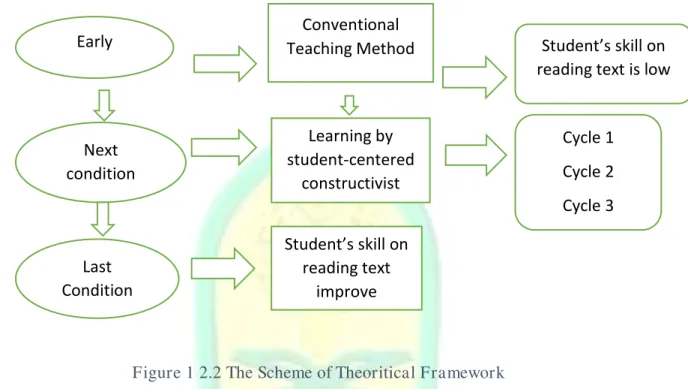
Figure 1 2.2 The Scheme of Theoritical Framework
Based on the observation, the student‟s reading achievement is still low when the teacher used conventional teaching strategy. So, researcher tries to apply Student Teams Achievement Divisions (STAD) Strategy in teaching and learning. After the researcher conducts this strategy in some cycles, students reading achievement finally can be improved.
Basically, Student Teams Achievement Divisions (STAD) in an interesting strategy which give a good motivation to the students to become more active in teaching and learning process. By using Student Teams Achievement Divisions (STAD) Strategy technique the student will be easy to understand meaning and getting information from the text. And the students can discuss with their group and present to the other groups. So, using this strategy can increase their ability to understand information from the reading text. Besides that, the
Student’s skill on reading text is low Early
Conventional Teaching Method
Cycle 1 Cycle 2 Cycle 3 Next
condition
Learning by student-centered
constructivist approach Student’s skill on
reading text improve Last
Condition
learning time will also be more effective and the students will enjoy for joining reading class as good as possible.
D. Hypothesis
Based on the limitation and problem statement, hypothesis can be formulated as follow:
1. Student Team Achievement Divisions (STAD) Strategy can improve the reading achievement in descriptive text for the seventh grade students of MTs. Ma‟arif Al-Ishlah Bungkal, Ponorogo in academic year of 2015/2016.
2. Student Team Achievement Divisions (STAD) Strategy cannot improve the students‟ reading achievement in descriptive and procedure text for the seventh grade students of MTs. Ma‟arif Al-Ishlah Bungkal, Ponorogo in academic year of 2015/2016.
CHAPTER III
RESEARCH METHODOLOGY
A. Classroom Action Research Object
This research is a classroom action research (CAR). It focuses in improving student‟s achievement especially in reading achievement. The classroom action research carried out in the second semester of the seventh grade students of MTs. Al-Ishlah in academic year 2015/2016. The researcher chose class VII B which consist of 10 male students and 12 female students.
B. Setting and Research Subject Characteristic
This research took place at MTs. Al-Ishlah Bungkal, Ponorogo. It is located at Jl. Bungkal-Ngrayun KM 1 Kalisat, Bungkal, Ponorogo. The subject of this study is the student of STAIN Ponorogo and the subject of the target in this research is the seventh grade B students of MTs. Al-Ishlah Bungkal, Ponorogo in academic year 2015/2016.
The researcher chose this class because from the fact and the result of the interview, it was shown that the students‟ reading achievement was still so poor.
According to the interview with Mrs. Nuraini Syah SS., seventh grade B students are difficult to express their ideas; sometimes they have difficulties to read the text using correct pronunciation; they have difficulties in understanding about the
main idea. When the students believe that they cannot write and read, they disengage themselves from the reading process.39
C. Research Variable
Based on the pre-liminary study conducted on Wednesday, April 20th 2016 the teaching learning process in the seventh grade B students of MTs. Al- Ishlah Bungkal Ponorogo in academic year 2015/2016, there are many problems found especially related to students‟ reading achievement.
In this research, the researcher decides the observation variables which are conducted in classroom action research. The variables of this research are:
1. The students‟ activeness in teaching learning process.
2. The students‟ cooperativeness in the discussion.
3. The students‟ achievement in reading achievement.
D. Classroom Action Research procedure 1. Definition of Action Research
Classroom Action Research (CAR) is a research conducted by teachers in class. It is the research conducted by the teacher in the classroom or at school where be taught with the emphasis on perfecting or improving learning
39 Transcript documentation and interview with Mrs. Nuraini Syah in MTs. Al-Ishlah Ponorogo at thursday March 10th 2016 11.30 o‟clok
processes and practices”.40 CAR is one strategic way for teachers to improve educational service which must be held in the context of learning in the classroom and improving the quality of the overall school program.
According to Jerry G. Gebhard, Classroom management refers to the way teachers organize what goes on in the classroom. As the most powerful person in the classroom, the teacher has the authority to influence the kind of interaction that goes on in the classroom, and this interaction is created from a combination of many related factors. It concludes such factors as how much the teacher talks and what the teacher says; the teacher‟s questioning behaviors.41
Action research is an effective learning device for teaching the process of the scientific investigation and systematic problem solving.42 The words action refers to talking practical action to resolve classroom problems.43 So action research takes in the teacher‟s own classroom and involves a cycle activities centering on identifying a problem or issue, collecting information about the issue, devising strategy to address the issue, trying out the strategy and observing in the effects.
40 Arikunto Suharsimi, Prosedur Penelitian Suatu Pendekatan Praktis (Jakarta: PT.Rineka Cipta, 2006),96
41 G. Gebhard Jerry, Teaching English as a Foreign or Second Language (English: The University of Michigan Press, 1990),69
42 Ronald L. Partin and Jossey Bass A Welly Imprint, Classroom Teacher Survival Guide (New York: Cambridge Language Education, 2005), 171.
43 Jack C. Richard,et.al, Professional development of Language Teachers, (New York:
Cambridge Language Education, 2005),171
CAR is the considerable form of study with systematic reflective, done by the teacher in specific purpose, to improve the condition of learning process continuously.44 This CAR integrates many aspects such as students‟
responses, teacher-students interaction, and intra-students interactions to solve the research problems and increase student‟s reading achievement.
From the statement above, it can be assumed that research is able to solve the problems and find scientific support. In the process of problem solving, the writer can continuously analyze and control the situation. This research is expected able to improve and increase in quality of learning. And they can do some experiences in teaching based on their own idea then evaluate and see how it works.
2. Model of Action Research
This study was conducting in a form of cycles through some steps consisting of planning the action, implementing the action, observing the action and reflecting the action. In the other hand, the writer had to observe the class before the writer done the research. The observation were include:
discovery the problem, identifying of the problem, limitation of the problem, analysis, formulation of the problem, choose hypothesis and make the title based of classroom action research.
44 Basuki, Cara Mudah Melaksanakan PTK Dalam Kegiatan Pembelajaran (Yogyakarta:
Pustaka Felicha,2010),8
This research model was introduced by Kurt Lewin as described in the scheme below:
Figure 3.1The Scheme of CAR45
According to explanation above, the design of the classroom action research is cyclical process. In some cycle consisting of four phrases they are:
a. Planning
This section discussed the activities concerning with the planning of action which was conducted by the researcher. It comprised the lesson
45 Mills G.E., Action research: A guide for the teacher researcher, 2nd Ed. Upper Saddle River (NJ: Prentice Hall, 2003),42.
Planning
Cycle 2 Reflecting
Re-planning
Cycle 1
Observing
Acting Problem Identification
for teaching English, preparation of action research and the scenario of STAD Strategy.
1. Making lesson plan.
In this teaching and learning activity, the researcher took the reading text under the title “The Giraffe”.46 It consisted of the picture and the descriptive text. The questions were the subjective question. It consisted of 10 questions. The allocated time was 90 minutes for the details was 5 minutes for pray, 10 minutes for greeting and reading the list of the attendance, 40 minutes for the post-activity (5 minutes for dividing the group, 15 minutes for the discussed the text in group, 5 minutes for presenting the result of the discussion with group in front of the class, 5 minutes for discussed the right answer and giving the result, and the last is 10 minutes for giving the assessment individually). The individually assignment consisted of 10 questions.
The group assignment consisted of 10 questions. Every questions is 10 points.
The instructional objective that want to achieve in this material were:
1) The students are able to write the functional meaning of the text and the short essay in descriptive text that related with the environment.
46 Op.cit. 4.
2) The students are able to respond the meaning and the steps in composing the short essay by using varieties language to interact with the environment in descriptive text.
3) The students are able to identify the communicative function of descriptive text.
4) The students are able to tell the language feature of the descriptive text.
5) The students are able to complete the language feature of the descriptive text.
6) Preparing media and material
E. The material that used by the researcher were:
1. First meeting at April 20th 2016, the researcher used the material under title,”
The Giraffe”.47 It consisted of the short text with the picture above, ten questions that consisted of the subjective question, and every number is given by 10 score.
2. Second meeting at April 24th 2016, the researcher used the material under title,
“The Dolphins”.48 It consisted of the short text with the picture above, 2 parts of the questions (part A consists of 5 questions that used format 5 questions
47 Mokarto S.M. Josephine, English on the Sky (Jakarta: Erlangga, 2006), 97.
48 Op.cit, 98.
5W+1H (subjective questions) and part B consisted of 5 questions to seek the meaning of the difficult words).
3. Third meeting at April 27th 2016, the researcher used the material under title,
“The Kangaroo”.49 It consists of the short text with the picture above, 2 parts of the questions (part A consists of 5 questions that used format 5 questions 5W+1H (Subjective questions) and part B consists of 5 questions to seek the meaning of the difficult words).
F. Media
`Media that used in teaching learning process is:
a. Marker b. Blackboard c. Text book50 d. Pen
e. The pictures of animal.
G. Preparing Observation Sheets
To get the data about activeness and cooperativeness, the researcher prepared two kinds of observation sheet. They were:
49 Op.cit, 96.
50 Op.cit. 98.
1. The students‟ activeness in teaching learning process.
The researcher observed the students whether they asked questions, answered questions, and found new vocabularies or no. If they asked some questions, answered what researcher asked, and found the new vocabularies, they would get the special marked.
Observation sheet
No Name Aspects of Activeness
Ask Question
Answer Question
Find new vocabulary
1. Adi Putra Sutanto - - -
2. Andika Dwi Rahma √ √ √
3. Agus Tri Setyo √ √ √
2. The students‟ cooperativeness in the discussion, interaction and giving argumentation.
The researcher observed the students „cooperativeness covered discussion, interaction and giving argumentation by giving the checklist.
Discussion category got when the students could discuss the task either group or individual learning process. Interaction category got when the students could interact with the teacher and another students in order to discuss the material. The last category was giving argumentation. The students who gave their argumentation about the material in that day, it mean that they paid attention through learning process.
Observation sheet
No Name Aspects of Cooperativeness
Discussion Interaction Giving argumentation
1. Adi Putra S. - - -
2. Andika Dwi R. √ √ √
3. Agus Tri Setyo √ √ √
3. The students‟ achievement in reading achievement.
In this research, the researcher held two tests to measure the students‟
reading achievement. They are:
a. Written test.
In this case, the researcher held the written test to measure student‟s ability in reading. The researcher took the ten subjective questions which the score was 10 in every number. The questions was about descriptive text under the title,” The Giraffe, the Dolphins, the Kangaroo” with text above. The students passed the test if their score fulfil the requirement to reach the standard minimum of KKM.
b. Oral Test
In this part of the reading test, the researcher prepared the reading passage, measure the students‟ ability in reading, and marked the result by checklist. The assessment was by commanded the students to read one by one in the different case. Example: 5 students were commanded to read the three lines of the descriptive text in the opening material, 5 students were to read the three lines of the text at the half time by changeable. The