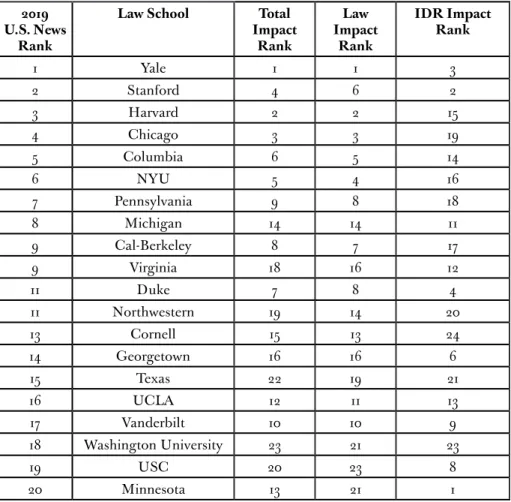
With the increasing availability of citation data, legal citations should no longer be excluded from rankings of the scholarly impact of law professors and law schools. We argue that this breadth of work and citations in law journals is a demonstration of the law school's interdisciplinary work and its influence within and beyond legal scholarship. It is clear that a significant part of the law faculty works in the core of interdisciplinary activity - they publish in non-law journals and these publications are recognized in both legal and non-law journals.
In Part I, we discuss why accounting for legal scholars' non-legal publications and citations is important when assessing scholarly impact. The importance of non-legal citations in the assessment of the jurisprudential impact of the faculty Non-legal citations are an important indicator of jurisprudential impact for two main reasons. First, non-legal citations can be an important reflection of a jurist's influence on theoretical and applied jurisprudence.
Second, non-legal citations can be an important indicator of a legal scholar's influence on interdisciplinary scholarship. We then turn to the importance of non-law citations for assessing the interdisciplinary scholarly impact of law professors. Other types of law scholarship rankings reflect to some extent the scholarly impact in non-law publications.
Law professors are employed by law schools, not other units of universities, so it is fair to ask whether non-law citations should matter for evaluations of the law school's scholarly impact. Moreover, the audience for non-legal journals is often more global than for legal journals.17. The high value placed on many non-legal publications is partly a result of the gap between peer review and non-peer review, but also of differences in the expertise of editors.
Citations in non-legal publications can serve not only as an indication of the influence of legal scholars on legal scholarship, but also as an indication of the interdisciplinary impact of legal scholarship. Three dominant citation analysis engines cover non-legal publications: Web of Science, Scopus and Google Scholar. Our goal is to stimulate further progress in and use of non-legal citation analysis for legal researchers.
For all practical purposes, excluding the Web of Science category “law” from our study provided publication profiles of authors of non-law journals. As a result, our study does count citations in the collection's legal journals toward an author's non-legal publications, which, albeit to a limited extent, reflects the influence of the author's non-legal work in at least some legal magazines measure. Faculty of Law (based on the list of Sisk et al.), which has published at least one single or co-authored article in a non-legal journal in the period 2012-2018.
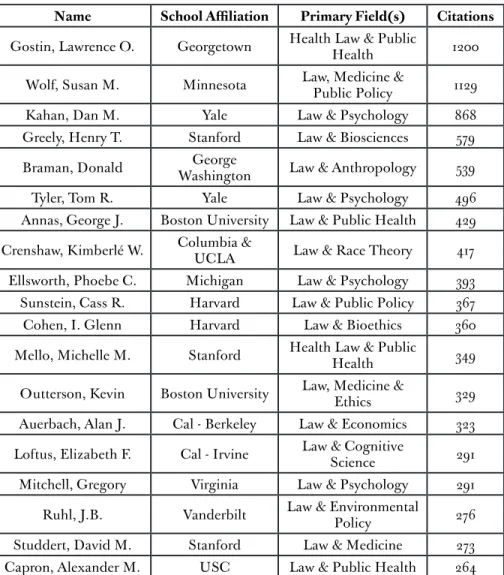
In short, interdisciplinary work in the Faculty of Law, as reflected in publication and citation in non-law journals, is largely limited to a small number of legal scholars working in three fields.

Discussion
Citations in non-legal publications will often not be as important to the scholarly impact of legal researchers as citations in legal publications, and a lesser impact could justify a discount factor to be applied to non-legal citations. In many cases, however, non-statutory citations will be as great or greater indicators of scholarly impact. Ranking of tenured law faculties and faculties by Interdisciplinary Scholarly Impact Scores suggests many parallels with other rankings, but several important differences.
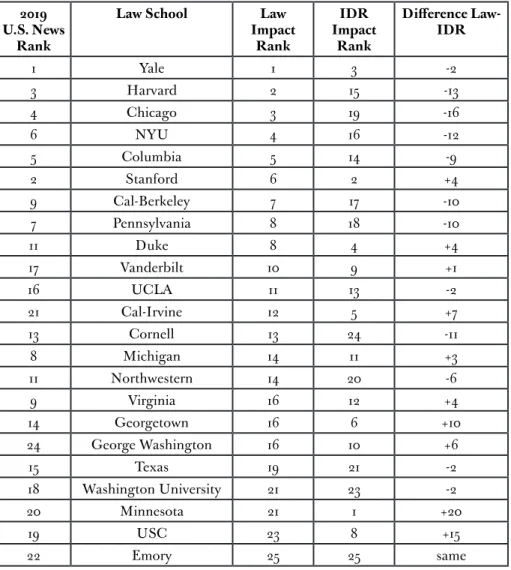
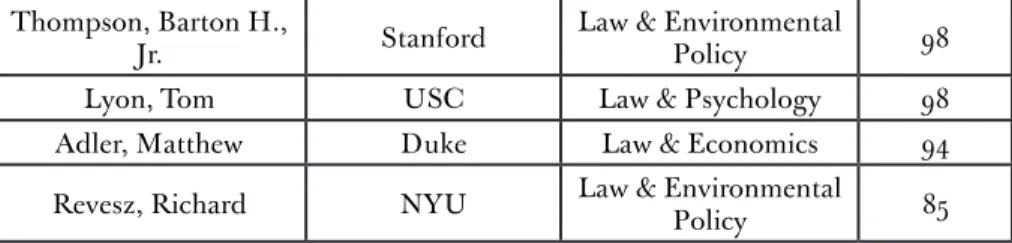
Lyon of USC, are the only two faculty from each school to make it into the top fifty cited faculty within the interdisciplinary Scholarly Impact rankings. This adds value to the idea of formulating a Total Scholarly Impact Score that takes into account citations in both law and non-law journals. Law Impact Ranks, only three schools experienced a neutral or positive increase in Interdisciplinary Scholarly Impact (Stanford University, Duke University, and Vanderbilt University).
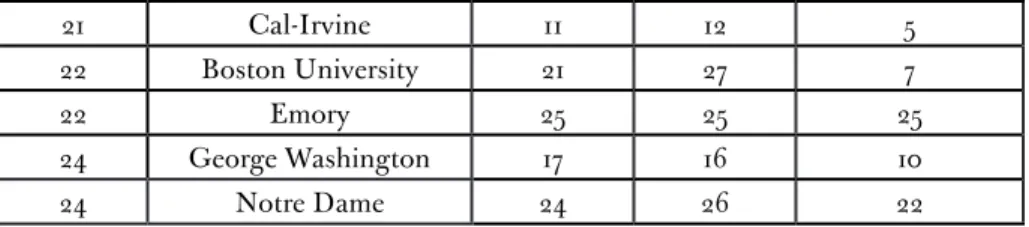
Based on Interdisciplinary Scholarly Impact rankings, several law schools appear to be significantly underrated in popular law school rankings. The faculty at these law schools achieve much higher Interdisciplinary Scholarly Impact rankings than the overall rankings assigned by the US. Among the schools in the top ten for the Interdisciplinary Scholarly Impact rankings, Vanderbilt is at No. 9 and George Washington is at No. 10.
According to the news rankings, only two schools saw a neutral or positive increase in Interdisciplinary Studies Impact (Stanford University and Duke University). SSRN news and download rankings suggest that the Interdisciplinary Research Impact Score provides a valuable supplement to other rankings. The results of this study are sufficiently consistent with other measures of scholarly influence to suggest that they reflect actual differences among faculty.
At the same time, the results of this study provide sufficiently diverse rankings of faculty and law schools to provide important new information for the overall assessment of scholarly impact. Regardless of the specific use and weighting of non-legal citations, and despite the additional effort required, future rankings of scholarly impact by legal scholars should include both types of citations. The exclusion of citations in non-legal publications in rankings of scientific impact by legal scholars is understandable.