
All rights are reserved, whether in whole or in part, in particular the rights of translation, reprint, reuse of illustrations, recitation, broadcast, reproduction on microfilm or in any other way, and storage in databases. Duplication of this publication or parts thereof is only permitted under the provisions of the German Copyright Act of 9 September 1965, in its current version, and permission for use must always be obtained from Springer-Verlag.
Corporate Social Responsibility in Five
- Introduction
- The roots of the debate
- The strategic significance of CSR
- Experiences
- The quest for applicable management models
- Introduction
- The essence of the SIGMA management model
- Experiences of SIGMA in practice – case study, BAA Heathrow
- Some dos and don’ts when using the SIGMA model
- Wrapping up
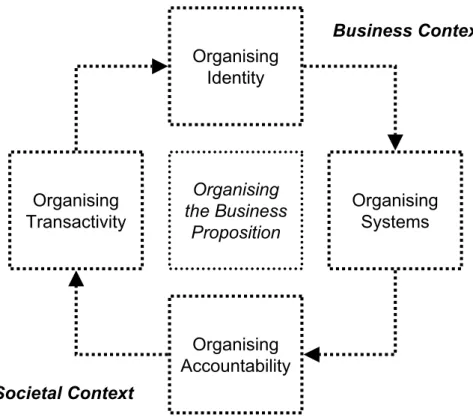
The core partners of the project were the British Standards Institution - the British standards organisation, Forum for the Future - a leading sustainability charity and think tank, and AccountAbility - the international professional body for accountability. The SIGMA Management Framework is the core of the model and is shown in Figure 2.1.
An Integrated Approach
- Introduction
- Explanation of the CSR management models
- Experiences
- Dos and don’ts
- Wrapping up
- Introduction
- The essence: The figure
- Experience with the model
- Some dos and don’ts
- Concluding remarks
- Introduction to the model
- The essence
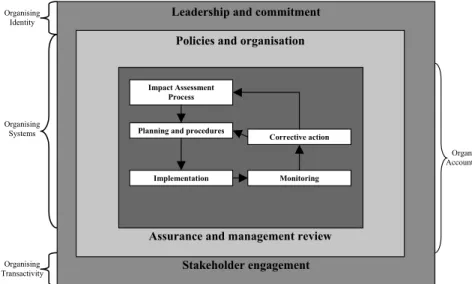
It is important to keep abreast of the perceptions of the local community in order to avoid surprises, as shown in the example of Pernis (Netherlands). The main elements of the CSR management model are based on leadership commitment (identity), ongoing stakeholder engagement (transactivity), a policy, organizational structure, impact assessment, planning and implementation (system) with monitoring, actions corrections, audits and management. reviews (liability).
COMPASS COMPASS
- Experience with the model
- Some dos and don’ts
- Wrapping up
- Introduction
- The sustManage building blocks
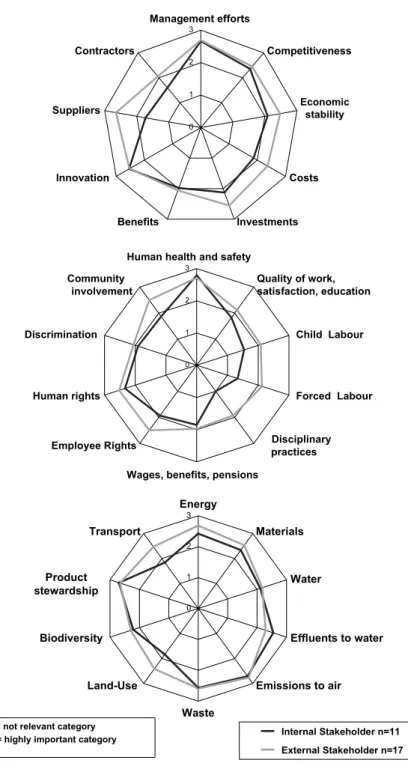
Most of these questions in the set of indicators were worked on during the course of the project. A prerequisite for the aggregation of indicators at the sectoral level was the harmonization of the data collection methodology.
Ill us tra tiv e
- Practical applications of sustManage
- Dos and don’ts
- Wrapping up
- Introduction
- The essence
- Experiences
- Some dos and don’ts
- Wrapping up
- Introduction to the model
- The Global Compact Performance Model
Companies should support freedom of association and effective recognition of the right to collective bargaining; The Global Compact Performance Model consists of ten business practice elements (see Figure 8.2), each of which is represented by a separate segment of the diagram.
ENABLERS
Experience with the model in practice
The Performance Model framework has also been used in the preparation of many Global Compact case studies related to an individual company's implementation efforts. It will be a free publication available for download on the Global Compact and BLIHR websites.
Conclusion
The Model: Worker Empowered Voluntary Labour Standards (WEV)
The essence of the WEV model
Long-term relationships with multinational buyers, factory owners and workers can provide incentives for improved performance. The main task of these consultants is to train management and workers to implement the process of continuous improvement of working conditions.
The implementation process: WEV in action
In addition to the mentioned core subjects, training in productivity and quality control is of added value to the WEV process. The development of a cooperative monitoring program utilizes the knowledge of the real experts, the workforce.
Dos and don’ts
We decided to start the process by proposing the formal inclusion of workers as well as management representatives from the beginning of the program. The points above further emphasize that the overall success of WEV lies in the initial launch of the program.
Facing the challenge
Plant management must fully understand the objectives of the program and must encourage the participation of their employees at all levels. The success of the WEV approach depends on the support of buyers, management, government officials and workers.
Introduction
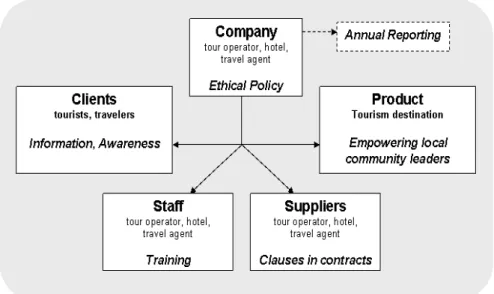
A model of inter-stakeholders’ partnerships against child sex tourism
A model for multi-stakeholder partnerships in human rights in tourism 85 Implementing the model in one country allowed this knowledge to be transferred to other destinations. Consultations, seminars, training sessions and visits were carried out at destinations to monitor the implementation of the model.
Application – the case of child sex tourism
Implementation of the Code requires direct cooperation between the private tourism sector and national NGOs with expertise in children's rights, with the support of competent IGOs. UNICEF, the UN agency working to protect children's rights under the UN Convention on the Rights of the Child, became a supporting organization in 2004, following the launch of the Code in North America.
Dos and don’ts in the implementation of the model
This body is funded by UNICEF and its task is the global monitoring of the Code development. The intensive collaboration with multinational companies also maximized the international impact and the expansion of the model.
Conclusion
Correct understanding of the business by all model partners facilitates communication and agreement on common goals. The key result of the model was the reevaluation and, in some countries, the reshaping of the relationship between the tourism industry and civil society.
Introduction
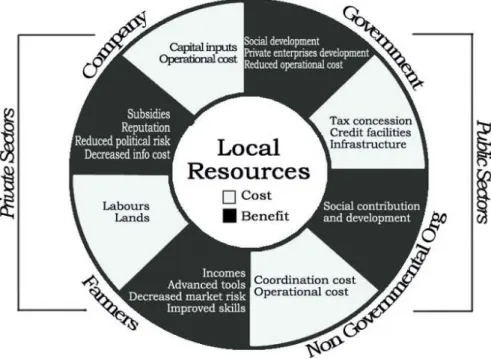
On the other hand, it helps the company organize and manage the farmers in carrying out all aspects of the farming activities. Typically, she can also assist the company by offering and enabling environmental and/or preferential conditions.
Essence of the model
In the Guangcai model, the key responsibility of the government is to provide an enabling environment for the private sector through tax breaks, soft loans and adequate infrastructure. The Guangcai 93 model gap is one of the dominant reasons for rural poverty.
Experiences
94 GUO Peiyuan, YU Yongda and DU Huixian (Fred Dubee) the company and farmers ensure that they can continuously and accurately monitor relevant developments and provide mechanisms and support measures to ensure compliance with partnership agreements and if necessary to start debugging in action. In short, the Guangcai Model helps reduce overall business and legal risks and greatly increases the potential for smooth and profitable cooperation between the company and the farmers.
Dos and don’ts
96 GUO Peiyuan, YU Yongda and DU Huixian (Fred Dubee) the contribution of farmers would be more important under such circumstances, (2) the areas where such industries are located are usually less developed not only economically but also in terms of entrepreneurial and business žilica, and (3) the government will be happy to support the project if it can promote regional development and thereby advance poverty reduction. Therefore, the Guangcai program should serve as a model for development rather than replication.
Conclusion
Introduction to the model
The essence of the model
For the community, this means higher literacy rates in the short term, leading to better jobs and a better quality of life. There are two broad themes here: the use of IT (particularly in the form of computers and software content) in the learning process and the community involvement in the project.
Problems faced
In addition to providing the infrastructure, it is crucial to develop appropriate content to ensure the success of the learning centers. It has been found that rural children are particularly fond of using software where learning takes place without conscious knowledge or effort on the part of the child.
Conclusion
Introduction
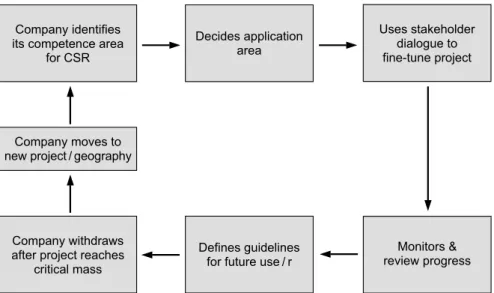
The Committee developed the Melbourne Model methodology (see www.melbourne.org.au) to address economic, social and cultural impacts of urbanization using resources, ideas, experience and knowledge inherent in the corporate sector, government and civil society. sector to combine and coordinate society (see Figure 13.1);. Through this brainstorming and action program leadership function, the Committee creates a sense of community.
The Constructive Corporate Participation (CCP) model
A retreat into bureaucracy is reflected in the uneasy way in which many companies worldwide try to meet their social responsibilities. The Committee's methodology seeks to avoid traditional and often expensive, inefficient and politically driven processes by ensuring that the 'best', as opposed to the 'ordinary', people are involved in the process of developing practical solutions.
Constructive Corporate Participation
A new paradigm
Corporate learning through constructive participation
The Committee takes the functioning of companies out of the vacuum and enables active and anticipatory responses to capacity problems in the community. A discussion of multiple futures can be used in long-term and multivariable planning to enable companies to be “in the community” rather than simply responding to community calls.
Conclusion
The Committee is a collection of mature and insightful companies looking for ways to explore citizenship and embrace Darwinian advice. As corporate citizens within the committee structure, companies seem to see themselves as part of a larger public culture rather than the culture of the city existing as something outside the company.
Introduction
Within companies, it is common practice to talk about 'What to do' and 'How to do it'.
Profit
- The essence: Three perspectives
- Experiences with the model: The insights
- Application of the model
- Dos and don’ts
- Concluding remarks
- Introduction
- The essence of the model
- Experiences with this model in practice
- Some dos and don’ts
- Wrapping up: Advice for application
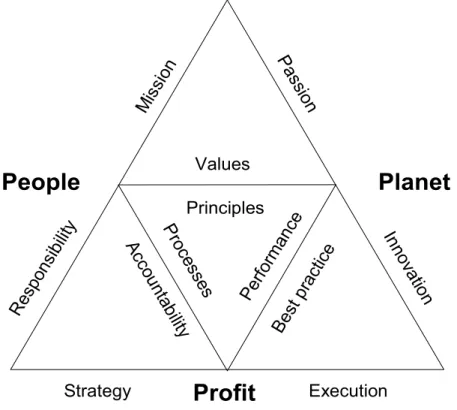
The purpose of the model is to support the decision-making process in the integration of People, Planet and Profit. Examining her reactions to the situation, she became aware that 'the way I posed the initial challenge question was a direct reflection of my controlling tendencies'.
Transparency and Trust
Introduction to the model
The outside world will see this support and be much more likely to engage positively with the corporation's social responsibility efforts. Without this internal credibility check, the outside world will simply view the corporation's social responsibility efforts with cynicism and disapproval.
The model
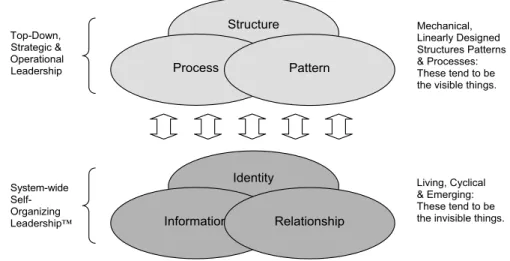
The management must co-create the company's vision and mission together with the employees, so that everyone can begin to see how they fit into the company's future. People who work in this way become great ambassadors for the company in their CSR efforts.
Experiences
Management must be open to this possibility and be willing to have people form teams to explore and develop them more fully. Summaries of these sessions should be shared with everyone so that everyone is as informed as possible.
Some dos and don’ts
Wrapping up
Introduction to the model
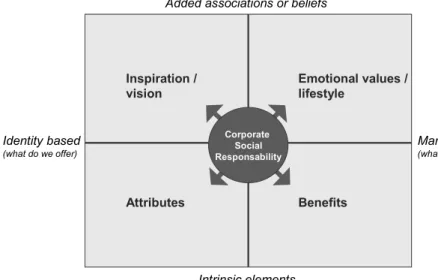
Benefits and final values provide the answers to one of the most important marketing questions, namely: 'what's in it for me?'. Therefore, the consulting company b-open has added an element to develop the CSR Brand Positioning Grid: the inspiration offered by a product or company.
The essence of the model
Experiences with this model in practice
The final selection will be based on criteria such as distinction from competition, relevance and attractiveness to the target groups, authenticity and credibility of the claim. After defining the positioning and supporting values of the brand, the model can be used to explore relevant CSR aspects for building the brand.
Some dos and don’ts
CSR Brand Positioning Grid 145 tive angle (box and items in this box) to convey CSR. It should also leave room to differentiate the explanation of the brand positioning for each group.
Concluding remarks
A strong brand positioning not only focuses on the needs of customers, but also takes into account the needs of other stakeholders (e.g. employees, NGOs, local communities). Such a positioning is based on an overarching brand value or theme that fits all these groups and from which they can each derive their own value.
Introduction
The more conceptualization the participants bring to the dialogue, the greater the opportunity for shared knowledge formation and thereby shared consideration for the implications of those actions that the dialogue aims to influence. If the community decides new rulings are needed, how can old agreements be updated?
Experience in practice
Some dos and don’ts
Advice for application
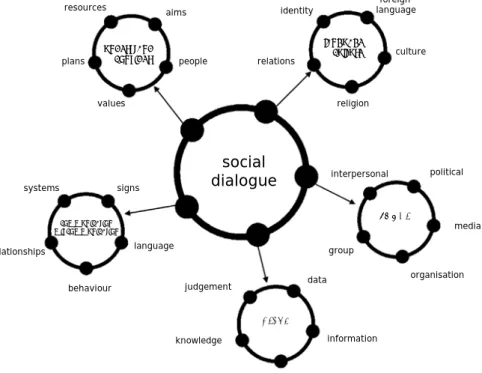
The '5dialogue' model can be adapted using a wide range of suitable concepts - the number five is chosen only as a guide to show how ideas often presented as simple are in fact complex and based on deeper assumptions that may themselves require re-examination. consideration. The responsibility of the community is to conduct its own dialogues effectively and legitimately, a situation that can only be decided by the members themselves.
The Experience of Holcim
Introduction
The essence of the model
Experiences with the model in practice
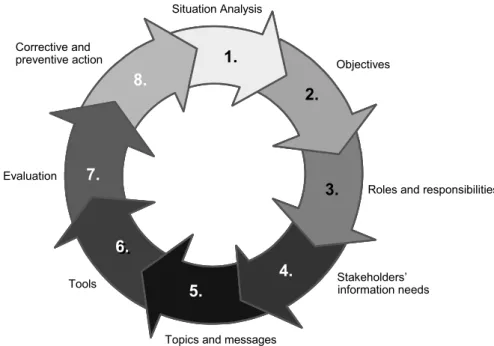
In practice, for example, several steps in the model planning phase can take place simultaneously. The joint project team involved the People's Committee of the local municipality, further embedding stakeholder involvement in the process.
Dos and don’ts
In comparison, the needs assessment process at Holcim Vietnam sought to assess the company's impact since the start of the Hong Chong operation (a greenfield site in the predominantly agrarian community of Binh An) five years earlier. Also in the needs assessment, the critical importance of training in hygiene awareness was identified for the long-term sustainability of the project, to ensure that the schools make the best use of their new infrastructure.
Conclusion
One can expect the model to have wide application in the business community, providing an opportunity to better understand and meet the needs of stakeholders in a spirit of openness and collaborative effort.
Introduction to the model
Cooperation: A fourth element in the mutual expectations of NGOs and companies concerns the recognition of the rules of the game. This questionnaire was then mirrored for both parties involved and tried to create a framework for mutual expectations and experiences at the start of a possible collaboration.
The essence of the BNI-instrument
After discussing the questionnaire with several representatives of companies and NGOs, an online tool was developed.
Experiences with the BNI-instrument
Furthermore, it enables them to identify the characteristics of the (desired) collaboration and to communicate about it. Some intermediate conclusions can be drawn, based on a brief qualitative and statistical analysis of the results.
Lessons learned
Pre-existing personal relationships are an important point; The initial doubts and perceptions on both sides turn out to be more positive once there is cooperation. Different value orientations do not seem to be a major obstacle; investing time in developing common perspectives on the nature of the issues involved pays off; Short-term results create internal awareness on both sides, leading to support and building trust.
Wrapping up
In addition, the researchers involved will prepare periodic reports on the relevant gaps based on an analysis of the expressed expectations and experiences and make these reports available via the same website. Both the use of the instrument and the reports on the most important gaps can hopefully provide valuable information for effective collaborations between companies and NGOs.
Introduction
Business is mainly concerned with its direct stakeholders, while society as a whole consists of a very heterogeneous set of stakeholders, all of whom have different expectations of corporate social responsibility.
The essence of the model
The level of abstraction must be clearly identified as this will define the boundaries of the analysis. The purpose of this step is to get a clear picture of the company's attitude towards its stakeholders.
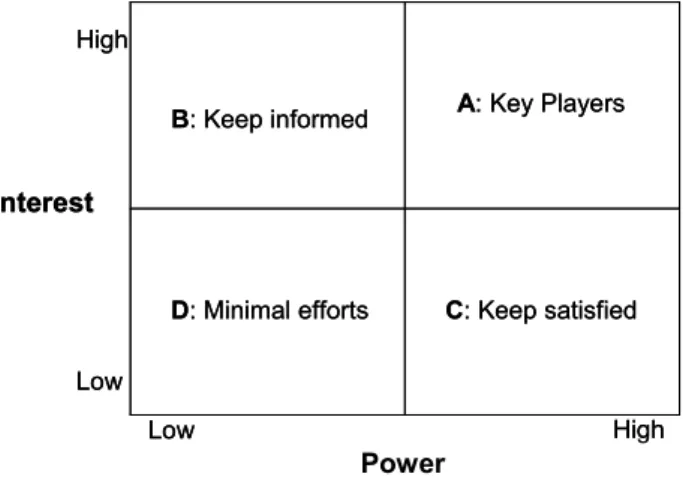
Experience with the model
Based on the list of priorities, it should give substance to the analysis by defining the goals and strategies for the next years or months and setting out a schedule of measures as well as the financial consequences necessary to achieve these goals. The action plan should include stakeholder dialogue (includes stakeholder satisfaction) and translation into business processes.
Some dos and don’ts
Concluding remarks regarding the application of the model
A Staged Approach to Stakeholder Management 179 Ideally, it is best to conduct this stakeholder management process in an organization every two years.
Introduction
The essence of the FLA Model
The work of external monitoring is carried out by independent accredited observers contracted and paid by the FLA. The FLA publishes a report on the company's compliance program and the results of external audits on its website.

Experiences with the model in practice
The participating company then has up to 45 days to internally investigate the alleged non-compliance and demonstrate that it has been resolved, or request that the process be reviewed by the FLA. The FLA will prepare a summary report of the complaint and its progress to date and provide that report to the complainant, the company and the FLA board of directors.
Dos and don’ts
The FLA is aware of the improvements needed and has already taken steps to remediate them. The FLA CSR model, as another CSR organization, generally places the factory manager in a double bind situation.
Concluding remarks regarding the application of the model
Introduction
The increasing number of technologies becoming available is likely to result in a large number of people voicing their concern regarding the potential effects of these technologies. Funds are therefore sought in a number of different domains to ensure appropriate recognition and evaluation of social, cultural, ethical and environmental impacts as well as an effective information dissemination process after appropriate assessment of these impacts.
The essence of the model
Similarly, it is important to assess what new information would be useful for stakeholders to further address each of the impact areas, i.e. the final outcome of the model, after examining the above dimensions, is the resulting thinking of stakeholders regarding social, cultural.
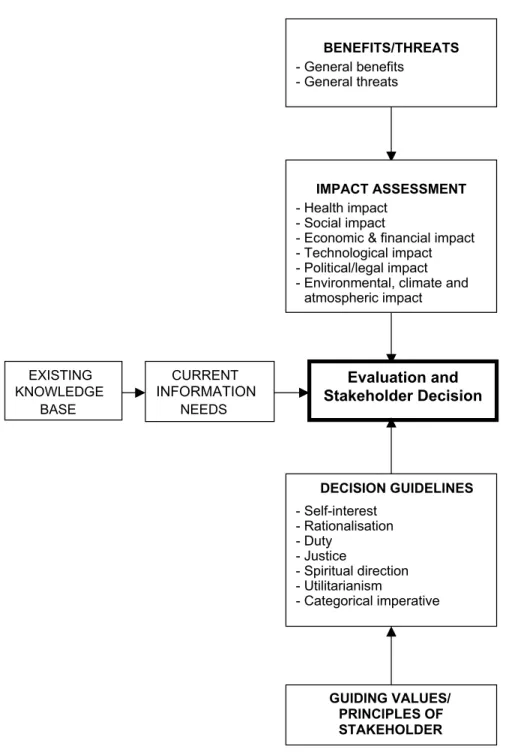
The model in practice
It should be noted that in relation to this model, and of particular concern to the developers and to the New Zealand government, is the question of the cultural impacts of the new technology. When considering the cultural issues affecting new technology, it is usually referred to the dominant culture in evidence.
Implications and conclusions
Through the use of focus groups (N=25) in two geographical locations in New Zealand, the model has since been developed in the form of a written questionnaire (subject to change) to be administered. for a wide range of stakeholders. However, in the New Zealand environment this would be inappropriate given the legal commitment to bi-culturalism and the expressed concerns of indigenous Maori.
Introduction
Description of the model
A company's product management goals and strategies can be described in a stand-alone document or included in a broader environmental policy. There are increasing product stewardship regulations around the world, such as the European Packaging Directive.
Experiences with the model
Waste management is another important aspect of product control for companies involved in packaging or other single-use products consumed outside the home. Some companies conduct surveys or use other methods to gather the views of stakeholders on product stewardship (and other CSR) issues.