This is to certify that the work submitted in the form of a thesis in fulfillment of the requirement for the award of Ph.D degree of Indian Institute of Technology Guwahati by Ganesh Thapa is his original work. I am really indebted to them for their critical analysis of PhD progress with logical questions to give direction to complete my research work.
Summary and Conclusions 82
Construction of expression vector 85
- Functional stress assay of Cd sensitive Δgsh mutant cells
- Expression analysis of Echmr in different abiotic stresses
Expression and Functional HM stress assay of Δgsh mutant
Introduction 103-105
Yeast desiccation tolerance assay 108-109
Subcellular localization of Echmr 119
- Transient expression of Echmr in protoplast 119-120
Functional validation of Echmr gene in yeast
Study of morphological changes in different tissues of Eichhornia crassipes grown in heavy metal polluted areas and evaluation of protein and isoenzyme changes due to metal stress.
Cloning and sequence analysis of heavy metal stress responsive (Echmr) gene from Eichhornia crassipes
ABSTRACT
INTRODUCTION
However, traffic, waste disposal and metal processing industries contribute to the spread of heavy metals in the environment. Hyperaccumulation of heavy metals in some plants has been recorded during the last decades (Barman et al., 2000) and this has emphasized the importance of further advanced research in the molecular basis of phytoremediation technology.
OBJECTIVES
- Overview of Abiotic Stress Responses
- Regulation of Transcription in Abiotic Stress Responses
- Post-Transcriptional Regulation of Abiotic Stress-Inducible Transcripts
- Small RNA-Dependent Gene Regulation in Abiotic Stress
- Stress-Tolerance Mechanisms in Diverse Plant Species
- Strategies in improving abiotic stress tolerance potential
- Perspectives
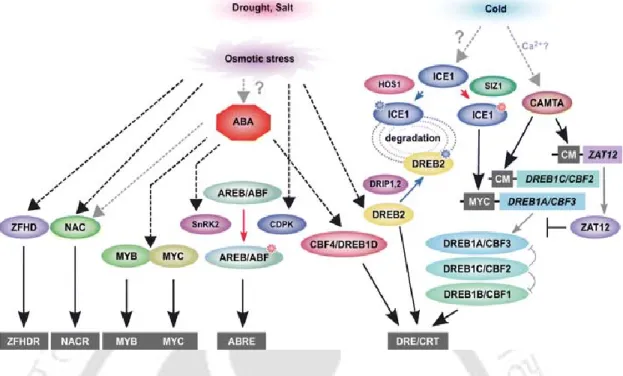
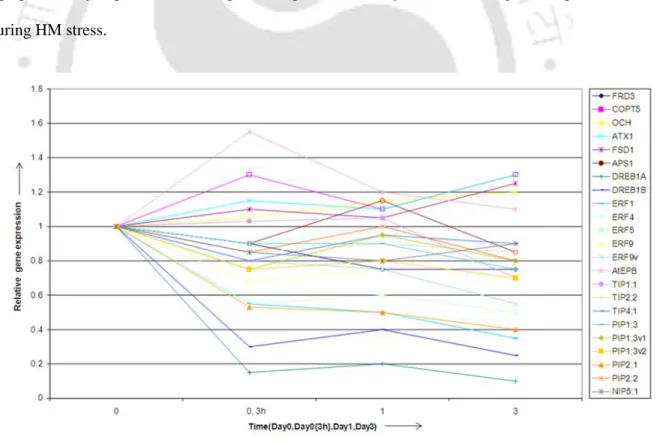
These results have provided a basic picture of gene regulatory networks in abiotic stress responses in plants. For example, RNA helicases are involved in abiotic stress responses in various organisms, including plants (Owttrim, 2006).
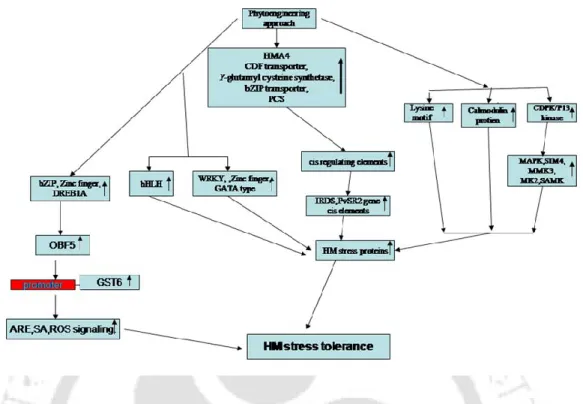
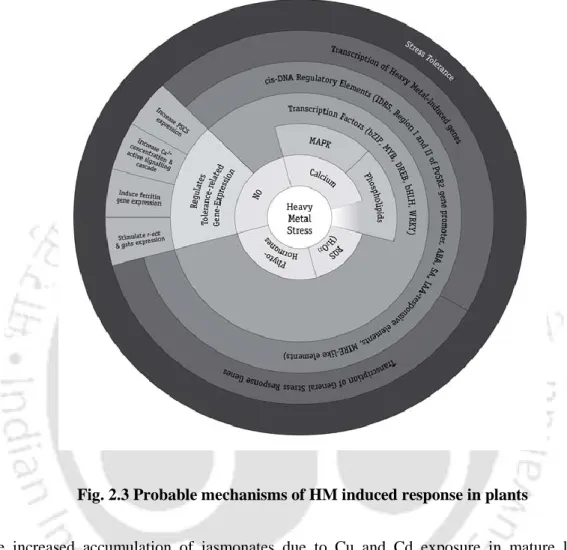
Molecular mechanistic model of plant heavy metal tolerance
- Heavy metal stress response: From sensing to gene regulation
- Key players of HM tolerance/sensitivity engineering
- Heavy Metals sensors
- Heavy metals induced signaling protein kinases
- Heavy metals induced NO signaling
- Hormonal cis-DNA regulatory elements
- Heavy metals responsive transcription factors and cis-regulatory elements
- Conclusion
Members of the ZIP transporter family, IRT1 (iron-regulated transporter) expressed in iron-deficient plants Arabidopsis (Zhao and Eide, 1996) and ZRT1 and ZRT2 (zinc-regulated transporter) high-affinity zinc transporters and low, namely yeasts, were found to absorb other HMs separately. by the transport of Fe(II) across the membrane (Zhao et al., 1996). Auxin-responsive mRNA was detected in Cd-treated Brassica juncea plants ( Minglin et al., 2005 ).
Plant heavy metal stress responsive proteins and Eichhornia crassipes
- Glutathione and heavy metal stress tolerance in plants
- Phytochelatins and Plant metal hypertolerance
- Heat shock proteins and heavy metals
- Metallothioneins
- Heavy metals induced aquaporins/transporters
- Water hyacinth-A hyperaccumulator
- Perspectives for heavy metal stress tolerance
Grx is one of the important components in redox-mediated developmental processes, such as flowering (Xing et al., 2006). Members of the P1B-ATPase family are involved in the transport of HM ions in higher plants (Baxter et al., 2003; Williams and Mills, 2005).
INTRODUCTION
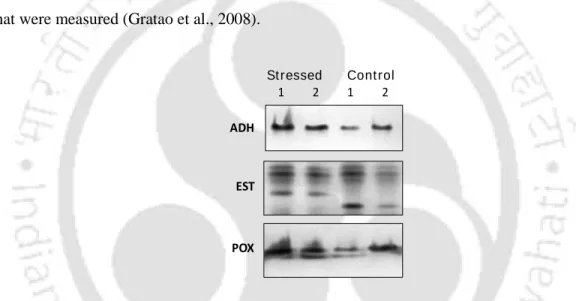
The expression of antioxidant enzymes such as superoxide dismutase (SOD), aldehyde dehydrogenase (ADH), esterase (EST), peroxidase (POX) and catalase (CAT) play a crucial role in scavenging ROS and providing nutrition to stressed plants (Gupta et al . ., 1999). A significant induction of antioxidant enzymes (POX and CAT) along with an increase in protein, lipid peroxidation and GSH levels was observed in response to cadmium chloride (CdCl2) in rice seedlings (Yu et al., 2000 ). Although, Eichhornia as a biosorbent of heavy metal ions has been reported (Schneider et al., 1995; Sabale et al., 2010), but correlative studies with soil HM pollution and plant changes at the morphological, protein and antioxidant enzymes level are not done. .
Materials and Methods
- Eichhornia plant, soil and water samples
- Physical parameters of the samples .1 Sieving analysis of soil
- AAS analysis
- XRD analysis
- SEM analysis
- Morphological imprinting
- Biochemical parameters of the samples .1 Protein and isozyme analysis
- Statistical analysis
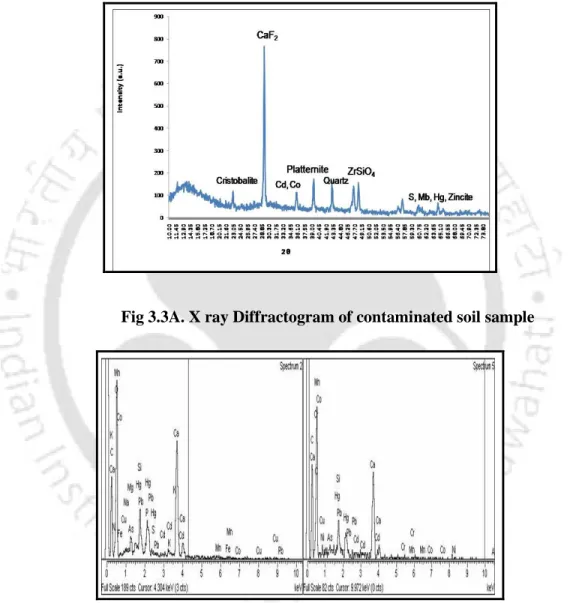
The composition of HM in a sample of waste soil at landfills was characterized with a fully automatic XRD powder AXS D8 ADVANCE using a non-destructive technique. A scanning electron microscope (SEM, Leo 1430vp) was used to study the microstructure of soils contaminated with HM. An aliquot of the supernatant was used to estimate the amount of protein according to the Bradford method (Bradford 1976).
Results and Discussion
- Mineralogical characterization of soil samples
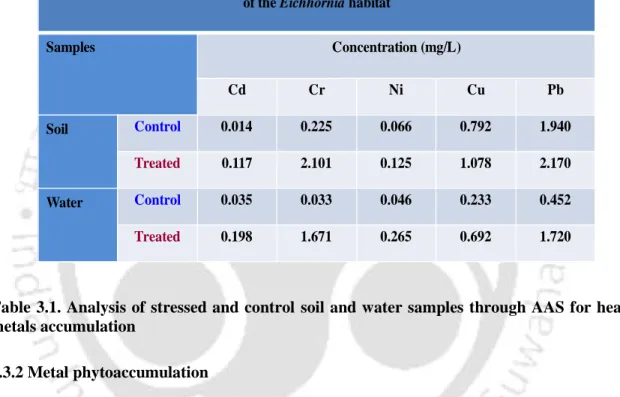
- Metal phytoaccumulation
- Morphological changes in Eichhornia during HMs stress
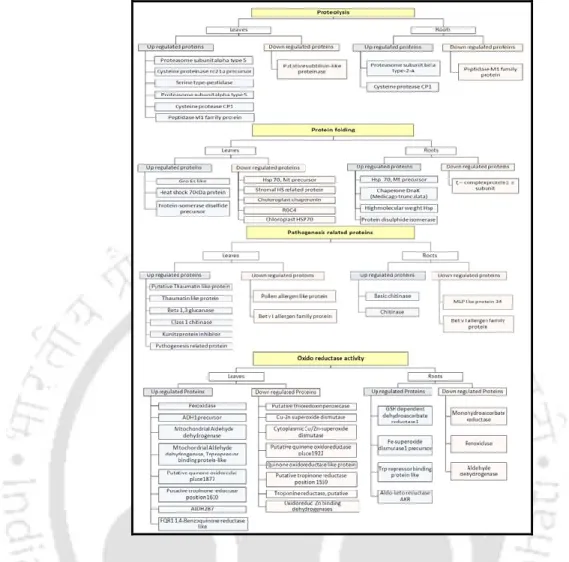
- Protein profile changes in Eichhornia
- Isozymic profile in HMs stress
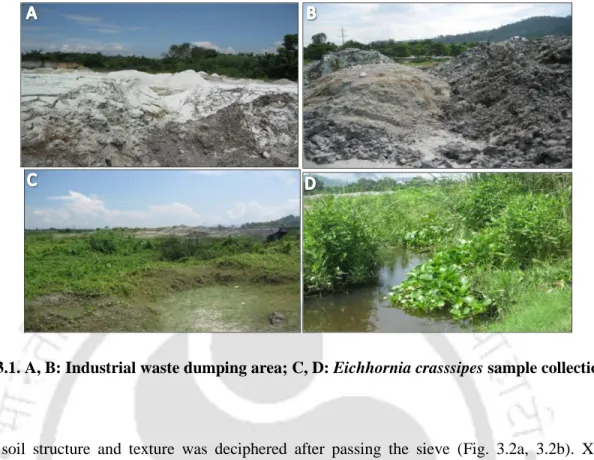
The AAS analysis of the soil and water sample collected from landfill and control areas shows that there is a significant difference in the HMs concentration (P<0.05). It was found that there is a significant difference in the protein profile of the control and stressed shoot of Eichhornia (Fig 3.6). High soil Cd concentration has been reported to drastically alter the antioxidant system such as SOD, CAT, POX in wheat seedlings (Lin et al., 2007). activity (Rodríguez-Serrano et al 2009).
Summary and conclusions
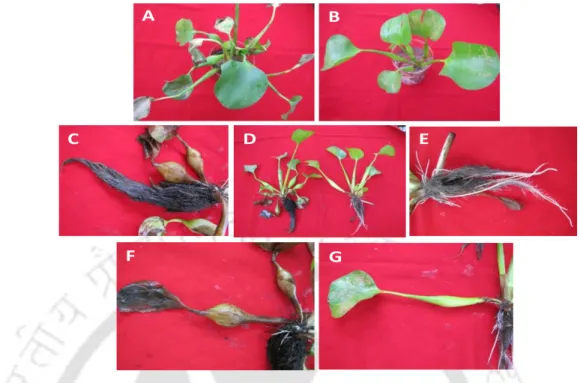
These results indicated a defense strategy of Eichhornia against oxidative stress induced by HMs stress leading to change in the expression of antioxidant enzymes. Different morphological changes along with altered protein and isozyme profile may be another strategy of Eichhornia to cope with HM stress with the synthesis of proteins with specific adaptive functions that remain to be identified. The stress adaptive potential of Eichhornia can be exploited and further tested as a model system to study HM stress tolerance in plants.
Introduction
But GSH depletion was the main mechanism of short-term HM toxicity and tolerance index (Metwally et al., 2005). GSH plays a key role not only in metal detoxification, but also in the protection of plant cells against other environmental stresses, including intrinsic oxidative stress reactions (Memon and Schroder, 2009; Dubreuil-Maurizi et al., 2011). Although various candidate genes from hyperaccumulators have been identified and analyzed at the biochemical and genetic level (Kramer et al., 2007), much remains to be known about the molecular regulation of HM stress tolerance.
Materials and methods
- Eichhornia plant samples, bacterial strains and plasmids
- Cloning of the Echmr gene from Eichhornia crassipes
- Sequence analysis
- Homology and Phylogenetic analysis
- Cis-regulatory elements analysis
- Protein topology and motifs search analysis
- Protein functions and sub-cellular localization prediction
The function and structure prediction of EcHMR was done by I-TASSER: a unified platform for automated protein structure and function prediction (Roy et al., 2010; Zhang 2008). TM-align utilizes the use of dynamic programming and TM-score rotation matrix for protein structure alignment. Then the function prediction was done by COFACTOR, a structure-based method for biological function annotation of protein molecules (Roy et al., 2012; . Roy and Zhang, 2012).
Results and Discussion
- Cloning of the Echmr gene from Eichhornia crassipes
- Homology and phylogenetic analysis
- Cis-regulatory elements analysis
- Protein topology and motifs search analysis
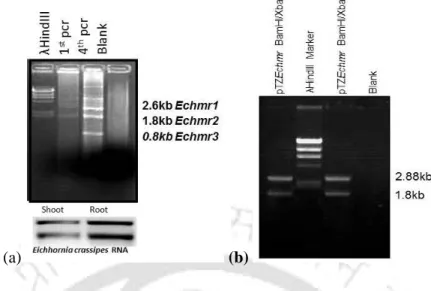
The Echmr gene was found to be closely related to Cd-TDFs, DhSMacDNA, DS AhcDNA, EthyR BfcDNA and Kudzu cDNA, suggesting that the Echmr gene may have a role in HM tolerance and other abiotic stress responses. The presence of various STREs, namely DRE, ABRE, HSE and Calmudilin-binding element in the UTRs of Echmr gene provides a hint about its role in abiotic stress responses. This appeal for the design of stress assay experiments subsequently to check the functionality of the Echmr gene in stress responses.
Isolectric Point 14.3 Charge at PH 7.0
- Protein functions and sub-cellular localization prediction
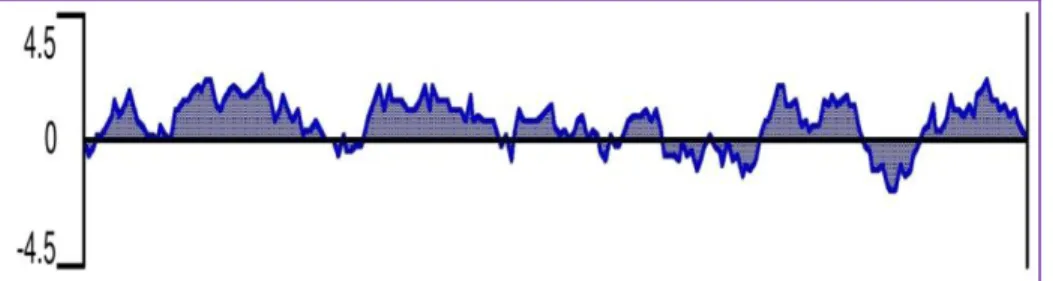
Then, the function of the EcHMR protein was inferred by structural matching of the 3D models with other known proteins. The predicted EcHMR binding site revealed its greatest similarity to the crystal structure of the CorA Mg2+ transporter (PDB hit 2bbhA, Lunin et al 2006) and to the crystal structure of the Ca2+ ATPase pump (PDB hit 2agvA, Obara et al 2005) (Table 4.7). However, a better understanding of the predicted membrane transport protein EcHMR may prove a way to advance HM responses.
Summary and Conclusions
Introduction
Transgenic tobacco expressing GSH1, PCS, and SAT (separately or in combination) increased Cd concentration in roots, suggesting their role in HM stress tolerance in plants (Wawrzyński et al., 2006). Interestingly, Cd exposure also induced a 3–5-fold increase in γ-EC-related peptides in transgenics, but was unable to confer tolerance to Cd stress ( Li et al., 2005 ). Similarly, overexpression of the bacterial gene GSH1 in the cytosol or chloroplast of Populus canescens increased GSH levels and conferred tolerance to HM (Bittsánszkya et al., 2005).
Materials and methods
- Bacterial strains and plasmids
- Construction of expression vector
- Complex thiol assay
- Mode of stress application
- Stress growth assays
- Functional stress assay of Cd sensitive Δgsh mutant cells
- Expression analysis of Echmr in different abiotic stresses
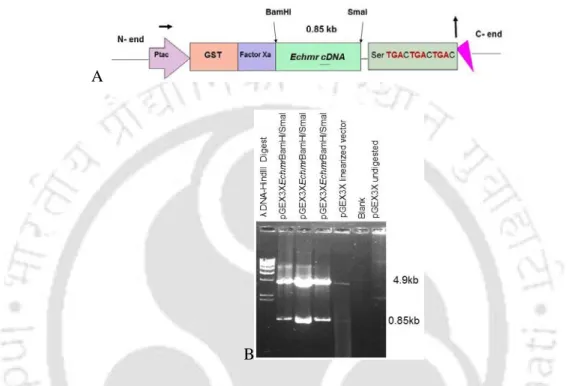
Wild-type strain E. coli W3110 and its Cd-sensitive mutant derivatives ΔgshA and ΔgshB (Helbig et al., 2008a) were grown at 37 °C in LB medium or in Tris-buffered mineral salts medium (Mergeay et al. , 1985 ), which contained 0.2% glycerol and 0.3% caseiamino acids (TMM) with appropriate addition of antibiotics and metals ( Helbig et al 2008b ). The resulting cDNA fragment was cloned into pGEX-3X with T4 DNA ligase (NEB) and the recombinant plasmid pGEX-3X-Echmr was transformed into E. RNA was isolated from mid-exponential phase cells containing plasmids pGEX-3X and pGEX3X- Echmr before and after IPTG induction using TRIzol reagent according to the instructions in the manufacturer's protocol and all RNA samples were quantified (Sambrook and Russell 2001).
Results and Discussion
- Molecular cloning of Echmr gene
- Thiol analysis of E. coli
- Measurement of growth
- Expression and Functional HM stress assay of Δgsh mutant
Therefore, Δgsh E.coli mutants were preferred for functional validation of Echmr for abiotic stress tolerance. Cd and Pb stresses induced a significant and discrete difference in the increase in Echmr gene transcript levels than the non-stressed condition (Figure 5.5). It was recently reported that increasing Cd loading causes a decrease in GSH levels and γ-EC levels in wild-type and ΔgshB cells (Helbig 2008b).
Summary and Conclusions
To reveal the relationship between environmental stresses and Echmr induction, Echmr gene expression was validated by northern analysis (Fig. 5.9). A significant up-regulation of Echmr transcript as observed under different abiotic stresses suggested a stress-dependent regulation of the Echmr gene. These results clearly established that enhanced expression of the Echmr gene from Eichhornia crassipes, a heterologous source, can provide protection in the non-photosynthetic Δgsh mutant E.
Introduction
Yeast Cd factor (YCF1) is the product of a yeast gene that confers Cd tolerance (Szczypka et al. 1994) and is also responsible for GSH conjugate transport activity in yeast (Li et al. The yeast ΔYcf1 mutant was complemented with human MRP1, resulting in both restored GS-conjugate transport activity and Cd2+ tolerance (Tommasini et al. 1996). Furthermore, it was shown that the mechanism responsible for YCF1-induced Cd tolerance involves (GSH)-Cd2+ transport complexes, while phytochelatins ([γ-glu-cys] n-gly) are not accepted (Li et al. 1997).
Material and methods
- Cloning of plant Echmr gene in yeast expression vector
- Yeast transformation
- Yeast competency treatment
- Preparation of DNA solution
- PCR screening of the recombinant yeast colonies
- Northern analysis
- Cd sensitivity assay
- Yeast desiccation tolerance assay
200 ng of total genomic DNA was used for PCR screening of recombinant yeast colonies or wild-type yeast cells. Ten-fold serial dilutions of cells were made and 5 µl of the 10-fold dilution was plated on YPD plates (25 °C, 2 days), in duplicate. Aliquots of 200 µl of yeast cells from all strains were made in MCT and pre-incubated at 28 °C for 1 h.
Results and discussion
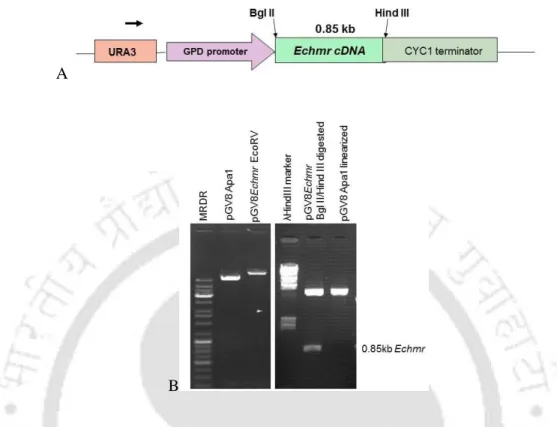
WC, wild-type W303-1A control; WS, wild type W303-1A after CdCl2 stress; ∆ycf1 mutant yeast cells in control medium were used as a control for calculation. WS, wild type W303-1A after CdCl2 stress; ∆ycf1 mutant yeast cells; ∆ycf1 mutant yeast cells complemented with Echmr cDNA; VC, ∆ycf1 mutant harboring vector alone. WC, wild-type FY3 control; WS, wild type FY3 in 4% PEG stress; FY3 yeast cells complemented with Echmr cDNA;.
Summary and conclusions
Introduction
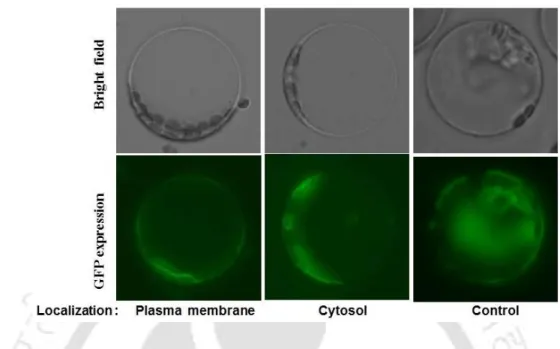
The assignment of the subcellular location of a protein is of utmost importance to biologists in elucidating its role and in refining the intricacies of cellular processes by tracing certain activities to specific organelles (Sadowski et al., 2008). Furthermore, more than 1300 Arabidopsis protein localization results in the SUBA database were outcomes of the GFP-tagged localization studies ( Heazlewood et al., 2007 ). Our results indicate that the ectopic expression of a foreign EcHMR gene together with GFP in the protoplast of Arabidopsis discretely revealed its localization in the plasma membrane or cytosol and this may imply that the EcHMR may have function in the HM stress tolerance.
Materials and Methods
- Growth of Plants
- Transient expression of Echmr in protoplast
- Microscopy
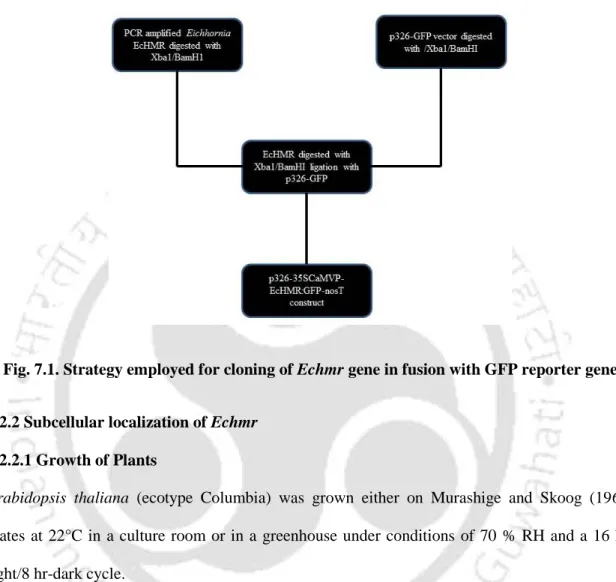
Strategy used to clone the Echmr gene in fusion with the GFP reporter gene 7.2.2 Subcellular localization of Echmr. The protoplasts were repelletized by centrifugation at 55 g for 5 min and resuspended in 20 ml of W5 solution. Protoplasts were recovered by centrifugation at 50 g for 5 min, resuspended in 3 ml of W5 solution and incubated at 22°C in the dark.
Results and Discussion
- Cloning of p326-EcHMR-GFP expression cassette
- Subcellular localization of the EcHMR protein in Arabidopsis protoplast
The aim of this work was to determine the subcellular distribution of EcHMR in the protoplast of Arabidopsis. Stably expressed EcHMR:GFP fusion protein localized predominantly in the plasma membrane or cytosol (Fig. 7.4). The green color represents the localization of EcHMR in the transiently transformed protoplast with 35SCaMVP:Echmr:GFP construct.
Summary and conclusions
Sch¨utzend¨ubel A, Polle A (2002) Plant responses to abiotic stresses: heavy metal-induced oxidative stress and protection by mycorrhization. Xiong J, Fu g, Tao T, Zhu C (2010) Roles of nitric oxide in alleviating heavy metal toxicity in plants. Yadav SK (2010) HMs toxicity in plants: An overview of the role of GSH and phytochelatins in heavy metal stress tolerance of plants.
SUMMARY