Chemistry of Spices
This page intentionally left blank
Chemistry of Spices
Edited by
Villupanoor A. Parthasarathy
Indian Institute of Spices Research Calicut, Kerala, India
Bhageerathy Chempakam
Indian Institute of Spices Research Calicut, Kerala, India
and
T. John Zachariah
Indian Institute of Spices Research Calicut, Kerala, India
CABI is a trading name of CAB International
CABI Head Offi ce CABI North American Offi ce
Nosworthy Way 875 Massachusetts Avenue
Wallingford 7th Floor
Oxfordshire OX10 8DE Cambridge, MA 02139
UK USA Tel: +44 (0)1491 832111 Tel: +1 617 395 4056 Fax: +44 (0)1491 833508 Fax: +1 617 354 6875 E-mail: [email protected] E-mail: [email protected] Website: www.cabi.org
©CAB International 2008. All rights reserved. No part of this publication may be reproduced in any form or by any means, electronically,
mechanically, by photocopying, recording or otherwise, without the prior permission of the copyright owners.
A catalogue record for this book is available from the British Library, London, UK.
Library of Congress Cataloging-in-Publication Data Chemistry of spices / [edited by] V.A. Parthasarathy, B. Chempakam, T. John Zachariah.
p. cm.
Includes bibliographical references and index.
ISBN 978-1-84593-405-7 (alk. paper)
1. Spices--Analysis. 2. Spice plants--Composition. I. Parthasarathy, V.A. II. Chempakam, B., Dr. III. Zachariah, T. John. IV. Title.
SB305.C44 2008 641.3'383--dc22
2007043551 ISBN-13: 978 1 84593 405 7
Typeset by Spi, Pondicherry, India.
Printed and bound in the UK by Biddles Ltd, King’s Lynn.
Contributors vii
Preface ix
1 Introduction 1
V.A. Parthasarathy, B. Chempakam and T. John Zachariah
2 Black Pepper 21 T. John Zachariah and V.A. Parthasarathy
3 Small Cardamom 41 B. Chempakam and S. Sindhu
4 Large Cardamom 59 B. Chempakam and S. Sindhu
5 Ginger 70
T. John Zachariah
6 Turmeric 97
B. Chempakam and V.A. Parthasarathy
7 Cinnamon and Cassia 124 N.K. Leela
8 Clove 146
N.K. Leela and V.P. Sapna
9 Nutmeg and Mace 165 N.K. Leela
10 Coriander 190 V.A. Parthasarathy and T. John Zachariah
11 Cumin 211
Shamina Azeez
12 Fennel 227
Shamina Azeez
Contents
v
13 Fenugreek 242 N.K. Leela and K.M. Shafeekh
14 Paprika and Chilli 260 T. John Zachariah and P. Gobinath
15 Vanilla 287
Shamina Azeez
16 Ajowan 312
T. John Zachariah
17 Star Anise 319
B. Chempakam and S. Balaji
18 Aniseed 331
N.K. Leela and T.M. Vipin
19 Garcinia 342 K.S. Krishnamurthy and V.P. Sapna
20 Tamarind 362 K.S. Krishnamurthy, V.P. Sapna and V.A. Parthasarathy
21 Parsley 376
Shamina Azeez and V.A. Parthasarathy
22 Celery 401
K.S. Krishnamurthy
23 Curry Leaf 413
V.A. Parthasarathy, T. John Zachariah and B. Chempakam
24 Bay Leaf 426
V.A. Parthasarathy, T. John Zachariah and B. Chempakam
Index 435
vi Contents
Indian Institute of Spices Research, Calicut – 673 012, Kerala, India Phone: 0091 – 0495 – 2731410, Fax: 0091 – 0495 – 2730294
E-mail: [email protected], Web site: www.spices.res.in Dr V.A. Parthasarathy, Director
E-mail: [email protected] Division of Crop Production & PHT
Dr B. Chempakam, Principal Scientist & Head E-mail: [email protected]
Dr T. John Zachariah, Senior Scientist – Biochemistry E-mail: [email protected]
Dr N.K. Leela, Senior Scientist – Organic Chemistry E-mail: [email protected]
Dr K.S. Krishnamurthy, Senior Scientist – Plant Physiology E-mail: [email protected]
Dr Shamina Azeez, Senior Scientist – Biochemistry E-mail: [email protected]
Gobinath, P. E-mail: [email protected] Balaji, S. E-mail: [email protected] Sapna, V.P. E-mail: [email protected] Shafeekh, K.M.E-mail: shefi [email protected] Sindhu, S. E-mail: [email protected] Vipin, T.M. E-mail: [email protected]
Contributors
vii
This page intentionally left blank
Spices are woven into the history of nations. The desire to possess and monopolize the spice trade has, in the past, compelled many a navigator to find new routes to spice-producing nations. In the late 13th century, Marco Polo’s exploration of Asia established Venice as the most important trade port. Venice remained prosperous until about 1498. Portuguese explorer Vasco de Gama sailed around Africa’s Cape of Good Hope to reach Calicut, India.
He returned with pepper, cinnamon, ginger and jewels, and also deals for the Portuguese to continue trade with India.
Spices impart aroma, colour and taste to food preparations and sometimes mask unde- sirable odours. The volatile oils from spices give the aroma and the oleoresins impart the taste. There is a growing interest in the theoretical and practical aspects of the inner biosynthetic mechanisms of the active principles in spices, as well as in the relationship between the biological activity and the chemical structure of these secondary metabolites.
The antioxidant properties of herbs and spices are of particular interest in view of the impact of oxidative modification of low-density lipoprotein cholesterol in the develop- ment of atherosclerosis. A range of bioactive compounds in herbs and spices has been studied for anticarcinogenic properties in animals, but the challenge lies in integrating this knowledge to ascertain whether these effects can be observed in humans, and within defined cuisines. Research on the structure activity relationships in spice components has become an exciting field since these compounds play a major role in the culinary, indus- trial and pharmacological fields.
Hence, we have attempted to compile all available information on the chemistry of spice crops such as black pepper, cardamom (small), cardamom (large), ginger, turmeric, cinnamon and cassia, clove, nutmeg and mace, coriander, cumin, fennel, fenugreek, paprika, vanilla, ajowan, star anise, aniseed, garcinia, tamarind, parsley, celery, curry leaf and bay leaf. To edit this book, we have used the current Indian expertise on spices and we have made every effort to collate all available information so that the book will be useful to researchers, industrialists and postgraduate students of agriculture, horticulture and phy- tochemistry. It will also be a very useful resource book for spice traders and processors. We are grateful to CABI for giving us the opportunity to edit this book and we are indebted to Ms Sarah Hulbert of CABI Head Office for her immense help in getting the book into final shape. She has answered an array of e-mails and strings of questions to help us in this ven- ture and we thank her for her patience and assistance.
Preface
ix
x Preface
We appreciate the help rendered by Mr A. Sudhakaran, artist-cum-photographer of IISR, Calicut, Kerala, for designing the cover page. The help given by Ms T.V. Sandhya in typesetting the manuscript is gratefully acknowledged. We also thank the Director of the Indian Institute of Spices Research, Calicut, India, for providing photographs of the spices.
V.A. Parthasarathy B. Chempakam T.J. Zachariah
1 Introduction
V.A. Parthasarathy, B. Chempakam and T. John Zachariah
Spices and herbs have played a dramatic role in civilization and in the history of nations. The delightful flavour and pun- gency of spices make them indispensable in the preparation of palatable dishes. In addition, they are reputed to possess several medicinal and pharmacological properties and hence find position in the preparation of a number of medicines.
1.1. Historical Perspective
Many maritime routes were developed to India and China with an ultimate desire to develop a spice route. In the late 13th century, Marco Polo’s exploration of Asia established Venice as the most important trade port. Venice remained prosperous until about 1498. The Portuguese explorer, Vasco de Gama, sailed around Africa’s Cape of Good Hope to reach Calicut, India. He returned with pepper, cinnamon, ginger and jewels, and also deals for the Portuguese to continue trade with India.
Rosengarten (1969) has presented a very interesting history of spices. In 1492, Christopher Columbus arrived in America while searching for a direct western route to the Spice Islands. Though he did not find the Spice Islands, Columbus brought allspice,
vanilla and red peppers from the West Indies back to his Spanish supporters. Conflict developed over who would dominate this prosperous trade. Wars over the Indonesian Spice Islands broke out between the expand- ing European nations and continued for about 200 years, between the 15th and 17th centuries.
In 1780, the Dutch and English fought a war over the spice trade and the Dutch lost all spice trading centres. The Americans began their entry into the world spice race in 1672 (ASTA, 1960).
From the beginning of history, the strongest nations have controlled the spice trade. The same is true today; the USA is now the world’s major spice buyer, followed by Germany, Japan and France.
In short, the trade in spices, usually carried out along the many historic spice routes, has been one of the most important commercial activities throughout ancient and modern times. The importance placed on spices is reflected by economic devel- opments that began early in many ancient civilizations, where spices found applica- tions in food preservation, cooking and trad- itional medicine.
Asia still grows most of the spices that once ruled the trade, including cinnamon, pepper, nutmeg, clove and ginger. However, more and more spices are being planted in
©CAB International 2008. Chemistry of Spices
(eds V.A. Parthasarathy, B. Chempakam and T.J. Zachariah) 1
2 V.A. Parthasarathy et al.
the Western hemisphere, along with a wide variety of herbs and aromatic seeds. Brazil is a major supplier of pepper. Guatemala is a leading producer of cardamom. Grenada grows nutmeg and ginger, and allspice is grown in Jamaica. Nicaragua, El Salvador and the USA grow sesame seed. Europe and the USA produce many herbs and Canada grows several aromatic seeds.
1.2. Global Spice Trade
The major markets in the global spice trade are the USA, the European Union, Japan, Singapore, Saudi Arabia and Malaysia. The principal supplying countries are China, India, Madagascar, Indonesia, Vietnam, Brazil, Spain, Guatemala and Sri Lanka. During the review period from 2000 to 2004, the value of spice imports increased by an average of 1.9% per year and the volume increased by 5.9%. World trade in spices in 2004 consisted of 1.547 million t, valued at US$2.97 bil- lion. An annual average rate of 7% was seen in the global import volume of spices in the period 2000–2002, whereas the import values decreased by 5% annually. This was attrib- uted to the dramatic decrease in the value of whole pepper during 2000/01 by about 40%
and a further 18% in 2002/03 (Table 1.1).
Higher market prices for major commodi- ties such as paprika, vanilla, ginger, bay leaves and spice mixtures resulted in an upward value trend by 4.6% from 2003 to 2004, with a stabilized import volume. There was a growing trend towards the trade of processed spices, which fetched higher prices. The increasing demand for value-added process- ing of spices, such as capsicum and ginger, offers business opportunities for the food and extraction industries in international markets (International Trade Centre, 2006).
World import for black pepper achieved only minor increases in volume during 2000–2004. On average, 260,000 t of black pepper is imported yearly into the global market. While growth in volume trade rose marginally, import values for whole pep- per declined steeply by 54% from US$854 million to US$394 million in that period,
resulting in lower world prices for pepper.
Vietnam, Indonesia, Brazil, Malaysia and India are the major producers and export- ers of black pepper. With an export volume of 96,113 t, valued at US$136.6 million in 2004, Vietnam is the world’s largest exporter in the black pepper trade.
In the case of ginger, Japan is the number one importer in the world. Japan’s imports of ginger reached more than 100,000 t, valued at US$126 million, which accounted for 50%
of the country’s total spice imports in 2004.
The principal supplier of quality ginger to the Japanese market is China, with exports exceeding 70,000 t, valued at US$93 million, followed by Thailand with 26,000 t.
Vanilla is the second most expensive spice after saffron because its production is very labour-intensive. The world market for vanilla is highly concentrated in the USA, France and Germany. In 2004, US imports of vanilla amounted to US$205 million, followed by France and Germany (US$44 million and US$36 million, respectively).
These importing countries represent 72.5%
of the world vanilla trade.
As an average, import values of nut- meg, mace and cardamom decreased by 7%
annually, whereas volumes recorded a slight increase over 2000–2004. Imports of carda- mom made up 60% and nutmeg and mace 40% of the total import value of US$204 million in 2004.
International trade in mixed spices (curcuma, turmeric and curry powder, laurel leaves, curry paste, dill and fenugreek seeds) grew by 5% and 11% in volume and value terms, respectively, in 2003/04. The main importing countries were the USA, Belgium, Germany, the Netherlands and the UK. India supplied 14% of the total import value of this spice category to the US and UK markets in 2004.
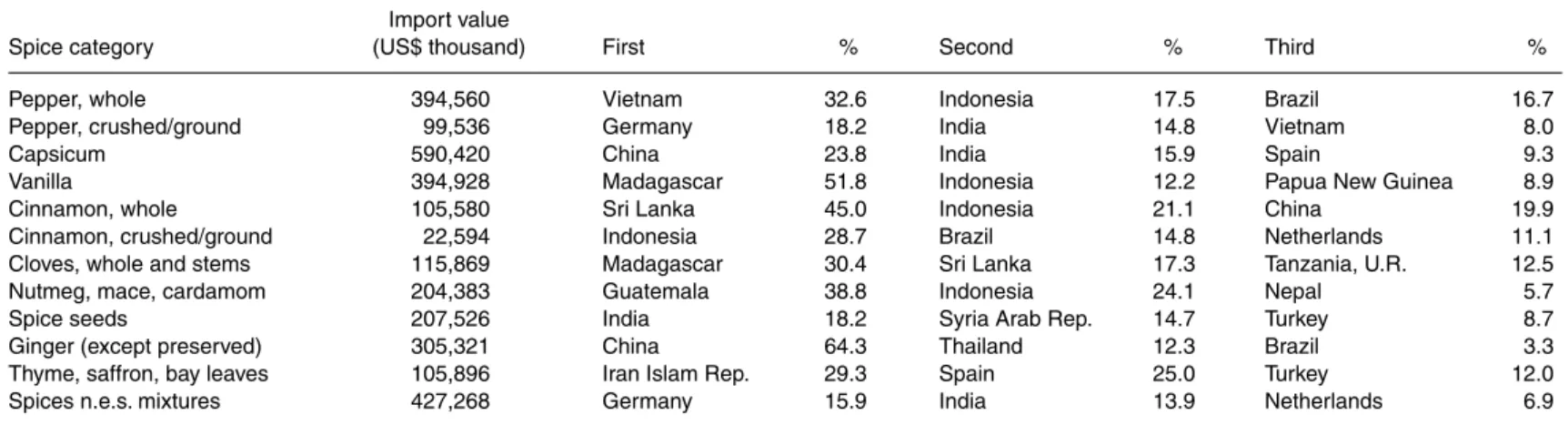
Table 1.2 shows the exports and market shares of the leading spice producing coun- tries during 2000–2004. These major export- ers account for a value share of more than 55% in the 2004 world import trade of spices. In terms of export competitiveness, China has emerged as the principal exporter.
Its export share increased sharply in 2003/04 to 13.2%, up from 9.7%, surpassing India
Introduction 3 Table 1.1. World imports of different spices.
Quantity (thousand t) Value (US$ million)
Spice category 2000 2001 2002 2003 2004 2000 2001 2002 2003 2004 Pepper, whole 216.1 228.9 246.6 228.8 237.0 854.3 492.3 402.4 425.1 394.6 Pepper, crushed/ground 23.7 22.1 27.4 30.5 32.4 95.0 72.1 75.4 92.3 99.5 Total pepper 239.8 251.0 274.0 259.3 269.4 949.3 564.4 477.8 517.4 494.1 Capsicum 230.7 273.1 324.8 350.1 371.0 370.6 426.1 453.5 492.0 590.4
Vanilla 4.3 4.4 6.8 5.0 3.5 108.2 240.7 308.5 535.9 394.9
Cinnamon, whole 73.4 68.3 78.4 70.4 75.2 108.6 108.1 106.5 100.1 105.6 Cinnamon, crushed/ground 9.8 10.1 13.4 13.0 13.2 16.7 16.2 20.2 20.6 22.6 Total cinnamon 83.2 78.4 91.8 83.4 88.4 125.3 124.3 126.7 120.7 128.2 Cloves, whole and stems 50.3 53.1 29.5 50.3 43.9 148.2 148.2 124.1 101.2 115.9 Nutmeg, mace, cardamom 42.2 41.9 46.3 50.1 47.5 279.9 279.9 236.9 215.6 204.4 Spice seeds 201.2 186.4 207.0 213.8 220.3 207.8 207.8 207.0 201.3 207.5 Ginger (except preserved) 213.7 234.1 236.2 313.8 284.1 206.6 206.6 143.1 177.9 305.3 Thyme, saffron, bay leaves 15.3 17.9 18.3 20.1 20.6 77.9 77.9 80.0 95.9 106.9 Other spice mixtures 173.5 249.2 202.0 189.5 198.4 292.7 292.7 321.6 383.3 427.3 Total spice imports 1254.0 1389.6 1436.7 1535.4 1547.2 2766.5 2766.5 2479.2 2841.2 2973.9 Source: International Trade Centre (2006).
4V.A. Parthasarathy et al.
Table 1.2. Main spice-exporting countries by commodity; value and percentage share, 2004.
Import value
Spice category (US$ thousand) First % Second % Third %
Pepper, whole 394,560 Vietnam 32.6 Indonesia 17.5 Brazil 16.7
Pepper, crushed/ground 99,536 Germany 18.2 India 14.8 Vietnam 8.0
Capsicum 590,420 China 23.8 India 15.9 Spain 9.3
Vanilla 394,928 Madagascar 51.8 Indonesia 12.2 Papua New Guinea 8.9 Cinnamon, whole 105,580 Sri Lanka 45.0 Indonesia 21.1 China 19.9 Cinnamon, crushed/ground 22,594 Indonesia 28.7 Brazil 14.8 Netherlands 11.1 Cloves, whole and stems 115,869 Madagascar 30.4 Sri Lanka 17.3 Tanzania, U.R. 12.5 Nutmeg, mace, cardamom 204,383 Guatemala 38.8 Indonesia 24.1 Nepal 5.7 Spice seeds 207,526 India 18.2 Syria Arab Rep. 14.7 Turkey 8.7 Ginger (except preserved) 305,321 China 64.3 Thailand 12.3 Brazil 3.3 Thyme, saffron, bay leaves 105,896 Iran Islam Rep. 29.3 Spain 25.0 Turkey 12.0 Spices n.e.s. mixtures 427,268 Germany 15.9 India 13.9 Netherlands 6.9 Note: n.e.s. = not elsewhere specified.
Introduction 5
with 8.6%, followed by Madagascar 8.2%, Indonesia 7.3%, Vietnam 5.1%, Brazil 4.1%, Spain 3.1%, Guatemala and Sri Lanka 2.8%.
Table 1.3 shows the rankings of the top three exporting countries of individual spices to international markets.
Developing countries, including least developed countries, supply about 55%
of spices to global markets. The USA, the European Union, Japan and Singapore are among the major markets, accounting for about 64% of the world import share of spices.
Germany, the Netherlands and Singapore are significant re-exporters in the spice trade.
Apart from competing for markets, developing country producers and export- ers face many challenges, including that of quality issues. Spice exports are subject to strict quality standards for food safety set by the American Spice Trade Association (ASTA) and the European Spice Association (ESA). Demand is growing for high quality and processed spices. This trend for value- added products offers new business oppor- tunities in the spice trade.
Global production of spices
Table 1.4 gives the major spice-producing areas in the world, while Table 1.5 shows the
area and production of important spices in the world. Compared with many other field and horticultural crops, area and production of spices is limited. The FAO database gives the area and production of a limited number of spices only. Spices were cultivated in an area of 7587.02 thousand ha, with a produc- tion of 31,859.69 thousand t during 2005.
The world export of spices during 2005 was 3592.48 thousand t and import was 3454.40 thousand t (Anon., 2007).
1.3. Major Compounds in Spices Spices impart aroma, colour and taste to food preparations and sometimes mask undesirable odours. Volatile oils give the aroma, and oleoresins impart the taste.
Aroma compounds play a significant role in the production of flavourants, which are used in the food industry to flavour, improve and increase the appeal of their products. They are classified by functional groups, e.g. alcohols, aldehydes, amines, esters, ethers, ketones, terpenes, thiols and other miscellaneous compounds. In spices, the volatile oils constitute these compo- nents (Zachariah, 1995; Menon, 2000).
In black pepper, caryophyllene-rich oils possess sweet floral odours, whereas oils Table 1.3. Main spice-importing countries by commodity; value and percentage share, 2004.
Import
value (US$
Spice category thousand) First % Second % Third % Pepper 494,096 USA 23.1 Germany 10.9 Netherlands 5.3 Capsicum 590,420 USA 23.6 Malaysia 7.6 Germany 7.1 Vanilla 394,928 USA 51.9 France 11.3 Germany 9.3 Cinnamon 128,174 Mexico 21.0 USA 16.9 India 6.0 Cloves 115,869 Singapore 46.3 India 23.7 Malaysia 7.1 Nutmeg, mace, 204,383 Saudi 25.0 India 8.0 Netherlands 8.0 cardamom Arabia
Spice seeds 207,526 USA 11.1 Germany 8.4 Malaysia 6.5 Ginger (except 305,321 Japan 41.2 USA 12.1 Pakistan 6.2 preserved)
Thyme, saffron, 105,896 Spain 20.2 USA 13.9 Italy 8.0 bay leaves
Spices n.e.s. 427,266 USA 13.0 Belgium 7.8 Germany 6.8 mixtures
Note: n.e.s. = not elsewhere specified.
6 V.A. Parthasarathy et al.
Table 1.4. Spice-producing areas.
Spices Botanical name Edible part(s) Major source/origin Ajowan Trachyspermum ammi Seed Persia and India (L.) Sprague
Aniseed Pimpinella anisum L. Fruit Mexico, The Netherlands,
Spain
Basil Ocimum basilicum L. Sweet, leaf France, Hungary, USA, Serbia and Montenegro Bay leaf Laurus nobilis L. Leaf Turkey, USA, Portugal Cardamom Elettaria cardamomum Fruit India, Guatemala
White et Mason
Large Amomum subulatum Roxb. Fruit India, Nepal, China cardamom
Cassia Cinnamomum cassia Stem, bark China, Indonesia, (L.) Presl South Vietnam Celery Apium graveolens L. Fruit France, India
Chilli Capsicum frutescens L. Fruit Ethiopia, India, Japan, Kenya, Mexico, Nigeria,
Pakistan, Tanzania, USA
Cinnamon Cinnamomum verum syn. Stem, bark Sri Lanka, India C. Zeylanicum
Clove Syzygium aromaticum Buds Indonesia, Malaysia, (L.) Merr. et Perry Tanzania
Coriander Coriandrum sativum L. Fruit Argentina, India, Morocco,
Romania, Spain,
Serbia and Montenegro Cumin Cuminum cyminum L. Fruit India, Iran, Lebanon Curry leaf Murraya koenigii Spreng Leaf India, Burma
Dill Anethum graveolens L. Fruit India
Fennel Foeniculum vulgare Mill. Fruit Argentina, Bulgaria, Germany, Greece, India, Lebanon Fenugreek Trigonella foenum-graecum L. Fruit India
Garcinia Garcinia cambogia Fruit India, Sri Lanka Garlic Allium sativum L. Bulb/clove Argentina, India Ginger Zingiber officinale Rosc. Rhizome India, Jamaica, Nigeria,
Sierra Leone
Mint Mentha piperita L. Leaf/terminal Bulgaria, Egypt, France, shoot Germany, Greece,
Morocco, Romania,
Russia, UK
Mustard Brassica nigra (L.) Koch Seed Canada, Denmark, Ethiopia, UK, India Nutmeg Myristica fragrans Houtt. Aril/seed Grenada, Indonesia, India
kernel
Onion Allium cepa L. Bulb Argentina, Romania, India Oregano Origanum vulgare L. Leaf Greece, Mexico
Paprika Capsicum annuum L. Fruit Bulgaria, Hungary, Morocco, Portugal, Spain, Serbia and
Montenegro
Parsley Petroselinum crispum (Mill) Leaf Belgium, Canada, France, Nyman ex A.W. Hill Germany, Hungary Black pepper Piper nigrum L. Fruit Brazil, India, Indonesia,
Malaysia, Sri Lanka,
Vietnam
Continued
Introduction 7
with high pinene content give turpentine- like off-odours (Lewis et al., 1969). The major compounds in fresh pepper are trans- linalool oxide and α-terpineol, whereas dry black pepper oil contains α- and β-pinenes, d-limonene and β-caryophyllene as major components.
In cardamom, the oil has very little mono- or sesquiterpenic hydrocarbons and is dominated by oxygenated compounds, all of which are potential aroma com- pounds. While many of the identified com- pounds (alcohols, esters and aldehydes) are commonly found in many spice oils (or even volatiles of many different foods), the
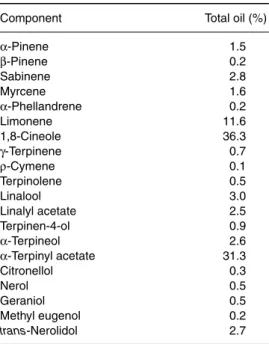
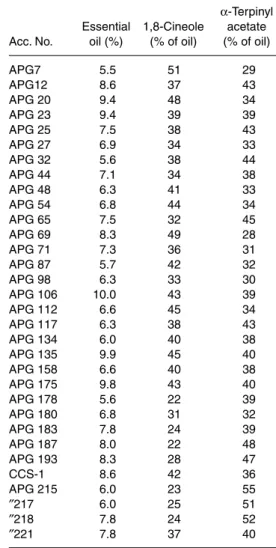
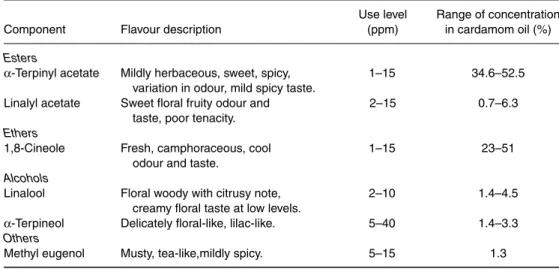
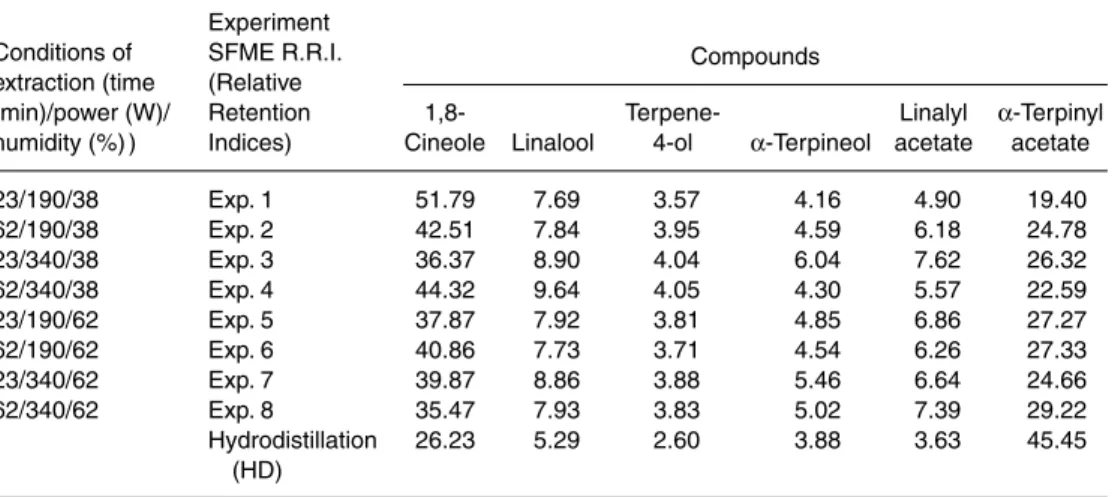
dominance of the ether, 1,8-cineole, and the esters, α-terpinyl and linalyl acetates in the composition make the cardamom volatiles a unique combination (Lewis et al., 1966; Salzer, 1975; Korikanthimath et al., 1997).
Ginger owes its characteristic orga- noleptic properties to two classes of con- stituents: the odour and the flavour of ginger are determined by the constituents of its steam- volatile oil, while the pun- gency is determined by non-steam-volatile components, known as the gingerols. The steam-volatile oil comprises mainly of ses- quiterpene hydrocarbons, monoterpene Table 1.4.Continued
Spices Botanical name Edible part(s) Major source/origin Poppy Papaver somniferum L. Seed The Netherlands, Poland,
Romania, Turkey, Russia
Rosemary Rosmarinus officinalis L. Leaf, terminal France, Spain, USA, shoot Serbia and Montenegro Saffron Crocus sativus L. Pistil of flower Spain
Sage Salvia officinalis L. Leaf Albania, Serbia and Montenegro Star anise Illicium verum Hooker fil. Fruit China, North Vietnam Tamarind Tamarindus indica L. Fruit Indonesia, Vietnam Thyme Thymus vulgaris L. Leaf France, Spain
Turmeric Curcuma longa L. Rhizome China, Honduras, India,
Indonesia, Jamaica
Vanilla Vanilla planifolia Andrews Fruit/beans Indonesia, Madagascar,
Mexico, India
Source: cookingsecrets.org/herbs-spices/spice-producing-areas.
Table 1.5. Area and production of important spices in the world.
Spice(s) Area (thousand ha) Production (thousand t) Anise, badian, fennel, coriander 661.16 467.86 Chillies and peppers (dry) 2,004.81 2,662.73 Chillies and peppers (green) 1,725.54 24,803.01 Cinnamon (canella) 176.98 134.8
Cloves 466.08 145.18
Ginger 338.9 1,119.74
Nutmeg, mace and cardamom 222.89 74.02 Pepper (Piper sp.) 473.55 407.41
Vanilla 76.44 10.36
Other spices 1,440.67 2,034.58
Total 7,587.02 31,859.69
Source: FAO database (2007).
8 V.A. Parthasarathy et al.
hydrocarbons and oxygenated monoterpe- nes (Purseglove et al., 1981). The monot- erpene constituents are believed to be the most important contributors to the aroma of ginger and are more abundant in the nat- ural oil of the fresh (‘green’) rhizome than in the essential oil distilled from dried ginger.
Oxygenated sesquiterpenes are relatively minor constituents of the volatile oil, but appear to be significant contributors to its flavour properties. The major sesquiterpene hydrocarbon constituent of ginger oil is (-)- α-zingiberene. Australian ginger oil has a reputation for possessing a particular ‘lem- ony’ aroma, due to its high content of the isomers, neral and geranial, often collec- tively referred to as citral (Wohlmuth et al., 2006).
Cinnamon possesses a delicate, spicy aroma, which is attributed to its volatile oil.
Volatile components are present in all parts of cinnamon and cassia. They can be clas- sified broadly into monoterpenes, sesquit- erpenes and phenylpropenes (Senanayake, 1997). The oil from the stem bark contains 75% cinnamaldehdyde and 5% cinnamyl acetate, which contribute to the flavour (Angmor et al., 1972; Wijesekera, 1978;
Krishnamoorthyet al., 1996).
The minor constituents like methyl amyl ketone, methylsalicylate, etc., are responsi- ble for the characteristic pleasant odour of cloves. The oil is dominated by eugen ol (70–85%), eugenyl acetate (15%) and b-caryophyllene (5–12%), which together make up 99% of the oil. b-Caryophyllene, which was earlier thought of as an artefact of distillation, was first reported as a con- stituent of the bud oil by Walter (1972).
The volatile oil of nutmeg constitutes the compounds: monoterpene hydrocarbons, 61–88%; oxygenated monoterpenes, i.e.
monoterpene alcohols, monoterpene esters;
aromatic ethers; sesquiterpenes, aromatic monoterpenes, alkenes, organic acids and miscellaneous compounds. Depending on the type, its flavour can vary from a sweetly spicy to a heavier taste. The oil has a clove- like, spicy, sweet, bitter taste with a terpeny, camphor-like aroma.
Among the seed spices, cumin fruits have a distinctive bitter flavour and strong,
warm aroma due to their abundant essen- tial oil content. Of this, 40–65% is cumi- naldehyde (4-isopropylbenzaldehyde), the major constituent and important aroma compound, as also the bitterness com- pound reported in cumin. The odour is best described as penetrating, irritating, fatty and overpowering, curry-like, heavy, spicy, warm and peristent, even after drying out (Weiss, 2002). The characteristic flavour of cumin is probably due to dihydrocuminal- dehyde and monoterpenes.
In the mature fruit of fennel, up to 95%
of the essential oil is located in the fruit, greater amounts being found in the fully ripe fruit. Hydrodistillation yields 1.5–3.5%.
Generally, anethole and fenchone are found more in the waxy and ripe fruits than in the stems and leaves (Akgül, 1986; Kruger and Hammer, 1999). Anethole has flavouring properties and is distinctly sweet, being 13 times sweeter than sugar.
As for coriander, in the unripe fruits and the vegetative parts of the plant, aliphatic aldehydes predominate in the steam- volatile oil and are responsible for the peculiar aroma. On ripening, the fruits acquire a more pleasant and sweet odour and the major constituent of the volatile oil is the monoter- pene alcohol, linalool. Sotolon (also known as sotolone, caramel furanone, sugar lactone and fenugreek lactone) is a lactone and an extremely powerful aroma compound and is the major aroma and flavour component of fenugreek seeds (Mazza et al., 2002).
Among the leafy spices, 45 aroma vola- tiles of desert parsley have been identified, with the major constituents as myristicin, apiole, b-phellandrene, p-mentha-1,3,8- triene and 4-isopropenyl-1-methylbenzene (MacLeodet al., 1985). Among these, apiole in particular has a desirable parsley odour character. The leaf stems of celery show three main constituents of volatiles, e.g. apiole (about 23%), 3-butylphthalide (about 22%) and sedanolide (about 24%). The last two possess a strong characteristic celery aroma (MacLeod et al., 1988). Limonene (40.5%), β-selinene (16.3%), cis-ocimene (12.5%) and β-caryophyllene (10.5%) are some of the vola- tile oil constituents present in celery leaves from Nigeria (Ehiabhi et al., 2003).
Introduction 9
The curry leaf plant is highly valued for its characteristic aroma and medicinal value (Philip, 1981). A number of leaf essential oil constituents and carbazole alkaloids have been extracted from the plant (Mallavarapu et al., 1999). There are a large number of oxy- genated mono- and sesquiterpenes present, e.g.cis-ocimene (34.1%), α-pinene (19.1%), γ-terpinene (6.7%) and β-caryophyllene (9.5%), which appear to be responsible for the intense odour associated with the stalk and flower parts of curry leaves (Onayade and Adebajo, 2000). In fresh bay leaves, 1, 8-cineole is the major component, together withα-terpinyl acetate, sabinene, α-pinene, β-pinene, β-elemene, α-terpineol, linalool and eugenol (Kilic et al., 2004).
The major chemical constituents in spices are tabulated in Table 1.6.
1.4. Value Addition and New Product Development
Farm-level processing operations are the most important unit operations for value addition and product diversification of spices. It is essential that these operations ensure proper conservation of the basic qual- ities like aroma, flavour, pungency, colour, etc. Each of these operations enhances the quality of the prod uce and the value of the spice. The clean raw materials form the basis for diversified value-added products.
The first spice oil and oleoresin indus- try was started in 1930 in India at Calicut by a private entrepreneur. Extracts of gin- ger were manu factured during the Second World War. The major oils are from black pepper, cardamom, chilli seed, capsicum, paprika, clove, nutmeg, mace, cinnamon, cassia, kokkam, galangal, juniper and pep- permint (Guenther, 1950). Pepper oil, ginger oil, celery seed oil, kokkam oil and pepper- mint are the major oils exported from India.
Oleoresins exported are from black pepper, cardamom, chillies, capsicum, paprika, ginger, turmeric, white pepper, coriander, cumin, celery, fennel, fenugreek, mustard seed, garlic, clove, nutmeg, mace, cinna- mon, cassia, tamarind, galangal, rosemary
and curry powder oleoresins. Table 1.7 lists the value-added products from major spices.
1.5. Pharmacological aspects Chemopreventive and anticancerous Recent advances in our understanding at the cellular and molecular levels of carcinogen- esis have led to the development of a prom- ising new strategy for cancer prevention, that is, chemoprevention. Chemoprevention is defined as the use of specific chemical substances – natural or synthetic, or their mixtures – to suppress, retard or reverse the process of carcinogenesis. It is one of the novel approaches of controlling cancer alternative to therapy, which has some limi- tations and drawbacks in the treatment of patients (Stoner and Mukhtar, 1995; Khafif et al., 1998; Kawamori et al., 1999; Bush et al., 2001; Jung et al., 2005).
The chemopreventive and biopro- tectant property of curcumin in turmeric increases cancer cells’ sensitivity to certain drugs commonly used to combat cancer, rendering chemo therapy more effective.
It also possesses strong antimicrobial and antioxidant activity and may slow down other serious brain diseases like multiple sclerosis and Alzheimer’s disease (Lim et al., 2001). The specific inhib ition of HIV- 1 integrase by curcumin suggests strategies for developing antiviral drugs based on cur- cumin as the lead compound for the devel- opment of inhibitors of HIV-1 integrase (Li et al., 1993). The effect of polyacetylenes in celery leaves towards human cancer cells, their human bioavailability and their ability to reduce tumour formation in a mammalian in vivo model indicates that they may also provide benefits for health (Christensen and Brandt, 2006).
In star anise, the presence of a prenyl moiety in the phenylpropanoids plays an important role in antitumour-promoting activ- ity. Hence, the prenylated phenylpropanoids might be valuable as a potential cancer chem- opreventive agent (Padmashree et al., 2007).
10 V.A. Parthasarathy et al.
Table 1.6. Major chemical constituents in spices.
Spice crop (botanical name) Compound and structure Black pepper (Piper nigrum L.)
Piperine, b-caryophyllene, chavicine
Small cardamom (Elettaria cardamomum Maton) and large cardamom (Amomum subulatum Roxburgh)
1,8-cineole, a-terpinyl acetate
Ginger (Zingiber officinale Rosc.)
Gingerol, shogoal, citral, zingiberene, ar-curcumene N
O O
O Piperine
CH3
H
CH3 CH3 H2C H
β-Caryophyllene
N O
O O Chavicine
CH3
H3C CH3 O
1,8-cineole
H3C CH3 CH3
O CH3
O α-Terpinyl acetate
HO
O
(CH2)n HO
CH3 H3CO
Gingerol
HO
O
(CH2)n H3CO
Shogaol
CH3
CH3
O H3C CH3
Citral
H3C CH3 H
CH3
H H3C
(−)Zingiberene
H3C CH3 H
CH3
H3C
ar-Curcumene
Continued
Introduction 11
Table 1.6. Continued
Spice crop (botanical name) Compound and structure Turmeric (Curcuma longa L.)
ar-Turmerone, curcumin, demethoxy curcumin, bis-demethoxy curcumin
Cinnamon (Cinnamomum verum syn. C. Zeylanicum) and Cassia (Cinnamomum cassia (L.) Presl) Eugenol, benzyl benzoate, cinnamaldehyde
Clove (Syzygium aromaticum (L.) Merr. et Perry) Eugenol, eugenyl acetate
H3C O
H3C CH3 H3C
ar-Turmerone
Curcumin O H3CO
HO
HO
O
O O
O O
Bisdemethoxycurcumin
OCH3 HO
OH
OH
Demethoxycurcumin OCH3
OH
OH
OCH3
CH2-CH=CH2 Eugenol
COOC6H5
Benzyl benzoate
CHO
Cinnamaldehyde
CH2
OCH3 OH
Eugenol
O O CH3
O H3C
CH2 Eugenyl acetate
Continued
12 V.A. Parthasarathy et al.
Table 1.6. Continued
Spice crop (botanical name) Compound and structure Nutmeg and mace (Myristica fragrans Houtt)
Myristicin, elemicin
Coriander (Coriandrum sativum L.) Linalool
Cumin (Cuminum cyminum L.)
Cuminaldehyde, b-pinene, cis-b-farnesene O
O
OMe
CH2 Myristicin
OMe MeO
MeO CH2
Elemicin
CH2
H3C CH3 CH3
OH
Linalool
O
H3C CH3
Cuminaldehyde β-Pinene
H3C H3C
H3C
CH2 H2C
cis-β-Farnesene CH2
H3C CH3
Continued
Introduction 13
Continued Table 1.6. Continued
Spice crop (botanical name) Compound and structure
O
OCH3 OH
Vanillin Fennel (Foeniculum vulgare Mill.)
Anethole, estragol
Fenugreek (Trigonella foenum-graecum L.) Diosgenin
Paprika (Capsicum annum L.) Capsanthin, capsorubin
Vanilla (Vanilla planifolia Andrews) Vanillin
CH3
O H3C
(E)-Anethole
OH
OCH3 CH2
Estragol (methyl chavicol)
O O
HO
CH3
CH3
CH3 H3C
Diosgenin
CH3
CH3 HO
H3C H3C CH3
OH
O CH3
CH3 CH3 H3C CH3
Capsanthin Capsorubin
OH CH3
C
C CH3 CH3
CH3 CH3 H3C O
H3C
H3C O
CH3 CH3
14 V.A. Parthasarathy et al.
Table 1.6. Continued
Spice crop (botanical name) Compound and structure Ajowan (Trachyspermum ammi (L.) Sprague)
Thymol, γ-terpenene
Star anise (Illicium verum Hooker fil.) (E)-Anethole
Aniseed (Pimpinella anisum L.) (E)-Anethole, anisaldehyde
Garcinia (Garcinia cambogia)
a-Humelene, valencene, b-caryophyllene CH3
CH3
CH2 CH3
Valencene
H3C CH3 CH3
γ-Terpenene
CH3
O H3C
(E)-Anethole
CH3
H3C O
(E)-Anethole
O OCH3
Anisaldehyde
CH3 CH3 CH3
CH3 α−Humulene
CH3 CH3 O
CH2 CH3
Valencene
CH3
H
CH3 CH3 H2C H
β-Caryophyllene Continued
Introduction 15
Table 1.6. Continued
Spice crop (botanical name) Compound and structure Tamarind (Tamarindus indica L.)
Furfural, 2-phenyl acetaldehyde
Parsley (Petroselinum crispum (Mill) Nyman ex A.W. Hill) 1,3,8-p-Menthatriene, b-phellandrene, myristicin
Celery (Apium graveolens L.) Myrcene, limonene, a-pinene
Bay leaf (Laurus nobilis L.)
1,8-Cineole, linalool, a-terpinyl acetate, methyl eugenol O
O
Furfural
O
2-Phenylacetaldehyde
H3C
H3C
CH3 CH3
CH2 1,3,8-p-menthatriene
CH2 β-Phellandrene
O
O
OMe
CH2 Myristicin
CH2
H3C CH3 CH2
Myrcene
H3C CH2 CH3
-(−) Limonene
CH3
α-Pinene
CH3
H3C CH3 O
1,8-Cineole
CH2
H3C CH3 CH3
OH
Linalool
H3C CH3 CH3
O CH3
O α-Terpinyl acetate
OCH3
OCH3
CH2
Methyl eugenol Continued
16 V.A. Parthasarathy et al.
Curry leaf (Murraya koenigii Spreng.) Murrayacine, koenigine, a-pinene, b-phellandrene Table 1.6. Continued
Spice crop (botanical name) Compound and structure
N H
OCH3 CHO
Murrayacine C(CH3)2
CH3 β-Phellandrene
N H
Me
O CH3 CH3 OMe
HO
Koenigine
CH3
α-Pinene
Table 1.7. Value-added products from major spices.
Spices Product
Black pepper Dehydrated green pepper, freeze-dried green pepper, frozen green pepper, white pepper, green pepper in brine, pepper oil, pepper oleoresin,
ground pepper, organic pepper, sterile pepper, canned tender green pepper Cardamom (small) Green cardamom, cardamom oil, cardamom oleoresin
Cardamom (large) Oil, oleoresin
Ginger Ginger oil, oleoresin, candy, preserves, vitaminized effervescent
ginger powder, plain effervescent powder, starch from spent ginger, wine, beer, medicinal beverages, encapsulated ginger oil,
dehydrated ginger
Turmeric Curcuminoids, dehydrated turmeric powder, oil, oleoresin
Introduction 17
Antioxidant
Tamarind is used traditionally as an astringent, anti-inflammatory and antidiuretic agent, and a laxative, carminative and digestive agent (Sudjaroenet al., 2005; Siddhuraju, 2007). As for garcinia, the major flavouring compound is (–)-hydroxycitric acid, which is emerging as an antiobesity factor (Greenwood et al., 1981;
Rao and Sakariah, 1988; Jena et al., 2002).
However, more evidence needs to be compiled to prove its potential satisfactorily.
Apart from culinary uses, parsley is known for its anticancer, antioxidant, diuretic and laxative properties. Photosensitizing, toxic furocoumarines, including psoralen, ber- gaptene and isoimperatorin, have been found in parsley roots, which can induce dermatitis (Petersonet al., 2006).
As a remedy for bird flu
Star anise is the industrial source of shikimic acid, a primary ingredient used to create the antiflu drug, Tamiflu, which is regarded as the most promising drug to mitigate the severity of the bird flu H5N1 strain of virus (Goodman, 2005). Currently, Tamiflu is the only drug available which may reduce the severity of bird flu (also known as avian flu).
As a bioenhancer
Piperine (1-piperoyl piperidine) in black pepper is shown to possess bioavailability- enhancing activity with various structur- ally and therapeutically diverse drugs. This property of piperine may be attributed to increased absorption, which may be due to alteration in membrane lipid dynamics and a change in the conformation of enzymes in the intestine (Khajuria et al., 2002).
Antimicrobial
Clove bud oil has various biological activ- ities, such as antibacterial, antifungal, anti-
oxidant and insecticidal properties. The high level of eugenol present in the essen- tial oil imparts strong biological and anti- microbial activity (Raghavenra et al., 2006).
Curry leaves have been studied for their antifungal activity against three plant- pathogenic fungi, i.e. Rhizoctonia solani, R. bataticola [Macrophomina phaseolina] and Helminthosporium oryzae [Cochliobolus miyabeanus] (Ray and Srivastava, 2006).
Insecticidal
The volatile oil from cardamom is a poten- tial grain protectant by killing various life stages of the stored-product insects attack- ing wheat, e.g. Tetropium castaneum and Sitophilus zeamais Motschulsky, via contact and fumigant action (Huang et al., 2000).
Cinnamaldehyde in cinnamon has strong insecticidal activity against Acanthoscelides oblectus and antifeedant activity against Ceratitis capitata, a pest causing damage to fruit crops.
Nutmeg oil also possesses strong antibac- terial, antifungal and insecticidal properties.
Myristicin, which imparts hallucinogenic properties, is also reported to be an effect- ive insecticide, while the lignin types of the constituents in the nut are anticarcinogenic (Narasimhan and Dhake, 2006). Larvicidal properties, against second stage larvae of Toxocara canis, are also reported in mace (Nakamuraet al., 1988).
Curry leaves have also been proven to be effective against Rhizopus stolonifer [R. stolonifer var. stolonifer] and Gloeosporium psidii [Colletotrichum coccodes] infecting guava (Dwivedi et al., 2002). Bay leaf has been used as a herbal medicine and has pharma- ceutical activity which includes antibacterial, antifungal, antidiabetes and anti-inflammatory effects (Guynot et al., 2003).
1.6. Conclusion
Spices produce a vast and diverse assortment of organic compounds, the great majority of which do not appear to participate directly
18 V.A. Parthasarathy et al.
References
Akgül, A. (1986) Studies on the essential oils from Turkish fennel seeds. In: Brunke, E.J. (ed.) Progress in Essential Oil Research. W. de Gruyter and Co., New York, pp. 487–489.
American Spice Traders’ Association (1960) A History of Spices. Bernard L. Lewis, Inc., New York.
Angmor, J.E., Dicks, D.M., Evans, W.C. and Sandra, D.K. (1972) Studies on Cinnamomum zeylanicum Part 1. The essential oil components of C. zeylanicum Nees grown in Ghana. Planta Medica 21, 416–420.
Anon. (2007) Arecanut and Spices Database. Premaja, P. and Manoj Kumar, K. (eds), Directorate of Arecanut and Spices Development, India, p. 110.
Bush, J.A., Cheung, K.J.J. and Li, G. (2001) Curcumin induces apoptosis in human melanoma cells through a Fas receptor/caspase-8 pathway independent of p53. Experimental Cell Research 271(2), 305–314.
Christensen, L.P. and Brandt, K. (2006) Bioactive polyacetylenes in food plants of the Apiaceae family: occur- rence, bioactivity and analysis. Journal of Pharmaceutical and Biomedical Analysis 41(3), 683–693.
Cookingsecrets.org/herbs-spices/spice-producing-areas.
Dwivedi, B.K., Pandey, R.C., Pandey, G., Pant, H.L. and Logani, R. (2002) Evaluation of angiospermic plant extracts against Rhizopus stolonifer and Gloeosporium psidii fungi of guava. Bioved 13(1/2), 129–134.
Ehiabhi, O.S., Edet, U.U., Walker, T.M., Schmidt, J.M., Setzer, W.N., Ogunwande, I.A., Essien, E. and Ekundayo, O. (2003) Constituents of essential oils of Apium graveolens L., Allium cepa L., and Voacanga africana Staph. from Nigeria. Journal of Essential Oil Bearing Plants 9(2), 126–132.
FAO (2007) FAO database.
Goodman, P.S. (2005) Star Rises in Fight Against Bird Flu. Demand for a Chinese Fruit Skyrockets. Washington Post Foreign Service, 18 November, p. D01.
Greenwood, M.R., Cleary, M.P., Gruen, R., Blasé, D., Stern, J.S., Triscari, J. and Sullivan, A.C. (1981) Effect of (–)-hyroxycitrate on development of obesity in the Zucker obese rat. American Journal of Physiology 240, E72–E78.
Guenther, E. (1950) The Essential Oils, Volume IV. Van Nostrand Publishing Co., New York, pp. 396–437.
Guynot, M.E., Ramos, A.J., Seto, L., Purroy, P., Sanchis, V. and Marin, S. (2003) Antifungal activity of volatile compounds generated by essential oils against fungi commonly causing deterioration of bakery prod- ucts.Journal of Applied Microbiology 94(5), 893–899.
Huang, Y., Lam, S.L. and Ho, S.H. (2000) Bioactivities of essential oil from Elletaria cardamomum (L.) Maton to Sitophilus zeamais Motschulsky and Tribolium castaneum (Herbst). Journal of Stored Products Research 36, 107–117.
International Trade Centre UNCTAD/WTO (2006) World Markets in the Spice Trade – 2000–2004. ITC, Geneva, vi + 111 p.
Jena, B.S., Jayaprakasha, G.K., Singh, R.P. and Sakariah, K.K. (2002) Chemistry and biochemistry of (-)-hydroxycitric acid from garcinia. Journal of Agricultural and Food Chemistry 50, 10–22.
Jung, E.M., Lim, J.H., Lee, T.J., Park, J., Choi, K.S. and Kwon, T.K. (2005) Curcumin sensitizes tumor necrosis factor-related apoptosis-inducing ligand (TRAIL)-induced apoptosis through reactive oxygen species- mediated up-regulation of death receptor 5 (DR5). Cancer Biology 26(11), 1905–1913.
in growth and development. These sub- stances, traditionally referred to as second- ary metabolites, assume great significance.
Although noted for the complexity of chem- ical structures and biosynthetic pathways, the volatile and non-volatile natural prod- ucts are perceived generally as biologically insignificant.
Secondary metabolites in spices have been a fertile area for chemical investigation for many years, driving the development of both analytical chemistry and of new syn-
thetic reactions and methodologies. In recent years, there has been an emphasis on second- ary metabolites in relation to dietary compo- nents, which may have a considerable impact on human health. The majority of herbs and spices constitute important bioactive sec- ondary metabolites which possess versatile pharmacological and medicinal properties.
The structure–activity relationship of these compounds is an exciting field, where mol- ecular biology and nanotechnology can def- initely play a symbiotic role.