Impact Analysis
of Mentorship and Weak Learner-Advanced Learner Identification Program
Department of Statistics Assam University :: Silchar
2021
Impact Analysis of Mentorship and Weak Learner-Advanced Learner Identification Program
Department of Statistics, Assam University :: Silchar
2021
Table of Contents
Section no. Section Title Page No.
1 Prelude 1
1.1 Mentorship Program 1
1.2 Weak Learner Advanced Learner Identification Program
2
2 Need for Impact Analysis 6
3 Methodology 7
4 Result 8
5 Conclusion 13
Appendix A: Students’ Feedback Questionnaire for Impact Analysis
15
1
The Department of Statistics, Assam University was established in 2014. In that year ten students took admission in the PG program of the department i.e. M.A./M. Sc Program in Statistics. Since its inception the department has taken proper care and nurtured the students with the best possible knowledge in Statistics and software training and provided a proper ambience of learning.
1.1 Mentorship Program
In a meeting of the Honourable Vice Chancellor with all Heads of the academic departments held on the 11th August, 2020 the Vice Chancellor informed the house about a letter received by the university from UGC which urged to start mentoring of the students on career, health, stress and any other issue related to them. He urged all the HoDs to start proper mentoring of their students in the truest sense of the term.
After returning from the meeting the Head of the Department of Statistics, emailed all the faculty members of the department the issue of mentorship and commended his colleagues to suggest how the mentorship can be started in the department. Accordingly, an online meeting was convened in presence of the students and faculty members of the department in Google meet. The meeting was held on 26th September, 2020. The main resolutions of the meeting is provided below:
The current students were told to create a common email id for all of them. The password of the email id is shared to all the students. From the email id the students are asked to send any query related to their career or any other issue they want to discuss with the teacher.
Also. if they want they can keep the email anonymous.
However, later it was found that the plan did not work. Even after a period of three months no email was received from the said email id by any of the teachers. Thus, a second online meeting was convened by the HoD with the students and faculty members of the department in Google meet on the 19th of December, 2020. Since, the classes of the first semester was yet to start so from amongst the students the meeting was attended only by the current third semester students. In the meeting it was resolved that the students shall be divided under different teachers as their mentors.
The mentor shall contact the students and keep track of the progress of the students. Thus, a teacher
2
X shall be the mentor of a few students of the class Y1, Y2, Y3 (say). The said students shall be under the mentorship of no other teacher of the department. The students (Y1, Y2, Y3) can contact their respective teacher (X) any time they want for any type of problems they face (even issues beyond academics) or may seek suggestions about academics/career/stress/learning difficulties and so on. Subsequently, when classes for the first semester started the aforementioned mentorship plan was implemented on them too. After three weeks of regular classes (so that the fresh students are accustomed with all the faculty members) the students were asked to provide the HoD names of two faculty members out of which one of them shall be designated as their mentor during the program. Based on the submission of the students, and considering the fact that the students shall be uniformly distributed for mentorship under the teachers the allotment of students to respective mentors were done.
All the teachers are in touch with the students they are mentoring. For the pandemic situation the classes are going online so the teachers contact their mentee over phone in a regular basis. The mentees can also call their mentors as and when they require. All the teachers are maintaining a Mentor’s diary where they note down all the details of the discussion that take place between the mentor and the mentee along with the date and time of call. Initially the mentor collects the socio- economic, health, food habits, daily routine, and family profile of the students they are mentoring.
They try to understand the problems that the mentee are facing and provide suggestions accordingly. During the discussion the mentors try to find out if the mentee is following the suggestions forwarded to them and if some positive change has taken place. The mentors also monitor the performance of the students in the internal assessment tests and try to point out the area of improvement of the mentee. In case the mentee is having any problem in understanding any academic matter not taught by the mentor, then he/she (the mentor) coordinates with the concerned subject teacher and arranges tutorial classes for the mentee.
1.2 Weak Learner- Advanced Learner Identification Program
In 9th November, 2020 the Director of Internal Quality Assurance Cell (IQAC) of Assam University sent an email to all the HoDs of the different academic departments of the University.
In the email stress was laid on several points that are to be practiced in the university departments to ensure that academic quality is improved. Out of which point no. 4 stressed on some mechanism
3
to be developed for the identification of the Weak and Advanced Students for each program. The exact statement in the email was as below.
All departments are requested to decide upon a mechanism to identify weak students and arrange remedial classes for them and also arrange some classes/activities to promote advanced learners. In this regard, Departments will make precise resolution in the Departmental Affairs Committee (DAC) and implement the same from this session itself. A report in this regard may please be sent to the IQAC before December, 10, 2020.
Accordingly, in the twenty fourth meeting of the DAC of the Statistics department held on 7th December 2020 at 5.30 pm conducted online over google meet the following resolution was taken about the mechanism of identifying the weak learners and advanced learners of any class.
Member of the DAC Prof. Bhattacharjee, placed before the house a mechanism which can enable a department to identify the weak and advanced learner.
He opined that, for successfully grooming of the weak students, the department needs to identify them at an early stage of the program. For this purpose, the performance of students in the First Internal Assessment Examination of the First Semester shall be considered.
Accordingly, a student of the M.A/M. Sc program of the department is identified as the weak student in the following manner:
Based on the performance of the students in the first internal assessment the marks obtained by the student shall be normalized and then multiplied by 100. The formula for normalized score of a student is computed using the following formula:
min 100 max
min
x NS
Where, x is the marks obtained by the student in the internal assessment test in a given paper, max is the highest marks scored in the internal assessment test in that paper and min is the lowest marks scored in the internal assessment test in that paper.
4
If the normalized score of a given student in a paper is less than 40 then he/she is identified as weak student in that paper.
If a teacher feels that a student is not regularly responding to the questions (or assignments) raised (or given) in the class the teacher has the option to consider the student as weak student, if he/she (the course teacher) deems fit.
Follow up Action on Identifying Weak Students:
At the very outset, for a weak student a counselling is arranged with the coordinator of the concerned course and his/her mentor.
The course coordinator tries to find out the problem area of the student in that course.
Mostly, this happens because the student lacks in understanding the basic concept on which the course is built. In such a case special tutorials/ remedial classes shall be arranged for them, beyond class hours, mostly online.
The course teacher needs to invest time in evaluating the assignments and tasks given to the students with necessary remarks for improvement.
The links of such tutorial classes shall be emailed to all students of the class so that anyone who has the requirement is free to join the tutorial class.
Sometimes, it is found that the student is unable to cope up as he/she does not have the pre-requisite knowledge of the course which he/she is expected to acquire during the under-graduate program. In such a case, the course coordinator shall provide the student with some additional study material of UG level and follow his/her progress.
It may sometimes be observed that some students might still not be able to cope up because of their insincerity or irregularity. The guardian of such students shall be informed about their absenteeism or insincerity as the case may be.
5
This strategy shall be repeated in all the semesters of a particular batch of students. Thus, a student who is identified as weak student in the department in the first semester may not remain so in the next or any subsequent semester and vice versa. As the identification shall be done course wise so a student who is identified as weak student in paper 101 (say) may not be a weak student in paper 103 (say). However, if any student feels the need they are free to join such special tutorial classes.
Identifying Advanced Learners of the Department:
In connection to this Prof. Bhattacharjee further opined that it is necessary to groom the advanced learners in the department so that they can in due course of time, take more interest in the subject. This shall benefit the department in particular and the discipline of Statistics in general.
A student who secures a normalized score of 90 or above in any paper in the Internal Examination is said to have an advantage in that paper.
In order to be an advanced student one needs to get advantage in at least three out of the 5 papers in the internal assessment exam.
Follow up Action on identifying Advanced Learner:
The advanced learners shall be allowed to join different workshops and seminars that are conducted in the department for research scholars and faculty members. Their joining is kept free and no registration fees shall be charged from them and get free access to the conference kit, study materials and working lunch.
Such learners shall also be invited to remain present in the different progress seminars, final registration seminars and the pre-submission seminars of the Ph. D scholars of the department.
According to Prof. Bhattacharjee, such activities shall help the advanced learners to grow stronger in the subject and also learn about the application areas of the subject. In addition to all these, they also get a chance to mix and interact with their seniors who are currently in the
6
field of research. It can be expected that this shall boost their morale and increase their interest in the research domain.
This strategy shall be repeated in all the semesters of a particular batch of students. Thus, a student who is identified as advanced learner in the department in the first internal of first semester may not remain so in the next internal or in the next semester. As loosing of the status of “advanced learner” in the subsequent semesters is not exemplary, so students who once attain the status of “advanced learner” are expected to try hard not to lose that status. This shall encourage the competitive mind of the student.
The house accepted the suggestions and decided to implement it for each of the upcoming semesters.
2. Need for Impact Analysis
Both the mentorship program and the process of identification of weak-advanced learners and the follow-up action taken thereof were new events for the Department of Statistics. The events started with an aim to benefit the students and to make them more involved in the department.
Though mandated, yet these programs were accepted by the faculty members of the department whole heartedly and it was felt by all that these programs shall increase the student-teacher bonding in the department. Also during the COVID period as the classes were going on online these programs were welcome by all.
However, it is necessary to conduct the impact analysis of such and similar other programs that are started for the benefit of the students. It provides an eye opener about how the events are working for the students. Such impact analysis can be done in two ways. Either by comparing the performance of the students in before-after situation or by taking the opinion of the students about the programs implemented. Whichever way is accepted the exercise enables the organizers to understand if such programs are to be continued and what are the fine tuning necessary in the programs such that the programs can be more beneficial to all.
Keeping, this in mind the department decided to conduct impact analysis survey to understand the efficacy of both the events i.e. the mentorship program and the process of identification of weak- advanced learners. Accordingly, the department developed a questionnaire for the purpose and
7
implemented it online for collecting necessary information from the concerned students. The analysis of the data thus collected shall quantify how beneficial the events are for the students and shall also provide some changes that might be necessary for further improvement of the said events.
3. Methodology
The Impact Analysis of both the programs were implemented through a questionnaire. The questionnaire started with a covering letter for the respondents (in this case the students of the said program) that explained the purpose of the analysis. The rest of the questionnaire can be broadly classified into two parts. The first part comprises of statements/questions related to Mentorship and the second part comprises of statements/question related to the weak students advanced student identification program.
The first part of the questionnaire which is related to the Mentorship Program comprises of 10 statements and six questions that are concerned about the impact of the mentorship program. The statements are uni-directional either positive or negative in nature with five options which confirm the level of agreement of the respondent towards the statement. The level of agreement are numbered from 1 to 5, with higher marks indicating higher agreement and vice versa. The said scale with 10 statements are Likert type scale and are additive in nature. The responses of an individual across the 10 statements can be added together to get the score of the respondent about the efficacy of the Mentorship Program. The questions are treated separately with answering options provided below the questions. The six question appearing in the later part of the questionnaire tries to find out how far the suggestions provided by the mentor were helpful for the mentee in his/her academic, personal, health, family and social life. Each question has six options.
Also at the end there is a comment box where the participants of the survey can comment on any relevant issue not covered in the survey (c.f. Appendix A for details).
The second part of the questionnaire is concerned with the “Weak Learner Advance Learner Identification Program”. This has 10 statements. Each statements have five options through which the respondents can express their extent of agreement with the statement. Also at the end there is a comment box where the participants of the survey can comment on any relevant issue not covered in the survey (c.f. Appendix A for details).
8
In the first part of the questionnaire related to the Mentorship Program, there are 10 statements.
The responses of particular respondent are summed up for all the ten responses. This can be done as the scale is additive in nature. The total score of an individual in Mentorship Program shall lie between 10 to 50, this can be expressed in percentage to find how much a respondent awards the program out of 100. These values across all the respondent can be averaged to find out the ultimate score.
The six questions in the later part of the questionnaire related to the Mentorship Program provides how far the suggestions provided by the mentor were helpful for the mentee in his/her academic, personal, health, family and social life. This is analyzed in terms of frequencies expressed as percentage and displayed through different bar diagrams.
In the next part of the questionnaire related to the Weak Student Advanced Student Identification program there are 10 statements. The responses for the 10 statements of a particular respondent are summed up. This can be done as the scale is additive in nature. The total score of an individual in the Weak Student Advanced Student Identification Program shall lie between 10 to 50, this can be expressed in percentage to find how much a respondent awards the program out of 100. These values across all the respondent can be averaged to find out the ultimate score.
Both the questionnaire were implemented online using Google forms. All questions/statements were made mandatory for the respondents. The link of the form was sent to all the students by email.
4. Results
The questionnaire were responded by 21 students so the results are obtained based on the information obtained from 21 students only. The responses from the forms were downloaded from the Google Drive in ‘.csv’ format and then was analyzed in Microsoft Excel.
9
Table 1: Outcome of the Scores of the Statements for the Mentorship Program in percentage
Statement 1 2 3 4 5 6 7 8 9 10 Total
Score 92.73 90.91 84.55 77.27 95.45 89.09 93.64 95.45 92.73 90.00 90.18
The table shows that the aggregate score of the efficacy for the Mentorship program is 90.18 which is quiet high. This indicates that the students feel that the impact of the Mentorship program is very high.
Though the aggregate score is very high yet the score for statement 4 seems to be relatively less.
The statement related to discussion on “Career Options” of the mentee. The mentors are expected to discuss more about the career opportunities that the students can choose during/following their master’s program in Statistics.
Regarding the questions related the efficacy of the suggestions provided the mentors on different attributes viz. academic, personal, health, family and social life the following results are obtained.
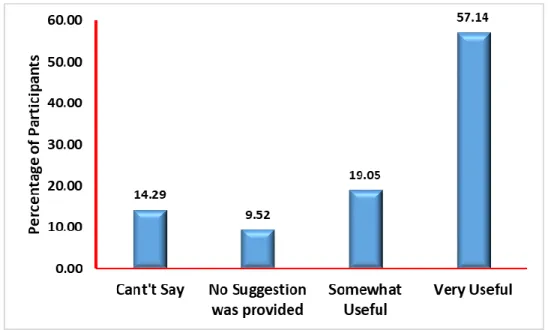
Figure 1: Bar Diagram showing the efficacy of the mentoring provided about Academics
10
Figure 1 shows that most respondent found that the suggestion provided by the mentors in connection to their academic issues were very useful.
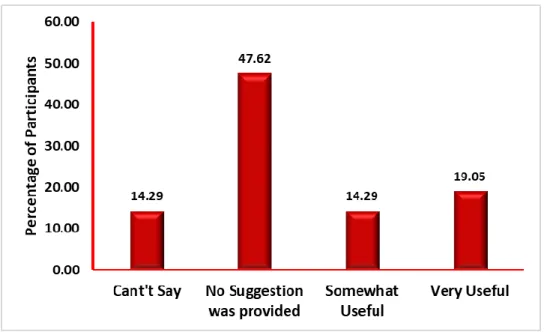
Figure 2: Bar Diagram showing the efficacy of the mentoring provided about Personal Life
Figure 2 shows that most respondents found that the mentor provided no suggestion about their Personal Life. This might be because of the fact that the respondents must have hardly discussed their personal problems with their mentor.
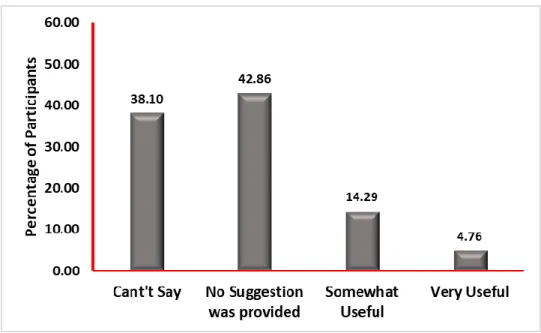
Figure 3: Bar Diagram showing the efficacy of the mentoring provided about Health
11
Figure 3 shows that most respondent found that the mentor provided very useful suggestion about their Health issues.
Figure 4: Bar Diagram showing the efficacy of the mentoring provided about Family Life
As the participants did not discuss much about their family with the mentor so the mentor was not able to provide any mentoring in that direction. Figure 4 shows that most respondent either “Can’t Say” if mentoring is useful with regard to Family issues or no suggestion was forwarded to them by the mentor in this regard.
12
Figure 5: Bar Diagram showing the efficacy of the mentoring provided about Social Life
It seems that the mentors did not discuss much with the respondent about their social life. The responses of the students about their mentor’s effectiveness in mentoring them about their social life reflects that- this issue needs improvement. Students need to be groomed about their social activities and appearances.
Most students feel that the mentor shall speak to them at least twice a week. This is highly frequent.
It means that the students want to talk to their mentor and they are finding the exercise interesting and highly beneficial for their career and overall development.
Table 2: Outcome of the Scores of the Statements for the Weak Lerner Advanced Learner Identification Program in percentage
Statement 1 2 3 4 5 6 7 8 9 10 Total
Score 92.73 91.82 93.64 77.27 86.36 90.91 93.64 84.55 90.91 91.82 89.36
The table shows that the aggregate score of the efficacy for the Weak Lerner Advanced Learner Identification program is 89.36 which is quiet high. This indicates that the students feel that the
13
impact of the Weak Lerner Advanced Learner Identification program is definitely high. However, relatively low score is noticed under statement number 4. The statement is “I feel embarrassed when my friends learn that I am a weak learner in one or more papers”. This indicates that some students do not enjoy that their status of “weak student” to be made public in the class. The status is notified and hence is above broad. The practice of notification may be thought over again and also proper mentoring be done so that the students are free from peer group pressure.
5. Conclusion
The Impact analysis of two different programs viz. the Mentorship Program and the Weak Lerner Advanced Learner Identification Program that started in the department of late is presented in the report. The analysis was done based on the information collected by the department from the students of the department on whom the programs were implemented. A structured questionnaire was prepared for collecting the information which was implemented online. There were 21 respondents who participated in the survey.
The overall efficacy of both the programs were remarkable. When expressed in percentage the values of the Mentorship Program was 90.18 and the Weak Lerner Advanced Learner Identification Program was 89.36. There was clear evidence that the participants are really enjoying both the programs.
However, there are still some areas where some fine tuning is needed. The mentors shall be more pro-active and try to discuss with the mentees about different aspect of their life. Some personal issues, family matters, social life of the mentees requires attention by the mentors. With passage of time, through more frequent meetings and offline gatherings this shall be attained, definitely.
The teachers need to be well versed with the job prospects and career opportunities that are available for budding statisticians. With the advent of Data Science as one of the emerging disciplines, mentees probably want their mentor to throw some light on that in connection to job prospects.
The status of the students’- weak or otherwise following the performance in the internal tests needs discussion in departmental meetings. It seems the students are not enjoying the current practice of notifying their status in public. However, this might be necessary as it might put the students in
14
some positive stress leading to improved performance in coming days. A thread bearing discussion on this issue is needed in departmental meetings.
To conclude, the entire exercise appeared to be a beneficial workout for the department. This shall enable the department to further sharpen and fine tune the two project which has already proved to be beneficial for the entire department.
***** *****
15
Appendix A: Students’ Feedback Questionnaire for Impact Analysis
Student Feedback Questionnaire on Mentorship Program and Weak Learner- Advanced Learner Identification Program
Dear Student,
The Department of Statistics, Assam University, Silchar of late has started two programs for the benefit of the students viz. the Mentorship Program and the Weak Learner-Advanced Learner Identification program.
Accordingly, we need to conduct an impact analysis of the programs so that we can understand how the programs are helping you or if we require to bring some changes in the way in which the programs are implemented.
Thus, you are requested to complete the survey and help us to serve you better.
Please be assured that we respect your privacy and that the responses given are only collected to assess the importance of the programs mentioned above.
Thanking you,
Head, Department of Statistics, Assam University, Silchar
Mentorship Program
In this section there are 10 statements related to the Mentorship Program initiated by the department. Click in the appropriate option below each statement to express the extent of agreement that you have with the statements.
1. I am satisfied with the mentor who is assigned to me.
Disagree 1…………..2……….3…………..4………5 Agree 2. My mentor is concerned of my well being
Disagree 1…………..2……….3…………..4………5 Agree
16
3. My mentor is aware of my performance in the internal examination Disagree 1…………..2……….3…………..4………5 Agree 4. My mentor suggested me about the career options that I can choose
Disagree 1…………..2……….3…………..4………5 Agree 5. I feel that the mentorship program is disturbing rather than of any help to me
Agree 1…………..2……….3…………..4………5 Disagree
6. I feel that the mentorship program should have helped me if it was there during the graduation days
Disagree 1…………..2……….3…………..4………5 Agree 7. My mentor helps me happily whenever I am in need.
Disagree 1…………..2……….3…………..4………5 Agree
8. I feel happy that I have someone in the department to fall back to whenever I am in trouble Disagree 1…………..2……….3…………..4………5 Agree
9. My mentor calls (or ask me to join online meeting) at odd hours and disturbs my normal life.
Agree 1…………..2……….3…………..4………5 Disagree 10. I am overall satisfied with the Mentorship program of the department.
Disagree 1…………..2……….3…………..4………5 Agree Please answer the following questions too:
1. How frequently do you want your mentor to contact you? (tick any one)
Twice in a week Once in a week Once in every two weeks Once in a month
17
2. My mentor’s suggestions/tips were useful in which of the following domains:
(a) Academic
Very Useful Somewhat Useful Can’t Say right now Somewhat Useless
Useless Did not provide any suggestion about Academic Matters
(b) Personal
Very Useful Somewhat Useful Can’t Say right now Somewhat Useless Useless Did not provide any suggestion about Personal Matters
(c) Health
Very Useful Somewhat Useful Can’t Say right now Somewhat Useless
Useless Did not provide any suggestion about Health matters
(d) Family
Very Useful Somewhat Useful Can’t Say right now Somewhat Useless
Useless Did not provide any suggestion about Family matters
(e) Social life
Very Useful Somewhat Useful Can’t Say right now Somewhat Useless
Useless Did not provide any suggestion about Social life Do you want to express something about the mentorship program?
18
Weak Learners-Advanced Learners Identification (WLALI) Program
In this section there are 10 statements related to the Weak Learners-Advanced Learners Identification (WLALI) Program initiated by the department. Click in the appropriate option below each statement to express the extent of agreement that you have with the statements.
1. The WLALI program helps me to identify my relative position in the class in each paper.
Disagree 1…………..2……….3…………..4………5 Agree
2. My subject teacher explains to me the errors that I committed while answering.
Disagree 1…………..2……….3…………..4………5 Agree
3. Once I know my errors I can identify where I committed the mistakes and I can improve on them
Disagree 1…………..2……….3…………..4………5 Agree
4. I feel embarrassed when my friends learn that I am a weak learner in one or more papers.
Agree 1…………..2……….3…………..4………5 Disagree 5. I feel that the WLALI program is a stressful activity for me
Agree 1…………..2……….3…………..4………5 Disagree
6. I am satisfied with the counselling done by my subject teacher for my wellbeing in case I am a weak student.
Disagree 1…………..2……….3…………..4………5 Agree
7. Being a weak student in a paper motivates me to improve by position in the next exam.
Disagree 1…………..2……….3…………..4………5 Agree
19
8. Such a program should have helped me, if it existed, during my graduation days.
Disagree 1…………..2……….3…………..4………5 Agree
9. After being identified as a weak student the follow-up action taken up by the department is not satisfactory.
Agree 1…………..2……….3…………..4………5 Disagree
10. Overall I am satisfied in the way in which the WLALI program is implemented.
Disagree 1…………..2……….3…………..4………5 Agree
Do you want to express something about the Weak Learners-Advanced Learners Identification (WLALI) Program?
***** *****