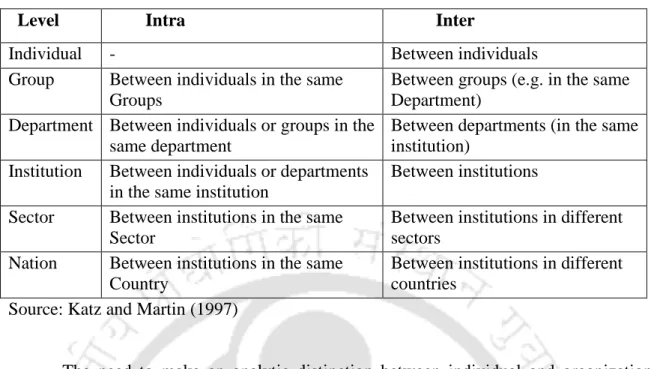
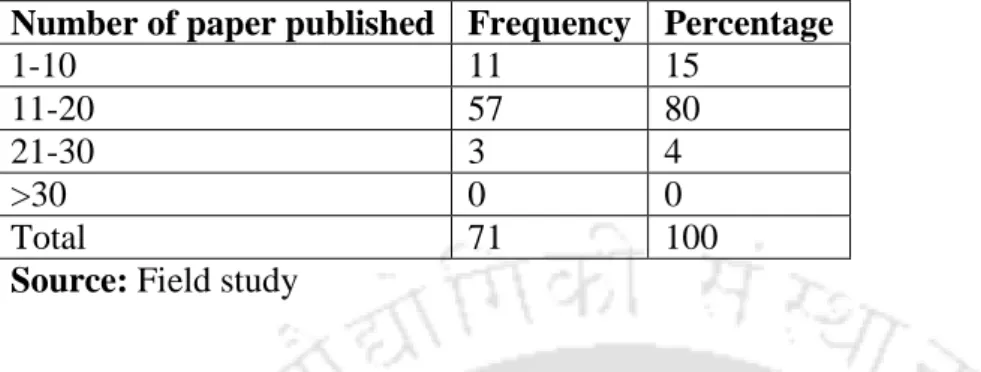
List of tables and figures Table 1.1: Different levels and forms of cooperation Table 1.2: Institutional distribution of respondents Table 1.7.3: Respondents' profile. In this context, this study attempts to examine the nature, process and organization of scientific collaboration in rice biotechnology research in India.

Review of Literature
The Internalist Characterization of Science and Technology
Merton's thought was focused on the emergence of science as a social institution and its response to social interest. Sociology of scientific knowledge examines how to deal with the social conditions of science as well as its effects of science.
Externalist Approach: Relativism in Sociology of Science and Technology The phase of Mertonian science was severely criticized on the grounds of functionalist
The sociology of science has expanded into various research fields with many empirical studies. Manier (1980) suggests that there are major differences between Bloor's strong program argument and Barnes'.
Sociology of Science in Constructivist and Postmodernist Era
The SST perspectives in this context assume greater importance in understanding the dialectic between science for its own sake and the application of science to the development of our economy, culture and politics. Furthermore, it is also necessary to understand the changing culture of science and its practitioners.
Modes of Knowledge Production
- Triple Helix Model of Innovation
- Mode 3 Form of Knowledge Production – Quadruple Helix Model of Innovation
The concept of the triple helix of university-government-industry relations was accelerated in the 1990s by Etzkowitz and Leydesdorff (1997). However, a certain degree of stable development can be achieved through mutual co-evolution of the helices and adjustments in the university-industry-government arrangements.
Actor-Network Theory (ANT)
Emergence of Hybrid Scientific Community: Transdisciplinary Approach to Science
The Ontology of Sociotechnical Aspects and Epistemological Consequences Collaborations are seen as being held together by sociotechnical aspects of work
Particular attention should be paid to the actors who are "left out", in the sense that they are not represented by the voices that speak through the sociotechnical aspects under observation. This last point is related to the level of irreversibility of the translations of the interests entered.
Theory of Remote Scientific Collaboration (TORSC)
The lexical definition of collaboration suggests "the situation of two or more people working together to create or achieve the same thing". Those responsible for one or more of the main elements of the research (eg design of the experiment, construction of research equipment, execution of the experiment, analysis and interpretation of data, recording the results in a paper).
Classifying Scientific Collaboration
The present study does not attempt to distinguish between the two dimensions because they are dependent. Instead, it is important to establish a connection that connects the two levels, in order to make the individual visible in the organizational and vice versa.
Motivations for Collaboration
Access to sophisticated and expensive instruments is one of the main reasons why cooperation takes place (Bozeman and Corley 2004). Access to resources, which are otherwise difficult to get hold of, is an important motivational factor for entering into collaboration.
Critique of Collaboration
- Hierarchies of Knowledge within Research Teams
- Decontextualization of Knowledge
This division of labor reflects and reinforces the differential status, worth, and value of research tasks and of the researchers who perform them (Mauthner and Edward 2007). One of the main epistemological objections to division of labor as currently practiced is that they privilege textual over contextual knowledge.
Co-publication as an Indicator of Collaboration
However, such studies have also shown that the growth rate of multiple authorship varies across subject areas (Hicks and Katz 1997; Meadows 1974). It is immutable and verifiable, given access to the same data set, other investigators should be able to reproduce the results;.
Problems of Credit Allocations in Bibiometric Study
Moreover, it seems that the 'significance' of a 10% share in the corrected count (or fraction scale) is much more difficult to explain (Braun et al. 1991). With adjusted counts, each co-author is assigned a fraction of the authorship.
Research Gap
A 10% share of country X means in the sense that 10 out of every 100 newspapers in the world have at least one contributor from country X. So if two authors write an article, each gets half a point, in case of three authors each gets a third, and so on.
Rationale for the Topic
Research Questions
In addition, the Government of India has been promoting Public Private Partnership (PPP) in the case of agricultural biotechnology in India, but how the PPP model works in the National Agricultural Research System (NARS) in general and in rice biotechnology in particular has not been sufficiently explored. How new agricultural technologies are conceived and implemented by the rice biotechnology research community.
Objectives of the Study
Methodology
Quantitative Method: Data Collection and Analysis
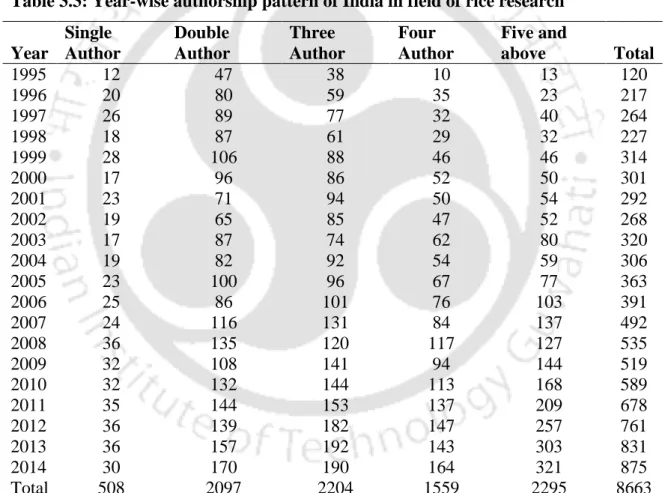
This study uses bibliometric survey to measure the scientific collaborations taking place in the field of rice research in India. In the study, the multi/co-author method was used to capture the pattern of scientific collaboration operating at the micro and macro levels in the field of rice biotechnology research.
Qualitative Method: Data Collection and Analysis
Recording the interview allows for a more in-depth analysis of what people are saying (Bryman 2004). It is a systematic coding and categorization approach used for the unobtrusive exploration of large amounts of textual information to determine trends and patterns of words used, their frequencies, their relationships, and the structures and discourses of communication (Marying 2000). The interviews data analyzes started first with the transcription i.e.
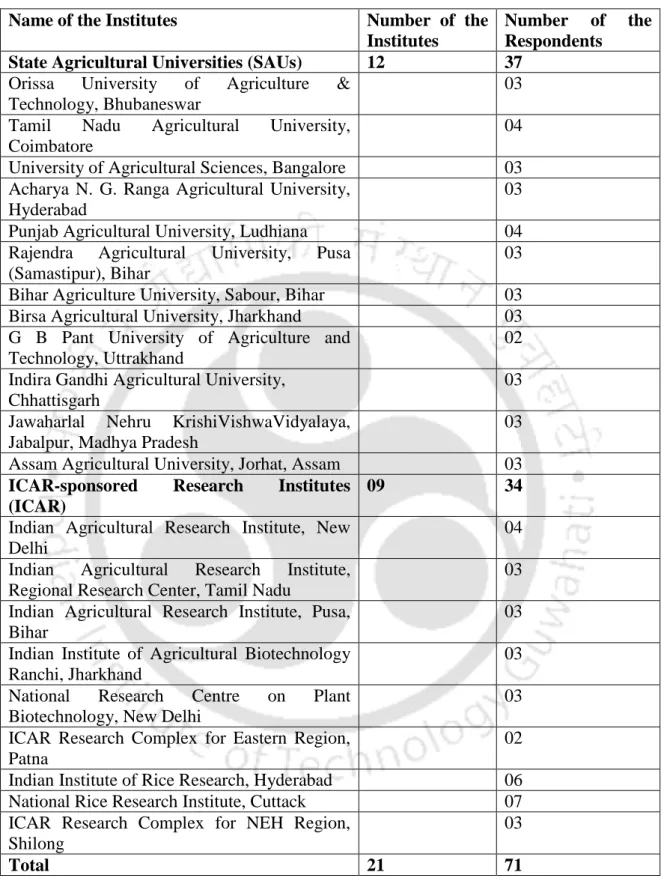
Profile of the Respondents
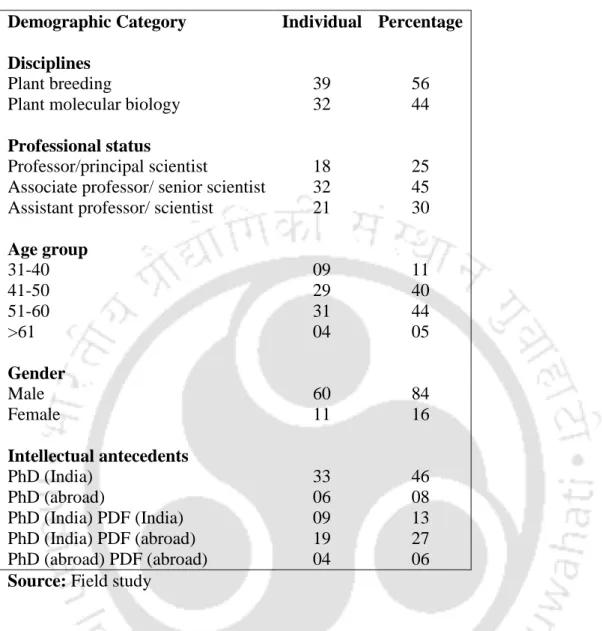
Of course, motivations are embedded as a training pot in the formative phase of the professional career of scientists. Scientists who are exposed to training from higher educational institutions in India and abroad are in a better position to carry out their research in "new" fields and with new techniques.
Structure of the Study
As such, "new" areas and new techniques aimed at concrete results fit the inter-institutional research projects, which take on greater significance in the context of R&D cooperation in the field of rice biotechnology research. By addressing the fourth research question of the study, the sixth chapter examines the socio-political construction of innovations in rice biotechnology research.
Evolution of the National Agricultural Research System (NARS)
Organized scientific research on animal husbandry problems began with the establishment of the Imperial Bacteriological Laboratory (now known as the Indian Veterinary Research Institute) at Mukteswar in 1889. The Director-General of the Council simultaneously became the Ex-officio Secretary (DARE) to the Government (FAO 1982).
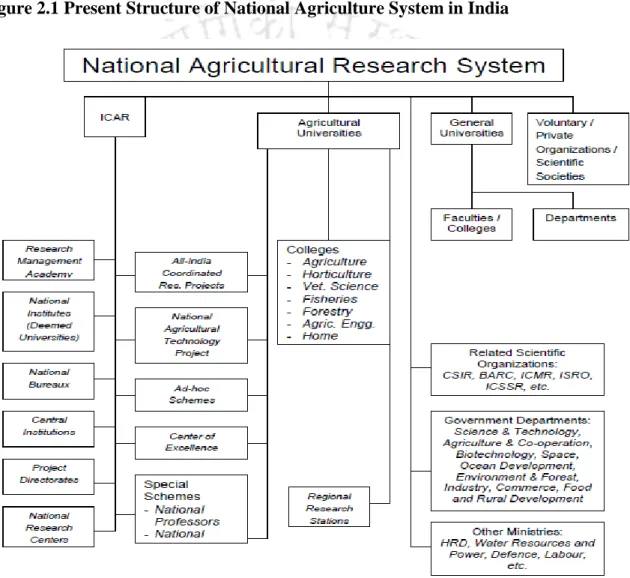
The Structure of the Present National Agriculture System in India
To provide, undertake and promote consultancy services in the field of education, research, training and dissemination of information in agriculture, agro-forestry, animal husbandry, fisheries, home economics and related sciences. The Minister of Agriculture in the Government of India is the President and the Minister of State for Agriculture is the Vice-President of the ICAR.
The Agricultural Universities System
Currently, ICAR includes 49 ICAR institutes, 17 national research centers, six bureaus, 25 project directorates, 91 All-India Coordinated Research Projects (AICRPs) and all India Network Research Projects (AINPs), 607 krishi vigyan kendras (KVKs), 52 state agricultural universities, four central universities of agriculture, four central universities with faculty of agriculture (http://www.icar.org.in/ accessed 7 May 2016). The number of teaching campuses per university ranges from 1 to 10 (http://www.icar.org.in/ accessed 11 June 2016).
General Universities
The Second Education Commission (1964–66) recommended at least one agricultural university in each state and ICAR drafted a model law in 1966. In 1978, a review committee appointed by ICAR reviewed the functioning of each agricultural university and made a series of recommendations.
Other Scientific Organizations
Some of the areas in which the Bhabha Atomic Research Center (BARC) is actively involved are the development of newer varieties of crops and the preservation of agricultural products. Technological institutions like IIT Kharagpur are active in agricultural engineering, soil and water management and agronomy.
Private-Sector Development
Indian Council of Medical Research (ICMR) studies on nutritional qualities of various agricultural products, including toxicity and occupational health of agricultural workers, have greatly assisted ICAR in planning its research programmes. There are now several private foundations, as well as NGOs, actively engaged in agricultural research.
International Cooperation
Swaminathan Research Foundation and Mahyco Research Foundation have developed substantial research capacity with a national presence and work closely with the ICAR/SAU system. In addition, many small, regional and local NGOs are involved in agricultural research, such as those that operate some of the ICAR-sponsored KVKs.
The Consultative Group on International Agricultural Research (CGIAR) The CGIAR system has contributed extensively to the cause of agricultural research in
At the policy-making level, the Vice-Chancellors of Agricultural Universities are represented in the Governing Body, and in the Standards and Accreditation Committee of the ICAR. Through the AICRPs and ad hoc research schemes, these universities have established linkages with the ICAR and Agricultural Universities subsystems.
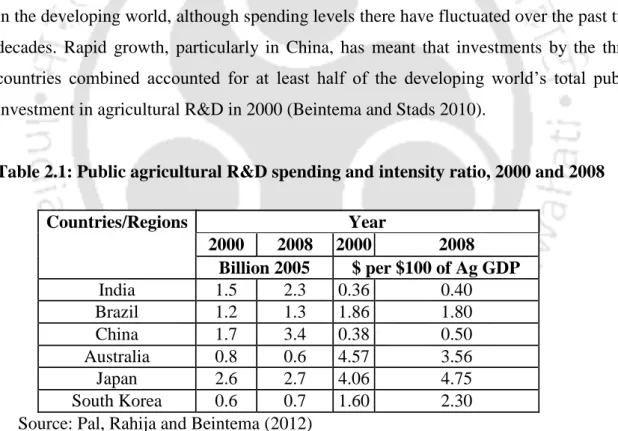
Indian R&D in a Global Context
The current national agricultural policy envisages that market forces will drive future agricultural growth through internal market reforms, an increased role for the private sector and the removal of price distortions. In addition, the legal team must ensure that IP due diligence is observed, i.e., patents, trademarks, copyrights and designs are filed, appropriate non-competition confidentiality agreements and deeds are executed. of assignment, etc.
Niche Areas of Excellence were supported to gain global competence in agricultural research, education and consultancy in the specific areas. A total of 19,413 candidates took the exam and admission was recommended to 2,076 candidates, 472 of whom received JRF students in 20 major subject groups.
Impact of R&D on Agriculture in India
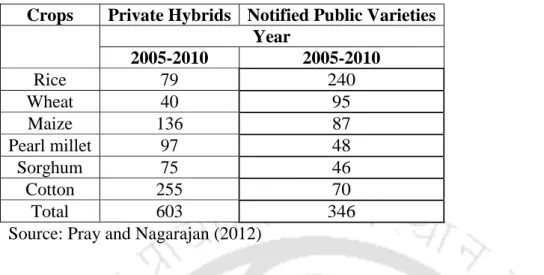
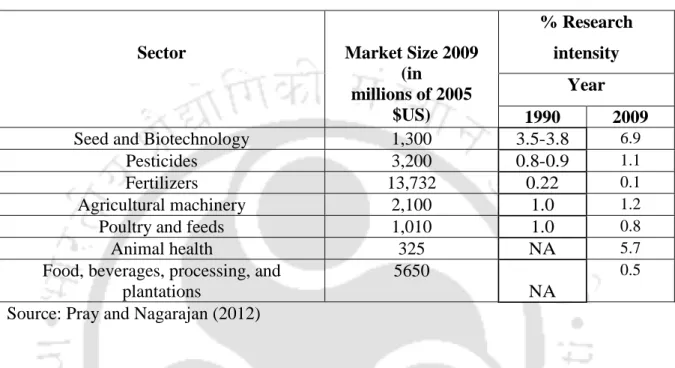
Despite this success, India faces many critical challenges such as the lack of public investment in the agricultural sector, particularly in irrigation, power, rural roads, market and mechanization. Also, subsidies on fertilizers have decreased leading to increases in the cost of production.
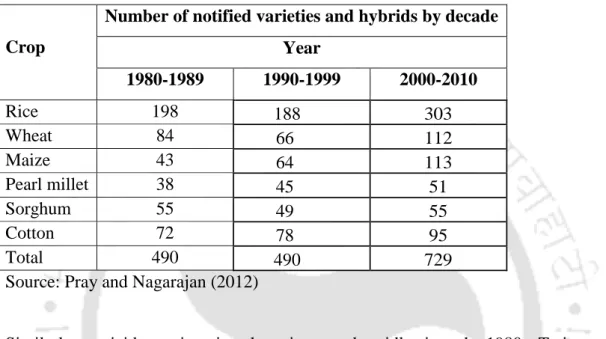
Factors for the Growth of R&D in Public and Private Sector
One of the reasons for the decrease in litter growth is due to environmental concerns. Pesticide research has more agricultural patents, which may account for some of the growth and research intensity in that industry.
Rice as a Crop Plant
This has continued to be an extremely important factor in the growth of R&D in India over the past decade.
History of Rice Cultivation in India
The great botanist and plant breeder 'Vavillov' suggested that India and Myanmar should be considered as the center of origin of cultivated rice. This therefore suggests that there may have been two centers of origin for our cultivated rice; Southeast Asia (India, Myanmar and Thailand) and West Africa.
Rice and Food Security in Asia
The above table 2.6 shows that world rice production in 2014-15 was 479155 thousand tons. Furthermore, nine out of the top ten rice-producing countries are from Asia, which contributes 84 percent to global rice production in the same year.
Rice Production in India
China tops the list with 144,560 thousand tons, accounting for 30 percent of global rice production in 2014-15. India is the second largest producer of rice with 105482 thousand tonnes contributing 22 percent to global rice production in 2014-15. An interesting fact is that the above top ten rice producing countries account for about 85 percent of global rice production.
History of Rice Research in India
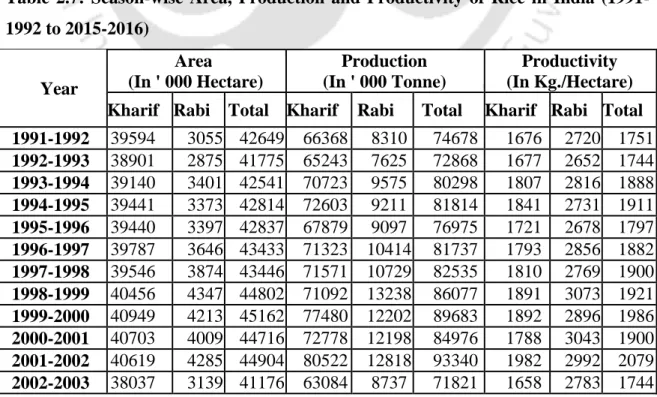
The year 2008-09 indicates the highest area under rice cultivation with 45537 thousand hectares, while the year 2002-03 indicates the lowest area coverage with 41176 thousand hectares. It was also found that this single seedling planting was popularized by the then British Government in the Madras Presidency.
Rice Breeding Programmes in India
Following this plant species concept, Indian rice breeders developed many semi-dwarf rice varieties that increased the country's rice productivity and India became self-sufficient in rice production. AICRIP aims to improve fertility, increase efficiency in the use of external inputs and incorporate resistance to biotic and abiotic stresses.
The Rice Green Revolution in India
Shortly after their introduction, these IRRI varieties were crossed with local varieties and by 1998 about three-quarters of the rice acreage in India had been sown with HYVs (Indiastat 2002). More importantly, this yield gain was able to withstand fluctuations in the monsoon, the main natural cause of macro-level food shortages in India.
International Collaboration in Rice Improvement Programmes
Other major institutional initiatives for rice improvement include the creation of the West African Rice Development Association (WARDA) in Africa, established in 1970 as an autonomous intergovernmental research association of 17 West and Central African countries (a member of the CGIAR since 1980) with a mandate to ensure food security and reduce poverty in the region by developing technology for the sustainable growth of the rice sector. CIAT was founded in 1967 in Latin America with the mission of alleviating hunger and poverty in developing tropical countries by increasing agricultural productivity through the development and application of science and technology.
Institutionalisation of Agricultural Biotechnology Research in India
Since 2003, ICAR has committed significant direct funding to GM crop research in the agricultural universities and institutes under its auspices. To further strengthen research in crop biotechnology, a new institute, the National Center for Plant Genome Research (NCPGR) has been established in New Delhi in 1997 with the mandate to strengthen plant biotechnology research in India.
Transgenic Rice Research in India
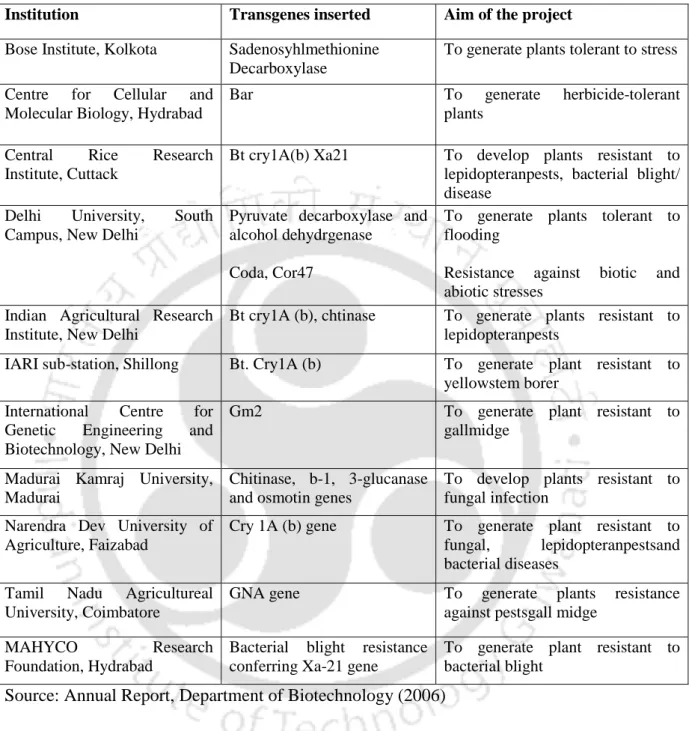
One of the major outcomes of the IPRB, which accelerated R&D in transgenic rice in India was the establishment of the Asian Biotechnology Network (ARBN). It is quite clear from table 2.8 that most of the R&D work in transgenic rice in India has been done in central government funded public sector research institutes, universities and research centres.
A Case of Golden Rice
This approach led to the development of the second generation GR (Al-Babili and Beyer 2005). Introduction of the maize (Zea mays) psy gene in place of one of the daffodil enabled the second generation GR to be developed under the hypothesis that the daffodil psy gene limits β-carotene accumulation (Paine et al. 2005). .
Entrance of ‘Golden Rice’ in India
The current golden rice network in India is funded by DBT and coordinated by Dr. However, the course of golden rice development in India shows that the golden rice project has been deliberately pushed to well-established institutes since its inception.
Application of Marker-Assisted Selection in Rice Research with Special Reference to Indian Context
These institutes are well established in terms of infrastructure and scientific manpower, especially in the field of rice research in India. The trajectory of rice biotechnology research in India also shows that the introduction of new agricultural technologies has affected rice research in all dimensions.
Quantum of Indian Publications in Rice Research
In rice research, the growth rate of publications fluctuated rather than remaining constant.
Relative Growth Rate and Doubling Time
Data on the growth of rice research literature in developing countries such as India is shown in Table 3.2 above. Table 3.2 shows that the average RGR drops from 0.34 in the first block to 0.11 in the second block.
Collaboration Characteristics
- Authorship Pattern
- Co-authorship Activity Index
- Measures of Collaboration
- Domestic and International Collaboration Profile
Di = Number of domestic co-authored publications in a certain time period, Dio = Total production of the country in this certain time period. Ii = Number of domestic co-authored publications in a certain time period, Iio = Total production of the country in this certain time period,.
Collaboration Profiles according to Institutions
Relative Research Effort
In order to compare the country's research performance with world research performance, the Activity Index (AI) was created, proposed by Frame (1977) and processed by Schubert and Braun (1986). Here we use the Modified Activity Index (MAI) to see how a country's research activity has changed over different years.
Frequency of Research Collaboration
One of the remarkable features of the above data set (Table and 3.14) is that the cooperation between SAU and INDUSTRY decreases by 30.01 percent in the second block of the study period. Similarly, ICAR's collaboration with CGIAR and OII decreased by 28.91 and 11.42 percent during the second block of the study period.
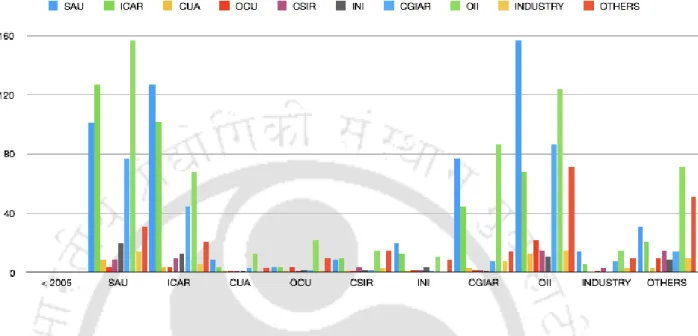
Collaboration Profile of State Agriculture Universities and ICAR-sponsored Institutes
Therefore, in the context of ICAR, local newspapers dominate the first block of the study, while local newspapers dominate the second block. Some of the key findings suggest that his publication output in the field of rice research in the context of India decreased by 1.3 percent in the second block of the study period.
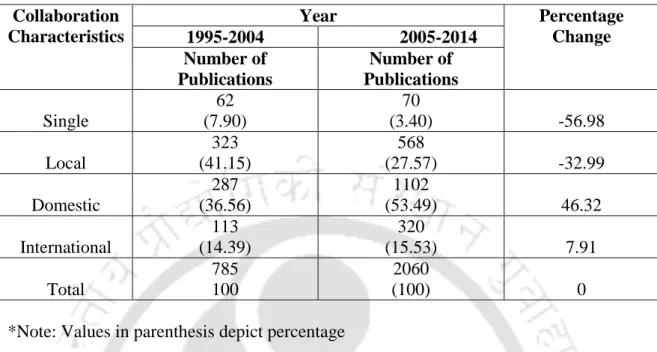
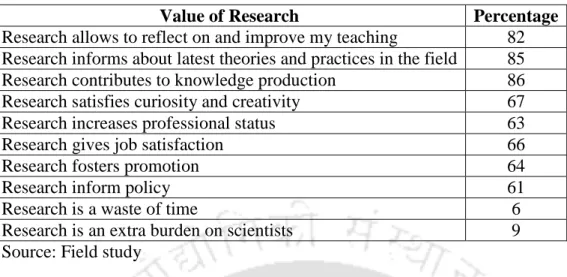
Perceptions of Rice Biotechnologists about Research and Collaboration Activities
Different Activities Performed by Rice Biotechnologists within their Academic Area
The data presented in Table 4.6 illustrate the importance of research to the external organization in terms of the type of research they believe rice biotechnologists are conducting. As shown in table 4.11, according to the geographical proximity, the respondents' perceptions are evenly distributed among the proposed categories.
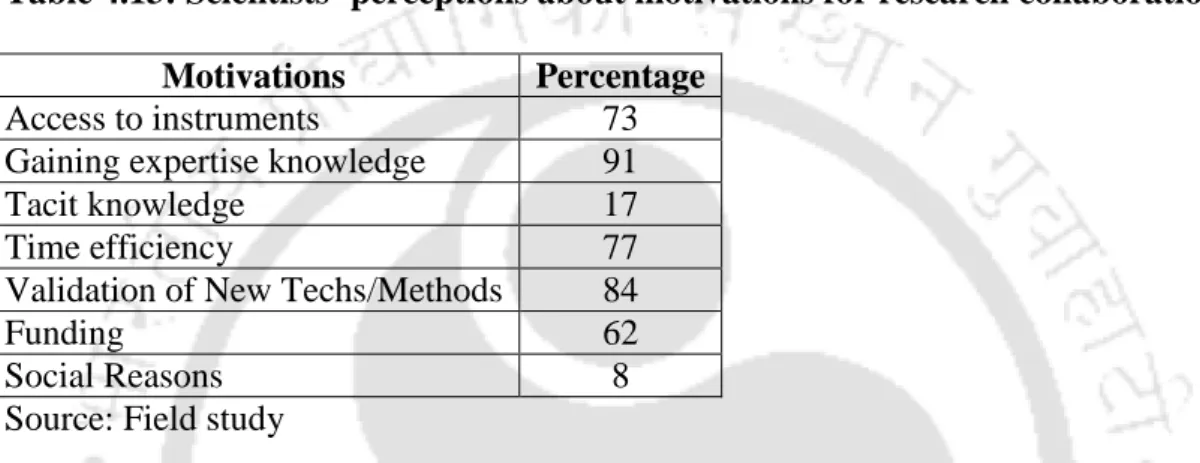
Motivations of Collaboration
However, some scientists also believe that certain standards of funding agencies are also an important basis for cooperation. But the high level of professionalism in the Western scientific community transcends the need to consider social reasons.
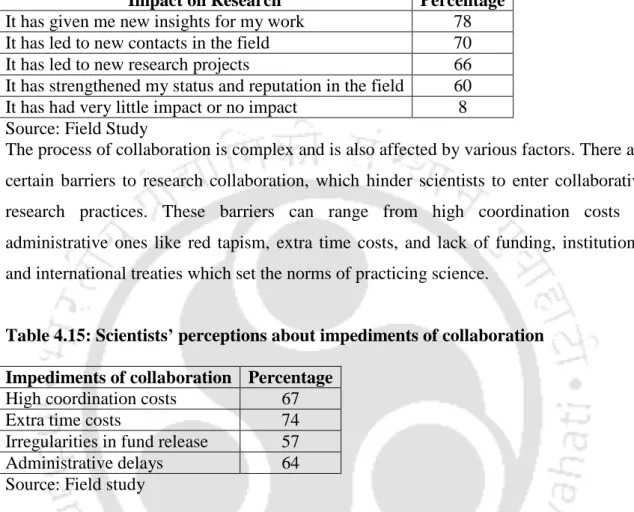
Impact of Collaboration on Research
A majority of the scientists claim that coordination costs in terms of travel and communication affect collaborative research practices as they are not covered and taken care of by funding agencies. In contrast, about 43 percent of respondents never find irregularities in fund release a problem in their cooperation.
Dimensions of Collaboration Formation in Rice Biotechnology Research
- Interpersonal Context
- Funding Context
- Sectoral Context
- Organizational Context
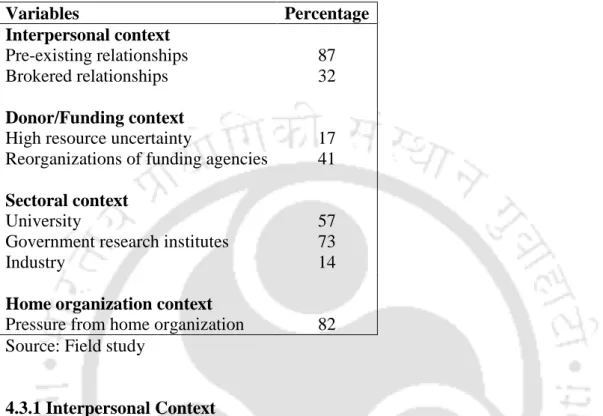
Pre-existing relationships between some or all of the participants are central to establishing rice biotechnology collaborations. In this study, only 17 percent of rice biotechnologists agree that there is high uncertainty about rice biotechnology resources.
Magnitude of Scientific Collaboration in Rice Biotechnology
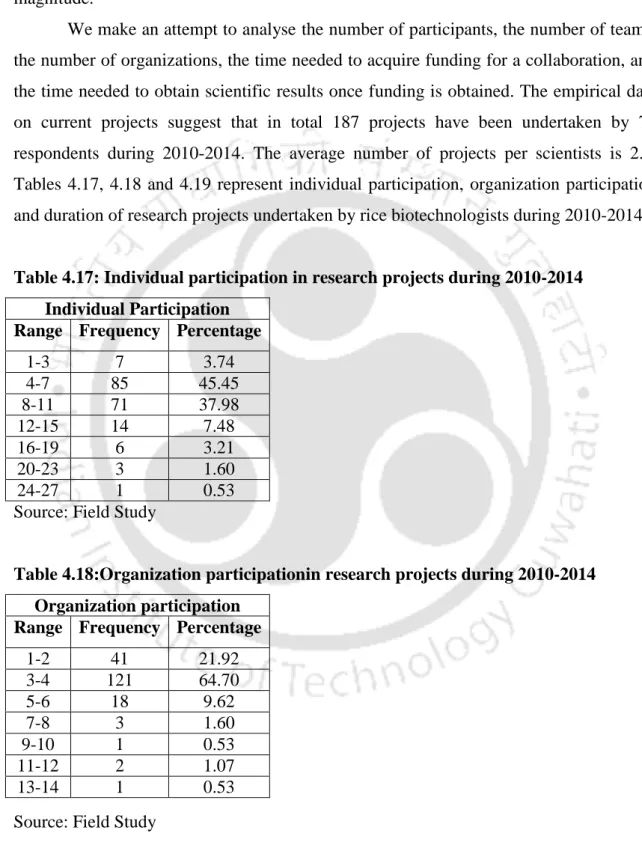
We make an effort to analyze the number of participants, the number of teams, the number of organizations, the time required to obtain funding for a collaboration and the time required to obtain scientific results once funding is secured. However, the number of individual participants, the number of organizational participants may change during the course of the cooperation.
The Structure of Scientific Collaboration in Rice Biotechnology
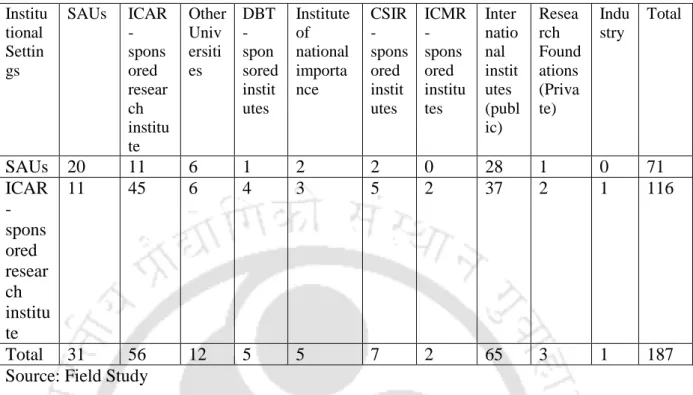
Meanwhile, ICAR sponsored research institute has 68 percent (79 out of 116) of projects with national institutes and 32 percent (37 out of 116) of projects with international institutes. In contrast, collaboration between SAIs and ICAR-sponsored research institutes is relatively weaker at 9 percent (11 out of 187).
Patterns of Collaboration
On the contrary, if the collaborators are part of the same academic culture, this can ensure the smooth functioning of the collaboration (Sonnewald 2007). A remarkable feature of the data set is the extremely negligible number of respondents with industry participation.
Triple helix - Government-University-Private R&D Institutions Networking in Rice Biotechnology
Most of the collaborations are taking place between scientists located at SAU and ICAR-sponsored institutes. According to this perspective, industry-sponsored research will influence the basic research orientation of university researchers.
International collaboration
Actors of International Collaboration
Apart from CGIAR, most respondents in the study also highlighted the role of another international agency known as the International Rice Research Institute (IRRI), which is part of CGIR, to promote international cooperation in rice research in India. Thus, IRRI continues to be an important actor and promoter of international cooperation in rice research and development institutions in India.
Drivers and Benefits of International Collaboration
One of the benefits of international cooperation is that you get the best person for the job. Second, the interdisciplinary nature of agricultural biotechnology plays an important role in accelerating international rice research collaboration in the context of India.
The Process of Finding International Collaborating Partners
Several respondents referred to the importance of various international networks such as Universitas and the World Wide University Network to be fruitful in identifying a potential international partner. However, we also take individual initiatives to have R&D cooperation with few Southeast Asian countries such as China and Philippines.
Possibilities for Improving International Collaboration
Scientists gave multiple reasons in interviews for not collaborating with private players in rice biotechnology research. The interdisciplinary nature of agricultural biotechnology plays an important role in accelerating international collaboration in rice biotechnology research in the context of India.
Nature of Work
The main objective of this project is to improve the productivity of rice in the eastern, northeastern and southern regions of the country, which often bear the negative impact of one or the other form of abiotic stress. We have our annual meetings where we meet face to face with each other to review project progress and future actions to be taken.
Common Ground
The Role of Previous Ties in Collaboration Network
The importance of previous ties, work experiences or relationships is an important factor for successfully developing rice biotechnologist collaboration. The current study indicates that for scientists based in both SAUs and ICAR, the role of past ties and relationships is a critical part of collaboration.
Tacit Knowledge and Transactive Knowledge
Furthermore, scientists in the present study report that the outcome is negatively affected in the case of dispersed cooperation regarding the transfer of tacit and transactive knowledge. Rice biotechnologists are of the opinion that long-distance collaboration bypasses the flow of tacit and transactive knowledge component between the research teams, primarily because it is stored in the research group that generated it.
Collaboration Readiness
Incentives and Rewards