Associate Professor Cheah currently serves as editor of the Journal of Global Scholars of Marketing Science and associate editor of the International Journal of Advertising. He has had his research published in leading marketing journals such as the Journal of Retailing and Consumer Services and the Journal of Global Scholars of Marketing Science. Her research has been published in several journals, such as the Journal of Marketing Communication and the Journal of Marketing for Higher Education, and she has published a book with a respected publisher, Springer.
She is published in journals such as the Journal of Retailing and Consumer Services and the European Journal of Marketing. Her work has been published in leading peer-reviewed journals including the Journal of Business Research, International Journal of Market Research, Australasian Journal of Environmental Management, Journal of Social Marketing and Health Marketing Quarterly. His research work was published in Journal of Brand Management, Psychology & Marketing, Journal of Strategic Marketing, Appetite,.
Shimul is an associate editor for the Asia Pacific Journal of Marketing and Logistics (APJML) and the Journal of the Global Marketing Scholars (JGSMS). His research has been published in various national and international journals, including Journal of the Academy of Marketing Science, Journal of Retailing, European Journal of Marketing, Journal of Small Business Management, Journal of International Marketing and International Small Business Journal.
DOI: 10.4324/9781003321378-1
1 Luxury Marketing and Sustainability in the South
Introduction
COVID-19 is causing marketers to focus on how to cater to local consumers who can spend more money because they cannot travel (Prokopec, 2022). A marketer of luxury goods must consider how to motivate local customers to spend locally instead of planning their purchases for travel (Prokopec, 2022). As for the second shift, it is about how luxury brands connect with their affluent customers through digital channels (Ranfagni & Ozuem, 2022).
Singapore became a regional hub in the third shift (Prokopec, 2022) even though Japan was the first luxury market in the last decade (Isozaki & Donzé, 2022). However, it has become clear that Southeast Asia has become increasingly important, especially with the growth of markets such as Indonesia, Thailand, Vietnam and more recently the Philippines (Prokopec, 2022). There are a growing number of luxury brands opening stores there and tapping into that niche market which has historically been the domain of the affluent traveling consumer and also a shift in behavior in those markets that are experiencing more local consumption and growth ( Prokopec, 2022). .
Given how significant the luxury industry is globally, sustainable luxury is gaining more traction among luxury companies and academic research institutions as a concept that has great potential (Ranfagni & Ozuem, 2022). Luxury has recently been mass-marketed (Kapferer & Michaut-Denizeau, 2017), possibly weakening its compatibility with sustainability in the South Asian context.
Overview of the Luxury Marketing and
Sustainability-Related Practices in the South Asian Context
Implications of Luxury Marketing and Sustainability Practices in the South Asian Context
First, the possibility of innovating luxury brands and products through sustainability must be focused on international perspectives, such as cross-cultural differences between consumers in the East and the West. Brand experiences play a key role in the emotional and hedonic association of customers with luxury organizations (Dion & Arnould, 2011). The global luxury market has significant differences between consumers in the Global North and Global South (Ho & Wong, 2022).
To examine how sustainable luxury consumption decisions differ between cultures (Ho & Wong, 2022) and how consumers perceive the negative effects of consumerist lifestyles, cross-cultural research is needed. Second, sustainable activities of luxury manufacturers focus on consumer behavior with less attention to consumer attitudes (Paul, 2022). In the South Asian context, luxury consumption is associated with display, overconsumption (Berry, 2022), overproduction, pleasure and personal satisfaction, resulting in conflicts between luxury and sustainability.
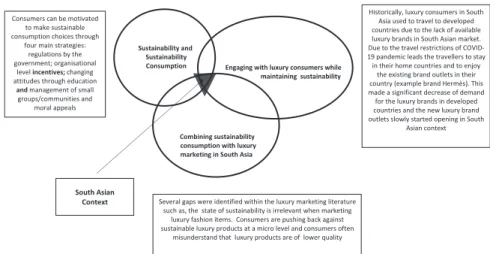
Dean (2018) highlighted the incompatibility between luxury and sustainability; Luxury values are often accompanied by pleasures, while sustainable consumption involves moderation and ethics, neglecting the fact that consumer attitude formation is based on the likelihood of liking or disliking a luxury product. Historically, South Asian luxury consumers traveled to developed countries due to the lack of available luxury brands in the South Asian market. Several gaps within the luxury marketing literature have been identified, such as the state of sustainability being irrelevant when marketing.
Third, Mosca and Chiaudano (2022) suggested that managers of luxury brands do not have the right knowledge to identify the importance of sustainable practices in luxury marketing, as sustainability can increase consumers' positive perceptions of luxury goods in South Asia (such as ' a lack of animal testing, restrictions on forced labour) only if recorded and precisely mentioned in public. Consequently, updated knowledge of brand managers becomes a major part of the sustainable luxury marketing process (Dion & Arnould, 2011; Berry, 2022). There are three broad implications for policy makers when catering to the South Asian market with both luxury marketing and sustainability practices.
First, the need for more attention to international perspectives, such as cross-cultural differences between consumers in Eastern and Western counterparts during the luxury marketing process. Second, focus on consumer attitudes during the sustainable activities of luxury manufacturers by limiting the focus on consumer behavior. Thirdly, updated knowledge of the brand managers about sustainable practices during the luxury marketing process is necessary for a brand to remain competitive in South Asia.
Summary
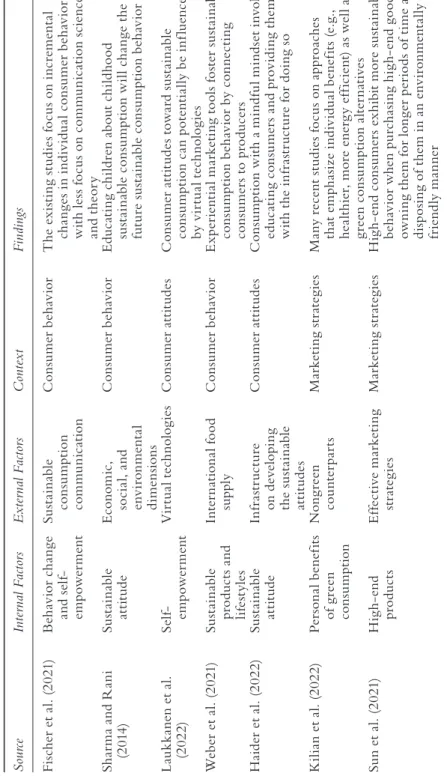
The need for research in communication theory and science, the use of virtual technologies and experiential marketing tools, and the importance of high-quality consumers to consume sustainably are among the contributing factors to environmental sustainability. It is historically true that luxury consumers in South Asia have traveled to developed countries due to the lack of luxury brands available in the South Asian market. Due to the travel restrictions associated with the COVID-19 pandemic, many travelers have chosen to stay at home and take advantage of the brand's existing retail outlets in their home countries (e.g. Hermès).
As a result, the demand for luxury brands in developed countries declined significantly, and new luxury brand outlets gradually began to open in South Asian countries. There are three broad implications for policy makers in serving the South Asian market with both luxury marketing and sustainability practices, namely taking international perspectives into account, focusing on consumer attitudes during luxury manufacturers' sustainable activities by narrowing the focus to consumer behavior and updated knowledge of the brand managers towards sustainable practices during the luxury marketing process.
How wellness-focused business strategies could increase competitiveness and innovation among luxury companies. ed.), The rise of positive luxury: A transformative research agenda for well-being, social impact, and sustainable growth (1st ed.). Retrieved from: https://www.warc.com/newsandopinion/opinion/how-to-engage-with-the-new-asian-luxury-consumer/en-gb/5796. Retrieved from: https://www.luxurysociety.com/en/articles/2022/03/has-hermes-strong-momentum-reached-a-tipping-point-in-china.
Retrieved from: https://www.mckinsey.com/industries/retail/our-insights/a-perspective-for-the-luxury-goods-industry-during-and-after-coronavirus. How wellness-focused business strategies could increase competitiveness and innovation among luxury companies. ed.), The rise of positive luxury: A transformative research agenda for well-being, social impact, and sustainable growth (1st ed.). Retrieved from: https://www.luxurysociety.com/en/articles/2022/03/has-hermes-strong-momentum-reached-a-tipping-point-in-china.
27 July 2022, available at https://www.statista.com/statistics/267948/brand-value-of-the-leading-10-most-valuable-luxury-brands-worldwide/. Retrieved November 14, 2022, from https://www.sustainably-chic.com/blog/how-ai-is-making- the-fashion-industry-more-sustainable. Retrieved August 1, 2022, from https://www.bain.com/insights/from-surging-recovery-to-elegant-advance-the-evolving-future-of-luxury/.
Retrieved October 23, 2022, from https://www.reuters.com/business/retail-consumer/chanel-increases-prices-again-europe-asia. Retrieved October 23, 2022, from https://www.thefashionlaw.com/chanel-will-not-sell-ready-to-wear-bags-online-any-time-soon/. Retrieved October 23, 2022, from https://www.businessinsider.com/pyramid-of-luxury-brands-2015-3?international=true&r=US&IR=T.
Creating Shared Values by Integrating Unsustainable Development Goals into Corporate Communication—The Case of Apparel Retailing. Global Sourcing: Insights from the Global Apparel Industry—The Case of Zara, a Fast Fashion Retailer. Retrieved November 21, 2022, from https://www.theguardian.com/fashion/2019/jun/23/five-ways-fashion-damages-the-planet.