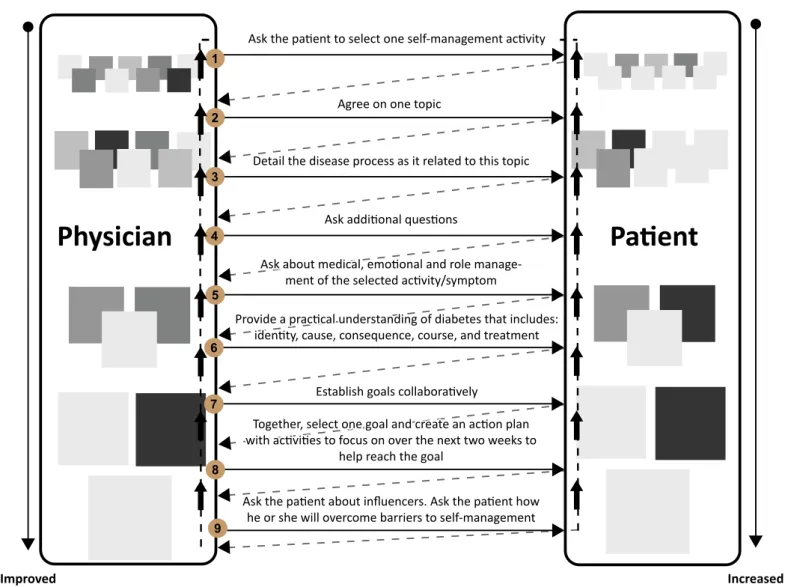
Help the patient gain a coherent understanding of diabetes, clearly linking its course and consequences to self-management actions. Have the patient demonstrate mastery of each until he confidently engages in the entire action.31 11.

Self-management aspects of the improving breakthrough series in chronic disease care: implementation with diabetes and heart failure teams. The prevalence of diabetes in India is increasing.1, 2 Currently, India is the country with the second largest number of diabetes patients in the world, with China occupying the first position.1, 3 It should also be noted that India is the country with the second largest number of diabetes patients. the second most populous country in the world, behind only China. The increase in the prevalence of diabetes in the country, especially type 2 diabetes, could be attributed to the increasing prevalence of central obesity, growing urbanization, declining physical activity and extensive consumption of high-calorie foods.
India's economic growth is impressive, with GDP growing at a frenetic rate over the past five years. However, significant advances in medicine served to control these diseases, ushering in an era of increasing incidence/prevalence of non-communicable diseases such as diabetes, obesity, hypertension, cancer and heart disease. In the mother's womb, a nutritionally deprived baby stores all the food it receives as fat.
This fat is deposited in the abdominal region and is called abdominal, visceral or central fat.
FEATURED ARTICLE
Diabetes in India: An Epidemiological Overview
- Pradeepa, M. Deepa
The rapid increase in non-communicable diseases (NCDs) represents one of the key challenges of global development in the new century. They have proven to be a serious concern in South Asia.1 The increasing prevalence of diabetes is becoming a global concern. In the first quarter of the 20th century, some attempts were made to study the prevalence of diabetes in India.
Some of the epidemiological studies and population-based surveys conducted in the late 90s and the current century have provided ample data to clearly analyze the diabetes prevalence in the country.7. A multicentric collaborative study undertaken by the Indian Council of Medical Research (ICMR) in the 1970s to obtain diabetes prevalence rates in 6 different parts of the country (Ahmedabad, Kolkata, Cuttack, Delhi, Pune and Trivandrum) showed the prevalence of diabetes as 2.1% in urban and 1.5% in rural areas.8 In the same study, the prevalence reported in individuals above 40 years of age was 5% in urban and 2.8% in rural areas.8 . The second national level population-based study, called the National Urban Diabetes Survey (NUDS), was conducted in six major cities in the year 2001.
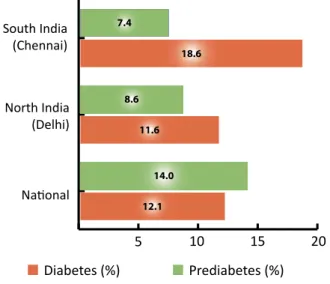
The study conducted on 11,216 subjects aged ≥20 years reported the age-standardized prevalence of type 2 diabetes as 12.1% with no gender difference.
REVIEW ARTICLE
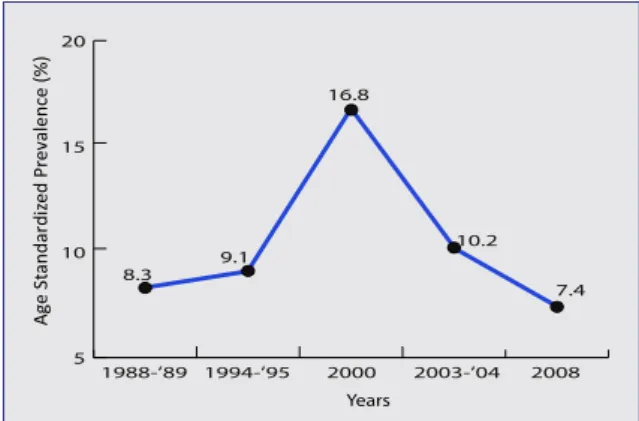
9.3%).9 Data obtained from the national survey showed that the prevalence of diabetes is relatively high in urban metros of India. CUPS showed that there are intra-urban differences in the prevalence of diabetes even within a city.18. Over the past two decades, compelling evidence has emerged that there are regional differences in the prevalence of diabetes.
Impact of urbanization on lifestyle and diabetes prevalence among indigenous Asian Indian population. The burden of diabetes and impaired fasting glucose in India using the ADA1997 criteria: Prevalence of Diabetes in India Survey (PODIS). Intra-urban differences in the prevalence of metabolic syndrome in South India – The Chennai Urban Population Study (CUPS).
Secular trends in prevalence of diabetes and glucose tolerance in urban South India - Chennai Urban Rural Epidemiology Study (CURES-17).

CARDIOLOGY
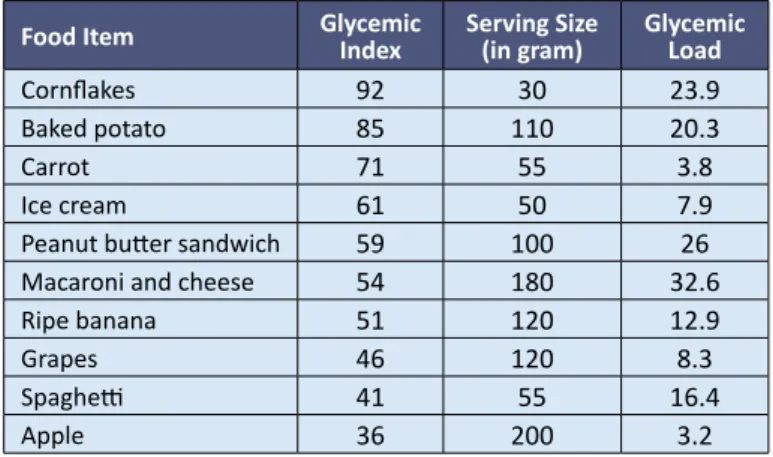
One such study published in the latest issue of Archives of Internal Medicine reports that foods containing carbohydrates with a high glycemic index (GI) increase the risk of CHD in women, but not in men. GI is a rating system for foods, based on the extent to which they raise blood sugar levels in the two hours after consumption. GI is a measure of carbohydrate quality (source or nature), while GL is a measure of carbohydrate quantity, i.e. the net glycemic effect of a serving of food.
Physical inactivity, unhealthy diet, smoking and obesity are some of the major risk factors for heart disease in women. The study findings were published in the recent issue of The Journal of Experimental Medicine. Atherosclerosis of the coronary arteries, which leads to coronary heart disease (CHD), is the leading cause of death in the United States.
A previous review by Michels et al (Diabetes Care, 2003) reported a slightly increased risk of developing breast cancer in type 2 diabetics, based on the prospective evaluation conducted among 116,488 female nurses aged 30 to 55 years.
ONCOLOGY
Now, a recent population-based, case-controlled study published in the journal Breast Cancer Research and Treatment has been announced as the first research to suggest an increased risk for contralateral breast cancer (CBC) in diabetics diagnosed with primary breast cancer. The study group consisted of 322 women diagnosed with a second primary CBC, while 616 matched patients diagnosed with a first incidence of breast cancer served as controls. One of the studies presented by Luis F Lara of Baylor University Medical Center, Dallas, Texas, investigated the detection rate of adenomas and all polyps using TER in contrast to forward-viewing colonoscopy, along with assessment of the learning curve for use. of TER.
TER contributed to a substantial increase in overall polyp detection rates by 12 to 18%, and adenoma rates by 13 to 19%. Another study presented at the same conference by Manoj K Mehta, of NorthShore University HealthSystem, Illinois, analyzed the influence of the researchers' cumulative years of experience in detecting baseline adenomas using the same two techniques. The researchers noted that the highest clinical accuracy for detecting adenomas at baseline using standard colonoscopy, and the increased detection rates using TER, were demonstrated in the 11 to 20 year group.
The findings were published in the current issue of the American Journal of Obstetrics & Gynecology.
GYNECOLOGY
A team of researchers from Emory University and the Georgia Institute of Technology has designed a new flu vaccine patch that contains numerous vaccine-filled, dissolvable, micron-scale needles that allow for painless intradermal administration. Based on these findings, the researchers suggested that the dissolving microneedle patches could provide a safe and simpler vaccination strategy with improved immunogenicity, and eliminate the disadvantages associated with the use of injection needles. The vaccine patch consists of microneedles joined in an array of 100, each 650 microns long, and is made of polyvinylpyrrolidone.
The pain associated with microneedling injection was non-existent to mild and less than with conventional injection. In addition to these benefits, numerous previous studies have reported the safety and stimulation of long-lasting immunogenicity with the use of microneedle patches. A recent study by Kim et al (The Journal of Infectious Diseases, 2010) showed that intradermal microneedle vaccination, compared to the conventional intramuscular vaccination, was superior in stimulating both humoral and antibody-secreting cell immune responses after 100% survival of fatal infections. problems with the flu virus.
With the current findings, it is indicative that the microneedle vaccine patch technology may make a safe and effective alternative to conventional injection procedures and help reduce the morbidity and mortality associated with vaccine-preventable influenza infections.
IMMUNOLOGY
It eliminates the risk of contracting dreaded infections such as HIV and hepatitis associated with the reuse of hypodermic needles. A review by Prausnitz et al (Current Topics in Microbiology and Immunology, 2009) reported that in addition to being a safe and effective intradermal microneedle patch; elicits the same immune response as intramuscular injection, at a lower dose. Current long-term therapies used to treat multiple sclerosis (MS) are administered intramuscularly or subcutaneously, causing local side effects at injection sites.
Now, a Phase II trial conducted by researchers at the Mount Sinai School of Medicine reports that teriflunomide is safe and effective when used with glatiramer acetate for the treatment of relapsing-remitting multiple sclerosis (RRMS). The drug may also interfere with the interaction between antigen-presenting cells and T cells, which is essential for T-cell immune response. According to the National Institute of Allergy and Infectious Diseases (NIAID), 250,000 to 350,000 individuals in the United States have MS as of 2009.
Magnetic resonance imaging with gadolinium contrast provides clues to the diagnosis shortly after the first attack.
CLINICAL RESEARCH
The drug not only reduced the volume and size of the lesions in the brain, as detected by MRI, but also showed a high safety profile. Previous studies have substantiated the role of various systemic factors, including hyperglycemia, dyslipidemia, and hypertension, in the development and progression of diabetic retinopathy. The study's results, published online in the New England Journal of Medicine, rule out the effect of intensive blood pressure control in slowing disease progression.
The researchers also evaluated the progression of the disease in these subjects by assessing the need for laser photocoagulation or vitrectomy. The researchers also validated the need to conduct more randomized controlled clinical trials to evaluate the effectiveness of new treatment modalities, including islet cell transplantation, ruboxistaurin, intravitreal hyaluronidase, and fenofibrate, as mono/combination therapies in the treatment of diabetic retinopathy. Now, a recent double-blind, randomized, placebo-controlled, crossover study, published in the latest issue of The Lancet, reports the potential use of the drug in the treatment of chronic stable angina.
During the first treatment period, 28 and 32 patients were analyzed out of the 31 and 34 assigned to the allopurinol and placebo groups, respectively.
NEWS
Of note, the P values and effect sizes were significant even though the sample size was small. Guidelines for the management of stable angina pectoris: summary: the European Society of Cardiology task force for the management of stable angina pectoris. However, only a low number represents a clinically practical assessment of reproductive status and may vary from cycle to cycle.
The findings of the study were published in the recent issue of the open access journal BMC Research Notes. Of the psychotropic side effects, 56% were found to be serious and included neonatal withdrawal syndrome, preterm labor and birth defects such as ventricular septal defects. Approximately 20% of psychotropic medication-related adverse events were observed in children ≤2 years and half of these were observed in adolescents (11-17 years).
In contrast to these findings, a recent study published in the journal Emotion reports that the injection may negatively affect the emotional experience of the treated subjects.