The AFM character of the unmilled NiO powders is converted to induced FM after milling due to defects and size reduction. In Chapter 5, we report the effects of the initial crystallite size of the target powders, NiO film thickness and TA under different environments on the decomposition reaction of NiO to Ni and the resulting magnetic properties of the NiO films deposited directly on thermally oxidized Si substrate using magnetron sputtering technique at ambient temperature.
Prologue Introduction
Prologue
Introduction
While high-volume information processing and communication devices are currently based on semiconductor devices, information storage devices rely on multilayers of magnetic materials and insulators [HEDI2014, SHIN2014, SATO2015, SCHA2016]. Thus, the operating principle of spintronic devices is based on completely different physical phenomena compared to their charge-based counterparts.
![Figure 1.01: Conceptual diagram of spintronics [ANDO2015].](https://thumb-ap.123doks.com/thumbv2/azpdfnet/10523585.0/20.918.160.781.148.1056/figure-1-01-conceptual-diagram-of-spintronics-ando2015.webp)
Motivation behind the work
Recently, Jang et al [JANG2011] reported that the degradation response of NiO films strongly depends on TA and the thickness of the films. Following the reports by Jang et al [JANG2011] that the degradation reaction of NiO films strongly depends on the TA and the thickness of the films, one would expect that the oxidation behavior of Ni thin films may also depend on the Ni- film thickness and annealing temperature.
Objective of the thesis work
Most of the reported studies are bottom-to-top approach on selected size of the particles and revealed that the resulting magnetic properties in these oxide materials are complex. On the other hand, the top-to-bottom approach to study the magnetic properties of pure NiO powders and the preparation and characterization of NiO thin films through various approaches without any impurity phases is still limited.
Fundamental aspects and theoretical Models
Introduction
Therefore, over the past few decades, extensive research has been carried out on various types of magnetic materials from both fundamental and application points of view. In this regard, the understanding of the development of magnetic properties in these new types of materials and the optimization of magnetic properties for different applications is very essential.
Structural properties
- Crystal Structure
- Crystal field effect
- High spin and low spin arrangement
- Orbital quenching
- Jahn-Teller Distortion
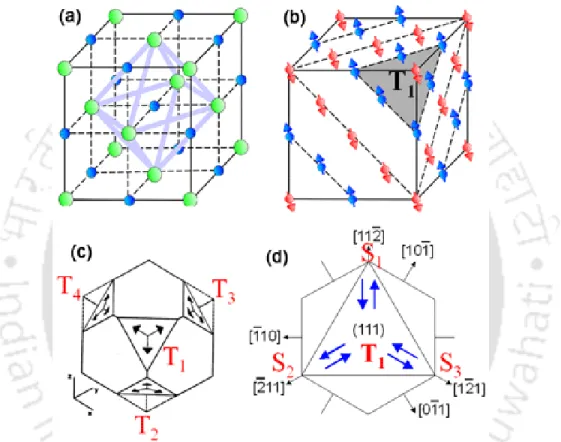
Within each (111) foil, the spin is driven to align along one of the three equivalent [112] directions by sources of smaller anisotropy as shown in Figure 2.01(b,c,d). On the other hand, we cannot see such an overlap with a typical t2g orbital (dxy) as shown in Figure 2.06(b).
Defects
- Extrinsic defects
- Intrinsic defects
This modifies the band structure of the materials, which in turn changes the properties of the materials. Doping in NiO is performed in order to increase the properties of parent NiO for possible applications.
Magnetic ordering 1. Origin of magnetism
- Diamagnetism
- Paramagnetism
- Ferromagnetism
- Antiferromagnetism
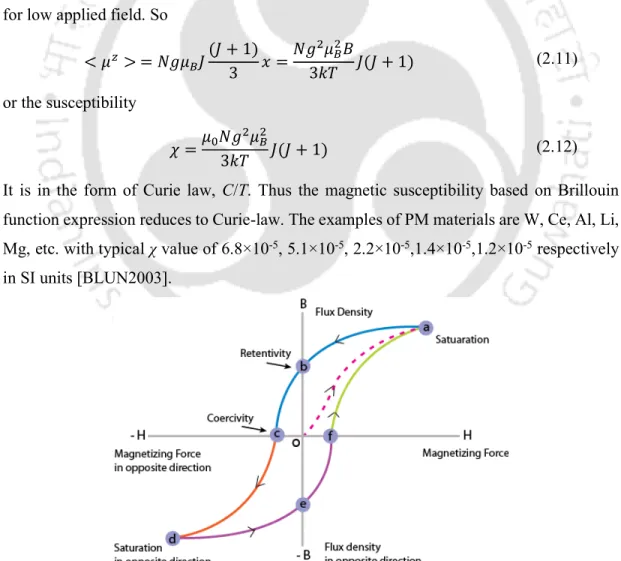
Spontaneous magnetization is the net magnetization that exists within a uniformly magnetized microscopic volume even in the absence of an external magnetic field. So the total magnetic field experienced by each dipole is the sum of the applied field B and the molecular field Bm.
Intrinsic properties of magnetic materials
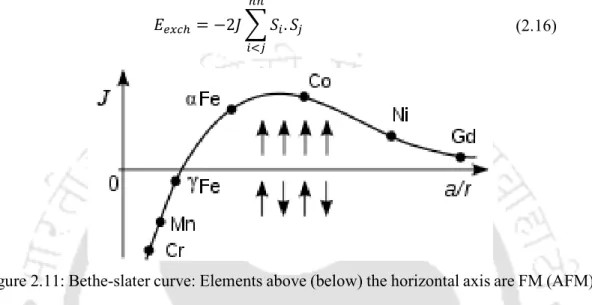
Assuming that the exchange interaction is the same for each nearest neighbor pair, eqn.(2.15) turns out to be. It is clear from Figure 2.11 that the value of J and hence the short-range exchange interaction strongly depends on the inter-atomic distance.
Anisotropy
- Magnetocrystalline anisotropy
- Shape anisotropy
- Induced anisotropy
- Magnetostrictive anisotropy
- Exchange anisotropy
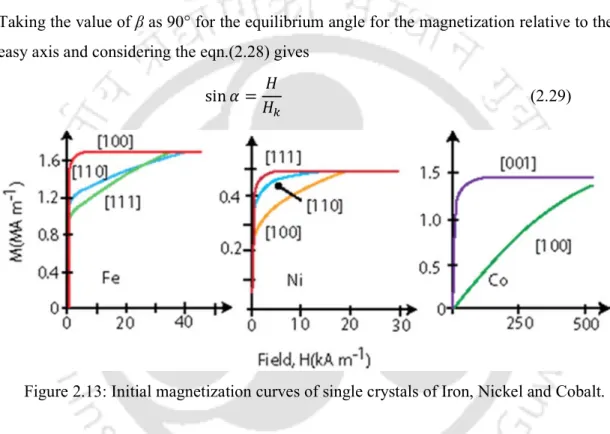
If λ is positive, applying a tensile stress to the bar creates an easy axis in the direction of the applied stress. If a compressive stress is applied, the direction of the let axis formed will be perpendicular to the stress direction.
Surface effects
Spin-glassy behavior of the surface spins. iv) Magnetically dead layer at the surface. v) Enhancement of magnetic anisotropy resulting in surface anisotropy. However, surface effects lead to a decrease or an increase in the magnetization of the nanoparticle.
Magnetic interaction
- Magnetic dipole-dipole interaction
- Direct exchange interaction
- Super-exchange interaction
- Anisotropic exchange interaction
- Ruderman-Kittel-Kausya-Yosida Interaction
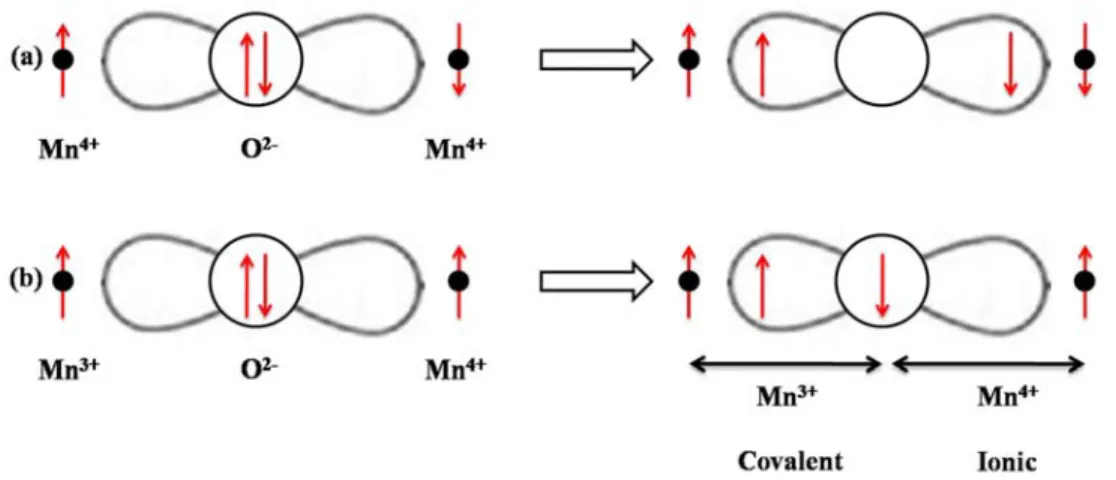
A schematic representation of the super exchange interaction producing AFM and FM is shown in Fig. 2.19(a) and (b), respectively. A first-principles study of the superexchange interaction in (Ga,Mn)V, (V = N, P, As and Sb) by Chang et al [CHAN2007] reports that the superexchange interaction is short-range AFM in nature and is found to be quite strong in (Ga,Mn)N and weak in (Ga,Mn)As and (Ga,Mn)Sb.
Experimental Methods
Introduction
In the course of the present research, several experimental techniques are used for the preparation and characterization of NiO samples.
Techniques used for sample preparation
- Ball milling technique
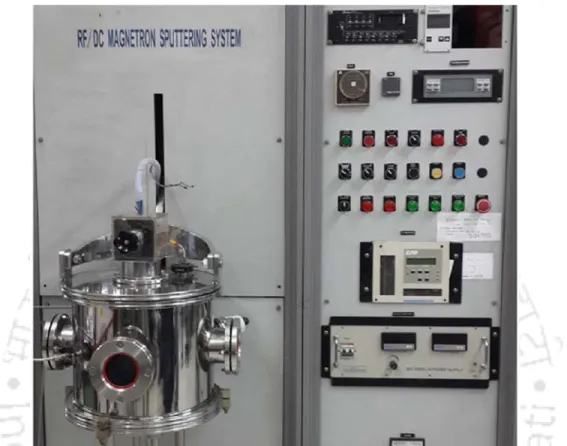
- Sputtering technique
- DC sputtering technique
- Magnetron sputtering technique
- Deposition rate calibration
- Heat treatment at elevated temperatures
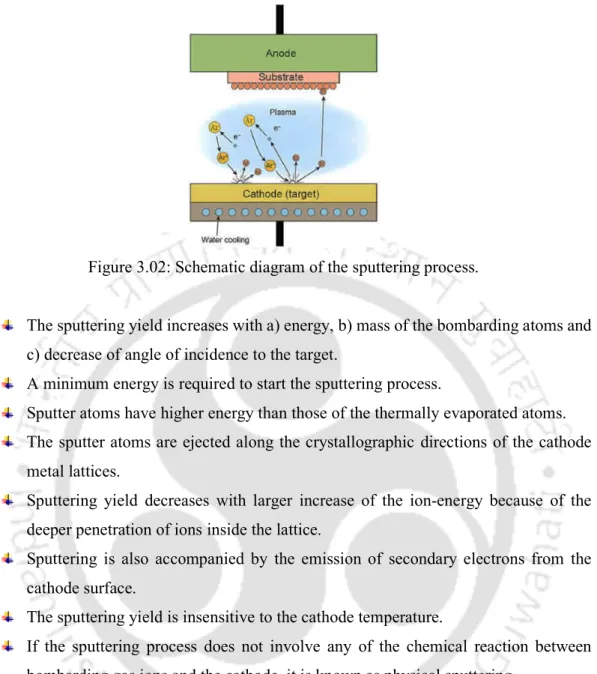
The sputtering yield increases with a) energy, b) mass of the bombarding atoms and c) decreasing angle of incidence to the target. The deposition of the films is carried out after the plasma is stabilized and the pre-sputtering process is completed.
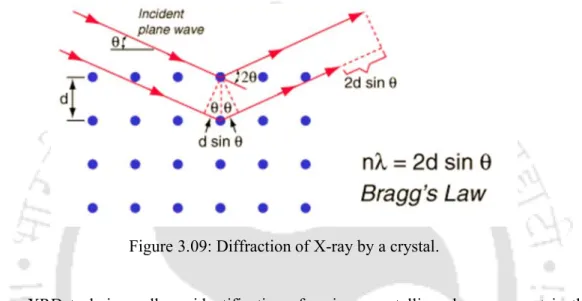
Structural characterization 1. X-ray diffraction
- Morphological and microstructural characterization 1. Scanning electron microscopy
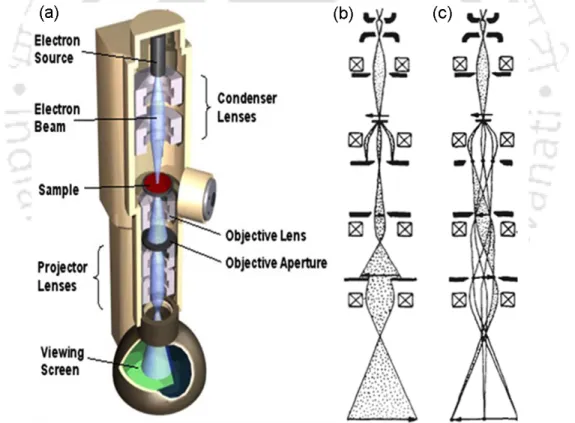
- Transmission electron microscopy
A photographic view of the FE-SEM used in the present study is shown in Figure 3.10. These primary bombarding electrons on the surface of the sample expel electrons called secondary electrons from the sample.
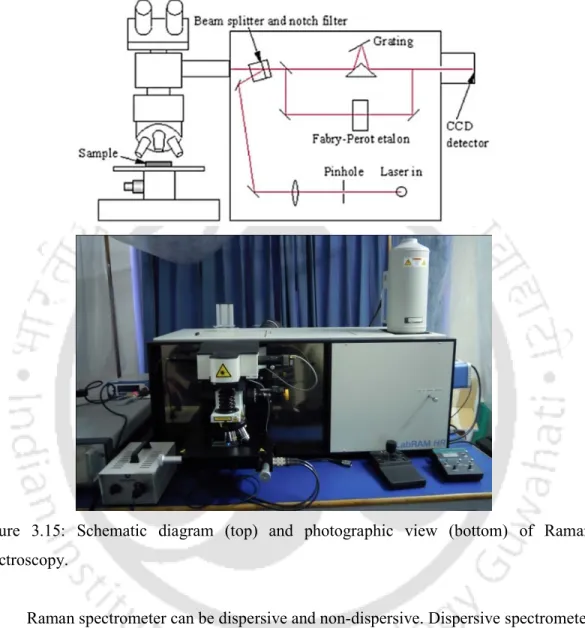
Spectroscopy characterization 1. Micro-Raman spectroscopy
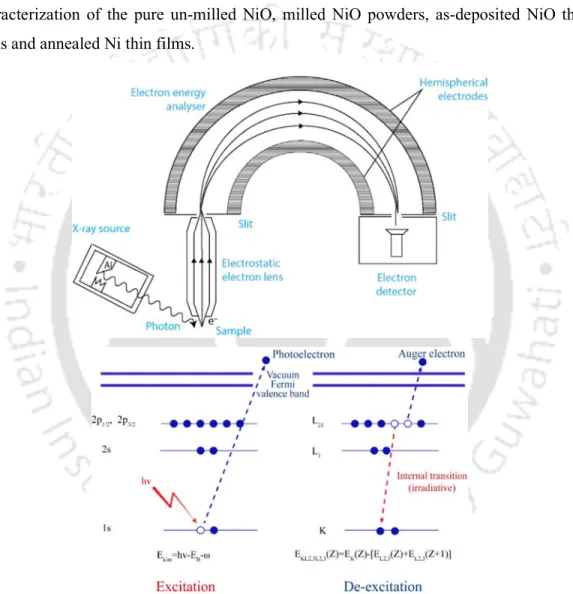
- X-ray photoelectron spectroscopy
- Electron spin resonance spectroscopy
The sample cavity is mounted in the center of the electromagnetic pole pieces perpendicular to the magnetic field, B, which can be varied in a controlled manner. The ideal way for EPR spectra is to fix the magnitude of the magnetic field and continuously vary its frequency.
Magnetic property characterization
- Vibrating sample magnetometer
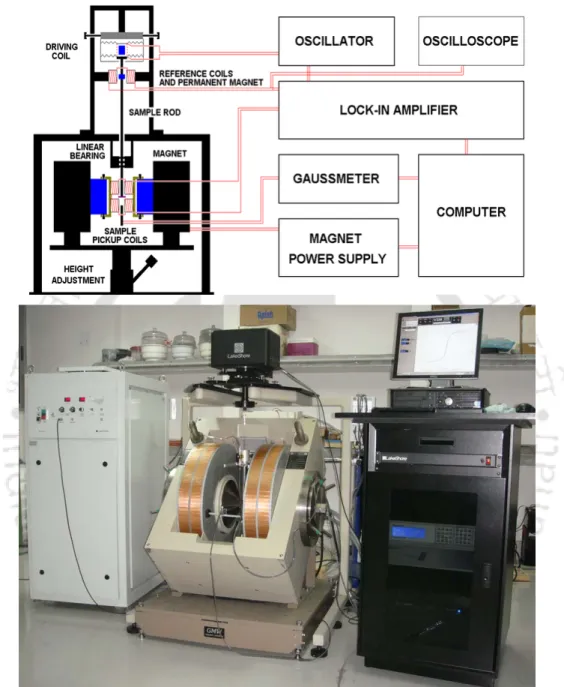
This signal has an amplitude that is proportional to the magnetic moment of the sample, the oscillation amplitude and the oscillation frequency. The furnace is purged with nitrogen gas to prevent oxidation of the sample at high temperature.
Electrical resistivity characterization
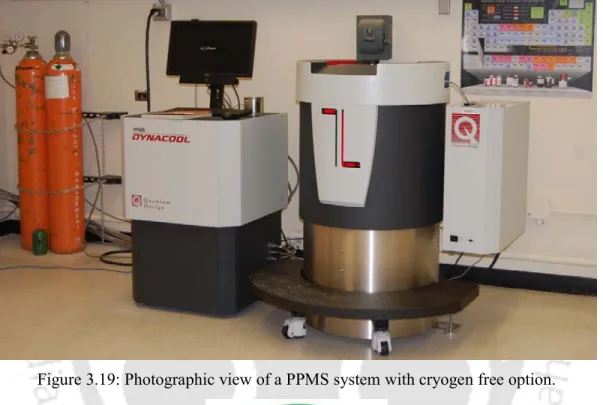
- Physical Property Measurement System
When a sample is placed in a uniform magnetic field, a dipole moment is proportional to the product of the sample's susceptibility and the applied field induced in the sample. The exciter is vibrated at a frequency of 72 Hz (Lakeshore model 7410) and the signal received from the hall probe and pick-up coils is converted into the sample's magnetic moment.
Effect of milling speeds on the properties of NiO powders
Introduction
The first investigation of the size-dependent magnetic properties of NiO was reported by Richardson et al [RICH1956]. Over the past decade, extensive studies of particle size-dependent magnetic properties [KODA1997, TIWA2005, WINK2005], finite size versus surface area effects on magnetic properties [MAND2011], substitution effect [CAZZ2003, PECK2011] and magnetic crossover at room temperature have been reported. [WANG2005 , LILL2006, HONG2006, THOT2007] NiO prepared by different.
Experimental details
The microstructural properties of the pure unmilled and milled NiO powders are analyzed using transmission electron microscopy (TEM, JEOL 2100 and TECNAI G2 F30) technique. Magnetic properties of the pure unmilled and milled powders are characterized using vibrating sample magnetometer (VSM, LakeShore Model 7410) by (i) magnetic hysteresis (M-H) loops at different temperatures under zero-field cooling (ZFC) and field- cooled (FC) conditions and (ii) high-temperature thermomagnetization (M-T) measurements over a wide range of temperatures from 300 K to 1100 K performed at 4 °C/min heating rate with the applied field of 2 kOe.
Results and discussion
- Properties of milled NiO powders 1. Structural properties
- Vibrational properties
- Electronic properties
- Magnetic properties
- Resonance properties
- Properties of annealed NiO powders
- Structural properties
- Magnetic properties
- Resonance properties
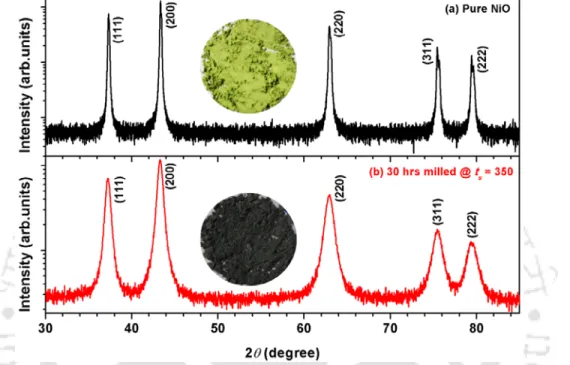
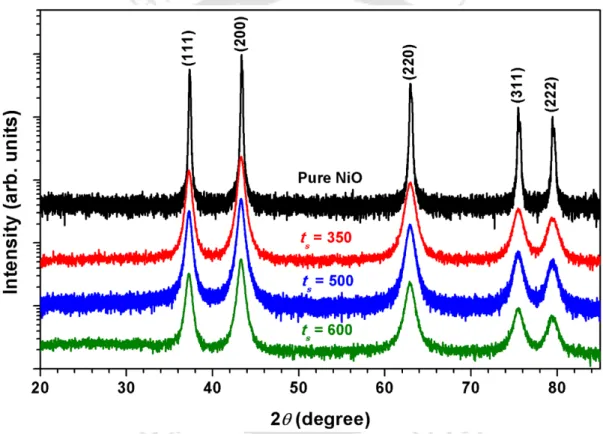
It is clearly seen that the milled NiO powders show a large decrease in D and increase in η compared to the pure unmilled NiO powder. On the other hand, ground NiO powders show reduced particle size and agglomerated particles.
Summary
As previously described, the ground NiO powders exhibit a broad resonance peak at a low field, in contrast to the unground NiO powder [KAKA2014]. This changes the color of the powder from light green for pure, unground NiO to dark green for ground NiO powders.
Thickness dependent ferromagnetism in thermally decomposed
Introduction
Jang et al [JANG2009] reported that the improved electrical properties of sputtered NiO thin films are mainly due to the nickel vacancy-based defects. The NiO targets are therefore prepared from the ball-milled NiO powders with different crystallite sizes in order to study the effects of the initial crystallite size of the powders used for the production of targets on the dynamics of thickness-dependent thermal decomposition and the resulting magnetic properties of NiO -to study thin films.
Experimental details
The phase evolution and crystal structure of NiO thin films are analyzed through X-ray diffraction (XRD) patterns obtained using a high-power (18 kW) X-ray diffractometer (Rigaku TTRAX III, Japan). The microstructural properties of the deposited and annealed NiO thin films are analyzed using transmission electron microscopy (TEM, JEOL 2100 and TECNAI G2 F30) technique.
Results and discussion
- Properties of NiO films prepared from target of 350 rpm NiO powder 1. Structural properties
- Vibrational properties
- Magnetic properties
- Properties of NiO films prepared from target of 600 rpm NiO powder 1. Structural properties
- Magnetic properties
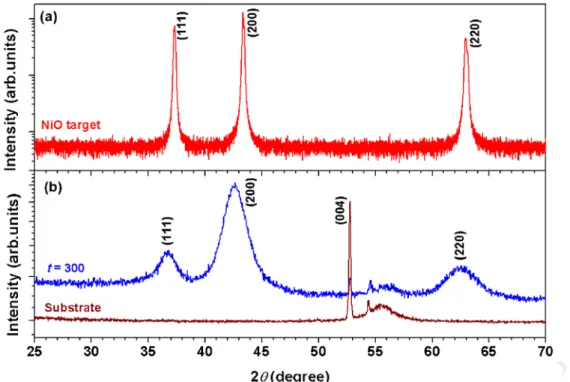
This can be attributed to the thickness-dependent thermal decomposition behavior observed for NiO films annealed at 500 °C under vacuum environment. This is mainly due to the thickness-dependent decomposition behavior of NiO films annealed at 400 °C under vacuum environment.
Summary
However, the degradation reaction is completely suppressed for the NiO films annealed under oxygen conditions. The effect of the initial crystallite size of the target powders on the thermal degradation of the sputtered NiO films reveals a significant decrease in the degradation temperature (by about 100 °C) for the NiO films.
Thickness dependent thermal oxidation in Ni thin films
Introduction
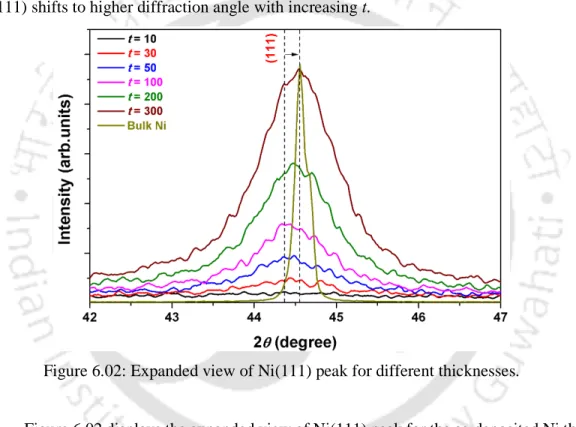
Therefore, it is also expected that the oxidation behavior of Ni thin films may depend on the Ni film thickness and annealing temperature. The observed results show that the magnetic and electrical properties of Ni thin films strongly depend on the thickness-dependent crystallization of the oxide phase formed.
Experimental details
The magnetic properties of the as-deposited and annealed Ni thin films are characterized using a vibrating sample magnetometer (VSM, Lake Shore Model 7410) by performing (i) magnetic hysteresis (M-H) loops along the plane of the film at various constant temperatures in the range temperature between 30 K and 300 K and (ii) high-temperature thermomagnetization (M-T) measurements in the temperature range from 300 K to 1000 K. Room temperature electrical resistivity behavior of as-deposited and annealed Ni films characterized using the physical property measurement system (PPMS, Quantum Design, USA).
Results and discussion 1. Structural properties
- Thermal oxidation process
- Vibrational properties
- Magnetic properties
- Electrical properties
The deposited Ni(200 nm) thick film shows quite uniform grains on the surface, which is in good agreement with the previous reports on similar systems [ABDE2016, DRAG2016]. This is due to the formation of clear NiO phases on the top surface of the films.
Summary
As TA increases to 400 °C, the resistance of the films increases greatly compared to the films deposited and annealed at 250 °C. The electrical resistance of the as-deposited Ni films mainly decreases with increasing t and follows the model proposed by Namba.
Summary and scope for future work
Summary of the results
The effects of the initial crystal size of NiO powders used to prepare NiO targets on the dynamics of thickness-dependent thermal breakdown and the resulting magnetic properties of NiO thin films were investigated. All the deposited and annealed NiO films up to 400 °C (300 °C) under vacuum conditions prepared from the NiO target prepared using 350 (600) rpm milled NiO powders are shown.
Scope for future work
JUAN2014] Juang J, Chen C-Y, Yang CF, Proceedings of the 2nd International Conference on Intelligent Technologies and Engineering System, Springer Science & Business, New York (2014). KRON2003] Kronmuller H, Fahle M, Micromagnetisme en de microstructuur van ferromagnetische vaste stoffen, Cambridge University Press, New York (2003).
![Figure 2.04: Schematic representation TM ion in (a) octahedral (b) tetrahedral configurations [BASO1964]](https://thumb-ap.123doks.com/thumbv2/azpdfnet/10523585.0/31.918.163.769.159.766/figure-schematic-representation-tm-octahedral-tetrahedral-configurations-baso1964.webp)