Reducing the Environmental Impact of Cattle Operations
Nutrition of Cattle
Reducing the Environmental Impact of Cattle Operations
Edited by
Ernst Pfeffer
Institut fu¨r Tiererna¨hrung der Universita¨t Bonn, Endenicher Allee 15, D-53115 Bonn, Germany
and
Alexander N. Hristov
Department of Animal & Veterinary Science, University of Idaho, PO Box 44 -2330, Moscow, ID 83844 -2330, USA
CABI Publishing
CABI Publishing CABI Publishing
CAB International 875 Massachusetts Avenue
Wallingford 7th Floor
Oxfordshire OX10 8DE Cambridge, MA 02139
UK USA
Tel:þ44 (0)1491 832111 Tel:þ1 617 395 4056 Fax:þ44 (0)1491 833508 Fax:þ1 617 354 6875
E-mail: [email protected] E-mail: [email protected]
Web site: www.cabi-publishing.org
ßCAB International 2005. All rights reserved. No part of this publication may be reproduced in any form or by any means, electronically, mechanically, by photocopying, recording or otherwise, without the prior permission of the copyright owners.
A catalogue record for this book is available from the British Library, London, UK.
A catalogue record for this book is available from the Library of Congress, Washington, DC, USA.
Library of Congress Cataloging-in-Publication Data Nitrogen and phosphorus nutrition in cattle / edited by Alexander A. Hristov and Ernst Pfeffer.
p. cm.
Includes bibliographical references (p. ).
ISBN 0-85199-013-4 (alk. paper)
1. Cattle--Feeding and feeds. 2. Nitrogen in animal nutrition. 3. Phosphorus in animal nutrition. I. Hristov, Alexander A. II. Pfeffer, Ernst. III. Title.
SF203.N58 2005 636.2’0852--dc22
2004022637 ISBN 0 85199 013 4
Typeset by SPI Publisher Services, Pondicherry, India Printed and bound in the UK by Biddles Ltd, King’s Lynn
Contributors vi 1 Interactions between Cattle and the Environment: a General Introduction 1
E. Pfeffer and A.N. Hristov
2 Nitrogen Requirements of Cattle 13
C.G. Schwab, P. Huhtanen, C.W. Hunt and T. Hvelplund
3 Nitrogen Metabolism in the Rumen 71
N.D. Walker, C.J. Newbold and R.J. Wallace
4 Factors Affecting the Efficiency of Nitrogen Utilization in the Rumen 117 A.N. Hristov and J.-P. Jouany
5 Whole-animal Nitrogen Balance in Cattle 167
J.L. Firkins and C. Reynolds
6 Phosphorus Metabolism in the Rumen 187
R.L. Kincaid and M. Rodehutscord
7 Phosphorus Metabolism in Ruminants and Requirements of Cattle 195 E. Pfeffer, D.K. Beede and H. Valk
8 Effects of Dietary Phosphorus and Nitrogen on Cattle Reproduction 233 J.D. Ferguson and D. Sklan
9 Improving the Efficiency of Nutrient Use on Cattle Operations 255 J. Schro¨der, A. Bannink and R. Kohn
Index 281
v
Dr Bannink, Wageningen University and Research Centre, Institute for Animal Science and Health, PO Box 65, 8200 AB Lelystad, The Netherlands.
Dr Beede, Michigan State University, Department of Animal Science, 2265K Anthony Hall, East Lansing, MI 48824-1225, USA.
Dr Ferguson, University of Pennsylvania, Department of Clinical Studies, New Boldon Center, 382 West Street Road, Kennett Square, PA 19348, USA.
Dr Firkins, Ohio State University, Department of Animal Sciences, College of Food, Agriculture and Environmental Science, Columbus, OH 43210, USA.
Dr Hristov, University of Idaho, Department of Animal and Veterinary Science, PO Box 44-2330, Moscow, ID 83844-2330, USA.
Dr Huhtanen, MTT Agrifood Research Centre, Animal Production Research, FIN-31600, Jokioinen, Finland.
Dr Hunt, University of Idaho, Department of Animal and Veterinary Science, PO Box 44-2330, Moscow, ID 83844-2330, USA.
Dr Hvelplund, Institute of Agricultural Sciences, Department of Animal Nutrition and Physiology, PO Box 50, DK-8830 Tjele, Denmark.
Dr Jouany, Institut National de la Recherche Agronomique, Centre de Clermond-Ferrand – Theix, F-63122 Saint Genes Champanelle, France.
Dr Kincaid, Washington State University, Animal Sciences Department, Pullman, WA 99164-6310, USA.
Dr Kohn, University of Maryland, Department of Animal and Avian Sciences, College Park, MD 20742, USA.
Dr Newbold, Rowett Research Institute, Bucksburn, Aberdeen, AB21 9SB, UK.
Professor Pfeffer, Institut fu¨r Tiererna¨hrung der Universita¨t Bonn, Endenicher Allee 15, D-53115 Bonn, Germany.
Dr Reynolds, College of Food, Agriculture and Environmental Sciences, Wooster, OH 44691, USA.
Dr Rodehutscord, Martin-Luther-Universitat Halle-Wittenberg, Institut fur Ernahrungswissenschaf- ten, D-06108 Halle (Saale), Germany.
Dr Schro¨der, Plant Research International, Wageningen University and Research Centre, PO Box 16, 6700 AA Wageningen, The Netherlands.
Dr Schwab, University of New Hampshire, Department of Animal and Nutrition Sciences, Ritzman Lab, 22 Colovos Road, Durham, NH 03824, USA.
vi
Dr Sklan, Hebrew University, Faculty of Agriculture, PO Box 12, Rehovot 76-100, Israel.
Dr Valk, Animal Sciences Group, Edelhertweg 15, PO Box 65, NL 8233 AB Lelystad, The Netherlands.
Dr Walker, Rowett Research Institute, Bucksburn, Aberdeen, AB21 9SB, UK.
Dr Wallace, Rowett Research Institute, Bucksburn, Aberdeen, AB21 9SB, UK.
Animals depend on regular supply of a number of nutrients serving different functions in their metabolism. These nutrients have to be provided by feeds ingested by the animals. Normally, nutrients yielding metabolizable energy are responsible for most of the feed cost. For this reason it appeared logical for a long time to aim at maximum efficient utilization of feed energy as the target of calculating rations for farm animals, while more or less generous ‘safety margins’ were recommended with respect to less expensive nutrients by advisors in all countries until recently.
This purely economical approach of optimizing rations did not take into consideration the fate of that part of ingested nutrients which is not transferred into the animal products. Only towards the end of the 20thcentury was it generally recognized that animal units may be the cause of dramatic local or regional surpluses of nutrients creating serious impacts on soil, water and air.
Limiting nitrate in drinking water to lowered concentrations after changed legislation appeared especially critical from groundwater found in regions with high stocking densities of farm animals and it was estimated that dairy cows were responsible for more than half of the ammonia emitted into the air, consequently causing accumulations of nitrogenous compounds in natural precipitation. Even after removal of phosphates from detergents intensive growth of algae was observed in lakes and streams and this was interpreted to a great proportion as a consequence of phosphate enrichment in particulate matter transferred from fields into surface water due to erosion. Again, the highest phosphate concen- trations of soils were found in regions with very high stocking densities.
Animal nutritionists increasingly realized that this situation is to be seen as a challenge to their scientific discipline. Avoiding nutrient deficiencies by allowing unnecessary safety additions may ignore the ecological demand that production of food for humans has to be sustainable.
A great number of studies dealing with details of sustainable animal production has been carried out and published and any attempt to survey the present state of the art has to be restricted with respect to species as well as nutrients. This book, therefore, is restricted to nitrogen and phosphorus in cattle, from basic biological facts to practical feeding and farm management.
The editors are grateful to all authors for their respective contributions and to CABI for publishing this book. In September 2004 we received the sad news of the death of David Sklan, he will be remembered as a respected scientist and a dear colleague.
Ernst Pfeffer and Alex Hristov
Bonn, Germany, and Moscow, Idaho, October 2004.
viii
Chapter 1:
AFO Animal feeding operation
CAA Clean Air Act
CAFO Concentrated animal feeding operation
CWA Clean Water Act
DM Dry matter
ELG Effluent limitations guidelines EPA Environmental Protection Agency
NMP Nutrient management plan
NPDES Nutrient pollution discharge elimination system
NPN Non-protein nitrogen
PMx Particulate matter (equivalent diameters less thanmm)
TMR Total mixed ration
VAPS Voluntary alternative performance standards VOC Volatile organic compounds
Chapter 2:
AA Amino acids
AAT Amino acids absorbed from the small intestine
ADG Average daily gain
ADIN Acid detergent insoluble nitrogen
ATP Adenosine tri-phosphate
BW Body weight
CNCPS Cornell Net Carbohydrate and Protein System
CP Crude protein
dCHO Intake of digestible carbohydrates
DIM Days in milk
DIP Digestible intake protein
DK Danish system of protein evaluation
DM Dry matter
ix
DMI Dry matter intake DOM Digestible organic matter DUP Digestible undegraded protein
DVE Darm Verteerbar Eiwit
EAA Essential amino acids
ECM Energy corrected milk
ECP Endogenous crude protein
EDP Effective protein degradability
EE Ether extract
EDP Effective degradability of protein EPD Effective protein degradability EQSBW Equivalent shrunk body weight ERDP Effective rumen degradable protein FIN Finnish system of protein evaluation FME Fermentable metabolizable energy FOM Fermentable organic matter GER German system of protein evaluation
His Histidine
INRA Institut Nationale de la Recherche Agronomique L Leeding of feeding (multiple of maintenance)
Leu Leucine
Lys Lysine
MCP Microbial crude protein
Met Methionine
MP Metabolizable protein
MPY Milk protein yield
MSPE Mean squared prediction error
MUN Milk urea nitrogen
NDF Neutral detergent fibre
NAN Non-ammonia nitrogen
NE Net energy
NPN Non-protein nitrogen
NRC National Research Council NSC Non-structural carbohydrates nXP Utilizable crude protein
OM Organic matter
PBV Protein balance value in the rumen PDIA Truly digestible rumen undegraded protein
PDIE Protein value, when energy is limiting microbial growth PDIN Protein value, when nitrogen is limiting microbial growth QDP Quickly degraded protein
RDP Rumen degradable feed protein
RE Retained energy
RMSE Root mean square error
RUP Rumen undegradable feed protein
SDP Slowly degraded protein
TDN Total digestible nutrients
Thr Threonine
TP Tissue protein
VAL Valine
VFA Volatile fatty acids
WG Weight gain
Chapter 3:
AA Amino acids
Ala Alanine
Arg Arginine
ATP Adenosine tri-phosphate
BAC Bacterial artificial chromosome CFB Cytophaga-flexibacter-bacteroides
CP Crude protein
CPCR Competitive polymerase chain reaction DCCD Dicyclohexylcarbodiimide
DIC Diphenyliodonium chloride
DM Dry matter
DNA Deoxy ribonucleic acid
DPP Dipeptide peptidase
EDTA Ethylene diamine tetraacetic acid
GDH Glutamate dehydrogenase
GIT Gastro-intestinal tract
Gly Glycine
GM Genetically modified
HAP Ammonia hyperproducing bacteria
Leu Leucine
LPNA Leucine p-nitroanilide
Lys Lysine
LysAlaMNA Lysine alanine 4-methoxy-2-nitroanilide mRNA Messenger ribonucleic acids
NAD Nicotinamide adenosine dinucleotide
NADP Nicotinamide adenosine dinucleotide phosphate
NSAAPPPNA N-Succinyl alanine alanine phenylalanine proline p-nitroanilide PCR Polymerase chain reaction
Pro Proline
RDP Rumen degradable protein
RDNA Ribosomal deoxy ribonucleic acid
RNA Ribonucleic acids
scFA Short chain fatty acids
SDS-PAGE Sodium dodecyl sulphate polyacrylamide gel electrophoresis
TCA Tri-carboxylic acid
Chapter 4:
ATP Adenosine tri-phosphate
BCFA Branched chain fatty acids
BW Body weight
CHO Carbohydrates
CP Crude protein
CT Condensed tannins
DM Dry matter
DMI Dry matter intake
EO Essential oils
ESBM Expeller soybean meal
FA Fatty acid
GLU Corn dextrose
HMEC High moisture ear maize
HT Hydrolysable tannins
MN Microbial nitrogen
MPS Microbial protein synthesis
MUN Milk urea nitrogen
NAN Non-ammonia nitrogen
NDF Neutral detergent fibre
NE Net energy
NFC Non-fibre-carbohydrates
NPN Non-protein nitrogen
NSC Non-structural carbohydrates
OM Organic matter
PUN Plasma urea nitrogen
RDP Ruminally degradable dietary protein RUP Ruminally undegradable protein rusitec Rumen simulation technique
SSBM Solvent soybean meal
STA Corn starch
TNC Total non-structural carbohydrates VFA Volatile fatty acids
WSC Water soluble carbohydrates
Chapter 5:
ATP Adenosine tri-phosphate
BUN Blood urea nitrogen
CP Crude protein
DM Dry matter
DMI Dry matter intake
MRNA Messenger ribonucleic acid NAD Niacin adenosine dinucleotide
NAN Non-ammonia nitrogen
NANMN Non-ammonia non-microbial nitrogen NEL Net energy for lactation
NPN Non-protein nitrogen
PDV Portal drained viscera
RDP Rumen degradable protein
RNA Ribonucleic acids
RUP Rumen undegradable protein
TDN Total digestible nutrients
Chapter 6:
ADG Average daily gain
ATP Adenosine tri-phosphate
FTU Unit of phytase activity
Pi Inorganic phosphate
Chapter 7:
CP Crude protein
DipM Disintegrations per minute
DM Dry matter
DMI Dry matter intake
Pi Inorganic phosphate
PTH Parathyroid hormone
SA Specific radioactivity Chapter 8:
ATP Adenosine tri-phosphate
cAMP Cytosolic adenosine monophosphate
CL Corpora lutea
CP Crude protein
CR Conception rate
DIPR Difference between requirement for and dietary supply of rumen degradable protein
DM Dry matter
DMI Dry matter intake
DNA Deoxy ribonucleic acids
LH Luteinizing hormone
LR Likelihood Ratio
MP Metabolizable protein
MUN Milk urea nitrogen
Pi Inorganic phosphate
RDN Rumen degradable protein
RUP Rumen undegradable protein
SPC Services per conception TDN Total digestible nutrients Chapter 9:
A Milk and meat
AN Additional nitrogen requirement
ANU Additional nitrogen requirement per unit milk and/or meat
CP Crude protein
CF Nutrients of crops appearing as feed
DM Dry matter
EX Fraction of harvested nutrients being exported
F Feed and bedding
FP Transfer of nutrients from feed to product (efficiency of nutrient utilization)
I Nutrient input
IM Fraction of nutrients in feed and bedding material being imported IMN Permitted feed nitrogen import per hectare
IMNU Permitted feed nitrogen imported per unit milk and/or meat IMP Permitted feed phosphorus import per hectare
IMPU Permitted feed phosphorus imported per unit milk and/or meat
L Nutrient losses
M Loss in faeces, urine and worn bedding MACN Maximum attainable crop nitrogen per hectare MAON Maximum attainable nitrogen output per hectare
MP Metabolizable protein
MS Transfer of manure nutrients to soil
O Nutrient output
RDP Rumen degradable protein
SC Transfer of nutrients from soil to harvested crops
1 Interactions between Cattle and the Environment: a General Introduction
E. Pfeffer
1and A.N. Hristov
21Institut fu¨r Tiererna¨hrung der Universita¨t Bonn, Bonn, Germany
2Department of Animal and Veterinary Science, University of Idaho, Moscow, Idaho, USA
1.1 Role of Animals in Man’s Search for Food ... 1
1.2 Historical Highlights in Research Concerning N and P as Nutrients ... 2
1.3 Resources of N and Phosphate as Plant Nutrients ... 4
1.4 Elementary Balances in Animal Production ... 6
1.5 Environmental Regulations in the USA and the European Union ... 7
References ... 10
1.1 Role of Animals in Man’s Search for Food
At the beginning of human civilization, hunting animals was the predominant way to find food for man in most parts of the world. Domestication of animals was a remarkable step to secure food when, as a consequence of the growing density of human population, natural resources limited the potential quantity of food to be found just by hunting.
Developing pastoral systems were characterized by large areas producing little or no crops that could be consumed directly by man. Most of the vegeta- tion growing on these areas could be utilized only as feed for the herds, mostly consisting of ruminants.
Regular bleeding of animals and using the blood as food, from time to time slaughtering individual animals from the flock and finally allowing the offspring to drink only a part of the milk produced by their dams, in order to use the remaining milk as food for human consumption, were phases of devel- oping more intensive forms of animal husbandry.
Each of these phases ranging from nomadic systems to intensive grassland management can still be found in some regions of the world. The major function of animals in these systems is to extract nutrients from vast areas and concentrate them into food for man. In this phase excreta of the animals usually raise hardly any interest in herdsmen.
In order to increase the amount of food har- vested per unit of area, land was ploughed and crop production was started in areas where cli- mate and access to water allowed this. Density of human population usually is much higher in these crop-producing than in pastoral systems, i.e. land often is limiting the potential amount of food pro- duced. Animals in such systems have the function to increase yields per unit of area and this is achieved by using them as draught animals and by using their excreta as fertilizer on the fields.
The old German expression of ‘pasture as the mother of arable land’ illustrates this situation:
draught animals and animals grazing on extensive rangeland during the daytime were flocked or kept in stalls overnight; excreta voided during ßCAB International 2005.Nitrogen and Phosphorus Nutrition of Cattle
(eds E. Pfeffer and A.N. Hristov) 1
the night were conserved and used to increase the concentration of plant nutrients in the soil of tilled fields. The author of the first German textbook of agricultural science expressed his opinion about the function of animals in farms as follows:
Die Tiere sind bloß wie Maschinen anzusehen, welche . . . die Fu¨tterung zum . . . bei weitem gro¨ßern Theil . . . in Mist . . . verwandeln (The animals are to be regarded just like machines which to by far the greater part convert feed into manure) (Thaer, 1809, p. 257).
Although plant nutrients were not yet identified, it was recognized that without returning excreta of animals as manure fertility of the fields could not be sustained. Today, in most areas farmers and extension workers no longer regard manure as the only source of plant nutrients, but
‘cut and carry’ systems in some areas seem to still follow this line. As long as farmers do not purchase fertilizer or feeds they are in danger of having negative nutrient balances in their fields, and for this reason excreta of animals are regarded as a saving box for plant nutrients which have to be returned to the land from which they were origin- ally extracted and transferred into plant material.
Up to a certain degree, therefore, ‘horizontal movement of nutrients’ can be an intended effect of animal husbandry by which animals carry nutrients from wide areas into folds or stalls, where their excreta are regarded as a major prod- uct of high value.
More than a 100 years after Albrecht Thaer, Theodor Brinkmann, professor of farm manage- ment in Bonn, tried to determine the value of the various production factors for the farmer.
Although he no longer regarded excreta as the main animal product, he pointed out that purchased concentrate feeds not only promoted milk and meat production directly but also imported plant nutrients into the farm. The monetary value of these plant nutrients had to be taken into account;
he critically added that this, however, was valid only as long as the respective plant nutrients were truly missing in the farm because otherwise pur- chased feeds would only increase existing surpluses (Brinkmann, 1922, p. 109). This latter situation of excessive presence of nutrients has developed towards the end of the 20th century in wide regions of Europe and North America with the consequence of negative ecological effects. A first attempt to create a comprehensive international overview on
emission of ammonia was made more than 10 years ago (Klaassen, 1992) and feeding strategies to decrease potentials for nitrogen (N) and phos- phorus (P) pollution have gained increasing rele- vance (CAST, 2002). This book intends to summarize scientific aspects related to nitrogen and phosphorus supply and use by cattle and resulting impacts on sustainability of agriculture.
The restriction to N and P appears justified at present as these nutrients have been found to play a predominant role in the fertility of soils and in impacts on the environment, but other elements will have to be taken into consideration as well in the near future.
1.2 Historical Highlights in Research Concerning N and P as Nutrients Of the more than 100 elements found in the peri- odic table today, only a dozen were known 350 years ago, among them carbon, sulphur, iron, copper, silver and gold. The term ‘element’ was not used in today’s meaning and alchemists were convinced that they could, by experimentation, find the ‘philo- sopher’s stone’ by which they could turn worthless materials into gold. One of these alchemists was Henning Brand in Hamburg who in 1669 heated concentrated urine without admitting air and found a snow-white substance, which immediately burned out when exposed to air, thereby illumin- ating the dark room (Childs, 2003; Van der Krogt, 2003d). This property of giving light was the base for naming of the substance discovered by Brand, from the Greek words wvs [phos]¼light; and werv [phero]¼to carry, to bring. Phosphorus thereby was the first element to be identified in modern times. About 100 years after Brand’s dis- covery, the Swedish chemists Gahn and Scheele found calcium phosphate to be a major constituent of bone (McDowell, 1992). Today it is common knowledge that P is involved in practically all meta- bolic processes as phosphate (H2PO4=HPO24 ) or as phosphate-containing organic compounds.
About a century after the finding of P, the identification of three gases substantially pro- moted the scientific understanding of nature (Van der Krogt, 2003a,b,c):
1. In 1766, Henry Cavendish reported to the Royal Society in England about ‘inflammable air from the metals’.
2. In 1772, Daniel Rutherford in Scotland showed that air in which animals had breathed (even after removal of the exhaled ‘fixed air’ – carbon dioxide) was no longer able to burn a candle, he named this entity ‘aer malignus’ or noxious air.
3. In 1774, Joseph Priestly obtained a colourless gas by heating red mercuric oxide in which a candle would burn ‘with a remarkable flame’
(Carl Wilhelm Scheele in Sweden had discovered the same gas in 1766, but his publication was delayed until 1777, due to neglect by his pub- lisher).
Antoine Lavoisier (1743–1794) suggested names for these gases derived from Greek. They include the syllable ‘ge`ne’ fromgeinomai(geino- mai)¼to engender, bring forth.
As combustion of the ‘inflammable air’ always produced water, it was characterized by the word ydvr (hydro)¼water, hydroge`ne (H) in French and hydrogen in English. The German name Wasserstoff means the identical (Wasser¼water;
Stoff¼material).
The major property of the gas causing the
‘remarkable flame’ was thought to be the forma- tion of acids. Therefore, the word ojys (oxys)
¼acid became characteristic for oxyge`ne (O) in French, oxygen in English and Sauerstoff in German (sauer¼acid, sour).
Referring to the gas discovered by Daniel Rutherford, Lavoisier pointed out:
nous l’avons donc nomme´ azote, de l’aprivatif des Grecs, et dezvh, vie, ainsi la partie non respirable de l’air sera le gaz azotique (we, therefore, named it azote, from the Greek alpha privativum and fromzvh, life, thus the not respirable part of the air will be the azotique gas).
Following the same thought, the gas was named Stickstoff in German, derived from the verb erstick- en¼to suffocate. In 1790, Jean Antoine Chaptal proposed the name nitroge`ne. The Greek word nitron[nitron] was used for saltpetre (potassium nitrate), thus the name nitroge`ne means ‘making soda/saltpetre’ (Van der Krogt, 2003b). The latter name was adopted in English as nitrogen.
With carbon and sulphur known for a long time and the three elements nitrogen, oxygen and hydrogen discovered before the end of the 18th century, interest increased in the quantitative ana- lyses of elements in various organic materials at the beginning of the 19th century. Mulder (1838) car- ried out a large series of analyses in what he called
the ‘most important substances in the animal king- dom’ – fibrin, albumin and gelatine. Regularly, he found that these substances contained more than 50% carbon, about 22% oxygen, between 15.5%
and 16% nitrogen, about 7% hydrogen, and less than 1% phosphorus and sulphur. He stated:
La matie`re organique, e´tant un principe ge´ne´ral de toutes les parties constituantes du corps animal, et se trouvant, comme nous verrons tantot, dans le re`gne ve´ge´tal, pourrait se nommerProte´inede prvteiosprimarius (the organic matter, being a general principle of all parts forming the animal body and to be found, as we shall soon see, in the plant kingdom as well, may be namedProteinfrom proteios[Greek]¼primarius[Latin]).
Thus, the name protein was meant to indicate that organic compounds containing nitrogen are by no means adverse to life (azotique) but, on the con- trary, are of primary importance and play a pre- dominant role in biological processes.
This thought was immediately taken up by Justus von Liebig who is often referred to as ‘father of agricultural chemistry’. Liebig (1840, p. 64) wrote:
In dem humusreichsten Boden kann die Entwicklung der Vegetabilien nicht gedacht werden ohne das Hinzutreten von Stickstoff, oder einer stickstoffhaltigen Materie (In soil, even richest in humus, it is impossible to imagine development of plants without the presence of nitrogen or nitrogen containing material).
He then continues to explain that there is no reason for believing that N from the air can participate in processes of animals or plants and that, on the other hand, he had found strong correlations between the amount of ammonia taken up through the roots and the amount of gluten formed in grains. Further, he observed that the presence of P was essential for the transformation of N from ammonia into pro- tein formed by plants.
Liebig’s conviction that there were only three proteins and that these were transferred without any change from plants as food into animal tissues (Liebig, 1843) was challenged by the work of Voit (1872) who found considerable differences in N balances of dogs fed varying proportions of meat and gelatine. Thomas (1909) balanced N in his own body over periods in which he ingested a constant N-free basal diet of starch and sugar either alone or supplemented by different vege- table or animal products as sole sources of
protein. From the results, he concluded that clear differences exist in the ‘biological value’ of the protein in different foods. Mitchell (1924), taking up the basic idea of Thomas (1909), defined the
‘biological value’ of a diet component fed to rats as the percentage of absorbed N equivalent to the sum of metabolic faecal N, endogenous urinary N and retained N. A more complete review of the history of research and understanding of protein metabolism is given by Munro (1964).
Amino acids were identified in the period between 1806 and 1935 (Meister, 1965). Once the biological function of these components of all natural proteins had been discovered, analyses of indispensable amino acids became more meaning- ful than the biological value of complete proteins.
In non-ruminant nutrition nowadays, free amino acids are frequently used for upgrading natural proteins and requirements, as well as recom- mendations for supply, and are increasingly based on amino acids absorbed prior to the cae- cum, i.e. from the small intestine.
Towards the end of the 19th century, funda- mental differences between non-ruminants and ruminants with regard to utilization of N became obvious. Zuntz (1891), at the end of a review dealing with digestion of cellulose, addressed the finding that asparagine as the sole source of diet- ary nitrogen is worthless in dogs but has positive effects in ruminants. He proposed the hypothesis that nitrogen of asparagine and comparable amides might be incorporated into microbial pro- tein, which then could be digested by ruminants.
This is seen as the starting point of research into non-protein nitrogen (NPN) use in ruminants (Bergner, 1986).
More than 50 years after Zuntz’s hypothesis, Loosliet al. (1949) presented concentrations of the ten essential amino acids in rumen material, faeces and urine of three sheep and two goats fed diets containing urea as the sole source of dietary N; the results were clear evidence of massive amino acid synthesis in the rumen. Lambs fed this diet gained about 100 g daily. Microbial synthesis of all amino acids was fully confirmed in rumen-fistulated calves by Duncanet al. (1953). Long-term feeding experiments in Finland finally proved that cows fed purified rations with urea and ammonium salts as the sole sources of N could not only survive but reproduce and produce moderate milk yields with normal composition over repeated lactations (Vir- tanen, 1966).
The potential of microorganisms to utilize NPN is not restricted to urea as a feed additive – it is also relevant for urea synthesized in the liver of their host animal. Simonnetet al. (1957) found in anaesthetized sheep that urea accumulated in the isolated forestomach filled with saline and con- cluded the existence of a cycle by which urea present in the blood was returned into the digest- ive tract. Schmidt-Nielsenet al. (1957) showed in a camel on very low N intake that not only quan- tities of urea in the urine were minimized but also that intravenously infused urea was retained in the body. From measuring urea clearance rates and glomerular filtration rates, these authors con- cluded that fractions of the filtered urea excreted were about 40% during normal N intake but only 1–2% during extremely low N intake. One way for blood urea to enter the rumen is via saliva, but there is also a direct transfer through the mucosa of the rumen wall, which has been reviewed by Houpt (1970). The role played by bacteria adhering to the rumen wall in the transfer of urea N from the blood into the rumen was reviewed by Cheng and Costerton (1980).
Rapidly growing knowledge about factors influ- encing the quantity of amino acids flowing to the duodenum of cattle led to the consequence that digestible crude protein could no longer be regarded as an adequate basis for describing re- quirements and supply of N in ruminants, and alternative systems were proposed (Roy et al., 1977; Satter and Roffler, 1977; Ve´rite´ et al., 1979; Madsen and Hvelplund, 1984; Rohret al., 1986). The present state of the art with respect to N requirement and systems of feed evaluation is reviewed in Chapter 2 of this book. Chapters 3 and 4 summarize the present knowledge about N metabolism in ruminal microorganisms and discuss potential strategies for improving the effi- ciency of N utilization by manipulation of microbial metabolism.
1.3 Resources of N and Phosphate as Plant Nutrients
Only very low concentrations of N are found in rocks from which soil originates. Fixation of N2from the air can be achieved by some micro- organisms, free-living or in symbiosis with higher plants. Among the latter, legumes are of particular
importance in agriculture. When a certain concen- tration of organic matter has accumulated in the soil, primarily through microbial fixation of N2, organically bound N can be mobilized again into low-molecular-weight compounds like amino acids, ammonia and nitrate, which are taken up by plant roots. Nitrogen may be lost from soil by diffusion of nitrate into groundwater or by volatil- ization of ammonia.
Rocks are the major reservoir of phosphates.
When soil is formed from rocks, orthophosphate is formed from apatites. Phosphorus in the soil is present on the surface of various adsorbents as precipitates with several inorganic cations or as organically bound phosphate. The central pool through which these separate pools communicate is the small amount of ionized orthophosphate in the soil solution. Plants and soil organisms take up ionized phosphate. Phosphorus may be lost by diffusion of phosphate into the groundwater or by erosion of adsorbing particles into surface water.
Insufficient replacement of nutrients extracted by plants from the soil of fields was a major reason for low crop yields with the consequence of increasing poverty and famines at regular inter- vals in Europe over long periods. In the 19th century, acidulating bones with the aim of increas- ing the solubility of phosphate was attempted
empirically in several places and finally the industrial production of superphosphate, predom- inantly from bones, was developed. Considerable quantities of plant nutrients were transported from South America to Europe in the form of Chile nitre (mainly sodium nitrate) mined in the Atacama desert and of guano, excreta of birds on the Peruvian islands, rich in salts of nitric acid and phosphoric acid.
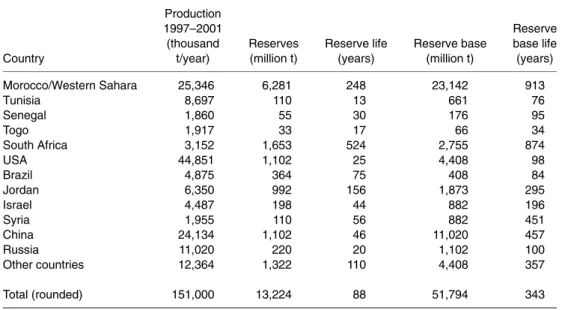
Phosphate ores were first mined in relatively small amounts in the 1840s in England, France and Spain and later in other countries; today most of the phosphate fertilizer and phosphate chem- icals are produced from phosphate rock (Beaton, 2003). Table 1.1 shows today’s important areas of phosphate mining. Phosphate-containing ore bod- ies are finite, non-renewable resources. Reserves are defined as deposits that may potentially be feasible at some time in the future. Reserve base is that part of an identified resource that meets specified minimum production practices. Reserve and reserve base at present cost less than $36/t and $90/t, respectively. At current production levels, the world’s reserve and reserve base are estimated to last for less than 100 years and about 340 years, respectively (Roberts and Stew- art, 2002).
The most important step towards overcoming the shortage of plant nutrients was taken in 1909
Table 1.1. World phosphate rock production, reserves and reserve base. (From Roberts and Stewart, 2002.)
Country
Production 1997–2001 (thousand
t/year)
Reserves (million t)
Reserve life (years)
Reserve base (million t)
Reserve base life (years)
Morocco/Western Sahara 25,346 6,281 248 23,142 913
Tunisia 8,697 110 13 661 76
Senegal 1,860 55 30 176 95
Togo 1,917 33 17 66 34
South Africa 3,152 1,653 524 2,755 874
USA 44,851 1,102 25 4,408 98
Brazil 4,875 364 75 408 84
Jordan 6,350 992 156 1,873 295
Israel 4,487 198 44 882 196
Syria 1,955 110 56 882 451
China 24,134 1,102 46 11,020 457
Russia 11,020 220 20 1,102 100
Other countries 12,364 1,322 110 4,408 357
Total (rounded) 151,000 13,224 88 51,794 343
when Fritz Haber informed the directors of Badische Anilin und Soda Fabrik (BASF) that his search for combining nitrogen and hydrogen to ammonia had functioned successfully in the laboratory. Carl Bosch then found ways of making the principle work under industrial conditions. By application of the Haber–Bosch process, about 4000 t of ammonia were produced in 1913, and today the global output of ammonia is estimated at about 130 million t/year (Smil, 1999). Due to this invention, the ‘not respirable air’ discovered by Daniel Rutherford became the infinite raw mater- ial for production of nitrogen fertilizer.
1.4 Elementary Balances in Animal Production
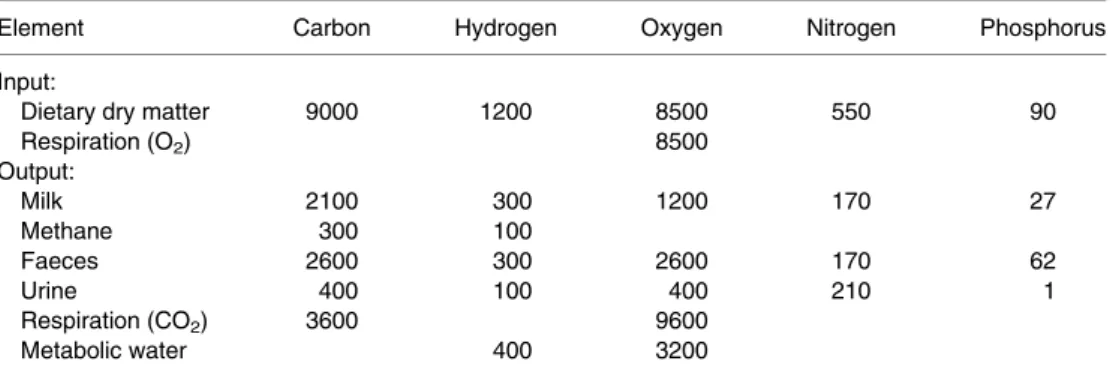
Chemical elements can be neither produced nor destroyed in the animal’s metabolism. They can only be transferred from one form into another and a very great part of research in animal nutri- tion is simply based on balancing elements. This is demonstrated in Table 1.2 for five elements in a dairy cow weighing 650 kg, assumed to produce 30 kg of milk daily. Further it is assumed that body mass and composition are constant. In order to cover the requirements of energy and all nutrients for maintenance and production, this cow is assumed to consume 50 kg of a total mixed ration (TMR) containing 40% dry matter (DM) plus 80 l of water per day.
A more detailed investigation may disclose that this cow daily excretes 40 kg of faeces containing
15% DM and 30 l of urine and that microbial fermentation in her digestive tract causes a daily emission of 500 l methane (CH4). Finally, her daily consumption of oxygen from inspired air may amount to 6000 l and a corresponding vol- ume of carbon dioxide (CO2) may be expired daily. When elements are analysed in dietary DM, drinking water, milk and all excreta, then daily movements of the analysed elements into and out of the animal’s body can be calculated, as shown in Table 1.2 for carbon, hydrogen, oxy- gen, N and P.
The efficiency by which the consumed elements are turned into compounds of milk in this example is 7% for oxygen, 23% and 25% for carbon and hydrogen and about 30% for N and P, respect- ively. Only in recent years, potential impacts on the environment of that unutilized part of the ingested elements has found scientific interest.
Expiration of CO2is not a net contribution to the greenhouse effect (global warming) because carbon contained in the feed must have been captured from CO2 in the atmosphere in the preceding period of vegetation. Expired CO2 is thus recycled into the atmospheric pool and is ready for again getting captured for photosyn- thesis according to the equation:
6CO2þ6H2O!C6H12O6þ6O2 (1) Carbon contained in faeces and urine will finally be oxidized to CO2 when exposed to aerobic conditions and the same should happen to methane, and thus the cycle of carbon between
Table 1.2. Approximate balance of five elements in dairy cows producing 30 kg of milk daily and fed according to common recommendations (g/day)a.
Element Carbon Hydrogen Oxygen Nitrogen Phosphorus
Input:
Dietary dry matter 9000 1200 8500 550 90
Respiration (O2) 8500
Output:
Milk 2100 300 1200 170 27
Methane 300 100
Faeces 2600 300 2600 170 62
Urine 400 100 400 210 1
Respiration (CO2) 3600 9600
Metabolic water 400 3200
aConstant body mass and composition assumed; for further assumptions see text.
atmospheric carbon dioxide and organic matter is completed. Methane and its oxidation products, especially carbon monoxide, have great import- ance for the chemistry of the atmosphere (Crutzen, 1995), but this point will not be followed in this book.
Oxidation of hydrogen to water in the meta- bolic chain of reactions is the principle for provid- ing the organism with metabolizable energy.
Water formed in this way does not have any im- pact on the environment.
Nitrogen is excreted in the urine mostly as urea.
When contaminated with faeces, this urea may readily be hydrolysed by microbial urease accord- ing to the equation:
OC(NH2)2þH2O!CO2þ2NH3 (2) When excreta are applied to the soil, ammonia is formed and may be taken up by plants through their roots, either directly or after conversion to nitrate. If excreted N accumulates in con- centrations exceeding the capacity of plants, con- siderable emissions of ammonia into the air and nitrate into groundwater may occur. Both phe- nomena are regarded as having impact on the environment.
When cattle are grazing on pasture, enrichment of N will result in those spots where the animals urinate and enrichment of P will be found where they defecate. Thus, a certain degree of horizontal movement of nutrients will be found within the grazed paddocks.
Principally, the same phenomenon has to be registered on a much larger scale as a consequence of transporting great quantities of concentrate feeds, regardless of whether grains or by-products of the food industry, from the site of their produc- tion into areas of high animal density.
1.5 Environmental Regulations in the USA and the European Union Although progress has been made (Børstinget al., 2003), N and P are routinely overfed to ruminants, which, in combination with the continuous trend to concentrate animal units in intensive animal systems, leads to nutrient surpluses at farm and system levels ( Jonkeret al., 2002; Ondersteijnet al., 2002; Dou et al., 2003). Compared to crops,
production of nutrients from farm animals, particu- larly ruminants, is an inherently inefficient process (Domburget al., 2000; Ondersteijnet al., 2002). The efficiency of utilization of dietary nutrients for milk or meat production is a simple formula:
Efficiency¼Nutrient in usable products Nutrient intake (3) A reduction of the denominator or an increase of the numerator will enhance efficiency, i.e. less N input and/or greater milk N output will result in an increased efficiency of conversion of dietary N into milk N, for example. Crude protein content and composition of the diet can have a profound effect on N losses and ammonia release from ma- nure (Swensson, 2003) and must be publicized by nutrition consultants and extension professionals as an immediately available tool for reduction of N losses from cattle operations. Alternatively, N (and P) from animal waste may be converted into value- added products, thus reducing nutrient loads to soil and atmosphere (Cowling and Galloway, 2001). Management practices, however, often have minimal impact on milk N efficiency ( Jonker et al., 2002), although when backed by legislative actions, farm management is critical in controlling nutrient pollution from dairy operations (Onder- steijn et al., 2003). Similar conclusions can be drawn at whole-farm and agricultural system levels (De Vrieset al., 2001).
Concentration of livestock in large feeding operations has been associated with concerns regard- ing water and air quality and nuisance issues such as odour. In the USA, the Environmental Protection Agency (EPA) is the government body responsible for implementing environmental regulations, in- cluding regulations applicable to animal feeding op- erations (for details, see Meyer and Mullinax, 1999;
Meyer, 2000; and Powers, 2003; most recent revi- sions can be found at the EPA web site, http://
www.epa.gov/npdes/caforule; Federal Register, Vol. 68, No. 29, 12 February 2003).
In retrospect, the EPA rules regulating animal feeding operations (AFO) stemmed from the 1972 Federal Clean Water Act (CWA, Section 502) classifying beef feedlots as point sources of pollu- tion. In 1974 effluent guidelines for feedlots were established and in 1976 regulations were issued defining Concentrated Animal Feeding Oper- ations (CAFO) requiring National Pollutant Discharge Elimination System (NPDES) (Sweeten
and Miner, 2003). Under the current regulations, AFO are required to have an NPDES permit if the animals are fed or housed in a confined area for more than 45 days in any 12-month period and crops, vegetation, forage growth or postharvest residues are not sustained in the nor- mal growing season over any portion of the lot or facility. Animal operations are grouped into large ($1000 beef cattle or dairy heifers, or$700 ma- ture dairy cattle), medium (300 to 999 beef cattle or dairy heifers, or 200 to 699 mature dairy cattle) and small (<300 beef cattle or dairy heifers, or
<200 mature dairy cattle). In most situations, large AFO are defined as CAFO and are required to have NPDES. Medium and small AFO can be classified as CAFO if animals are in direct contact with surface water running through the confine- ment area or the operation discharges into US waters through a manmade ditch, flushing system or other devices, or the permitting authority de- termines the facility is a significant contributor of pollutants and designates it as a CAFO (Koelsch, 2003). Historically, medium and small AFO have been designated CAFO status only following an on-site inspection. By definition pasture systems are not regulated by CAFO rules.
The process of obtaining an NPDES permit involves the development and implementation of a Nutrient Management Plan (NMP) by the CAFO.
Federal regulations require dairy operators to have NMP in place by 31 December 2006. States may have additional requirements. Effluent Limitations Guidelines (ELG) for dairy CAFO imply no dis- charge of manure, litter or process wastewater from the production area, except in cases when rainfall causes the discharge and the production area is designed, operated and maintained to con- tain all of the manure, litter and process wastewater plus runoff from a 25-year, 24-h rainfall event (Wright, 2003). Under the new regulations, ELG for large CAFO require that manure, litter and processed wastewater be applied to agricultural fields using rates and methods that: (i) ‘ensure ap- propriate agricultural utilization of nutrients’; and (ii) ‘minimize P and N transport from the field to surface waters’ (Davis, 2003). Large CAFO are required to evaluate the potential for N and P loss on all fields receiving manure. Manure applications may be limited or eliminated on fields having a high potential for P loss (determined using a risk assess- ment method). Based on the assessment for risk of nutrient loss, manure is applied based on P or N
requirements. Medium and small CAFO are re- quired to apply manure ensuring appropriate agri- cultural utilization of the waste nutrients (Sheffield and Paschold, 2003). In many situations, applica- tion of manure, based on N, overdoses P in soil;
manure N:P ratios are significantly lower compared to N:P ratios in plants (Heathwaite et al., 2000).
Ammonia N volatilization from manure further concentrates P and contributes to P accumulation in soil.
Through the Voluntary Alternative Perform- ance Standards (VAPS) the new EPA regulations provided an alternative to the traditional waste management systems under the ELG. Examples of alternative approaches are as follows (Sweeten et al., 2003):
. reduction in nutrient excretion and/or dietary nutrient requirements through nutrition;
. grass filters, buffer strips, infiltration areas and vegetative systems reducing solid, nutrient and hydraulic loading;
. air quality process-based models to improve emission estimates from manure holding facilities;
. constructed wetlands following pre-treatment to allow release of wastewater to receiving water seasonally or continually;
. hybrid aerobic or anaerobic treatment systems shifting emissions to N2gas rather than am- monia;
. improving the cost effectiveness of systems (anaerobic digestion and thermal conversion) to recover energy and reduce atmospheric emissions from agricultural waste;
. cost-effective methods for recovery of market- able by-products (N and P);
. accelerating the recovery of value-added reuse of waste materials.
The contribution of ruminants to global ammo- nia emissions is the largest of all farm animal species and animals are the main contributors to overall ammonia N emissions from agriculture (Bouwman et al., 1997). The contribution of farm animals to global or US ammonia emissions is estimated to be 48% and 50%, respectively (NRC, 2003). The con- tribution to N2O, NO or CH4 emissions is esti- mated at 33% and 25%, 1% (both) and 19% and 18%, respectively (NRC, 2003). The role of agricul- ture in greenhouse gas emission is also significant (Tamminga, 2003). Odour and human health con- cerns have driven regulations related to air quality
impact of animal operations in the USA. With the 1990 Clean Air Act (CAA) amendments, the EPA was required to establish standards for pollutants considered harmful to human health. Standards were established for CO, NO2, O3, Pb and SO2 as well as PM10 particulate matter (airborne par- ticles with aerodynamic equivalent diameters less than 10mm) (Powers, 2003). Particulate matter of 2:5mm (PM2:5) was proposed as pollutant with a 1997 amendment to the CAA, but a federal court blocked this addition in a 1999 ruling (Powers, 2003). The adoption of more stringent policies by the EPA is expected with the next revision of the CAA. The following is a brief overview of the im- portant air pollutants originating from farm animal systems (NRC, 2003):
. Ammonia is produced through microbial hydrolysis of urinary urea in manure. Emitted in the atmosphere, ammonia can be converted to ammonium aerosol and removed by dry or wet deposition. Once removed from the atmosphere, ammonia or ammonium contrib- utes to ecosystem fertilization, acidification, eutrophication and can impact visibility, soil acidity, forest productivity, terrestrial ecosys- tem biodiversity, stream acidity and coastal productivity (Galloway and Cowling, 2002).
Ammonia also contributes indirectly to PM2:5 through formation of ammonium salts.
. Nitrous oxide is formed through microbial nitrification and denitrification and contrib- utes to tropospheric warming and strato- spheric ozone depletion.
. Direct emission of nitric oxide from animal manure appears to be of minor importance, but fertilizer N applied to soil can be emitted as nitric oxide. Nitric oxide and nitrogen diox- ide (referred to as NOx) are rapidly intercon- verted in the atmosphere and removed through wet and dry deposition. NOx is an important precursor in ozone production and aerosol nitrate is a contributor to PM2:5and N deposition (as HNO3).
. Methane is produced through anaerobic fer- mentation of organic matter in the rumen. It is an important greenhouse gas contributing to global warming.
. Volatile organic compounds (VOC) from ani- mal operations include organic sulphides, disulphides, C4 to C7 aldehydes, trimethyla- mine, C4amines, quinoline, demethylpyrazine,
short-chain organic acids and aromatic com- pounds, and can have various environmental effects.
. Hydrogen sulphide is formed through anaer- obic reduction of sulphate in water and de- composition of sulphur-containing organic matter in manure. In the atmosphere, hydro- gen sulphide is oxidized to sulphur dioxide and removed by dry or wet (as aerosol sulphate) deposition. On a global scale, it appears that hydrogen sulphide emissions from farm ani- mal systems have relatively minor ecological effects.
. PM10and PM2:5particulate matter directly or indirectly originate from animal operations through animal activities, housing fans, air incorporation of mineral and organic material from soil, manure and water droplets and con- version to aerosols of ammonia, nitric oxide and hydrogen sulphide. Both particle types can cause health effects through deposition in airways and can affect visibility.
. Odour from animal operations, although dif- ficult to quantify, has a significant societal, primarily local, impact and will likely be an important target in future environmental re- gulations.
Comparable regulations exist in most states of the European Union, which aim at protection of the environment against impacts of intensive ani- mal production. These regulations differ in details not only between different members of the EU, but also between different regions within individ- ual states. Depending on the respective author- ities, different means for achieving the goal are considered adequate:
. limiting the number of animals kept per unit of available land;
. limiting the quantity of feed that may be pur- chased from external sources;
. forcing farmers to compare import and export of nutrients into their farm.
Numbers of animals and available land are easy to find out, but stocking density does not provide very reliable information about the degree of emis- sion from a farm. Comparison of nutrient fluxes, on the other hand, is rather complicated, but gives a valid description of the degree of sustainability, if based on correct primary recordings. These recordings must include quantities and nutrient
concentration of purchased fertilizer and feeds as major routes of nutrient import as compared to quantities and nutrient concentration of marketed goods of plant and animal origin. Knowledge of nutrient fluxes may provide strategies for improv- ing nutrient efficiency and for combining profitabil- ity with sustainability of producing food.
This book intends to present the state of the art of supplying dairy cows properly with N and P without causing unwanted emissions of these elements.
References
Beaton, J. (2003) Fertilizer use – a historical perspec- tive. Phosphorus (phosphate, P2O5). Available at:
http://www.agcentral.com/imcdemo/01History/
01-09.htm
Bergner, H. (1986)Nathan Zuntz and 100 years non- protein-nitrogen research in Berlin.Archives of Ani- mal Nutrition36, 127–130.
Børsting, C.F., Kristensen, T., Misciattelli, L., Hvel- plund, T. and Weisbjerg, M.R. (2003) Reducing nitrogen surplus from dairy farms. Effects of feed- ing and management.Livestock Production Science83, 165–178.
Bouwman, A.F., Lee, D.S., Asman, W.A.H., Dentener, F.J., Van Der Hoek, K.W. and Olivier, J.G.J.
(1997) A global high-resolution emission inventory for ammonia.Global Biochemical Cycles11, 561–587.
Brinkmann, T. (1922) Die Oekonomik des landwirtschaf- tlichen Betriebes. In: Weber, M. (ed.)Grundribder Sozialo¨konomik, 3. Wirtschaft und Gesellschaft. Verlag J.C.B. Mohr, Thu¨bingen, pp. 27–124.
CAST [Council for Agricultural Science and Technol- ogy] (2002) Animal diet modification to decrease the potential for nitrogen and phosphorus pollu- tion.Issue PaperNo. 21. E-mail: cast @ cast-science.
org
Cheng, K.-J. and Costerton, J.W. (1980) Adherent rumen bacteria – their role in the digestion of plant material, urea and epithelial cells. In: Ruck- ebusch, Y. and Thivend, P. (eds)Digestive Physiology and Metabolism in Ruminants. MTP Press Ltd, Lancaster, UK, pp. 227–250.
Childs, P.E. (2003) Phosphorus: fire from urine. 1. The discovery of phosphorus. Available at: http://
www.ul.ie/childsp/CinA/Issue60/TOC55_Urine.
htm
Cowling, E.B. and Galloway, J.N. (2001) Challenges and opportunities facing animal agriculture: optimizing nitrogen management in the atmosphere and bio- sphere of the Earth. Journal of Animal Science80 (E. Suppl. 2), E157–E167.
Crutzen, P.J. (1995) The role of methane in atmospheric chemistry and climate. In: Engelhardt, W.v., Leon- hardt-Marek, S., Breves, G. and Giesecke, D. (eds) Ruminant Physiology: Digestion, Metabolism, Growth and Reproduction. Ferdinand Enke Verlag, Stuttgart, Germany, pp. 291–315.
Davis, J. (2003) Making decisions about application rates. Livestock and Poultry Environmental Curricu- lum. Fact sheet #25. Available at: http://
www.mwpshq.org
De Vries, W., Kros, H., Oenema, O., Reinds, G.J. and Erisman, J.W. (2001) Animal production impacts on nitrogen emissions to air and ground water: a Dutch case with a European perspective. American Society of Animal Science, International Animal Agriculture and Food Science Conference, Indian- apolis in Indianapolis, pp. 1–50.
Domburg, P., Edwards, A.C., Sinclair, A.H. and Chal- mers, N.A. (2000) Assessing nitrogen and phos- phorus efficiency at farm and catchment scale using nutrient budgets.Journal of the Science of Food and Agriculture80, 1946–1952.
Dou, Z., Ferguson, J.D., Fiorini, J., Toth, J.D., Alexan- der, S.M., Chase, L.E., Ryan, C.M., Knowlton, K.F., Kohn, R.A., Peterson, A.B., Sims, J.T. and Wu, Z. (2003) Phosphorus feeding levels and crit- ical control points on dairy farms.Journal of Dairy Science86, 3787–3795.
Duncan, C.W., Agrawala, I.P., Huffman, C.F. and Luecke, R.W. (1953) A quantitative study of rumen synthesis in the bovine on natural and puri- fied rations.Journal of Nutrition49, 41–49.
Galloway, J.N. and Cowling, E.B. (2002) Reactive nitro- gen and the world: two hundred years of change.
Ambio31, 64–71.
Heathwaite, L., Sharpley, A. and Gburek, W. (2000) A conceptual approach for integrating phosphorus and nitrogen management at watershed scale.Jour- nal of Environmental Quality29, 158–166.
Houpt, R. (1970) Transfer of urea and ammonia to the rumen. In: Phillipson, A.T. (ed.)Physiology of Diges- tion and Metabolism in the Ruminant. Oriel Press Ltd, Newcastle upon Tyne, UK, pp. 119–131.
Jonker, J.S., Kohn, R.A. and High, J. (2002) Dairy herd management practices that impact nitrogen utilization efficiency. Journal of Dairy Science 85, 1218–1226.
Klaassen, G. (ed.) (1992) Ammonia emission in Europe:
emission coefficients and abatement costs. Pro- ceedings of a workshop held at the International Institute for Applied Systems Analysis (IIASA) in Laxenburg, Austria, 4–6 February 1991. CP-92- 04, 288 pp.
Koelsch, R. (2003) Do I need an NPDES permit for my livestock or poultry operation?Livestock and Poultry Environmental Curriculum. Fact sheet #2. Available at:
http://www.mwpshq.org
Liebig, J. (1840)Die organische Chemie in ihrer Anwendung auf Agricultur und Physiologie. Verlag von Friedrich Vieweg und Sohn, Braunschweig, 352 pp.
Liebig, J. (1843)Die Thier-Chemie oder die organische Chemie in ihrer Anwendung auf Physiologie und Pathologie. Verlag von Friedrich Vieweg und Sohn, Braunschweig, 344 pp.
Loosli, J.K., Williams, W.E., Thomas, W.E., Ferris, F.H.
and Maynard, L.A. (1949) Synthesis of amino acids in the rumen.Science110, 144–145.
Madsen, J. and Hvelplund, T. (1984) Prediction of amino acid supply to the small intestine of cows from analysis of the feed.Canadian Journal of Animal Science (Supplement)86–88.
McDowell, L.R. (1992)Minerals in Animal and Human Nutri- tion. Academic Press, San Diego, California, 524 pp.
Meister, A. (1965) Biochemistry of Amino Acids, 2nd edn, Volume 1. Academic Press, New York and Lon- don, 119 pp.
Meyer, D. (2000) Dairying and the environment.Journal of Dairy Science83, 1419–1427.
Meyer, D. and Mullinax, D.D. (1999) Livestock nutrient management concerns: regulatory and legislative overview. Journal of Animal Science 77 (Suppl. 2), 51–62.
Mitchell, H.H. (1924) A method of determining the biological value of protein.Journal of Biological Chem- istry58, 873–903.
Mulder, G.J. (1838) Sur la composition de quelques substance animales.Bulletin des Sciences Physiques et Naturelles en Ne´erlande1, 104–119.
Munro, H.N. (1964) Historical introduction: the origin and growth of our present concepts of protein metabolism. In: Munro, H.N. and Allison, J.B.
(eds)Mammalian Protein Metabolism, Volume I. Aca- demic Press, New York and London, pp. 1–29.
NRC [National Research Council] (2003)Air Emissions From Animal Feeding Operations: Current Knowledge, Fu- ture Needs. National Academies Press, Washington, DC, pp. 50–73.
Ondersteijn, C.J.M., Beldman, A.C.G., Daatselaar, C.H.G., Giesen, G.W.J. and Huirne, R.B.M.
(2002) The Dutch Mineral Accounting System and the European Nitrate Directive: implications for N and P management and farm performance.
Agriculture, Ecosystems and Environment92, 283–296.
Ondersteijn, C.J.M., Beldman, A.C.G., Daatselaar, C.H.G., Giesen, G.W.J. and Huirne, R.B.M.
(2003) Farm structure or farm management: effect- ive ways to reduce nutrient surpluses on dairy farms and their financial impacts.Livestock Produc- tion Science84, 171–181.
Powers, W.J. (2003) Keeping science in environmental regulations: the role of the animal scientist.Journal of Dairy Science86, 1045–1051.
Roberts, T.L. and Stewart, W.M. (2002) Inorganic phos- phorus and potassium production and reserves.
Better Crops86, 6–7.
Rohr, K., Lebzien, P., Schafft, H. and Schulz, E. (1986) Prediction of duodenal flow of non-ammonia nitrogen and amino acid nitrogen in dairy cows.
Livestock Production Science14, 29–40.
Roy, J.H.B., Balch, C.C., Miller, E.L., Orskov, E.R. and Smith, R.H. (1977) Calculation of N-requirement for ruminants from nitrogen metabolism studies.
In: Protein Metabolism and Nutrition. Proceedings of the Second International Symposium on Protein Metabolism and Nutritionheld at ‘Flevohof ’, the Netherlands, May 2–6, 1977. European Association of Animal Production Publication No. 22, Pudoc, pp. 126–129.
Satter, L.D. and Roffler, R.E. (1977) Calculating re- quirements for protein and nonprotein nitrogen by ruminants. In:Protein Metabolism and Nutrition.
Proceedings of the Second International Symposium on Pro- tein Metabolism and Nutritionheld at ‘Flevohof’, the Netherlands, May 2–6, 1977. European Associ- ation of Animal Production Publication No. 22, Pudoc, pp. 133–136.
Schmidt-Nielsen, B., Schmidt-Nielsen, K., Houpt, T.R.
and Jarnum, S.A. (1957) Urea excretion in the camel. American Journal of Physiology 188, 477–484.
Sheffield, R. and Paschold, J. (2003) What is required in a Nutrient Management Plan? Livestock and Poultry Environmental Curriculum. Fact sheet #20.
Available at: http://www.mwpshq.org.
Simonnet, H., Le Bars, H. and Molle´, J. (1957) Le cycle de l’ure´e administre´e par voie buccale chez les ruminants.Comptes Rendu´s Hebdomadaires des Se´ances de l‘Acade´mie des Sciences, Paris, 244, 943–945.
Smil, V. (1999) Detonator of the population explosion.
Nature400, 415.
Sweeten, J. and Miner, R. (2003) A brief history and background of the EPA CAFO rule.Livestock and Poultry Environmental Curriculum. Fact sheet #1.
Available at: http://www. mwpshq.org
Sweeten, J., Miner, R. and Auvermann, B. (2003) Alter- native treatment systems.Livestock and Poultry Envir- onmental Curriculum. Fact sheet #7. Available at:
http://www.mwpshq.org
Swensson, C. (2003) Relationship between content of crude protein in rations for dairy cows, N in urine and ammonia release.Livestock Production Science84, 125–133.
Tamminga, S. (2003) Pollution due to nutrient losses and its control in European animal production.Livestock Production Science84, 101–111.
Thaer, A. (1809)Grundsa¨tze der rationellen Landwirtschaft, Erster Band. Realschulbuchhandlung, Berlin, 380 pp.
Thomas, K. (1909) U¨ ber die biologische Wertigkeit der Stickstoffsubstanzen in verschiedenen Nahrungs- mitteln.Archiv fu¨r Anatomie und Physiologie – Physiolo- gische Abteilung des Archivs fu¨r Anatomie und Physiologie 219–302.