Interactions between users and the built environment help shape the identity of a place. The survey results for the fourth image shown to respondents in the Udaipur survey show that tourists and permanent residents are more familiar with the buildings on the city's heritage streets.

The Indian Heritage
This has contributed to a repository of intangible cultural heritage elements unique to this region of the world (Chitty, 2016). The cultural heritage is expected to keep the city rejuvenated and maintain its place identity.
Indian built heritage and the issue of identity
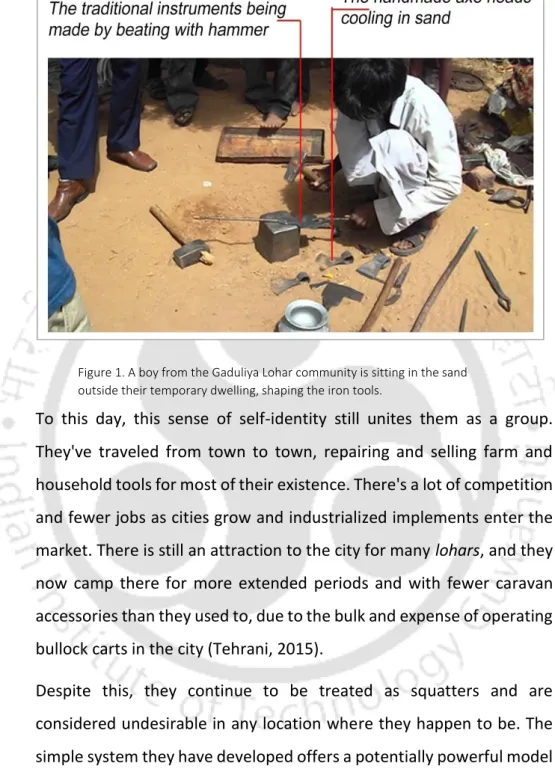
Many older military weapons have become obsolete due to the expansion of the ammunition industry. A strong base element - the carriage - connects the elements in predefined relationships carefully for some elements and loosely for others.
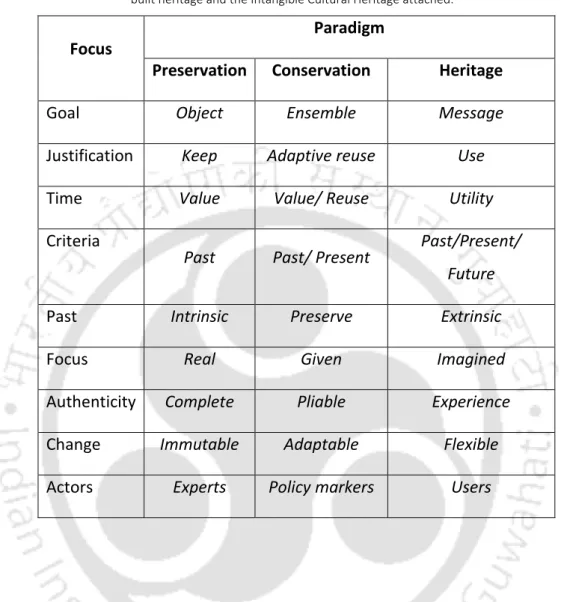
Preservation, Conservation, and Heritage paradigm for Indian
- Preservation of the Existing Structure
- Conservation of the Idea and the Built Form
- Heritage Paradigm to Preserve the Essence of Space and
We see that the idea behind conservation and preservation is to maintain the structural integrity of the built form. The heritage paradigm restores the structure to a usable form and maintains its identity by abstracting the built form and uses of the past.
The Elements of Urban Place Identity
- The Elements of Urban Design
- Architectural Elements that affect the Place Identity of a
- The User Roles and Cultural Impact on Place Identity
In urban design, the physical built environment and architectural elements play an important role in creating a place's identity. For many people, the architectural elements lining these paths dominate their image of the place. The boundary wall separates the activity and ownership of the spaces visible in the photograph.
The main campus gate, shown in Figure 18, acts as a threshold point for the city's segregation and campus activities. Informed use of these architectural elements in the urban space can form a strong identity of the place. In the context of Indian built heritage, the activities that take place in an area can influence the image of the city.
The users may be frequent visitors to the site or people who depend on the site for income.

The User’s Perception Towards the Architecture of the Place
- What is people's perception of architectural heritage
- What may be elements of the heritage-built environment
- What strategy must be used during new development,
- Would replication or abstraction give the same feeling as
The visitors are the tourists who come to a place to appreciate and experience the beauty of the city's heritage. The heritage areas must be restored for the public, but must be in constant use to meet the needs of residents (Akande et al., 2019). The significant differences in the image of the place and its identity between the three groups can be understood by looking at the types of identities.
The tourists mainly relate to the physical characteristics of the historical districts of the place, and thus the affective and evaluative place identity is higher (Dixon & Durrheim, 2010). Depending on their experiences and involvement with a built space, users have different perceptions of the place. The activities in a built space influence the user experiences, creating an image of the place.
But the bigger question is whether replicating the built environments that were created centuries ago is an intelligent decision or not.
The identified niche in research to answer research
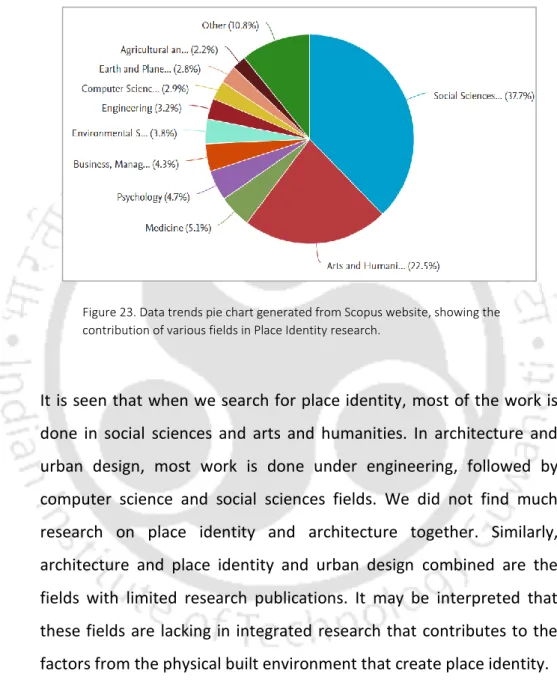
Pie chart of data trends created by the Scopus website, showing the contribution of different fields to Country Identity research. Similarly, architecture and place identity and urban design combined are areas with limited research publications. It can be interpreted that these fields lack integrated research that contributes to factors from the physical built environment that create place identity.
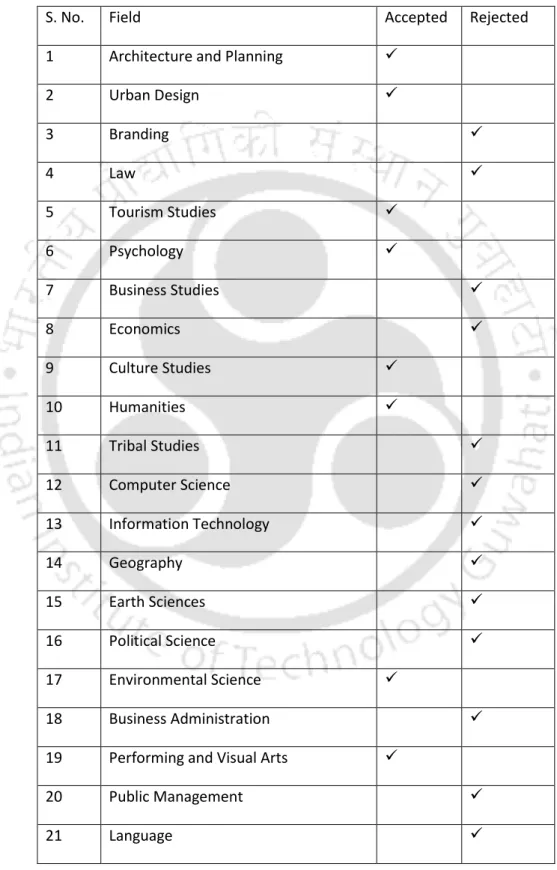
However, we found no research on heritage site architecture that considers user perceptions and identifies place identity. The areas of study related to the identity of the architectural sites of Indian heritage cities and their acceptance/rejection status. Keywords included place, home, identity, image, city branding, city branding, liveability and indicators, place identity theories, architectural identity, public spaces, approaches to urban design, architectural heritage, city image, contemporary role of historical areas etc.
A research gap is identified here mainly because architecture and urban design are still not connected to the identity of the place from the architect's perspective.
Research hypothesis
Aim and objectives
- Aim
- Objectives
Study approach
- Study Design
- Analysis Method
The Image of The City', where he examined the image in terms of urban design principles (Lynch, 1960). The flow of the study is discussed in the next section, 1.9.1, and the analysis methods are discussed in section 1.9.2. This supports the conclusions drawn from the literature review, and a discussion of the conclusions is made in the last part of the study.
The analyzed results are used to verify the validity of the conclusions of the literature study. The relative importance index method is often used when the defining aspects of the variables of analysis are of interest. This study uses a semiotic assessment tool used to assess the relationship between minor elements of the architectural facade of a heritage site in India (Mishra & Kolay, 2019).
The meta-elements are the elements created by the break-up of the facade into smaller elements.

Thesis Layout
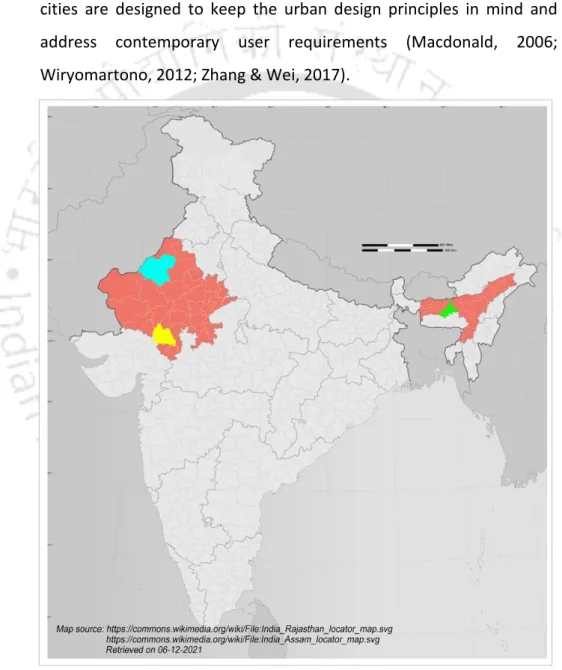
Bikaner has the sand dunes that Rajasthan is famous for, while Udaipur is known for its lakes and is called the "City of Lakes" and. The review site should mediate between the station and the rest of the city. Often referred to as the 'City of Temples', Guwahati has a rich historical, cultural and religious heritage that has the potential to be showcased for tourism.
The Kamakhya railway station fails to reflect their perception of the temple in the design. The sculpture in the figure designed with inspiration from the Goddess can be part of the city's urban design. The tangible and intangible heritage of the city has deep-rooted effects on the place's culture.
The methodology for the study was inspired by Kevin Lynch's book 'The Image of the City' (Lynch, 1960). Because of the scale of the camel festival, locals consider it important to the city's culture. We can conclude that when development occurs within or outside the city limits to expand the value of city services, such as urban renewal, heritage hotel or resort, etc., elements of identity creation can be replicated and repeated.
Residents’ perception of Indian Architectural Heritage
Experiments with Place Identity and architecture
Discussions and Concluding Remarks
Documenting the common perception of place identity
It is under enormous pressure from urbanization and the cultural heritage of the city is facing the threat of extinction. The new development plan takes into account only the natural features of the place, but neglects the cultural heritage. The second part of the study takes place in Rajasthan, which is rich in its cultural traditions, architectural heritage and famous natural resources.
The state has an iconic image of being a desert place and most depictions of the state show it with sand dunes. The common characteristic of the cities studied is that they are under pressure from urbanization and the historicity of the places is facing a threat. The second study is conducted in Bikaner, Rajasthan, to understand people's perception of the city's built heritage and their connection with the traditional and cultural significance of the architecture.
The third study was done in Udaipur, Rajasthan, to see the applicability of the ideas of replication and abstraction of the identity-creating elements of a heritage built environment.
Creative Expression of Cultural Heritage Identity in Guwahati
- Cultural Context
- Kamakhya Railway Station
- The Survey and results
- Design explorations
- Inferences
- Discussion
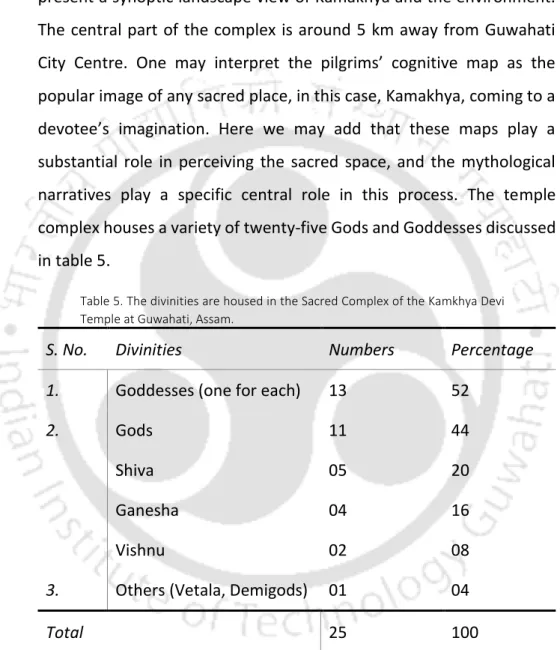
An inquiry has been made about Kamakhya Railway Station with the context of Kamakhya Temple. The deities are housed in the sacred compound of the Kamkhya Devi Temple in Guwahati, Assam. The second part asked how people perceive the temple and how it can be replicated in a railway station plan.
People feel comfortable and do not want changes in the spatial planning of the railway station. The abstract idea of the goddess flows into the culture of the country and the architecture reflects that abstraction. Even without an understanding of the language, it will give a distinct identity to the station.
This idea of extracting the identity of the Goddess from the cultural significance of the temple was finalized.
A place with a strong belief system: Bikaner, Rajasthan
- Introduction
- Site study and Results
- Analysis
- Inferences
- Discussion
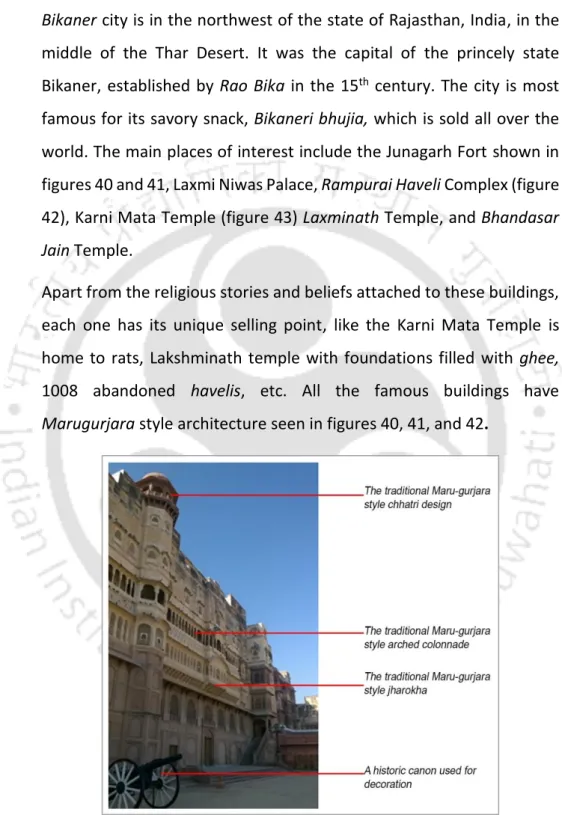
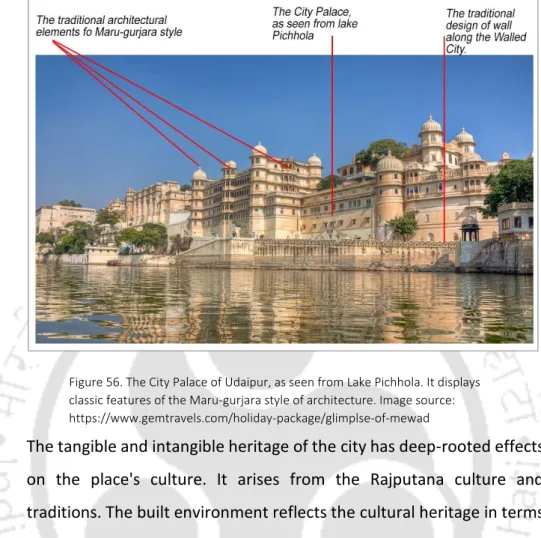
The exterior of the Junagarh Fort of Bikaner shows traditional architectural elements of the Maru-gurjara style. It is therefore clear that the placement of nodes was a deliberate effort to provide the best views and appreciation of the architecture of the place. It is seen that the people can enjoy the best views of the architecture from one place while socializing.
Through the literature, we have found that cognitive elements of place-making are crucial for the creation of a city's place identity. Their experiences and perception significantly influence their mental image of the place and, in turn, the place's identity. The tourists found the architecture of the Havelis and Junagarh Fort to be comparable, but for the residents it was difficult.
Let's say that there is an attempt to restore the identity of the place for its brand as a tourist destination.
The Architectural Heritage of Udaipur City: An Investigation into
- Study area introduction
- Methodology
- Site study and results
- Analysis and results
- Conclusion
The city has most of the important historical structures in the heritage areas of the historic core, around Lake Pichhola (Samant, 2007). The city's cultural heritage thrives on the city's built heritage based on its country identity. The changes cause disruptions in the social and physical fabric of the city's historic building floors and daily routines.
These identified elements help strengthen the city's image in the minds of city residents and visitors. The city was established in the valley area of the Aravali range and was surrounded on three sides. User types are generally concentrated in parts of the city according to their motives.
Perception of the color palette created by the city's historic market streets. This design uses a much more popular view of the Fort, seen from the main street of the city. Here we have replicated the natural environment using lakes in the background of architectural abstraction.
- Discussion
- Use in future expansion
- Place Branding and Tourism
- Repetition v/s Abstraction of Identity as a planning
- Effects of westernization and globalization on place
- Further Queries
- Do we need to change our identity with the changing
- When a new development happens in a city with historic
- Can the community image of a city be separated from its
- Identity migration
- Salient Features
- Abstraction for appreciation
- Replication for utility
- Concluding remarks for the study
- Limitations of this study
- Way Forward
Recently there was news in the media about a man who had a replica of the Taj Mahal built at his house. As the photographs show, the new structure is a smaller version of the original monument, as shown in figure 100. The new structure is becoming very popular among tourists who want to see the original Taj Mahal at Agra but cannot travel.
The Taj Mahal of Burhanpur attracts the attention of tourists for those who cannot travel to Agra. It can be said that the new structure is an exact copy of the original one, seen in figure 102 and 103. Except for the scale of the two structures, all the details are copied from the original Taj Mahal.
The carvings on the entrance arch are just like those of the original Taj Mahal in Agra.